Local-Business

Gold price skyrockets to Tk262,440 per bhori overnight in Bangladesh
Gold prices in Bangladesh have climbed again within 24 hours, with the Bangladesh Jewellers Association (BAJUS) announcing a fresh hike on Monday that has pushed prices to a new all-time high.
In a notification issued late night, BAJUS said the price of 22-carat gold has been increased by Tk5,249 per bhori, fixing the new rate at Tk262,440, the highest ever in the country’s history.
The jewellers’ body said the decision was taken following an increase in the price of pure gold (tejabi gold) in the local market.
The revised prices will come into effect from Tuesday.
Under the new rates, 21-carat gold will sell at Tk250,484 per bhori, 18-carat gold at Tk214,734 per bhori, while gold made under the traditional method has been priced at Tk176,593 per bhori.
Buyers will have to pay an additional 5 percent VAT set by the government and a minimum 6 percent making charge fixed by BAJUS on the selling price.
Gold price jumps Tk 6,299 per bhori in Bangladesh after brief cut
However, making charges may vary depending on the design and quality of jewellery.
Earlier, on January 25, BAJUS last adjusted gold prices, raising the price of 22-carat gold by Tk1,574 to Tk257,191 per bhori, which was then the highest on record.
With the latest adjustment, gold prices have been revised 14 times so far in 2026 — increased on 11 occasions and reduced three times.
Alongside gold, BAJUS has also raised silver prices. The price of 22-carat silver has been increased by Tk525 per bhori to Tk7,757, marking the highest silver price in the country’s history.
According to the new rates, 21-carat silver will sell at Tk7,407 per bhori, 18-carat silver at Tk6,357 per bhori, while traditional silver has been priced at Tk4,782 per bhori.
So far this year, silver prices have been adjusted 11 times in the domestic market, with eight increases and three reductions.
1 month ago
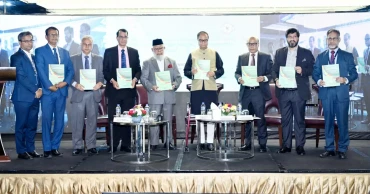
Bangladesh Bank to curb large corporate loans, boost bond market: Governor Dr. Mansur
Bangladesh Bank Governor Dr. Ahsan H. Mansur on Monday announced a strategic plan to reduce large-scale corporate lending by banks as part of a broader effort to contain defaulted loans and develop the country's bond market.
Speaking at a seminar titled ‘Bond Market Development in Bangladesh: Challenges and Recommendations’ at the Renaissance Dhaka Gulshan Hotel, the Governor emphasized that corporate entities will be encouraged to decouple from traditional bank financing for large projects.
Governor Mansur reaffirmed that the central bank will strictly enforce the ‘Single Borrower Exposure Limit’, which restricts a bank from lending more than 25 percent of its total capital to a single client.
Funded Loans will be capped at 15 percent of capital. Non-Funded Loans will be capped at 10 percent of capital.
Limits will remain flexible for green financing, including the power and energy sectors.
The Governor described this restriction as a "push factor" designed to drive corporate houses toward the bond market for their long-term financing needs.
Speaking in the seminar, Bangladesh Securities and Exchange Commission (BSEC) Chairman Khondoker Rashed Maqsood noted that easy access to bank loans has historically discouraged corporates from entering the capital market.
He identified long-term bank lending as a primary driver of the rising volume of non-performing loans (NPLs) in the country.
"The economy will be shifted from bank-dependency to capital market-dependency," Governor Mansur stated, adding that while the central bank is currently leading the initiative, full regulatory control of the bond market will eventually transition to the capital market authorities.
To make bond issuance more attractive, the central bank and BSEC are working to reduce the time and cost required to issue bonds, provide attractive incentives for investors and conduct ongoing research to align the market with international standards.
The seminar, moderated by Deputy Governor Habibur Rahman, featured high-level panel discussions. Notable participants included Finance Secretary Khairuzzaman Mozumder, ICC Bangladesh President Mahbubur Rahman, DSE Chairman Mominul Islam, and senior executives from Pran-RFL Group and City Bank.
The discussions were based on joint research conducted by Bangladesh Bank and BSEC, presented by central bank official Ezazul Islam, which highlighted the roadmap for a sustainable secondary bond market in Bangladesh.
1 month ago
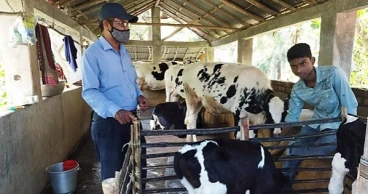
Bangladesh Dairy Board to open regional offices to boost milk output
The Bangladesh Dairy Development Board will open branch offices at key locations across the country to increase milk and dairy production and improve quality standards, Fisheries and Livestock Adviser Farida Akhter said on Monday.
Farida stressed the need to identify major dairy production hubs, establish an adequate number of regional offices, and develop an appropriate manpower structure to ensure effective implementation of the board’s mandate.
She made the remarks while presiding as chairperson over the first meeting of the dairy development governing board, formed under the Bangladesh Dairy Development Board Act, 2023, at the Fisheries and Livestock Ministry conference room.
Emphasising the importance of dairy as a balanced food, she said the board must play a strong role in increasing production, setting and controlling quality standards, marketing dairy products and ensuring proper management of related activities.
Plenty on fields: Why vegetables so expensive in Dhaka?
“To ensure safe milk and dairy products for people across the country, the activities of the Dairy Development Board must go beyond the confines of its headquarters and expand nationwide,” she said, adding that regular board meetings are essential for effective implementation of the law.
The 15-member governing board meeting was attended by Fisheries and Livestock Secretary Abu Tahir Muhammed Zaber, who served as vice-chairman of the board.
The secretary informed the meeting that Joint Secretary Shahina Ferdousi has been appointed as Executive Director of the board by the Ministry of Public Administration and will also serve as the board’s member secretary.
The meeting was convened to approve key decisions required for implementing the functions assigned to the board under the law.
Net FDI in Bangladesh jumps over 200 percent in Q3 of 2025: BIDA
Board members also discussed launching extensive publicity and awareness campaigns to familiarise stakeholders and the public with the activities of the Dairy Development Board, expressing unanimous support for the initiative.
1 month ago

South Korean company to invest $80mn in Mirsarai EZ
The Bangladesh Export Processing Zones Authority (BEPZA) on Monday signed a lease agreement with South Korean company Park Handbag BD Ltd to establish a large-scale bag, luggage and high-end garments manufacturing facility at the BEPZA Economic Zone in Mirsarai, Chattogram.
The proposed investment, amounting to US$ 80 million, is expected to significantly contribute to industrial growth and employment generation in the country.
The agreement was signed at the BEPZA Complex in Dhaka.
Md Tanvir Hossain, Executive Director (Investment Promotion) of BEPZA, signed the agreement on behalf of BEPZA, while Beomjoon Park, Chairman of Park Handbag BD Ltd, signed on behalf of the investing company.
BEPZA Executive Chairman Major General Mohammad Moazzem Hossain witnessed the signing ceremony.
Under the agreement, Park Handbag BD Ltd will develop the project on 57,600 square metres of land to manufacture handbags, backpacks, luggage, and a wide range of knit and woven garments, including polo shirts, T-shirts, padded and down jackets, trousers, sportswear and undergarments.
Once fully operational, the project is expected to create employment opportunities for 10,960 Bangladeshi nationals.
The manufactured products will be exported to major global markets, including the USA, the UK, the European Union, South America and Asia.
Welcoming the South Korean investor, the BEPZA Executive Chairman reaffirmed the authority’s commitment to providing round-the-clock facilitation to investors. He also urged Park to encourage other South Korean entrepreneurs to explore investment opportunities in BEPZA-administered EPZs and Economic Zones.
He said BEPZA is continuously modernising its service delivery system through increased automation, digitalisation and efficiency to better serve investors.
“We should do better than yesterday,” he remarked, underscoring BEPZA’s drive to remain competitive and responsive.
Speaking at the ceremony, Beomjoon Park said Park Handbag BD Ltd will manufacture bags for globally renowned brands such as Coach and Kate Spade.
He expressed strong confidence in Bangladesh as a competitive manufacturing destination and praised BEPZA for its fast, efficient and investor-friendly services.
1 month ago

Al-Arafah Islami Bank to suspend all services for 9 days
Al-Arafah Islami Bank (AIBL) has announced a temporary suspension of all its banking services for nine consecutive days, starting from January 30 to February 7, 2026.
The shutdown is part of a major technical upgrade to its "Core Banking System" (CBS) to ensure more secure and modern digital services for its customers.
The central bank of Bangladesh issued a notification on Sunday (January 25) granting the bank permission for this scheduled downtime.
According to the bank’s schedule, the suspension will affect various services in phases:
January 30 – February 7: All online banking services, including ATMs and Internet Banking, will remain completely suspended for the full nine days.
February 1 – February 3: All branches and sub-branches will be closed for cash transactions and physical banking.
February 5 (10:00 AM): Branches will resume limited operations, primarily for cash transactions only.
February 8: All regular and online banking services will fully resume and return to normal operations.
Banking sector reform can’t be done overnight: Salehuddin
The bank stated that the upgrade is essential to enhance the quality of customer service and bolster transaction security in the current era of digital banking. While the total service suspension lasts nine days, the bank noted that the actual impact on branch-based banking is limited to three days, as January 30-31 are weekend holidays and February 4 is a scheduled holiday for Shab-e-Barat.
Bangladesh Bank has approved this "technical downtime" to facilitate the bank's long-term goal of providing superior Shariah-based financial services. Customers are advised to plan their urgent transactions before the shutdown begins.
1 month ago
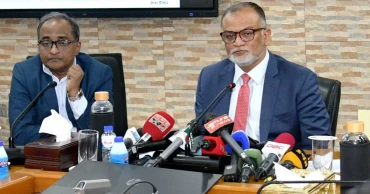
Market stable, prices likely to ease further in Ramadan: Adviser Bashir
Bangladesh’s market remains stable with no supply crunch, and the prices of essential commodities are expected to decline further during Ramadan, Commerce Adviser Sk Bashir Uddin said on Sunday.
Talking to journalists after the 10th meeting of the Taskforce Committee on reviewing prices and market conditions of essential commodities ahead of Ramadan held at the Commerce Ministry, Bashir said the assessments of imports and domestic production indicate a more stable market than last year.
“Based on our analysis, we believe this year’s Ramadan market will be better than last year’s, with greater stability,” he said, adding that traders have assured uninterrupted supply of essentials and effective price control during the holy month.
The adviser pointed out that the imports of essential commodities have increased by about 40 percent compared to last year, which he said would help keep prices within consumers’ reach. “If there is no supply disruption, there is no reason for prices to rise.”
Bashir also said there is no gas or dollar shortage, while the exchange rate remains stable, placing the market in a relatively stronger position than at other times.
Referring to edible oil, he said prices at the wholesale level are currently below government-fixed rates due to increased competition. “We have diversified edible oil supply. Around 500,000 tonnes of rice bran oil from domestic production have been supplied to the market, which has intensified competition.”
Costly mega projects like Padma Bridge hurt market stability, reiterates Bashir
He said future prices would be determined through market competition, which naturally helps reduce prices and ensures fair rates for consumers.
Responding to a question on government policy if prices rise during Ramadan despite these measures, Bashir said the government is focused on action rather than speculation. “We do not fear future fear-mongering. We are working and the results will follow.”
Commerce Secretary Mahbubur Rahman, heads of various commerce ministry agencies and senior representatives of private sector organisations were present at the meeting.
1 month ago

Gold price jumps Tk 6,299 per bhori in Bangladesh after brief cut
Gold prices in Bangladesh surged again on Saturday noon, rising by Tk 6,299 per bhori (11.664 gram), barely hours after a reduction announced on Friday night, according to the Bangladesh Jewellers Association (BAJUS).
After six consecutive hikes, BAJUS had lowered the price of gold by Tk 3,149 per bhori on Friday night. However, the jewellers’ body reversed course on Saturday, setting a new record high for gold prices in the country.
In a press release, BAJUS said the price of 22-carat gold has been increased by Tk 6,299 to Tk 255,617 per bhori—the highest ever in Bangladesh. The new rate will take effect immediately.
BAJUS said the adjustment was made considering the rise in the local market price of tejabi gold (pure gold) and the overall market situation.
Under the revised rates, the price of 21-carat gold has been fixed at Tk 244,011 per bhori, 18-carat gold at Tk 209,136 per bhori, while gold under the traditional method will sell at Tk 171,869 per bhori.
In addition to the selling price, buyers will have to pay a government-mandated 5 percent VAT and a minimum 6 percent making charge set by BAJUS. The making charge, however, may vary depending on the design and quality of jewellery.
BAJUS last adjusted gold prices on January 22, when it reduced the price of 22-carat gold by Tk 3,149 per bhori, setting it at Tk 249,318.
With the latest revision, gold prices have been adjusted 12 times in the domestic market so far in 2026—raised nine times and reduced three times.
In line with the hike in gold prices, silver prices have also been raised. The price of 22-carat silver has been increased by Tk 525 per bhori to Tk 6,882, marking the highest silver price in the country’s history.
Meanwhile, the price of 21-carat silver has been set at Tk 6,532 per bhori, 18-carat silver at Tk 5,599 per bhori, and silver under the traditional method at Tk 4,199 per bhori.
1 month ago

Titas Gas to face low pressure for 24 hours from Saturday
Titas Gas Transmission and Distribution PLC on Friday said that gas supply across all its supply areas will remain under low pressure for 24 hours due to reduced LNG supply.
In a media release, the state-run company said low gas pressure will prevail in Dhaka and all Titas-affiliated areas from 12:00pm on Saturday to 12:00pm on Sunday.
The disruption is being caused by a temporary reduction in gas received from LNG sources due to maintenance work at an LNG terminal, the statement said.
Titas apologised to consumers for the temporary inconvenience.
Alongside gas supplied from local gas fields, Titas distributes LNG-based gas from the Maheshkhali LNG terminals in Cox’s Bazar. There are two floating storage and regasification units (FSRUs) at Maheshkhali, though Titas did not specify which terminal is undergoing maintenance.
Titas supplies gas to most districts in Dhaka and Mymensingh divisions. As a result, consumers in these areas are expected to face disruptions during the 24-hour low-pressure period.
Titas low pressure chokes gas supply across Dhaka; residents struggle
Meanwhile, gas consumers have been facing severe supply constraints for several months due to pipeline leakages, valve failures and maintenance-related issues.
The shortage of LPG cylinders in the market has forced many city residents to rely on electric cookers or firewood for daily cooking.
1 month ago
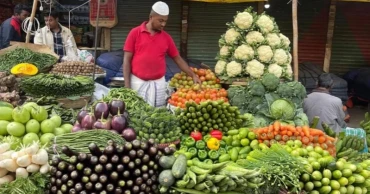
Plenty on fields: Why vegetables so expensive in Dhaka?
Winter has brought a bumper vegetable harvest across the country, supported by smooth transportation and abundant supply, yet Dhaka’s consumers are seeing little relief at the markets.
Visits to several city markets showed that vegetable prices remain stubbornly high, even as farmers complain they are barely recovering production costs, raising fresh questions about possible market manipulation and the role of middlemen in the supply chain.
Dhaka’s kitchen markets are actually awash with winter vegetables, but prices show little sign of easing even in what is traditionally the cheapest season of the year.
While consumers continue to pay inflated rates, farmers across producing districts say they are selling their produce at throwaway prices, pointing to a widening gap between farm-gate and retail prices driven largely by middlemen.
Major wholesale markets in the capital receive winter vegetables from Bogura, Naogaon, Chuadanga, Sirajganj, Rajshahi, Jashore and other districts.
Traders say more than 50 truckloads of vegetables arrive in Dhaka every day from Bogura alone during the peak season.
Despite ample supply, winter vegetables costly in Lalmonirhat
Wholesalers at Karwan Bazar said supply is higher than last year, yet prices have not come down. By late January, wholesale prices were on average Tk 20 per kg higher than the same period a year ago.
“Last year at this time, cauliflower sold at Tk 15–20 per kg wholesale. This year it is Tk 30–35,” said Latif Munshi, a vegetable trader at Karwan Bazar, adding, “We are buying at higher prices from upstream traders, so we have no option but to sell at higher rates to retailers.”
Anwar Mia, a trader at the Swarighat wholesale market, echoed the sentiment. “Prices of cabbage, tomato, cucumber, carrot, bottle gourd—almost all winter vegetables—are higher than last year. There is no supply shortage, but increased intermediary costs are pushing prices up.”
The picture is starkly different at the production level.
In Bogura’s Sherpur upazila, vegetable grower and trader Naim Meyajan said he cultivated cauliflower on nearly 10 bighas of land. While early varieties fetched good prices between September and November, prices collapsed once peak harvesting began in December.
“Wholesalers bought fields early at Tk 80,000 to Tk 100,000 per bigha against a production cost of around Tk 50,000. But when the main harvest started, there were no buyers for fields. I had to take cauliflowers to market where prices fell to Tk 5 per kg,” he said.
Farmers at Fulbari and Mohasthan haats in Bogura said prices of most vegetables started falling sharply by late December.
In many cases, they were forced to sell produce at an inflated ‘maund’ calculation—60 kg instead of the standard 40 kg—yet still failed to recover costs.
Early winter vegetable cultivation gains momentum across Khulna division
In Dhaka, however, prices moved in the opposite direction. Cauliflower that sold at Tk 25 per piece in late December is now priced at Tk 40–50 depending on size. At Shantinagar kitchen market, cabbage is selling at around Tk 50 per piece.
By contrast, in Sirajganj’s Ullapara upazila, farmer Bhobesh Ghoshal said he sold cabbage at Tk 6–10 per piece in January. “Those same cabbages are being sold in Dhaka at Tk 20 or more”.
A visit to the Jatrabari wholesale hub shows cabbage trading at Tk 25–30 per piece wholesale, before reaching consumers at Tk 50. For key winter vegetables, the price gap between farmers and consumers ranges from Tk 30 to Tk 40 per unit.
Tomato prices show an even sharper disparity. Early varieties arrive in Dhaka from Chattogram, while seasonal tomatoes mainly come from Rajshahi. In both phases, retail prices in Dhaka have ranged between Tk 100 and Tk 150 per kg.
In Rajshahi’s Godagari upazila, tomato farmer Moktar Hossain said he is currently selling tomatoes at Tk 40 per kg, down from Tk 50–80 during the early season. “Middlemen are selling those tomatoes in Dhaka at Tk 60 per kg, and prices keep rising along the chain.”
At wholesale markets in Dhaka, tomatoes are sold to retailers at Tk 80–90 per kg and finally reach consumers at Tk 100–120. The cumulative price difference from farm to table stands at Tk 50–70 per kg.
Radish prices, though relatively lower, reflect a similar pattern. In retail markets, radish sells at Tk 30–40 per kg. In Cumilla’s Gomti char area, farmer Sohrab said radish is sold in bundles rather than by weight.
“One bundle of 8–10 radishes sells for Tk 30, which is roughly Tk 10 per kg,” he said. “But consumers are paying at least Tk 20 more per kg in Dhaka.”
According to a study by the Food and Agriculture Organization (FAO), more than 700,000 kg of vegetables are sold daily in Dhaka. Even assuming a conservative price gap of Tk 20 per kg between farmers and consumers, the additional daily burden on consumers stands at around Tk 15 million—amounting to nearly Tk 500 million over January due to elevated prices.
Commenting on the situation, Consumers Association of Bangladesh (CAB) President AHM Shafiquzzaman blamed market syndicates and weak oversight.
“A group of traders is taking advantage of the pre-election period by forming syndicates and destabilising the vegetable market. Vegetables have been selling at high prices for nearly a month, but there is no effective monitoring. Extortion at different stages of the supply chain is also pushing prices up,” he said.
Shafiquzzaman warned that prices could rise further during Ramadan, expressing doubts about official assurances of market stability. “Government data is often unreliable,” he said.
Calling for decisive action, he urged the authorities to dismantle syndicates of middlemen, ensure fair prices for farmers and protect consumer rights through stricter market regulation.
Former Jahangirnagar University vice-chancellor and agricultural economist Abdul Bayes, however, advised that ensuring fair prices for both consumers and farmers in the agricultural market should not rely solely on government intervention; instead, marginal farmers must be empowered.
Vegetable prices soar in Manikganj amid inclement weather
Emphasising the formation of farmers’ cooperatives, Bayes said, “A single farmer from Bogura cannot bring 100 kilograms of cauliflower to Dhaka to sell. But if 100 farmers from the same area form a cooperative, they can collectively bypass middlemen and bring their produce directly to the market. This would allow farmers to secure better prices from wholesalers, while consumers would be able to buy vegetables at lower prices.”
He also noted that NGOs could play an important role by supporting farmers in forming such cooperatives.
Besides, Bayes said, if the government can dismantle syndicates in wholesale markets, foster competition, and curb extortion along supply chains, long-term market instability in the vegetable sector could be brought under control.
1 month ago

Bangladesh Bank to ease rules, give banks more freedom: Governor
Bangladesh Bank (BB) Governor Dr Ahsan H Mansur on Thursday said the central bank is working to reduce ‘regulatory overreach’ by allowing banks greater operational freedom, provided they strictly comply with existing rules and guidelines.
“We do not want to interfere in your work, but our guidelines and regulations must be followed by everyone,” he said while speaking at a roundtable titled ‘Banking Sector Reforms’, jointly organised by Mutual Trust Bank PLC and The Financial Express at a city hotel.
The Governor said Bangladesh Bank has opted for a direct action approach by forming three dedicated task forces instead of setting up a banking commission to expedite reforms and asset recovery.
Dr Mansur explained that forming a commission would be time-consuming, requiring at least six months to prepare a report and another three months for review, leaving the current interim government with little time for implementation.
BTMA threatens shutdown of all spinning mills over duty-free yarn imports
“We have taken the approach that we will not form any commission. We will move directly to implementation through task forces,” he said.
Dr Mansur said the three task forces are focusing on banking sector reform, Bangladesh Bank reform, and asset recovery.
Referring to the challenges of recovering laundered money, the Governor said a Joint Investigation Team (JIT) has been formed comprising the Criminal Investigation Department (CID), the Bangladesh Financial Intelligence Unit (BFIU), and the Anti-Corruption Commission (ACC).
He acknowledged that capacity building remains a major challenge, noting that Bangladesh is receiving technical assistance from international partners. “The World Bank, British government, FBI and the European Union are providing technical support,” Dr Mansur said.
The Governor said the long-term goal is to establish a permanent mechanism similar to the United Kingdom’s National Crime Agency (NCA) to combat financial crimes on a continuous basis.
He revealed that authorities have identified 12 to 13 major individuals and around 200 others who allegedly laundered more than Tk 200 crore each.
Experts, farmers warn of food security crisis over poultry import ban
Expressing optimism over ongoing legal proceedings, Dr Mansur specifically mentioned the asset recovery case involving Saifuzzaman in London, adding that Islami Bank has also filed a claim in the matter.
The BB Governor said the central bank is maintaining strict political neutrality to keep the economy functional, distinguishing the current approach from that of the ‘1/11’ caretaker government period.
“We do not want any factories to close. No colour, no party—if a factory exists, the objective is how to keep it running,” Dr Mansur said.
He cited examples, noting that letters of credit (LCs) were allowed for S Alam Group’s SS Power plant due to its $2.5 billion investment, which is critical for the country’s power supply.
Similarly, facilities have been extended to the Gazi Group and Beximco, he said.
Regarding Beximco, the Governor said that out of its 18 or 19 entities, only the textile division is currently facing difficulties, while other units such as pharmaceuticals and Shinepukur Ceramics remain operational.
Dr Mansur said an exit roadmap has been developed in consultation with business representatives, allowing affected industries timeframes ranging from five to 12 years to regularise their liabilities.
11 more institutions inc. banks, municipal bodies join BIDA’s One-Stop Service portal
The Governor stressed the urgency of passing key financial laws during the tenure of the current administration, warning that future governments may find it ‘extremely difficult’ to enact them.
He expressed concern that the amendment to the Money Loan Court Act was returned by a committee on the grounds of being anti-business, arguing that without the amendment, asset recovery would be impossible.
Dr Mansur also underscored the importance of passing amendments to the Bank Company Act to strengthen governance in the banking sector.
1 month ago