world-business

American Airlines extends suspension of flights to Israel through late March amid war in Gaza
American Airlines is suspending flights to Israel through late March, extending a break in service that started in the early days of the war in Gaza.
A spokesperson for the airline said Wednesday that customers with tickets for flights to Tel Aviv can rebook at no extra charge or cancel their trip and get a refund.
The airline said flights to Ben Gurion International Airport in Tel Aviv will be suspended through March 29. The airline updated a travel advisory on its website over the weekend.
“We will continue to work closely with our partner airlines to assist customers traveling between Israel and European cities with service to the U.S.,” the spokesperson said.
Delta Air Lines extended its suspension of Tel Aviv flights through Sept. 30 from Aug. 31. United Airlines has suspended service indefinitely.
All three airlines stopped flying to Israel shortly after the Oct. 7 Hamas attack that started the war. Many other international airlines did the same, although some later resumed them.
Germany’s Lufthansa announced Monday that based on a “current security analysis” it would halt all flights to Tel Aviv, Amman, Beirut, Teheran and Erbil in Iraq through Monday.
About 1,200 Israelis, mostly civilians, died in the Oct. 7 attack, which was followed by Israel's bombardment of Gaza. About 40,000 people have died in Gaza, according to the Hamas-controlled health ministry there. U.S. attempts to broker a cease-fire agreement have been unsuccessful.
1 year ago
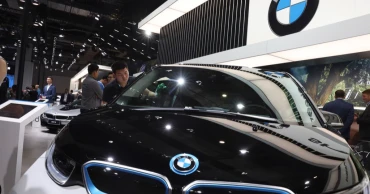
BMW recalls 1.3 million vehicles in China that may have Takata airbag inflators
BMW was recalling more than 1.3 million vehicles in China that might have Takata airbag inflators following a similar recall in the United States last month, officials said Friday.
The recall covers nearly 600,000 vehicles made in China between 2005 and 2017 and more than 750,000 imported vehicles made between 2003 and 2018, the Chinese State Administration for Market Regulation said.
It includes a wide range of models, from series 1 to series 6 cars and the X1, X3, X4, X5 and X6 SUVs.
A small number of vehicles in the recall may have Takata inflators if the owner changed the steering wheel, the Chinese regulatory body said. The inflator can explode when the airbag deploys, sending fragments into the car and injuring the occupants, it said.
Takata airbag inflators have been blamed for the deaths of at least 35 people since 2009 in the United States, Malaysia and Australia.
U.S. regulators said last month that BMW would recall more than 390,000 vehicles because the original steering wheel may have been replaced with a sport or M-sport steering wheel equipped with a Takata inflator.
Ford and Mazda warned the owners of more than 475,000 vehicles in the U.S. earlier this week not to drive them because they have Takata airbag inflators. The vehicles were built between 2003 and 2015.
Stellantis, following a fatal explosion in the U.S. last year, urged the owners of some 2003 Dodge Ram pickups to stop driving them if their air bag inflators had not been replaced.
The Chinese regulator said that BMW owners can visit a dealer to have their steering wheel checked or upload a photo of their steering wheel and their vehicle identification number to get an answer in two weeks. BMW will replace the driver's side airbag free of charge in affected vehicles.
1 year ago

Philippe Varin elected Chair of International Chamber of Commerce
International industry leader Philippe Varin has been elected Chair of the International Chamber of Commerce (ICC) – the voice of global business, representing over 45 million businesses.
Varin succeeds Maria Fernanda Garza – who becomes ICC’s Honorary Chair – following a unanimous vote of the organisation’s over 90 national committees at its Global Headquarters in Paris.
Varin is an operating partner of the GVP Climate Investment Fund and Chair of the C’Possible partnership to enhance vocational education opportunities in France. He served as Group Executive Vice President for Aluminum at Pechiney before becoming CEO of Corus in 2003, overseeing its acquisition by Tata in 2007.
International Chamber of Commerce Global Chair Maria Fernanda Garza visiting Dhaka
He also Chaired PSA Peugeot Citroen from 2009 to 2014 and subsequently, Areva and Orano until 2020. He led France Industrie and the Conseil National de l’Industrie from 2017 to 2021, Chaired Suez from 2020 to 2022 and has Co-Chaired the World Materials Forum since 2015. ment d
Upon his election Varin said: “I am deeply conscious that the founding mission of the International Chamber of Commerce – to promote peace and prosperity through global trade – is of immense strategic importance and a challenge in a world that is increasingly characterised by conflicts and intense geoeconomic competition.”
International Chamber of Commerce gets 1st woman Chair
Varin has set out a five pillar strategy for his two-year tenure as ICC Chair, encompassing international trade, the rule of law, climate action, trade digitalisation, and multilateral cooperation.
ICC World Council also elected three prominent business leaders in its Chairmanship: Harsh Pati Singhania (First-Vice Chair) from India, Shinta Kamdani (Vice Chair) from Indonesia, and Patrick Obath from Kenya (Vice Chair).
1 year ago
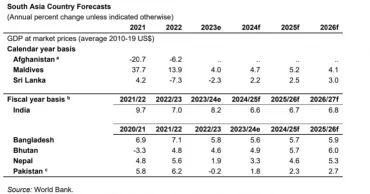
World Bank projects modest growth increase for Bangladesh: 5.7% in 2024-25, 5.9% by 2025-26
The World Bank has projected Bangladesh’s economic growth to slightly increase to 5.7% in the fiscal year 2024-25 and 5.9% in 2025/26, driven by a rise in private consumption and the implementation of large investment projects. This projection is part of the World Bank’s latest Global Economic Prospects report.
In FY 2023-24 (July 2023 to June 2024), Bangladesh’s growth is expected to slow due to elevated inflation impacting real wage growth and private consumption. Additionally, higher borrowing costs have dampened demand.
In Pakistan, economic activity, although still subdued, has shown improvement with increased industrial production in late 2023 to early 2024 following the relaxation of import controls. Growth in the South Asia region reached 6.6% in 2023, primarily fueled by faster growth in India.
Early 2024 saw mixed private sector activity across the region. While Pakistan and Sri Lanka experienced a pickup, Bangladesh faced disruptions in industrial activity due to ongoing import restrictions.
India's growth in FY2023-24 (April 2023 to March 2024) was bolstered by stronger-than-expected industrial and services activity, despite a slowdown in agricultural production caused by monsoons.
Sri Lanka saw an economic boost from recovering tourism and remittances, although both remained below pre-pandemic levels. Bhutan and Nepal are also poised for growth, partly due to recoveries in tourism and remittances.
Growth in the South Asia region is forecasted to slow to 6.2% in 2024 and remain at that rate through 2025-26, with steady growth expected in India.
Globally, the economy is anticipated to stabilize in 2024 for the first time in three years, with growth holding steady at 2.6% before increasing slightly to 2.7% in 2025-26. This remains below the pre-COVID-19 decade average of 3.1%.
Developing economies are projected to grow at an average rate of 4% over 2024-25, slightly slower than in 2023. Low-income economies are expected to see growth accelerate to 5% in 2024 from 3.8% in 2023. However, three-quarters of these economies have had their 2024 growth forecasts downgraded since January.
In contrast, advanced economies are projected to maintain steady growth at 1.5% in 2024, rising to 1.7% in 2025.
World Bank Insights on Global Economic Challenges
"Four years after the upheavals caused by the pandemic, conflicts, inflation, and monetary tightening, it appears that global economic growth is steadying," said Indermit Gill, World Bank Group’s Chief Economist and Senior Vice President. "However, growth is at lower levels than before 2020. Prospects for the world’s poorest economies are even more worrisome. They face punishing levels of debt service, constricting trade possibilities, and costly climate events. Developing economies will have to find ways to encourage private investment, reduce public debt, and improve education, health, and basic infrastructure."
One in four developing economies is expected to remain poorer than in 2019. The income gap between developing and advanced economies is set to widen in nearly half of developing economies over 2020-24, the highest share since the 1990s. Per capita income growth in these economies is expected to average 3.0% through 2026, below the pre-COVID-19 average of 3.8%.
Global inflation is projected to moderate to 3.5% in 2024 and 2.9% in 2025, but the decline is slower than previously expected. Many central banks are likely to keep interest rates high, averaging about 4% over 2025-26, double the 2000-19 average.
The Global Economic Prospects report highlights the importance of public investment in accelerating private investment and promoting economic growth. It suggests that increasing public investment by 1% of GDP in developing economies could boost output by up to 1.6% over the medium term.
The report also addresses the fiscal challenges faced by small states, emphasizing the need for comprehensive reforms to improve revenue stability, spending efficiency, and fiscal frameworks.
1 year ago
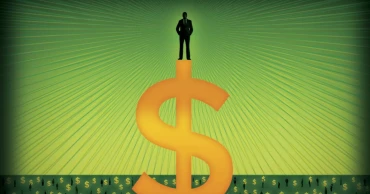
CEOs made nearly 200 times what their workers got paid last year
The typical compensation package for chief executives who run companies in the S&P 500 jumped nearly 13% last year, easily surpassing the gains for workers at a time when inflation was putting considerable pressure on Americans' budgets.
The median pay package for CEOs rose to $16.3 million, up 12.6%, according to data analyzed for The Associated Press by Equilar. Meanwhile, wages and benefits netted by private-sector workers rose 4.1% through 2023. At half the companies in this year's pay survey, it would take the worker at the middle of the company's pay scale almost 200 years to make what their CEO did.
CEOs got rewarded as the economy showed remarkable resilience, underpinning strong profits and boosting stock prices. After navigating the pandemic, companies faced challenges from persistent inflation and higher interest rates. About two dozen CEOs in the AP's annual survey received a pay bump of 50% or more.
"In this post-pandemic market, the desire is for boards to reward and retain CEOs when they feel like they have a good leader in place," said Kelly Malafis, founding partner of Compensation Advisory Partners in New York. "That all combined kind of leads to increased compensation."
But Sarah Anderson, who directs the Global Economy Project at the progressive Institute for Policy Studies, believes the gap in earnings between top executives and workers plays into the overall dissatisfaction among Americans about the economy.
"Most of the focus here is on inflation, which people are really feeling, but they're feeling the pain of inflation more because they're not seeing their wages go up enough," she said.
Many companies have heeded calls from shareholders to tie CEO compensation more closely to performance. As a result, a large proportion of pay packages consist of stock awards, which the CEO often can't cash in for years, if at all, unless the company meets certain targets, typically a higher stock price or market value or improved operating profits. The median stock award rose almost 11% last year compared to a 2.7% increase in bonuses.
The AP's CEO compensation study included pay data for 341 executives at S&P 500 companies who have served at least two full consecutive fiscal years at their companies, which filed proxy statements between Jan. 1 and April 30.
Top Earners
Hock Tan, the CEO of Broadcom Inc., topped the AP survey with a pay package valued at about $162 million.
Broadcom granted Tan stock awards valued at $160.5 million on Oct. 31, 2022, for the company's 2023 fiscal year. Tan was given the opportunity to earn up to 1 million shares starting in fiscal 2025, according to a securities filing, provided that Broadcom's stock meets certain targets – and he remains CEO for five years.
At the time of the award, Broadcom's stock was trading at $470. Tan would receive portions of the stock awards if the stock hit $825 and $950 and the full award if the average closing price is at or above $1,125 for 20 consecutive days between October 2025 and October 2027. The targets seemed ambitious when set, but the stock has skyrocketed since, and reached an all-time closing high of $1,436.17 on May 28.
Like rival Nvidia Inc., Broadcom is riding the current artificial intelligence frenzy among tech companies. Its chips are used by businesses and public entities ranging from major banks, retailers, telecom operators and government bodies.
In granting the stock award, Broadcom noted that under Tan its market value has increased from $3.8 billion in 2009 to $645 billion (as of May 23) and that its total shareholder return during that time easily surpassed that of the S&P 500. It also said Tan will not receive additional stock awards during the remainder of the five-year period.
Other CEOs at the top of AP's survey are William Lansing of Fair Isaac Corp, ($66.3 million); Tim Cook of Apple Inc. ($63.2 million); Hamid Moghadam of Prologis Inc. ($50.9 million); and Ted Sarandos, co-CEO of Netflix ($49.8 million).
At Apple, Cook's compensation represented a 36% decline from the year prior. Cook requested a pay cut for 2023, in response to the vote at Apple's 2022 annual meeting, where just 64% of shareholders approved of his pay package.
The survey's methodology excluded CEOs such as Nikesh Arora at Palo Alto Networks ($151.4 million) and Christopher Winfrey at Charter Communications ($89 million).
Although securities filings show Elon Musk received no compensation as CEO of Tesla Inc., his pay is currently front and center at the electric car company. Musk is asking shareholders to restore a pay package that was struck down by a judge in Delaware, who said the approval process for the package was "deeply flawed."
Companies are required to assign a value to stock awards at the time they're granted. The award given to Musk in 2018 was valued at $2.3 billion. Even if Musk were to cash out portions of those awards — he hasn't yet — that wouldn't count as compensation. Musk's pay package is now estimated to be worth around $45 billion.
CEO pay vs workers
Workers across the country have been winning higher pay since the pandemic, with wages and benefits for private-sector employees rising 4.1% in 2023 after a 5.1% increase in 2022, according to the Labor Department.
Even with those gains, the gap between the person in the corner office and everyone else keeps getting wider. Half the CEOs in this year's pay survey made at least 196 times what their median employee earned. That's up from 185 times in last year's survey.
The gap is particularly wide at companies where employees typically earn lower wages, such as retailers. At Ross Stores, for example, the company says its employee at the very middle of the pay scale was a part-time retail store associate who made $8,618. It would take 2,100 years earning that much to equal CEO Barbara Rentler's compensation from 2023, valued at $18.1 million. A year earlier, it would have taken the median worker 1,137 years to match the CEO's pay.
Corporate boards often feel pressure to keep upping the pay for well-performing CEOs out of fear that they'll walk out the door and make more at a rival. They focus on paying compensation that is competitive within their industry or marketplace and not on the pay ratio, Malafis said. The better an executive performs, the more the board is willing to pay.
The disparity between what the chief executive makes and the workers earn wasn't always so wide.
After World War II and up until the 1980s, CEOs of large publicly traded companies made about 40 to 50 times the average worker's pay, said Brandon Rees, deputy director of corporations and capital markets for the AFL-CIO, which runs an Executive Paywatch website that tracks CEO pay.
"The (current) pay ratio signals a sort of a winner-take-all culture, that companies are treating their CEOs as, you know, as superstars as opposed to, team players," Rees said.
Say on pay
Despite the criticism, shareholders tend to give overwhelming support to pay packages for company leaders. From 2019 to 2023, companies typically received just under 90% of the vote for their executive compensation plans, according to data from Equilar.
Shareholders do, however, occasionally reject a compensation plan, although the votes are non-binding. In 2023, shareholders at 13 companies in the S&P 500 gave the executive pay packages less than 50% support.
After its investors gave another resounding thumbs down to the pay packages for its top executives, Netflix met with many of its biggest shareholders last year to discuss their concerns. It also talked with major proxy-advisory firms, which are influential because they recommend how investors should vote at companies' annual meetings.
Following the talks, Netflix announced several changes to redesign its pay policies. For one, it eliminated executives' option to allocate their compensation between cash and options. It will no longer give out stock options, which can give executives a payday as long as the stock price stays above a certain level. Instead, the company will give restricted stock that executives can profit from only after a certain amount of time or after certain performance measures are met.
The changes will take effect in 2024. For last year, co-CEO Ted Sarandos received options valued at $28.3 million and a cash bonus of $16.5 million. Co-CEO Greg Peters received options valued at $22.7 million and a cash bonus of $13.9 million.
Anderson, of the Institute for Policy Studies, said Say on Pay votes are important because they "shine a spotlight on some of the most egregious cases of executive access, and it can lead to negotiations over pay and other issues that shareholders might want to raise with corporate leadership."
"But I think the impact, certainly on the overall size of CEO packages has not had much effect in some cases," she said.
Female CEOs
More women made the AP survey than in previous years, but their numbers in the corner office are still minuscule compared to their male counterparts. Of the 341 CEOs included in Equilar's data, 25 were women.
Lisa Su, CEO and chair of the board of chip maker Advanced Micro Devices, was the highest paid female CEO in the AP survey for the fifth year in a row in fiscal 2023, bringing in compensation valued at $30.3 million — flat with her compensation package in 2022. Her overall rank rose to 21 from 25.
The other top paid female CEOs include Mary Barra of automaker General Motors ($27.8 million); Jane Fraser of banking giant Citigroup ($25.5 million); Kathy Warden of aerospace and defense company Northrop Grumman Corp. ($23.5 million); and Carol Tome of package deliverer UPS Inc. ($23.4 million).
The median pay package for female CEOs rose 21% to $17.6 million. That's better than their male counterparts fared: Their median pay package rose 12.2% to $16.3 million.
2 years ago
Adani Group seeks new investment opportunity in Bangladesh
Adani Group has expressed interest to invest more in the energy and infrastructure sector in Bangladesh.
A delegation of Adani Group, led by Pranav Adani, Director of Adani Enterprises, met Finance Minister Abul Hassan Mahmood Ali at his secretariat office in the capital on Wednesday and discussed potential investment opportunities.
"I think there are a lot of opportunities that Bangladesh has to offer," Pranav Adani told reporters after the meeting with the finance minister. "We have been exploring ways to further invest in the country."
Among others, Anil Sardana, Managing Director of Adani Energy Solutions, was present in the meeting.
They also met Bangladesh Prime Minister’s Advisor Dr Tawfiq Elahi, Power Secretary Mr Habibur Rahman and Bangladesh Power Development Board Chairman Mr Mahbubur Rahman.
They also offered assistance required for post-cyclone recovery in the power sector.
Following the meeting, Abul Hassan Mahmood Ali said, "We welcome Adani's proposal for further investment. They have already done some investment (to supply power to Bangladesh),"
The delegation also invited the finance minister to visit the Adani Power owned World's largest ,30 GW solar and wind power plant under construction in India.
The minister said he will visit at his convenient time.
2 years ago

AmCham holds its “May Luncheon”, research paper unveiled
The American Chamber of Commerce in Bangladesh (AmCham) held its “May Luncheon” preceded by the unveiling of a research paper on Sunday.
Former Governor, Bangladesh Bank Dr Atiur Rahman joined the event as the guest of honor. Prof Dr Md Mamun Habib, School of Business & Entrepreneurship, Independent University, Bangladesh attended as the research lead and Syed Ershad Ahmed, President of AmCham joined as the session chair.
Make taxes affordable for media outlets: FBCCI standing committee
The program commenced with a presentation by Prof Mamun Habib highlighting the salient aspects of the research paper on “Development of Labor Conditions in Bangladesh for Sustainable Growth” followed by a brief panel discussion on the research topic, said a media release.
Md Humayun Kabir, Additional Secretary, Ministry of Labor and Employment, John Fay, Commercial Counselor, U.S. Embassy, Dhaka, Leena Khan, Labor Attaché, U.S. Embassy Dhaka, Neeran Ramjuthan, Program Manager, ILO Labor Administration and Working Conditions Cluster spoke as panelists.
Following the panel discussion, the research paper was unveiled with the presence of the guest of honor, AmCham President, panelist, AmCham EC members and other guests.
Meeting with ILO: BGMEA stresses fair minimum prices, unified code of conduct
The latter part of the program started with the warm welcome remarks delivered by Syed Ershad Ahmed, President – AmCham, and culminated with the keynote speech by Dr Atiur Rahman on “Post-LDC Graduation: Opportunities, Challenges, and the Way Forward”.
The program was supported by L-R Global Bangladesh Asset Management Company Limited with Reaz Islam, its CEO, also sharing his remarks after the unveiling ceremony.
Syed Mohammad Kamal, former Vice President and the Country Manager, MasterCard Singapore Holding Pte Ltd, also spoke.
Members of the Chamber, Executive Committee Members, former presidents, foreign dignitaries, business leaders, media representatives, and other guests attended the program.
2 years ago
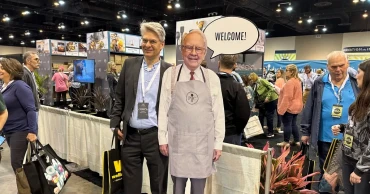
Profit drops at Warren Buffett's firm but thousands still want to hear from the investing guru
Warren Buffett's company reported a steep drop in earnings Saturday because the paper value of its investments fell and it sold off part of its massive Apple stake, but the tens of thousands of shareholders filling an Omaha arena to hear Buffett answer questions at the annual meeting later can take heart that Berkshire Hathaway's many businesses performed well.
Berkshire reported a $12.7 billion profit, or $8.825 per Class A share, in the quarter. That's roughly one-third of the $35.5 billion, or $24,377 per A share, that Berkshire reported a year ago.
But those figures were heavily swayed by a large drop in the paper value of Berkshire's investments. That's why Buffett encourages investors to pay more attention to the conglomerate's operating earnings that exclude the investment figures. By that measure, Berkshire's operating earnings jumped 39% to $11.222 billion from last year's $8.065 billion as its insurance companies led a strong performance.
The three analysts surveyed by FactSet Research had predicted operating earnings of $6,701.87 per Class A share.
Buffett did sell off nearly $6 billion in stocks during the quarter, including trimming about 13% of Berkshire's massive Apple stake. The investment in the iPhone maker is still the biggest one in the $364 billion portfolio at $135.4 billion, and Buffett said he expects Apple to remain the biggest investment for years — even up to when his successor takes over.
But the estimated value of Berkshire's Apple stake suggests that Buffett sold off more than 100 million shares. Buffett has said he invested in Apple's stock because of how devoted consumers are to the iPhone and other Apple products.
Apple CEO Tim Cook, who is at the Berkshire meeting, told CNBC that he still considers it a privilege to have Berkshire as a major shareholder, and he knew about the sales before Berkshire disclosed them Saturday.
Berkshire reported a $2.6 billion underwriting profit at its insurers, up from $911 million a year ago.
BNSF railroad's profits did disappoint and drop 8% to $1.143 billion, but most of its many other companies delivered solid results, including a 72% jump in operating profits at the utility unit that added $717 million to Berkshire's total.
Berkshire's revenue grew 5% to $89.87 billion in the quarter. The two analysts who reported estimates to FactSet predicted $87.044 billion revenue.
With no major acquisitions in sight, Berkshire's massive cash pile continued to grow to a record $188.993 billion in the quarter. Berkshire even spent $2.6 billion repurchasing shares during the first three months of the year, but its companies that include Geico insurance, BNSF railroad, several major utilities and an assortment of dozens of others keep generating mountains of cash.
“We’d love to spend it but we won’t spend it unless we’re doing something with very little risk that will make us a lot of money,” Buffett said.
THOUSANDS ATTEND WARREN BUFFETT’S ‘WOODSTOCK FOR CAPITALISTS’Tens of thousands filled the arena eager to vacuum up tidbits of wisdom from billionaire Warren Buffett, who famously dubbed the meeting ‘Woodstock for Capitalists.’
But a key ingredient is missing this year: It’s the first meeting since Vice Chairman Charlie Munger died.
The meeting opened with a video tribute to Munger recounting his life and highlighting some of his best known quotes from the meetings over the years that drew applause, including classic lines like “If people weren't so often wrong, we wouldn't be so rich.” The video also featured old interviews with Buffett and Munger talking about their epic friendship.
The video also featured several of the classic skits the investors made for meetings over the years with hoiliday stars like a “Desperate Housewives” spoof where one of the women introduced Munger as her boyfriend and another video where Jaimie Lee Curtis swooned over Munger.
As the video ended, everyone in the arena gave Munger a prolonged standing ovation to thank him for being what Buffett called "the architect of Berkshire Hathaway.
For decades, Munger shared the stage with Buffett every year for the marathon question and answer session that is the event's centerpiece. Munger routinely let Buffett take the lead with expansive responses that went on for several minutes. Then Munger himself would cut directly to the point. He is remembered for calling cryptocurrencies stupid, telling people to “marry the best person that will have you” and comparing many unproven internet businesses in 2000 to “turds.”
He and Buffett functioned as a classic comedy duo, with Buffett offering lengthy setups to Munger's witty one-liners. Together, they transformed Berkshire from a floundering textile mill into a massive conglomerate made up of a variety of interests, from insurance companies such as Geico to BNSF railroad to several major utilities and an assortment of other companies.
Munger often summed up the key Berkshire’s success as “trying to be consistently not stupid, instead of trying to be very intelligent.” He and Buffett also were known for sticking to businesses they understood well.
“Warren always did at least 80% of the talking. But Charlie was a great foil,” said Stansberry Research analyst Whitney Tilson, who was looking forward to his 27th consecutive meeting with a bit of a heavy heart because of Munger's absence.
MEETING THE NEXT GENERATION OF BERKSHIRE LEADERS
That absence, however, may well create space for shareholders to get to know better the two executives who directly oversee Berkshire's companies: Ajit Jain, who manages the insurance units, and Greg Abel, who handles everything else. Abel will one day replace the 93-year-old Buffett as CEO. Abel and Jain are sharing the main stage with Buffett for the first time this year in the spot Munger used to occupy.
The first time Buffett kicked a question to Abel, he mistakenly said “Charlie?” out of habit.
Morningstar analyst Greggory Warren said he hopes Abel will speak up more this year and let shareholders see some of the brilliance Berkshire executives talk about. Ever since Munger let it slip at the annual meeting three years ago that Abel would be the successor, Buffett has repeatedly reassured investors that he's confident in the pick.
Experts say the company has a solid culture built on integrity, trust, independence and an impressive management roster ready to take over.
“Greg's a rock star,” said Chris Bloomstran, president of Semper Augustus Investments Group. "The bench is deep. He won’t have the same humor at the meeting. But I think we all come here to get a reminder every year to be rational.”
2 years ago

Tesla cuts US prices for 3 of its electric vehicle models after a difficult week
Tesla knocked $2,000 off the prices of three of its five models in the United States late Friday, another sign of the challenges facing the electric vehicle maker led by billionaire Elon Musk.
The company cut the prices of the Model Y, a small SUV which is Tesla's most popular model and the top-selling electric vehicle in the U.S., and also of the Models X and S, its older and more expensive models. Prices for the Model 3 sedan and the Cybertruck stayed the same.
The cuts reduced the starting price for a Model Y to $42,990 and to $72,990 for a Model S and $77,990 for a Model X.
The move came the day after Tesla's stock tumbled below $150 per share, eliminating all gains made over the past year. The Austin, Texas, company's stock price has dropped about 40% so far this year amid falling sales and increased competition. Discounted sticker prices are a way to try to entice more car buyers.
Tesla's Musk meets Chinese foreign minister, who calls for 'mutual respect' in US-China relations
Musk posted early Saturday on X, the social media platform known as Twitter before he acquired and renamed it, that the cost of an entry-level Tesla was as low as $29,490 once a federal tax credit and gas savings were factored in.
Industry analysts have been waiting for Tesla to introduce a small electric vehicle that would cost around $25,000, the Model 2. Media reports this month that Musk planned to scrap the project created more uncertainty over the company's direction, although Musk called them untrue.
The price cuts ended a long workweek at Tesla, which announced Monday that it was cutting 10% of its staff globally, about 14,000 jobs. The company also said it was recalling nearly 4,000 of its 2024 Cybertrucks after discovering the accelerator pedal can get stuck, potentially causing the vehicle to accelerate unintentionally and increase the risk of a crash.
Jury: Musk's 2018 Tesla tweets didn't deceive investors
On Saturday, Musk confirmed he had postponed a planned weekend trip to India to meet with Prime Minister Narendra Modi, citing “very heavy Tesla obligations.” He said on X that he looked forward to rescheduling the visit for later this year.
Tesla is scheduled to announce its first-quarter earnings on Tuesday.
The company reported earlier this month that its worldwide sales fell sharply from January through March as competition increased worldwide, electric vehicle sales growth slowed, and earlier price cuts failed to lure more buyers.
It was Tesla's first year-over-year quarterly sales decline in nearly four years.
2 years ago
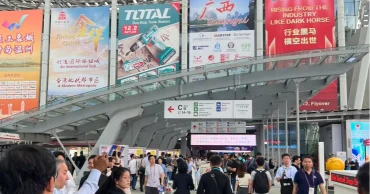
Canton Fair 2024: Global Trade Epicenter Uniting Innovation and Commerce under One Roof
Each year, Guangzhou becomes the focal point of international trade through the China Import and Export Fair, famously known as the Canton Fair. The 135th session of Canton Fair officially opened its doors on April 15, 2024. This mega event serves as a vital platform for both established and emerging markets, promoting a diverse range of products from basic raw materials to advanced electronics and machinery.
Strategic Importance and Government Support
Zhou Shanqing, Director General of the Canton Fair Press Center and Deputy Director General of China Foreign Trade Center, detailed the extensive preparations that underscore the significance the Chinese government places on this event. Praised by Chinese President Xi Jinping through congratulatory letters and emphasized in the 2024 Government Work Report, the Canton Fair is crucial for stabilizing and expanding foreign trade. It serves as a strategic node for showcasing China's commitment to open economic policies and supporting global cooperation.
2 years ago