Asia
Thailand counts votes as 3 parties contest early election
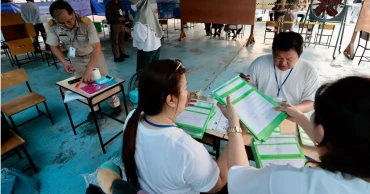
Vote counting was underway in Thailand's early general election on Sunday, seen as a three-way race among competing visions of progressive, populist and old-fashioned patronage politics.
The battle for support from 53 million registered voters came against a backdrop of slow economic growth and heightened nationalist sentiment. While more than 50 parties contested the polls, only three — the People’s Party, Bhumjaithai, and Pheu Thai — have the nationwide organization and popularity to gain a winning mandate.
A simple majority of the 500 elected lawmakers selects the next prime minister.
No outright winner expected
Local polls consistently project that no single party will gain a majority, necessitating the formation of a coalition government.
Although the progressive People’s Party is seen as favored to win a plurality, its reformist politics aren't shared by its leading rivals, which may freeze it out by joining forces to form a government.
The People’s Party, led by Natthaphong Ruengpanyawut, is the successor to the Move Forward Party, which won the most seats in the House of Representatives in 2023, but was blocked from forming a government by conservative lawmakers and then forced to dissolve.
"I think we will get the mandate from the people, and we promised the people that we will form the people’s government to bring policies that benefit all, not a few in the country,” Natthaphong told reporters after casting his ballot in Bangkok.
Reformist party softens its pitch
His party's platform continues to promise sweeping reforms of the military, police and judiciary, appealing to youth and urban voters. Legal constraints have led it to set aside demands for reform of a law that metes out harsh penalties for criticism of the monarchy, while putting new emphasis on economic issues.
Softening its politics risks weakening its core support, already at risk because the last election had positioned it squarely as the alternative to nine previous years of military-led government, a situation it can't fruitfully exploit this time.
At the same time, its positions critical of the military can be a political liability with the surge of patriotism that emerged during last year’s border clashes with Cambodia, said Napon Jatusripitak, director of the Center for Politics and Geopolitics at Thailand Future, a Bangkok-based think tank.
The Bhumjaithai Party, headed by incumbent Prime Minister Anutin Charnvirakul, is seen as the main defender and preferred choice of the royalist-military establishment.
Anutin has been prime minister only since last September, after serving in the Cabinet of his immediate predecessor, Paetongtarn Shinawatra, who was forced out of office for an ethics violation regarding mishandling relations with Cambodia. He dissolved parliament in December to call a new election after he was threatened with a no-confidence vote.
Subsequent border clashes with Cambodia allowed Anutin to recast himself as a wartime leader after his popularity initially slipped because of floods and financial scandals. His campaign focuses on national security and economic stimulus.
“We have done everything that we had to, but we cannot force the mind of the people. We can only present ourselves, and hope that the people will have faith in us,” Anutin said after casting ballots in northeastern Buriram province, his party's stronghold.
Bhumjaithai, seen as the likeliest party to form the next government, benefits from an electoral strategy employing old-style patronage politics and a machine skilled at grassroots organizing in the vote-rich northeast.
Thaksin's political machine
The Pheu Thai Party is the latest political vehicle for billionaire former Prime Minister Thaksin Shinawatra. Thaksin-backed parties staged repeated electoral comebacks, only to be ousted by conservative-leaning courts and state watchdog agencies.
It softened its politics enough by the 2023 election to be returned to power after being judged by the previously hostile royalist-military establishment as an acceptable alternative to the more progressive Move Forward party.
The conservative court system rounded on it anyway — ousting two of its prime ministers over two years and ordering Thaksin imprisoned on old charges. The party now campaigns on economic revival and populist pledges like cash handouts, nominating Thaksin’s nephew, Yodchanan Wongsawat, as its lead candidate for prime minister.
"I’m excited, because I think today will be another busy day for the country’s democracy,” Yodchanan told reporters after voting.
Sunday’s voting includes a referendum asking voters whether Thailand should replace its 2017 military-drafted constitution.
The vote isn't on a proposed draft, but rather to decide whether to authorize parliament to begin a formal drafting process, which would require many further steps before coming to fruition.
Pro-democracy groups view a new charter as a critical step toward reducing the influence of unelected institutions such as the military and judiciary, while conservatives warn that it could cause instability.
26 days ago
Death toll rises to 8 in north China factory explosion
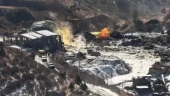
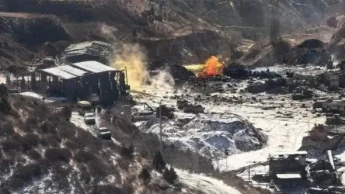
The death toll from a powerful explosion at a biotech factory in north China’s Shanxi Province has risen to eight, local authorities said on Sunday.
Officials confirmed that eight people had died as of 9:30am following the blast, which occurred on Saturday at a workshop of Jiapeng Biotech Company in Shanyin County under Shuozhou City.
Xi Jinping seeks stable China-US ties, signals cooperation with Trump
Authorities have placed the company’s legal representative under control as part of the ongoing investigation. A probe committee has also been formed to determine the cause of the explosion and assess responsibility.
Further details will be released as the investigation progresses.
26 days ago
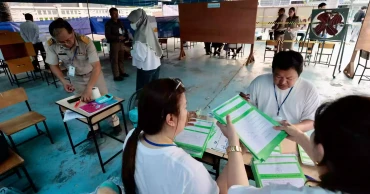
Three PMs in three years, sluggish growth and a war: Thailand votes in key election
Thai voters went to the polls on Sunday in an early general election widely seen as a three-way contest among the progressive People’s Party, the ruling Bhumjaithai Party and the populist Pheu Thai Party.
More than 53 million voters are eligible to cast ballots in the election, held amid slow economic growth and rising nationalist sentiment. Although over 50 political parties are contesting the polls, analysts say only three have a real chance of forming the next government.
A simple majority in the 500-seat House of Representatives is needed to select the next prime minister. Opinion surveys suggest no party is likely to win an outright majority, making a coalition government almost certain.
The People’s Party, led by Natthaphong Ruengpanyawut, is expected to win the most seats but may struggle to form a government due to opposition from conservative parties. It is the successor to the dissolved Move Forward Party and continues to promote reforms of the military, police and judiciary, while placing more focus on economic issues.
The Bhumjaithai Party, headed by Prime Minister Anutin Charnvirakul, is seen as the favorite to lead the next government. Anutin called the snap election in December after facing a no-confidence threat. His campaign centers on national security and economic recovery.
The Pheu Thai Party, linked to former prime minister Thaksin Shinawatra, is campaigning on populist promises and economic revival, nominating Thaksin’s nephew Yodchanan Wongsawat as its prime ministerial candidate.
Voters are also taking part in a referendum on whether to begin drafting a new constitution, a move supported by pro-democracy groups but opposed by conservatives.
27 days ago
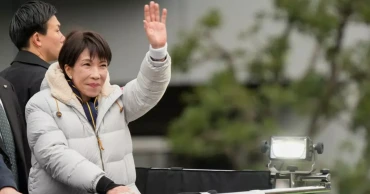
Japan PM Takaichi seeks strong mandate as polls open in national election
Polls opened across Japan on Sunday as Prime Minister Sanae Takaichi seeks a decisive victory in parliamentary elections to strengthen her grip on power and push through a conservative reform agenda.
Takaichi, Japan’s first female prime minister who took office in October, remains highly popular with voters. However, her ruling Liberal Democratic Party (LDP) has struggled with public support, prompting her to call a snap election in hopes of securing a stronger mandate.
She aims to revive Japan’s economy, expand military capabilities and take a firmer stance amid rising tensions with China, while maintaining close ties with the United States and President Donald Trump.
Campaigning under the slogan “work, work, work,” the ultraconservative leader has attracted younger supporters with a leadership style seen as both energetic and tough.
Opinion polls suggest the LDP, together with its new ally, the Japan Innovation Party, is on track to win a comfortable majority in the powerful 465-seat lower house. Some surveys indicate the coalition could secure up to 300 seats, a sharp rise from its slim majority following losses in the 2024 election.
Takaichi has said she would step down if her party fails to win a majority.
A strong win could signal a major shift to the right in Japan’s policies on security, immigration and defense. Takaichi has pledged to revise defense rules by December, including lifting restrictions on weapons exports and boosting Japan’s military capabilities, moving further away from its postwar pacifist stance.
She has also pushed for tougher immigration controls, stricter rules for foreign residents and property owners, and stronger anti-espionage laws — proposals that critics warn could undermine civil liberties.
Meanwhile, record snowfall in northern Japan in recent weeks has blocked roads and caused dozens of deaths, raising concerns that voting and vote counting may be disrupted in some affected areas.
27 days ago
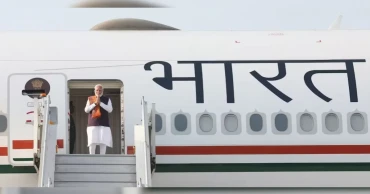
Modi begins Malaysia visit, spotlight on growing strategic ties
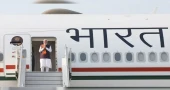
Indian Prime Minister Narendra Modi on Saturday began a two-day official visit to Malaysia, a trip seen as significant for further strengthening bilateral relations that were elevated to a Comprehensive Strategic Partnership in August 2024.
This is Modi’s third visit to Malaysia and his first since the two countries upgraded ties during Malaysian Prime Minister Anwar Ibrahim’s state visit to India last year. The Indian prime minister is scheduled to hold bilateral talks with Anwar, focusing on political, economic and defence cooperation.
India and Malaysia formally established diplomatic relations in 1957, with ties steadily expanding over the decades. Relations were upgraded to an Enhanced Strategic Partnership during Modi’s 2015 visit, before being elevated further last year.
Political engagement between the two sides has remained consistent in recent years, with frequent leader-level interactions on multilateral platforms. Modi and Anwar met on the sidelines of the BRICS Summit in Brazil in July 2025, while Modi also attended the ASEAN-India Summit virtually from Kuala Lumpur in October 2025. The two leaders have also held regular telephone and virtual discussions.
High-level ministerial exchanges have continued, including visits by India’s External Affairs Minister S Jaishankar and Defence Minister Rajnath Singh. Defence cooperation has expanded, with India increasing its institutional presence in Malaysia, including the opening of a Hindustan Aeronautics Limited regional office in Kuala Lumpur in 2023.
Economic ties have also deepened, with bilateral trade reaching nearly $19.85 billion in the 2024-25 financial year. Malaysia is India’s third-largest trading partner within ASEAN, while India ranks among Malaysia’s top 10 global trading partners.
People-to-people links remain a key pillar of the relationship. Malaysia hosts around 2.9 million people of Indian origin, one of the largest Indian diaspora communities worldwide. Cultural and educational cooperation has grown through initiatives such as academic chairs supported by India at Malaysian universities.
During the visit, Modi is expected to interact with members of the Indian diaspora and business leaders. Discussions may also explore avenues for enhanced defence collaboration, including aircraft sales and maintenance support, according to India’s Ministry of External Affairs.
With inputs from NDTV
27 days ago
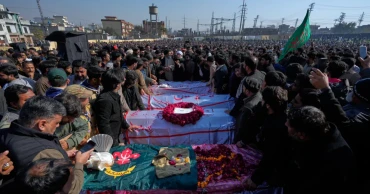
IS claims Islamabad Shiite mosque suicide attack killing 31
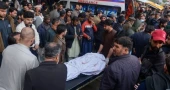
An affiliate of the Islamic State group has claimed responsibility for a deadly suicide bombing at a Shiite mosque on the outskirts of Pakistan’s capital that killed at least 31 people and injured 169 others.
The claim was made overnight by Islamic State in Pakistan through a statement on its Amaq News Agency. Authorities said the bomber has been identified, his facilitators traced and the alleged mastermind arrested.
According to the claim, the attacker opened fire on security guards at the mosque’s main gate before detonating his explosive vest inside the mosque compound. The group again described Pakistan’s Shiite community as a target, using sectarian language to justify the attack.
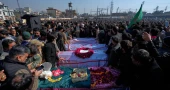
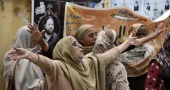
Saturday, heavy security was deployed as funerals were held at the same mosque for several victims. More than 2,000 mourners attended, including Shiite leaders and senior government officials. Other victims were buried in their home towns.
The attack was the deadliest in Islamabad since the 2008 suicide bombing at the Marriott Hotel. It comes amid a sharp rise in militant violence across Pakistan.
Authorities said the attacker was a Pakistani national who had recently traveled to Afghanistan. Several suspects, including close relatives of the bomber, were arrested during overnight raids in Islamabad and northwestern Pakistan. A police officer was killed during one of the operations.
State-run Pakistan Television reported the arrest of an alleged Afghan national linked to Islamic State, who is suspected of planning the attack. It said the bombing was coordinated from Afghanistan. Kabul has not commented on the claim.
Islamic State, a Sunni militant group, has repeatedly targeted Pakistan’s Shiite minority in past attacks aimed at fueling sectarian tensions. In 2022, the group claimed responsibility for a suicide bombing at a Shiite mosque in Peshawar that killed dozens.
Pakistan’s Defense Minister Khawaja Mohammad Asif said the attack showed that militants based in Afghanistan could strike even in the capital. His comments were strongly rejected by Afghanistan’s Taliban government, which condemned the attack but accused Pakistan of making irresponsible claims. Kabul has consistently denied sheltering militants.
The bombing drew condemnation from the United States, Russia and the European Union.
Prime Minister Shehbaz Sharif thanked the international community for messages of support and said those responsible would be brought to justice. He stressed that global cooperation remains vital for Pakistan’s counterterrorism efforts.
Although Islamabad has seen fewer attacks than other parts of the country, Pakistan has recently faced growing militant violence, much of it linked to separatist groups and the Pakistani Taliban, which is allied with Afghanistan’s Taliban.
27 days ago
New cabinet announced by Yemen’s ruling council
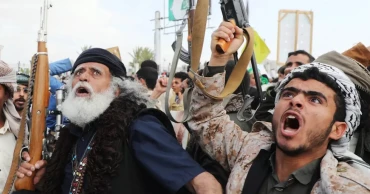
The chairman of Yemen’s ruling leadership council has announced the formation of a new cabinet, weeks after deadly violence erupted in the country’s south and a separatist group was dissolved.
The recent escalation has laid bare growing rifts within the Saudi-led coalition battling Iran-backed Houthi rebels in Yemen. Rashad al-Alimi, chairman of the Presidential Leadership Council, announced the formation of a new cabinet in a presidential decree released late Friday by the state-run SABA news agency.
The new government consists of 35 ministers and is headed by Prime Minister Shae’a al-Zandani, who will also continue to serve as foreign minister. Only two women were included in the cabinet: Afrah al-Zouba, appointed minister of planning and international cooperation, and Ahd Jaasous, named state minister for women’s affairs.
Maj. Gen. Taher al-Aqili was appointed defense minister, while Maj. Gen. Ibrahim Haidan was named interior minister. Both are tasked with overseeing Saudi backed operations aimed at dismantling militias linked to the separatist Southern Transitional Council, which is supported by the United Arab Emirates.
Read More: Saudi Arabia backs Yemen request for talks to end southern fighting
Yemen has been embroiled in a civil war for more than a decade, driven by deep-rooted sectarian and tribal divisions and fueled by regional rivalries. The Houthis, aligned with Iran, control much of the country’s north, including the capital, Sanaa. In contrast, Saudi Arabia and its allies back the internationally recognized government in the south.
Although the Southern Transitional Council opposes the Houthis, it seeks an independent southern state. Recent clashes in southern provinces exposed tensions within the coalition, particularly between Saudi Arabia and the UAE, underscoring the fragile nature of their alliance as the conflict remains largely at a stalemate.
27 days ago
IS claims responsibility for deadly Islamabad mosque attack
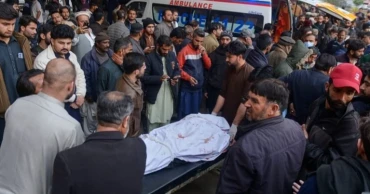
An affiliate of the Islamic State group said overnight it was behind a deadly suicide bombing at a Shiite mosque on the outskirts of Pakistan’s capital, which killed 31 people and injured 169 others. On Saturday, mourners gathered at the same mosque under heavy security to attend funeral prayers for the victims.
The regional affiliate of the Islamic State, identifying itself as Islamic State in Pakistan, claimed responsibility for the attack in a statement released through its Amaq News Agency. According to the group, the bomber opened fire on security personnel who attempted to stop him at the main entrance before detonating his explosive vest near the mosque’s inner gate.
The group described Pakistan’s Shiite population as a legitimate target, using inflammatory language to justify attacks by alleging they support Shiite militias fighting Islamic State in Syria.
Friday’s bombing marked the deadliest attack in Islamabad since the 2008 suicide blast at the Marriott Hotel that killed 63 people. In November, another suicide attack outside a court in the capital left 12 people dead.
Read More: 145 'Indian-backed terrorists' killed in Balochistan, says Pakistan
The assault comes amid a surge in militant violence across Pakistan that has posed a major challenge for Prime Minister Shehbaz Sharif’s government. Authorities said the attacker was a Pakistani national who had recently traveled to Afghanistan. Several relatives, including his brother and mother, were arrested during overnight raids in Islamabad and northwestern Pakistan, during which a police officer was killed.
More than 2,000 mourners attended funeral prayers at the mosque, joined by senior officials and Shiite community leaders. Other victims were buried in their hometowns.
The attack drew condemnation from Afghanistan’s Taliban government and the international community, including the United States, Russia and the European Union. Prime Minister Sharif thanked countries worldwide for their support and vowed those responsible would be brought to justice.
27 days ago
India, US announce framework for interim trade deal
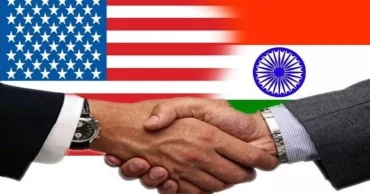
India and the United States on Friday released a framework for an interim trade agreement aimed at lowering tariffs on Indian goods, a move that has drawn criticism from opposition parties in India who say the deal favors Washington.
The joint statement came a week after US President Donald Trump announced plans to cut import duties on Indian products, following months of trade tensions between the two countries. Last year, the US imposed high tariffs on India to pressure New Delhi to reduce its dependence on discounted Russian crude oil.
Under the proposed agreement, tariffs on Indian goods entering the US market would be reduced to 18 percent from the current 25 percent. Trump said the decision followed Indian Prime Minister Narendra Modi’s commitment to stop purchasing Russian oil.
Both countries described the framework as “reciprocal and mutually beneficial” and said they would continue working toward a broader trade agreement. The future deal is expected to include wider market access and measures to strengthen supply chains.
As part of the interim arrangement, India agreed to eliminate or reduce tariffs on all US industrial goods and a wide range of American agricultural and food products, according to the statement.
Trump earlier said India would gradually bring down import taxes on US goods to zero and purchase up to $500 billion worth of American products. On Friday, he also signed an executive order revoking a separate 25 percent tariff imposed on Indian goods last year.
However, Indian opposition parties criticized the deal, warning it could hurt sensitive sectors such as agriculture and dairy, which provide livelihoods for millions of people.
Responding to the concerns, Indian Trade Minister Piyush Goyal said the agreement protects key agricultural and dairy products, including maize, wheat, rice, ethanol, tobacco and certain vegetables.
“This agreement will open a $30 trillion market for Indian exporters,” Goyal said in a social media post, referring to the size of the US economy. He added that the deal could create hundreds of thousands of new jobs.
Goyal also said tariffs would be reduced to zero on several Indian exports to the US, including generic medicines, gems and diamonds, and aircraft parts.
India has recently expanded its trade ties globally, including a free trade agreement with the European Union and new trade deals with Oman and New Zealand.
1 month ago
31 killed, 169 injured in Islamabad mosque blast
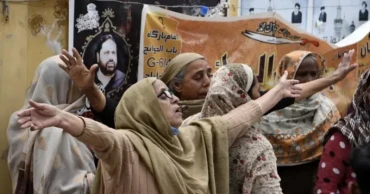
At least 31 people were killed and 169 others injured in an explosion at a Shia mosque in the Tarlai Kalan area of Islamabad during Friday prayers, officials said.
Islamabad’s deputy commissioner Irfan Memon confirmed the casualty figures, adding that emergency measures have been imposed at major hospitals in the twin cities of Islamabad and Rawalpindi. Security forces cordoned off the site as investigators gathered evidence from the scene.
Police indicated that the blast was carried out by a suicide bomber who detonated explosives after being stopped at the mosque entrance. Witnesses reported hearing gunfire as two attackers approached the mosque, with a brief exchange between mosque guards and the assailants before the explosion. One attacker was reportedly hit by gunfire before detonating his vest.
Eyewitnesses described chaos at the scene, with injured worshippers lying across the mosque compound and locals rushing victims to hospitals. Mosque caretaker Syed Ashfaq said, “Bodies were lying everywhere, some missing arms or legs. We transported the most critically injured in our own vehicles.”
The Pakistani president, Asif Ali Zardari, condemned the attack, calling it “a crime against humanity” and expressing solidarity with the victims’ families.
In response to the attack, 25 ambulances were dispatched to Islamabad, and all hospitals across Rawalpindi District were placed on high alert, with specialist surgical teams on standby, according to Punjab Chief Minister Maryam Nawaz Sharif.
The blast occurred amid ongoing discussions of a potential military operation in Pakistan’s Tirah Valley along the Afghan border, though the government has not officially confirmed the operation. Relations with the Afghan Taliban have been tense, and Pakistan recently reported returning over one million Afghan nationals across the border in the past year.
Last year saw a sharp rise in militant-related deaths across Pakistan, with militants accounting for more than half of the fatalities, according to an independent think tank report.
The attack in Islamabad follows a series of high-profile militant incidents, including a suicide attack in November last year at district courts that killed 12 people, and coordinated assaults in Balochistan in which security forces said they killed more than 200 militants.
Authorities are continuing the investigation into the cause and perpetrators of Friday’s blast.
With inputs from BBC
1 month ago