asia
Nine killed as Shiite protesters storm US Consulate in Karachi
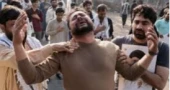
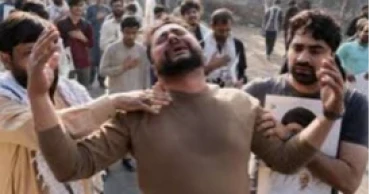
At least nine people were killed and around two dozen injured Sunday during violent clashes with police and paramilitary forces after hundreds of Shiite protesters stormed the U.S. Consulate in Karachi, officials said.
The unrest followed reports that the United States and Israel had carried out attacks in Iran, killing the country’s supreme leader, Ali Khamenei. Police and hospital sources said at least 25 people were wounded, with several in critical condition.
Summaiya Syed Tariq, a police surgeon at Karachi’s main government hospital, confirmed that six bodies and multiple injured were initially brought to the hospital, but the death toll later rose to nine after three critically wounded individuals died. Karachi is the capital of Sindh province and Pakistan’s largest city.
Senior police official Irfan Baloch said the protesters briefly attacked the consulate’s perimeter but were eventually dispersed. “The situation is now fully under our control,” he said, dismissing reports that the consulate building had been set on fire. He added, however, that demonstrators torched a nearby police post and damaged consulate windows before security forces restored order.
Witnesses said dozens of protesters remained gathered about a kilometre from the consulate, urging others to join them. One demonstrator reportedly tried to set fire to a consulate window before police intervened.
The Sindh provincial government urged citizens to express their views peacefully and warned against involvement in violence.
Elsewhere, Shiite groups held a peaceful rally in Multan, chanting anti-U.S. and anti-Israel slogans. Participant Mamoona Sherazi said she was protesting the killing of Khamenei, whom she described as a fatherly figure and a strong advocate for Shiites and oppressed Sunni Muslims. “God willing, we will never bow before America and Israel,” she said.
Another rally took place near the U.S. Consulate in Lahore, Punjab province. Senior police official Faisal Kamran said demonstrators were prevented from reaching the consulate and were dispersed when they attempted to march toward it.
Additional rallies were planned in Islamabad and other cities. Authorities said security has been strengthened at the U.S. Embassy and consulates nationwide to prevent further violence.
Shiites comprise roughly 15% of Pakistan’s population of about 250 million, forming one of the world’s largest Shiite communities. While anti-U.S. and anti-Israel protests have occurred in the past, clashes of this scale are rare.
5 days ago
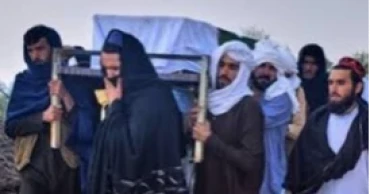
Pakistan srikes Afghan targets, claims 300+ killed in border clashes
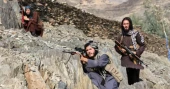
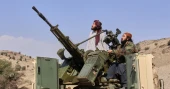
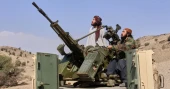
Pakistan’s military, supported by artillery and air power, launched strikes deep inside Afghanistan overnight and into early Saturday, killing more than 300 Afghan forces in days of fierce border clashes, officials said.
The fighting began Thursday night after Afghanistan struck Pakistani positions in retaliation for attacks Islamabad said hit seven training camps and hideouts of the banned Tehrik-e-Taliban Pakistan (TTP), a separate group allied with Afghanistan’s Taliban.
Pakistan’s Information Minister, Attaullah Tarar, said over 331 Afghan Taliban fighters were killed and more than 500 wounded. He added that Pakistan destroyed 102 Afghan posts, captured 22, and destroyed 163 tanks and armoured vehicles at 37 sites. State media reported that Pakistan Air Force targeted key military installations across eastern Afghanistan on Saturday.
Authorities said hundreds of residents near the northwestern Torkham border have fled to safer areas, while dozens of Afghan refugees waiting at the border were transported to secure locations inside Pakistan.
Afghanistan’s Defense Ministry confirmed its forces struck Pakistani military bases in Miranshah and Spin Wam overnight, destroying installations and causing heavy casualties in response to Pakistan’s airstrikes. The Afghan Department of Information and Culture accused Pakistan of hitting civilian areas, destroying homes, and killing at least 11 people.
Mullah Taj Mohammad Naqshbandi, an Afghan border official said, “brave forces of the Islamic Emirate destroyed the Pakistani military regime’s commissariat, military units, and three key security towers.”
The Afghan government claimed 55 Pakistani soldiers were killed in its counterattacks, with Afghan losses far lower than Pakistan’s claims. Spokesman Zabihullah Mujahid said the attacks were “a message that our hands can reach their throats” and criticised Pakistan for avoiding dialogue.
Pakistan’s Defense Minister Khawaja Mohammad Asif declared on X that “our patience has run out” and warned of open war. Army spokesman Lt. Gen. Ahmed Sharif Chaudhry said Afghanistan had to “choose TTP or Pakistan.”
Civilians are struggling amid the conflict, with Afghan refugees at Torkham unable to return home and locals near the border urging a ceasefire. Tensions, which escalated last October, had briefly eased under a Qatari-mediated truce, but peace talks in Turkey failed to produce a lasting deal.
Regional powers including Turkey, Saudi Arabia, Qatar, and China are again seeking to mediate. Qatar’s state minister, Mohammed bin Abdulaziz Al-Khulaifi, spoke with the foreign ministers of both countries on Friday to try to reduce tensions.
6 days ago
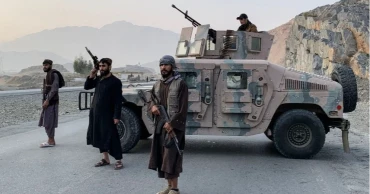
Why are Afghanistan and Pakistan fighting?
Pakistan has carried out airstrikes on Afghanistan’s capital, Kabul, and other cities, marking a sharp escalation of hostilities along the two countries’ shared border.
Pakistan’s Defence Minister Khawaja Asif declared on Friday that Islamabad’s patience with the Taliban authorities had ended, describing the situation as “open war.”
The strikes followed Afghan Taliban claims of “large-scale offensive operations” against Pakistani forces along the Durand Line, which separates the two countries, reports Al Jazeera.
Pakistani officials said Afghan forces attacked border military posts, prompting Pakistan to hit Taliban targets in Kabul, Paktia, and Kandahar provinces. The attacks reportedly destroyed brigade bases, ammunition depots, and multiple checkpoints. Gunfire and shelling were also reported near the Torkham border crossing.
Casualty reports differ sharply. Pakistan’s Prime Minister spokesperson Mosharraf Zaidi claimed 133 Taliban fighters were killed, over 200 wounded, and 27 Taliban posts destroyed. Pakistani media said two Pakistani soldiers died. The Taliban, however, reported only eight fighters killed and 11 wounded, while Afghanistan claimed its forces killed 55 Pakistani soldiers and captured military posts. Independent verification of these figures was not available.
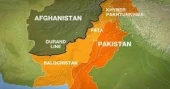
The violence reflects ongoing tensions since the Taliban returned to power in 2021. Afghanistan does not formally recognize the Durand Line, arguing it was a colonial imposition that split Pashtun areas. Pakistan accuses the Taliban of sheltering armed groups like the Pakistan Taliban (TTP), responsible for attacks in Khyber Pakhtunkhwa and Balochistan provinces.
Analysts say the Afghan Taliban has avoided cracking down on the TTP due to ideological ties and fear of defections to the Islamic State Khorasan Province, raising the risk of further escalation.
Global reactions have been critical. India condemned Pakistan’s strikes, highlighting civilian casualties during Ramadan. UN Secretary-General Antonio Guterres urged both sides to respect international law.
Iran called for resolving differences through dialogue and neighborly principles, while Russia also urged an immediate halt to cross-border attacks and offered mediation.
Experts warn that Afghanistan, lacking a strong air force and conventional military, remains vulnerable. The conflict is likely to continue along the border, with Pakistan retaining the upper hand due to superior military capabilities.
Both nations are expected to continue artillery exchanges and targeted strikes, raising fears of prolonged instability in the region.
6 days ago
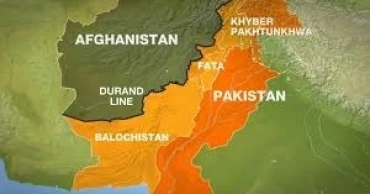
Pakistan declares State of emergency in Bannu district of Khyber Pakhtunkhwa province
Pakistan has declared a state of emergency in Bannu district of Khyber Pakhtunkhwa province, restricting the use of certain vehicles following reports of potential sabotage.
District Education Officer Abdul Malik also ordered a one-day closure of all government schools to ensure public safet, reports Al Jazeera.
Bannu police have been placed on high alert, with security measures intensified across the district. District Police Officer Yasir Afridi said six attacks were successfully foiled, including attempts at the Kashoo Bridge check post and Kotka Muhammad Khan Domel area. Authorities urged residents to avoid spreading rumours and to cooperate with security forces.
The announcement comes amid rising tensions along the Pakistan-Afghanistan border. Pakistan has rejected Afghan Taliban calls for talks. Mosharraf Zaidi, spokesperson for the Pakistani Prime Minister, told Pakistan TV, “There won’t be any talks. There is no dialogue or negotiation. Terrorism from Afghanistan must end.” He added that Pakistan will act against terrorists and their enablers and stressed that international support is needed to prevent Afghan soil from being used for cross-border attacks.
Meanwhile, Afghanistan says it is pursuing “active diplomacy” alongside “legitimate and responsible” military action. Zakir Jalali, political director of Afghanistan’s Foreign Ministry, said Afghan officials consulted with foreign ministers of Turkey, Qatar, and Saudi Arabia to clarify their position.
Pakistan’s Information Minister Attaullah Tarar claimed that Pakistani forces have killed 331 Afghan Taliban fighters, injured over 500, destroyed 104 checkpoints, and captured 22, though these figures could not be independently verified.
Border tensions remain high as both sides continue military and diplomatic maneuvers.
6 days ago
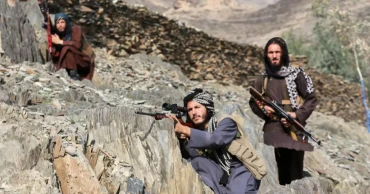
Taliban launch drone attacks on Pakistani military camps: Afghan media
Afghan media outlet TOLOnews has reported that Taliban forces carried out drone strikes on Pakistani military installations in Miranshah and Spinwam, both located in Khyber Pakhtunkhwa.
Citing unnamed security sources, TOLOnews said the attack triggered a fire at the Spinwam military base, reports Al Jazeera .
According to the report, the strikes were launched in response to air attacks carried out by the Pakistan Air Force on Thursday night.
6 days ago
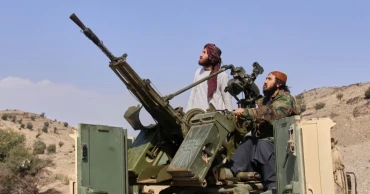
Jordan backs diplomacy to end Pakistan-Afghanistan border clashes
Jordan has voiced support for diplomatic initiatives to halt the ongoing violence, saying it is closely monitoring the recent border clashes between Pakistan and Afghanistan that have left several people dead and wounded.
In a statement, the Jordan’s Ministry of Foreign Affairs said it backs all diplomatic efforts aimed at settling conflicts and disputes through peaceful means, according to ministry spokesperson Fuad al-Majali, reports Al Jazeera .
Jordan also underlined the importance of restraint, dialogue, respect for state sovereignty, and adherence to the principles of good neighbourliness, the spokesperson added.
6 days ago
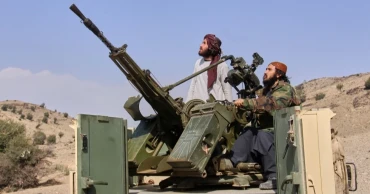
Pakistan defence minister says country in 'open war' with Afghanistan
Pakistan’s Defence Minister Khawaja Muhammad Asif on Friday said the country is in “open war” with Afghanistan after Islamabad carried out airstrikes on Afghan territory following attacks on Pakistani military posts near the border.
“Our patience has now run out,” Asif said, referring to Thursday night’s offensive by the Afghan Taliban on Pakistani positions.
The latest escalation comes amid months of cross-border clashes despite a fragile ceasefire agreed in October. Previous negotiations failed to reach a comprehensive deal, with both sides blaming each other for lack of sincerity, reports BBC.
The Taliban said it had launched a “retaliatory operation” on Thursday evening, claiming to capture 19 Pakistani military posts and two bases, and asserting that 55 Pakistani soldiers were killed. Pakistan denied the claims, saying the Taliban had “miscalculated” by opening unprovoked fire in Khyber Pakhtunkhwa, prompting an “immediate and effective response” by its forces.
Early Friday, Pakistan launched airstrikes on Kabul, Kandahar, and Paktika, targeting Taliban positions. Military spokesman Ahmed Sharif Chaudhry said 22 Afghan targets were hit, claiming over 200 Taliban fighters were killed, with 12 Pakistani soldiers dead. The Taliban, however, said 13 fighters were killed, 22 injured, and 13 civilians wounded. Independent verification of the casualties is not available.
The Taliban also claimed to have carried out airstrikes using drones against Pakistani military positions in Kandahar and Helmand, while Pakistan said it thwarted drone attacks on Swabi, Nowshera, and Abbottabad.
Pakistan’s Prime Minister Shehbaz Sharif vowed that the country had “full capability to crush any aggressive ambitions” and insisted there would be “no compromise” in defending its homeland.
Diplomatic efforts are underway to ease tensions. Pakistan’s Foreign Minister Ishaq Dar held talks with his Turkish and Saudi counterparts to discuss peace and stability. Iran offered to facilitate dialogue between the two countries, while UK Foreign Secretary Yvette Cooper urged immediate steps toward de-escalation and protection of civilians.
Pakistan has accused the Afghan Taliban government of supporting “anti-Pakistan terrorists” responsible for recent attacks, including a suicide bombing in Islamabad.
7 days ago

Delhi court discharges Kejriwal, Sisodia and all 23 accused in excise policy case
A Delhi court on Friday discharged all 23 accused in the Central Bureau of Investigation’s (CBI) excise policy case, also known as the alleged Delhi liquor scam, including former chief minister Arvind Kejriwal and former deputy chief minister Manish Sisodia, both senior leaders of the Aam Aadmi Party.
The order was passed by Special Judge Jitendra Singh, who said the court found no material on record to support the prosecution’s case against any of the accused. The court also refused to take cognisance of the CBI chargesheet filed in connection with the excise policy-linked corruption allegations.
Soon after the verdict, the Central Bureau of Investigation said it would immediately challenge the trial court’s decision in the high court, claiming that several aspects of its investigation were either ignored or not adequately considered.
Reacting to the ruling, Kejriwal told reporters that the court had declared both him and Sisodia honest. Visibly emotional, he described the excise case as the biggest political conspiracy in the history of independent India and said the verdict vindicated the Aam Aadmi Party’s claim of integrity. He later said the order proved that he and his party were “Kattar Imaandar” (absolutely honest).
Kejriwal and Sisodia were among those arrested by the CBI during its probe into alleged corruption in the formulation and implementation of the now-scrapped excise policy of the erstwhile AAP government in Delhi. Both were taken into custody while serving as chief minister and deputy chief minister respectively.
Earlier, in January, a Delhi court had acquitted Kejriwal in two cases filed by the Enforcement Directorate over allegations of evading summonses related to the same excise policy investigation.
The CBI had filed its first chargesheet in the case in 2022, followed by several supplementary chargesheets. The agency alleged that ₹100 crore was paid by a so-called “south lobby” to influence the excise policy in its favour.
Apart from Kejriwal and Sisodia, the chargesheet named several others, including K Kavitha, Vijay Nair, Abhishek Boinpally, Arun Ramchandra Pillai, Sameer Mahendru, Amandeep Singh Dhall, Durgesh Pathak, Amit Arora and P Sarath Chandra Reddy, according to a report by ANI.
#From Hindustan Times
7 days ago

Pakistan launches air strikes on Kabul, tensions with Afghanistan spiral
Pakistan has carried out air strikes on Afghanistan’s capital Kabul and two other provinces, sharply escalating months of border tensions, as Prime Minister Shehbaz Sharif said his country’s forces are fully prepared to crush any aggressive ambitions by the Afghan Taliban.
According to Pakistani officials, the strikes on Friday targeted locations in Kabul as well as Kandahar and Paktika provinces. The attacks followed an announcement by the Afghan Taliban late Thursday of a major offensive against Pakistani military posts near the border.
Pakistan’s Defence Minister described the situation as an “open war” with the Afghan Taliban, while several cabinet members publicly praised the armed forces. Islamabad accuses the Taliban-led government in Kabul of backing militants linked to repeated attacks inside Pakistan, a claim consistently denied by Afghan authorities.
A spokesperson for the Afghan Taliban said on social media that their forces had responded with renewed attacks against Pakistani troops, though the post was later deleted. Taliban officials also claimed retaliatory strikes on Pakistani border posts, with both sides making conflicting assertions about casualties that could not be independently verified.
Afghan state television reported that three civilians, including a woman and two schoolchildren, were killed in Paktika province during Pakistani air strikes, with several others injured. Pakistan has said its operations were precision strikes carried out in response to what it called unprovoked aggression.
The escalation has drawn international concern. The United Nations, China, Iran, Turkey and Saudi Arabia have all urged restraint. China called on both sides to resolve differences through dialogue and said it was ready to play a constructive role in de-escalation, while Iran offered to mediate between the neighbours.
Former Afghan president Hamid Karzai condemned the strikes, saying Afghans would defend their homeland and urging Pakistan to pursue good neighbourly relations instead of military action.
Analysts told the BBC that while the latest air strikes mark a serious escalation, they are part of a long-running pattern of tit-for-tat violence. Experts noted that, despite its experience in guerrilla warfare, the Taliban is unlikely to engage Pakistan in a full-scale conventional conflict given Pakistan’s far superior military capabilities.
Fighting has also disrupted areas near key border crossings, including Torkham, one of the main routes for people and goods between the two countries. The border has largely remained closed since clashes last year, worsening conditions for Afghan returnees and refugees.
With official briefings expected from both Islamabad and Kabul, the situation remains fluid, raising fears of further instability in an already volatile region.
With inputs from BBC
7 days ago
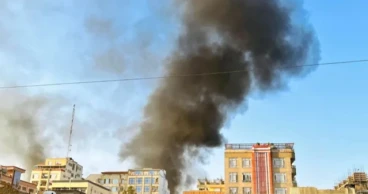
Kabul shaken by airstrikes in wake of Afghanistan–Pakistan confrontation
Pakistan carried out airstrikes in Kabul and two other Afghan provinces early Friday, Afghanistan's government spokesperson said, hours after Afghanistan launched a cross-border attack on Pakistan in the latest escalation of violence between the neighboring countries that made a Qatar-mediated ceasefire appear increasingly shaky.
At least three explosions were heard in Kabul, but there was no immediate information on the exact location of the strikes in the Afghan capital, or of any potential casualties. Government spokesperson Zabihullah Mujahid said Pakistan also carried out airstrikes in Kandahar to the south and in the southeastern province of Paktia.
Two senior Pakistani security officials told The Associated Press that Pakistan’s military carried out airstrikes targeting what they described as Afghan military facilities in Kabul, Kandahar and Paktia provinces, allegedly destroying two brigade bases, but they didn’t mention any potential casualties. The officials spoke on the condition of anonymity as they were not authorized to speak to media on the record.
Afghanistan said its military launched its attack across the border into Pakistan late Thursday in retaliation for deadly Pakistani airstrikes on Afghan border areas Sunday, and claimed to have captured more than a dozen Pakistani army posts.
Pakistan’s government, which had described last Sunday’s airstrikes as an attack on militants harbored in the area, described Thursday’s Afghan attack as unprovoked, and dismissed claims that army posts had been captured.
The officials spoke on the condition of anonymity as they were not authorized to speak to media on the record.
U.N. Secretary-General António Guterres urges both sides to protect civilians as required under international law and “to continue to seek to resolve any differences through diplomacy,” U.N. spokesperson Stephane Dujarric said.
Afghan strikes were retaliatory
“In response to the repeated rebellions and insurrections of the Pakistani military, large-scale offensive operations were launched against Pakistani military bases and military installations along the Durand Line,” Mujahid said in a post on X Thursday night. Afghanistan’s Defense Ministry said the retaliatory attacks occurred along the border in six provinces.
The two countries’ 2,611-kilometer (1,622-mile) long border is known as the Durand Line, which Afghanistan has not formally recognized.
Differing casualty figures
The two sides reported widely differing casualty figures.
Afghanistan's Defense Ministry said 55 Pakistani soldiers had been killed, including some whose bodies had been taken into Afghanistan, while “several others were captured alive.” It put its own casualties at eight killed and another 11 wounded. The ministry said it had destroyed 19 Pakistani army posts and two bases, and that the fighting had ended at midnight, about four hours after the start of the attack.
Pakistan's Information Minister Attaullah Tarar, however, said the number of Pakistani soldiers killed stood at two, with three others wounded. He said 36 Afghan fighters had been reported killed. In a post on X, he said Pakistan was giving a “strong and effective response” to what he called unprovoked firing from Afghanistan.
Mosharraf Ali Zaidi, spokesperson for Pakistan's Prime Minister Shehbaz Sharif, denied that any Pakistani soldiers had been captured. Later, in a post on X, he added that at least 133 Afghan fighters were killed and more than 200 wounded, saying that 27 Afghani posts were also destroyed and nine fighters were captured. He didn't specify where the victims died, and just added that there would be “many more casualties estimated in strikes in Kabul, Paktia and Kandahar military targets.”
Refugee camp hit
Both sides also reported exchanges of fire in the Torkham border area.
Afghan authorities were evacuating a refugee camp near the Torkham border crossing after several refugees were wounded, said Qureshi Badlon, head of Torkham's Information and Public Awareness Board. The Defense Ministry said 13 civilians were wounded in a missile strike on the camp, including women and children.
On the Pakistani side of the border, police said residents were also evacuating to safer areas, while some Afghan refugees who had been waiting to cross back into Afghanistan were also moved to secure locations. Pakistan launched a sweeping crackdown on migrants in October 2023 and has expelled hundreds of thousands of people.
Pakistani police said mortars fired from Afghanistan had landed in nearby villages, but there were no reports of civilian casualties.
“Pakistan will take all necessary measures to ensure its territorial integrity and the safety and security of its citizens,” Pakistan's Information Ministry said in a post on X.
Afghanistan's military released video footage of military vehicles moving at night, and the sound of heavy gunfire. The video could not be independently verified.
Months of tension
Tension has been high between the two neighbors for months, with deadly border clashes in October killing dozens of soldiers, civilians and suspected militants. The violence followed explosions in Kabul that Afghan officials blamed on Pakistan. Islamabad, at the time, conducted strikes deep inside Afghanistan to target militant hideouts.
A Qatari-mediated ceasefire between the two countries has largely held, but the two sides have still occasionally traded fire across the border. Several rounds of peace talks in November failed to produce a formal agreement.
On Sunday, Pakistan’s military carried out strikes along the border with Afghanistan, saying it had killed at least 70 militants.
Afghanistan rejected the claim, saying dozens of civilians had been killed, including women and children. The Defense Ministry said “various civilian areas” in eastern Afghanistan had been hit, including a religious madrassa and several homes. The ministry said the strikes were a violation of Afghanistan's airspace and sovereignty.
Militant violence has surged in Pakistan in recent years, much of which Pakistan blames on the Pakistani Taliban, or TTP, and outlawed Baloch separatist groups. The TTP is separate from but closely allied with Afghanistan’s Taliban. Islamabad accuses the TTP of operating from inside Afghanistan, a charge both the group and Kabul deny.
7 days ago