asia
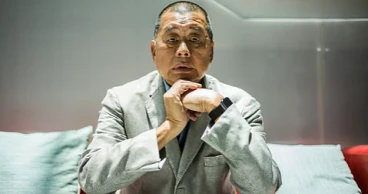
Hong Kong court convicts pro-democracy media tycoon Jimmy Lai in landmark security case
Jimmy Lai, the outspoken pro-democracy media entrepreneur and longtime critic of Beijing, was convicted Monday in a landmark national security case in Hong Kong, a ruling that could see him spend the rest of his life in prison.
A panel of three handpicked judges found the 78-year-old guilty of conspiring to collude with foreign forces to endanger national security, as well as conspiring to publish seditious materials. Lai had denied all the charges.
Lai was first arrested in August 2020 under the sweeping national security law imposed by Beijing following the massive 2019 anti-government protests. He has remained in custody for nearly five years and has already been jailed over several lesser offenses, during which time he has appeared increasingly frail.
His wife, son and Catholic Cardinal Joseph Zen were present in court as Lai briefly acknowledged his family before being led away by guards.
The closely watched, jury-free trial has drawn intense international scrutiny from the United States, Britain and the European Union, with observers viewing it as a key test of press freedom and judicial independence in the former British colony. The verdict also carries diplomatic implications, with U.S. President Donald Trump and U.K. Prime Minister Keir Starmer both saying they have raised Lai’s case with Beijing.
Lai, founder of the now-shuttered Apple Daily newspaper, faces a possible life sentence under the national security law, while the sedition conviction carries a maximum two-year term. A mitigation hearing is scheduled to begin Jan. 12.
Prosecutors accused Lai of orchestrating efforts to seek foreign sanctions against Hong Kong and China, citing meetings with senior U.S. officials in 2019 and dozens of Apple Daily articles, messages and social media posts as evidence. The court ruled Lai was the central figure behind the conspiracies.
Throughout the 156-day trial, Lai testified in his own defense and argued for freedom of expression, though concerns over his deteriorating health were repeatedly raised.
Apple Daily was forced to shut down in 2021 after police raids and asset freezes. Lai was previously sentenced to five years and nine months in a separate fraud case and has also been convicted over his role in unauthorized assemblies linked to the 2019 protests.
Source: AP
5 months ago

Gunmen kill 12 at Sydney’s Bondi Beach; police kill one, arrest another
A shooting near a Jewish gathering at Bondi Beach on Sunday left 12 people dead and 29 others injured, including two police officers in serious condition, New South Wales authorities said.
NSW Premier Chris Minns confirmed one of the attackers was killed at the scene and the second is in custody, describing the attack as targeted against the Jewish community, Australian Broadcasting Corp reported.
NSW Police Commissioner Mal Lanyon declared the incident a terrorist attack, noting that over 1,000 people had gathered to celebrate Hanukkah when the shooting occurred. Many victims were forced to take cover behind buildings, vehicles, and natural barriers.
Authorities said there is no longer an active threat but urged residents to avoid the area as emergency operations continue. Witnesses described chaotic scenes, with gunfire striking near women, children, and other beachgoers.
One gunman, identified as Narveed Akram from Sydney’s south-west, is under investigation while police conducted raids at his home. Hospitals in Sydney treated multiple victims, several in critical condition.
The attack, occurring on the first night of Chanukah, has been condemned by Jewish community leaders and federal politicians as a “terror attack” and “horrifying tragedy.” Authorities continue to investigate and secure the area.
5 months ago
China targets free childbirth nationwide by 2026
China has announced an ambitious plan to make childbirth essentially free for parents by 2026 under national insurance guidelines.
The move, revealed at a national healthcare security conference on Saturday, is part of a broader strategy to address the country's declining birth rate by reducing the financial burden of having children.
5 months ago

Philippines reports 3 fishermen injured in Chinese coast guard action near disputed shoal
The Philippine Coast Guard said Saturday that three Filipino fishermen were injured after Chinese coast guard vessels used water cannons and aggressive blocking tactics against Philippine fishing boats near a disputed shoal in the South China Sea.
According to the coast guard, at least 20 Philippine fishing boats were targeted Friday afternoon off Sabina Shoal. Two boats were damaged, while three fishermen sustained injuries during what officials described as a dangerous and unlawful assault. Chinese coast guard personnel operating smaller rubber boats also allegedly cut the anchor lines of several Philippine vessels, exposing them to strong currents and rough seas.
Two Philippine coast guard ships were dispatched to assist the fishermen but encountered hazardous maneuvers from Chinese vessels. One Chinese ship reportedly came within about 35 yards of a Philippine coast guard vessel during nighttime operations, spokesperson Commodore Jay Tarriela said during an online briefing.
“The Chinese coast guard is now targeting ordinary fishermen and endangering civilian lives,” Tarriela said, condemning the actions.
Despite the confrontations, the Philippine Coast Guard said it was able to reach the affected fishermen early Saturday, provide medical assistance to the injured and deliver essential supplies, indicating that tensions later subsided.
China has not immediately responded to the latest incident. Beijing has consistently asserted its claims over much of the South China Sea and vowed to defend what it considers its territory, despite a 2016 international arbitration ruling that rejected China’s expansive claims under the UN Convention on the Law of the Sea. China has dismissed that ruling and continues to disregard it.
The Philippine Coast Guard urged its Chinese counterpart to respect international norms and prioritize safety at sea, warning against actions that put civilian lives at risk.
While the United States has no territorial claims in the South China Sea, it has reiterated that it is obligated under a mutual defense treaty to protect the Philippines if Filipino forces or vessels come under armed attack in the disputed waters. Vietnam, Malaysia, Brunei and Taiwan are also claimants in the long-standing maritime disputes, which remain a major regional flashpoint.
5 months ago

6.9 magnitude earthquake causes small tsunami waves off northeastern Japan
A 6.9 magnitude earthquake shook northeastern Japan and caused small tsunami waves but no apparent damage Friday, days after a stronger quake in the same region.
Friday's quake occurred off the east coast of Aomori prefecture, in the north of Honshu, the main Japanese island, at a depth of 20 kilometers (12.4 miles) at 11:44 a.m., according to the Japan Meteorological Agency, which issued a tsunami advisory that was lifted about two hours later.
Small waves were reported in Hokkaido and Aomori prefectures, but no serious damage or injuries were reported.
The quake followed a 7.5 magnitude earthquake Monday that caused injuries, light damage and a small tsunami on Japan's Pacific coast.
At least 34 people were injured in that quake, power was knocked out temporarily in places, and tsunami waves more than 2 feet (0.6 meters) above tide levels were measured in Kuji port in Iwate prefecture.
Authorities had warned of possible aftershocks.
Officials said after Monday's quake there was also a slight increase in the risk of a megaquake, at magnitude 8 or stronger, and a possible tsunami occurring along Japan’s northeastern coast from Chiba, just east of Tokyo, to the northernmost main island of Hokkaido. The agency urged residents in the area to monitor their emergency preparedness, reminding them that the caution is not a prediction of such a strong earthquake.
The recent quakes occurred around the area where the magnitude 9.0 quake and tsunami in 2011 killed nearly 20,000 people and destroyed the Fukushima Daiichi nuclear power plant.
5 months ago

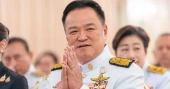
Thailand's Parliament dissolved for new elections early next year
Thailand’s Parliament was dissolved Friday for new elections early next year as the country engaged in deadly fighting with Cambodia.
Prime Minister Anutin Charnvirakul dissolved the House of Representatives after getting approval from King Maha Vajiralongkorn, whose endorsement became effective Friday with its publication in the Royal Gazette.
Anutin had signaled the move with a Facebook post late Thursday saying: “I’d like to return power to the people.”
The election must be held 45 to 60 days after the royal endorsement, a period during which Anutin will head a caretaker government with limited powers that cannot approve a new budget.
The move comes at a tricky political moment, as Thailand is engaged in large-scale combat with Cambodia over a longstanding border dispute.
Anutin has only been prime minister since September
Anutin has been prime minister for just three months, succeeding Paetongtarn Shinawatra, who served only a year in office before losing office over a scandal that erupted out of a previous round of border tensions.
Anutin won the September vote in Parliament with support from the main opposition People’s Party in exchange for a promise to dissolve Parliament within four months and organize a referendum on the drafting of a new constitution by an elected constituent assembly.
The party, which runs on progressive platforms, has long sought changes to the constitution, imposed during a military government, saying they want to make it more democratic.
The issue of constitutional change appeared to trigger the dissolution, after the People’s Party prepared to call a no-confidence vote Thursday. That threat came after lawmakers from Anutin’s Bhumjaithai Party voted in favor of a bill to amend the constitution that the opposition party felt ran against the spirit of the agreement they had reached in September.
The People's Party holds the largest number of seats in the House of Representatives and is seen as the main challenger to Bhumjaithai. As news of the pending dissolution circulated late Thursday, its leaders said they hoped Anutin would still honor the agreement to arrange a constitutional referendum.
Anutin served in Paetongtarn’s former government but resigned from his positions and withdrew his party from her coalition government as she faced controversy over a phone call with Cambodia's Senate President Hun Sen in June.
Paetongtarn, daughter of former Prime Minister Thaksin Shinawatra, was suspended from office ahead of the July fighting, after being found guilty of ethics violations over the politically compromising call.
Warring parties are waiting for calls with Trump
With Thailand now again engaged in heavy combat against Cambodia, Anutin has embraced an aggressive military posture to appeal to nationalistic public sentiment, and has said Thailand will keep fighting until its sovereignty and safety are guaranteed.
After the five days of border fighting in July, U.S. President Donald Trump pushed the two countries to agree on a ceasefire by threatening to withhold trade privileges from them.
Trump has vowed again to make peace between them after widespread fighting flared up again this week. If he employs the cudgel of high tariffs on Thai exports should Thailand fail to comply with his peacemaking effort comply, it could cause serious damage to its already sluggish economy.
Trump said twice this week that he expects to speak by phone with the Thai and Cambodian leaders, expressing confidence that he would persuade them to stop the fighting.
Anutin on Friday confirmed that he is scheduled to speak with Trump on Friday night, saying he would brief him on the latest situation along the border.
As of Thursday, about two dozen people had been reported killed in this week’s fighting, while hundreds of thousands have been displaced on both sides. The Thai military estimates that 165 Cambodian soldiers have been killed, though no number has been officially announced by Phnom Penh.
Thailand’s leader may gain from hawkish posture
“Anutin has capitalized on the renewed border tensions with Cambodia to portray himself as a leader willing to take a nationalist, hard-line stance in defending Thailand’s sovereignty and territorial integrity,” commented Napon Jatusripitak, director of the Center for Politics and Geopolitics at Thailand Future, a Bangkok-based think tank.
“This emerging narrative has, at least for now, eclipsed criticisms of his handling of the floods in Southern Thailand and muted scrutiny over lingering questions of his potential involvement with scam networks,” said Napon, who is also a visiting fellow at Singapore’s ISEAS-Yusof Ishak Institute.
Purawich Watanasukh, a political scientist as Bangkok’s Thammasat University said that the standing of Anutin’s Bhumjaithai Party has slipped in recent weeks due to the southern flood crisis, which took more than 160 lives, and his government’s mishandling of major scam scandals, which tainted some officials and figures in the Thai business community.
“However, the recent clash between Thailand and Cambodia has provided Anutin with an opportunity to reframe himself as a defender of national sovereignty, potentially boosting his popularity, ” Purawich told The Associated Press in an email interview. “Dissolving the House at this moment allows Bhumjaithai to capitalize on this shifting sentiment.
5 months ago

Japan issues tsunami advisory after 6.7 magnitude quake
Japan on Friday issued a tsunami advisory after a 6.7 magnitude earthquake shook the country’s northeast, according to the Japan Meteorological Agency.
The quake occurred off the east coast of Aomori prefecture, in the north of Honshu, the main Japanese island, at a depth of 20 kilometers (12.4 miles) at 11:44 a.m. local time, JMA said.
The Pacific coast of Hokkaido, Aomori, Iwate and Miyagi prefectures could see a tsunami of up to 1 meter (3.2 feet), the agency added.
Damage and injuries weren’t immediately clear.
An advisory is a lower level of caution than a warning.
Friday’s quake followed a 7.5 magnitude earthquake earlier this week in the north that caused injuries, light damage and a tsunami in Pacific coastal communities.
At least 34 people were injured in that quake on Monday off the coast of Aomori, the northernmost prefecture of Japan’s main Honshu island. A tsunami more than 2 feet (0.6 meters) above tide levels was measured in Kuji port in Iwate prefecture before all tsunami advisories were lifted. Power was knocked out for hundreds of homes but was mostly restored Tuesday morning.
Authorities had warned of possible aftershocks.
Officials said after Monday's quake there was also a slight increase in risk of a magnitude 8-level quake and possible tsunami occurring along Japan’s northeastern coast from Chiba, just east of Tokyo, to Hokkaido. The agency urged residents in 182 municipalities in the area to monitor their emergency preparedness in the coming week, reminding them that the caution is not a prediction of a big one.
The quakes occurred in the coastal region, where a magnitude 9.0 quake and tsunami in 2011 killed nearly 20,000 people and destroyed the Fukushima Daiichi nuclear power plant.
5 months ago
34 dead, 80 injured as airstrike hits hospital in rebel-held Myanmar region
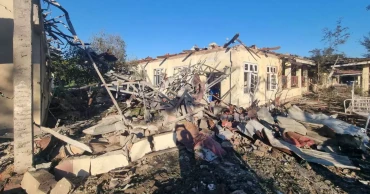
An airstrike by Myanmar ’s military destroyed a hospital in an area controlled by a leading rebel armed force, killing 34 patients and medical staff, according to a rescue worker and independent media reports Thursday.
About 80 other people were injured in the attack Wednesday night on the general hospital in Mrauk-U township, an area controlled by the ethnic Arakan Army in the western state of Rakhine.
The military, which took over Myanmar's government in 2021 and has been fighting ethnic militias and armed resistance forces since then, has not mentioned any attack in the area.
Wai Hun Aung, a senior official for rescue services in Rakhine, told The Associated Press that a jet fighter dropped two bombs at 9:13 p.m. with one hitting the hospital’s recovery ward and the other landing near the hospital’s main building.
He said he arrived at the hospital early Thursday to provide assistance and recorded the deaths of 17 women and 17 men. He said that most of the hospital building was destroyed by the bombs, and taxis and motorbikes near the hospital were also damaged.
Rakhine-based online media posted photos and videos showing damaged buildings and debris including medical equipment.
The hospital has been the main source of health care for people in Rakhine, where most hospitals have closed because of Myanmar’s civil war, said Wai Hun Aung.
It was reopened after doctors gathered in Mrauk-U to provide much-needed medical services.
Mrauk-U, located 530 kilometers (326 miles) northwest of Yangon, the country’s largest city, was captured by the Arakan Army in February 2024.
The Arakan Army is the well-trained and well-armed military wing of the Rakhine ethnic minority movement, which seeks autonomy from Myanmar’s central government. It began its offensive in Rakhine in November 2023 and has seized a strategically important regional army headquarters and 14 of Rakhine’s 17 townships.
Rakhine, formerly known as Arakan, was the site of a brutal army counterinsurgency operation in 2017 that drove about 740,000 minority Rohingya Muslims to seek safety across the border in Bangladesh. There is still ethnic tension between the Buddhist Rakhine and the Rohingya.
Myanmar's shadow National Unity Government, established by elected lawmakers who were barred from taking their seats in 2021, condemned the airstrike.
The organization urged the international community to pressure the military to end its actions, take action against perpetrators and provide humanitarian assistance as soon as possible.
Myanmar has been in turmoil since the army took power in 2021, triggering widespread popular opposition. Many opponents of military rule have since taken up arms, and large parts of the country are now embroiled in conflict.
The military government has stepped up airstrikes ahead of planned Dec. 28 elections against the armed pro-democracy People’s Defense Force, which is closely associated with the National Unity Government. Opponents of military rule charge that the polls will be neither free not fair, and are mainly an effort to legitimize the army retaining power.
5 months ago

Pakistan ex-ISI chief Faiz Hameed sentenced to 14 years
A Pakistan military court on Thursday sentenced former spy chief Lt. Gen. (retd.) Faiz Hameed to 14 years in prison over multiple charges, including political activities, misuse of authority, and violations of the Official Secrets Act, the military said.
The Field General Court Martial tried Hameed under the Pakistan Army Act over a 15-month-long process, concluding he was guilty on all four counts. The military statement said Hameed was provided full legal rights, including counsel of his choice, and may appeal the verdict before the relevant forum.
Hameed, former director general of the Inter-Services Intelligence (ISI), was widely known as a close associate of jailed former Prime Minister Imran Khan, who has faced multiple graft and corruption cases since his 2023 arrest. Khan was removed from office in April 2022 through a no-confidence vote and has since criticized the military, Prime Minister Shehbaz Sharif, and the United States, allegations denied by all parties.
Security analyst Syed Muhammad Ali told AP that the ruling followed a thorough investigation giving Hameed ample chance to defend himself. “The decision signals that no officer, retired or active, will be allowed to engage in politics,” he said, noting Hameed’s case serves as a warning to others.
Hameed was detained in 2024 after a Supreme Court-ordered probe into the Top City project, a private housing development near Islamabad. Details of the charges were not publicly disclosed before the verdict.
The arrest and conviction of such a high-profile retired military officer surprised many in Pakistan, where the army holds substantial influence and detentions of senior officials are uncommon.
5 months ago

South Korea indicts ex-acting president over 2024 martial law case
South Korea on Thursday indicted former acting president Choi Sang-mok on charges linked to the brief martial law declared by then-President Yoon Suk Yeol in December 2024, widening the list of senior officials facing legal action over the crisis.
Choi is among three top officials who temporarily led the government after Yoon was impeached and removed over the controversial martial law order, which triggered widespread political unrest. Yoon is currently in jail and standing trial on rebellion charges. Dozens of his officials and military commanders have been arrested, indicted or placed under investigation.
An independent investigation team led by special counsel Cho Eun-suk charged Choi with dereliction of duty for failing to fully restore the nine-member Constitutional Court while it was reviewing Yoon’s impeachment. Prosecutors say Choi filled two vacant seats but left a third unfilled, citing political gridlock, even though restoring the court could have strengthened the case for Yoon’s removal. The court later unanimously dismissed Yoon in April.
Assistant special prosecutor Park Ji-young said another former acting leader, Han Duck-soo, was also indicted Thursday on the same dereliction of duty charge. Han, who earlier faced accusations of helping legitimize Yoon’s martial law order by attempting to push it through a Cabinet Council meeting, has said he opposed the plan.
Five others, including Yoon’s justice minister, were indicted on various charges connected to the martial law episode. Prosecutors also brought perjury charges against Choi for testimony given during Han’s trial.
The probe into the martial law declaration is one of three independent investigations into Yoon, his wife and their associates. The inquiries were approved by current President Lee Jae Myung after he won a June snap election triggered by Yoon’s removal.
In August, Yoon’s wife, Kim Keon Hee, was arrested and indicted on financial and political corruption charges. Hak Ja Han, the 82-year-old Unification Church leader, was also arrested for allegedly ordering church officials to bribe a lawmaker close to Yoon.
The unfolding scandal has rattled the country’s political landscape, with local media reporting that other influential figures, including those aligned with the Lee administration, may have received money from the church.
Amid the growing scrutiny, Oceans Minister Chun Jae-soo on Thursday denied bribery allegations but submitted his resignation to avoid putting pressure on the administration. President Lee accepted his resignation later in the day.
Earlier this week, Lee urged a full investigation into alleged ties between politicians and a religious group, though he did not mention the Unification Church by name.
5 months ago