asia
Typhoon Fung-wong exits Philippines, leaving 8 dead and 1.4 million displaced
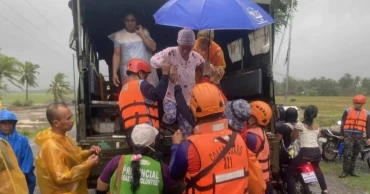
Typhoon Fung-wong moved out of the northwestern Philippines on Monday after triggering widespread floods and landslides, cutting power across several provinces, killing at least eight people, and displacing over 1.4 million residents.
The typhoon is expected to move northwest toward Taiwan. Fung-wong struck northeastern Aurora province Sunday night as a super typhoon, with sustained winds of up to 185 kph (115 mph) and gusts reaching 230 kph (143 mph), while the country was still reeling from Typhoon Kalmaegi, which killed at least 224 people in central provinces before hitting Vietnam.
Authorities reported multiple fatalities: one person drowned in Catanduanes, another was killed when her house collapsed in Samar, three children died in landslides in Nueva Vizcaya, and an elderly person was killed in a mudslide in Mountain Province. Two villagers were also killed, and two went missing in a landslide in Lubuagan, Kalinga.
Over 1.4 million people sought refuge in emergency shelters or with relatives before the storm’s landfall, with around 318,000 still in evacuation centers on Monday. At least 132 villages in northern provinces were flooded, trapping some residents on rooftops, and about 1,000 houses were damaged. Roads blocked by landslides were expected to reopen as the weather improved.
Bernardo Rafaelito Alejandro IV of the Office of Civil Defense warned that heavy rains still posed risks in northern Luzon, including metropolitan Manila, and rescue and relief operations were underway.
Philippine President Ferdinand Marcos Jr. had declared a state of emergency earlier this week due to the damage from Kalmaegi and the anticipated impact of Fung-wong, locally called Uwan. Schools and most government offices remained closed Monday and Tuesday, while over 386 flights were canceled and more than 6,600 passengers and cargo workers were stranded at ports.
The Philippines, prone to about 20 typhoons annually, is also vulnerable to earthquakes and has more than a dozen active volcanoes, making it one of the world’s most disaster-prone countries.
6 months ago
Chinese fishing boat capsizes off South Korea, nine crew missing
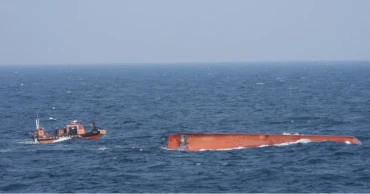
South Korean rescue teams are searching for nine crew members after a Chinese fishing vessel capsized and sank off the country’s southwestern coast on Monday.
South Korea’s Coast Guard reported that two crew members were rescued by a nearby commercial ship after the incident, which occurred about 150 kilometers (93 miles) southwest of the port city of Gunsan.
Four patrol vessels, two helicopters, and a plane have been deployed to the area for the ongoing search operation. So far, rescuers have spotted a layer of fuel believed to have leaked from the sunken vessel, but no other debris or objects linked to the boat have been found.
Kim Yeong-cheol, a Coast Guard official in Gunsan, said the vessel was likely fishing for croaker and hairtail.
The Chinese consulate general in Gwangju confirmed that 11 people were on board and that two have been rescued, according to state broadcaster CCTV.
The accident occurred a day after another Chinese fishing boat capsized in international waters roughly 80 kilometers (50 miles) from South Korea’s southwestern Gageo Island, killing at least two crew members. Six others were rescued, while authorities continued searching for three missing crew members from that incident on Monday.
Source: AP
6 months ago

Boat carrying hundreds of Myanmar migrants capsizes near Malaysia
A boat carrying around 300 migrants from Myanmar capsized in the Indian Ocean near the Thailand-Malaysia maritime border, leaving one person dead, 10 rescued, and dozens missing, officials said Sunday.
Authorities said the exact time and location of the sinking remain unclear, though the vessel likely capsized in Thai waters. Officials believe the boat was part of an illegal migration network operated by cross-border syndicates.
A preliminary investigation by the Malaysian Maritime Enforcement Agency (MMEA) found the boat departed from Buthidaung in Myanmar’s Rakhine state and sank about three days ago. MMEA’s First Admiral Romli Mustafa said the agency launched a search and rescue operation on Saturday after several survivors were spotted drifting near Langkawi Island, Malaysia.
Rescuers found the body of a woman, believed to be from Myanmar, floating at sea. Among the 10 survivors were several Myanmar nationals and one man from Bangladesh, officials said. “There is a possibility that more victims will be located as the operation continues,” Romli said in a statement.
State police chief Adzli Abu Shah told Malaysia’s Bernama news agency that the vessel likely went down in Thai waters before survivors drifted into Malaysian territory.
The Rohingya, a Muslim minority from Myanmar’s Rakhine state, have faced decades of persecution, prompting many to flee by sea to neighboring countries such as Malaysia, where the Muslim-majority population makes it a preferred destination.
In January, Malaysia turned away two boats carrying nearly 300 Rohingya refugees attempting to enter the country illegally. While Malaysia has accepted some refugees on humanitarian grounds, authorities have tightened restrictions in recent years to discourage mass arrivals.
According to the U.N. refugee agency, Malaysia currently hosts over 117,000 registered Rohingya refugees, making up about 59% of the nation’s total refugee population.
6 months ago
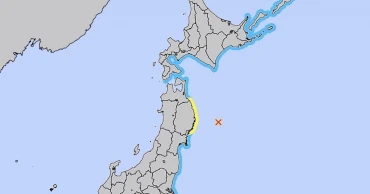
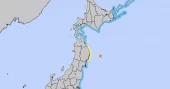
Powerful quake hits off Japan’s northern coast, tsunami advisory issued
A powerful magnitude 6.9 earthquake struck off the coast of Iwate Prefecture in northern Japan on Sunday evening, prompting a tsunami advisory and warnings of possible aftershocks, the Japan Meteorological Agency (JMA) said.
The quake, which occurred at 5:03 p.m. local time at a depth of about 16 kilometers (10 miles), was followed by several smaller tremors. Authorities said there were no immediate reports of injuries or major damage, and no irregularities were detected at nearby nuclear power plants.
The JMA issued an advisory for tsunami waves up to 1 meter (3 feet) along northern coastal regions. Small tsunami waves — about 10 to 20 centimeters (4–8 inches) — were observed at Ofunato, Ominato, Miyako, Kamaishi, and Kuji. Officials warned residents to stay away from the coast, noting that waves could continue for several hours and grow stronger over time.
Public broadcaster NHK cautioned that aftershocks could follow, and the meteorological agency said the area faces an increased risk of strong earthquakes for about a week, especially in the next few days.
The quake caused temporary power shortages and delays to bullet train services, according to Kyodo News and railway operator JR East.
Japan’s northeast is one of the world’s most seismically active zones. The region was devastated in March 2011 by a massive earthquake and tsunami that killed nearly 20,000 people and triggered the Fukushima Daiichi nuclear disaster.
Officials said Sunday’s earthquake was not directly linked to the 2011 event, though the region remains highly prone to major quakes. Japan sits along the Pacific “Ring of Fire,” where many of the world’s strongest earthquakes occur.
6 months ago

Pakistan–Afghanistan peace talks collapse in Istanbul amid escalating border tensions
Peace talks between Pakistan and Afghanistan in Istanbul have ended without any agreement, with both sides accusing each other of derailing negotiations meant to ease border tensions and maintain a fragile ceasefire, officials said Saturday.
Tensions have flared in recent weeks after deadly border clashes left dozens of soldiers and civilians dead. The fighting erupted following Oct. 9 explosions in Kabul, which the Taliban government said were Pakistani drone strikes and vowed to retaliate. Although Qatar helped broker a ceasefire on Oct. 19, it remains shaky.
Afghan government spokesperson Zabiullah Mujahid blamed Islamabad for the breakdown, calling Pakistan’s demands “unreasonable.” Speaking in Kandahar on Saturday, Mujahid said Afghanistan “does not want insecurity in the region,” but warned that “if war breaks out, we will defend ourselves.” He also reaffirmed that Afghanistan “will not allow anyone to use its soil against another country.”
No breakthrough after third round of talks
The two-day talks, mediated by Turkey and Qatar, marked the third round of dialogue between the neighbors since the Taliban’s 2021 takeover. Despite intensive back-channel efforts, officials confirmed the discussions stalled late Friday without progress.
Pakistan’s Defense Minister Khawaja Asif told Geo News that the talks had “ended without results,” and the delegation was returning home “with no plan for further meetings.” He said the ceasefire would remain in effect as long as “it is not violated from the Afghan side.”
Islamabad has long accused Kabul of sheltering the Tehreek-e-Taliban Pakistan (TTP), which has carried out a series of attacks inside Pakistan since 2021. The Taliban administration denies the allegation, saying it does not permit cross-border militancy.
Mujahid dismissed claims linking the TTP to Kabul, noting the group’s formation predates the Taliban’s return to power.
4 Afghan civilians killed in border clash amid peace talks with Pakistan
Clashes and civilian casualties continue
The failure of the Istanbul talks came a day after Afghan officials reported that four civilians were killed and five injured in new cross-border clashes. Asif said the Afghan side arrived “without a concrete plan” and refused to sign a written agreement, offering only verbal assurances. “There is no scope for such understandings,” he said, adding that there is “no prospect for a fourth round of talks anytime soon.”
Earlier this month, Pakistan’s military said it had launched airstrikes on TTP hideouts inside Afghanistan, killing dozens of militants. Afghan authorities rejected the claim, alleging civilian deaths and reporting retaliatory strikes that killed 58 Pakistani soldiers. Pakistan acknowledged losing 23 troops.
The violence led Qatar to mediate a temporary ceasefire on Oct. 19, followed by six days of talks in Istanbul that ended with a plan to extend the truce and hold the latest round on Nov. 6–7 — which collapsed without any breakthrough.
Border closures and deportations heighten strain
Since the clashes, Pakistan has closed all its border crossings with Afghanistan, partially reopening the key Torkham point last week to allow stranded Afghans to return home. The closure, enforced on Oct. 12, has severely disrupted trade, leaving hundreds of cargo trucks stuck on both sides and cutting off one of the busiest trade routes linking South and Central Asia.
At the same time, Pakistan has intensified a nationwide campaign to deport undocumented foreigners — mostly Afghans. Authorities say more than a million Afghans have been repatriated since 2023 under the drive.
Meanwhile, Pakistan continues to face a surge in militant attacks claimed by the TTP, which is designated as a terrorist organization by both the United Nations and the United States.
Source: AP
6 months ago

Taiwan vice president urges EU to strengthen ties amid China threats
Taiwan’s Vice President Bi-Khim Hsiao on Friday called on the European Union to deepen security, trade, and technological cooperation with the self-governing island, while defending its democracy against growing threats from China.
Speaking to international lawmakers at a China-focused conference in the European Parliament building, Hsiao said, “Peace in the Taiwan Strait is essential to global stability and economic continuity,” and stressed the importance of opposing any unilateral attempts to alter the status quo by force.
Hsiao urged European lawmakers, including representatives from Germany and Spain, to work more closely with Taiwan on trusted supply chains and AI technology. She also highlighted parallels between Taiwan facing cyberattacks and disruptions to undersea internet cables and hybrid attacks experienced by European countries since Russia’s invasion of Ukraine.
While the EU has no formal diplomatic relations with Taiwan under the “One China” policy, Hsiao emphasized shared democratic values and close trade ties, urging Brussels to build a “reliable technology ecosystem rooted in trust, transparency and democratic values.”
China criticized Hsiao’s visit, calling it a violation of its sovereignty and the one-China principle, and condemned the EU parliament for allowing “separatist activities.” China maintains that Taiwan is part of its territory and has repeatedly threatened to annex the island by force if necessary.
Hsiao’s address comes amid heightened security concerns, with Taiwan planning to boost its defense budget to 5% of GDP by 2030 and accelerate its air defense system, “T-Dome,” in response to China’s increased military activities near the island.
The event was part of a conference organized by the Inter-Parliamentary Alliance on China, which brings together lawmakers from around the world to coordinate policy on China. Around 50 legislators from two dozen countries attended.
Analysts note that despite the lack of formal ties, stronger EU-Taiwan cooperation could help Europe mitigate risks from China’s growing pressure on the island, particularly in semiconductor and electronics supply chains, potentially more impactful than the effects of Russia’s invasion of Ukraine.
6 months ago

4 Afghan civilians killed in border clash amid peace talks with Pakistan
Four Afghan civilians were killed and five others injured in an overnight clash between Afghan and Pakistani forces along their shared border, Afghan officials said Friday, highlighting rising tensions as the two countries conduct peace talks in Istanbul.
The exchange of fire occurred Thursday night near the Chaman border in southwest Pakistan, though a tense calm prevailed afterward. Both sides blamed the other for violating the ceasefire brokered by Qatar last month.
Ali Mohammad Haqmal, head of the Information and Culture Department in Spin Boldak, accused Pakistan of initiating the attack but said Afghan forces refrained from responding due to ongoing peace talks. Pakistan’s Foreign Ministry spokesman Tahir Andrabi dismissed the Afghan claim, asserting that Afghan forces started the shooting. The ministry said the situation was quickly brought under control and that the Oct. 19 ceasefire remained in place.
Pakistan’s delegation, led by National Security Adviser Lt. Gen. Asim Malik, is discussing cross-border security issues with the Afghan side, headed by Abdul Haq Wasiq, director of general intelligence. Pakistan has repeatedly accused the Afghan Taliban government of sheltering militants responsible for attacks across the border, a claim Kabul denies.
Tensions escalated last month after deadly clashes killed dozens of soldiers, civilians, and suspected militants on both sides, following explosions in Kabul on Oct. 9, which the Taliban blamed on Pakistan. The violence subsided only after Qatar mediated a ceasefire.
In recent months, Pakistan has faced a rise in attacks from Tehrik-e-Taliban Pakistan (TTP), a UN- and U.S.-designated terrorist group closely allied with the Afghan Taliban. Many TTP fighters are believed to be taking refuge in Afghanistan, adding strain to relations between the two neighbors.
6 months ago

North Korea, Russia hold talks to boost military cooperation
Senior North Korean and Russian military officials met in Pyongyang this week to discuss expanding cooperation, North Korea’s state media reported Friday, amid closer ties between the two countries over Russia’s war in Ukraine.
The Korean Central News Agency (KCNA) said North Korean officials, led by Pak Yong Il, vice director of the Korean People’s Army General Political Bureau, met Wednesday with a Russian delegation headed by Vice Defense Minister Viktor Goremykin. Discussions focused on strengthening cooperation in line with “deepened bilateral relations” under North Korean leader Kim Jong Un and Russian President Vladimir Putin. KCNA did not report any specific agreements. Goremykin’s delegation also met separately with North Korean Defense Minister No Kwang Chol on Thursday.
The meetings follow a briefing by South Korea’s National Intelligence Service (NIS), which reported that North Korea may be preparing additional troop deployments to Russia. South Korean officials said they are monitoring the situation closely but did not speculate on any new deployments.
Seoul has assessed that North Korea has already sent roughly 15,000 troops and large amounts of military equipment, including artillery and ballistic missiles, to support Russia’s war efforts. In addition, thousands of North Korean military construction workers and deminers have reportedly been sent to Russia’s Kursk region, with around 5,000 personnel moving in phases since September for possible infrastructure restoration projects.
The North Korea–Russia meetings also came shortly after U.S. Defense Secretary Pete Hegseth visited South Korea for annual security talks and praised Seoul’s plans to increase military spending in response to North Korea’s nuclear threats and regional uncertainties.
6 months ago

Explosions shake Jakarta school mosque, injuring 55 students
Multiple explosions occurred during Friday prayers at a mosque inside a high school in Indonesia’s capital, Jakarta, injuring at least 55 people, most of them students, police said.
Witnesses reported hearing at least two blasts, both inside and outside the mosque at SMA 27 — a state high school within a navy compound in northern Jakarta’s Kelapa Gading area — just as the sermon began. Students and others ran in panic as gray smoke filled the mosque.
Jakarta Police Chief Asep Edi Suheri said the explosions appeared to have originated near the mosque’s loudspeaker, though the cause has not yet been determined. Most victims sustained cuts, burns, and injuries from flying glass.
Emergency teams took the injured to nearby hospitals, where 20 students remain hospitalized with burns, including three in serious condition. Others were released after initial treatment.
Videos circulating online showed students in uniform running across the school courtyard, covering their ears against the noise, while some of the injured were carried on stretchers to waiting vehicles.
Parents gathered at Yarsi and Cempaka Putih hospitals seeking information about their children. Some said their children had injuries caused by nails and fragments from the explosion.
Police found toy rifles and a toy gun near the scene, Suheri said, adding that an anti-bomb squad is investigating. “We ask the public not to speculate until the investigation is complete,” he told reporters.
Indonesia, the world’s largest Muslim-majority nation, has experienced several militant attacks in past decades, including the 2002 Bali bombings that killed 202 people. However, authorities say the country has seen a “zero attack” period since 2023 due to tightened security and counterterrorism measures.
6 months ago
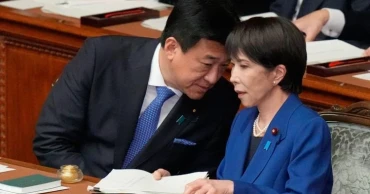
Japan resumes seafood exports to China after two-year Fukushima wastewater ban
Japan has resumed seafood exports to China for the first time since Beijing imposed a blanket ban over the release of treated radioactive wastewater from the tsunami-hit Fukushima Daiichi nuclear power plant more than two years ago.
Chief Cabinet Secretary Minoru Kihara said on Friday that six metric tons of scallops harvested in Hokkaido were shipped to China on Wednesday — the first consignment since the import ban was introduced in August 2023.
The move comes after months of negotiations between the two countries. Beijing announced in June that it would gradually ease the restrictions and allow seafood imports to resume.
The wastewater release from Fukushima — a long-debated and politically sensitive issue — had sparked strong opposition from Japan’s neighbors, particularly China and South Korea, over food safety and environmental concerns.
The ban dealt a heavy blow to Japan’s seafood sector, which relied heavily on the Chinese market, especially for scallops and sea cucumbers. “The government views the resumption as a positive step,” Kihara said, urging Beijing to continue re-registering pending export applications for Japanese seafood producers.
However, restrictions remain in place for seafood from Fukushima and nine surrounding prefectures, which were immediately affected after the 2011 nuclear disaster. Kihara added that Tokyo will continue pressing China to lift the remaining bans and also resume imports of Japanese beef.
In response, Chinese Foreign Ministry spokesperson Mao Ning said China would strictly manage Japanese seafood imports “in accordance with laws and regulations to ensure public food safety” and warned that any risks would trigger the immediate reimposition of restrictions.
The Fukushima Daiichi plant suffered triple meltdowns following a massive earthquake and tsunami in 2011, which led to radioactive water leaks. Japan’s nuclear regulator and the International Atomic Energy Agency (IAEA) later approved the controlled release of treated wastewater into the sea, saying the environmental and human health impacts would be negligible and consistent with global safety standards.
6 months ago