Europe

Russia’s Kamchatka mostly spared despite powerful quake and tsunami
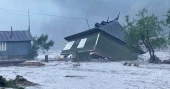
A massive earthquake struck off Russia’s Far East coast on Wednesday, triggering tsunami waves that flooded a fishing port and cut power in some areas. However, authorities reported only minor injuries and no major structural damage, crediting preparedness measures for preventing a larger disaster.
The 8.8-magnitude earthquake hit near the Kamchatka Peninsula—an area often referred to as Russia’s “land of fire and ice” due to its volcanic activity. Local officials declared a state of emergency in some areas but said the impact was less severe than initially feared.
Kamchatka Peninsula: volatile yet resilient
Kamchatka, located nine time zones east of Moscow, is one of the world’s most seismically active regions, home to around 300 volcanoes, 29 of which are active. The peninsula, which faces the Pacific Ocean and the Sea of Okhotsk, is sparsely populated, with about 162,000 residents in its regional capital, Petropavlovsk-Kamchatsky.
Fishing is the region’s main industry, and limited infrastructure means helicopters are often the only way to access remote areas. Authorities said the geography helped shield Petropavlovsk-Kamchatsky from the brunt of the tsunami, as its position within Avacha Bay offered natural protection.
Observers noted visible eruptions and lava flows from Klyuchevskaya Sopka, the tallest active volcano in the Northern Hemisphere, following the quake.
Strategic military installations unharmed
Kamchatka also hosts Vilyuchinsk, a key Russian naval base housing advanced Borei-class nuclear submarines and other nuclear-powered vessels. Though the earthquake raised concerns about potential damage to these sensitive facilities, the Defense Ministry has not reported any issues.
Experts noted that the base was designed with seismic threats in mind. Retired navy Captain Vasily Dandykin said the base’s infrastructure could withstand powerful quakes and posed no risk to Russia’s nuclear assets.
Media reports suggest Vilyuchinsk may eventually house submarines equipped with the Poseidon torpedo—an intercontinental nuclear-armed system designed to trigger underwater radioactive tsunamis. President Vladimir Putin said last year that Poseidon trials were nearing completion.
The Kuril Islands and regional readiness
The Kuril Islands, stretching between Kamchatka and Japan, also felt the impact. The islands, long disputed between Russia and Japan, house around 20,000 people and rely on fishing. In Severo-Kurilsk, tsunami waves as high as 6 meters flooded the fishing port and swept boats out to sea.
Despite this, authorities reported no casualties on the islands. Russia has recently upgraded military installations in the Kurils, including air bases and other infrastructure.
Details of the quake
The earthquake struck at 11:24 a.m. local time Wednesday, about 120 kilometers from Petropavlovsk-Kamchatsky, at a depth of 21 kilometers, according to the U.S. Geological Survey. Several aftershocks followed, with magnitudes reaching up to 6.9.
Officials said their long-standing preparedness for a major earthquake paid off. While some injuries occurred—including a hospital patient who jumped from a window—none were life-threatening. No serious damage was found in residential buildings after inspections.
While considered one of the strongest earthquakes since the 2011 Japan quake and tsunami, Russian authorities credited their readiness and regional geography for sparing the population from large-scale destruction.
Source: Agency
10 months ago
Lithuanian PM resigns amid corruption probes and growing protests
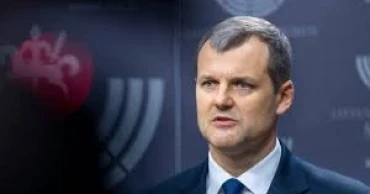
Lithuanian Prime Minister Gintautas Paluckas resigned on Thursday amid mounting pressure over corruption investigations and public protests demanding his departure.
Paluckas, who took office late last year as leader of the centre-left Social Democratic Party, stepped down just months after forming a coalition government following the October parliamentary elections. His resignation is expected to lead to the dissolution of the entire Cabinet, leaving the Baltic state facing political uncertainty just weeks ahead of Russian-Belarusian joint military drills near its borders.
In a letter to his party, Paluckas said the ongoing controversies were impeding government work. “I cannot allow the ruling coalition and Cabinet to be held hostage by these scandals. I am taking swift and decisive action,” he wrote. “I have never clung to power, and I remain open to all possible outcomes.”
President Gitanas Nausėda confirmed the resignation in a statement to the media Thursday morning.
Tulip Siddiq steps down as Treasury minister
Despite the political shake-up, Lithuania's foreign policy stance is expected to remain unchanged, as President Nausėda—elected independently—continues to represent the country globally and has been a steadfast backer of Ukraine in its fight against Russian aggression.
Paluckas’ downfall follows a series of media reports in July scrutinizing his business history and financial conduct, prompting formal investigations by Lithuania’s anti-corruption and law enforcement bodies.
A major blow came when reports resurfaced about a 2012 criminal case known as the “rat poison scandal.” While serving as director of the Vilnius municipal administration, Paluckas was convicted of manipulating a public tender, unlawfully favoring a higher bidder for rat extermination services. Though sentenced to two years in prison, his sentence was suspended, and he never served time. He also reportedly failed to pay a significant portion of the 16,500-euro (about $19,000) fine tied to the case.
Paluckas has denied wrongdoing in both past and recent allegations, accusing political rivals of orchestrating a “coordinated attack.”
He stepped down before the opposition could initiate formal impeachment proceedings. Talks to form a new coalition government are expected to begin soon.
Source: Agency
10 months ago
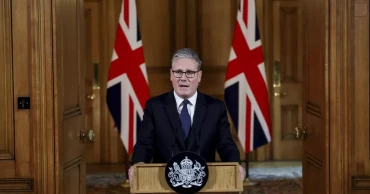
UK to recognize Palestanian state if Israel fails to reach ceasefire, says Starmer
British Prime Minister Keir Starmer on Tuesday warned that the UK will formally recognize a Palestinian state in September unless Israel takes concrete steps toward ending the war in Gaza and pursuing lasting peace.
In a rare Cabinet meeting during the summer recess, Starmer told ministers that Britain would move to recognize Palestine at the United Nations General Assembly unless the Israeli government agrees to a ceasefire, allows unhindered humanitarian aid into Gaza, pledges not to annex any part of the West Bank, and commits to a viable peace process aimed at achieving a two-state solution.
Starmer also laid out conditions for Hamas, demanding the release of all remaining hostages, acceptance of a ceasefire, disarmament, and a pledge to not participate in Gaza’s future governance.
In a televised address, the prime minister said the UK would assess progress on these demands in September before making its final decision on recognition.
Gaza death toll surpasses 60,000 amid ongoing Israel-Hamas war, says Health Ministry
While the UK has long supported a two-state solution, it has previously stated that recognition of a Palestinian state should come as part of a negotiated peace deal.
However, calls for unilateral recognition have grown louder since French President Emmanuel Macron announced that France would become the first major Western nation to do so in September.
More than 250 Members of Parliament have signed a letter calling on the government to recognize Palestinian statehood.
Despite linking recognition to a set of conditions, Starmer affirmed Britain’s belief that “statehood is the inalienable right of the Palestinian people.”
10 months ago
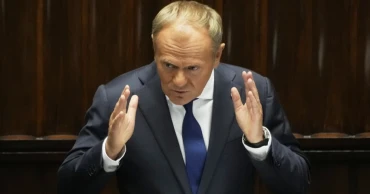
Poland detains 32 suspected of coordinating sabotage with Russia
Polish Prime Minister Donald Tusk said Tuesday that authorities have detained 32 individuals suspected of collaborating with Russia to carry out acts of sabotage, according to the state-run Polish news agency PAP.
While one of the suspects has already been convicted, the remaining individuals are in custody awaiting trial, PAP reported. The group reportedly includes Polish, Russian, Ukrainian, and Belarusian nationals, as well as a 27-year-old Colombian man accused of carrying out two arson attacks in Poland last year at the direction of Russian operatives.
India says 3 militants killed in Kashmir linked to massacre that triggered Pakistan clash
According to a statement from Poland's Internal Security Agency released Tuesday, the Colombian suspect is facing a potential sentence of 10 years to life in prison for allegedly setting fire to two construction warehouses in May 2024. The agency said he received instructions—including how to prepare and use a Molotov cocktail—from an individual linked to Russian intelligence.
Further information regarding the suspects or the nature of the alleged sabotage activities has not yet been disclosed.
10 months ago

Cyberattack on Russia’s aeroflot cancels over 100 flights
A cyberattack on Russian state-owned airline Aeroflot disrupted its computer systems on Monday, forcing the cancellation of over 100 flights and delaying many others, Russia’s Prosecutor’s Office said.
Ukrainian hacker group Silent Crow and Belarusian group Belarus Cyber-Partisans claimed responsibility, calling it one of the most damaging cyberattacks since Russia’s full-scale invasion of Ukraine began in 2022.
Aeroflot confirmed system difficulties early Monday, warning of possible disruptions. Crowds of delayed passengers were seen at Moscow’s Sheremetyevo Airport. The outage also affected Aeroflot subsidiaries Rossiya and Pobeda.
Four killed in escalating Russia-Ukraine aerial attacks
While most cancelled flights were domestic, some international routes to Belarus, Armenia, and Uzbekistan were also hit.
Silent Crow claimed it had accessed Aeroflot's internal network for a year, stealing customer data, employee surveillance records, and internal communications. “These resources are now inaccessible or destroyed,” the group said on Telegram, adding the damage could cost millions to fix.
They also suggested they might soon leak the stolen data, saying, “The personal data of all Russians who have ever flown with Aeroflot have now also gone on a trip — albeit without luggage.”
The Belarus Cyber-Partisans said they aimed to cause serious disruption and had worked for months to exploit vulnerabilities in Aeroflot's systems.
Russia’s Prosecutor’s Office has launched a criminal investigation. Kremlin spokesperson Dmitry Peskov called the attack “quite alarming,” noting that cyber threats remain a serious concern for major service providers.
The incident adds to an already tense summer for Russia’s airports, which have faced multiple disruptions due to Ukrainian drone attacks.
10 months ago
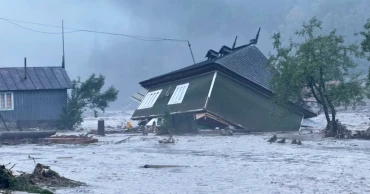
Flash floods in Romania kill one, force hundreds to evacuate
Heavy rainstorms triggered flash floods in northeastern Romania overnight, leaving at least one person dead and forcing hundreds to evacuate, officials said Monday.
Rescue teams were deployed to the worst-hit Neamt and Suceava counties, where helicopters and firefighters assisted residents trapped by floodwaters. In Neamt alone, 890 people were evacuated, according to emergency authorities.
Glacial flood alert issued for northwest Pakistan
A 66-year-old man was found dead in a stream in the town of Neagra, the Department for Emergency Situations confirmed.
Officials released images showing muddy torrents sweeping away vehicles and debris, with several homes badly damaged.
10 months ago
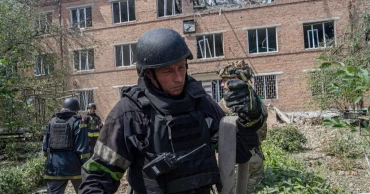
Four killed in escalating Russia-Ukraine aerial attacks
At least four people were killed—two in Ukraine and two in Russia—as both countries launched overnight aerial attacks, targeting multiple regions, officials said Friday.
In Ukraine, the southern Dnipro and northeastern Sumy regions came under combined rocket and drone strikes. Serhii Lysak, head of the Dnipro regional administration, confirmed that two people were killed and five others injured in the attacks. A multi-story building and a business establishment in the city of Dnipro were damaged, while a fire engulfed a shopping center in the region.
In Sumy, three people were reported injured by local military authorities.
Kharkiv, Ukraine’s second-largest city, endured heavy bombardment. Local officials said the city was struck by four guided aerial bombs, two ballistic missiles, and 15 drones in a span of three hours. Kharkiv Mayor Ihor Terekhov said high-rise buildings, businesses, roads, and communication networks were damaged. Five people were injured, including three emergency workers caught in a “double tap” strike—where rescuers are targeted after the initial attack.
Plane with 49 aboard vanishes from Radar in Russia's Far East
Ukraine’s Air Force reported that Russia launched 208 drones and 27 missiles overnight. Air defense systems intercepted or shot down 183 drones and 17 missiles, while 10 missiles and 25 drones struck nine locations.
Meanwhile, in Russia, Ukrainian drones targeted several regions. In Rostov, a border region, a drone strike killed two people, according to acting governor Yuri Slyusar. In the nearby Stavropol region, drones hit an industrial facility, sparking a fire and prompting temporary internet restrictions.
Additional drones targeted Moscow, Penza, Crimea, the Azov and Black Seas, and several other Russian regions, with 54 drones intercepted in total, Russia’s Defense Ministry said.
Civil aviation authorities briefly halted flights in Kaluga, Vladikavkaz, and Grozny following the attacks.
10 months ago
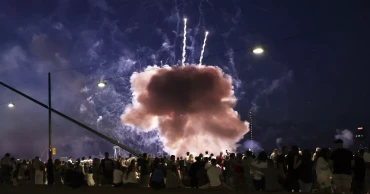
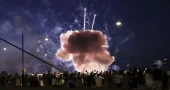
19 injured after fireworks show goes awry at fair in western Germany
A fireworks display at a popular fair in the western German city of Düsseldorf went wrong late Friday, leaving at least 19 people injured, including four seriously, according to German authorities.
The incident occurred during the Rheinkirmes festival along the banks of the Rhine river. Firefighters and emergency responders rushed to the scene after fireworks reportedly exploded close to the ground, as shown in footage from the site.
Pope Leo XIV celebrates mass at church tied to his Augustinian roots
Among the injured was a child, German news agency DPA reported.
Düsseldorf fire services confirmed that police have launched an investigation into the cause of the malfunction.
The 10-day Rheinkirmes fair, held annually on the left bank of the Rhine opposite the city’s old town, includes amusement rides, drone displays, fireworks shows, and other attractions managed by hundreds of staff.
10 months ago
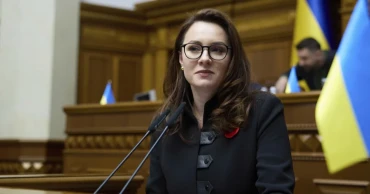
Zelenskyy appoints Ukraine’s first new prime minister since Russian invasion
Ukrainian President Volodymyr Zelenskyy has appointed former economy minister Yulia Svyrydenko as the country’s new prime minister, marking a key leadership shift aimed at boosting Ukraine’s defense and diplomacy amid the ongoing war with Russia.
Svyrydenko, 39, becomes the first new head of government since Russia launched its full-scale invasion in 2022. She has played a prominent role in Ukraine’s international negotiations, including leading a recent mineral partnership deal with the United States — a move seen as crucial in aligning U.S. economic interests with Ukraine’s long-term security.
US selling weapons to NATO allies for Ukraine support
The appointment comes just days after a major U.S. weapons deal was announced, with support from President Donald Trump. In her first remarks after parliamentary approval, Svyrydenko emphasized urgency. “War leaves no room for delay,” she said on X. “Our top priorities are ensuring army supply lines, expanding domestic weapons production, and strengthening our defense technology.”
Outgoing prime minister Denys Shmyhal will now serve as Ukraine’s defense minister, replacing Rustem Umerov, whose tenure was criticized for inefficiency despite efforts at reform. Shmyhal, who led the government since March 2020, was Ukraine’s longest-serving prime minister.
The reshuffle is part of a broader leadership update, though Zelenskyy is largely retaining his core team. He also named former European integration minister Olga Stefanishyna as special representative for U.S. cooperation and nominated her to be Ukraine’s next ambassador to Washington, replacing Oksana Markarova.
Trump envoy visits Kyiv as US pledges Patriot missiles to Ukraine
Zelenskyy acknowledged the difficulty of maintaining global focus on Ukraine amid rising international conflicts. “We all want peace,” he said in a speech to parliament. “But the world’s attention is scattered. Ukraine must rely more on its own strength.” Source: Agency
10 months ago
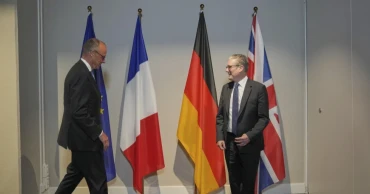
Leaders of the UK and Germany to sign a treaty on defense, trade and migration
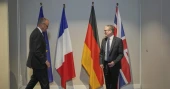
British Prime Minister Keir Starmer and German Chancellor Friedrich Merz are poised to sign a landmark treaty on Thursday aimed at deepening defense collaboration and intensifying joint law enforcement efforts to crack down on criminal gangs smuggling migrants across the English Channel.
This marks Merz’s first official visit to the UK since taking office in May. The treaty was initially proposed during Starmer’s visit to Berlin in August 2024, when he met then-Chancellor Olaf Scholz to outline plans for enhanced UK-Germany cooperation under a “friendship and cooperation” framework.
Curbing illegal cross-channel migration has been a top priority for Starmer, leader of the center-left Labour Party. In 2024, approximately 37,000 individuals were detected crossing the Channel in small boats from France.
The first half of 2025 has already seen over 20,000 similar crossings, with dozens tragically losing their lives attempting the journey.
Germany had agreed in 2023 to criminalize activities related to facilitating the smuggling of migrants into the UK. This legal change would empower authorities to more aggressively target the logistics behind the crossings, including the supply and storage of small boats.
Chancellor Merz is expected to reaffirm his government’s commitment to enacting the necessary legislative amendments by the end of this year.
Trump flip-flops over whether he’ll fire the Fed’s Powell
Starmer praised Merz’s stance, stating, “Chancellor Merz’s commitment to make necessary changes to German law to disrupt the supply lines of the dangerous vessels which carry illegal migrants across the Channel is hugely welcome.” He described the UK and Germany as “the closest of allies.”
In addition to the migration and security cooperation, both governments are expected to unveil a series of bilateral investment deals.
The treaty builds upon a defense agreement the two nations signed in 2023, underlining their shared commitment to Ukraine and coordinated responses to growing threats from Russia. It includes mutual defense pledges, agreeing to assist one another in the event of an attack.
Further military collaboration is anticipated, including joint efforts to promote exports of jointly manufactured military equipment such as Boxer armored vehicles and Typhoon fighter jets. The two countries also plan to co-develop a deep precision strike missile system over the next decade.
Starmer has made restoring relations with European partners a key foreign policy goal following the turbulence caused by the UK’s departure from the European Union in 2020.
While he has ruled out rejoining the EU’s single market or customs union, and shown limited enthusiasm for a youth mobility agreement with the bloc, he has consistently worked to reduce trade frictions and strengthen defense cooperation.
Speaking in the German parliament last week, Merz said, “I make no secret of the fact I very much regret to this day that Britain left the European Union.
But if they at least work together with us again in the area of foreign and security policy, then that is a very good sign. Prime Minister Keir Starmer wants that.”
10 months ago