Middle-East
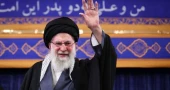
Ayatollah Khamenei warns protesters as death toll rises to 15
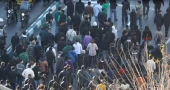
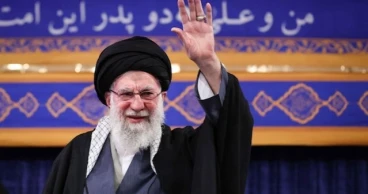
Iran’s Supreme Leader Ayatollah Ali Khamenei on Saturday issued a stern warning amid nationwide protests, saying “rioters must be put in their place,” a remark widely seen as endorsing a tougher security crackdown.
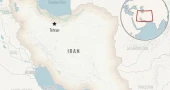
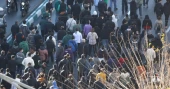
His first public comments come as demonstrations driven by economic hardship enter their second week, with human rights groups reporting at least 15 deaths and more than 580 arrests across the country.
Protests have spread to over 170 locations in 25 provinces, making them the largest unrest since 2022, though still less intense than the demonstrations sparked by Mahsa Amini’s death.
Khamenei sought to distinguish between citizens protesting economic conditions and what he described as “rioters,” blaming foreign enemies, including the United States and Israel, for stirring unrest. He also blamed outside forces for the sharp fall of Iran’s currency.
The protests follow warnings from US President Donald Trump, who said Washington would respond if peaceful demonstrators were violently suppressed, prompting Iranian officials to threaten retaliation against US forces in the region.
Overnight violence included a grenade explosion in Qom and the killing of a Basij member in western Iran. Rights groups accused security forces of using live fire in some areas.
Despite President Masoud Pezeshkian’s calls for dialogue, analysts say Iran’s powerful security apparatus is likely to contain the unrest as economic pressures continue.
2 months ago
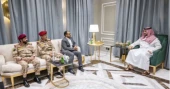
Saudi Arabia backs Yemen request for talks to end southern fighting
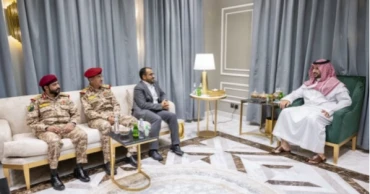
Saudi Arabia has welcomed a request from Yemen’s Saudi-backed Presidential Leadership Council (PLC) to convene talks in Riyadh aimed at easing a violent power struggle in southern Yemen that has intensified fighting and heightened tensions among Gulf states.
In a statement issued Saturday, the Saudi foreign ministry urged southern Yemeni factions to attend the proposed forum in the capital, saying the goal is to develop a unified and fair approach to addressing southern grievances.
Earlier the same day, PLC Chairman Rashad al-Alimi called on political leaders and armed groups in southern Yemen to take part in the Riyadh meeting, according to Yemen’s SABA news agency. Al-Alimi stressed the importance of the southern issue and rejected any one-sided or exclusionary solutions to the conflict.
Violence has escalated in recent days after the Southern Transitional Council (STC), a separatist group, launched a major offensive in Hadramout and Al-Mahra provinces, which together account for nearly half of Yemen’s territory. Oil-rich Hadramout, which borders Saudi Arabia and has deep historical ties to the kingdom, was viewed by Riyadh as strategically sensitive. The STC’s seizure of parts of the province last month raised alarm in Saudi Arabia.
Although the STC is part of the anti-Houthi coalition, it is widely believed to seek an independent southern state, putting it at odds with the internationally recognised Yemeni government led by the PLC. Saudi Arabia has accused its coalition partner, the United Arab Emirates, of supplying arms to the STC—claims Abu Dhabi has denied, saying it supports Saudi security.
The UAE, meanwhile, voiced serious concern over the escalating violence and urged restraint to preserve Yemen’s stability. It also announced the withdrawal of its remaining troops from Yemen, citing the completion of counterterrorism missions, a move that may signal easing tensions with Saudi Arabia.
Saudi Arabia bombs Yemen over shipment of weapons for separatists that arrived from UAE
The Saudi-led coalition was formed in 2015 to push back Iran-aligned Houthi rebels, but after years of war, the Houthis still control the north while rival Saudi- and Emirati-backed groups are now clashing in the south.
Analysts warn that unless the conflict is contained, the latest violence could usher in a dangerous new phase of the war, with competing forces fighting to redraw territorial control—an outcome that could have repercussions beyond Yemen itself.
2 months ago
Death toll rises to 10 in Iran protests amid economic unrest
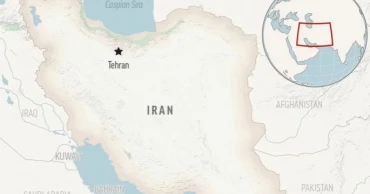
Violence linked to ongoing protests in Iran over the country’s worsening economy has claimed at least two more lives, raising the overall death toll to 10, authorities said Saturday, as demonstrations show no signs of easing.
The new deaths occurred overnight. In Qom, a man was killed when a grenade exploded in the city, home to major Shiite seminaries. Iranian state media reported security officials claimed the man had intended to use the grenade to attack civilians. In Harsin, Kermanshah province, a member of the Basij, the paramilitary arm of Iran’s Revolutionary Guard, was killed in a gun and knife attack, according to the IRAN newspaper. Online footage showed fires in the streets of Qom during the night.
The protests, now entering their second week, have spread to over 100 locations across 22 of Iran’s 31 provinces, the U.S.-based Human Rights Activists News Agency reported. The unrest is primarily driven by the rapid depreciation of the Iranian rial, now costing about 1.4 million rials per U.S. dollar, though demonstrators are also voicing broader anti-government grievances.
U.S. President Donald Trump warned Tehran on Friday against violently targeting peaceful protesters, prompting threats from Iranian officials to target American forces in the Middle East. Meanwhile, Iran’s civilian government under reformist President Masoud Pezeshkian has expressed willingness to negotiate but acknowledges limited capacity to address the economic crisis.
2 months ago
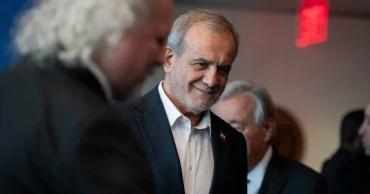
Iran warns of harsh response to any attack amid Trump’s nuclear threat
Speaking on Tuesday, President Pezeshkian said the Islamic Republic would deliver a “severe and deterrent” response to any hostile action. He made the remarks in a post on the social media platform X, without providing further details.
His comments followed a warning issued by President Trump a day earlier, during talks with Israeli Prime Minister Benjamin Netanyahu at Trump’s Mar-a-Lago residence in Florida. Trump suggested that the United States could launch military strikes if Iran attempts to revive its nuclear program.
Trump told reporters that Washington would not tolerate Iran rebuilding its nuclear capabilities and said any such move would be met with overwhelming force. He added that he hoped such action would not be necessary.
The discussion between Trump and Netanyahu came only months after a 12-day air conflict in June, which reportedly left nearly 1,100 people dead in Iran, including senior military officials and nuclear scientists. Iran responded at the time with missile attacks on Israel that killed 28 people.
Trump later indicated that another U.S. strike against Iran remains a possibility, warning that any confirmed nuclear activity would trigger consequences even stronger than previous actions.
Pezeshkian said over the weekend that tensions have already escalated sharply, accusing the United States, Israel and European countries of trying to destabilize Iran. At the same time, Tehran has maintained that it is no longer enriching uranium and has expressed willingness to engage in negotiations over its nuclear program.
At least 7 killed as economic protests spread across Iran
According to U.S. intelligence agencies and the International Atomic Energy Agency, Iran last operated an organized nuclear weapons program in 2003, though it has enriched uranium to levels close to weapons-grade in recent years.
Meanwhile, Iran is facing its largest protests in three years as the national currency fell to a historic low against the U.S. dollar. Demonstrations continued for a third day in Tehran and other cities, with police using tear gas in some areas. University students also staged protests on major campuses.
President Pezeshkian met with business leaders and promised efforts to address economic challenges. The government announced policy changes to support businesses, along with temporary closures of offices and banks to manage winter energy consumption.
Source: AP
2 months ago
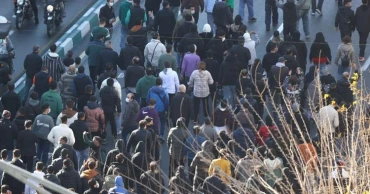
At least 7 killed as economic protests spread across Iran
Protests driven by Iran’s worsening economic conditions expanded into rural provinces on Thursday, leaving at least seven people dead in the first reported fatalities involving both demonstrators and security personnel, according to authorities.
The deaths — two on Wednesday and five on Thursday — were reported in four cities, many located in areas predominantly inhabited by Iran’s Lur ethnic community. The casualties suggest a possible shift toward a tougher response by the country’s ruling clerics as unrest slows in Tehran but intensifies elsewhere.
The demonstrations mark Iran’s most significant unrest since 2022, when nationwide protests erupted following the death of Mahsa Amini in police custody. While the current protests have not reached the same scale or intensity, they have spread steadily beyond the capital.
The worst violence was reported in Azna, in Lorestan province, about 300 kilometers southwest of Tehran. Videos circulating online appeared to show fires in the streets and the sound of gunfire, as crowds shouted slogans condemning authorities. The semi-official Fars news agency reported three deaths there.
Additional fatalities were reported in Lordegan, Fuladshahr and Kouhdasht. Activist groups accused security forces of opening fire in some cases, while state-linked media blamed protesters for the death of a Basij paramilitary volunteer.
Officials acknowledged that rising inflation, currency depreciation and economic hardship were driving the protests. Iran’s rial has sharply fallen, with the dollar trading at around 1.4 million rials.
Authorities reported arrests and claimed calm had since returned, even as tensions persist nationwide.
Source: AP
2 months ago
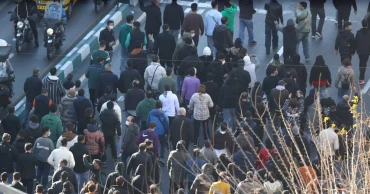
Iran Revolutionary Guard volunteer killed amid widening economic protests
A 21-year-old volunteer in Iran’s paramilitary Revolutionary Guard was killed Wednesday night in Lorestan province during protests driven by economic hardship, authorities said Thursday, marking the first reported security force fatality in the demonstrations.
State-run media said the Basij volunteer was “martyred … at the hands of rioters” while defending public order in the city of Kouhdasht, about 400 kilometers southwest of Tehran. Another 13 Basij members and police officers were injured. Local officials linked the protests to inflation, currency depreciation, and rising economic pressures, urging citizens to voice concerns without letting “profit-seeking individuals” exploit the unrest.
The demonstrations, the largest in Iran since 2022, have slowed in Tehran but spread to other provinces. Iran’s reformist civilian government has indicated willingness to negotiate with protesters, but officials say options are limited amid a collapsing rial. Authorities also reported arrests of seven people, including alleged monarchists and individuals linked to European-based groups, and confiscation of smuggled firearms.
2 months ago
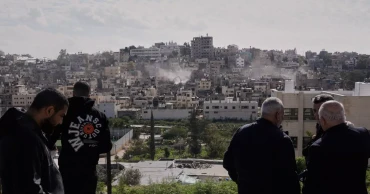
Israeli bulldozers demolish Palestinian homes in West Bank refugee camps
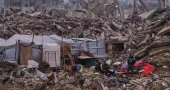
Palestinians in the Israeli-occupied West Bank watched as Israeli military bulldozers tore down their homes Wednesday in Nur Shams refugee camp, part of an almost year-long campaign in northern West Bank camps.
Since early 2025, Operation "Iron Wall" has damaged or destroyed at least 850 structures across Nur Shams, Jenin, and Tulkarem, according to satellite analysis by Human Rights Watch. The demolitions have forced tens of thousands from their homes, resulting in the largest displacement in the West Bank since Israel captured the territory in 1967. Many now live with relatives, in rented apartments, or in public buildings.
Israel says the operation targets armed groups, claiming the demolitions remove militant infrastructure and clear routes for troops. Residents said they were given time to remove belongings, but the loss is devastating.
Motaz Mohor, whose home was destroyed, said, “Our home is dear to us…this is the second time our family has been displaced,” recalling his grandparents’ flight during the 1948 Nakba. Ahmed al Sayyes, another resident, called the destruction “a tragedy after tragedy,” unsure where he and his family will go next.
2 months ago
Explainer: Why Yemen’s anti-Houthi coalition is facing instability
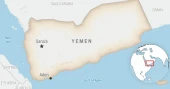
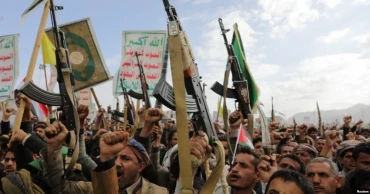
Yemen’s anti-Houthi coalition is facing renewed instability following a sharp political rift involving Saudi Arabia, the United Arab Emirates (UAE) and rival Yemeni factions, raising concerns over further fragmentation of the war-torn country.
The latest crisis erupted after Presidential Leadership Council (PLC) Chairman Rashad al-Alimi ordered UAE forces to withdraw from Yemen, canceled a joint defense arrangement and declared emergency measures, including a temporary embargo and plans for Saudi-backed forces to take control of military camps in eastern provinces. The move was presented as a step to protect national security.
However, the decision was swiftly rejected by other PLC members, notably the UAE-backed Southern Transitional Council (STC). The STC and several council members said the PLC is a collective authority and accused al-Alimi of making unilateral and illegal decisions. They reaffirmed the UAE’s role as a key partner in fighting the Houthis, counterterrorism and securing maritime routes.
The political fallout coincided with Saudi-led airstrikes on the port of Mukalla and unusually public accusations between Riyadh and Abu Dhabi. Saudi Arabia alleged the UAE supplied weapons to separatist forces without authorization, a claim denied by the UAE, which said the equipment was meant for its own forces and coordinated with coalition partners.
At the heart of the dispute are Yemen’s oil-rich eastern provinces of Hadramout and Al-Mahrah, which hold strategic ports and border areas critical to Saudi security. STC forces recently expanded their presence in these regions, heightening tensions with Saudi-backed units.
Analysts say the crisis exposes deeper structural divisions within the anti-Houthi camp, where competing regional agendas and local ambitions have long coexisted uneasily. While Saudi Arabia prioritizes border security and stability, the STC continues to push for greater autonomy or independence for southern Yemen.
With troop movements reported and political unity eroding, the standoff risks escalating into open confrontation, further weakening the anti-Houthi coalition and complicating efforts to stabilize Yemen after more than a decade of conflict.
2 months ago
Israel to suspend operations of dozens of humanitarian groups in Gaza from 2026
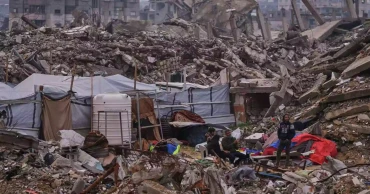
Israel announced Tuesday it will halt operations of more than two dozen humanitarian organizations in Gaza, including Doctors Without Borders (MSF), starting Jan. 1, citing their failure to meet new vetting rules.
The Ministry of Diaspora Affairs said the organizations did not provide sufficient details on staff, funding, and operations. Israel accused some MSF staff of alleged ties to Hamas and other militant groups, claims the group has strongly denied.
The ministry noted that about 25 organizations, representing 15% of NGOs operating in Gaza, will not have their permits renewed. International organizations criticized Israel’s rules as arbitrary and warned that they could put aid workers at risk.
Tensions have escalated over aid in Gaza since the two-year war ended with a ceasefire on Oct. 10. Israel maintains it is fulfilling aid commitments under the ceasefire, while humanitarian groups say more assistance is urgently needed for the territory’s two million residents.
Doctors Without Borders said in 2024 it took allegations of staff involvement in military activities “very seriously” and reiterated it would never knowingly employ individuals engaged in such actions.
2 months ago
Saudi Arabia bombs Yemen over shipment of weapons for separatists that arrived from UAE
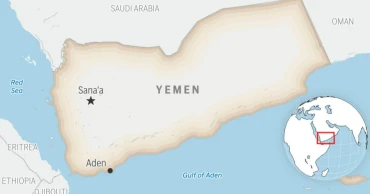
Saudi Arabia bombed Yemen's port city of Mukalla on Tuesday over what it described as a shipment of weapons for a separatist force there that arrived from the United Arab Emirates. The UAE did not immediately acknowledge the strike.
The attack signals a new escalation in tensions between the kingdom and the separatist forces of the Southern Transitional Council, which is backed by the Emirates. It also further strains ties between Riyadh and Abu Dhabi, which had been backing competing sides in Yemen's decadelong war against the Iranian-backed Houthi rebels amid a moment of unease across the wider Red Sea region.
Yemen's anti-Houthi forces later declared a state of emergency Tuesday. It issued a 72-hour ban on all border crossings in territory they hold, as well as entries to airports and seaports, except those allowed by Saudi Arabia.
A military statement carried by the state-run Saudi Press Agency announced the strikes, which it said came after ships arrived there from Fujairah, a port city on the UAE's eastern coast.
"The ships' crew had the disabled tracking devices aboard the vessels, and unloaded a large amount of weapons and combat vehicles in support of the Southern Transitional Council's forces," it said.
"Considering that the aforementioned weapons constitute an imminent threat, and an escalation that threatens peace and stability, the Coalition Air Force has conducted this morning a limited airstrike that targeted weapons and military vehicles offloaded from the two vessels in Mukalla," it added.
It wasn't immediately clear if there were any casualties from the strike or if any other military besides Saudi Arabia's took part. The Saudi military said it conducted the attack overnight to make sure "no collateral damage occurred."
The UAE did not immediately respond to a request for comment from the AP. The Council's AIC satellite news channel acknowledged the strikes, without offering details.
The attack likely targeted a ship identified by analysts as the Greenland, a roll-on, roll-off vessel flagged out of St. Kitts. Tracking data analyzed by the AP showed the vessel had been in Fujairah on Dec. 22 and arrived in Mukalla on Sunday. The second vessel could not be immediately identified.
Mohammed al-Basha, a Yemen expert and the founder of the Basha Report, a risk advisory firm, cited social media videos which purported to show new armored vehicles rolling through Mukalla after the ship's arrival. The ship's owners, based in Dubai, could not be immediately reached.
"I expect a calibrated escalation from both sides. The UAE-backed Southern Transitional Council is likely to respond by consolidating control," al-Basha said. "At the same time, the flow of weapons from the UAE to the STC is set to be curtailed following the port attack, particularly as Saudi Arabia controls the airspace."
Footage later aired by Saudi state television, which appeared to be filmed by a surveillance aircraft, purportedly showed the armored vehicles moving through Mukalla to a staging area. The types of vehicles corresponded to the social media footage.
Mukalla is in Yemen's Hadramout governorate, which the Council had seized in recent days. The port city is some 480 kilometers (300 miles) northeast of Aden, which has been the seat of power for anti-Houthi forces in Yemen after the rebels seized the capital, Sanaa, back in 2014.
The strike in Mukalla comes after Saudi Arabia targeted the Council in airstrikes Friday that analysts described as a warning for the separatists to halt their advance and leave the governorates of Hadramout and Mahra.
The Council had pushed out forces there affiliated with the Saudi-backed National Shield Forces, another group in the coalition fighting the Houthis.
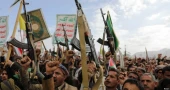
Those aligned with the Council have increasingly flown the flag of South Yemen, which was a separate country from 1967-1990. Demonstrators have been rallying for days to support political forces calling for South Yemen to secede again from Yemen.
The actions by the separatists have put pressure on the relationship between Saudi Arabia and the UAE, which maintain close relations and are members of the OPEC oil cartel, but also have competed for influence and international business in recent years.
There has also been an escalation of violence in Sudan, another nation on the Red Sea, where the kingdom and the Emirates support opposing forces in that country's ongoing war.
Meanwhile, Israel has acknowledged Somalia's breakaway region of Somaliland as an independent nation, the first to do so in over 30 years. That's sparked concern from the Houthis, who have threatened to attack any Israeli presence in Somaliland.
2 months ago