Middle-East
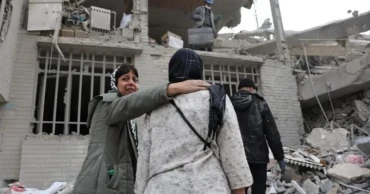
Israeli strikes on Gaza kill 32, mostly women, children
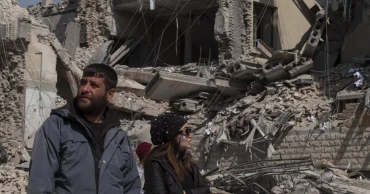
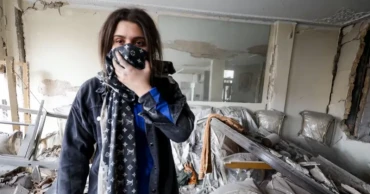
At least 32 people, most of them women and children, were killed in Israeli airstrikes across the Gaza Strip, local health authorities reported on Sunday, as Israeli Prime Minister Benjamin Netanyahu travelled to the United States to meet President Donald Trump for discussions about the ongoing conflict.
Israel, which ended its ceasefire with Hamas last month, has captured territory in an attempt to compel the militant group into agreeing to a new truce and the release of remaining hostages. The country has also prevented the entry of food, fuel, and other critical supplies into Gaza for more than a month, exacerbating the humanitarian crisis in the enclave, which heavily depends on external aid.
Phone footage challenges Israel’s account of killing 15 Palestinian medics
On Sunday evening, the Israeli military instructed residents of several areas in Deir al-Balah, central Gaza, to evacuate, shortly after around 10 projectiles were launched from the territory—marking the largest attack from Gaza since Israel resumed military operations.
The military said about five of those projectiles were intercepted. Hamas’ armed wing claimed responsibility. A rocket hit the city of Ashkelon, and debris fell in other locations, police said. According to the Magen David Adom emergency service, one person sustained minor injuries. The military later announced it had targeted and hit a rocket launcher in Gaza.
Israeli airstrikes overnight into Sunday hit a tent and a home in Khan Younis, a city in the south, killing five men, five women, and five children, according to Nasser Hospital, which received the victims’ bodies.
Among the deceased was a female journalist. “My daughter was innocent. She had no part in any of this — she was passionate about journalism and loved it deeply,” her mother, Amal Kaskeen, said.
Israeli forces establish new security corridor in Southern Gaza
A toddler’s body occupied one side of an emergency stretcher.
“My cousin was killed, and Trump wants the Gaza issue resolved quickly — that’s clear from what happened this morning,” said Mohammad Abdel-Hadi, a relative of one of the victims.
In the Jabaliya refugee camp in northern Gaza, Israeli shelling claimed at least four lives, according to Gaza’s Health Ministry. An Associated Press journalist at Al-Aqsa Martyrs Hospital in Deir al-Balah reported that seven bodies — including those of a child and three women — had arrived there.
Meanwhile, a strike in Gaza City hit civilians queuing outside a bakery, killing at least six people, including three children, according to the civil defence service operated by Gaza’s Hamas-led administration.
Netanyahu Meets Trump Amid Protests Against the War
In Jabaliya, dozens of Palestinians demonstrated against the war, with social media footage showing them marching and chanting anti-Hamas slogans. While such protests are uncommon, they have taken place in recent weeks.
Within Israel, resentment is growing over the renewed conflict and its implications for the hostages still held in Gaza. Hostage families, recently released individuals, and their supporters have urged President Trump to work towards ending the hostilities.
Netanyahu is scheduled to meet Trump on Monday, their second encounter since Trump began his new term in January. The prime minister stated that their agenda would include discussions on the conflict and the newly imposed 17% tariff on Israel — part of a broader U.S. global trade policy.
“There are many leaders waiting for similar discussions regarding their economies. It reflects the strong personal ties and the critical connection between the U.S. and Israel during this difficult time,” Netanyahu said during the conclusion of his visit to Hungary.
The United States, alongside Egypt and Qatar, is one of the key mediators in truce negotiations and supported Israel’s decision to resume the conflict last month.
Israeli airstrike on Gaza School kills 27
Human Toll of the Conflict
Hundreds of Palestinians have been killed since then, including 15 medics whose bodies were only recovered a week after their deaths. Israel’s military recently revised its narrative about the incident, partially captured on video, which had drawn criticism from officials with the Red Cross, Red Crescent, and the United Nations.
The war began on October 7, 2023, when Hamas-led militants launched an attack on Israel, killing around 1,200 people and abducting 251. Of those hostages, 59 remain in Gaza — with 24 believed to be alive.
According to Gaza’s Health Ministry, at least 50,695 Palestinians have been killed by Israel’s offensive. The ministry does not differentiate between civilians and combatants but says over half the dead were women and children. Israel claims it has killed about 20,000 militants but has not provided evidence to support this figure.
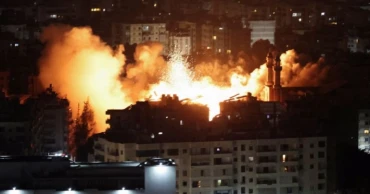
Early Monday, airstrikes hit within the Al Aqsa Martyrs Hospital compound. Explosions were recorded by an Associated Press camera, with smoke and flames visible from a distance. No immediate reports of casualties were available.
Escalation in the West Bank
The Palestinian Health Ministry in the occupied West Bank said that an American-Palestinian teenager was killed, and two others were wounded — one critically — and alleged that Israeli settlers were responsible for the shooting.
The Israeli military said it was investigating the incident in Turmus Ayya, a town near Jerusalem with a significant Palestinian-American community.
The war in Gaza has fuelled violence in the West Bank, where Israeli military operations have resulted in the deaths of hundreds of Palestinians and the displacement of tens of thousands. There has also been a rise in both settler violence and Palestinian attacks on Israelis.
8 months ago
Phone footage challenges Israel’s account of killing 15 Palestinian medics
Mobile phone footage from one of the 15 Palestinian medics killed by Israeli forces last month appears to contradict Israeli claims that the ambulances involved had no emergency signals active at the time of the attack.
The video, recovered from the pocket of a slain paramedic, shows emergency vehicles from the Palestinian Red Crescent and Civil Defense approaching a previously attacked ambulance with flashing lights and visible medical markings. The teams were driving slowly and did not appear to pose any threat as three medics exited the vehicles. Moments later, gunfire erupted and continued for over five minutes. One medic can be heard praying in the background, saying, “Forgive me, mother. This is the path I chose, mother, to help people.”
The incident occurred before dawn on March 23 in Tel al-Sultan, a district of Rafah in southern Gaza. Eight Red Crescent workers, six Civil Defense staff, and a United Nations employee were killed in the shooting. Israeli forces allegedly bulldozed over the bodies and destroyed their vehicles, burying them in a mass grave. Rescue crews were unable to access the site until a week later.
The video was shared with the U.N. Security Council by the Palestinian ambassador and verified by a surviving paramedic, Munzer Abed, and U.N. visual evidence showing the same location. Abed, a 10-year Red Crescent veteran, described being shot at without warning despite the ambulance’s sirens being on. He said Israeli soldiers beat him, stripped him to his underwear, interrogated him, and threatened him with weapons before detaining him.
Israeli strikes on Gaza overnight leaves more than 50 Palestinians dead
Asked about the video, the Israeli military said the incident is “under thorough examination.” Initially, the military claimed the vehicles approached suspiciously without lights, but an Israeli official has since admitted that account was incorrect.
The Palestinian Red Crescent called for an independent investigation, expressing distrust in internal military probes. One medic, Assaad al-Nassasra, remains missing. Abed claims to have seen him blindfolded and taken by Israeli forces.
Israel later claimed it had killed a Hamas commander, Mohammed Amin Shobaki, and eight other militants at the site, but no bodies with those identities have been recovered. None of the 15 medics killed match the names provided by the Israeli side.
Jonathan Whittall, interim Gaza head for the UN humanitarian office (OCHA), refuted Israeli allegations that the medics were militants. “These are paramedic crews that I personally have met before,” he said. “They were buried in their uniforms with their gloves on. They were ready to save lives.”
UN agency closes the rest of its Gaza bakeries
The UN says over 150 emergency responders and more than 1,000 health workers have been killed in Gaza during the war, most while on duty. Israeli investigations into such incidents are rare.
Source: With input from agency
8 months ago
Israeli forces establish new security corridor in Southern Gaza
Israeli troops have been deployed to a newly established security corridor stretching across southern Gaza, the military announced Saturday, as pressure mounts on Hamas in the ongoing conflict.
Prime Minister Benjamin Netanyahu introduced the corridor on Wednesday, calling it the “Morag Corridor,” and indicated it would sever the southern city of Rafah—currently under evacuation orders—from the rest of Gaza. The corridor is named after a former Israeli settlement located between Rafah and Khan Younis.
The Israeli military stated that forces from the 36th Division had been deployed to the corridor, though the exact number of troops and its precise location were not immediately disclosed. Israeli media published maps showing the corridor running east to west across the narrow coastal enclave.
Netanyahu described it as “a second Philadelphi Corridor,” referencing the Gaza-Egypt border zone under Israeli control since May 2023. The new corridor joins the Netzarim Corridor, which cuts off northern Gaza, including Gaza City, from the rest of the territory.
“We are dividing the strip and increasing pressure step by step, so that they return our hostages,” Netanyahu said. His defense minister has signaled plans to expand Israel's security zones within Gaza.
The deployment comes as Israel intensifies its military operations following the breakdown of a January ceasefire. The renewed offensive began last month with a surprise airstrike after Hamas reportedly rejected new ceasefire terms. Since then, hundreds of Palestinians have been killed.
Trump and Netanyahu will meet again Monday on Gaza, tariffs and more
The White House confirmed Saturday that Netanyahu will meet U.S. President Donald Trump on Monday—his second meeting with Trump since January. While the U.S., Egypt, and Qatar continue to mediate for a truce, Washington has supported Israel’s resumption of military actions.
After their last meeting, Trump controversially proposed relocating displaced Palestinians from Gaza and offered U.S. involvement in rebuilding the war-torn area—an idea widely condemned by Palestinians, Arab countries, and human rights organizations.
Israel has vowed to continue its offensive until Hamas returns the remaining hostages, disarms, and exits Gaza. The government also cut off food, fuel, and aid supplies to Gaza last month—drawing condemnation from rights groups, who call the move a war crime.
Hamas, on the other hand, demands the release of Palestinian prisoners, a permanent ceasefire, and full Israeli withdrawal from Gaza in exchange for freeing the remaining 59 hostages, 24 of whom are believed to be alive. The group has rejected demands to disarm or leave Gaza.
The war began after Hamas launched a deadly attack on southern Israel on October 7, 2023, killing around 1,200 people and abducting 251, many of whom have since been released through negotiated deals.
According to Gaza’s Health Ministry, over 50,000 Palestinians have been killed during the conflict—many of them women and children. Israel claims to have killed around 20,000 militants, though it has not provided evidence to support the figure.
The war has left much of Gaza in ruins, displacing the majority of its population, many of them multiple times. Among the recent casualties were 15 Palestinian medics reportedly killed by Israeli forces last month, with their bodies and vehicles later buried by bulldozers.
At a weekly rally, families of hostages called once again for a ceasefire and the safe return of their loved ones.
Israeli strikes kill at least 17 in Gaza as ground troops move into northern territory
“Netanyahu is working hard to ensure our hostages die, rather than working hard to save their lives,” said Efrat Machikawa, niece of hostage Gadi Moses.
Source: With input from agency
8 months ago
Israeli airstrike on Gaza School kills 27
Israeli airstrikes killed at least 100 Palestinians across Gaza on Thursday, including 27 or more people taking shelter in a school, according to Palestinian health officials.
The intensified offensive is part of what Israel’s military says is an effort to pressure Hamas and ultimately expel the group.
Nine killed in Israeli strikes in Syria
Health Ministry spokesman Zaher al-Wahidi reported that the bodies of 14 children and five women were retrieved from the school in Gaza City’s Tuffah neighbourhood. He added that the death toll may climb, as several of the 70 injured are in critical condition. Another 30-plus residents were reportedly killed in airstrikes on homes in the adjacent Shijaiyah area, based on Ahli Hospital records.
The Israeli military said it had targeted a “Hamas command and control centre” in Gaza City and claimed it took precautions to minimise civilian harm. This justification — striking Hamas militants — was also cited for a previous attack on a United Nations shelter, which killed at least 17 people.
Hamas denounced the school bombing as a “heinous massacre” of civilians.
As the strikes continued, Israel’s military ordered further evacuations from parts of northern Gaza, instructing residents to move west or south to shelters. Many fled on foot — some carrying possessions on their backs, others using donkey carts.
“My wife and I have been walking for three hours and covered only a kilometre,” said 72-year-old Mohammad Ermana, walking with a cane alongside his wife. “Now, I’m searching for a new shelter every hour, not every day.”
Israel has issued broad evacuation orders in anticipation of ground operations. The U.N. Office for the Coordination of Humanitarian Affairs said around 280,000 Palestinians have been displaced since Israel ended its ceasefire with Hamas last month.
These latest evacuation directives followed statements from Israeli officials that they plan to seize large areas of Gaza and create a new security corridor. To pressure Hamas, Israel has enforced a month-long blockade on food, fuel, and aid — a measure human rights groups have condemned as a war crime.
Hamas has stated it will only release the remaining 59 hostages — 24 of whom are believed to be alive — in exchange for the release of Palestinian prisoners, a permanent ceasefire, and an Israeli withdrawal from Gaza. The group has rejected demands to disarm or leave the territory.
Another Deadly Day in Gaza
Israeli air raids overnight killed at least 55 people in Gaza, hospital sources reported Thursday.
In Khan Younis, the bodies of 14 individuals, including five children and four women, were brought to Nasser Hospital — nine from the same family. The European Hospital near the city received the bodies of another 19, including five children aged 1 to 7 and a pregnant woman. In Gaza City, 21 more bodies, including those of seven children, were taken to Ahli Hospital.
Later in the day, four additional people were killed in Khan Younis, with their bodies also taken to Nasser Hospital. Two more people were killed in central Gaza and taken to Al Aqsa Hospital.
Meanwhile, the Israeli military said it would launch an independent investigation into a March 23 operation in which its forces fired on ambulances in southern Gaza. According to U.N. officials, 15 medics and emergency workers were killed, and their bodies, along with the ambulances, were buried by Israeli troops in a mass grave.
Initially, the Israeli military claimed the ambulances were acting suspiciously and that nine militants had been killed. The military stated that a special fact-finding team would lead the investigation. However, rights groups argue that such inquiries rarely lead to accountability.
Younes Al-Khatib, head of the Palestine Red Crescent Society, told the U.N. Security Council on Thursday that some of the medics may have still been alive when Israeli forces overtook them. He said the group’s radio operators overheard a Hebrew-language conversation between Israeli soldiers and the medics after the ambulances were attacked.
Palestinian U.N. envoy Riyad Mansour submitted a video to the Security Council that he claims depicts the moments leading up to the killing of 15 humanitarian workers in Gaza. He said the footage, allegedly recovered from the body of one of the victims, shows emergency vehicles travelling at night with lights on — clearly signalling to Israeli forces. Nevertheless, Mansour said the Israeli army ambushed the convoy.
Israel’s Gaza Strategy
On Wednesday, Prime Minister Benjamin Netanyahu announced plans to create a security corridor across Gaza to increase pressure on Hamas. This move would isolate the southern city of Rafah — currently under evacuation orders — from the rest of the enclave.
Israel has also reinforced control of the Netzarim corridor, which separates northern Gaza from the rest of the territory. This and another corridor along Gaza’s border with Egypt stretch from the Israeli border to the Mediterranean.
Netanyahu also said on Sunday that Israel intends to retain overall security control of Gaza following the war, and he endorsed former U.S. President Donald Trump’s proposal for “voluntary emigration” of Palestinians — a suggestion viewed by Palestinians as forced expulsion and condemned by human rights experts as likely breaching international law.
According to Gaza’s Health Ministry, over 50,000 Palestinians have been killed since the conflict began. The ministry does not differentiate between civilians and fighters but says more than half of those killed were women and children. Israel claims to have killed about 20,000 militants, though it has not provided verification.
Much of Gaza now lies in ruins, with nearly 90% of the population displaced at the peak of the war.
The conflict began when Hamas-led fighters attacked southern Israel on October 7, 2023, killing roughly 1,200 people — mostly civilians — and taking 251 hostages. Most hostages have since been freed in ceasefire deals and other agreements. Israel has rescued eight hostages alive and recovered many bodies.
Netanyahu Travels Despite ICC Warrant
Netanyahu arrived in Hungary early Thursday — his second overseas visit since the International Criminal Court issued an arrest warrant against him in November over Israel’s actions in Gaza.
The ICC, based in The Hague, stated there is reason to believe that Netanyahu and former Defence Minister Yoav Gallant used starvation as a method of war and deliberately targeted civilians — charges both deny.
Although Hungary is an ICC member and technically obliged to arrest those under warrant, the court has no enforcement mechanism and depends on states’ cooperation. Hungary announced plans to initiate withdrawal from the ICC as Netanyahu landed in Budapest.
Strike in Lebanon
At least two people were killed early Friday in a suspected Israeli airstrike on an apartment in the Lebanese coastal city of Sidon. An AP photographer saw emergency crews carry two bodies from the building.
The Israeli military has yet to comment. It marks the first strike in Sidon since a ceasefire halted the Israel-Hezbollah conflict in late November. Despite the ceasefire, Israel continues to carry out airstrikes against targets it claims belong to Hezbollah and allied groups.
8 months ago
Nine killed in Israeli strikes in Syria
At least nine people in southwestern Syria were killed in Israeli airstrikes on Thursday, as Israel accused Turkey of attempting to establish a “protectorate” in Syria.
According to the Syrian state news agency, SANA, the victims were civilians, but no further details were provided. The Syrian Observatory for Human Rights, a UK-based war monitor, reported that the casualties were armed residents from Daraa province.
Senegal revises amnesty law that covered deadly protests
Earlier on Wednesday evening, Israeli forces had launched strikes on five Syrian cities, including multiple attacks near a strategic airbase in Hama, where Turkey is said to have interests in maintaining a military presence. Syria's Foreign Ministry stated that the strikes had nearly destroyed the Hama military airport and caused injuries to both civilians and military personnel.
Israeli Foreign Minister Gideon Sa'ar accused Turkey of playing a “negative role” in Syria, stating that Turkey was working towards turning Syria into a Turkish protectorate. “Their intention is clear,” Sa'ar remarked during a press conference in Paris. "We didn’t support Syria being an Iranian proxy, and we don’t believe it should become a Turkish protectorate either.”
No official response from Turkish authorities has been issued yet.
Israel has controlled parts of southwestern Syria since the downfall of former President Bashar Assad, establishing a buffer zone which it claims is for its own security against armed groups. Critics argue that Israel’s military actions have fueled instability in Syria and are preventing long-term peace and reconstruction efforts.
Tensions had recently flared in the village of Koawaya in the province, where local residents clashed with Israeli troops attempting to cross agricultural land.
Syria’s interim leadership continues to face challenges in gaining support from non-Sunni Muslim communities. Relations with the Druze in the south remain tense, and the Alawites along the coast are still wary after clashes between security forces and former loyalists of Assad led to revenge killings.
Israeli strikes on Gaza overnight leaves more than 50 Palestinians dead
Amnesty International has called for an investigation into the killings, urging that they be treated as war crimes. The organisation accused government-linked militias of deliberately targeting civilians. Agnès Callamard, the organisation's Secretary-General, stated, “Our evidence shows that government-affiliated militias intentionally executed civilians from the Alawite minority in cold-blooded revenge attacks, shooting them at close range. For two days, authorities did nothing to stop these killings.”
8 months ago
Israeli strikes on Gaza overnight leaves more than 50 Palestinians dead
Overnight strikes by Israel killed at least 55 people across the Gaza Strip, hospital officials said Thursday, a day after senior government officials said Israel would seize large areas of Gaza and establish a new security corridor across the Palestinian territory.
Israel has vowed to escalate the nearly 18-month war with Hamas until the militant group returns dozens of remaining hostages, disarms and leaves the territory. Israel has imposed a month-long halt on all imports of food, fuel and humanitarian aid that has left civilians facing acute shortages as supplies dwindle.
Officials in Khan Younis, in the southern part of the strip, said the bodies of 14 people had been taken to Nasser Hospital – nine of them from the same family. The dead included five children and four women. The bodies of another 19 people, including five children aged between 1 and 7 years and a pregnant woman, were taken to the European hospital near Khan Younis, hospital officials said. In Gaza City, 21 bodies were taken to Ahli hospital, including those of seven children.
On Wednesday, Prime Minister Benjamin Netanyahu announced Israel was establishing a new security corridor across the Gaza Strip to pressure Hamas, suggesting it would cut off the southern city of Rafah, which Israel has ordered evacuated, from the rest of the Palestinian territory.
Netanyahu referred to the new axis as the Morag corridor, using the name of a Jewish settlement that once stood between Rafah and Khan Younis, suggesting it would run between the two southern cities. He said it would be “a second Philadelphi corridor ” referring to the Gaza side of the border with Egypt further south, which has been under Israeli control since last May.
UN agency closes the rest of its Gaza bakeries
Israel has reasserted control over the Netzarim corridor, also named for a former settlement, that cuts off the northern third of Gaza, including Gaza City, from the rest of the narrow coastal strip. Both of the existing corridors run from the Israeli border to the Mediterranean Sea.
“We are cutting up the strip, and we are increasing the pressure step by step, so that they will give us our hostages,” Netanyahu said.
The Western-backed Palestinian Authority, led by rivals of Hamas, expressed its “complete rejection” of the planned corridor. Its statement also called for Hamas to give up power in Gaza, where the militant group has faced rare protests recently.
Netanyahu’s announcement came after the defense minister, Israel Katz, said Israel would seize large areas of Gaza and add them to its so-called security zones, apparently referring to an existing buffer zone along Gaza’s entire perimeter. He called on Gaza residents to “expel Hamas and return all the hostages,” saying “this is the only way to end the war.”
Hamas has said it will only release the remaining 59 hostages — 24 of whom are believed to be alive — in exchange for the release of more Palestinian prisoners, a lasting ceasefire and an Israeli pullout. The group has rejected demands that it lay down its arms or leave the territory.
On Sunday, Netanyahu said Israel plans to maintain overall security control of Gaza after the war and implement U.S. President Donald Trump’s proposal to resettle much of its population elsewhere through what the Israeli leader referred to as “voluntary emigration.”
Palestinians have rejected the plan, viewing it as expulsion from their homeland after Israel’s offensive left much of it uninhabitable, and human rights experts say implementing the plan would likely violate international law.
'Eid of sadness': Palestinians in Gaza mark Muslim holiday with dwindling food and no end to war
The war began when Hamas-led militants attacked southern Israel on Oct. 7, 2023, killing around 1,200 people, mostly civilians, and taking 251 hostages, most of whom have since been released in ceasefire agreements and other deals. Israel rescued eight living hostages and has recovered dozens of bodies.
Israel’s offensive has killed more than 50,000 Palestinians, according to Gaza’s Health Ministry, which doesn’t say whether those killed are civilians or combatants. Israel says it has killed around 20,000 militants, without providing evidence.
The war has left vast areas of Gaza in ruins and at its height displaced around 90% of the population.
8 months ago
40 including children killed in Gaza as Israel expands operation
Israel's military operation in Gaza has expanded to seize "large areas," according to the defence minister, while hospital officials in the Palestinian territory report that Israeli strikes overnight and into Wednesday have killed over 40 people, including nearly a dozen children.
Israel’s offensive in Gaza is "expanding to crush and clean the area" of militants while "seizing large areas that will be added to the security zones of the State of Israel," Defence Minister Israel Katz stated in a written announcement.
Israel strikes kill 3 in Beirut
Israel has long maintained a buffer zone inside Gaza along its security fence, which has significantly expanded since the war began in 2023. While Israel argues that the buffer zone is essential for security, Palestinians see it as a land grab further reducing the already narrow coastal enclave, home to around 2 million people.
Katz did not specify which areas of Gaza would be seized in this expanded operation, which he said involves the “extensive evacuation” of residents from combat zones. His remarks followed Israel’s order for a full evacuation of the southern city of Rafah and surrounding areas.
Prime Minister Benjamin Netanyahu has stated that Israel intends to maintain indefinite but unspecified security control over Gaza once Hamas is defeated.
The minister urged Gaza’s residents to "expel Hamas and return all hostages." The militant group still holds 59 captives, 24 of whom are believed to be alive, after most others were freed through ceasefire agreements or other negotiations.
“This is the only way to end the war,” Katz declared.
Since the collapse of the ceasefire last month, Israel’s expanding areas of operation and evacuation orders have resulted in “no-go” zones covering more than 60% of Gaza, according to Olga Cherevko, spokesperson for the U.N. Office for the Coordination of Humanitarian Affairs.
Aid organisations are offering assistance where possible, though supplies are dwindling due to Israel’s monthlong blockade. These "no-go" zones include the military zone in the Netzarim corridor—an Israeli-controlled strip dividing northern and southern Gaza—as well as the expanded buffer zone and newly designated evacuation areas.
The Hostage Families Forum, representing most captives' relatives, expressed shock over the defence minister’s announcement.
The group stated that Israel’s government has a duty to secure the release of all 59 hostages and must pursue every possible negotiation channel.
“Their lives hang in the balance as more and more disturbing details emerge about the horrific conditions they’re being held in—chained, abused, and in desperate need of medical attention,” the forum said. It urged the Trump administration and other mediators to maintain pressure on Hamas for their release.
“Our highest priority must be an immediate deal to bring ALL hostages back home—the living for rehabilitation and those killed for proper burial—and end this war,” the group added.
Children killed in strike on UN building
Israel continued its strikes on Gaza, with overnight air raids killing 17 people in the southern city of Khan Younis. Another 15 were killed in an attack in northern Gaza on Wednesday, according to hospital officials.
At Nasser Hospital, officials said 12 bodies from an overnight airstrike included five women—one of them pregnant—and two children. The Gaza European Hospital reported receiving five bodies from separate airstrikes.
Later on Wednesday, officials at the Indonesian Hospital said an Israeli strike on a U.N. agency for Palestinian refugees (UNRWA) building in Jabaliya refugee camp killed 15 people, including nine children and two women.
The Palestinian Civil Defence reported that the building had previously functioned as a UNRWA clinic but was now housing displaced individuals. It said the attack hit two rooms and that rescue teams retrieved the bodies of seven victims and 12 wounded survivors.
Juliette Touma, a spokesperson for UNRWA, stated that the facility was no longer operating as a clinic but served as a shelter for about 735 displaced people from 160 families.
Despite warnings from UNRWA staff about the dangers after Wednesday’s attack, many families have remained at the site “simply because they have absolutely nowhere else to go,” Touma said, adding that no UNRWA staff were harmed in the strike.
The Israeli military stated that it targeted Hamas operatives in the area, alleging that they were hiding in a “command and control centre” used to coordinate armed activities and functioned as a central meeting place for the group.
Separately, the European Hospital confirmed receiving the bodies of eight people killed in Khan Younis, while three others killed in Zawaida in central Gaza were taken to Al-Aqsa Hospital, according to hospital officials.
The war began on 7 October 2023, when Hamas-led militants attacked southern Israel, killing about 1,200 people, mostly civilians, and taking 251 hostages.
Israel orders evacuation of most of Rafah
Israel’s ongoing offensive has resulted in the deaths of more than 50,000 Palestinians, including hundreds killed since the recent ceasefire ended about two weeks ago, according to Gaza’s Health Ministry, which does not distinguish between civilians and combatants. Israel claims to have killed around 20,000 militants, though it has not provided evidence.
8 months ago
Israel strikes kill 3 in Beirut
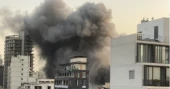
The Israeli military carried out an airstrike on a building in Beirut's southern suburbs early Tuesday, resulting in the deaths of at least three people.
Israel stated that the strike targeted a Hezbollah militant.
Israel orders evacuation of most of Rafah
The attack occurred without prior warning, just days after Israel launched an assault on Beirut on Friday—the first such strike on the Lebanese capital since a ceasefire ended clashes between Israeli forces and Hezbollah in November. Before the attack, the Israeli military had issued warnings to residents in the densely populated suburbs following the launch of two projectiles from southern Lebanon, which Hezbollah denied responsibility for.
According to the Lebanese Health Ministry, at least seven other individuals sustained injuries in the strike.
In a statement, the Israeli military said the airstrike targeted a Hezbollah operative who was assisting the Palestinian Hamas group in Gaza with attacks against Israel. It added that the strike was conducted “under the direction of the Shin Bet,” Israel’s domestic intelligence agency.
Hezbollah did not immediately comment on the attack, and no further details on casualties were available.
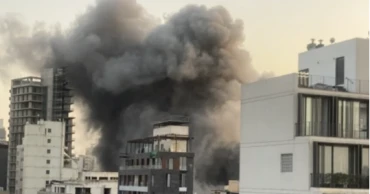
Photos and videos widely circulated on local and social media showed significant damage to the top three floors of an apartment building. Debris from the strike had fallen onto vehicles below.
Jets were heard flying over parts of the Lebanese capital before the strike, which took place near the Hay Madi neighborhood. During Israel’s previous war with Hezbollah, Israeli drones and fighter jets frequently targeted Beirut’s southern suburbs, an area where Hezbollah maintains significant influence and support. Israel considers this region a militant stronghold and has accused Hezbollah of stockpiling weapons there.
“We were at home. It was Eid al-Fitr,” said Hussein Nour El-Din, a local resident, referring to the Islamic holiday marking the end of Ramadan. “We didn’t know where the explosion happened, but once the smoke cleared, we saw it was the building right across from us.”
On Saturday, Hezbollah’s deputy leader, Sheikh Naim Kassem, warned that if Israel continued its attacks on Lebanon and the Lebanese government failed to intervene, the group would be forced to explore other options.
As part of the U.S.-brokered ceasefire that ended the 14-month conflict between Israel and Hezbollah, Israeli forces were required to withdraw from all Lebanese territory by late January, while Hezbollah was obligated to cease its armed presence south of the Litani River along the Israeli border.
Iran has rejected direct negotiations with the US in response to Trump's letter
Since the ceasefire took effect, Israel has conducted daily strikes in southern and eastern Lebanon, claiming to target Hezbollah operatives and infrastructure. Meanwhile, the Lebanese military has been gradually deploying in the country’s southern region, with Beirut urging the international community to pressure Israel to halt attacks and withdraw its remaining forces from five hilltops within Lebanese territory.
8 months ago
Israel orders evacuation of most of Rafah
The Israeli military issued extensive evacuation orders for the majority of Rafah, a city in the southern Gaza Strip, on Monday, suggesting the possibility of a major ground operation in the area.
This move comes after Israel ended its ceasefire with Hamas and resumed its air and ground offensive earlier this month. In March, Israel had halted all supplies of food, fuel, medicine, and humanitarian aid to Gaza's 2 million Palestinians to pressure Hamas to accept new terms in the truce.
The evacuation orders covered most of the city and its surrounding areas. The military instructed Palestinians to move to Muwasi, a coastal area with overcrowded tent camps. These orders were issued during Eid al-Fitr, a Muslim holiday typically marked by celebration at the end of Ramadan.
Israel had launched a large operation in Rafah in May of the previous year, which resulted in extensive destruction and the capture of a strategic corridor along the border with Egypt, as well as the Rafah crossing, Gaza's only non-Israeli controlled exit point. Although Israel was expected to withdraw from this corridor under the January ceasefire agreement, it refused, citing concerns over weapons smuggling.
Israel has stated its intention to escalate its military actions until Hamas releases the remaining 59 hostages it holds — 24 of whom are believed to still be alive. Israel also demands that Hamas disarm and leave Gaza, conditions not outlined in the ceasefire, which Hamas has rejected.
Israeli Prime Minister Benjamin Netanyahu confirmed on Sunday that Israel plans to assume control of Gaza's security post-war and to implement U.S. President Donald Trump's proposal for the resettlement of Gaza’s population in other nations, a plan Palestinians have universally rejected, viewing it as forced expulsion. Human rights experts also warn that the plan could breach international law.
Hamas has maintained its stance on the original ceasefire agreement, which stipulated the release of all remaining hostages in exchange for a long-term ceasefire and Israeli withdrawal. However, full negotiations on this agreement have not yet taken place, with only preliminary talks held in February.
The conflict began on October 7, 2023, when Hamas militants attacked Israel, killing around 1,200 people, mostly civilians, and taking 251 hostages, many of whom have since been released. In retaliation, Israel’s offensive has killed over 50,000 Palestinians, according to Gaza’s Health Ministry, though the exact number of civilians versus combatants remains unclear.
The war displaced up to 90% of Gaza's population at its peak, with widespread destruction that leaves the future of reconstruction uncertain.
8 months ago
Iran has rejected direct negotiations with the US in response to Trump's letter
Iran's president said Sunday that the Islamic Republic rejected direct negotiations with the United States over its rapidly advancing nuclear program, offering Tehran's first response to a letter President Donald Trump sent to the country's supreme leader.
President Masoud Pezeshkian said Iran's response, delivered via the sultanate of Oman, left open the possibility of indirect negotiations with Washington. However, such talks have made no progress since Trump in his first term unilaterally withdrew America from Tehran's nuclear deal with world powers in 2018.
In the years since, regional tensions have boiled over into attacks at sea and on land. Then came the Israel-Hamas war in the Gaza Strip, which saw Israel target militant group leaders across Iran's self-described "Axis of Resistance." Now, as the U.S. conducts intense airstrikes targeting the Iranian-backed Houthi rebels of Yemen, the risk of military action targeting Iran's nuclear program remains on the table.
“We don’t avoid talks; it’s the breach of promises that has caused issues for us so far,” Pezeshkian said in televised remarks during a Cabinet meeting. “They must prove that they can build trust.”
The White House, the State Department and other officials offered no immediate reaction to the announcement. However, Trump said before Pezeshkian’s comments he was considering military action and secondary tariffs if Iran does not agree to a nuclear deal.
“If they don’t make a deal, there will be bombing and it will be bombing the likes of which they have never seen before," Trump said in a comment aired Sunday by NBC News.
Iran's position hardens after Trump's letter
Having Pezeshkian announced the decision shows just how much has changed in Iran since his election half a year ago after he campaigned on a promise to re-engage with the West.
US, Iran-backed Houthis vow escalation after airstrikes"
Since Trump's election and the resumption of his “maximum pressure” campaign on Tehran, Iran's rial currency has gone into a freefall. Pezeshkian had left open talks up until Iran's 85-year-old Supreme Leader Ayatollah Ali Khamenei came down hard on Trump in February and warned talks “are not intelligent, wise or honorable" with his administration. The Iranian president then immediately toughened his own remarks on the U.S.
Meanwhile, there have been mixed messages coming from Iran for weeks. Videos from Quds, or Jerusalem, Day demonstrations on Friday had people in the crowds instructing participants to only shout: “Death to Israel!” Typically, “Death to America” was also heard.
A video of an underground missile base unveiled by Iran's hard-line paramilitary Revolutionary Guard also showed its troops stepping on an Israeli flag painted on the ground — though there was no American flag as often seen in such propaganda videos.
But Press TV, the English-language arm of Iranian state television, published an article last week that included listing U.S. bases in the Middle East as possible targets of attack. The list included Camp Thunder Cove on Diego Garcia in the Indian Ocean, where the U.S. is basing stealth B-2 bombers likely being used in Yemen.
“The Americans themselves know how vulnerable they are,” warned Iranian parliament speaker Mohammad Bagher Qalibaf on Friday. "If they violate Iran’s sovereignty, it will be like a spark in a gunpowder depot, setting the entire region ablaze. In such a scenario, their bases and their allies will not be safe.”
However, Tehran's two recent direct attacks on Israel with ballistic missiles and drones caused negligible damage, while Israel responded by destroying Iranian air defense systems.
Iran's rejection is the latest in tensions over nuclear program
Trump's letter arrived in Tehran on March 12. Though announcing he wrote it in a television interview, Trump offered little detail on what he exactly told the supreme leader.
“I’ve written them a letter saying, ‘I hope you’re going to negotiate because if we have to go in militarily, it’s going to be a terrible thing,’” Trump said in the interview.
The move recalled Trump’s letter-writing to North Korean leader Kim Jong Un in his first term, which led to face-to-face meetings but no deals to limit Pyongyang’s atomic bombs and a missile program capable of reaching the continental U.S.
The last time Trump tried to send a letter to Khamenei, through the late Japanese Prime Minister Shinzo Abe in 2019, the supreme leader mocked the effort.
Trump’s letter came as both Israel and the United States have warned they will never let Iran acquire a nuclear weapon, leading to fears of a military confrontation as Tehran enriches uranium at near weapons-grade levels of 60% purity — something only done by atomic-armed nations.
Iran has long maintained its program is for peaceful purposes, even as its officials increasingly threaten to pursue the bomb. A report in February, however, by the U.N.’s nuclear watchdog said Iran has accelerated its production of near weapons-grade uranium.
Iran denies aiding Yemen's Houthi rebels after US strikes, Trump’s threat
Iran's reluctance to deal with Trump likely also takes root in his ordering the attack that killed Iranian Gen. Qassem Soleimani in a Baghdad drone strike in January 2020. The U.S. has said Iran plotted to assassinate Trump over that prior to his election this November, something Tehran denied though officials have threatened him.
8 months ago