Middle-East
Iran fires missiles at Israel, Gulf states after US-Israeli strike kills Khamenei
Iran launched missiles at targets in Israel and Gulf Arab states on Sunday following its vow of massive retaliation after Supreme Leader Ayatollah Ali Khamenei was killed in a joint U.S.-Israeli airstrike.
Iran confirmed Khamenei’s death in the strike on his Tehran office Saturday, an event that raises uncertainty over the future of the Islamic Republic and heightens the risk of regional instability.
The 86-year-old’s death “showed that he consistently stood among the people and at the forefront of his responsibilities, confronting what officials call global arrogance,” Iranian state TV said.
Trump described the killing as giving Iranians their “greatest chance” to “take back” their country.
“Khamenei, one of the most evil people in History, is dead,” Trump wrote in a social media post.
Iran’s Cabinet vowed the “great crime will never go unanswered,” while the paramilitary Revolutionary Guard threatened its “most intense offensive operation” ever, targeting U.S. and Israeli bases.
“You have crossed our red line and must pay the price,” Iran’s parliamentary speaker, Mohammad Bagher Qalibaf, said in a televised address Sunday. “We will deliver such devastating blows that you yourselves will be driven to beg.”
“Iran just stated that they are going to hit very hard today, harder than they have ever hit before,” Trump responded on social media. “THEY BETTER NOT DO THAT, HOWEVER, BECAUSE IF THEY DO, WE WILL HIT THEM WITH A FORCE THAT HAS NEVER BEEN SEEN BEFORE!”
Iran’s top Revolutionary Guard commander, senior security adviser killed in US-Israeli strikes
Iran retaliates
Following the initial airstrikes, Iran launched missiles and drones toward Israel and U.S. military installations in Bahrain, Kuwait, and Qatar. The Israeli military said dozens of Iranian missiles were fired at Israel, many intercepted. Magen David Adom reported that a woman in the Tel Aviv area died after being wounded in the attack.
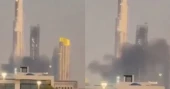
Air traffic across the Middle East was disrupted as explosions and air defense fire continued over Dubai into Sunday morning. Shrapnel from an Iranian missile struck the UAE capital, killing one person, while debris from interceptions caused fires at the city’s main port and on the facade of the Burj Al Arab hotel.
The U.S.-Israel strike marks a major escalation in American military intervention, with potential for retaliatory violence and wider conflict. It represents a significant demonstration of force by a U.S. president who campaigned on “America First” and promised to avoid “forever wars.”
Khamenei’s death, the second strike on Iran under Trump’s second term, creates a leadership vacuum, as no known successor has been publicly designated. He had the final authority over all major policies and led both Iran’s clerical establishment and the Revolutionary Guard.
“This is the single greatest chance for the Iranian people to take back their Country,” Trump said.
Iran quickly formed a council to govern until a new supreme leader is chosen. State media reported the deaths of the head of Iran’s Revolutionary Guard and a top security adviser to Khamenei in the airstrikes. Maj. Gen. Mohammad Pakpour succeeded the Guard’s previous commander, killed by Israel last June. Adviser Ali Shamkhani was a key figure in Iran’s security establishment, IRNA reported.
Iran warns ‘great crime’ will not go unanswered after Khamenei killed
Eyewitnesses in Tehran said some residents celebrated Khamenei’s death, cheering from rooftops and blowing whistles, while mourners raised a black flag over the Imam Reza shrine in Mashhad. The government declared 40 days of public mourning and a seven-day nationwide holiday.
Citing unidentified sources, the semi-official Fars news agency reported several relatives of Khamenei, including a daughter, son-in-law, daughter-in-law, and grandchild, were also killed.
Strikes were planned for months
Officials said the joint U.S.-Israel operation, planned for months, occurred Saturday during Ramadan and the start of Iran’s workweek. The strike followed stalled negotiations, with Trump framing it as necessary to prevent Iran’s nuclear program resurgence.
About 12 hours after the attacks began, the U.S. military reported no American casualties and minimal damage at U.S. bases despite “hundreds of Iranian missile and drone attacks.” Targets in Iran included Revolutionary Guard facilities, air defenses, missile and drone sites, and airfields.
Israel reported killing the commander of the Revolutionary Guard Corps, the defense minister, and Khamenei’s security council secretary, a close adviser.
An Iranian diplomat told the U.N. Security Council that hundreds of civilians were killed or injured. Iran retaliated with missiles and drones against Israel and U.S. bases, and exchanges of fire continued into the night.
Some strikes hit near Khamenei’s office. Israeli officials confirmed his death, later confirmed by Trump.
Democrats criticized Trump for acting without congressional approval, though White House spokesperson Karoline Leavitt said leaders from both parties were briefed in advance.
Tensions soar as US builds up forces
Tensions escalated as the U.S. deployed the largest Middle East military force in decades. Trump insisted he sought a deal to limit Iran’s nuclear program amid growing domestic unrest.
Despite declaring Iran’s nuclear program destroyed last year, U.S. officials said Iran was rebuilding, developing the capability to produce high-quality centrifuges needed for enriched uranium. Iran maintained its uranium enrichment rights while attempting to prevent inspectors from visiting bombed sites.
Khamenei dead in strike, Iranian media confirm
Operation coordination and casualties
Israel said the strike was coordinated with the U.S. Air Force pilots hit “hundreds of targets across Iran,” including military, government, and intelligence sites. Trump acknowledged possible U.S. casualties, saying, “that often happens in war,” and warned the Revolutionary Guard to surrender or face “certain death.”
In southern Iran, at least 115 people were killed in a girls’ school strike, with dozens more wounded, state TV reported. IRNA cited 15 deaths in the southwest, including a sports hall, two residential areas, and a hall near a school.
Regional impact
The attacks could disrupt global markets, especially if Iran threatens the Strait of Hormuz, through which a third of worldwide oil passed in 2025. Saudi Arabia said it repelled Iranian attacks on its capital and eastern region. Bahrain reported a missile strike on the U.S. Navy’s 5th Fleet headquarters, damaging three buildings. Kuwait said a drone struck its main airport, injuring employees, and shrapnel hit Ali Al-Salem air base. Explosions were also reported in Qatar, while Jordan said it “dealt with” 49 drones and ballistic missiles.
5 days ago
Iran’s top Revolutionary Guard commander, senior security adviser killed in US-Israeli strikes
The head of Iran’s Revolutionary Guard and a senior security adviser to the late Supreme Leader Ayatollah Ali Khamenei were killed in airstrikes conducted by the United States and Israel, state media reported Sunday.
The state-run IRNA news agency reported that Maj. Gen. Mohammad Pakpour, who became the Guard’s top commander after Israel killed his predecessor during the 12-day June war, was among those killed.
Also killed was Ali Shamkhani, a long-standing figure in Iran’s security establishment, who had been wounded in the June conflict, IRNA said.
Council formed to govern Iran after Khamenei’s killingA council has been formed to govern Iran following the death of Supreme Leader Ayatollah Ali Khamenei.
The council, enshrined in Iranian law, consists of the sitting president, the head of the judiciary, and a member of the Guardian Council selected by the Expediency Council, which advises the supreme leader and resolves disputes with parliament.
Iranian reformist President Masoud Pezeshkian and hard-line judiciary chief Gholamhossein Mohseni Ejei are members of the council.
Iranian law mandates that the Assembly of Experts “must, as soon as possible,” select a new supreme leader.
Debris from aerial interception sparks fire at Dubai’s Jebel Ali Port
Dubai authorities said debris from an aerial interception caused a fire at the city’s Jebel Ali Port, a major global transshipment hub.
The Dubai Media Office stated that emergency crews responded immediately to the blaze on one of the port’s berths and worked to contain it.
The sprawling Jebel Ali, located between Dubai’s two man-made palm-shaped islands, is the world’s busiest port outside East Asia. Debris from the interception also struck the Palm Jumeirah.
Officials reported that debris from an intercepted drone caused a fire on the facade of the Burj Al Arab hotel. The media office also noted that Dubai International Airport was damaged and four employees were injured.
Iran’s Revolutionary Guard threatens “most-intense offensive operation” everIran’s paramilitary Revolutionary Guard warned Sunday that it would launch its “most-intense offensive operation” in response to Khamenei’s death.
“The most-intense offensive operation in the history of the armed forces of the Islamic Republic of Iran will begin in moments, targeting (Israel) and American terrorist bases,” it said.
Mourners raised a black flag over the Imam Reza shrine in Mashhad, Iran’s second-largest city and a major Shiite pilgrimage site.
Global shipping firm instructs vessels in Persian Gulf to shelterA global shipping company has ordered its vessels in and bound for the Persian Gulf to seek shelter due to rising military tensions and restricted traffic through the Strait of Hormuz.
CMA CGM said on its website that it had suspended passage through the Suez Canal, a key route connecting the Red and Mediterranean seas.
“Vessels will be rerouted via the Cape of Good Hope,” the company said.
Iran’s Revolutionary Guard promises “regret-inducing punishment”The Revolutionary Guard vowed Sunday that a “severe, decisive and regret-inducing punishment” would follow Khamenei’s death.
The Guard, which answered only to Khamenei, said after state media confirmed the 86-year-old leader’s death:
“The Islamic Revolutionary Guard Corps, the Armed Forces of the Islamic Republic of Iran, and what it called the vast popular Basij forces will powerfully continue the path of their leader in defending his legacy, standing firm against internal and external plots and delivering what it described as a lesson-giving punishment to aggressors against the Islamic homeland.”
5 days ago
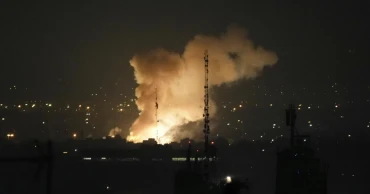
IRGC claims missile, drone strikes on 27 US bases in Middle East
Iran’s Islamic Revolutionary Guard Corps (IRGC) announced a sixth wave of attacks on US and Israeli targets in the Middle East, state media reported.
The IRGC said it launched “extensive missile and drone” strikes on 27 US military bases, Israel’s Tel Nof airbase, the Israeli army’s command center at HaKirya in Tel Aviv, and a major defence industrial complex in the city.
Iranian forces warned that they would “carry out a different and harsh step of revenge, with successive, regrettable slaps,” signaling more retaliatory operations.
5 days ago
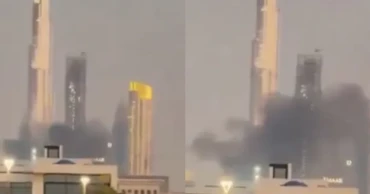
Dubai Airport, Burj Al Arab hit in overnight Iranian strike
Dubai International Airport and the iconic Burj Al Arab suffered damage during overnight Iranian missile strikes across Gulf states, aviation sources told Reuters.
One of the terminals at Dubai International Airport—typically among the world’s busiest air travel hubs—was affected in the attack. Authorities publicly described the event only as an “incident.”
According to Dubai’s media office, four people were injured at the airport. In a post on X, the office said “a concourse at Dubai International (DXB) sustained minor damage in an incident, which was quickly contained,” without providing additional details.
Source: NDTV
5 days ago
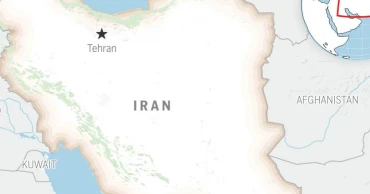
Iran names three-member body to manage transition after Khamenei’s death
Iran has said that its president, the head of the judiciary and a senior jurist from the Guardian Council will jointly oversee the country’s transition period following the death of Ayatollah Ali Khamenei.
Under Iran’s constitution, the task of selecting a new supreme leader now falls to the Assembly of Leadership Experts, a council of clerics mandated to appoint Khamenei’s successor as quickly as possible.
However, bringing its members together may be challenging due to security concerns, as Iran remains under attack from the United States and Israel, reports BBC.
Khamenei himself assumed the role of supreme leader on the same day that Ruhollah Ayatollah Khomeini, the founder of the Islamic Republic, died.
5 days ago
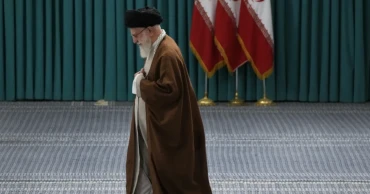
What to know about Iran’s Supreme Leader Khamenei
Iran’s Supreme Leader Ayatollah Ali Khamenei, who ruled the Islamic Republic for nearly four decades, has died at the age of 86, leaving the country facing an uncertain future with no named successor.
Iranian state media confirmed his death early Sunday without providing details, hours after US President Donald Trump said Khamenei had been killed in a major new attack by US and Israeli forces and urged Iranians to overthrow the ruling theocracy. As reports of his death spread, some residents in Tehran were seen cheering from rooftops.
Khamenei’s death comes after years of mounting pressure on his leadership. In one of his final demonstrations of authority, he oversaw the deadliest crackdown of his rule, aimed at crushing nationwide protests during which demonstrators openly shouted “Death to Khamenei.”
Even before his compound was reportedly among the first targets of Saturday’s strikes, Khamenei had been under intense strain. Over the past year, Trump had warned that he could have killed the Iranian leader if he chose to, while also blocking an Israeli plan to do so during last summer’s 12-day war.
In recent weeks, as the United States increased its military presence in the region to pressure Tehran over its nuclear programme, Khamenei attempted to deter attacks, warning that any US strike would trigger a regional war. At the same time, he allowed Iran to enter negotiations with Washington over its nuclear activities.
His harsh suppression of protests, which left thousands dead, underscored the depth of public anger. Years of sanctions, economic mismanagement and corruption had already severely weakened Iran’s economy.
Last summer’s Israeli and US bombardment badly damaged Iran’s nuclear facilities, missile systems and military capacity. Tehran’s regional network of allies, including Hamas in Gaza, Hezbollah in Lebanon and the Houthis in Yemen, has also been weakened by Israeli and US strikes since the war in Gaza began, reducing Iran’s influence across the Middle East.
Transforming the Islamic Republic
When Khamenei assumed power in 1989, he faced doubts about his authority. At the time, he was a relatively low-ranking cleric and lacked the religious stature of his predecessor, Ayatollah Ruhollah Khomeini, who led Iran’s 1979 Islamic Revolution.
Yet Khamenei ruled far longer than Khomeini and arguably left an even deeper mark on the country. He firmly entrenched clerical rule, ensuring Shiite Muslim clerics remained at the top of the political hierarchy, setting boundaries for civilian leaders, the military and the security apparatus.
To hard-liners, Khamenei became the ultimate authority, second only to God.
He also transformed the paramilitary Revolutionary Guard into Iran’s most powerful institution, dominant in both military affairs and internal politics. The Guard controls elite forces, oversees the ballistic missile programme and has built a vast business empire, giving it enormous influence over the economy. In return, it served as Khamenei’s most loyal enforcer.
Domestic challenges
The first serious challenge to Khamenei’s grip on power came from the reform movement that won control of parliament and the presidency soon after he became supreme leader. Reformists sought to strengthen the role of elected officials, a move hard-liners feared would undermine the Islamic Republic.
Khamenei mobilised the clerical establishment, and unelected bodies blocked reforms and disqualified reformist candidates from elections. Since then, repeated waves of protest have been met with force.
Mass demonstrations erupted in 2009 over alleged election fraud. Economic protests followed in 2017 and 2019 as sanctions tightened. In 2022, outrage flared again after the death of Mahsa Amini, who had been detained by police for allegedly not wearing her mandatory headscarf properly.
Security crackdowns killed hundreds, with many more arrested amid reports of torture and sexual abuse in detention.
The deadliest crackdown yet
The most recent protests began in late December in Tehran’s main bazaar after the national currency, the rial, plunged to a record low of 1.42 million to the US dollar. Demonstrations quickly spread nationwide.
“Rioters must be put in their place,” Khamenei declared. When hundreds of thousands marched on Jan 8 and 9, security forces opened fire, with veteran protesters saying they were shocked by the scale of force used.
Activists said they had documented more than 7,000 deaths and were verifying additional cases. The government has acknowledged more than 3,000 fatalities, still exceeding previous crackdowns.
Nuclear negotiations
By agreeing to talks over Iran’s nuclear programme, Khamenei appeared to be seeking time to prevent US strikes. However, Tehran rejected Washington’s core demands that it stop all uranium enrichment and hand over its stockpiles.
Trump initially threatened military action to halt the killing of peaceful protesters, later using the threat to push Iran into serious negotiations.
While some inside Iran and within the Iranian diaspora hoped foreign military pressure might bring down Khamenei, others, including many opponents of the regime, opposed outside intervention to topple the system.
No successor
Under Iran’s constitution, a council of Shiite clerics is responsible for selecting the next supreme leader. Several names have circulated, including Khamenei’s son.
Danny Citrinowicz, an Iran expert at Israel’s Institute for National Security Studies, told the Associated Press that a key lesson Iran drew from last year’s war was the need to ensure regime continuity if Khamenei died. He said power could temporarily shift to a small committee of senior officials until hostilities ease.
“It is possible that Khamenei has indicated a preferred successor behind closed doors,” Citrinowicz said. “However automatic implementation of a preselected successor will increase internal friction during war.”
The Revolutionary Guard, now the most powerful force in Iran, could also move to assert control more openly. Such a struggle, involving the Guard and possibly the regular military, could ignite a violent power battle over the oil-rich nation of about 85 million people.
5 days ago
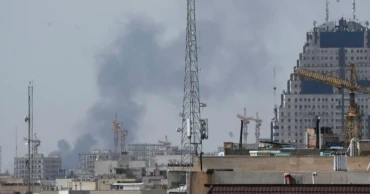
Iran warns ‘great crime’ will not go unanswered after Khamenei killed
Iran’s Cabinet issued a warning early Sunday that a “great crime will never go unanswered” following what it said was a joint U.S.-Israeli military operation that killed Supreme Leader Ayatollah Ali Khamenei.
The warning came after Iranian state media reported that Khamenei, 86, was killed in an airstrike that hit his compound in central Tehran.
Iranian state television interrupted its broadcast to announce his death.
“To the noble and proud people of Iran: With the ultimate grief and sorrow this is to inform you that following the barbaric attack by the criminal governments of America and the evil Zionist regime, the true example of faith, jihad and resistance, the Supreme Leader of the Revolution Grand Ayatollah Khamenei achieved the blessing of martyrdom,” the anchor said.
Semi-official media reported that Khamenei’s daughter and son-in-law were among those killed in the U.S.-Israeli strikes.
The Fars News Agency, citing unidentified sources, also said a grandchild and a daughter-in-law died in Saturday’s attacks, without providing further details.
Iran’s government announced 40 days of national mourning and declared a seven-day nationwide public holiday in memory of the late leader, reports AP.
State television said Khamenei was inside his Tehran compound when the attack began, adding that satellite images from Airbus showed extensive bombing damage at the site.
His death at his workplace, state TV said, “showed that he consistently stood among the people and at the forefront of his responsibilities, confronting what officials call global arrogance.”
Iranian state media later formally confirmed that Ayatollah Ali Khamenei had died.
State television and the state-run IRNA news agency reported his death without giving further details.
U.S. President Donald Trump had earlier said Khamenei was killed in a joint American-Israeli operation against Iran.
Australian Prime Minister Anthony Albanese said he backs U.S. actions aimed at preventing Iran from threatening global peace and security. “We support the United States acting to prevent Iran from obtaining a nuclear weapon and to prevent Iran continuing to threaten international peace and security,” Albanese wrote on social media on Saturday.
The Arab League said the Israeli-U.S. airstrikes marked a point at which the Arab-Israeli conflict had turned into a “full-scale regional war.”
Its U.N. observer, Maged Abdelaziz, told an emergency meeting of the Security Council that Israel was using the Iran conflict to avoid ending its occupation of Palestinian territories and to impose its “hegemony on the Middle East by using military means.”
Despite reports of limited progress in U.S.-Iran talks in Geneva two days earlier, Abdelaziz said Israel carried out “a wanton military attack” that it claimed “was intended to prevent Iran from acquiring nuclear weapons.”
He added, “At the same time, Israel itself refuses to join the Nuclear Non-Proliferation Treaty,” and declines to place its nuclear facilities under the safeguards of the International Atomic Energy Agency.
The IAEA said its Board of Governors will hold a special session in Vienna on Monday after a request from Russia.
A diplomatic note dated Feb. 28 said the meeting would address “matters related to military strikes of the United States and Israel against the territory of the Islamic Republic of Iran that started in the morning of 28 February 2026, preceded by repeated open threats of such action, including against nuclear facilities under the IAEA safeguards.” The session will be held ahead of the board’s regular meeting.
5 days ago
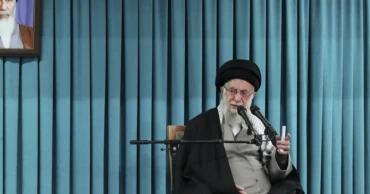
Khamenei dead in strike, Iranian media confirm
Iranian news agencies Tasnim and Fars have confirmed the death of the country’s Supreme Leader, Ayatollah Ali Khamenei, saying he was killed at his office in the early hours of Saturday while “performing his assigned duties”.
According to Fars, the Iranian government has announced 40 days of public mourning following Khamenei’s killing, along with seven days of public holidays.
An IRGC-aligned outlet reported that the supreme leader’s daughter, son-in-law and grandson were also killed in the strike. The reports came after US President Donald Trump and Israeli officials claimed that Khamenei had been killed, allegations that Iranian officials had earlier dismissed as “psychological warfare”.
Following the reports, people were seen pouring into the streets of the Iranian capital, Tehran, Al Jazeera reported.
Public ceremonies are expected in the coming days as part of the 40-day mourning period, even as bombardments continue across the country. A few hours earlier, a loud explosion was heard again in the capital.
Khamenei became head of the Islamic Republic in 1989 after the death of Ayatollah Ruhollah Khomeini, the leader of Iran’s 1979 Islamic revolution. While Khomeini was the ideological architect of the revolution that ended the Pahlavi monarchy, Khamenei went on to shape Iran’s military and paramilitary structures, which form the backbone of its defence strategy and regional influence.
Before assuming the role of supreme leader, Khamenei served as Iran’s president during the devastating war with Iraq in the 1980s. Analysts say that the prolonged conflict, combined with Iran’s sense of isolation as Western countries supported Iraqi leader Saddam Hussein, deepened Khamenei’s distrust of the West in general and the United States in particular. This outlook would later define his decades-long rule and reinforce the belief that Iran must remain in a permanent state of defence against both external and internal threats.
Meanwhile, Reza Pahlavi, son of Iran’s deposed Shah, said “their hour of liberation is at hand” in a short post on X, thanking Trump for the military operation launched against Iran. “The courageous Iranian people have paid a heavy price for freedom,” he added.
Pahlavi, who is seeking to lead Iran, said he has outlined a plan “for an orderly, transparent transition to a democratic Iran”.
5 days ago
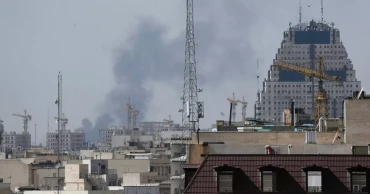
Global tensions rise as US-Israeli strikes on Iran fuel fears of 'wider war'
Coordinated military strikes by the United States and Israel on Iranian targets have sharply escalated global tensions, triggering widespread concern over the risk of a broader regional conflict.
World leaders and neighbouring countries have urged restraint as fears grow that the rapidly intensifying situation could spiral into a wider war.
Iranian state media, citing the Red Crescent, on Saturday evening said at least 201 people were killed and more than 700 injured.
U.S. President Donald Trump urged the Iranian public to “seize control of your destiny” by rising up against the Islamic leadership that has ruled the nation since 1979.
In a video announcing the “major combat operations," Trump told Iranians that “when we are finished, take over your government. It will be yours to take. This will be probably your only chance for generations."
Meanwhile, Iran retaliated by firing missiles and drones toward Israel and U.S. military bases in the region, and exchanges of fire continued into the night.
Some of the first strikes on Iran appeared to hit near the offices of 86-year-old Supreme Leader Ayatollah Ali Khamenei. Smoke rose from the capital as part of strikes that Iranian media said occurred nationwide.
Iranian Foreign Minister Abbas Araghchi told NBC News that Khamenei and President Masoud Pezeshkian are alive “as far as I know,” and called the attack “unprovoked, illegal and absolutely illegitimate.”
He also said Iran will continue to exercise its inherent and lawful right of self-defense until the ongoing aggression by the United States and Israel is ceased “fully and unequivocally.”
Araghchi made the remarks in a letter to the UN secretary-general and the president of the UN Security Council on Saturday.
Besides, Foreign Ministry spokesperson Esmaeil Baqaei has denounced the United States and the Israeli regime for killing civilians, including dozens of students in a primary school, in their unprovoked attacks on Iranian cities.
“The US & Israel launched an egregious, unwarranted act of aggression against Iran by indiscriminately targeting Iranian cities. In just one single case, they targeted a primary school in Minab, Hormozgan Province, killing and maiming tens of innocent young girls,” Baqaei wrote in a post on his X account on Saturday afternoon.
Calling the attack on the school “a blatant crime” he said, “The world must stand up to this grave injustice and the UNSC must act now in exercise of its primary responsibility under the Charter.”
How world leaders react
Global leaders have voiced deep concern following military strikes by Israel and the United States on Iran, and Tehran’s subsequent retaliation, warning of the risk of a wider regional conflict across the Middle East.
The United Nations Human Rights Chief, Volker Türk, called for “restraint” and urged all parties to “see reason, to de-escalate, and for a return to the negotiating table.”
“I deplore the military strikes across Iran this morning by Israel and the United States of America, and the subsequent retaliatory strikes by Iran,” he said, stressing that civilians ultimately bear the brunt of armed conflict. He reminded those involved that protecting civilians is “paramount” under international law.
The European Union’s top diplomat, Kaja Kallas, described the latest developments as “perilous.”
A spokesperson for the Government of the United Kingdom said London does not want to see “further escalation into a wider regional conflict.” The statement emphasised that the immediate priority is the safety of UK nationals in the region, adding that Britain stands ready to protect its interests.
Prime Minister Keir Starmer chaired a meeting of the government’s emergency Cobra committee and is expected to hold a series of calls with allies.
The BBC reported that the UK was not involved in the US-Israeli strikes.
Germany said it had been informed of the attack in advance, with Chancellor Friedrich Merz consulting relevant security ministers.
In Rome, the office of Italian Prime Minister Giorgia Meloni said she had held a conference call with ministers and intelligence chiefs and would consult allies and regional leaders to support efforts aimed at easing tensions.
Australian Prime Minister Anthony Albanese said his country supported the US in acting to prevent Iran from obtaining a nuclear weapon and from continuing to threaten international peace and security.
Meanwhile, Russia condemned the US-Israeli strikes, calling them a “reckless move.” The Russian foreign ministry said it was “condemnable” that the attacks were being carried out under what it described as the guise of renewed negotiations, referring to recent US-Iran nuclear talks.
Moscow also urged the international community to assess what it termed “irresponsible actions aimed at undermining peace, stability, and security” in the region.
As diplomatic activity intensifies, world leaders continue to call for restraint, warning that any further escalation could destabilise an already volatile Middle East.
Oil prices poised for volatility amid fears of wider conflict
Oil markets, currently closed for the weekend, are expected to see sharp price swings next week as uncertainty lingers over the impact of U.S. and Israeli strikes on Middle East oil supplies.
Earlier projections suggested any price spike would be short-lived if oil shipping routes and infrastructure—such as Iranian pipelines and the Kharg Island terminal—remain unaffected. However, disruption to infrastructure or tanker traffic through the Strait of Hormuz could trigger a sharper and more prolonged surge.
Brent crude has already climbed to a seven-month high of $72.87. Iran exports about 1.6 million barrels per day, mostly to China, and any disruption could push Chinese buyers to seek alternative supplies, driving global prices higher.
Around 20% of global oil passes daily through the Strait of Hormuz, used heavily by Saudi Arabia, Iraq and the UAE. Analysts say Iran is unlikely to close the strait as it would harm its own exports and key customer China.
Pre-conflict forecasts suggested limited strikes could raise prices by $5–$10 on market fears alone, while a broader war disrupting tanker traffic could push crude above $90 per barrel and send U.S. gas prices well above $3 per gallon, from last week’s average of $2.98.
# With input from agencies
6 days ago
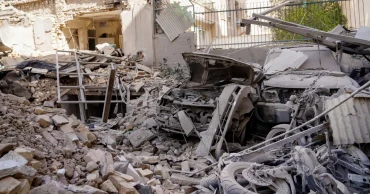
201 killed, 747 injured as US–Israel strikes hit 24 provinces in Iran
The Iranian Red Crescent Society has reported that at least 201 people have been killed and 747 others injured in attacks across Iran, according to Mehr news agency.
A spokesperson for the humanitarian organisation said US and Israeli strikes have affected 24 provinces. More than 220 Red Crescent teams have been deployed to the impacted areas, and rescue efforts are ongoing.
Meanwhile, Donald Trump stated that the United States has initiated “major combat operations” in Iran, following Israel’s announcement that it had carried out missile strikes on the country. Iranian media, citing the Red Crescent, confirmed the casualty toll of at least 201 deaths across 24 provinces.
In response, Iran has launched retaliatory strikes targeting Israel and US assets in several Middle Eastern countries, including Qatar, United Arab Emirates, Kuwait, Bahrain, Jordan, Saudi Arabia and Iraq, reports Al Jazeera.
Multiple explosions were reported in the capital, Tehran, along with blasts in other parts of the country. State media also reported that a strike on a school in southern Iran left more than 80 people dead.
Amid the escalating exchanges, several countries in the region have closed their airspace.
Separately, Iran’s Foreign Ministry spokesperson Esmail Baghaei said the US attacks do not “serve the interests of the American people”.
“This is something that is imposed on Iran. We never sought war. We were going to resolve this issue diplomatically. And this was the demand of all the countries of the region and the international community”, he told Al Jazeera.
“This was asserted by the US, and we believe that it is just to advance the whims of the Israeli regime. And I think this war would not serve the interests of the American people.”
Moreover, Baghaei said that Iran was “friendly with all countries of the region”.
“The problem is that the US is conducting this war of aggression at the cost of everyone, including the countries of the region.”
6 days ago