tech-news
BTRC issues licenses to Starlink to operate in Bangladesh
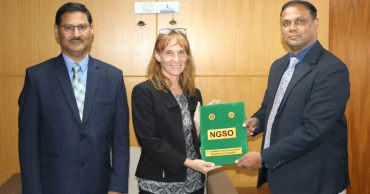
The Bangladesh Telecommunication Regulatory Commission (BTRC) has issued licenses in favour of Starlink Services Bangladesh Limited, enabling the company to provide internet services through non-geostationary satellite orbit (NGSO) systems in the country.
The license handover ceremony took place on Tuesday afternoon at the BTRC headquarters in Agargaon, Dhaka, said a press release.
BTRC grants initial approval to Starlink, awaits final ministry clearance
BTRC handed over two separate licenses—Non-Geostationary Satellite Orbit Operator License and Radio Communication Apparatus License —to Starlink, marking a significant step in the expansion of satellite-based internet connectivity in Bangladesh.
The licenses have been granted for a period of 10 years, following prior approval from the government.
Under the first license, issued by BTRC’s Licensing Division, Starlink will be able to conduct commercial operations in Bangladesh. The second license, issued by the Spectrum Division, allows the company to use approved frequencies to provide internet services, as well as to import and use radio communication equipment and related devices.
Electronics Tariff relief is temporary, semiconductor tariffs on the way :Commerce Secretary
Lt Col Syed Md Tawfiqul Islam, Director of the Licensing Division, handed over the first license to Rebecca Slick Hunter, Director of Global Licensing and Market Aviation at Starlink.
The second license was handed over by Dr Md Sohel Rana, Director of the Spectrum Division, also to Rebecca Slick Hunter.
10 months ago

Amazon launches its first internet satellites to compete against SpaceX's Starlinks
Amazon’s first batch of internet satellites rocketed into orbit Monday, the latest entry in the mega constellation market currently dominated by SpaceX's thousands of Starlinks.
The United Launch Alliance's Atlas V rocket carried up 27 of Amazon's Project Kuiper satellites, named after the frigid fringes of our solar system beyond Neptune. Once released in orbit, the satellites will eventually reach an altitude of nearly 400 miles (630 kilometers).
Two test satellites were launched in 2023, also by an Atlas V. Project officials said major upgrades were made to the newest version. The latest satellites also are coated with a mirror film designed to scatter reflected sunlight in an attempt to accommodate astronomers.
Stargazers oppose the fast-growing constellations of low-orbiting satellites, arguing they spoil observations. Others fear more satellite collisions.
Founded by Jeff Bezos, who now runs his own rocket company, Blue Origin, Amazon aims to put more than 3,200 of these satellites into orbit to provide fast, affordable broadband service around the globe.
Spaceship carrying 3 Chinese astronauts docks with Tiangong space station in latest crew rotation
Elon Musk's SpaceX already has launched more than 8,000 Starlinks since 2019. The company marked its 250th Starlink launch Sunday night. More than 7,000 Starlinks are still in orbit some 300-plus miles (550 kilometers) above Earth.
The European-based OneWeb satellite constellation numbers in the hundreds in an even higher orbit.
Amazon already has purchased dozens of rocket launches from United Launch Alliance and Blue Origin for Project Kuiper, as well as others.
“There are some things you can only learn in flight" despite extensive testing on the ground, said Rajeev Badyal, the project's vice president.
“No matter how the mission unfolds, this is just the start of our journey," he said in a statement ahead of the evening liftoff.
‘Flying taxis’ poised to revolutionise urban commuting
The first liftoff attempt earlier this month was nixed by bad weather. It took until now to secure another spot in the launch lineup at Cape Canaveral Space Force Station.
10 months ago
BTRC grants initial approval to Starlink, awaits final ministry clearance
The Bangladesh Telecommunication Regulatory Commission (BTRC) has given initial approval to Starlink to provide satellite internet services in Bangladesh.
It sent a letter to the Posts and Telecommunications Division last week seeking final endorsement, according to a ministry source.
Under the telecommunications law, BTRC is required to obtain prior approval from the ministry before making major decisions, including the issuance of licences.
Bangladeshi firms join hands with US telecom giant Starlink
On April 7, Starlink applied to the BTRC for a licence to operate in the country under the regulatory framework titled "Guidelines for Non-Geostationary Orbit (NGSO) Satellite Services Operators in Bangladesh.
On March 25, Chief Adviser Dr Muhammad Yunus directed the relevant authorities to ensure the commercial launch of Starlink’s satellite broadband internet service in Bangladesh within 90 days.
During trial broadcasts in the country, Starlink operated using its foreign satellite broadband gateway, according to officials.
However, for commercial operations, the company must comply with the Non-Geostationary Satellite Orbit (NGSO) policy. This policy requires the use of a local broadband gateway or International Internet Gateway (IIG).
Starlink, a subsidiary of Elon Musk’s SpaceX, has been in negotiations with Bangladesh’s regulatory authorities over the licensing process.
The initiative aims to address the recurring internet shutdowns that have disrupted freelance and business activities.
Starlink's entry ensures uninterrupted internet in Bangladesh: CA’s Press Secretary
Starlink’s entry into the market is seen as a major breakthrough for ensuring uninterrupted connectivity, particularly benefiting remote communities and local entrepreneurs.
Bangladeshi companies are already collaborating with Starlink to establish ground stations, facilitating the integration of satellite connectivity.
10 months ago
Tesla could benefit the most from new rules on reporting of self-driving car crashes
Rule changes announced by the Trump administration this week could allow automakers to report fewer crashes involving self-driving cars, with Tesla potentially emerging as the main beneficiary.
The Transportation Department announced Thursday that it will no longer require automakers to report certain kinds of non-fatal crashes — but the exception will apply only to partial self-driving vehicles using so-called Level 2 systems, the kind Tesla deploys. Tesla CEO Elon Musk had complained the old reporting rules cast his company in a bad light.
If Tesla and other automakers are required to report fewer crashes into a national database, that could make it more difficult for regulators to catch equipment defects and for the public to access information about a company's overall safety, auto industry analysts say. It will also allow Tesla to trumpet a cleaner record to sell more cars.
“This will significantly reduce the number of crashes reported by Tesla,” said auto analyst Sam Abuelsamid at Telemetry Insight. Added Dan Ives of Wedbush Securities, noting that Tesla rival Waymo won’t get an exception, “This is a win for Tesla, a loss for Waymo.”
Tesla stock soared nearly 10% Friday on the rule changes. Wall Street analysts, and Musk critics, have said that Musk’s role as an adviser to President Donald Trump could put Tesla in position to benefit from any changes to regulations involving self-driving cars.
Other car makers such as Hyundai, Nissan, Subaru and BMW make vehicles with Level 2 systems that help keep cars in lanes, change speed or brake automatically, but Tesla accounts for the vast majority on the road. Vehicles used by Waymo and others with systems that completely take over for the driver, called Automated Driving Systems, will not benefit from the change.
The National Highway Traffic Safety Administration, which enforces vehicle safety standards, said the new rules don’t favor one type of self-driving system over another, and that raft of changes it announced will help all self-driving automakers.
Musk damaged Tesla’s brand in just a few months. Fixing it will likely take longer
“No ADS company is hurt by these changes,” the agency said in statement to The Associated Press, using the acronym for Automatic Driving System. It added that the changes also make sense because “with ADS, no driver is present meaning stronger safety protocols are needed.”
Waymo declined to comment for this story. The AP reached out to Tesla but did not receive a reply.
Under the change, any Level 2 crash that is so bad it needs a tow truck to come will no longer be required to be reported if it doesn’t result in death or injury or air-bag deployment. But if a tow truck is called for crashes of vehicles using ADS, it has to be reported.
The vast majority of partial self-driving vehicle crashes reported under the old NHTSA rules involved Teslas — more than 800 of a total 1,040 crashes in the past 12 months, according to an AP review of the data. It’s unclear how many of those Tesla crashes required the vehicles to be towed, because a column requesting that information in the database is mostly blank.
The NHTSA said after the story was published that only 8% of total reported crashes under the old criteria were cases in which partial self-driving vehicles had to be towed away and there was no other qualifying crash-reporting factor involved. It is not clear about cases where tow-away information wasn’t provided.
The relaxed crash rule was part of several changes described by the Transportation Department as a way to “streamline” paperwork and allow U.S. companies to better compete with the China in the race to make self-driving vehicles. The department said it would also move toward national self-driving regulations to replace a confusing patchwork of state rules.
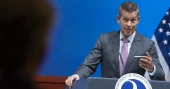
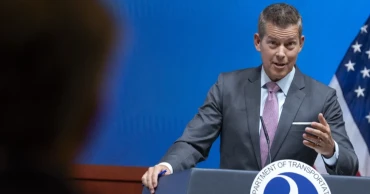
“We’re in a race with China to out-innovate, and the stakes couldn’t be higher,” said Transportation Secretary Sean Duffy on Thursday. “Our new framework will slash red tape and move us closer to a single national standard.”
Traffic safety watchdogs had feared that the Trump administration would eliminate the NHTSA reporting requirement completely.
The package of changes came days after Musk confirmed on a conference call with Tesla investors that the electric vehicle maker will begin a rollout of self-driving Tesla taxis in Austin, Texas, in June. Waymo, which is owned by Google parent Alphabet, already has cybercabs available in that city and several others.
Tesla sales fall by 49% in Europe even as the EV market grows
Musk has argued that the previous reporting requirements were unfair since Tesla vehicles all use its partial self-driving systems and therefore log more miles than any other automaker with such technology. He says that his cars are far safer than most and save lives.
Tesla sales have plunged in recent month amid a backlash against Musk’s backing of far-right politicians in Europe and his work in the U.S. as head of Trump’s government cost-cutting group. The company has pinned its future on complete automation of its cars, but it is facing stiff competition now from rivals, especially China automaker BYD.
10 months ago
Google's parent begins year with robust growth despite legal, competitive and economic threats
Google's profits soared 50% in this year's opening quarter, overcoming the competitive and legal threats that its internet empire is facing amid an economy roiled by a global trade war.
The numbers released Thursday by Google parent Alphabet Inc. indicated the company is rising to the challenge so far, but investors are likely to remain concerned about the turbulent times ahead.
The Mountain View, California, company earned $34.5 billion, or $2.81 per share, during the January-March period, up from $23.7 billion, or $1.89 per share, at the same time last year. Revenue rose 12% from last year to $90.2 billion. The results easily exceeded analysts’ projections, according to FactSet Research.
“We continued to see healthy growth and momentum across the business,” Alphabet CEO Sundar Pichai told analysts Thursday during a conference call.
Alphabet's stock gained more than 4% in extended trading after the numbers came out. The shares had fallen by 16% since the end of last year.
Google’s first-quarter performance illustrated the continuing power of its long-dominant search engine in a sea of uncertainty. While grappling with competitive threats emerging as artificial intelligence reshapes technology, Google is also battling court decisions condemning its search engine and digital ad network as illegal monopolies.
The AI-driven upheaval has opened new opportunities for people to find helpful advice, insights and information through more conversational search options from the likes of OpenAI and Perplexity.
Google's long-dominant search engine is countering the new competition with a feature called AI Overviews that appear above web links in its results. It is also testing a conversational tool called AI Mode that would usher in an even more radical change to its business model.
EU fines Apple 500 million euros, Meta 200 million in digital cases
“The company delivered a sound response to those questioning the solidity of the search business amid ever-increasing AI demand,” Investing.com analyst Thomas Monteiro said.
But Google is trying to keep its business intact as by the U.S. Justice Department attempts to break up the company and impose other restraints after a federal judge last year branded its search engine an illegal monopoly. To make matters worse, its digital ad network also was found to be illegally abusing its power earlier this month in another case brought by the Justice Department.
President Donald Trump’s trade war has injected more uncertainty into the mix by rattling the financial markets amid fears the tariffs will reignite inflation while dragging the economy into a recession. Although Google’s digital services aren’t directly impacted by the tariffs, a recession would likely curtail the spending on ads that generate most of Alphabet’s revenue.
But there were few signs of a slowdown in the past quarter. Google's ad revenue during the period totaled $66.9 billion, an 8% increase from the same time a year ago.
Although Google's executives are mostly upbeat during Thursday's call, they also acknowledged conditions should the trade war trigger a recession.
“We are obviously not immune to the macro environment,” said Philipp Schindler, Alphabet's chief business officer.
Google faces off with US government in attempt to break up company in search monopoly case
The past quarter's steady growth emboldened Alphabet to stand firm on plans to invest $75 billion on AI and other technologies this year while also pursuing approval of a $32 billion deal to buy cybersecurity firm Wiz.
10 months ago
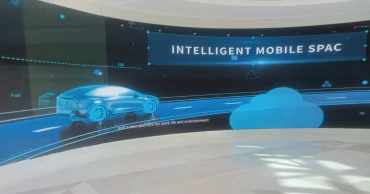
First automated driving zone in China aims to demonstrate ‘vehicle-road coordination’
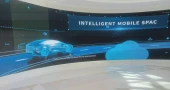
China’s first high-level automated driving demonstration zone, established in 2020, aims to advance the development of autonomous driving technology and intelligent connected vehicles, following China’s 'vehicle-road coordination' approach to automated driving.
The project is being developed in phases, with each stage building on the success of the last.
The demonstration zone’s development is structured into four distinct phases. Phase one focused on setting up the experimental environment, while phase two marked a small-scale deployment.
In phase three, large-scale deployment began and phase four focuses on expansion and scenario refinement.
After four years of development, the zone has now entered phase three, enabling autonomous shuttle driving services in key scenarios such as airports and museums.
One of the most significant milestones of this project is the establishment of a city-level engineering test platform that integrates five critical systems: vehicles, roads, cloud computing, networks, and mapping. This platform provides world-class infrastructure for automated driving companies, accelerating innovation within China's automotive industry.
To further promote innovation, the demonstration zone has implemented a range of policies designed to create a "friendly" environment for automated driving. These include peak-hour testing, cross-regional test recognition, and approval for unmanned delivery vehicles on public roads, among others. The zone has now demonstrated eight application scenarios: robot shuttles, unmanned delivery, unmanned retail, autonomous buses, unmanned sweepers, unmanned patrol vehicles, and automated freight trucks.
Currently, residents in the area can use mobile apps to book autonomous shuttle services, including transfers at Beijing Daxing International Airport. Unmanned sweepers have begun operating on city roads, and automated patrol vehicles assist public security in routine patrols. Meanwhile, automated freight trucks are being tested on highways in the Beijing-Tianjin-Hebei region.
While these automated driving vehicles are still in the testing phase and have not yet been officially put into operation, the demonstration zone’s innovations are a significant step forward in the development of China’s autonomous vehicle industry.
10 months ago
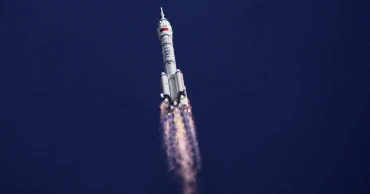
Spaceship carrying 3 Chinese astronauts docks with Tiangong space station in latest crew rotation
A spaceship carrying three astronauts docked Thursday with China’s space station in the latest crew rotation, marking a further step in the country’s ambitions for a crewed mission to the moon and explore Mars.
The Shenzhou 20 spaceship took off as planned atop China’s workhorse Long March 2F rocket at 5:17 p.m. local time (0917 GMT). It reached the Tiangong space station about 6.5 hours later, according to the China Manned Space Agency.
The rocket lifted off from the launch center in Jiuquan, on the edge of the Gobi Desert in northwestern China. The spaceship will remain in space before returning with the current three-person crew.
The Tiangong, or “Heavenly Palace,” space station has made China a major contender in space, especially since it was entirely Chinese-built after the country was excluded from the International Space Station over U.S. national security concerns. China's space program is controlled by the People’s Liberation Army, the military branch of the ruling Communist Party.
The addition of mechanical arms to the three-module station has also raised concerns from some that China could use them to disable satellites or other space vehicles during a crisis.
Musk says he'll spend less time in Washington and more time running Tesla after its profit plunges
Since first launching a man into space in 2003 — becoming only the third country to do so — China's space program has advanced at a steady pace. The space agency has also landed an explorer on Mars and a rover on the less-explored far side of the moon, and aims to put a person on the moon before 2030.
The Shenzhou, or “Celestial Vessel,” 20 mission will be commanded by Chen Dong, who is making his third flight. He will be accompanied by fighter pilot Chen Zhongrui and engineer Wang Jie, both making their maiden voyages, according to the Manned Space Agency. Unlike previous crews, Shenzhou 20 is entirely male.
They will replace three astronauts currently on the Chinese space station. Like those before them, they will stay on board for roughly six months.
The space ship is due to be launched into space atop China's workhorse Long March 2F rocket at 5:17 p.m. local time (0917 GMT) and reach the Tiangong about 6.5 hours later.
The three-person crew was sent in October last year and they have been in space for 175 days. They are due to return on April 29 after a brief overlap with their replacements. The Tiangong, fully assembled in October 2022, can accommodate up to six people at a time.
Google faces off with US government in attempt to break up company in search monopoly case
While in space, the astronauts will conduct experiments in medical science and new technologies and perform space walks to carry out maintenance and install new equipment, the Manned Space Agency said.
10 months ago
Tech Tip: Thinking about a used phone? Here's what to know
Brand-new smartphones are expensive, and with global trade tensions—partly due to U.S. President Donald Trump’s tariff threats—prices could climb even higher, especially for Asian-made electronics.
To cut costs, many are turning to secondhand phones.
The market for pre-owned smartphones is booming. In fact, it’s expanding faster than the new phone market, says U.K.-based tech research company CCS Insight.
As people upgrade to the latest models, they often sell or trade in their old devices, which are still in good shape and have plenty of life left.
If you're watching your wallet, a refurbished phone can be up to 50% cheaper than a brand-new one. These days, they often come with warranties, payment plans, and customer support, according to CCS Insight.
Meanwhile, the price of a top-tier iPhone Pro Max could jump nearly 30%, rising from $1,200 to $1,550, according to UBS.
But buying used isn't always simple. Here's a quick guide:
What are the most in-demand models?Apple dominates the used phone market, making up 60% of it. Samsung comes next with 17%, and the rest is made up of lesser-known Chinese brands like Xiaomi.
Where should you shop?There are plenty of online sources for secondhand phones—but also many scams. Stick to trusted sellers, read reviews, and avoid suspiciously cheap deals.
Some good platforms to try include Gazelle, Backmarket, and major retailers like BestBuy or Amazon. Phone carriers often sell certified refurbished models as well.
Even Apple and Samsung offer their own secondhand phones, refurbished by their teams. While these options are more reliable, the savings might not be as big, and the model selection can be limited—Apple, for example, currently only offers refurbished iPhone 13 and 14 models.
Refurbished typically means the phone has been reset, tested, and repaired as needed. But a used phone could be anything from a barely-used gem to a beat-up device sold “as is” on Facebook Marketplace. These are cheaper, but riskier.
“You’ll get the best deal if you’re comfortable with more risk,” says Simon Bryant, VP of research at CCS Insight.
Safer peer-to-peer platforms like eBay or Swappa offer buyer protections, including refunds if the phone isn’t as advertised.
What about battery health?Just because a phone is refurbished doesn't mean the battery has been replaced—it depends on the seller. Apple and Samsung say their refurbished phones come with new batteries and sometimes even new shells, plus a charger, a one-year warranty, and original packaging.
Other sellers might only ensure the battery retains at least 80% of its original capacity.
How do I assess condition?Most platforms have their own grading systems, like “Excellent,” “Very Good,” or “Like New.” But there's no industry standard, so ratings vary widely between sellers and can make comparison tricky.
“It’s inconsistent,” Bryant explains. “One site’s 'Grade A' might be another’s 'Like New'—which complicates shopping.”
How old is too old?Stick to phones that are no more than three generations old. Devices older than five or six generations may no longer receive software updates, which impacts performance and security.
“Three generations back is the sweet spot,” Bryant says. “You get modern features, less wear, and solid support.”
Could it be stolen?Reputable platforms have checks in place, but always verify the device's IMEI (serial number), which can be accessed by dialing *#06# on most phones. Swappa requires sellers to run an IMEI check before listing a phone. BackMarket works with certified sellers to avoid blacklisted devices but will assist if a stolen one slips through.
Can I check for water damage?Newer phones resist water but aren’t waterproof. If buying in person, check for liquid damage. Apple and Samsung both offer guides on how to locate water exposure indicators on their devices.
Do accessories come with it?Not always. Chargers, cables, or headphones may be missing, so factor those costs into your budget.
10 months ago
EU fines Apple 500 million euros, Meta 200 million in digital cases
European Union watchdogs fined Apple and Meta hundreds of millions of euros Wednesday as they stepped up enforcement of the 27-nation bloc’s digital competition rules.
The European Commission imposed a 500 million euro ($571 million) fine on Apple for preventing app makers from pointing users to cheaper options outside its App Store.
The commission, which is the EU’s executive arm, also fined Meta Platforms 200 million euros because it forced Facebook and Instagram users to choose between seeing ads or paying to avoid them.
The punishments were smaller than the blockbuster multibillion-euro fines that the commission has previously slapped on Big Tech companies in antitrustcases.
Apple and Meta have to comply with the decisions within 60 days or risk unspecified “periodic penalty payments,” the commission said.
The decisions were expected to come in March, but officials apparently held off amid an escalating trans-Atlantic trade war with U.S. President Donald Trump, who has repeatedly complained about regulations from Brussels affecting American companies.
The penalties were issued under the EU’s Digital Markets Act, also known as the DMA. It’s a sweeping rulebook that amounts to a set of do’s and don’ts designed to give consumers and businesses more choice and prevent Big Tech “gatekeepers” from cornering digital markets.
Both companies indicated they would appeal.
Apple accused the commission of “unfairly targeting” the iPhone maker, and said it "continues to move the goal posts” despite the company's efforts to comply with the rules.
Meta Chief Global Affairs Officer Joel Kaplan said in a statement that the “Commission is attempting to handicap successful American businesses while allowing Chinese and European companies to operate under different standards.”
In the App Store case, the Commission had accused the iPhone maker of imposing unfair rules preventing app developers from freely steering consumers to other channels.
Among the DMA’s provisions are requirements to let developers inform customers of cheaper purchasing options and direct them to those offers.
The commission said it ordered Apple to remove technical and commercial restrictions that prevent developers from steering users to other channels, and to end “non-compliant” conduct.
Apple said it has “spent hundreds of thousands of engineering hours and made dozens of changes to comply with this law, none of which our users have asked for."
“Despite countless meetings, the Commission continues to move the goal posts every step of the way," the company said.
The EU’s Meta investigation centered on the company’s strategy to comply with strict European data privacy rules by giving users the option of paying for ad-free versions of Facebook and Instagram.
Users could pay at least 10 euros ($11) a month to avoid being targeted by ads based on their personal data. The U.S. tech giant rolled out the option after the European Union’s top court ruled Meta must first get consent before showing ads to users, in a decision that threatened its business model of tailoring ads based on individual users’ online interests and digital activity.
Meta rolled out a third option in November giving Facebook and Instagram users in Europe the option to see fewer personalized ads if they don’t want to pay for an ad-free subscription.
10 months ago
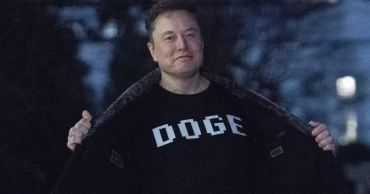
Musk says he'll spend less time in Washington and more time running Tesla after its profit plunges
Elon Musk says he’ll be spending less time in Washington slashing government costs and more time running Tesla after his electric vehicle company reported a big drop in profits.
Musk said on a conference call with analysts Tuesday that “now that the major work of establishing Department of Government Efficiency is done,” that he will be “allocating far more of my time to Tesla” starting in May. Musk said he now expects to spend just “a day or two per week on government matters”
Tesla struggled to sell vehicles as it faced angry protests over Musk’s leadership of DOGE, a jobs-cutting group that has divided the country. The Austin, Texas, company reported a 71% drop in profits and a 9% decline in revenue for the first quarter.
“Investors wanted to see him recommit to Tesla,” said Wedbush Securities' Dan Ives. “This is a big step in the right direction."
Investors sent Tesla shares up more than 5% in after-hours trading, although they are still down more than 40% for the year.
The company reconfirmed that it expects to roll out a cheaper version of its best-selling vehicle, the Model Y sport utility vehicle, in the first half of this year. It also stuck with its predictions that it will be able to launch a paid driverless robotaxi service in Austin in June and have much of its fleet operating by itself next year.
“There will be millions of Teslas operating autonomously in the second half of the year,” Musk said in a conference call after the results were announced. He later added about the personal use of autonomous vehicles, "Can you go to sleep in our cars and wake up at your destination? I’m confident that will be available in many cities in the U.S. by the end of this year.”
Millions take to streets across US against Trump and Musk
Auto analyst Sam Abuelsamid at Telemetry Insight said he doubts Musk's predictions.
“The system is not robust enough to operate unsupervised. It still makes far too many errors,” he said. “It will suddenly make mistakes that will lead to a crash.”
The planned rollout of the robotaxi without a steering wheel or pedals comes as federal regulators still have open investigations into whether the technology that Tesla hopes will allow cars to drive themselves is completely safe.
Tesla’s driver-assistance technology that can steer or stop a car but still requires humans to take over at any time — its so-called Autopilot — is being probed by the National Highway Traffic Safety Administration for whether it alerts drivers sufficiently when their attention wanders. And the company’s Full Self-Driving, which is only partial self-driving and has drawn criticism for misleading drivers with the name, has come under scrutiny for its tie to accidents in low-visibility conditions like when there is sun glare.
Another challenge to Tesla, which once dominated the EV business: It is facing fierce competition for the first time.
Earlier this year, Chinese EV maker BYD announced it had developed an electric battery that can charge within minutes. And Tesla’s European rivals have begun offering new models with advanced technology that is making them real Tesla alternatives just as popular opinion has turned against Musk. The Tesla CEO has alienated potential buyers in Europe by publicly supporting far-right politicians there.
Tesla said Tuesday that quarterly profits fell from $1.39 billion to $409 million, or 12 cents a share. That’s far below analyst estimates. Tesla’s revenue fell from $21.3 billion to $19.3 billion in the January through March period, also below Wall Street’s forecast. Tesla’s gross margins, a measure of earnings for each dollar of revenue, fell from 17.4% to 16.3% .
Tesla has said it will be hurt less by the Trump administration's tariffs than most U.S. car companies because it makes most of its U.S. cars domestically. But it won’t be completely unscathed. It sources some materials for its vehicles from abroad that will now face import taxes.
Tesla warned in announcing its results that tariffs will hit its energy storage business, too.
Retaliation from China will also hurt Tesla. The company was forced earlier this month to stop taking orders from mainland customers for two models, its Model S and Model X. It makes the Model Y and Model 3 for the Chinese market at its factory in Shanghai.
The company’s side business of selling “regulatory credits” to other automakers that fall short of emission standards boosted results for the quarter.
Tesla generated $595 million from credit sales, up from $442 million a year ago.
The company generated $2.2 billion in cash flow versus $242 million a year earlier.
'Hands Off!' protests against Trump and Musk are planned across the US
Morningstar analyst Seth Goldstein said earlier reports of plunging sales that had tanked the stock made the quarterly results almost predictable.
“They’re not particularly surprising given that deliveries were down,” he said. “It was good to see positive cash flow.”
10 months ago