Fashion
Blazy's chanel debut brings Showmanship back under a sky of planets
Showmanship returned to Chanel on Monday.
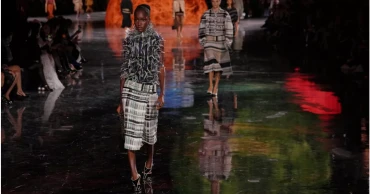
At Paris Fashion Week, its new designer Matthieu Blazy opened the season’s most anticipated debut beneath colossal celestial bodies — Saturn with its rings, a full solar system suspended above a jet-black and a mirror-bright runway — staking a claim for theater from the first second.
Reflections mirrored the cosmos beneath the runway, while a front row constellation — Nicole Kidman, Marion Cotillard, Tilda Swinton, joined by Lauren Sanchez and Jeff Bezos — gazed upward.
By night’s end, the room rose in a standing ovation. As Vogue's doyenne Anna Wintour has said, “fashion needs its showmen.”
Chanel had one again.
Heritage house
Founded in 1910, Chanel reshaped women’s wardrobes by replacing corseted silhouettes with ease — jersey, trousers — and later codified a global idea of Parisian chic through the little black dress, pearls and the tweed suit. Under Karl Lagerfeld in the 1980s, it became the model for how a heritage house can be both historic and relentlessly modern, its runway spectacles influencing the industry far beyond Paris. That legacy made Blazy’s debut more than a change of designer, but a test of how a century-old, multi-billion dollar institution continues to speak to the world.
The show capped a season dense with debuts: Pierpaolo Piccioli at Balenciaga, Louise Trotter at Bottega Veneta, Jack McCollough and Lazaro Hernandez at Loewe and Dario Vitale at Versace.
Yet Chanel’s moment felt singular for stakes and scale. By dialing down glitter, dialing up line, restoring theater and keeping the codes legible, Blazy positioned Chanel not as a museum of symbols but as a platform for them.
Opening statement of androgyny
The opener functioned as a manifesto: an androgynous, slouchy pantsuit featuring low-slung trousers and an asymmetric jacket with structured shoulders. The looks split from the playbook of subdued designer Virginie Viard who parted ways with Chanel last year. They also shifted from late-period Karl Lagerfeld — one step closer to Gabrielle “Coco” Chanel.
The styles were not a reinvention of tweed, but rather menswear rethought through the founder’s origin story, when Coco wore the clothes of her lover the “Boy” Capel.
A hand anchored in a pocket made the point explicit: the freedom Chanel once placed in women’s hands — giving them trousers and pockets on them — restated. The spring 2026 collection, months in the making, read as an imagined conversation between Blazy and Chanel herself: thoughtfulness braided with showmanship.
Codes, humor and the Lagerfeld lens
Ribbons — rumored to be a sticking point between designer and atelier — were largely gone. Sparkle was sparse, a calculated risk in markets that prize high shine.
In their place came silhouette-first solutions and masses of feathers, with the camellia held as steady leitmotif. However far the line moved, the codes stayed legible — each look unmistakably Chanel. Tweed arrived interconnected rather than narrowly Parisienne — multicultural in palette and weave, intercontinental if not interplanetary.
Then came the fun wigs — what one critic termed the “funny little hats” — feathered, sly and intentionally light. They channeled Lagerfeld’s provocation about how he revitalized the once-dusty heritage house when he joined the helm in 1983.
“Chanel is an institution, and you have to treat an institution like a (prostitute) — and then you get something out of her," he said.
While Viard’s Chanel was often faulted for sobriety and restraint; Blazy, like Lagerfeld, deals in irony. At Bottega Veneta he staged frogs on heels, bunny-lapel coats and trompe-l’œil leather jeans. Here, plumage, proportion and wigs delivered the wink without tipping into theatrical costume.
Accessories set a new tempo: big hats, metallic bags, tiers of pearls, chunky gold chains and statement earrings — bold on paper, disciplined on the body. Handbags — the other reason Blazy was chosen — spanned crisp chain-strap updates and playful clutches, including a notable ovoid shaped like an egg.
The finale carried the argument in motion: a silky short-sleeve shirt paired with a multicolored feathered skirt with a long train. Color moved across the plumage and the black floor threw back its reflection.
“It was such a surprise. ... It’s exciting to be here for a new era," filmmaker Sofia Coppola told The Associated Press. “There are things you recognize from the house codes, and a fresh new look at it.”
4 months ago
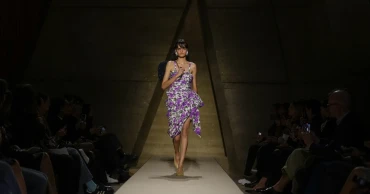
Chloé blooms in Paris with vintage-inspired floral elegance
Chemena Kamali brought a poetic burst of florals to the Paris Fashion Week runway on Sunday, presenting a Chloé collection that celebrated focus, femininity, and flow — true to the house’s storied spirit.
In her third tenure at Chloé, Kamali drew from the label’s rich legacy, blending romantic silhouettes with structured ease. Founded in 1952 by Gaby Aghion, Chloé revolutionized Parisian ready-to-wear with its free, feminine style — an ethos Kamali continues to nurture.
Stella Jean returns to Milan runway with Bhutanese artisans, urges preservation of craftsmanship
The show opened with soft prints and widened into pearlized yellows, layered coats, and knotted skirts. Pastel drapes, ruched gowns, and ’80s-inspired shoulders defined confidence and movement, while dropped hems and fluid tailoring evoked Karl Lagerfeld’s 1970s designs.
Balancing nostalgia with modern clarity, Kamali’s Chloé radiated “romance with discipline” — clothes that evolve naturally, made by women, for women.
Source: AP
5 months ago
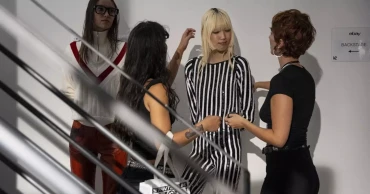
How to shop secondhand sustainably and stay stylish
Online platforms are giving secondhand fashion a modern twist, with livestream shopping, AI-powered search, and other digital tools making thrifting faster, more fun, and accessible.
While buying pre-owned clothing is generally more sustainable than purchasing new items, experts caution that it is not a free pass for overconsumption. Buying more than needed still drives textile waste, and online shopping adds emissions from packaging, delivery, and server energy.
Industry insiders and fashion enthusiasts offer tips for shopping secondhand responsibly while curating a wardrobe that is both stylish and long-lasting.
The boom of online resale
Platforms like eBay, ThredUp, The RealReal, and live-auction apps such as Whatnot have seen record growth this year. eBay reports that secondhand items now account for 40% of its fashion sales, with livestream runway events allowing shoppers to buy designer pieces in real time.
But experts warn that secondhand shopping can still fuel waste. “People who buy secondhand often purchase more clothes than others and discard them sooner,” said Meital Peleg Mizrachi, a Yale University researcher. Only about 20% of donated clothing gets resold in charity stores, with the rest downcycled, exported, or discarded.
Choosing quality
Sustainable shopping starts with selecting durable items. Look for natural fabrics like cotton, silk, or bamboo, lined garments, and strong stitching, experts say. Older items, especially those made before the mid-1990s, may offer better craftsmanship. Being specific in searches helps locate unique and high-quality pieces.
Caring for your wardrobe
Proper maintenance extends the life of secondhand clothing. Use garment bags, store in muslin bags with lavender to deter moths, spot-clean when possible, air-dry, and repair minor damages such as missing buttons to keep pieces in circulation.
Closing the loop
Sustainable secondhand shopping also involves responsible resale and donation. Give clothes to small community stores or shelters, and explore brand take-back programs. eBay, for example, partners with Marks & Spencer for in-store returns to resell online.
Ultimately, experts say the key to truly sustainable fashion is buying less and resisting fast-fashion trends. “We cannot purchase our way out of the climate crisis,” Mizrachi said. “Making overconsumption unprofitable is the only way to change the fashion industry.”
Source: AP
5 months ago
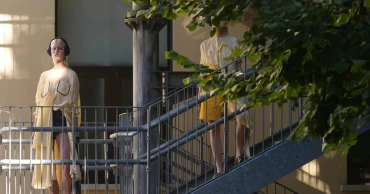
Liberatore turns Milan runway into call for awareness amid global chaos
Models descended an emergency escape staircase to reach the Francesca Liberatore runway at Milan Fashion Week on Sunday, a symbolic gesture urging the world to find a way out of the deepening human suffering across the globe.
Known for her artistic approach to fashion, Liberatore said the ongoing turmoil made her reluctant to present a lighthearted Spring-Summer 2026 collection. Instead, she staged her show as a reflection of global uncertainty, accompanied by Italian singer Elisa’s renditions of Tears for Fears’ classics “Everybody Wants to Rule the World” and “Mad World.”
Tailoring in turbulent times
Liberatore said she wanted to contribute to the global conversation through precise fashion codes and a clear design language. The outcome was youthful, wearable looks marked by refinement and subtle symbolism.
“Everyone living in their golden world needs to open their eyes. We need to stop and pay attention to this situation,” she told reporters backstage.
The show opened with sharply tailored white jackets in textured fabrics before transitioning into softer silhouettes — protective bodices flowing into long A-line skirts, relaxed tunics over skirts, and wide sundresses edged with brocade. Headphones designed in collaboration with Sony completed the looks, targeting a younger audience.
Floral tribute
In the finale, models carried black roses and placed them at the foot of the photographers’ podium, leaving the audience to interpret the gesture. Liberatore said it represented both her distress over ongoing wars and the fashion industry’s struggle to engage younger generations.
The roses also served as a tribute to the late Giorgio Armani, the designer who placed Milan on the global fashion map. Liberatore and Armani traditionally closed Milan Fashion Week, and on Sunday evening a gala show was set at the Brera Art Gallery to celebrate Armani’s 50-year career, held just weeks after his passing at the age of 91.
5 months ago
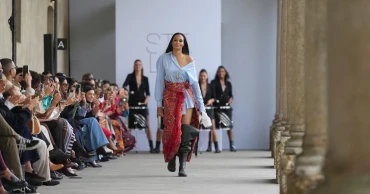
Stella Jean returns to Milan runway with Bhutanese artisans, urges preservation of craftsmanship
Italian-Haitian designer Stella Jean made a striking return to the Milan runway on Saturday after a three-year hiatus, showcasing a collection crafted with Bhutanese artisans and appealing for stronger political support to preserve the world’s dwindling artisan class.
“I said I would come back when I had something to say,” Jean told reporters backstage.
Appeal for artisans
Jean, known for blending Italian tailoring with textiles and artistry from global artisans, stressed that Italian craftsmanship is at risk as fewer young people are entering the trade. She urged lawmakers to extend the same fiscal benefits recently granted to artworks to fine craftsmanship.
Such support, Jean said, would allow consumers to pay less value-added tax on pieces that can take up to a year to complete—like Bhutan’s traditional ankle-length kira dress, which she wore on the runway—while ensuring artisans receive fair pay.
“We cannot pay them less because artisans are already underpaid,” Jean said backstage. “Otherwise, this craftsmanship will survive only in museums. If we don’t wear it, it becomes meaningless.”
South Korea set to legalize tattoo artistry with landmark bill
Bhutanese craftsmanship on display
The collection included handwoven tego jackets over silk printed dresses, skirts embroidered from nettle fiber, embroidered skirts paired with rugby shirts, and silk dresses with beaded panels depicting village scenes. Bhutanese artisans who collaborated with Jean were present in the front row, dressed in traditional attire.
Tribute to Armani
Jean, who debuted in Milan at the Armani Theater in 2013 as a guest of Giorgio Armani, paid tribute to the late designer by unfurling a T-shirt from her premiere that read: “Grazie, Mr. Armani,” signed “Stella.”
“We cannot be here without paying tribute to someone to whom Italian fashion owes so much,” she said. “Italian fashion became the most important in the world, thanks to this gentleman.”
Source: Agency
5 months ago

Giorgio Armani's will reveals who inherits what from his ‘$11.8 Billion Empire’
In his will made public on Friday, fashion icon Giorgio Armani revealed his desire for a major luxury group to acquire a 15% stake in his multi-million-euro empire. Armani, who passed away on September 4 at the age of 91, named LVMH, L'Oreal, and EssilorLuxottica as his preferred buyers, though he was open to similar companies.
Armani’s company spans high fashion to hospitality, and he had maintained strict control over it for decades. Should a sale not materialize, he requested the company be listed on the stock market, with his foundation retaining 30.1% of the shares.
L’Oreal, which has collaborated with Armani on perfumes and cosmetics since 1988, expressed gratitude for being considered, while the designer's foundation will retain strong influence over strategic decisions.
Armani’s will also outlined the future governance structure, with Leo Dell'Orco and family members overseeing the company’s day-to-day operations.
Armani’s estimated $11.8 billion net worth was bequeathed to his foundation, which will hold 10% of the shares. His real estate assets were passed to his sister and other relatives. The designer’s final collections will be showcased at Milan Fashion Week later this month, marking 50 years of the Armani brand.
Source: NDTV
5 months ago
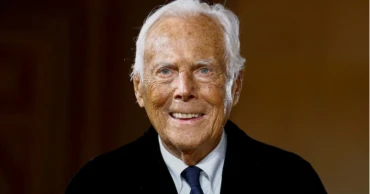
Fashion icon Giorgio Armani dies at 91, leaving behind $10b empire
Giorgio Armani, the legendary Italian designer who defined understated elegance and built a $10 billion global fashion empire, has died at 91, his fashion house confirmed.
Armani passed away at home in Milan. Known for his timeless suits, soft fabrics, and muted tones, he revolutionized fashion in the 1970s with his relaxed yet sharp silhouettes, worn from Hollywood red carpets to Wall Street boardrooms. His designs became symbols of power and style, from the iconic “power suit” for women to Richard Gere’s look in American Gigolo.
Over five decades, Armani expanded beyond clothing into accessories, perfumes, cosmetics, furniture, hotels, restaurants, and even sports, owning basketball team EA7 Emporio Armani Milan. By 2023, his empire employed more than 9,000 people with over 600 stores worldwide.
Born in Piacenza in 1934, Armani co-founded his label in 1975 with Sergio Galeotti, starting with just $10,000. He never sold or merged his company, always remaining in control. Known as “Re Giorgio” (King George), Armani was celebrated not only for his fashion but also for philanthropy, including AIDS awareness and refugee support.
Armani, who had no children, is survived by close family, including his niece Roberta, a key figure in his company. Plans to mark the 50th anniversary of his fashion house at Milan Fashion Week were underway at the time of his passing.
End/AP/UNB/SS
6 months ago

WNBA stars turn heads on the Orange Carpet with dazzling fashion
The WNBA All-Stars kicked off their All-Star Weekend in style, dazzling fans with glamorous outfits as they strutted down the Orange Carpet on Thursday.
Held at the Indianapolis Convention Center, the event saw players take the stage to loud cheers from hundreds of enthusiastic supporters. It added a new dimension to the All-Star festivities, blending fashion with fan engagement.
“This was so much fun,” said Los Angeles Sparks guard Kelsey Plum, who turned heads in a sparkling red dress and heels.
Indiana Fever’s Aliyah Boston, donning a sleek, dark gown, echoed Plum’s excitement. “I think it gets the fans more excited to see all the outfits,” she said.
In recent seasons, WNBA players have elevated their off-court fashion, gaining widespread attention for their bold and expressive pregame looks. While “Tunnel Fits” have long been a part of the league, the trend has now evolved into a significant part of player branding and fan culture.
Chicago Sky rookie Angel Reese made a statement in a leopard print coat and trendy sunglasses. “I missed this last year due to flight delays, so I’m glad I made it this time,” said Reese.
Singapore tops global list for costliest luxury spending, London overtakes Hong Kong
Reigning MVP A’ja Wilson of the Las Vegas Aces stunned in a Di Petsa-designed maroon gown with a high slit, accessorized with striking gold Saint Laurent earrings.
New York Liberty’s Natasha Cloud, who will take part in Friday’s skills competition, admitted she felt a bit out of her element. “It definitely pushed me out of my comfort zone,” she said, opting for a classic pants-and-shirt combo.
Minnesota Lynx’s Napheesa Collier enjoyed the spotlight but said she would have chosen a less revealing outfit had she known children would be in the crowd.
Source: Agency
7 months ago

Luxury sheep steal the spotlight at Senegal’s high-profile beauty contest
In Senegal, elite sheep take center stage in a dazzling beauty contest where their elegance is met with cheers, music, and fireworks. These striking animals—especially the prized Ladoum breed—are symbols of prestige, paraded in an open arena to the excitement of an enthusiastic crowd.
Known as the "Ferrari" of sheep, Ladoums are showcased in one of the country’s most celebrated annual events, competing across three categories: adult male, adult female, and young/promising.
Judges score each sheep based on traits like size, beauty, horn shape, height, and skin texture. Winners take home cash and food prizes.
This year’s top male, Prive, is just 19 months old but estimated to be worth over $100,000. “It feels amazing to be here,” said his breeder, Isaiah Cisse, as he lovingly prepared Prive for his moment in the spotlight.
Unlike common sheep used for food and religious sacrifice, the Ladoum are luxury livestock—bred over years to represent wealth and social status. These animals can fetch prices as high as $70,000 or more, far surpassing the $250 typical for ordinary sheep, and they attract buyers globally.
Weighing up to 400 pounds and standing about 4 feet tall, Ladoums are admired for their impressive size, spiraled horns, and gleaming coats.
As the competition took place in Dakar, each sheep was guided onto a stage to be evaluated, accompanied by live Assiko music and chants praising the animals.
“You won’t find sheep like these anywhere else,” said judge Elhadji Ndiaye. “Ladoum are truly unique.”
Young breeders are also making their mark. Twenty-two-year-old Musa Faye named his sheep Diomaye, after the country’s president, and is already preparing for future competitions.
“I play with him and spend a lot of time training,” Faye said. “I know he’ll win next time.”
The event also showcased up-and-coming enthusiasts like 12-year-old Ibrahim Diagne, who dreams of entering the contest one day. “My parents love this, and now I do too,” he said.
Sheep rearing in Senegal is a longstanding tradition passed down through families, often seen as more than just a livelihood—it's a cultural legacy.
That legacy continues for breeders like Maniane Ndaw, whose young sheep Alou won Best Junior Male this year—following in the footsteps of his champion father. “It brings me so much joy,” Ndaw said. “It proves the strength of the bloodline.”
8 months ago
How Does Fashion Waste Contribute to Environmental Issues?
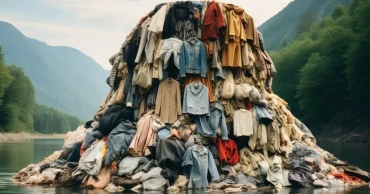
The fashion industry, which has always been praised for its productive and cultural contributions, has turned into one of the most environmentally damaging sectors in the world. Its impact stretches across natural resources and climates. From piling up in masses in landfills, polluting and clogging water, and making air unbreathable to destroying the balance in the earth’s resources and atmospheres, fashion waste is making life impossible on the planet.
What is Fashion Waste?
The term fashion waste refers to the useless materials naturally produced during the manufacturing of textile products and thrown away afterwards. It also includes worn-out clothes and other materials like wastewater, plastic waste, and toxic dyes discarded or discharged after their use.
Though the term fashion waste mostly highlights the wastage related to garments and fabrics, it has more branches. Any poisonous discharge of non-biodegradable waste that pollutes energy and natural elements like earth, water, and air during or after the manufacturing and use cycle of garment products falls under the definition of fashion waste.
Read more: How to Declutter Your Wardrobe to Donate Some Clothes
Key Environmental Impacts of Fashion Waste
.
Landfill Overflow
Much of the fashion waste is synthetic fibres such as polyester, nylon, and acrylic. These elements take about centuries to decompose and mix with soils or never decompose. There are many regions on the earth where miles after miles have been occupied by them. Massive piles of non-biodegradable materials are slowly eroding away, releasing poisons into the soil and air, making those regions unlivable. In 2018, the US single-handedly generated about 11.3 million tonnes of textile waste, about 66% of which ended up in landfills.
Water Clog and Pollution
Fashion waste contaminates water in two ways: chemically transforming its nature and clogging it with insoluble materials like plastic. Among chemical polluters, textile dyeing is the world's most common and second-largest water contaminant. Several rivers in Bangladesh and India, such as the Buriganga and Ganges, are carrying the mark of the devastating impact of textile waste.
Synthetic and plastic materials cause water clogs, impeding usual flow and preventing water from passing. They are the primary reason for clogged drains and sewerage. Synthetic clothes are also known to release microplastics into water during washing or when dumped in a water body. These microplastics are invisible, insoluble fibres that travel with river currents and fall into oceans, where they accumulate in large amounts and are consumed by marine life.
Read more: How to Choose the Best Fabric for Your Suit
Greenhouse Gas Emissions
Dumped clothing waste in landfills doesn’t only pile up and occupy spaces; during decomposition, it releases methane, one of the primary catalysts of the global greenhouse effect and about 25 times more potent than CO2.
Studies have found the fashion manufacturing industry to be highly energy-intensive. To manufacture a single shirt, about 2,700 litres of water are needed, and 2.1 kg of CO₂ is emitted. A pair of jeans produces 33.4 kg of CO₂ in their cotton cultivation and dyeing phases. At the current production acceleration rate in the fashion industry, the emission rate will increase by about 50% by 2030 without interference from regulatory bodies.
Resource Depletion
The fashion industry is one of the most resource-depleting sectors. For example, cotton covers around 2.5% of the world’s farmland and consumes about 24% of all insecticides and 11% of pesticides.
That’s a huge environmental cost for a single crop. Then there’s polyester, the most common fabric in today’s clothing, found in about 60% of garments. It’s made from crude oil, tying fast fashion directly to fossil fuel depletion.
Read more: Personal Grooming Tips and Tricks for Better Life and Career
The impact doesn’t stop at raw materials. The dyeing and finishing stages of textile production are some of the most chemically intensive and responsible for nearly 20% of global industrial water pollution. Around 43 million tonnes of chemicals are poured into the process each year.
10 months ago