Others
PM urges public support to take Bangladesh forward
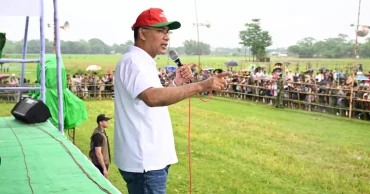
Saying that his government’s main responsibility is to protect the interests of people and resolve their problems, Prime Minister Tarique Rahman on Saturday urged citizens of all strata to stand by his government to help take Bangladesh forward and place it alongside developed nations.
“This government is your government. You elected it and brought it to power. Its number one duty is to protect the interests of people and solve their problems,” he said while addressing a gathering after inaugurating the re-excavation of the Basia River at Kashipur Union in Sylhet.
Tarique sought support from people of all walks of life to carry forward development plans and address the challenges facing the country.
“If you stand by us, we will be able to move Bangladesh forward and make it capable of standing alongside developed nations—if we all work together,” he said.
The Prime Minister said the people of Bangladesh voted in the election on the 12th February to install a government that will work for them. “Our only accountability is to the people of this country. That is why we want to carry out programmes and take actions that truly benefit the people.”
He said local leaders told him that there are not enough mills and factories in Sylhet, leaving many young people unemployed.
“We promised before the election that if BNP formed the government, we would reopen closed factories. Here with you is your own representative, Muktadir (Khandaker Abdul Muktadir), who is the Industries Minister. Soon after the election, within five to seven days, I sat down with him to review where factories are closed. Insha’Allah, we will reopen them gradually,” Tarique said.
He also said the government is working to create employment opportunities for young people abroad.
The Prime Minister said, “Less talk, more work. Now is the time to build the country.”
Commerce Minister Khandaker Abdul Muktadir, Water Resources Minister Shahid Uddin Chowdhury Anee, State Minister Farhad Hossain Azad and Prime Minister’s adviser Humayun Kabir were present at the programme.
The Basia River, which connects the Surma River and the Kushiyara River, has long suffered from loss of navigability and remained nearly defunct. The re-excavation initiative has been undertaken by the Ministry of Water Resources following demands from local residents.
The Prime Minister earlier inaugurated the re-excavation work of the Basia River canal at Kashipur Union around 1:20pm by cutting soil with a spade.
Addressing local residents, Tarique said the canal was originally excavated in 1977 by former president Ziaur Rahman but has since become silted up and nearly unusable.
“We want to re-excavate this canal because around 80,000 farmers will benefit directly, while another 150,000 will benefit indirectly,” he said.
Tarique, also the Chairman of BNP, said the project is expected to increase crop production by nearly 7,000 metric tonnes in nearby areas.
The Prime Minister said similar canal re-excavation projects will be carried out across the country to support farmers.
Highlighting the government’s pro-farmer approach, he said the distribution of farmers’ card has already begun in Tangail and will gradually reach farmers nationwide.
“Through the farmers’ card, we will provide benefits such as access to loans, fertiliser, seeds and pesticides,” Tarique said adding that each farmer will receive Tk 2,500 annually to support their farming needs.
He also said loans of up to Tk 10,000 for farmers have been waived.
Tarique said canal excavation work has already started in around 60 places across the country and that the 23-kilometre stretch of the Basia canal will be completed over two dry seasons.
Work will resume in November after the monsoon, with efforts to complete the project next year, he added.
The Prime Minister also announced plans to plant around 50,000 trees along both sides of the canal to protect it and benefit local communities.
1 month ago
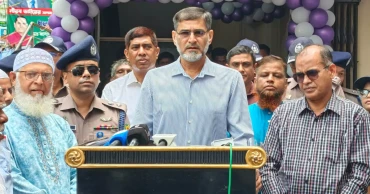
DMP to take swift action to prevent resurgence of criminals: Acting Commissioner
Acting Commissioner of Dhaka Metropolitan Police (DMP) Md Sarwar on Saturday said law enforcers will take swift action to prevent criminals from resurfacing in the capital.
He said the list of top criminals is being regularly updated as part of ongoing efforts to control crime, he said while speaking at the inauguration of a new police camp at Karwan Bazar in Dhaka.
“Unlike before, there are no major top-listed criminals at present. However, their associates or those trying to establish influence in the underworld are under close monitoring,” he said.
He said the DMP, along with Detective Branch (DB) and Counter Terrorism and Transnational Crime (CTTC) unit, is working in coordination to maintain law and order in Karwan Bazar area.
The newly established police camp is expected to play a key role in controlling extortion and other crimes in the area, he said, adding that police personnel will remain deployed round the clock.
Immediate action will be taken based on information provided by local traders and additional force will be deployed if necessary, he said.
The DMP official said special drives against extortion and drugs have already been launched in the capital, leading to several arrests.
These drives will continue, alongside strengthened covert surveillance across different areas.
Replying to a query, he said victims can contact the concerned Assistant Commissioner (AC), Deputy Commissioner (DC), or senior officials of DMP’s crime division if any police station refuses to record a case.
He added that any complaint against police will be investigated seriously and necessary action will be taken.
Sarwar expressed hope that the ongoing measures will significantly reduce crimes in Dhaka and said the special drives against all forms of crime, including extortion, will be further intensified.
1 month ago
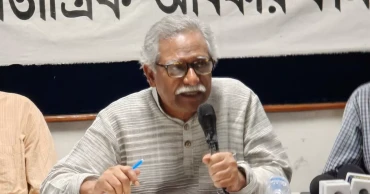
Speakers raise concerns over governance, economy, justice system
Speakers at an event have expressed concern over what they described as persistent governance, economic, and institutional shortcomings, warning that key reform initiatives in Bangladesh remain stalled or inadequately addressed.
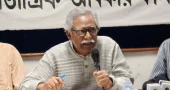
They expressed the concern at a programme titled "Two and a Half Months of the BNP Government: Review, Concerns and Demands," organised by the Democratic Rights Committee at the Sagar-Runi Auditorium of the Dhaka Reporters Unity in the capital.
The event was chaired by economist Anu Muhammad.
At the programme reviewing the current political situation and reform agenda, they pointed to issues spanning public policy, education, energy, justice, and international relations, urging stronger accountability, structural change, and long-term planning to address mounting national challenges.
Anu Muhammad called for fair prices for agricultural products based on production costs, a new wage structure, reasonable electricity tariffs for the agriculture and fisheries sectors.
He renewed calls for justice in several unresolved high-profile cases including the killings of Toki, Tonu and journalist couple Sagar-Runi as well as the shooting of Limon.
He said the government must thoroughly review the actions of the interim administration and publish a white paper examining agreements signed during that period, along with allegations of terrorism, corruption and abuse of power.
Anu Muhammad said the current government appears reluctant to undertake such a review, possibly out of concern that it could expose its own past involvement in similar activities.
He also expressed concern over the state of the judiciary, particularly judicial independence and accountability, citing a recent incident in which a judge allegedly intimidated a teacher as an example of troubling judicial overreach.
Writer and researcher Altaf Parvez said around 1.9 million people in Assam and four million in West Bengal have been labelled as 'Bangladeshi' and stripped of their voting rights, creating what he described as a "time bomb" for Bangladesh.
He also expressed disappointment over the government's handling of international relations, particularly with India, saying that despite improved bilateral ties, key issues such as border killings and renewal of the Ganges Water Treaty remain unresolved.
Other speakers included Dhaka University professor Samina Luthfa, lawyer Jyotirmoy Barua, lawyer Manjur Al Matin and Dhaka University Assistant Professor Moshahida Sultana Ritu.
Altaf Parvez said the BNP government's two-and-a-half-month tenure should be assessed alongside the preceding 18 months, making it effectively a 21-month review.
He argued that the current government is neither colonial nor a conventional elected administration, but one born out of a "people's uprising" following the events of August 8, 2024.
According to him, the public has every right to regularly review the government's performance, especially at the grassroots level, given the long history of movements by workers, indigenous communities, minorities and students over the past 15 years demanding fair elections and political reforms.
He alleged that although the BNP had pledged to implement the July Charter in its manifesto, it later declined to join the constitutional reform council, effectively stalling the reform process.
Raising concerns over recent economic decisions, Altaf criticised an ordinance allowing banks to return to their original shareholders, including individuals accused of corruption and money laundering.
He also questioned the decision to purchase ten Boeing aircraft for $4 billion at a time when Bangladesh was seeking a $1 billion IMF loan tranche amid a foreign debt burden of $114 billion.
Such a move, he warned, could destabilise the country's macroeconomy and national budget.
Professor Samina Luthfa said campuses have increasingly become centres of political control rather than academic excellence.
Even when one student organisation's influence declined, another quickly replaced it, perpetuating the cycle of political occupation.
This environment, she said, fostered organised violence that later became popularly known as "mob rule."
Over the past 21 months, no education reform commission has been formed, despite repeated calls, she said.
She noted that Bangladesh allocates only about 1.7 percent of its GDP to education, based on 2023-24 figures, far below UNESCO recommendations.
She called for gradually increasing the allocation to 7 percent over the next four years.
Moshahida Sultana Ritu called for a comprehensive overhaul of Bangladesh's energy policy, including renegotiation of costly power deals, reduction in diesel prices and accelerated development of locally driven solar initiatives.
She sharply criticised existing Independent Power Producer (IPP) agreements, particularly capacity charges, saying they have imposed an enormous financial burden on the public.
She also recommended allowing capacity charge payments in local currency rather than US dollars to reduce pressure on foreign exchange reserves.
Moshahida warned that rising diesel prices have triggered widespread inflation by increasing transportation, food and agricultural production costs."A reduction in diesel prices is essential to protect farmers, ensure food security and prevent further economic hardship," she said.
Highlighting the importance of a sustainable energy transition, she urged the government to prioritise solar power and formulate a realistic, locally tailored renewable energy roadmap.
Her recommendations included expanding solar-powered irrigation pumps, facilitating affordable financing for rooftop solar and solar pump projects, and expediting solar installations on land already acquired for Special Economic Zones.
She emphasised that Bangladesh must move away from short-term, reactive energy policies and instead pursue long-term planning rooted in local expertise and public participation.
Advocate Manjur Al Matin said Megh, the son of slain journalist couple Sagar and Runi, lost his parents 14 years ago, yet justice remains elusive.
Referring to the Tonu murder case, he noted that an arrest was made a decade after the killing, offering at least a glimmer of hope.
He criticised repeated delays in legal proceedings, mentioning a recent six-month extension granted for investigation in the Sagar-Runi murder case.
Justice, he said, is one of the fundamental pillars of any civilised society, and its absence inevitably leads to social decay.
Manjur also underscored the importance of judicial independence, particularly the establishment of a separate secretariat for the judiciary.
On the appointment of High Court judges, Manjur rejected the government's argument that constitutional constraints prevent reform.
He noted that a government with a two-thirds parliamentary majority has ample power to amend the constitution if it genuinely seeks change.
He criticised the government's failure to enact stronger laws to address these issues and expressed concern that the repeal of certain legal protections had only worsened the situation.
1 month ago
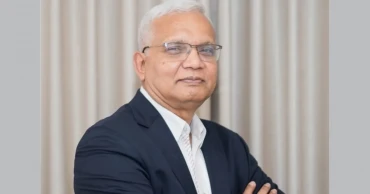
Minister Zahid stresses awareness, prevention to combat heart diseases in Bangladesh
Social Welfare and Women and Children Affairs Minister Abu Zafar Mohammad Zahid Hossain has emphasised the importance of raising public awareness, promoting healthy lifestyles and strengthening preventive measures to combat heart disease in Bangladesh.
He made the remarks while addressing the inauguration of a two-day international scientific conference titled BD Intervention 2026 organised by the Bangladesh Society of Cardiovascular Interventions (BSCI) at a hotel in Dhaka on Friday.
Speaking as the chief guest at the inaugural session, Zahid Hossain said that heart disease remains one of the major public health challenges in Bangladesh, said a PID handout.
“The government is giving top priority to the development of the healthcare sector and aims to ensure world-class cardiac care in remote areas through modern technology and skilled specialists under the Ministry of Health and Family Welfare,” said the minister.
The minister also stressed the need for stronger collaboration among cardiologists to improve healthcare services for women and children suffering from cardiovascular diseases.
Director General of the Directorate General of Health Services Prof. Dr. Pravat Chandra Biswas said the conference is helping Bangladeshi physicians connect with the latest global research and technology which will significantly enhance the quality of cardiac care in the country.
Director General of the Directorate General of Medical Education Prof. Dr. Nazmul Hossain, described training initiatives such as training villages and fellowship courses as timely steps toward developing the next generation of interventional cardiologists in Bangladesh.
BSCI President Prof. Dr. Khalequzzaman said the main goal of the conference is to introduce Bangladeshi interventional cardiologists to global advancements in cardiovascular technology, adding that joint efforts are essential to ensure world-class treatment for patients in the country.
The conference features live case transmissions from Dhaka and China, lectures from internationally renowned cardiologists, hands-on training sessions, fellowship courses, and case competitions. Discussions cover coronary, peripheral, and structural heart diseases.
More than 1,100 cardiology experts from home and abroad are participating in the mega event, which organisers believe will have a long-term positive impact on the advancement of heart disease treatment in Bangladesh.
1 month ago
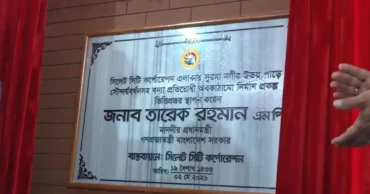
PM inaugurates Surma riverfront development project in Sylhet
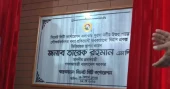
Prime Minister Tarique Rahman on Saturday inaugurated a project to develop both banks of the Surma River at Chandni Ghat in Sylhet, including beautification and flood protection infrastructure.
He laid the foundation stone of the project at around 11:00am.
Commerce Minister Khandaker Abdul Muktadir, Expatriates' Welfare and Overseas Employment Minister Ariful Haque Chowdhury, Prime Minister's Adviser Humaiun Kobir and Sylhet City Corporation Administrator Abdul Qayyum Chowdhury were present at the programme.
The Prime Minister's wife, Dr Zubaida Rahman, also attended the event.
Following the inauguration, officials briefed the Prime Minister on different aspects of the project.
He is scheduled to address a civic reception there.
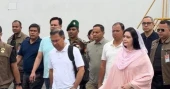
Earlier, after arriving at Osmani International Airport at 10:05am on a domestic flight with his wife, the Prime Minister went straight to the shrine of Hazrat Shahjalal (R), where he offered fateha and recited Darood Sharif.
At noon, he is set to inaugurate the re-excavation of the Baisha River in Kashipur Union under Sylhet Sadar upazila.
After offering Zuhr prayers and having lunch at the Circuit House, he will inaugurate Notun Kuri Sports-2026 at Sylhet District Stadium at 3:00pm.
Later, he is scheduled to attend a meeting with party leaders and workers at the Shilpakala Academy before returning to Dhaka in the evening.
This is Tarique Rahman's first visit to Sylhet as Prime Minister.
1 month ago
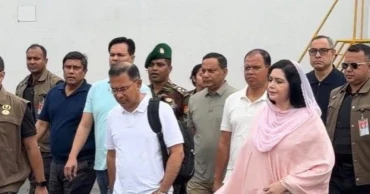
PM arrives in Sylhet with wife on first official visit
Prime Minister Tarique Rahman arrived in Sylhet on Saturday morning on his first official visit to the divisional city since assuming office.
He landed at Osmani International Airport at 10:05am on a domestic flight accompanied by his wife, Dr Zubaida Rahman, Prime Minister's Additional Press Secretary Atikur Rahman Rumon told UNB.
Commerce Minister Khandaker Abdul Muktadir, Expatriates' Welfare and Overseas Employment Minister Ariful Haque Chowdhury, Sylhet City Corporation Administrator Kaiyum Chowdhury, Divisional Commissioner Mashiur Rahman, Deputy Commissioner Sarwar Alam and other senior officials received the Prime Minister at the airport.
From the airport, Tarique headed straight to the shrine of Hazrat Shahjalal (R)where he is scheduled to offer fateha.
Earlier in the morning, the Prime Minister left his Gulshan residence for Hazrat Shahjalal International Airport at around 8:25am.
During the day-long visit, he will lay the foundation stone of a Sylhet City Corporation project at Chandni Ghat aimed at easing waterlogging in the city and address a civic gathering there.
At noon, he is scheduled to inaugurate the re-excavation of the Baisha River in Kashipur Union under Sylhet Sadar upazila.
After offering Zuhr prayers and having lunch at the Circuit House, the Prime Minister will inaugurate Notun Kuri Sports-2026 at Sylhet District Stadium at 3:00pm.
Tarique Rahman is also scheduled to attend a meeting with party leaders and workers at the Shilpakala Academy later in the day.
He is expected to return to Dhaka in the evening.
This will be Tarique Rahman's first visit to Sylhet as the Prime Minister.
He last visited the city on January 21 during the campaign for the 13th parliamentary election, in his first trip to Sylhet in nearly two decades.
1 month ago
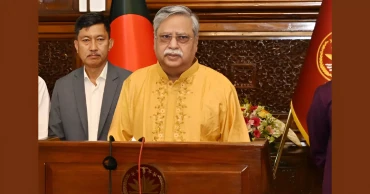
President Shahabuddin urges peace, unity on Buddha Purnima
President Mohammed Shahabuddin on Friday called for strengthening communal harmony, national unity and global peace as he greeted Buddhists in Bangladesh and around the world on the occasion of Buddha Purnima.
He said while exchanging greetings with the Buddhist community on the occasion of Buddha Purnima.
In his message marking the religious festival, the President said the teachings of Gautama Buddha on peace, non-violence, equality and compassion remain highly relevant at a time when wars, conflicts and hatred are destabilising different parts of the world.
Ensure dignity, safety, equality for women at work: President Shahabuddin
1 month ago
Bangladesh to issue 7-year Sukuk worth Tk 5,900 cr for rural bridge project
Bangladesh is set to issue its eighth government investment Sukuk worth Tk 5,900 crore to finance the construction and development of important bridges on rural roads under a revised project, according to an official statement.
The seven-year “CIBRR-1 Socio-Economic Development Sukuk” will be issued under the project titled Construction of Important Bridges on Rural Roads (1st Revised). The prospectus and Shariah declaration of the Sukuk have already been finalised with approval from the Shariah Advisory Committee under the Debt Management Department.
The auction for the Sukuk will be held for the first time on May 13, 2026, using Bangladesh Bank’s in-house Shariah Securities Module (SSM) system.
According to the prospectus, Sukuk will be issued through an auction-based lease structure with a face value of Tk 5,900 crore, maturing on May 14, 2033.
Investors will receive a total rental return of Tk 4,295.20 crore over seven years, equivalent to an annual return of 10.40 percent, payable on a semi-annual basis.
Banks and financial institutions having current or Al-Wadiah accounts with Bangladesh Bank will be eligible to participate directly in the auction. In addition, domestic and foreign individual investors, corporate bodies, investment companies, insurance companies, provident funds and deposit insurance funds may also participate through eligible banks and financial institutions maintaining accounts with Bangladesh Bank.
Investors will be able to submit bids online through the SSM system using their Sukuk Investor (SI) ID in multiples of Tk 10,000 between 10:00am and 3:00pm on May 13, 2026.
New investors must complete their SI ID registration through their respective banks by May 12, 2026.
The successful bidders will be informed of their allotted Sukuk amount through their respective accounts at 4:00pm on the auction day, the statement said.
1 month ago
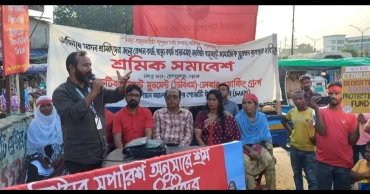
Rising cost of living deepens hardship for workers: Speakers
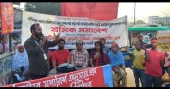
Speakers at a workers’ rally on Friday said that the rising cost of living is making life increasingly difficult for working people, urging immediate steps to ease the burden and strengthen social protection measures.
They made the call at a rally held in Savar marking the historic May Day under the slogan “Reduce the prices of essential commodities, save workers.”
Participants at the rally called for the introduction of ration and health cards for workers and the expansion of social protection programmes in the national budget.
Sramik Dal’s rally begins at Nayapaltan
The rally was organised by the Labour Working Group of the Democratic Budget Movement (DBM) and held in the afternoon at Murti Mor in Hemayetpur Bus Stand.
Around 300 workers from various labour and youth organisations took part in the programme.
Addressing the rally, DBM Joint General Secretary Sekendar Ali Mina and Combined Workers Federation General Secretary Nahidul Hasan Nayan highlighted the growing economic strain on workers amid persistent price hikes.
They stressed the need for an accessible rationing system, quality healthcare services for workers, and the establishment of specialised hospitals. The speakers also called for the introduction of an effective pension scheme.
They further demanded that compensation for workers injured or killed in workplace accidents be set in line with international standards.
The rally also urged authorities to make the workers’ protection fund functional and ensure workers’ participation in labour-related decision-making.
The speakers warned that sustainable economic development would not be possible without ensuring workers’ rightful demands and protections.
1 month ago

Bangladeshi students' murders in US: Second body confirmed as Bristy, repatriation underway
Authorities in Florida have confirmed that the second recovered body is that of Nahida Sultana Bristy, said Golam Mortoza, Minister (Press) at the Bangladesh Embassy in the United States, in a WhatsApp message on Friday.
Police from a Florida department contacted Bristy’s brother to confirm the identification, he said.
The family has requested that arrangements be made to send her body back to Bangladesh. The Bangladesh Embassy in Washington, DC, in coordination with the Bangladesh Consulate in Miami, has started the process to repatriate the body.
Meanwhile, the body of Zamil Ahamed Limon, one of the two Bangladeshi students killed in the United States, will arrive in Dhaka on May 4.
Golam Mortoza said the mortal remains will reach Hazrat Shahjalal International Airport at 8:40am on an Emirates flight. The body has been received by a funeral home and will be transported from Orlando via a flight departing at 8:50pm on May 2, through Dubai.
Limon’s first namaz-e-janaza was scheduled to be held after Johr prayers on Thursday at the Islamic Society of Tampa Bay Area in Florida, he added.
Limon and Bristy, both 27-year-old doctoral students from Bangladesh, disappeared on April 16. Limon was last seen at the off-campus complex where he shared an apartment with murder suspect Hisham Abugharbieh, 26 and another roommate.
Detectives used cellphone location and licence plate reader data to track Abugharbieh’s car and Limon’s phone to the bridge where Limon’s body was found on April 24. Limon had numerous stab wounds and appeared to be bound, according to a report filed by prosecutors.
Authorities later recovered another body from a nearby waterway on April 26, which has now been confirmed as Bristy.
The suspect was arrested days after the incident by a SWAT team at his parents’ home. A court ordered that he be held without bond.
Hisham Abugharbieh has also been barred from contacting witnesses or the victims’ family members, Hillsborough County Judge Logan Murphy said during a brief hearing in Tampa.
According to court records, Abugharbieh faces two counts of first-degree murder with a weapon along with other charges. He could face the death penalty if convicted, though prosecutors have not yet said whether they will pursue capital punishment.
When questioned days after the couple disappeared, Abugharbieh denied involvement, though detectives noted that his pinky finger was bandaged, according to a pretrial detention report.
Investigators later gained access to the apartment with the help of the building manager. A third roommate told police that Abugharbieh had used a cart overnight on April 16 to move cardboard boxes from his room to a trash compactor.
1 month ago