others
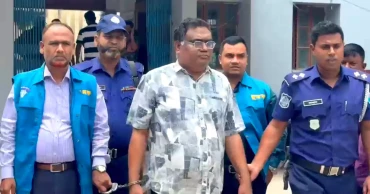
PIO of Shahjadpur arrested in Pabna in graft case
The Project Implementation Officer (PIO) of Shahjadpur upazila in Sirajganj was arrested in Pabna on Sunday night in a corruption case filed by the Anti-Corruption Commission (ACC).
Abul Kalam Azad was picked up from the Gopalpur area of the district town by a joint team of the ACC and police. Hailing from Hasampur village under Sujanagar upazila of Pabna, he currently lives with his family in the Shalgaria area of the town.
Confirming the arrest, ACC Pabna Integrated District Office Assistant Director Sadhan Chandra Sutradhar said multiple cases had been filed against Azad over allegations of embezzlement of development project funds, fabrication of fake muster rolls, and misuse of government money during his service in Shahjadpur. He had been on the run.
UP Chairman arrested in Cumilla auto-rickshaw driver killing case
According to the ACC sources, after a long investigation, evidence of corruption was found against the PIO, leading to the issuance of a warrant for his arrest.
According to the case statements, in 2023, preliminary investigations found allegations of illegal wealth accumulation against him. In May 2024, the ACC issued a notice asking him to submit his wealth statement.
He submitted the statement in July 2024, but investigators later found that he had concealed information on assets worth Tk 9.42 lakh. The inquiry also detected unexplained wealth worth Tk 1.32 crore, inconsistent with his known sources of income.
Following the findings, the ACC filed four separate cases against him – three in March 2025 and another in October 2025.
ACC officials said Azad was arrested based on a tip-off while he was on the run.
1 month ago

Murdered in US: Limon laid to rest in Jamalpur
Zamil Ahamed Limon, one of the two Bangladeshi doctoral students at the University of South Florida who were murdered in the United States, was laid to eternal in Madarganj upazila of Jamapur on Monday evening.
He was buried at his family graveyard at Laldoba village following a namaz-e-janaza at the Laldoba High School ground after Maghrib prayers.
Mortal remains of Bangladeshi student Limon arrive in Dhaka from US
Jamalpur-3 MP Mostafizur Rahman Babul, Additional District Magistrate Abdullah Bin Rashid, Upazila Nirbahi Officer of Madarganj Sumon Chowdhury, upazila BNP Vice President Abdul Mannan and Madarganj municipality BNP President Abdul Gafur, among others, attended he janaza.
1 month ago
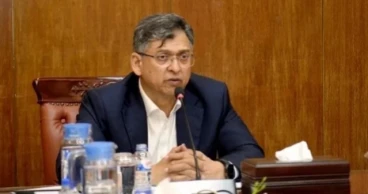
Old shirt to return as govt finalises new police uniform: Salahuddin
Home Minister Salahuddin Ahmed on Monday said the government has decided to revise the uniform of the Bangladesh Police by restoring the previous shirt design while replacing the trousers with khaki.
He made the announcement while briefing reporters at the Secretariat following the first meeting of the national committee on coordination, management and law enforcement related to forcibly displaced Myanmar nationals, commonly known as Rohingyas.
BNP made ‘significant compromises’ to ensure timely elections: Salahuddin
Responding to a question on the progress of the uniform change, the minister said the existing police dress had not been widely accepted either within the force or among the public.
“We have observed that the current uniform has not satisfied many within the police force and is not widely accepted. It is not quite suitable,” he said.
The decision was taken following requests from police personnel, Salahuddin said, adding that they were considering how a more traditional dress can be given.
“We have retained the earlier shirt used nationwide, but replaced the trousers with khaki. After detailed discussions, this has been finalised as a more acceptable uniform,” he added.
The minister said it will take some time before the new uniform is introduced, as production of clothes and preparation of the uniform are still underway.
Asked about an incident in which a journalist was reportedly prevented from travelling abroad on Sunday, he said he will look into the matter.
1 month ago

Bangladesh launches AGC to bolster grid stability ahead of Rooppur grid integration
Bangladesh has activated Automatic Generation Control (AGC), the secondary frequency regulation mechanism for the national power grid, alongside the already-operational Free Governor Mode of Operation (FGMO), in a significant step towards ensuring grid stability ahead of the eventual integration of the Rooppur Nuclear Power Plant.
Power Grid Bangladesh PLC disclosed this information on Monday. The initiative was carried out on April 28 and 29 under the supervision of the National Load Dispatch Centre (NLDC), operated by Power Grid Bangladesh PLC, with support from the Bangladesh Power Development Board (BPDB) and participation of the connected power stations.
Twelve power plants have been brought under the AGC framework, which functions as the secondary control layer. The FGMO, which serves as the primary control mechanism, had earlier been installed across 30 power stations under the same project. Tests confirmed that running both primary and secondary controls simultaneously produces a marked improvement in grid frequency stability.
The two systems are part of a broader initiative titled the Bangladesh Power System Reliability and Efficiency Improvement Project implemented by Power Grid Bangladesh PLC. The project had previously included an upgrade of the NLDC's Energy Management System (EMS) software.
Grid frequency stabilisation requires adequate spinning reserve, standby generation capacity that can be rapidly mobilised. With spinning reserve in place, FGMO and AGC together enable power plants to automatically adjust output in real time to match grid demand, a prerequisite for maintaining frequency within acceptable limits.
Power Grid Bangladesh said sustaining adequate spinning reserve and keeping plants continuously active under both FGMO and AGC will progressively enhance grid frequency stability, creating the technically favourable conditions necessary for safe and reliable operation of the Rooppur Nuclear Power Plant once it is connected to the national grid.
1 month ago

DMP files 1,721 cases for traffic rules violation
The Traffic Division of Dhaka Metropolitan Police (DMP) has filed 1,721 cases for violating traffic rules in different parts of the capital on Sunday.
During the drives, DMP filed 93 cases under Ramna zone, 152 cases under Lalbagh zone, 160 cases under Motijheel zone and 281 cases under Wari zone, 180 cases under Tejgaon zone, 416 cases under Mirpur zone, 241 cases under Uttara zone, 198 cases under Gulshan zone, said NM Nasiruddin, Deputy Police Commissioner of DMP’s Media and Public Relations Division, on Monday.
Besides, a total of 382 vehicles were impounded and 144 others were towed during the drives.
The DMP’s Traffic Division has vowed to continue drives to maintain discipline on Dhaka’s roads.
1 month ago
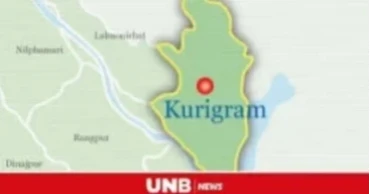
Three Jamaat men injured in Kurigram bee attack
Three activists of Bangladesh Jamaat-e-Islami were injured after being attacked by a swarm of bees in Ulipur upazila of Kurigram on Monday.
The incident took place at Birhim village under Bazra union of the upazila in the afternoon.
The injured were identified as Samiul Islam, 35, secretary of Bazra union unit of Jamaat; Firoz Hossain, 37, president of its Ulema wing; and party worker Tojammel Mia, 47. All are residents of Madhya Bazra village.
According to locals, the Jamaat men were travelling on a motorcycle to attend a party programme in the afternoon when they came under sudden attack by a swarm of bees in front of the house of one Rabbani Mia in Birhim village.
As the bees attacked, the trio stopped their motorcycle and tried to take shelter in a nearby house. Locals rushed to the scene and attempted to drive away the bees by lighting fire, but the three had already sustained injuries.
Witness Nazmul Islam said the victims became disoriented as the swarm suddenly descended on them before locals rescued them.
Two of the injured were taken to Sundarganj Upazila Health Complex in nearby Gaibandha for treatment.
Dr Farhana Binte Faruk, resident medical officer at the hospital, said Tojammel Mia had suffered around 40 stings.
He was later referred to Rangpur for advanced treatment, while Samiul Islam was given primary treatment and released. Firoz Hossain reportedly received treatment locally.
1 month ago

Govt plans CCTV coverage of all national, regional and district highways: Minister
National, regional and district-level highways across the country will be brought under CCTV surveillance in phases to improve road safety and discipline, Road Transport, Rail and Shipping Minister Shaikh Rabiul Alam said on Monday.
“We are planning to bring national highways under CCTV coverage on a priority basis. Later, regional highways and then district highways will be covered gradually,” Shaikh Rabiul said, while briefing journalists after the fifth session of this year's Deputy Commissioners’ Conference. Day two of this important annual event that serves as a prolonged, comprehensive brainstorming was held at the Osmani Memorial Auditorium in the capital.
The session was attended by officials from the Road Transport and Highways Division, the Ministry of Railways and the Ministry of Shipping.
Addressing traffic discipline on highways, he said efforts are underway to stop the movement of three-wheelers on major roads, but enforcement remains challenging.
Three-wheelers still find their way onto highways, which makes full control difficult. However, the situation has improved compared to earlier times, he said, adding that steps are being taken to gradually regulate their movement.
The minister also said road expansion demands in Bangladesh are significant, but financial constraints remain a major challenge.
In the last two months alone, proposals submitted by MPs for road widening projects would require around Tk 3 lakh crore. But the budget allocation is far lower, around Tk 40,000 crore, he said.
He stressed the need for prioritisation and transparency in project implementation.
“We must work based on priority. The government is committed to implementing projects transparently, impartially and based on necessity,” he added.
The minister also raised concerns over the installation of speed breakers without proper assessment.
“In many cases, speed breakers are being installed unnecessarily and without considering actual requirements,” he said.
1 month ago
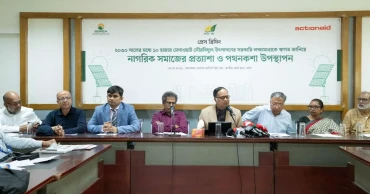
Bangladesh must cut red tape, duties to hit 10,000MW solar target by 2030: Experts
Energy experts and civil society leaders on Monday called on the government to slash import duties on solar equipment, streamline investor services and mobilise redirected fossil-fuel subsidies if Bangladesh is to achieve its target of generating 10,000 megawatts of solar power by 2030.
Speaking at a press briefing at the Jatiya Press Club, they described the target as ambitious yet achievable, warning that bureaucratic bottlenecks, high tariffs and a lack of grid modernisation remain the principal obstacles to a timely transition away from imported fossil fuels.
Solar power offers way out of energy trap: Hossain Zillur Rahman
The event was jointly organised by ActionAid Bangladesh, the Bangladesh Solar and Renewable Energy Association (BSREA) and the Just Energy Transition Network Bangladesh (JETnet-BD).
Energy expert Dr Ijaz Hossain said integrating 10,000 MW of solar capacity into the national grid could substantially reduce the country's expenditure on LNG and coal imports.
“Solar power is no longer an alternative, it is set to become the backbone of Bangladesh's energy system,” he said, stressing the need for battery storage systems to make surplus daytime generation available at night and to maintain grid stability.
Shafiqul Alam, Lead Energy Analyst at the Institute for Energy Economics and Financial Analysis, said thousands of megawatts could be unlocked simply by tapping rooftop space on garment factories and large industrial plants.
He argued that strengthening net metering policies would incentivise industrial owners to invest, reducing pressure on the public purse and cutting production costs.
Dipal Chandra Barua, Founder and Chairman of the Bright Green Energy Foundation, addressed concerns over land scarcity by highlighting the agro-voltaics model, under which shade-tolerant crops are cultivated beneath solar panels.
He also pointed to riverine char areas and floating solar projects as viable sites for large-scale generation.
Climate finance expert M Zakir Hossain Khan, Chief Executive of the Change Initiative, said reallocating even a fraction of the subsidies currently directed to fossil fuels could finance the solar push without recourse to foreign loans.
He cautioned that over-reliance on large, import-dependent projects posed a long-term risk to energy security, and said rooftop and irrigation-based solutions could deliver visible results within three to six months if there is adequate administrative will.
Mustafa Al Mahmud, President of BSREA, identified high import duties on solar panels and inverters as a leading deterrent, saying investors are further discouraged by lengthy multi-agency approval processes.
He called for a fast-track, one-stop service to facilitate renewable energy investment.
Lipi Rahman of JETnet-BD stressed that the gains from the 10,000 MW target must not accrue solely to large industrial players.
She called for the deliberate inclusion of marginalised women, smallholder farmers and micro-entrepreneurs to ensure the transition is equitable.
Experts concluded that the 2030 solar target is technically within reach but will require a coordinated, bureaucracy-free roadmap centred on grid modernisation, decentralised community-based systems and strong political commitment.
1 month ago

Physician found dead in Dhaka flat
A 26-year-old physician was found dead at a house in the Shahbagh area of the capital on Monday.
The deceased was identified as ABM Abid Hasan Jisan, 26, son of Ahsan Habib of Sadar upazila in Chuadanga district.
Jisan used to live in a flat at Eureka Saleha Palace on the Habibullah Road with his colleagues.
His colleague Hafizur said Jisan was working as a physician at Popular Hospital Medical College Hospital at Dhanmondi after completing his MBBS from Kushtia Medical College under 2018-19 session.
Dipto Sinha, a roommate of Jisan, found him unconscious on his bed around 2:30pm.
Later, they took him to Dhaka Medical College Hospital (DMCH), where doctors pronounced him dead, he said, adding that he was unaware whether the deceased had consumed anything prior to his death.
Dipto also claimed that Jisan was suffering from hypertension, saying he found him speaking with his family while leaving the room in the morning.
Inspector Md Faruk, in-charge of the DMCH police camp, said the body was kept at the hospital morgue for autopsy.
1 month ago

Haor region on alert as rivers continue to swell
The flood situation in parts of the haor region, including Sunamganj, Sylhet and Netrokona, remains concerning as several rivers continue to flow above the pre-monsoon danger level amid ongoing rainfall, according to the latest forecast from the Flood Forecasting and Warning Centre (FFWC).
At present, several rivers are flowing above the pre-monsoon danger level, including the Naljur River at Jagannathpur in Sunamganj, the Baulai River at Khaliajuri, the Bhugai-Kangsha River at Jariajanjail, the Someshwari River at Kalmakanda, the Magra River at Netrokona and Atpara, the Kalni-Kushiyara River at Ajmiriganj, and the Sutang River at the Sutang Railway Bridge in Habiganj.
Among the major rivers in the haor basin of the northeastern region, the water levels of the Surma-Kushiyara and Dhanu-Baulai rivers have increased, while the water levels of the Bhugai-Kangsha have decreased.
Over the past 24 hours, moderate to heavy rainfall has been observed both upstream (Agartala, Tripura) and within the haor basin, the FFWC said on Monday.
According to the Bangladesh Meteorological Department and global weather agencies, moderate to moderately heavy rainfall is expected over the next one day, followed by moderately heavy to heavy rainfall over the subsequent two days in this region.
The water levels of the Surma-Kushiyara rivers in Sylhet and Sunamganj districts may continue to rise over the next three days. On the 2nd day, the Kushiyara may exceed the pre-monsoon danger level at some locations, potentially causing flooding in haor-adjacent low-lying areas of Sylhet and Sunamganj districts, the forecast says.
The water levels of the Bhugai-Kangsha and Someshwari rivers in Netrokona district may remain stable over the next three days. However, flooding conditions in the haor-adjacent low-lying areas of the Bhugai-Kangsha basin in Netrokona may persist.
Similarly, the water levels of the Dhanu-Baulai rivers in Netrokona and Kishoreganj districts may remain stable over the next three days, and flooding conditions in the haor-adjacent low-lying areas of this basin may continue.
The water levels of the Manu, Khowai, and Juri rivers in Moulvibazar and Habiganj districts may remain stable over the next two days and increase on the 3rd day.
The Juri River may rise rapidly and reach the warning level within the next 72 hours. The water level of the Sutang River may increase over the next one day and then decrease over the following two days.
However, since it is already flowing above the pre-monsoon danger level, flooding conditions in Habiganj district may persist, according to the FFWC forecast.
1 month ago