usa
Supreme Court to review whether Trump’s birthright citizenship order violates the Constitution
The U.S. Supreme Court on Friday agreed to examine the constitutionality of President Donald Trump’s order denying birthright citizenship to children born in the United States to parents who are in the country illegally or on temporary status.
The justices will hear Trump’s appeal of a lower-court decision that struck down the policy. The order has not taken effect anywhere in the nation.
The case is scheduled for arguments in the spring, with a ruling expected by early summer.
Trump signed the birthright citizenship directive on Jan. 20, the start of his second term, as part of a broader Republican-led push to tighten immigration enforcement. Other measures include ramped-up enforcement operations in several major cities and the first use of the 18th-century Alien Enemies Act during peacetime.
The administration faces numerous legal challenges, and the Supreme Court has delivered mixed rulings on related issues. The justices temporarily blocked use of the Alien Enemies Act for fast-tracking the deportation of alleged Venezuelan gang members, yet allowed immigration sweeps to resume in the Los Angeles area after a lower court halted them over profiling concerns.
The Court is also reviewing the administration’s emergency request to deploy National Guard units in the Chicago area for immigration operations — a move currently frozen by a lower court.
This is the first of Trump’s immigration policies to reach the Supreme Court for a final decision. The directive challenges more than a century of interpretation of the 14th Amendment, which has long been understood to guarantee citizenship to nearly all individuals born on U.S. soil, except for children of foreign diplomats or occupying forces.
Several lower courts have struck down the order as unconstitutional — or likely unconstitutional — even after the Supreme Court limited the use of nationwide injunctions earlier this year. However, the Court left open the possibility of nationwide relief through class actions or state-led suits.
Each lower court considering the issue has ruled that Trump’s directive violates the 14th Amendment, which was enacted to guarantee U.S. citizenship to Black Americans, including formerly enslaved people. Under long-standing practice, anyone born in the United States — including children of undocumented mothers — is automatically a U.S. citizen.
The case now before the Court originated in New Hampshire, where a federal judge in July blocked the order in a class-action suit covering all affected children. The American Civil Liberties Union is representing the children and families challenging the policy.
“No president can rewrite the 14th Amendment’s core guarantee of citizenship,” said Cecillia Wang, national legal director of the ACLU. “We look forward to resolving this issue definitively at the Supreme Court.”
The administration also asked the justices to review a July ruling from the 9th U.S. Circuit Court of Appeals, which held that Democratic-led states challenging the policy needed a nationwide injunction to avoid a patchwork of citizenship rules. The Supreme Court did not act on the 9th Circuit case.
The administration argues that children of noncitizens are not “subject to the jurisdiction” of the United States and therefore do not qualify for citizenship.
“The Citizenship Clause was intended to secure citizenship for newly freed slaves — not for children of individuals in the U.S. illegally or temporarily,” Trump’s solicitor general, D. John Sauer, wrote in urging Supreme Court review.
Twenty-four Republican-led states and 27 GOP lawmakers, including Senators Ted Cruz and Lindsey Graham, are supporting the administration’s position.
5 months ago
Trump’s remarks alarm Somali community in Minneapolis
President Donald Trump’s latest remarks targeting Somali immigrants sparked outrage and anxiety Wednesday in the Minneapolis–St. Paul area, home to the largest Somali community in the United States.
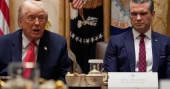
Speaking first during a Tuesday Cabinet meeting, Trump said Somalis “contribute nothing” and described them as “garbage,” adding that accepting them would send the country “the wrong way.” He intensified the criticism on Wednesday, telling reporters at an Oval Office event that “Somalians should be out of here” and that they had “destroyed our country.”
He also took aim at Minneapolis Mayor Jacob Frey, calling him a “fool,” and said he would not be “proud to have the largest Somali population” in the U.S.
Hamse Warfa, a Minnesota-based Somali-born entrepreneur and head of the education nonprofit World Savvy, rejected the president’s remarks.
“I am not garbage. I’m a proud American citizen,” Warfa said, noting that anti-immigrant rhetoric has repeatedly been used for political gain, pointing to past comments Trump made about Haitian migrants ahead of the 2024 election.
The Twin Cities region is home to roughly 84,000 people of Somali descent — nearly one-third of the U.S. Somali population. Refugees from the East African nation have been settling in Minnesota since the 1990s, drawn by social support services and the growing diaspora community.
Trump’s comments came amid reports that federal authorities are preparing a targeted immigration enforcement action in Minnesota focused on Somalis living illegally in the country, according to a person familiar with the preparations. Most Somalis in the state, however, are U.S. citizens, including many born in America.
Some community leaders said they heard anecdotal accounts of detentions by federal agents, though they lacked details. Immigration officials did not immediately respond to requests for comment.
Somalis have become an integral part of Minnesota’s civic and political landscape, contributing to local economies, opening businesses and serving in the Legislature and on city councils. U.S. Rep. Ilhan Omar, frequently singled out by Trump — including this week, when he called her “garbage” — represents Minnesota in Congress.
The community has also faced scrutiny following the arrests of dozens of people, many of them Somalis, accused of involvement in fraud schemes targeting social service agencies. While Trump has repeatedly claimed Minnesota is “a hub of fraudulent money laundering activity” and suggested money may have flowed to the extremist group al-Shabab, federal authorities have not charged any defendants with terrorism-related offenses, and evidence of such links remains scant.
Trump’s latest remarks followed his administration’s decision to halt all asylum rulings after two National Guard soldiers were shot dead in Washington. Although the suspect is of Afghan origin, Trump questioned immigrants from other countries, including Somalia. The administration also paused immigration applications for people from 19 countries — among them Somalia — that had been under previous U.S. travel bans.
Minnesota leaders, including Gov. Tim Walz and Mayor Frey, pledged to support Somali residents.
“Minneapolis is — and will remain — a city that stands up for our residents,” Frey said in a statement.
Several Democratic legislators and Minneapolis City Council members held a news conference Wednesday urging Republican lawmakers to condemn Trump’s comments.
“Where are the Republicans now?” asked state Sen. Zaynab Mohamed of Minneapolis, who said she had invited GOP leaders to attend the briefing.
Warfa said he hopes the political rhetoric recedes soon, especially as his daughter, a high school senior, prepares for college.
“I would rather spend time thinking about her future,” he said, instead of hearing the president describe people like him “as garbage.”
6 months ago
Trump rejected Maduro requests on call, options narrow for Venezuela leader, sources say
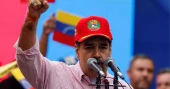
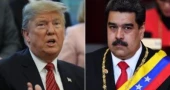
Venezuela’s President Nicolas Maduro is running out of options for a negotiated exit from power after a short call with U.S. President Donald Trump on November 21, sources familiar with the discussion said.
During the call, Maduro sought assurances for safe passage out of Venezuela along with full legal amnesty for himself and his family, the lifting of all U.S. sanctions, and the closure of an International Criminal Court case against him.
He also requested sanctions relief for more than 100 Venezuelan officials accused by the U.S. of human rights violations, corruption, or drug trafficking, reports Reuters.
Maduro proposed that Vice President Delcy Rodriguez oversee an interim government ahead of new elections. However, Trump rejected most of these requests during the less-than-15-minute call, while giving Maduro a one-week window to leave the country with his family. That offer has since expired, prompting Trump to declare Venezuela’s airspace closed. The details of the Friday deadline had not been previously disclosed, though Trump later confirmed the conversation had occurred without elaborating.
The discussion came amid growing U.S. pressure on Venezuela, including strikes on suspected drug-smuggling vessels in the Caribbean, repeated threats to extend military operations to land, and the designation of the Cartel de los Soles, which the U.S. says includes Maduro, as a foreign terrorist organization. Maduro’s government denies all criminal allegations and accuses the U.S. of seeking regime change to control Venezuela’s natural resources, particularly oil.
It remains uncertain whether Maduro can propose a new plan for safe passage. U.S. officials are reportedly weighing options but note significant disagreements and unresolved details. The Trump administration has raised its reward for information leading to Maduro’s arrest to $50 million, with $25 million each for other top Venezuelan officials, including Interior Minister Diosdado Cabello, who face U.S. indictments for alleged drug trafficking. All have denied the charges.
Maduro’s government has requested another call with Trump, while he continues to assert loyalty to the Venezuelan people. Observers say that although a negotiated exit is not entirely ruled out, the Venezuelan leader’s options are increasingly narrow as U.S. pressure intensifies.
6 months ago
MH370 Mystery: What to know as search for missing Malaysian flight begins again
More than ten years after Malaysia Airlines Flight MH370 disappeared, it remains one of aviation’s greatest mysteries. Despite extensive international search efforts, investigators still do not know what happened to the plane or its 239 people on board.
On Wednesday, Malaysia announced that U.S. marine robotics firm Ocean Infinity will restart a seabed search on December 30, renewing hopes of finally locating the missing jet.
Earlier searches across the southern Indian Ocean yielded almost nothing, with only a handful of small debris pieces ever found.
A massive search in the southern Indian Ocean, where the jet is believed to have gone down, turned up almost nothing. Apart from a few small fragments that washed ashore, no bodies or large wreckage have ever been recovered.
Here’s what we know about the deadly aviation tragedy.
‘Good night, Malaysian Three Seven Zero’
The Boeing 777 disappeared from air-traffic radar 39 minutes after departing Kuala Lumpur for Beijing on March 8, 2014.
The pilot’s last radio call to Kuala Lumpur — “Good night, Malaysian Three Seven Zero”— was the final communication before the plane crossed into Vietnamese airspace and failed to check in with controllers there.
Minutes later, the plane’s transponder, which broadcasts its location, shut down. Military radar showed the jet turn back over the Andaman Sea, and satellite data suggested it continued flying for hours, possibly until fuel exhaustion, before crashing into a remote section of the southern Indian Ocean.
Theories about what happened range from hijacking to cabin depressurization or power failure. There was no distress call, ransom demand, evidence of technical failure or severe weather.
Malaysian investigators in 2018 cleared the passengers and crew but did not rule out “unlawful interference.” Authorities have said someone deliberately severed communications and diverted the plane.
Passengers came from many countries
MH370 carried 227 passengers, including five young children, and 12 crew members. Most passengers were Chinese, but there were also citizens from the United States, Indonesia, France, Russia and elsewhere.
Among those aboard were two young Iranians traveling on stolen passports, a group of Chinese calligraphy artists, 20 employees of U.S. tech firm Freescale Semiconductor, a stunt double for actor Jet Li and several families with young children. Many families lost multiple members.
Largest underwater search in history
Search operations began in the South China Sea between Malaysia and Vietnam, then expanded to the Andaman Sea and the southern Indian Ocean.
Australia, Malaysia and China coordinated the largest underwater search in history, covering roughly 120,000 square kilometers (46,000 square miles) of seabed off western Australia. Aircraft, vessels equipped with sonar and robotic submarines scoured the ocean for signs of the plane.
Signals thought to be from the plane’s black box turned out to be from other sources, and no wreckage was found. The first confirmed debris was a flaperon discovered on Réunion Island in July 2015, with additional fragments later found along the east coast of Africa. The search was suspended in January 2017.
In 2018, U.S. marine robotics company Ocean Infinity resumed the hunt under a “no find, no fee” agreement, focusing on areas identified through debris drift studies, but it ended without success.
The challenge of locating remains
One reason why such an extensive search failed to turn up clues is that no one knows exactly where to look. The Indian Ocean is the world’s third largest, and the search was conducted in a difficult area, where searchers encountered bad weather and average depths of around 4 kilometers (2.5 miles).
It’s not common for planes to disappear in the deep sea, but when they do remains can be very hard to locate. Over the past 50 years, dozens of planes have vanished, according to the Aviation Safety Network.
US company resumes search
Malaysia’s government gave the green light in March for another “no-find, no-fee” contract with Ocean Infinity to resume the seabed search operation at a new 15,000-square-kilometer (5,800-square-mile) site in the ocean. Ocean Infinity will be paid $70 million only if wreckage is discovered.
However, the search was suspended in April due to bad weather. The government said Wednesday that Ocean Infinity will resume search intermittently from Dec. 30 for a total of 55 days, in targeted areas believed to have the highest likelihood of finding the missing aircraft.
It is unclear if the company has new evidence of the plane’s location. It has said it would utilize new technology and has worked with many experts to analyze data and narrow the search area to the most likely site.
6 months ago
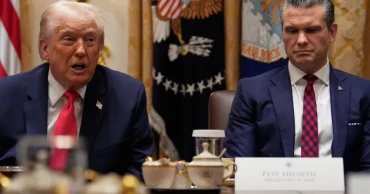
Trump says Somalis should leave the US and return to fix their homeland
President Donald Trump on Tuesday said he does not want Somali immigrants in the United States, claiming they depend too much on public assistance and do not contribute to the country.
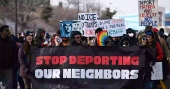
His remarks, directed at an entire immigrant community, are the latest in a series of attacks on the Somali diaspora. Somalis have settled in states such as Minnesota for decades, many arriving as refugees. Trump did not differentiate between U.S. citizens and non-citizens.
The comments came days after the administration halted all asylum decisions following the shooting of two National Guard soldiers in Washington. The suspect in that case is from Afghanistan, but Trump linked the incident to immigrants from other countries, including Somalia.
“They contribute nothing. I don’t want them in our country,” Trump told reporters at the end of a Cabinet meeting. He added that Somalis should “go back to where they came from” and fix their own country.
Trump has repeatedly targeted Rep. Ilhan Omar, a Minnesota Democrat who arrived from Somalia as a child. Last week, he intensified his criticism after a conservative activist, in an article based on unnamed sources, alleged that money stolen from Minnesota programs had gone to al-Shabab, the militant group operating in Somalia. The allegation has not been substantiated.
In a social media post last week, Trump vowed to send Somalis “back to where they came from,” calling Minnesota “a hub of fraudulent money laundering activity.” On Tuesday, he said Somalis in the U.S. should return to “fix” Somalia.
Trump also pledged to end temporary legal protections for Somalis living in Minnesota, though experts questioned whether the White House has the authority to enforce the plan as described. According to a report for Congress in August, only 705 Somalis nationwide are covered by Temporary Protected Status.
State officials and immigration advocates criticized Trump’s comments, calling them divisive and legally questionable. Many said the remarks unfairly targeted Minnesota’s Somali community, which is one of the largest in the country.
Trump again attacked Rep. Omar, calling her and her supporters “garbage.” Omar responded on social media, saying Trump’s “obsession” with her was “creepy” and that she hoped he would receive the help he needs.
Trump also claimed Somali immigrants “do nothing but complain” and are not interested in contributing to the United States.
Minneapolis Mayor Jacob Frey rejected Trump’s comments. He said Somali immigrants have strengthened the city by opening businesses, creating jobs, and enriching its cultural identity.
“To villainize an entire group is wrong under any circumstances,” Frey said. “The consistency with which Donald Trump does this raises serious questions about constitutional values and violates the moral principles we stand by as Americans.”
6 months ago
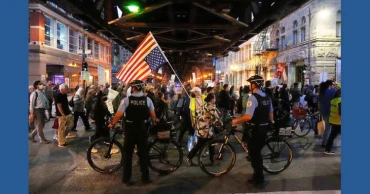
Trump suspends immigration applications from 19 countries
The Trump administration has temporarily halted immigration applications, including green card requests, for individuals from 19 countries previously targeted by travel restrictions. The move follows recent policy changes prompted by the shooting of two National Guard troops.
According to a policy memo posted Tuesday by U.S. Citizenship and Immigration Services (USCIS), the pause affects decisions such as green card approvals and naturalizations for people from countries deemed high-risk. USCIS Director Joseph Edlow will determine when the suspension ends.
Migrants brace for uncertainty under Trump’s new immigration restrictions
Earlier this year, the administration banned travel from 12 countries and restricted access for seven more, citing security concerns. While earlier restrictions did not affect immigrants already in the U.S., the new directive subjects them to additional review, including potential interviews and referrals to law enforcement.
USCIS plans to prioritize cases for review within 90 days, reflecting heightened scrutiny following the Thanksgiving week attack near the White House by an Afghan national. Critics argue the policy penalizes immigrants collectively.
Source: AP
6 months ago
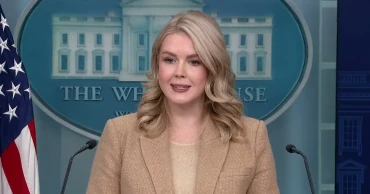
US admiral approved second Venezuela boat strike, White House says
A top US Navy admiral ordered a second strike on an alleged Venezuelan drug boat on September 2, the White House confirmed on Monday. The “double tap” strike has drawn attention from lawmakers and raised questions about its legality.
White House Press Secretary Karoline Leavitt said Defence Secretary Pete Hegseth authorised the strikes but did not order the killing of everyone on the boat. “Admiral Bradley acted well within his authority and the law,” she said.
Reports said two people survived the first blast and were still clinging to the burning vessel when the second strike killed them. Leavitt did not confirm these details. The Trump administration says its operations target narco-terrorist groups and aim to stop drug trafficking to the United States.
Since early September, more than 80 people have been killed in similar strikes in the Caribbean Sea. US officials usually release grainy videos with limited evidence of drug activity or details about those on board.
US military operations in the Caribbean have expanded recently. Trump warned that anti-drug efforts “by land” in Venezuela would begin soon.
Lawmakers from both parties have expressed concern about the September 2 strike and plan congressional reviews. Senate Armed Services Committee Chairman Roger Wicker said the committee will interview the admiral in charge and collect audio and video to understand the orders. The House Armed Services Committee said it will lead a bipartisan investigation into the operation.
Experts have raised doubts over the legality of the second strike under international law. Survivors may have been protected as shipwrecked people or incapacitated fighters. Geneva Conventions prohibit targeting those unable to fight and require their capture and care.
Venezuela condemned the strikes. Its National Assembly said it would investigate the September 2 attack. Venezuelan Attorney General Tarek William Saab called for direct dialogue with the US to ease tensions, blaming Trump’s allegations on envy of Venezuela’s natural resources.
Trump confirmed he spoke briefly with Venezuelan President Nicolás Maduro, pressing him to resign and leave the country with his family. Maduro refused and requested amnesty for top aides and control of the military, both denied by Trump.
US officials have accused Maduro of being part of the “Cartel of the Suns,” a group allegedly including high-ranking military and security officials involved in drug trafficking. Maduro denies the claims.
With inputs from BBC
6 months ago
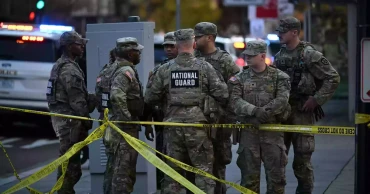
Shooting of National Guard members sparks strict US immigration crackdown
Following last week’s shooting of two National Guard members in Washington by a suspect who is an Afghan national, the Trump administration has announced a series of measures aimed at tightening entry and residency rules for certain foreigners.
The administration said it is pausing asylum decisions, reviewing green card applications from people from “countries of concern,” and halting visas for Afghans who assisted the U.S. war effort.
A memo obtained by The Associated Press revealed that, even before the shooting, the administration planned to review the cases of all refugees admitted to the U.S. during the Biden administration.
Refugee advocates and Afghan support groups have criticized the moves as collective punishment and a waste of resources, arguing that reopening processed cases is unnecessary. The Trump administration maintains that the policies are needed to ensure individuals entering or already in the country do not pose security threats.
All asylum decisions suspended
Joseph Edlow, director of U.S. Citizenship and Immigration Services, said on the social platform X last week that asylum decisions will be paused “until we can ensure that every alien is vetted and screened to the maximum degree possible.”
Aside from this post, no formal guidance has been issued, leaving details about the pause unclear.
Asylum seekers must demonstrate that they would face persecution if returned to their home countries due to race, nationality, or other grounds. Successful applicants are allowed to stay in the U.S. and can eventually apply for green cards and citizenship.
The Afghan suspect in the National Guard shooting was granted asylum earlier this year, according to advocacy group #AfghanEvac.
Trump had already restricted asylum applications. In January, he issued an executive order effectively halting asylum for people entering through the southern border, whose cases are processed through immigration courts overseen by the Justice Department. Edlow’s post indicates that USCIS asylum cases, not previously affected by Trump’s order, will now receive additional scrutiny. He did not specify how long the pause will last or what will happen to applicants during it.
Caseloads are rising: USCIS currently has 1.4 million pending asylum cases, compared with 241,280 in 2022, according to the Office of Homeland Security Statistics. Separately, around 2.4 million asylum applications are pending in the Justice Department’s immigration courts.
Focus on countries ‘of concern’
On Nov. 27, Edlow announced a “full scale, rigorous reexamination” of every green card for people from “every country of concern.”
“American safety is non negotiable,” Edlow said.
The agency’s press release said new guidance could make it harder for people from 19 “high-risk” countries, including Afghanistan, to apply for immigration benefits, such as green cards or extended stays. The administration had previously banned travel for citizens from 12 of these countries and restricted access for seven others.
No visas for Afghans
USCIS announced on Nov. 26 that it would suspend all “immigration requests relating to Afghan nationals,” affecting those in the U.S. seeking green cards, work permits, or family reunification.
Separately, Secretary of State Marco Rubio said on X that the State Department has temporarily stopped issuing visas for Afghan passport holders.
Previously, the Special Immigrant Visa (SIV) program allowed Afghans who assisted U.S. efforts and faced retribution to emigrate. The State Department’s new policy effectively closes this pathway. According to #AfghanEvac, about 180,000 Afghans were in the process of applying for SIVs.
Review of refugees admitted under Biden administration
Even before the shooting, the Trump administration planned to review tens of thousands of refugees admitted under the Biden administration through the U.S. Refugee Assistance Program, which helps people fleeing persecution. Unlike asylum seekers, refugees apply from abroad.
Edlow’s memo obtained by AP on Nov. 21 stated that all refugees admitted during the Biden administration, nearly 200,000 people, would be reviewed. Advocates note that refugees already undergo rigorous vetting.
Noem hints at updated travel ban
Late Monday, Homeland Security Secretary Kristi Noem suggested more changes could come. She said on X that after meeting Trump, she was recommending a “full travel ban” on countries she said were flooding the U.S. “with killers, leeches, and entitlement junkies.”
Noem did not name specific countries or provide a timeline. The Department of Homeland Security said in an email, “We will be announcing the list soon.”
6 months ago
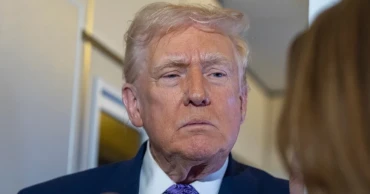
Trump says he will release MRI results and calls them perfect
President Donald Trump said Sunday that he is willing to release the results of an MRI he took in October, although he said he does not know what part of his body was scanned.
Speaking to reporters while returning to Washington from Florida, Trump said the MRI results were “perfect” and that he would make them public if people wanted to see them.
The White House has not explained why Trump underwent the MRI during his physical last month or what area was examined. Press Secretary Karoline Leavitt previously said the president received advanced imaging at Walter Reed National Military Medical Center as part of a routine checkup and that the results showed he remains in exceptional health.
Trump said Sunday he had “no idea” which part of his body the MRI covered. He added that it was not a brain scan, saying he recently took a cognitive test and “aced it.”
6 months ago
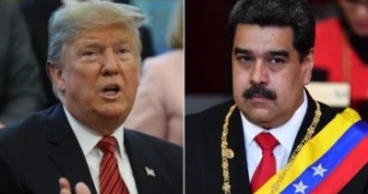
Trump calls Venezuelan airspace ‘closed,’ Maduro denounces ‘colonial threat’
US President Donald Trump on Saturday declared that the airspace “above and surrounding” Venezuela should be considered “closed in its entirety,” sparking sharp criticism from the Venezuelan government. Caracas denounced the statement as a “colonial threat” aimed at undermining the country’s sovereignty.
Trump made the announcement on his Truth Social platform, addressing it to “Airlines, Pilots, Drug Dealers, and Human Traffickers” rather than directly to President Nicolás Maduro. It remains unclear whether the statement represents a formal U.S. policy or is part of Trump’s ongoing campaign rhetoric against Maduro.
Venezuela’s Foreign Ministry said the declaration constitutes a “hostile, unilateral and arbitrary act,” threatening the nation’s territorial integrity and aeronautical security. The statement also cited U.S. immigration authorities’ suspension of biweekly deportation flights of Venezuelan migrants—a program that had returned over 13,000 people to Venezuela this year.
International airlines have recently canceled flights to Venezuela following Federal Aviation Administration warnings about the heightened military activity in the region. While the FAA’s authority is primarily domestic, it regularly issues global advisories to protect pilots from conflict zones.
Trump’s administration has previously increased pressure on Maduro, whom the U.S. does not recognize as Venezuela’s legitimate leader. U.S. forces have conducted bomber flights near Venezuelan waters, and the aircraft carrier USS Gerald R. Ford is currently stationed in the region, marking the largest U.S. military buildup there in decades.
Concerns over the use of force have prompted bipartisan calls for oversight. Senate Armed Services Committee leaders, Republican Roger Wicker and Democrat Jack Reed, said they will investigate U.S. military strikes on vessels in the Caribbean and eastern Pacific, particularly following reports of verbal orders to kill all crew members in a September attack on suspected drug smugglers.
Trump has reportedly explored both military and diplomatic channels, including a conversation with Maduro, though details of the discussion remain undisclosed.
6 months ago