
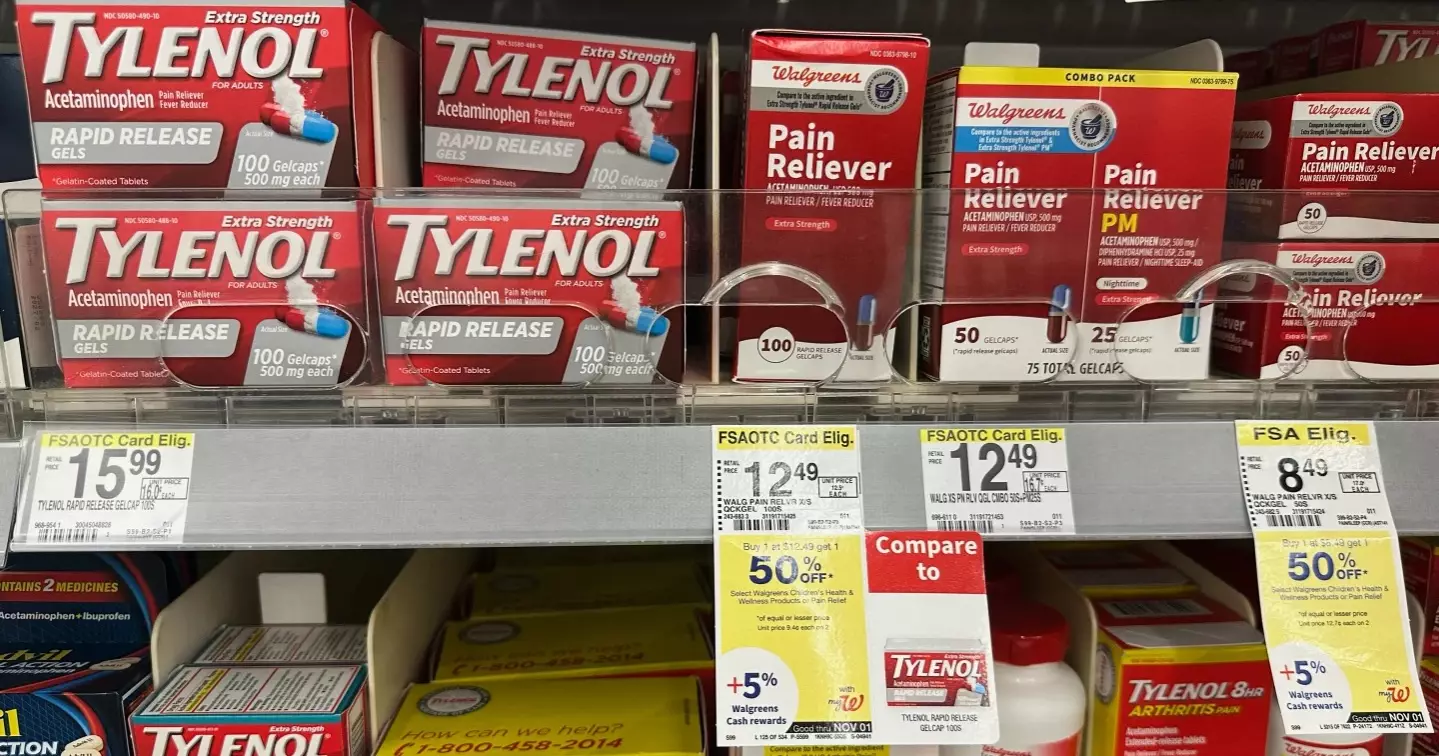
U.S. President Donald Trump’s warnings about Tylenol and vaccines during pregnancy have sparked confusion and anxiety among expectant mothers, drawing pushback from doctors who say his claims are not backed by science.
At a White House news conference on Monday, Trump urged pregnant women not to take Tylenol, citing a supposed risk of autism in children. He also revived widely debunked claims that vaccines or closely timed immunizations could contribute to autism.
The comments left some pregnant women unsettled, while others expressed frustration.
Faith Ayer, a nurse practitioner in Jacksonville, Florida, who is 17 weeks pregnant, said she felt “disappointed and angry” listening to Trump. “A lot of the claims that were shared have just not been backed by evidence,” she said.
Doctors across the country said they were already fielding questions from patients. “People are concerned,” said Dr. R. Todd Ivey, an OB-GYN in Houston. “But what I’m doing is reassuring patients that there is no causation that has ever been proven.”
The American College of Obstetricians and Gynecologists has long considered Tylenol — also known as acetaminophen — one of the few safe pain relievers during pregnancy. By contrast, the U.S. Food and Drug Administration warns that nonsteroidal anti-inflammatory drugs like ibuprofen or aspirin may cause serious fetal kidney problems.
Ayer said she relied on Tylenol to manage chronic migraines and a fever during COVID-19, with approval from her doctor. “Weighing benefits and risks, I had no reservations when taking Tylenol,” she said, noting that untreated fevers can raise the risk of miscarriage and preterm birth. She also plans to vaccinate her baby according to medical guidelines.
But some pregnant women are less certain. Dr. Stella Dantas, an OB-GYN in Portland, Oregon, said she is already receiving queries from patients who are now more anxious. “There are a number of reasons patients will need to take it, and patients already feel anxious about any medication in pregnancy,” she said.
Doctors are working to reassure patients. “Tylenol has been around for decades, is safe, and has not been shown to cause autism,” said Dr. Clayton Alfonso, an OB-GYN at Duke University. He said his team is preparing standard responses to handle the influx of questions.
The Coalition of Autism Scientists also points out that acetaminophen use has not risen in line with autism diagnoses. While some studies have hinted at possible links, many have not, and experts stress that autism is largely genetic, influenced by factors such as parental age and maternal health conditions.
“Besides letting patients know there has been no causal link established or proven, we also advise against ‘toughing it out’ if they have fever or pain,” said Dantas. “A healthy pregnancy starts with a healthy mom.”
Doctors also underscored the importance of vaccination, at a time when refusals are becoming more common. “We know that these vaccines save lives,” Ivey said. “They don’t cause autism.”
Physicians cautioned that pregnant women should not blame themselves if their child is later diagnosed with autism. “We need to take a deep breath,” Ivey said. “We need to trust the people doing the work — the scientists, the physicians, the other health care providers.”