usa
Gunman attacks Michigan church, killing 4 and injuring 8
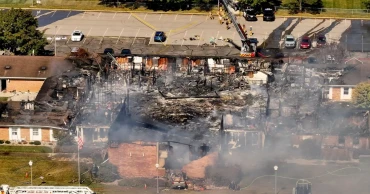
At least four people were killed and eight others injured after a gunman rammed a pickup truck into a Church of Jesus Christ of Latter-day Saints in Michigan, opened fire and set the building on fire during a Sunday service.
The attacker was later fatally shot by police. Authorities continued to search the church ruins for additional victims.
The incident occurred around 10:25 a.m. local time in Grand Blanc Township, near Flint, while hundreds were inside the church.
Police identified the gunman as 40-year-old Thomas Jacob Sanford, a former Marine from nearby Burton.
He reportedly exited his vehicle carrying two American flags, opened fire and used gasoline to ignite the fire. Explosive devices were also found, though it was unclear if they were deployed.
Police Chief William Renye said responding officers arrived within 30 seconds of a 911 call. Sanford fled the scene, prompting a brief pursuit and gunfire exchange that left him dead about eight minutes later. Authorities said churchgoers shielded children and moved them to safety during the attack.
The blaze engulfed the large church for hours before firefighters extinguished it. Two bodies were recovered from the debris, while one victim remained in critical condition and seven others were stable. Some attendees were unaccounted for, police said.
Sanford’s motive remains unclear. Military records show he served in the Marines from 2004 to 2008, including deployment to Iraq. The FBI, leading the investigation, described the attack as “targeted violence.”
The shooting occurred a day after the death of Russell M. Nelson, the church’s president, aged 101. Church spokesperson Doug Anderson said authorities were cooperating with law enforcement and urged prayers for peace and healing.
President Donald Trump praised the FBI’s response on social media and called for an end to “this epidemic of violence” in the U.S.
The attack reverberated across the region, prompting prayer services and community support. Michigan Governor Gretchen Whitmer called the incident “unacceptable,” emphasizing that violence in places of worship is intolerable.
8 months ago
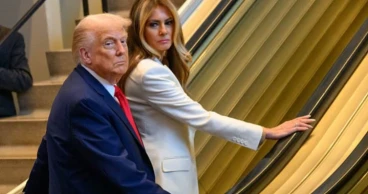
UN dismisses sabotage claims after Trump’s escalator halts
The United Nations has downplayed suggestions of sabotage after an escalator carrying US President Donald Trump and First Lady Melania Trump abruptly stopped ahead of his speech to the UN General Assembly on Tuesday.
The sudden stoppage forced the couple to walk up the halted stairway, prompting White House press secretary Karoline Leavitt to express anger. On X, she wrote that any UN staff responsible should be “fired and investigated immediately.”
Leavitt’s post included a screenshot of a Times article by Washington editor Katy Balls, who noted that some UN employees had joked about shutting off escalators and elevators so Trump “has to walk up the stairs.”
In response, UN spokesperson Stephane Dujarric explained that the problem likely occurred because a videographer from Trump’s team stepped onto the escalator just before the president and the first lady.
Trump’s remarks on Tylenol, vaccines spark concern among pregnant women
“A subsequent investigation, including a readout of the machine’s central processing unit, indicated that the escalator had stopped after a built-in safety mechanism on the comb step was triggered at the top of the escalator,” Dujarric said. “The safety mechanism is designed to prevent people or objects accidentally being caught and stuck in or pulled into the gearing. The videographer may have inadvertently triggered the safety function described above.”
Steven Cheung, Trump’s communications director, declined to comment on the UN explanation.
Trump, meanwhile, treated the glitch with humor. During his address, he quipped that all he received from the UN was a “bad escalator and a bad teleprompter.” He added, “If the first lady wasn’t in great shape, she would have fallen, but she’s in great shape,” drawing laughter from the audience.
With input from Al Jazeera
8 months ago

Trump’s remarks on Tylenol, vaccines spark concern among pregnant women
U.S. President Donald Trump’s warnings about Tylenol and vaccines during pregnancy have sparked confusion and anxiety among expectant mothers, drawing pushback from doctors who say his claims are not backed by science.
At a White House news conference on Monday, Trump urged pregnant women not to take Tylenol, citing a supposed risk of autism in children. He also revived widely debunked claims that vaccines or closely timed immunizations could contribute to autism.
The comments left some pregnant women unsettled, while others expressed frustration.
Faith Ayer, a nurse practitioner in Jacksonville, Florida, who is 17 weeks pregnant, said she felt “disappointed and angry” listening to Trump. “A lot of the claims that were shared have just not been backed by evidence,” she said.
Doctors across the country said they were already fielding questions from patients. “People are concerned,” said Dr. R. Todd Ivey, an OB-GYN in Houston. “But what I’m doing is reassuring patients that there is no causation that has ever been proven.”
The American College of Obstetricians and Gynecologists has long considered Tylenol — also known as acetaminophen — one of the few safe pain relievers during pregnancy. By contrast, the U.S. Food and Drug Administration warns that nonsteroidal anti-inflammatory drugs like ibuprofen or aspirin may cause serious fetal kidney problems.
Ayer said she relied on Tylenol to manage chronic migraines and a fever during COVID-19, with approval from her doctor. “Weighing benefits and risks, I had no reservations when taking Tylenol,” she said, noting that untreated fevers can raise the risk of miscarriage and preterm birth. She also plans to vaccinate her baby according to medical guidelines.
But some pregnant women are less certain. Dr. Stella Dantas, an OB-GYN in Portland, Oregon, said she is already receiving queries from patients who are now more anxious. “There are a number of reasons patients will need to take it, and patients already feel anxious about any medication in pregnancy,” she said.
Doctors are working to reassure patients. “Tylenol has been around for decades, is safe, and has not been shown to cause autism,” said Dr. Clayton Alfonso, an OB-GYN at Duke University. He said his team is preparing standard responses to handle the influx of questions.
The Coalition of Autism Scientists also points out that acetaminophen use has not risen in line with autism diagnoses. While some studies have hinted at possible links, many have not, and experts stress that autism is largely genetic, influenced by factors such as parental age and maternal health conditions.
“Besides letting patients know there has been no causal link established or proven, we also advise against ‘toughing it out’ if they have fever or pain,” said Dantas. “A healthy pregnancy starts with a healthy mom.”
Doctors also underscored the importance of vaccination, at a time when refusals are becoming more common. “We know that these vaccines save lives,” Ivey said. “They don’t cause autism.”
Physicians cautioned that pregnant women should not blame themselves if their child is later diagnosed with autism. “We need to take a deep breath,” Ivey said. “We need to trust the people doing the work — the scientists, the physicians, the other health care providers.”
8 months ago
US lawmakers push for military dialogue in rare China visit
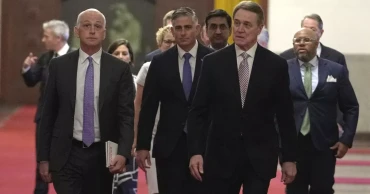
A bipartisan group of U.S. lawmakers on Sunday urged deeper military-to-military dialogue during a rare meeting with Chinese Premier Li Qiang in Beijing, marking the first visit by House members since 2019.
The last congressional trip to China took place in 2023, when a group of senators visited. Sunday’s delegation, led by Rep. Adam Smith, was welcomed by Li, who described it as an “icebreaking trip that will further the ties between the two countries.”
Trump urges NATO to halt Russian oil imports, warns of steep tariffs on China
“It is important for our two countries to have more exchanges and cooperation. This is not only good for our two countries but also of great significance to the world,” Li said.
Smith, the top Democrat on the House Armed Services Committee, said both sides agreed on the main priorities of the visit. “Certainly, trade and economy is on the top of the list ... (but also) we’re very focused on our military-to-military conversations,” he said in his opening remarks. “As a member of the Armed Services Committee, I’m deeply concerned that our two militaries don’t communicate more.”
The delegation also included Michael Baumgartner, a Republican member of the House Foreign Affairs Committee, along with Democrats Ro Khanna and Chrissy Houlahan, both members of the Armed Services Committee. The group is scheduled to remain in China until Thursday.
U.S.-China relations have deteriorated sharply since President Donald Trump’s first term, strained by disputes over trade, Taiwan, Beijing’s support for Russia, and China’s expansive claims in the South China Sea.
Tensions rise after Chinese and Philippine ships collide near disputed South China Sea shoal
“China and the U.S. are the two most powerful and influential countries in the world. It’s really important that we get along and find a way to peacefully coexist in the world,” Smith said. “I really welcome your remarks about wanting to build and strengthen that relationship.”
Trump confirmed he will meet Chinese President Xi Jinping at a regional summit in South Korea at the end of October and plans to visit China early next year, following what he described as a lengthy and constructive phone call with Xi on Friday.
Source: Agency
8 months ago
White House clarifies $100K H-1B visa fee won’t affect current holders as Trump plan sparks concern
The White House on Saturday clarified that President Donald Trump’s newly announced $100,000 fee for skilled-worker visas will not apply to existing H-1B visa holders, following confusion and rising anxiety among immigrant workers.
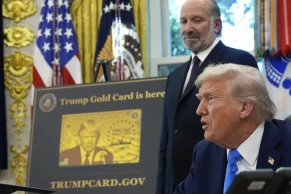
Trump on Friday, alongside Commerce Secretary Howard Lutnick, signed a proclamation requiring the hefty fee for new H-1B visas, which allow U.S. companies to hire foreign professionals in specialized fields. The new rule takes effect at 12:01 a.m. ET Sunday and will remain in place for a year, with the option of extension.
“Those who already hold H-1B visas and are currently outside of the country will NOT be charged $100,000 to re-enter,” White House press secretary Karoline Leavitt said on X. “This applies only to new visas, not renewals, and not current visa holders.” Officials also stressed the measure does not affect the ability of current visa holders to travel to and from the U.S.
Even so, immigration lawyers warned that the move creates chaos. Kathleen Campbell Walker, an attorney in Texas, wrote that the administration had “inserted total chaos into the H-1B process with barely a day’s notice.”
While Lutnick initially suggested the new fee would be an annual cost for companies, a White House official later described it as a one-time fee, adding that its application to renewals remains “under discussion.”
India, whose nationals account for over 70% of H-1B visas, voiced concern over the policy. The Ministry of External Affairs said it is reviewing the plan, warning that the measure could disrupt families and have “humanitarian consequences.”
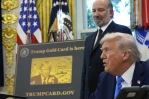
The changes also include a $1 million “gold card” visa for wealthy individuals seeking a path to U.S. citizenship, and a $5 million “Trump Platinum Card” that would allow foreigners to spend up to 270 days in the U.S. annually without paying U.S. taxes on foreign income.
Critics say the dramatic hike — raising fees from the current $215 to $100,000 — will effectively slash the number of H-1B visas issued each year, making it “uneconomic” for companies to bring in foreign talent. Lutnick argued the shift would push employers to train more Americans, while advocacy groups opposing H-1Bs applauded the move.
Tech companies, however, remained silent. Amazon, Apple, Google, and Meta did not immediately respond to requests for comment, while Microsoft declined. The U.S. Chamber of Commerce expressed concern, warning of negative consequences for employees, their families, and American businesses.
Trump’s overhaul is expected to face strong legal challenges, with critics calling the plan politically motivated and potentially unlawful. Doug Rand, a former U.S. immigration official, described the measure as “fan service for immigration restrictionists” that may not withstand judicial scrutiny.
Historically, H-1B visas are distributed by lottery, with Amazon topping the list of recipients this year, followed by Tata Consultancy, Microsoft, Apple, and Google. Analysts note that while the program is designed for highly skilled positions, many visas go to entry-level roles through consulting firms, particularly those based in India, raising ongoing debates about its impact on U.S. wages and jobs.
8 months ago
Trump nominates White House aide Lindsey Halligan as top US prosecutor in Virginia
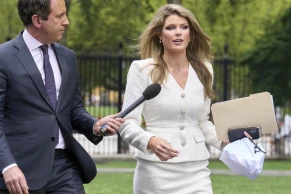
President Donald Trump on Saturday announced that he will nominate senior White House aide Lindsey Halligan as U.S. attorney for the Eastern District of Virginia, a post left vacant following the abrupt departure of the office’s top prosecutor a day earlier.
In a social media post before leaving the White House for an event at Mount Vernon, Trump said Halligan “will be fair, smart, and will provide desperately needed justice for all.”
The move comes as Trump has been urging Attorney General Pam Bondi to accelerate investigations into several political opponents, including New York Attorney General Letitia James, a longtime adversary. The Virginia prosecutor’s office has faced growing political pressure from administration officials to pursue charges against James in a mortgage fraud case tied to her Brooklyn townhouse and a Virginia property.
Erik Siebert, who had led the office, resigned Friday amid the mounting pressure, though Trump later said on social media: “He didn’t quit, I fired him!” Siebert had previously received backing from Virginia’s Democratic senators Mark Warner and Tim Kaine, prompting Trump to remark: “Next time let him go in as a Democrat, not a Republican.”
The Justice Department has been investigating the case for months but has yet to present any evidence that could warrant an indictment. James has denied the allegations, describing the probe as politically motivated.
Halligan, a lawyer closely tied to Trump’s legal team for several years, previously represented him during the FBI’s investigation into classified documents at Mar-a-Lago. She has also recently taken part in a White House initiative targeting what the administration described as “improper ideology” in Smithsonian institutions.
Earlier on Saturday, Trump publicly pressed Bondi for swift action, saying, “We have to act fast — one way or the other. If they’re not guilty, that’s fine. If they are guilty or if they should be charged, they should be charged. And we have to do it now.” Despite the pressure, Trump later praised Bondi in a separate post, saying she was “doing a GREAT job.”
Halligan’s nomination followed an interim appointment. Hours before Trump’s announcement, conservative lawyer Mary “Maggie” Cleary informed staff by email that she had been named acting U.S. attorney. Cleary, who has previously denied false accusations of involvement in the January 6 Capitol riot, told employees she was “humbled” to take on the role.
8 months ago

Xi, Trump vow stronger cooperation, stress peaceful coexistence in phone talks
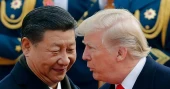
Chinese President Xi Jinping has said China and the United States can achieve mutual success and shared prosperity if both sides work together in the spirit of respect, peaceful coexistence and win-win cooperation.
Xi made the remarks during a phone conversation with U.S. President Donald Trump on Friday, according to Chinese state news agency Xinhua.
The two leaders held candid and constructive discussions on bilateral ties and global issues, providing strategic guidance for the future development of relations.
Recalling that China and the U.S. were allies during World War II, Xi said the Chinese people would never forget America’s support in the fight against Japanese aggression. He urged both sides to remember history, honor fallen heroes, and safeguard peace while pursuing common development.
Xi stressed that recent consultations between the two countries show that major issues can be managed for win-win outcomes. He cautioned the U.S. against unilateral trade restrictions and called for a fair business environment for Chinese companies.
On the TikTok issue, Xi reiterated that solutions should follow market principles and mutual interests.
Trump praised China’s recent military parade, calling it “phenomenal and beautiful.” He said U.S.-China ties are the world’s most important bilateral relationship, adding that Washington seeks long-term cooperation, stronger trade links and joint efforts to promote peace and stability.
8 months ago

More Americans believe Israel has gone too far in Gaza conflict: AP-NORC poll
A growing number of Americans now say Israel’s military campaign in Gaza has “gone too far,” according to a new poll by The Associated Press-NORC Center for Public Affairs Research.
The survey found that about half of U.S. adults view Israel’s actions in Gaza as excessive, up from 40% in November 2023, shortly after Hamas launched its October 7 assault on Israel that killed around 1,200 people and led to 251 hostages being taken.
The shift in opinion comes as Israel pushes deeper into Gaza City, facing international condemnation and U.N. experts’ findings that its actions amount to genocide. Gaza’s Health Ministry says more than 65,000 Palestinians have been killed since the war began, with vast destruction, famine and mass displacement across the enclave.
The poll revealed bipartisan concern. Nearly 70% of Democrats now believe Israel has overstepped, compared with 58% in November. Among independents, about half share that view, while Republican concern has risen slightly to 24%.
At the same time, fewer Americans see negotiating a permanent ceasefire as a top U.S. priority. About half of respondents rated it as “extremely” or “very” important, down from 59% in March, largely due to declining Republican support. Approval of President Donald Trump’s handling of the conflict has also slipped to 37%, from 44% earlier this year.
Meanwhile, support for U.S. military aid to Israel has fallen. Only about 20% of Americans consider it a high priority, compared with over a third at the war’s start. By contrast, 45% now say humanitarian relief for Palestinians should be a major U.S. focus.
The poll also shows Democrats increasingly favor negotiating a Palestinian state, while Republicans remain far less supportive.
8 months ago
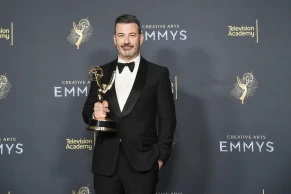
ABC suspends Jimmy Kimmel’s late-night show indefinitely over Charlie Kirk remarks
ABC has suspended Jimmy Kimmel’s late-night show indefinitely after he made comments about the killing of conservative activist Charlie Kirk sparked backlash and led a group of ABC-affiliated stations to refuse to air the program.
Kimmel, who has hosted Jimmy Kimmel Live! since 2003, drew controversy with remarks on Monday and Tuesday in which he accused “MAGA land” of trying to exploit Kirk’s assassination for political gain.
The network acted swiftly after Nexstar Communications Group — which operates 23 ABC affiliates — announced it would pull the show. “Kimmel’s comments are offensive and insensitive at a critical time in our national political discourse,” said Andrew Alford, president of Nexstar’s broadcasting division.
There was no immediate comment from Kimmel, whose contract with ABC expires in May 2026. The network did not specify a reason for the suspension.
President Donald Trump praised ABC’s decision on Truth Social, saying, “Congratulations to ABC for finally having the courage to do what had to be done.” He also renewed attacks on other late-night hosts, including Jimmy Fallon and Seth Meyers, calling them “two total losers.” Trump had previously celebrated CBS’s cancellation of Stephen Colbert’s show, predicting Kimmel would be “next.”
Audience members waiting to attend Wednesday’s taping of Kimmel’s show were informed at the last minute that it had been canceled. “They didn’t tell us what had happened… It seemed a bit extreme,” said Tommy Williams, a would-be audience member from Florida.
Kimmel’s monologues this week took aim at Trump, Vice President JD Vance, and FBI Director Kash Patel, accusing them of politicizing Kirk’s death. Critics said he misrepresented facts about the suspected shooter, 22-year-old Tyler Robinson, who authorities say had recently embraced left-leaning views and LGBTQ rights.
The controversy has also drawn in regulators. FCC Chairman Brendan Carr, a Trump appointee, called Kimmel’s remarks “some of the sickest conduct possible” and suggested suspension was justified. A conservative group, the Center for American Rights, filed a complaint accusing ABC of “reckless indifference” and political bias, urging regulators to take action.
However, FCC Commissioner Anna Gomez criticized the administration’s pressure campaign, warning against “using the weight of government power to suppress lawful expression.”
The dispute comes as the Trump administration intensifies efforts to police speech surrounding Kirk’s killing, with Vance even urging Americans to report those who mocked the assassination.
Kimmel has long been a vocal critic of Trump, often clashing with conservatives over his satirical commentary. The indefinite suspension leaves uncertainty over the future of one of ABC’s longest-running late-night franchises.
8 months ago
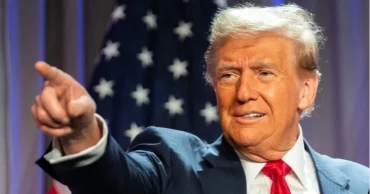
Trump files $15 billion defamation suit against The New York Times
U.S. President Donald Trump on Monday filed a $15 billion defamation lawsuit against The New York Times and four of its journalists, according to court documents.
The suit, lodged in the U.S. District Court in Florida, targets several articles and a book written by two journalists of the publication in the lead-up to the 2024 election. It alleges that the pieces are “part of a decades-long pattern by The New York Times of intentional and malicious defamation against President Trump.”
The lawsuit claims that the defendants published the statements “negligently, with knowledge of the falsity of the statements, and/or with reckless disregard of their truth or falsity.”
Trump, in a Truth Social post announcing the suit, accused The New York Times of lying about him and called the newspaper “a virtual ‘mouthpiece’ for the Radical Left Democrat Party.”
The New York Times did not immediately respond to a request for comment.
This is not Trump’s first legal action against media outlets. In July, he filed a $10 billion defamation lawsuit against The Wall Street Journal and media mogul Rupert Murdoch over a story linking him to financier Jeffrey Epstein.
8 months ago