usa
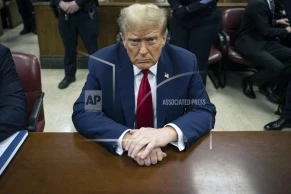
Trump threatens ‘war’ on Chicago as thousands protest federal crackdown
United States President Donald Trump has warned of unleashing his newly renamed “Department of War” on Chicago, sparking outrage and protests in both Chicago and Washington, DC, against the deployment of National Guard troops and immigration agents in Democratic-led cities.
Trump made the threat on Saturday through a post on his Truth Social platform, sharing a parody image from the film Apocalypse Now that depicted flames and helicopters over Chicago’s skyline. “‘I love the smell of deportations in the morning,’” he wrote. “Chicago about to find out why it’s called the Department of WAR.”
The president offered no further details, only adding the phrase “Chipocalypse Now,” a play on the 1979 Vietnam War film where the line “I love the smell of napalm in the morning” is delivered.
Trump has repeatedly threatened to expand federal enforcement in Chicago, similar to measures already taken in Los Angeles, and to deploy National Guard troops there, reports AL Jazeera.
Illinois Governor JB Pritzker denounced the remarks, saying the state “won’t be intimidated by a wannabe dictator.” He added, “The President of the United States is threatening to go to war with an American city. This is not a joke. This is not normal.”
Chicago Mayor Brandon Johnson also condemned Trump’s comments, calling them “beneath the honor of our nation” and accusing him of trying to “occupy our city and break our Constitution.”
Protests erupted in both Chicago and DC. In downtown Chicago, more than a thousand demonstrators carried signs saying “I.C.E. out of Illinois, I.C.E. out of everywhere,” while speakers compared the crackdown to Israel’s actions in Gaza. Nazek Sankari of the US Palestinian Community Network told the crowd, “We are inspired by the steadfastness of Palestinians in Gaza, and it is why we refuse to cower to Trump and his threats.”
Viviana Barajas of the community group Palenque LSNA vowed Chicago would “stand up” just as Los Angeles had. “If he thinks these frivolous theatrics to undermine our sovereignty will shut out the passion we have for protecting our people, this is Chicago, and he is sorely mistaken,” she said.
In Washington, protesters at the “We Are All DC” march carried banners reading “END THE D.C. OCCUPATION” and posters with slogans like “Trump must go now,” “Free DC,” and “Resist Tyranny.” Al Jazeera’s Heidi Zhou-Castro reported that demonstrators were calling Trump “a fascist and an authoritarian.”
Critics also noted that Trump had already deployed 2,000 troops to the capital last month despite violent crime being at a 30-year low. Mark Fitzpatrick, a former US diplomat and DC resident, said, “Federal agents, national guards patrolling our streets, that’s really an affront to the democracy of our city … We don’t have our own senators or members of the House of Representatives, so we’re at the mercy of a dictator like this, a wanna-be dictator.”
One protester, Jun Lee, carried a woodcut sign that read “Free DC.” She said she joined the march because she was “saddened and heartbroken” by the federal intervention. “This is my home, and I never, ever thought all the stuff that I watched in a history documentary that I’m actually living in person,” she said.
Trump has claimed he has broad authority to deploy the National Guard, at times even joking about being a dictator. “Most people are saying, ‘If you call him a dictator, if he stops crime, he can be whatever he wants’. I am not a dictator, by the way,” he said last month. “Not that I don’t have – I would – the right to do anything I want to do.” He added: “I’m the president of the United States. If I think our country is in danger – and it is in danger in these cities – I can do it.”
8 months ago

Pentagon approves deployment of 600 military lawyers as temporary immigration judges
Defense Secretary Pete Hegseth has authorized deploying up to 600 military lawyers to the Justice Department to serve as temporary immigration judges, a memo reviewed by AP shows.
The lawyers — both military and civilian — will be sent in groups of 150, with the first round to be identified next week. The move, requested by the Justice Department, aims to ease a massive immigration court backlog of about 3.5 million cases amid the Trump administration’s intensified immigration crackdown.
The appointments, initially set for up to 179 days but renewable, could nearly double the current pool of about 600 immigration judges, following recent dismissals and resignations.
The Pentagon and DOJ declined to comment, while the White House said the plan reflects efforts to address the backlog, calling it “a priority that everyone — including those waiting for adjudication — can rally around.”
9 months ago

14,000 US-bound migrants have turned back south since Trump border changes, UN reports
More than 14,000 mostly Venezuelan migrants who had set their sights on reaching the United States have reversed direction and headed south since U.S. President Donald Trump’s immigration crackdown took effect, according to a report released Friday by the governments of Colombia, Panama, and Costa Rica.
The trend, described as “reverse flow” migration, is primarily made up of Venezuelans who fled years of economic, social, and political turmoil at home, only to find that U.S. policies now bar asylum-seekers.
Migration through the dangerous Darien Gap between Colombia and Panama peaked in 2023 with over half a million crossings. While the pace slowed in 2024, it has nearly halted this year. The joint report, backed by the U.N. High Commissioner for Human Rights, said northbound migration has dropped 97% in 2025.
Interviews with migrants heading back south in Costa Rica, Panama, and Colombia showed that 97% were Venezuelans, and nearly half said they planned to return to their home country. Most said they had no choice but to turn back because they could no longer enter the U.S. legally.
Since 2017, around 8 million Venezuelans have fled the crisis. Many initially sought refuge in South American nations such as Colombia, Peru, Ecuador, and Chile, before a large wave shifted toward the U.S. starting in 2021, braving the perilous Darien route.
During the Biden administration, a U.S. government mobile app was the main pathway for asylum-seekers. But Trump scrapped the app on his first day in office, leaving thousands stranded in Mexico. Those who had continued their journey north when the new restrictions began are now heading back. A quarter of those interviewed plan to settle in Colombia, while others were unsure of their destination.
Colombia and other South American nations have long appealed for international assistance to manage the Venezuelan migrant influx, even before many began moving toward the U.S. Meanwhile, Venezuela’s political and economic crisis continues unabated.
Migrants retracing their steps face even greater risks, the report noted. Many lack money or jobs, and are dropped into areas dominated by criminal groups that increasingly prey on them. “Most of these people are already victims of human rights abuses," said Scott Campbell, a U.N. human rights representative in Colombia. “We urge authorities to aid people in this reverse migration to prevent them from being exploited or falling into trafficking networks run by illegal armed groups.”
The development marks a dramatic reversal in one of the world’s largest migration movements.
Migrants heading south typically take buses through Mexico and Central America to reach Panama, then pay between $260 and $280 for overcrowded boat rides back to Colombia.
Two routes are used: one across the Caribbean Sea, where they land in Necocli, Colombia — the same town where many first entered the Darien Gap; the other along the Pacific coast of Panama and Colombia, ending in remote towns or Buenaventura. Colombia’s Ombudsman’s Office estimates about 450 migrants have taken the latter, more hazardous path, while the U.N. has recorded cases of people being scammed, stranded, or suffering boat accidents, arriving exhausted and vulnerable.
The Pacific region remains one of Colombia’s most violent zones, where armed groups fill the void left by weak state presence.
9 months ago

Chicago mayor pushes back against Trump’s immigration crackdown plan
Chicago Mayor Brandon Johnson on Saturday resisted the Trump administration’s plan to send federal officers into the city, calling the move “out-of-control” and signing an order limiting local cooperation.
Under Johnson’s executive order, the Chicago Police Department is prohibited from assisting federal agents with civil immigration enforcement or participating in related patrols, traffic stops, or checkpoints during the expected federal surge.
He also instructed all city departments to protect the constitutional rights of residents “amidst the possibility of imminent militarized immigration or National Guard deployment by the federal government.”
When asked at a news conference about federal officers “taking orders,” Johnson said: “Yeah, and I don’t take orders from the federal government.”
The mayor further barred Chicago police from covering their faces to conceal their identities, a practice commonly used by Immigration and Customs Enforcement officers since President Donald Trump took office earlier this year.
According to two U.S. officials, the operation could begin as soon as Sept. 5 and last about a month. They described it as part of a wider effort to boost federal law enforcement presence in Democratic-led cities, similar to what happened in Los Angeles earlier this summer. The officials spoke on condition of anonymity because details had not been publicly released.
On Saturday, Trump commented on Chicago violence and Illinois Gov. JB Pritzker on Truth Social: “Six people were killed, and 24 people were shot, in Chicago last weekend, and JB Pritzker, the weak and pathetic Governor of Illinois, just said that he doesn’t need help in preventing CRIME. He is CRAZY!!! He better straighten it out, FAST, or we’re coming! MAGA. President DJT”
Unlike the recent federal control of policing in Washington, D.C., the Chicago operation is not expected to involve the National Guard or military and will be centered solely on immigration enforcement rather than a broader anti-crime campaign, the officials said.
Chicago, home to a large immigrant community, and Illinois both have strong laws limiting cooperation with federal immigration enforcement. This has often put them at odds with Trump’s mass deportation agenda.
Johnson emphasized that neither city nor state officials had been consulted about the planned deployment and demanded that Trump abandon the proposal. At the news conference, he sharply criticized the president, accusing him of “behaving outside the bounds of the Constitution” and targeting Democratic-led cities in retaliation against political opponents.
“He is reckless and out of control,” Johnson said. “He's the biggest threat to our democracy that we've experienced in the history of our country.”
The White House defended the plan, saying it was aimed at public safety. “If these Democrats focused on fixing crime in their own cities instead of doing publicity stunts to criticize the President, their communities would be much safer,” White House spokeswoman Abigail Jackson said in an email Saturday.
9 months ago

Trump predicts ‘conclusive ending’ to Gaza war within three weeks
US President Donald Trump has indicated that Israel’s assault on Gaza could soon come to an end, amid rising international condemnation over the mass killings of civilians, targeting of journalists and medics, and famine conditions imposed on the besieged territory.
“I think within the next two to three weeks, you’re going to have pretty good, conclusive ending,” Trump told reporters on Monday.
While Trump has repeatedly vowed to bring the war to an end, none of his promises have so far translated into a ceasefire or even the unimpeded delivery of humanitarian aid to Palestinians trapped under Israel’s blockade. His administration has continued to provide Israel with billions of dollars in weapons and dismissed global efforts to recognise a Palestinian state.
“It’s got to get over with because between the hunger and all of the other problems – worse than hunger, death, pure death – people [are] being killed,” Trump said.
Back in February, he had proposed the removal of all Palestinians from Gaza – a move widely regarded as ethnic cleansing and a crime against humanity.
On Monday, Trump also appeared unaware of an Israeli strike on Nasser Hospital in Gaza that killed 21 Palestinians, including five journalists.
When asked about the attack, he responded: “Well, I’m not happy about it. I don’t want to see it. At the same time, we have to end that whole nightmare.”
Trump then shifted focus to his efforts to secure the release of remaining Israeli captives in Gaza.
Source: Al Jazeera
9 months ago
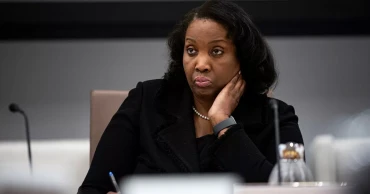
Trump moves to remove Federal Reserve governor Lisa Cook
President Donald Trump has announced that he is removing Federal Reserve governor Lisa Cook from her post, marking a sharp escalation in his clash with the US central bank.
In a message posted on Truth Social, Trump shared a letter addressed to Cook notifying her of her dismissal from the Fed’s board of governors with immediate effect.
He argued there was “sufficient reason” to believe she had provided false information on mortgage documents and invoked constitutional powers he claimed gave him the authority to act.
Cook rejected the move, insisting Trump cannot fire her, reports BBC.“President Trump purported to fire me ‘for cause’ when no cause exists under the law, and he has no authority to do so,” she said in a statement.
“I will not resign. I will continue to carry out my duties to help the American economy as I have been doing since 2022.”
Her lawyer, Abbe David Lowell, said, “We will take whatever actions are needed to prevent [Trump’s] attempted illegal action.”
The Federal Reserve has yet to comment on the announcement, made late Monday.
Why the Federal Reserve has historically remained independent of the White House
Cook, the first African American woman to serve on the Fed board, is one of seven governors. Legal experts say Trump’s move—unprecedented in the Fed’s 111-year history—may face courtroom challenges over whether sufficient grounds exist for her removal.
The dispute stems from allegations that Cook signed two conflicting mortgage agreements in Michigan and Georgia. Trump had already demanded her resignation last week following claims of mortgage fraud raised publicly by Trump ally Bill Pulte. Cook has denied wrongdoing, saying the issue arose from a 2019 loan application, before her appointment to the Fed.
If the Fed or Cook push back, analysts warn of a potential showdown between the White House and the central bank, which has operated independently since 1951.
Trump has also ramped up criticism of Fed Chair Jerome Powell, recently calling him a “numbskull” and “stubborn moron” over his resistance to steep rate cuts. Powell, however, signaled last week that a rate cut could come in September.
Markets reacted swiftly to the turmoil, with the US dollar weakening in Asia on Tuesday as investors speculated Cook’s successor may favor more aggressive rate reductions.
9 months ago

Trump's second term was always going to be about revenge
Donald Trump ran on a promise to use the powers of the government for revenge against those he believed wronged him. He now appears to be fulfilling that campaign promise while threatening to expand his powers well beyond Washington.
On Friday, the FBI searched the home of John Bolton, Trump’s first-term national security adviser-turned-critic, who last week in an interview called the administration “the retribution presidency.”
Trump’s team has opened investigations of Democrat Letitia James, the New York attorney general who sued Trump’s company over alleged fraud for falsifying records, and Sen. Adam Schiff, D-Calif., who as a congressman led Trump’s first impeachment. The Republican administration has charged Rep. LaMonica McIver, D-N.J., over her actions at an immigration protest in Newark, New Jersey, after arresting Mayor Ras Baraka, also a Democrat. Under investigation, too, is former New York Gov. Andrew Cuomo, a candidate for New York City mayor.
Trump has directed prosecutors to investigate two other members of his first administration: Miles Taylor, who wrote a book warning of what he said were Trump’s authoritarian tendencies, and Chris Krebs, who earned the president’s wrath for assuring voters that the 2020 election, which Trump lost to Democrat Joe Biden, was secure.
The actions look like the payback Trump said he would pursue after being hit with four separate sets of criminal charges during his four years out of office. Those included an indictment for his effort to overturn the 2020 election that was gutted by the U.S. Supreme Court, which said presidents have broad immunity from prosecution for official acts while in office.
“Joe Biden weaponized his administration to target political opponents – most famously, President Trump,” Abigail Jackson, a White House spokeswoman, said Saturday. Trump, she said, “is restoring law and order.”
In addition to making good on his promises of retribution, Trump has deployed the military into American cities to fight crime or help with immigration arrests. He has sent thousands of National Guard troops and federal law enforcement officers to patrol the streets in the nation’s capital, after activating the Guard and Marines in Los Angeles earlier this year.
Taken together, the actions have alarmed Democrats and others who fear Trump is wielding the authority of his office to intimidate his political opponents and consolidate power in a way that is unprecedented in American history.
“You combine the threat of prosecution with armed troops in the streets,” said Brendan Nyhan, a political scientist at Dartmouth College. “The picture is pretty clear for anyone who’s read a history book what kind of administration we’re dealing with.”
Past election investigations are a Trump focus
Trump began his second term by pardoning more than 1,500 people who were convicted of crimes during the Jan. 6, 2021, attack on the U.S. Capitol. His Justice Department, meanwhile, has fired some federal prosecutors who had pursued those cases. Attorney General Pam Bondi ordered a grand jury to look into the origins of the investigation of his 2016 campaign’s ties with Russia, and Trump has called on her department to investigate former Democratic President Barack Obama.
The government’s watchdog agency has opened an investigation into Jack Smith, the special prosecutor who investigated Trump’s efforts to overturn the 2020 election results and the classified documents stashed at his Florida estate. Those cases were among several that dogged Trump in the years between his presidential terms, including the New York fraud case and charges for election interference in Georgia brought by the Democratic prosecutor in Fulton County.
All those investigations led him to claim that Democrats had weaponized the government against him.
“It is amazing to me the number of people the Trump administration has gone after, all of whom are identified by the fact that they investigated or criticized Trump in one way or another,” said Stephen Saltzburg, a former Justice Department official who is a George Washington University law professor.
On Friday, Trump used governmental powers in other ways to further his goals. He announced that Chicago could be the next city subject to military deployments.
And after his housing director alleged that one of the governors of the independent Federal Reserve had committed mortgage fraud, Trump demanded she resign or be fired. He took to his social platform on Saturday to highlight the claims, as he tries to wrest control of the central bank.
Trump sees himself as the ‘chief law enforcement officer’
Vice President JD Vance denied in a television interview that Bolton was being targeted because of his criticism of Trump.
“If there’s no crime here, we’re not going to prosecute it,” Vance told NBC’s “Meet the Press” on Friday.
Trump said he told his staff not to inform him about the Bolton search ahead of time, but he stressed that he has authority over all prosecutions.
“I could know about it. I could be the one starting it,” the president told reporters. “I’m actually the chief law enforcement officer.”
Bolton occupies a special place in the ranks of Trump critics. The longtime GOP foreign policy hawk wrote a book published in 2020, after Trump had fired him the year before. The first Trump administration sued to block the book’s release and opened a grand jury investigation, both of which were halted by the Biden administration.
Bolton landed on a list of 60 former officials drawn up by now-FBI Director Kash Patel that he portrayed as a tally of the “Executive Branch Deep State.” Critics warned it was an “enemies list.” When Trump returned to office in January, his administration revoked the security detail that had been assigned to Bolton, who faced Iranian assassination threats.
The FBI is now investigating Bolton for potentially mishandling classified information, according to a person familiar with the matter who was not authorized to discuss the investigation publicly. In contrast, Trump condemned the FBI’s search of his own Mar-a-Lago resort in 2022.
Retribution is wide-ranging, from judges to the military
Trump has also targeted institutions that have defied him.
The president issued orders barring several law firms that were involved in litigation against him or his allies, or had hired his opponents, from doing business with the federal government. Trump cut deals with several other firms to do free legal work rather than face penalties. He has targeted universities for funding cuts if they do not follow his administration’s directives.
His administration filed a judicial misconduct complaint against a judge who ruled that Trump officials likely committed criminal contempt by ignoring his directive to turn around planes carrying people being sent to a notorious prison in El Salvador.
The actions are among steps that seem to be intensifying. Trump’s defense secretary, Pete Hegseth, has fired several military leaders perceived to be critics of the president or not sufficiently loyal, and earlier this week the administration revoked the security clearances of about three dozen current and former national security officials.
“It’s what he promised,” said Justin Levitt, a former Justice Department official and Biden White House staffer who is a law professor at Loyola Marymount University. “It’s what bullies do when no one tells them ‘No.’”
9 months ago

Another X-37B military shuttle blasts off for secret mission
A U.S. military mini shuttle took off Thursday night to carry out classified experiments in space, officials said.
The unmanned space plane, launched by SpaceX from Cape Canaveral, Florida, is the eighth flight for the X-37B test vehicle. According to the U.S. Space Force, this mission will test laser communications and navigation without GPS.
The duration of the flight has not been announced. The previous X-37B mission lasted just over a year before returning in March, while earlier missions have lasted from several months to years.
Hijacked satellites, space weapons signal new era of conflict in orbit
Built by Boeing, the reusable space planes were first launched in 2010. Each is 29 feet (9 meters) long with a wingspan of nearly 15 feet (4.5 meters).
Source: Agency
9 months ago
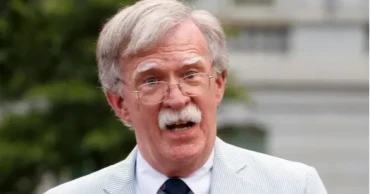
FBI raids home of ex-Trump national security adviser John Bolton: AP
The FBI on Friday searched the Maryland residence of John Bolton, the former national security adviser in President Donald Trump’s first administration, as part of an inquiry into the handling of classified material, according to a person familiar with the matter.
The individual, who spoke to The Associated Press on condition of anonymity because they were not authorized to discuss the investigation, said Bolton has neither been detained nor charged.
FBI hands back stolen Hernán Cortés manuscript page to Mexico
Requests for comment from Bolton’s spokesperson and the White House were not immediately returned, while a lawyer who has previously represented him declined to respond.
Bolton, who served for 17 months as Trump’s third national security adviser, frequently clashed with the president over policy on Iran, Afghanistan and North Korea. He came under scrutiny during Trump’s first term over a memoir that officials claimed contained classified details, though the Justice Department later dropped its lawsuit and a related grand jury probe in 2021.
Earlier this year, on his return to the presidency, Trump revoked the security clearances of more than 50 former intelligence officials, including Bolton. He was also among three former senior aides whose government security details were withdrawn.
Source: Agency
9 months ago
Judge denies Justice Department request to unseal Epstein grand jury transcripts
A U.S. federal judge has rejected the government’s request to unseal grand jury transcripts in the sex trafficking case against late financier Jeffrey Epstein.
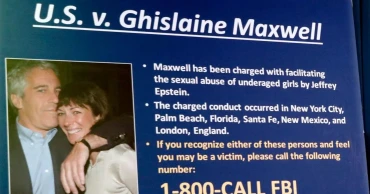
Judge Richard Berman in Manhattan issued the ruling Wednesday, following a similar decision earlier by the judge overseeing the case of Ghislaine Maxwell, Epstein’s former associate.
Maxwell, serving a 20-year sentence for helping Epstein abuse girls and young women, has remained central to public debate as conspiracy theories and demands for more transparency over the Epstein files persist. Epstein died in jail in 2019 while awaiting trial.
Melania Trump urges Hunter Biden to withdraw ‘highly defamatory’ Epstein remarks
In his order, Berman said the grand jury material “pales in comparison” to the larger trove of investigative documents already held by the Justice Department. He noted that no victims testified before the grand jury, and the only witness was an FBI agent with largely hearsay testimony. Supporting exhibits — including a PowerPoint and call log — will also remain sealed.
Berman criticized the government’s motion as a “diversion” from releasing more substantive Epstein records in its possession.
Meanwhile, the House Oversight Committee has sought testimony from Maxwell as part of its inquiry into Epstein. Chair Rep. James Comer has said her testimony is “vital,” though her lawyers have asked for immunity — a request lawmakers have refused.
Maxwell’s appeal to the U.S. Supreme Court is expected to be resolved in September.
Source: Agency
9 months ago