Others
Satellite images show new activity at Iran nuclear sites amid protest tensions
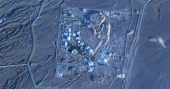
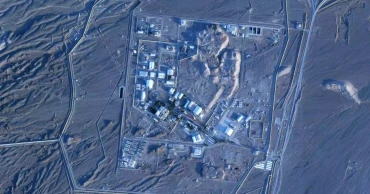
Satellite imagery has revealed renewed activity at two major Iranian nuclear facilities damaged in airstrikes last year, raising fresh concerns as tensions escalate over Tehran’s violent crackdown on nationwide protests.
Images released by Planet Labs PBC show newly constructed roofs covering heavily damaged structures at Iran’s Natanz nuclear enrichment site and the Isfahan Nuclear Technology Center. Analysts say the coverings appear designed to block satellite surveillance, potentially allowing Iran to inspect or recover remaining materials out of international view.
The activity marks the first significant construction detected at Iran’s bombed nuclear sites since Israel’s 12‑day conflict with Iran in June, followed by U.S. strikes. Iran has denied inspectors from the UN’s International Atomic Energy Agency (IAEA) access to the facilities since the attacks.
Experts caution the work does not suggest reconstruction of the sites. Instead, it may indicate efforts to assess whether sensitive assets — including stocks of highly enriched uranium — survived the strikes.
Read More: China successfully launches new test satellite
“These roofs are likely meant to obscure recovery operations rather than rebuild,” said analysts monitoring Iran’s nuclear program.
Natanz, Iran’s primary uranium enrichment hub, previously enriched uranium up to 60% purity — close to weapons-grade levels. The above-ground Pilot Fuel Enrichment Plant was severely damaged by Israeli strikes, with subsequent U.S. bunker-busting bombs targeting underground halls.
At Isfahan, which produces uranium gas used in enrichment, a similar roof now covers a damaged structure near the site’s northeast corner. Satellite images also show tunnel entrances nearby being filled or reinforced, possibly to protect against future attacks.
Iran has not commented publicly on the new construction. The IAEA also declined to respond.
Meanwhile, U.S. President Donald Trump has warned Iran to negotiate over its nuclear program, as Washington increases its military presence in the Middle East. Analysts warn the ongoing crisis carries significant nuclear risks.
1 month ago
Trump says Iran negotiating with U.S.
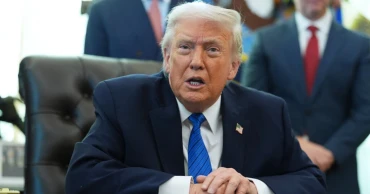
U.S. President Donald Trump said on Saturday that Iran is negotiating with the United States.
“The plan is that (Iran is) in talks with us, and we’ll see whether anything can be achieved. Otherwise, we’ll see what happens,” Trump told a Fox News correspondent.
He said that “the last time they negotiated, we had to remove their nuclear capability. It didn’t work, you know. Then we did it a different way, and we’ll see what happens.”
“We have a large fleet moving there, larger than what we had and still have, actually in Venezuela,” Trump said.
Read More: Trump hikes US tariffs on South Korean goods to 25 percent
Trump also said the United States could not share military plans with Gulf allies while negotiations with Iran were under way.
“We can’t tell them the plan. If I told them the plan, it would be almost as bad as telling you the plan it could be worse, actually,” he said, responding to reports that Gulf allies remain uninformed about potential U.S. intervention plans involving Iran.
1 month ago
Shot in the knee, a Gaza teen waits for Rafah crossing to open
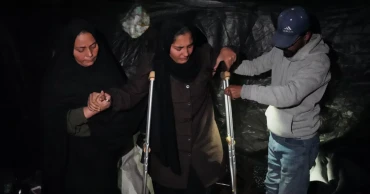
Rimas Abu Lehia was wounded five months ago when Israeli troops opened fire toward hungry Palestinians mobbing an aid truck for food in Gaza and a bullet shattered the 15-year-old girl's left knee.
Now her best chance of walking again is surgery abroad. She is on a list of more than 20,000 Palestinians, including 4,500 children, who have been waiting — some more than a year — for evacuation to get treatment for war wounds or chronic medical conditions, according to the Gaza Health Ministry.
Their hopes hinge on the reopening of the Rafah border crossing between Gaza and Egypt, a key point under the nearly 4-month-old ceasefire between Israel and Hamas. Israel has announced the crossing will open in both directions on Sunday.
The Israeli military body in charge of coordinating aid to Gaza said Friday that “limited movement of people only” would be allowed. Earlier, Prime Minister Benjamin Netanyahu had said Israel will allow 50 patients a day to leave; others have spoken of up to 150 a day.
That's a large jump from about 25 patients a week allowed to leave since the ceasefire began, according to U.N. figures. But it would still take anywhere from 130 to 400 days of crossings to get everyone in need out.
Abu Lehia said her life depends on the crossing opening.
“I wish I didn’t have to sit in this chair,” she said, crying as she pointed at the wheelchair she relies on to move. “I need help to stand, to dress, to go to the bathroom.”
Evacuations are critical as Gaza hospitals are decimated
Israel’s campaign in Gaza after the Hamas-led October 2023 attack on southern Israel that triggered the war has decimated the territory’s health sector. The few hospitals still working were overwhelmed by casualties. There are shortages of medical supplies and Israel has restricted aid entry.
Hospitals are unable to perform complicated surgeries for many of the wounded, including thousands of amputees, or treat many chronic conditions. Gaza’s single specialized cancer hospital shut down early in the war, and Israeli troops blew it up in early 2025. Without giving evidence, the military said Hamas militants were using it, though it was located in an area under Israeli control for most of the war.
More than 10,000 patients have left Gaza for treatment abroad since the war began, according to the World Health Organization.
After Israeli troops seized and closed the Rafah crossing in May 2024 and until the ceasefire, only around 17 patients a week were evacuated from Gaza, except for a brief surge of more than 200 patients a week during a two-month ceasefire in early 2025, according to WHO figures.
About 440 of those seeking evacuation have life-threatening injuries or diseases, according to the Health Ministry. More than 1,200 patients have died while waiting for evacuation, the ministry said Tuesday.
A U.N. official said one reason for the slow pace of evacuations has been that many countries are reluctant to accept the patients because Israel would not guarantee they would be allowed to return to the Gaza Strip. The official spoke on condition of anonymity because he was not authorized to discuss the issue. The majority of evacuees have gone to Egypt, the United Arab Emirates, Qatar and Turkey.
He said it wasn't clear if that would change with Rafah's opening. Even with "daily or almost daily evacuations,” he said, the number is not very high.
Israel has also banned sending patients to hospitals in the Israeli-occupied West Bank and east Jerusalem since the war began, the official said — a move that cut off what was previously the main outlet for Palestinians needing treatment unavailable in Gaza.
Five human rights groups have petitioned Israel’s High Court of Justice to remove the ban. The court has not ruled. Still, one cancer patient in Gaza was allowed to travel to the West Bank for treatment on Jan. 11, after the Jerusalem District Court accepted a petition in his case by the Israeli rights group Gisha.
Also, Israel has said it will only allow around 50 Palestinians a day to enter Gaza, while tens of thousands of Palestinians hope to go back.
Thousands of cancer patients need evacuation
Gaza has more than 11,000 cancer patients and some 75% of the necessary chemotherapy drugs are not available, the Health Ministry said. At least 4,000 cancer patients need urgent treatment abroad, it added.
Ahmed Barham, a 22-year-old university student, has been battling leukemia. He underwent two lymph node removal surgeries in June but the disease is continuing to spread “at an alarming rate,” his father, Mohamed Barham, said.
“There is no treatment available here," the elder Barham said.
His son, who has lost 35 kilograms (77 pounds), got on the urgent list for referral abroad this past week but still doesn’t have a confirmation of travel.
“My son is dying before my eyes,” the father said.
Desperate for Rafah to open
Mahmoud Abu Ishaq, a 14-year-old, has been waiting for more than a year on the referral list for treatment abroad.
The roof of his family home collapsed when an Israeli strike hit nearby in the southern town of Beni Suhaila. The boy was injured and suffered a retinal detachment.
“Now he is completely blind,” his father, Fawaz Abu Ishaq said. “We are waiting for the crossing to open.”
Abu Lehia was wounded in August, when she went out from her family tent in the southern city of Khan Younis, looking for her younger brother, Muhannad, she told The Associated Press. The boy had gone out earlier that morning, hoping to get some food off entering aid trucks.
At the time, when Gaza was near famine, large crowds regularly waited for trucks and pulled food boxes off them, and Israeli troops often opened fire on the crowds. The Israeli military said its forces were firing warning shots, but hundreds were killed over the course of several months, according to Gaza health officials.
When Abu Lehia arrived at the edge of a military-held zone from which the trucks were passing, dozens of people were fleeing as Israeli troops fired. A bullet hit Abu Lehia in the knee, and she fell to the ground screaming, she said.
At the nearby Nasser Hospital, she underwent multiple surgeries, but they were unable to repair her knee. Doctors told her she needs knee replacement surgery outside Gaza.
Officials told the family last month that she would be evacuated in January. But so far nothing has happened, said her father, Sarhan Abu Lehia.
“Her condition is getting worse day by day,” he said. “She sits alone and cries.”
1 month ago
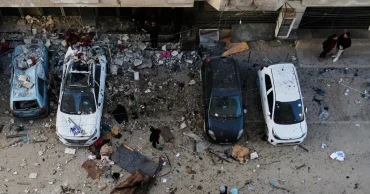
Israeli strikes kill 30 in Gaza amid ceasefire push
Hospitals in Gaza said Israeli strikes killed at least 30 Palestinians including several children on Saturday, one of the highest tolls since the October ceasefire, a day after Israel accused Hamas of new truce violations.
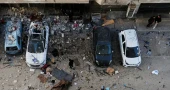
The strikes hit locations throughout Gaza, including an apartment building in Gaza City and a tent camp in Khan Younis, said officials at hospitals that received the bodies. The casualties included two women and six children from two different families. Another airstrike hit a police station in Gaza City, killing at least 14 and wounding others, Shifa Hospital director Mohamed Abu Selmiya said.
The strikes came a day before the Rafah crossing along the border with Egypt is set to open in Gaza’s southernmost city. All of the territory’s border crossings — the rest are with Israel — have been closed throughout almost the entire war. Palestinians see Rafah as a lifeline for tens of thousands needing treatment outside the territory, where the majority of medical infrastructure has been destroyed.
The crossing's opening, limited at first, will mark the first major step in the second phase of the U.S.-brokered ceasefire that took effect on Oct. 10. Other challenging issues include demilitarizing the strip after nearly two decades of Hamas rule and installing a new government to oversee reconstruction.
Egypt, one of the ceasefire mediators, in a statement condemned the Israeli strikes in the “strongest terms” and warned that they represent “a direct threat to the political course” of the truce. Qatar, another mediator, in a statement called Israel's strikes a “dangerous escalation” and said continuing them poses a “direct threat” to the political process.
‘We don’t know if we're at war or peace'
Nasser Hospital said the strike on the tent camp in Khan Younis caused a fire, killing seven, including a father, his three children and three grandchildren.
Atallah Abu Hadaiyed said he had just finished praying when the explosion struck. "We came running and found my cousins lying here and there, with fire raging. We don’t know if we’re at war or at peace, or what. Where is the truce? Where is the ceasefire they talked about?”he said, as people inspected ruins including a bloodied mattress.
Shifa Hospital said the Gaza City apartment building strike killed three children, their aunt and grandmother.
“The three girls are gone, may God have mercy on them. They were asleep, we found them in the street,” said a relative, Samir Al-Atbash, adding that the family were civilians with no connection to Hamas. Names were written on body bags lined up at the foot of a wall.
Shifa Hospital said the strike on the police station killed at least 14 including four policewomen, civilians and inmates. The hospital also said a man was killed in a strike on the eastern side of Jabaliya refugee camp.
Hamas called Saturday's strikes “a renewed flagrant violation” and urged the United States and other mediating countries to push Israel to stop them.
“All available indicators suggest that we are dealing with a ‘Board of War,’ not a ‘Board of Peace,’” senior Hamas official Bassem Naim said on X, questioning the legitimacy of the Trump administration-proposed international body meant to govern Gaza.
Israel’s military, which has struck targets on both sides of the ceasefire’s dividing line, said its attacks since October have been responses to violations of the agreement. It said Saturday's strikes followed what it described as two separate ceasefire violations a day earlier, in which Israeli forces killed three militants who emerged from a tunnel in an Israeli-controlled area of Rafah and four who approached troops near the dividing line.
The number reported killed Saturday was several times higher than the daily average since the ceasefire began. As of Friday, Gaza’s Health Ministry had recorded at least 520 Palestinians killed by Israeli fire since the start of the ceasefire. The ministry, part of the Hamas-led government, maintains detailed casualty records that are seen as generally reliable by U.N. agencies and independent experts.
The war began with the Hamas-led attack on southern Israel that killed some 1,200 people, mostly civilians, and took 251 people hostage. The remains of the final hostage in Gaza were recovered early this week.
1 month ago
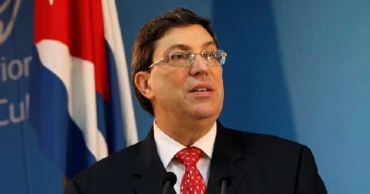
Cuba declares "international emergency" over U.S. tariff threat
Cuba on Friday declared an "international emergency" in response to a U.S. executive order threatening tariffs on goods linked to Cuba.
Cuban Foreign Minister Bruno Rodriguez Parrilla said the situation represents an "unusual and extraordinary threat" originating largely from the "U.S. anti-Cuban neo-fascist right wing."
He added that the threat endangers not only national security and foreign policy but also international peace and human survival amid nuclear risks and climate change.
The executive order, signed by U.S. President Donald Trump on Thursday, warns of tariffs on countries that sell or supply oil to Cuba.
1 month ago
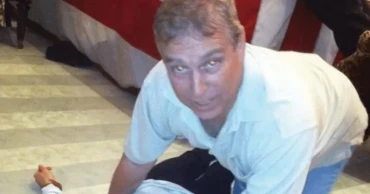
Epstein files reveal photos of Prince Andrew with unidentified woman, new emails emerge
Newly released documents from the Jeffrey Epstein investigation include photographs appearing to show Prince Andrew, formally Andrew Mountbatten-Windsor, kneeling on all fours over a fully clothed, unidentified woman.
The images, part of more than three million pages and 180,000 photos made public Friday by the U.S. Department of Justice, show Andrew touching the woman’s stomach in some shots and staring directly at the camera in others. No context is provided for the photos, and the timing and location remain unclear.
The latest batch also contains emails suggesting Epstein invited Andrew to dinner with a 26-year-old Russian woman in August 2010, two years after Epstein’s 2008 conviction for soliciting a minor. The messages indicate discussions about meeting arrangements but do not provide evidence of wrongdoing.
Prince Andrew has repeatedly denied any misconduct related to Epstein, including allegations of sexual assault made by Virginia Giuffre, which he settled in a 2022 civil case while maintaining he never met her. U.S. authorities previously stated that Andrew is not a target of their investigation and that no evidence indicates he committed a crime under U.S. law, though he may have been a witness to events relevant to the probe.
Additional emails in the release include correspondence between Epstein and Andrew’s former wife, Sarah Ferguson, discussing personal and business matters. The emails do not indicate illegal activity.
The DOJ’s release comes six weeks after a deadline mandated by law and features heavily redacted documents, including some pages entirely blacked out. The files also contain images of luxury apartments, hotel rooms, and a villa with a swimming pool.
The latest release adds to growing public scrutiny of Andrew’s past relationship with Epstein, but neither the Prince nor Ferguson have publicly commented on the new documents.
With inputs from BBC
1 month ago

Why gold prices hit record highs and what triggered the sudden drop
Gold prices have climbed to unprecedented levels in recent weeks as investors rushed into the traditional safe-haven asset amid intensifying global political uncertainty.
The precious metal surged beyond the $5,000 (£3,646) per ounce threshold for the first time on Monday and briefly touched $5,500. Silver and platinum prices also recorded sharp gains during the same period.
However, prices of all three metals later retreated sharply following indications of greater political stability in the United States. Even so, they remain significantly higher than a year ago.
Trump-driven uncertainty reshapes investments
Global trade flows have been disrupted by tariffs imposed by US President Donald Trump on countries he considers unfavourable trading partners. His trade stance has continued to unsettle markets, fuelling demand for gold, according to Emma Wall, chief investment strategist at Hargreaves Lansdown.
In January, both gold and silver reached record highs while global stock markets fell, after Trump threatened new tariffs on eight European countries opposed to his proposed takeover of Greenland.
Hamad Hussain, an economist at Capital Economics, said gold’s reputation as a safe asset, compared with risks linked to US foreign and fiscal policies under Trump, has pushed the metal “in the spotlight”.
Wars and Greenland threats heighten tensions
Ongoing wars in Ukraine and Gaza have added to wider geopolitical anxiety. The US seizure of Venezuelan President Nicolás Maduro also sent gold prices soaring.
Trump’s Greenland threats further strained global politics, weakening confidence in the US dollar and prompting investors to turn to precious metals. The dollar’s sharpest decline during Trump’s presidency followed his so-called “Liberation Day” tariffs announced last spring.
“Gold is doing what it does best when the world feels messy, jumping amid rising trade tensions, geopolitical flare-ups, political uncertainty in the US,” Wall says.
Gold sees sharpest one-day fall, down Tk15,746 per bhori
“Fresh friction between the US, Canada and China, unease around Europe and the Middle East, and even shutdown risks in Washington have all added to gold’s appeal.”
Central banks fuel the rally
Heavy buying by central banks has been another major driver behind rising gold prices.
“Investors and global central banks have... favoured gold as their reserve currency of choice, which they believe insulates them from US policy dependence,” Wall says.
“Certain nations will have observed the threat of Russia having its US dollar assets seized by global players supportive of Ukraine, and subsequently considered the metal a more attractive neutral reserve,” she added.
Although central banks are still purchasing more gold than before 2022, Hussain noted that demand appeared to ease somewhat in 2025.
China remains the world’s largest gold buyer, with demand coming from jewellery purchases and investment. Western investors have also poured money into gold-owning and trading firms.
Hussain said new market entrants have also played a role, citing digital currency firm Tether, which has reportedly amassed gold reserves larger than those of some small countries.
Why prices fell recently
Gold prices had surged partly on fears Trump might appoint a Federal Reserve chair willing to cut interest rates aggressively, potentially weakening the dollar and stoking inflation. Gold is often bought as a hedge against such risks.
But prices of gold, silver and platinum dropped after reports suggested Trump would nominate Kevin Warsh, viewed as a more reassuring choice than other contenders, reports BBC.
U.S. stocks control higher as gold sets a fresh record and the dollar weakens again
Despite the pullback, precious metals remain far above last year’s levels due to persistent geopolitical tensions, existing tariffs, fresh tariff threats and ongoing global conflicts, keeping safe-haven demand strong.
One of gold’s enduring attractions is its limited supply.
Nicholas Frappell, global head of institutional markets at ABC Refinery, told the BBC: “When you own gold, it’s not attached to the debt of somebody else like a bond is or an equity where the performance of a company will drive performance.
“It’s a really good diversifier in a very uncertain world.”
Recent volatility, however, underscores that gold prices can fall as quickly as they rise, like other traded commodities.
Gold prices drop sharply in Bangladesh
Gold prices in Bangladesh dropped sharply again on Saturday, with the rate of 22-carat gold falling by Tk15,746 per bhori (11.664 grams) in a single day, according to the Bangladesh Jewellers Association (Bajus).
In a morning notice, Bajus said the price of 22-carat gold has been reset at Tk255,617 per bhori, following a decline in the local price of refined gold, known as tejabi sona.
Under the updated rates, 21-carat gold now costs Tk244,011 per bhori, while 18-carat gold is priced at Tk209,136. Gold produced under the traditional method has been fixed at Tk171,869 per bhori.
Greenland’s strategic role in nuclear defense comes into focus amid Trump’s ‘Golden Dome’ push
Bajus added that buyers will have to pay a mandatory 5 percent VAT along with a minimum 6 percent making charge set by the association, although the making charge may vary depending on the design and quality of the jewellery.
Earlier, on January 30, Bajus had reduced the price of 22-carat gold by Tk14,638 per bhori, bringing it down to Tk271,363. With the latest cut, gold prices in the local market have declined by a total of Tk30,384 within just two days.
Prior to these back-to-back reductions, gold prices were raised by Tk16,213 per bhori on January 29, pushing the price of 22-carat gold to an all-time high of Tk286,001 per bhori—the highest ever recorded in Bangladesh.
So far in 2026, Bajus has adjusted gold prices 18 times, with increases on 13 occasions and reductions five times.
1 month ago
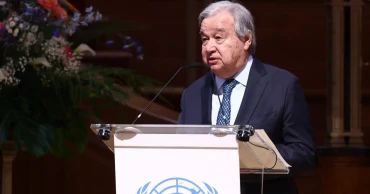
UN faces risk of ‘imminent financial collapse’, secretary general warns
The United Nations is facing the danger of an “imminent financial collapse” as several member states fail to pay their mandatory contributions, UN Secretary General António Guterres has warned.
In a letter sent to all 193 member states, Guterres said the organisation’s financial crisis was worsening and now “deepening, threatening programme delivery”, with funds potentially running out by July. He urged countries either to pay their assessed contributions in full or to reform the UN’s financial rules to avert collapse.
The warning comes as the United States, the UN’s largest contributor, has declined to pay into the organisation’s regular and peacekeeping budgets and has withdrawn from multiple UN agencies, describing them as a “waste of taxpayer dollars”. Several other countries are also in arrears or have refused to pay their dues.
Although the UN General Assembly approved limited changes to the financial system in late 2025, the organisation remains under severe cash strain. The situation is compounded by a rule requiring the UN to refund unspent funds even when the money was never received in the first place.
At the UN’s Geneva headquarters, notices highlighting the financial crisis have been widely displayed. Cost-cutting measures are visible, with escalators frequently shut down and heating reduced in an effort to conserve funds.
Guterres wrote that while the UN had experienced financial difficulties before, the current crisis was “categorically different”. He noted that “decisions not to honour assessed contributions that finance a significant share of the approved regular budget have now been formally announced,” without naming specific countries.
Read More: 12th DU National Model United Nations set to begin on May 29
He stressed that the “integrity of the entire system” relies on members fulfilling their obligations under the UN Charter to pay their “assessed contributions”. According to the secretary general, only 77 percent of total dues were paid in 2025, leaving an unprecedented amount outstanding.
Guterres also criticised a financial rule that forces the UN to return unused programme funds, describing it as a “double blow” in which the organisation is “expected to give back cash that does not exist”.
“I cannot overstate the urgency of the situation we now face. We cannot execute budgets with uncollected funds, nor return funds we never received,” he wrote.
As a result, the UN is now refunding millions of dollars it never had. The letter stated: “Just this month, as part of the 2026 assessment, we were compelled to return $227m [£165m] – funds we have not collected.”
“The bottom line is clear,” Guterres added. “Either all member states honour their obligations to pay in full and on time – or member states must fundamentally overhaul our financial rules to prevent an imminent financial collapse.”
UN agencies often struggle to secure full funding for humanitarian responses, but the past year has been especially challenging. The US did not pay its contribution to the UN’s regular budget in 2025 and provided only 30 percent of its expected funding for peacekeeping missions, reports BBC.
Read More: Kofi Annan was the United Nations
In January, President Donald Trump withdrew the US from dozens of international bodies, including 31 UN agencies, aiming to “end American taxpayer funding and involvement in entities that advance globalist agendas over US priorities”. Although Washington pledged $2 billion (£1.5 billion) for UN humanitarian work in late December, it warned the organisation must “adapt or die”, a sharp drop from the $17 billion it provided in 2022.
Other major donors, including the UK and Germany, have also announced significant cuts to foreign aid, further affecting UN operations.
Guterres had earlier cautioned that the organisation was in its most fragile financial position in years, blaming unpaid contributions and warning in October of a “race to bankruptcy”.
Meanwhile, Trump has faced criticism over proposals to replace some UN functions with his proposed Board of Peace to oversee reconstruction in Gaza. Although he said the initiative would work “in conjunction with the United Nations”, he previously suggested otherwise, saying: “Well, it might.”
1 month ago
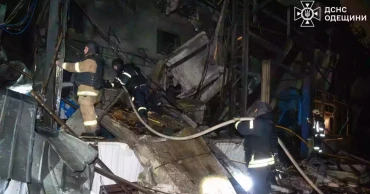
Trump says Putin agreed to brief pause in attacks on Ukraine’s energy sector, details remain vague
Uncertainty remained Friday over the scope and timing of a pledge by Russia to temporarily suspend attacks on Ukraine, after U.S. President Donald Trump said he secured a short-term commitment from Russian President Vladimir Putin amid one of Ukraine’s harshest winters in years.
Trump said late Thursday that Putin had agreed to halt strikes on Kyiv and other cities for a limited period as freezing temperatures continue to worsen living conditions for civilians.
“I personally asked President Putin not to strike Kyiv or other cities for a week during this period of extreme cold,” Trump said during a White House Cabinet meeting, adding that Putin had agreed. Trump did not clarify when the request was made or when the pause would take effect.
The White House did not immediately provide further details regarding the duration or scope of the reported halt.
Kremlin spokesman Dmitry Peskov confirmed Friday that Trump made a direct request to Putin to stop attacks on Kyiv until Feb. 1 in order to create conditions favorable for negotiations.
However, the reference to Feb. 1 raised questions, as the date is only days away and the coldest weather is expected to arrive starting Sunday, making the rationale for such a narrow time frame unclear.
Throughout the war, Russia has repeatedly targeted Ukraine’s energy infrastructure in what Ukrainian officials describe as an effort to deprive civilians of electricity, heating, and water during winter.
When asked whether Moscow had accepted Trump’s proposal, Peskov replied affirmatively but declined to specify whether the pause would apply only to energy facilities or to all aerial attacks, or when it would formally begin.
Conflicting signals on the ground
President Volodymyr Zelenskyy said Friday that while Russian strikes hit energy facilities in several regions on Thursday, no such attacks were reported overnight. He added, however, that Russia continued to target logistics networks and residential areas with drones and missiles, as it has on most nights during the conflict.
Although Trump characterized Putin’s response as a concession, Zelenskyy expressed doubt that Russia is genuinely seeking an end to the war, which will mark its fourth anniversary on Feb. 24.
“I do not believe Russia wants to stop this war. There is substantial evidence suggesting otherwise,” Zelenskyy said Thursday. He reiterated that Ukraine is prepared to halt attacks on Russian energy assets, including oil refineries, if Moscow also stops targeting Ukraine’s power grid and related infrastructure.
Read More: Ukraine, Russia, US discuss territorial concessions in Abu Dhabi
According to Ukraine’s Air Force, Russia launched 111 drones and one ballistic missile overnight, injuring at least three people. Russia’s Defense Ministry said its air defenses intercepted 18 Ukrainian drones over several regions, as well as over Crimea and the Black Sea.
Severe cold ahead
Meteorologists warned that Kyiv and other areas, already suffering from electricity shortages, are facing an intense cold spell beginning Friday and extending into next week. In some regions, temperatures could plunge to minus 30 degrees Celsius (minus 22 Fahrenheit), according to the State Emergency Service.
Zelenskyy said the idea of a temporary halt in energy-related attacks was discussed during talks in Abu Dhabi last weekend involving representatives from Ukraine, Russia and the United States. He said Ukraine agreed to a reciprocal approach.
“If Russia refrains from attacking us, we will take corresponding steps,” Zelenskyy told reporters.
Additional discussions were expected Sunday in Abu Dhabi, though those plans could be affected by rising tensions between the United States and Iran.
No formal ceasefire
Zelenskyy stressed that there is no official ceasefire in place and no formal agreement between Kyiv and Moscow.
“There has been no direct dialogue or signed agreement on a ceasefire,” he said, noting that Ukraine had proposed a limited energy truce during talks in Saudi Arabia last year, but the proposal did not advance.
Territorial disputes remain a central obstacle to peace, with Russia demanding control over occupied and unoccupied Ukrainian territory, Zelenskyy said.
Ukraine is open to compromises that lead to a genuine end to the war, he said, but not at the expense of its territorial integrity. He added that the United States is aware of Kyiv’s position and has discussed a potential compromise involving a free economic zone, which Ukraine insists must remain under its control.
1 month ago
Arab partners call for caution as Trump presses Iran on nuclear talks
Middle Eastern allies of the United States are once again urging both Washington and Tehran to avoid escalation, as President Donald Trump warns of possible military action and increases U.S. force deployments in the region, according to an Arab diplomat familiar with the discussions.
Saudi Arabia, Turkey, Oman, and Qatar have contacted officials in both the U.S. and Iran, warning that any confrontation could severely destabilize the region and disrupt global energy markets, said the diplomat, who spoke anonymously due to the sensitive nature of the talks.
Regional Arab and Muslim governments fear that a U.S. strike on Iran would likely provoke retaliation from Tehran, potentially targeting neighboring countries or U.S. interests on their soil and causing widespread collateral damage.
Saudi Defense Minister Khalid bin Salman said Friday on social media that he met in Washington with Secretary of State Marco Rubio, Defense Secretary Pete Hegseth, Trump’s regional envoy Steve Witkoff, and Joint Chiefs Chairman Gen. Dan Caine to discuss efforts aimed at promoting regional and global stability.
The appeals for restraint come as Trump has shifted his public justification for potential military action—from condemning Iran’s violent suppression of nationwide protests to focusing on preventing Tehran from advancing its nuclear program. This is despite Trump’s repeated claims that U.S. strikes in June had already destroyed Iran’s nuclear facilities.
Trump signals interest in a deal
Trump said Friday that he hopes to reach an agreement with Iran, but warned reporters that consequences would follow if negotiations fail. Asked whether he had imposed a deadline, Trump replied ambiguously that only Iran would know, confirming that his warnings had been directly conveyed to Iranian officials.
According to two senior administration officials, Trump’s renewed emphasis on Iran’s nuclear ambitions reflects a broader strategy rather than a change in course. One official said Trump initially highlighted the protests to encourage demonstrators and to caution Tehran against further repression.
Trump said Iran appeared to heed earlier warnings about executions but acknowledged that many people were still being killed.
Despite this, the administration views Iran’s nuclear program as the central threat—particularly from the perspective of Israel. Officials said Trump wants to remind Iran that eliminating that risk remains the ultimate objective.
Trump wrote on social media that he hopes Iran will quickly return to negotiations for a “fair and equitable deal” that ensures it never develops nuclear weapons, warning that time is running short.
Another senior official emphasized that Trump retains all military options, though the White House has not confirmed whether it believes Iran is attempting to rebuild its nuclear capabilities.
Iran says it is open to talks—but prepared for conflict
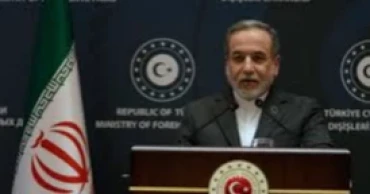
Iranian Foreign Minister Abbas Araghchi said Friday during talks in Istanbul with Turkish officials that Iran is open to dialogue but that no formal negotiations with the U.S. are currently planned. He added that while Iran is prepared to negotiate, it is also ready for war.
Turkey has sought to ease tensions, with President Recep Tayyip Erdogan offering to act as a mediator between Tehran and Washington during a phone call with Iranian President Masoud Pezeshkian earlier Friday.
Earlier this month, Trump halted plans for military strikes after urging Iranians to continue protesting and saying support was forthcoming. He later said Iran assured him it would not carry out mass executions of demonstrators.
Protests that began in late December over economic conditions have since evolved into a broader challenge to Iran’s leadership. Activist groups claim at least 6,540 people have been killed in the government crackdown.
Trump has repeatedly highlighted the buildup of U.S. military forces in the region, including the deployment of the aircraft carrier USS Abraham Lincoln and several guided-missile destroyers, bringing thousands of additional U.S. personnel to the Middle East.
U.S. Central Command warned Iran against endangering freedom of navigation during an upcoming live-fire drill in the Strait of Hormuz, a critical route for roughly 20% of the world’s oil supply. The command said it would not tolerate unsafe behavior such as close flyovers, aggressive boat maneuvers, or weapons pointed at U.S. forces.
The Arab diplomat said regional governments are urging the U.S. to act with extreme caution, given the potential for widespread fallout. Iran, meanwhile, is being advised that if a strike does occur, its response should be carefully measured to avoid harming neighboring countries.
Iran previously retaliated against U.S. actions by targeting American assets in Qatar after last year’s strikes on Iranian nuclear sites.
Ideally, the diplomat said, the crisis would result in nothing more than heightened tension—but warned that the situation remains volatile and unpredictable, with only Trump knowing whether military action is imminent.
1 month ago