Others
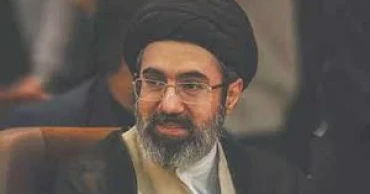
Son of Iran’s late Supreme Leader emerges as possible successor amid ongoing war
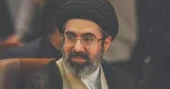
Mojtaba Khamenei, son of Iran’s late Supreme Leader Ali Khamenei, has long been viewed as a potential successor to his father — even before an Israeli airstrike at the outset of last week’s war killed the 86-year-old cleric. Despite never holding elected office or a formal government post, his name has frequently surfaced in succession discussions.
A reclusive and influential figure within Iran’s Islamic system, Mojtaba has not appeared in public since Saturday, when the strike targeted the supreme leader’s offices. Among those killed was his wife, Zahra Haddad Adel, whose family has longstanding ties to Iran’s ruling religious establishment. Iranian state media have not disclosed Mojtaba’s whereabouts, though he is widely believed to be alive and possibly in hiding as U.S. and Israeli airstrikes continue.
Standing strengthened after airstrikeCritics have previously warned that Mojtaba’s rise could resemble a dynastic transfer of power akin to Iran’s pre-revolution monarchy. However, with hard-liners portraying his father and wife as martyrs in the conflict with the United States and Israel, his position may have strengthened among senior clerics in the 88-member Assembly of Experts, the body tasked with appointing the next supreme leader.
The next leader will assume authority over a country at war and a stockpile of highly enriched uranium that could potentially be used for nuclear weapons, should such a decision be made.
Observers have likened Mojtaba’s behind-the-scenes role to that of Ahmad Khomeini, son of Iran’s first supreme leader Ruhollah Khomeini — acting as confidant, gatekeeper and power broker.
Early life shaped by revolutionBorn in 1969 in Mashhad, a decade before the 1979 Islamic Revolution, Mojtaba grew up during his father’s opposition to Shah Mohammad Reza Pahlavi. Family accounts describe a raid by the shah’s secret police, SAVAK, during which the elder Khamenei was beaten.
After the revolution, the family moved to Tehran. Mojtaba later fought in the Iran-Iraq war as a member of a battalion within Iran’s Revolutionary Guard, a force whose senior ranks have since included figures believed to be close to the Khamenei family.
When Ali Khamenei became supreme leader in 1989, Mojtaba gained proximity to significant financial and institutional networks, including religious foundations known as bonyads, which control vast economic assets.
Expanding influence behind the scenesOver the years, Mojtaba’s influence reportedly grew within his father’s office. U.S. diplomatic cables published by WikiLeaks described him as “the power behind the robes,” alleging he acted as a key gatekeeper and cultivated his own power base.
Though some observers questioned his theological credentials and relative youth, insiders have viewed him as an assertive and capable political operator with strong alliances.
He has reportedly maintained close ties with Iran’s Revolutionary Guard, including its elite Quds Force and the Basij militia, which has suppressed domestic protests.
The United States imposed sanctions on Mojtaba in 2019 during the administration of Donald Trump, accusing him of helping advance his father’s regional policies and domestic crackdown. Allegations have also linked him to backing the 2005 election of hard-line President Mahmoud Ahmadinejad and his disputed 2009 re-election, which triggered mass protests known as the Green Movement.
Reformist politician Mehdi Karroubi accused Mojtaba of interfering in those elections, calling him “a master’s son,” a charge dismissed at the time by his father.
High stakes in successionIran has witnessed only one previous transition in the supreme leadership — following the death of Ruhollah Khomeini in 1989.
The next supreme leader will take office amid heightened regional tensions following a 12-day conflict with Israel and broader U.S.-Israeli efforts aimed at curbing Iran’s nuclear and military capabilities.
As the highest authority in Iran’s Shiite theocratic system, the supreme leader holds ultimate decision-making power, serves as commander-in-chief of the armed forces and oversees the Revolutionary Guard. The Guard, which leads the so-called “Axis of Resistance” across the Middle East and controls Iran’s ballistic missile program, remains central to the country’s military and political structure.
With the country at a critical juncture, the question of succession has taken on renewed urgency.
2 days ago

What to know about Holi, the Hindu festival of colors
Holi, often called the Hindu festival of colors, is a vibrant annual celebration marking the arrival of spring. Observed mainly in India, Nepal and other South Asian nations, as well as among the global Indian diaspora, the festival blends cultural joy with deep religious meaning. It symbolizes love, renewal and the triumph of positivity over negativity.
The celebration usually takes place in March, on the last full moon day of the Hindu luni-solar month of Falgun. Because it follows the lunar calendar, the exact date changes each year. In 2026, Holi will be observed on March 4.
One of the festival’s most recognizable traditions sees participants dressed in white gathering outdoors to toss bright colored powders at one another, transforming streets into a mosaic of hues. Music, dancing and festive foods add to the lively atmosphere.
Mythological Roots
Holi’s origins lie in Hindu mythology, and many communities light bonfires on the eve of the festival to represent the victory of good over evil.
A popular legend tells of the demon king Hiranyakashipu, who demanded to be worshipped as a god. When his son Prahlada remained devoted to Vishnu instead, the king plotted to kill him. He enlisted his sister Holika, believed to be immune to fire, to sit with the boy in a blazing pyre. However, Prahlada’s devotion saved him, while Holika perished — a story that underscores faith and righteousness prevailing over evil.
In parts of southern India, the festival is linked to the tale of Shiva burning Kamadeva, the god of love, with his third eye. Known as Kama Dahanam, the event signifies overcoming earthly desires in pursuit of spiritual growth.
Holi is also associated with Krishna and his playful love for Radha, along with his interactions with the gopikas, who symbolize devotion and unconditional love.
Celebrations and Traditions
On Holi, towns and neighborhoods come alive as people splash colored powders and water on friends and strangers alike. Water balloons and squirt guns add to the fun, and celebrants often greet one another with shouts of “Holi hai!” meaning “It’s Holi!” Over time, Bollywood films have further popularized the festival’s exuberant spirit.
Each color used during Holi carries symbolism: blue reflects Krishna’s complexion, green represents spring and new beginnings, red is linked to marriage and fertility, and red and yellow together denote auspiciousness in Hindu rituals.
Special dishes are central to the festivities. A favorite treat is “gujia,” a deep-fried pastry filled with sweetened milk solids, nuts and dried fruits. Another staple is “thandai,” a chilled drink made with milk, sugar, almonds, fennel seeds, rose petals, poppy seeds and saffron.
Holi in the Diaspora
Beyond South Asia, Holi is celebrated with religious observances and community events. In North America and other regions with significant Hindu populations, festivities range from temple ceremonies and Holika Dahan bonfires to cultural programs, parades and Bollywood-themed gatherings.
Hindu temples and community centers abroad often organize cricket matches and other social activities around the holiday, helping preserve tradition while bringing communities together in celebration.
3 days ago

Amazon says drone attacks damage three facilities in UAE, Bahrain
Amazon’s cloud computing arm has said that three of its facilities in the United Arab Emirates (UAE) and Bahrain were damaged by drone strikes following US and Israeli attacks on Iran over the weekend.
The incidents took place on Sunday morning. At the time, Amazon Web Services (AWS) said that unidentified “objects” had struck one of its data centres in the UAE, causing sparks and a fire. On the same day, the company also reported power and connectivity problems at one of its facilities in Bahrain.
On Monday, AWS confirmed that the disruptions were caused by drone strikes.
According to the company, two facilities in the UAE were directly hit. In Bahrain, a drone strike near one of its sites caused physical damage to infrastructure.
AWS said the attacks led to structural damage and interrupted power supply to key systems. In some cases, fire suppression efforts were required, which also resulted in additional water damage.
The company said it is working to restore services as quickly as possible but cautioned that full recovery may take time due to the extent of the physical damage.
AWS also advised customers in the region to back up their data and consider shifting workloads to other AWS facilities worldwide as a precaution.
The company warned that the ongoing conflict has made the overall operating environment in the Middle East increasingly uncertain.
US President Donald Trump has indicated that the strikes on Iran could continue for four to five weeks, and possibly even longer.
In response, Iran has launched waves of missiles and drones targeting US bases and allied locations across the region, including in the UAE, Qatar, Kuwait and Saudi Arabia.
With inputs from BBC.
3 days ago
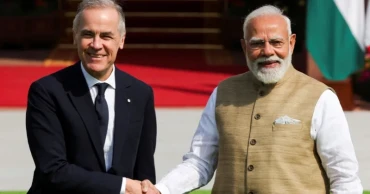
India, Canada sign 10-year nuclear deal to reset ties
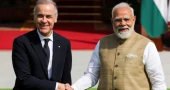
India and Canada have announced a series of agreements, including a 10-year civil nuclear energy deal, as Prime Minister Narendra Modi and his Canadian counterpart Mark Carney met in Delhi to restore relations that had sharply deteriorated in recent years.
The two leaders agreed to deepen cooperation in nuclear energy, technology, critical minerals, space, defence and education. They also pledged to conclude a long-pending free trade agreement by the end of 2026, as both nations seek to cushion the impact of US trade tariffs and diversify economic partnerships.
Relations between the two countries had plunged after former Canadian prime minister Justin Trudeau alleged Indian involvement in the 2023 killing of Sikh separatist Hardeep Singh Nijjar on Canadian soil. India strongly rejected the accusation. The diplomatic fallout led to expulsions of diplomats and suspension of visa services, bringing ties close to a standstill.
Since taking office last year, Carney has moved cautiously to repair relations. His government has stated that it does not believe India is currently linked to violent crimes or threats in Canada, though some lawmakers and members of the Sikh diaspora dispute that assessment.
Canada’s intelligence agency, the Canadian Security Intelligence Service, reiterated recently that its threat assessment regarding foreign interference, including by India, remains unchanged. Foreign Minister Anita Anand clarified that while some officials suggested India had halted interference activities, she would not personally use that wording. However, she defended renewed engagement, saying diplomatic dialogue was necessary to make progress.
During their meeting at Hyderabad House in Delhi, Modi described the civil nuclear agreement as a landmark arrangement ensuring long-term uranium supply from Canada. He said the two countries would also collaborate on small modular reactors and advanced nuclear technologies. Modi added that India and Canada would expand cooperation in artificial intelligence, supercomputing, semiconductors and jointly host a renewable energy summit.
Carney said Canada is well positioned to meet India’s growing nuclear fuel needs and announced the launch of a strategic energy partnership. He highlighted what he called unprecedented engagement between the two governments over the past year.
On trade, Modi said both sides aim to increase bilateral trade to $50 billion and finalise a comprehensive economic partnership agreement soon. Carney expressed hope that negotiations, which have stretched on for more than a decade, could be concluded within the year.
Analysts say the renewed outreach reflects shifting geopolitical realities. Canada is looking to broaden trade links beyond the United States, while India seeks to diversify imports and reduce energy dependence on Russia.
Public opinion in Canada appears supportive of rebuilding ties. A recent Angus Reid survey found that half of respondents believe it is the right time to restore relations with India, with more Canadians expressing a favourable view of India than of the United States amid ongoing tariff tensions.
Earlier in the visit, Carney met India’s External Affairs Minister S Jaishankar to discuss advancing a forward-looking partnership. His four-day tour began in Mumbai with meetings aimed at boosting trade and investment, and will continue with stops in Australia and Japan as part of Canada’s broader strategy to expand economic cooperation in the Indo-Pacific region.
With inputs from BBC
3 days ago
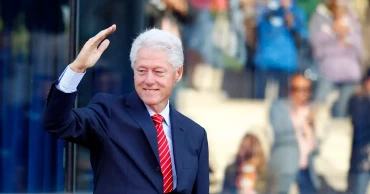
Video of Clintons’ testimony on Epstein ties released, shows tense moments over leak
The US House Oversight Committee has released more than nine hours of video footage from closed-door depositions of former US president Bill Clinton and former secretary of state Hillary Clinton regarding their past connections to convicted sex offender Jeffrey Epstein.
The recordings show both Clintons denying prior knowledge of Epstein’s crimes and facing pointed questions from Republican lawmakers.
One of the most heated exchanges occurred during Hillary Clinton’s testimony when she was informed that a photo taken inside the deposition room had been leaked. She reacted angrily, saying she was “done” if lawmakers were violating agreed rules and suggested they could hold her in contempt if they wished.
Republican Congresswoman Lauren Boebert acknowledged sharing a photo from inside the room but said it was posted before the hearing began. Clinton’s legal team objected strongly, arguing the leak was unacceptable and unprofessional. They noted that Clinton had requested an open hearing that would have allowed public access, but the committee rejected the proposal. Proceedings were briefly paused before resuming.
During questioning, Boebert raised “Pizzagate,” a widely debunked conspiracy theory alleging a child abuse ring linked to Clinton associates. Clinton dismissed the claim as “totally made up” and said she could not believe it was being referenced. Her lawyers objected to further questions on the subject.
Another Republican lawmaker, Eric Burlison, asked Hillary Clinton about the potential release of government files related to UFOs. She responded that she supported disclosure of any information that could be made public.
In his separate deposition, Bill Clinton was asked whether President Donald Trump should be compelled to testify. Clinton replied that it was up to lawmakers but said Trump “did know” Epstein well.
Clinton recounted a conversation with Trump in the early 2000s at a fundraiser held at one of Trump’s golf courses. According to Clinton, Trump said he and Epstein had once been friends but fell out over a real estate deal. Clinton said Trump did not suggest any improper conduct during that conversation.
In opening remarks, Bill Clinton said he was only a “brief acquaintance” of Epstein and that their association ended years before the financier’s crimes became public. He stated he did not witness any wrongdoing and expressed sympathy for Epstein’s victims.
Lawmakers also questioned Clinton about a photo released by the US Justice Department showing him in a hot tub with an unidentified person whose face was redacted. Clinton said he did not recall the photo being taken and believed it was shot in Brunei at the end of an official trip. He said he briefly used the hotel pool at the suggestion of the Sultan of Brunei and denied any sexual activity or knowledge of the other person in the image.
Throughout the depositions, both Clintons maintained they had no awareness of Epstein’s criminal activities at the time of their interactions with him.
With inputs from BBC
3 days ago
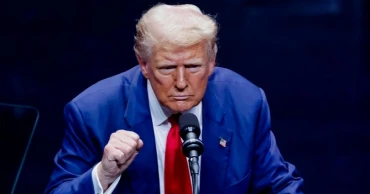
Iran strikes could last 4–5 weeks, says Trump
Israel and the United States pounded Iran on Monday in a campaign that U.S. President Donald Trump said would likely take several weeks.
Tehran and its allies hit back against Israel, Gulf states and targets critical to the world’s energy production.
The intensity of the attacks, the killing of Iranian Supreme Leader Ayatollah Ali Khamenei, and the lack of any apparent exit plan set the stage for a prolonged conflict with far-reaching consequences. Safe havens in the Mideast like Dubai have seen incoming fire; hundreds of thousands of airline passengers are stranded around the globe; oil prices shot up; and U.S. allies pledged to help stop Iranian missiles and drones.
With no sign of the conflict abating anytime soon, Trump said operations are likely to last four to five weeks but that he was prepared “to go far longer than that.”
He said U.S. forces were determined to destroy Iran’s missile capabilities, wipe out its navy, prevent it from obtaining a nuclear weapon and ensure that it cannot continue to support allied groups like Lebanon’s Hezbollah, which fired missiles at Israel, drawing retaliatory airstrikes.
“This was our last, best chance to strike -- what we’re doing right now -- and eliminate the intolerable threats posed by this sick and sinister regime,” Trump said.
Danny Danon, the Israeli ambassador to the U.N., said the conflict would continue “as long as it takes.” An Israeli military spokesman, Brig. Gen. Effie Defrin, said Israel is keeping “all options on the table,” including a potential ground invasion of Lebanon.
The chaos of the conflict became apparent when the U.S. military said Kuwait had “mistakenly shot down” three American F-15E Strike Eagles while Iran was attacking with aircraft, ballistic missiles, and drones. U.S. Central Command said all six pilots ejected safely and are in stable condition.
As several airstrikes hit Iran’s capital, Tehran, the top security official Ali Larijani vowed on X: “We will not negotiate with the United States.”
The death toll grew on all sides. The Iranian Red Crescent Society said that the U.S.-Israeli operation has killed at least 555 people. In Israel, where several locations were hit by Iranian missiles, 11 people were killed. Israel’s retaliatory strikes against Hezbollah killed dozens of people in Lebanon. Four American troops have been killed, three people were reported killed in the United Arab Emirates, and one each in Kuwait and Bahrain.
4 days ago
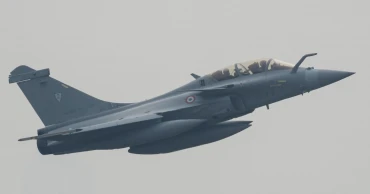
France allows temporary deployment of nuclear-armed aircraft to European allies
French President Emmanuel Macron announced Monday that France would allow the temporary deployment of its nuclear-armed aircraft to allied countries as part of its new nuclear strategy aimed at strengthening Europe’s independence.
Macron said the unprecedented new posture could “provide for the temporary deployment of elements of our strategic air forces to allied countries," but said there would be no sharing of decision-making with any other nation regarding the use of the nuclear weapons.
Tehran’s streets eerily empty amid heavy airstrikes
Talks about such arrangements have started with Britain, Germany, Poland, the Netherlands, Belgium, Greece, Sweden and Denmark, Macron said at a military base at L’Ile Longue in northwestern France that hosts the country’s ballistic missile submarines.
Macron’s long-planned speech, scheduled before the most recent outbreak of hostilities in Iran, was aimed at spelling out how French nuclear weapons fit into Europe’s security amid concerns raised on the continent by recurring tensions with U.S. President Donald Trump.
France also will allow partners to participate in deterrence exercises and allow allies’ non-nuclear forces to participate in France’s nuclear activities, said Macron, who is the commander-in-chief of the armed forces under the French constitution.
In a joint statement, Macron and German Chancellor Friedrich Merz welcomed a deeper Franco-German integration in the field of deterrence.
“France and Germany have agreed to take first concrete steps beginning this year, including German conventional participation in French nuclear exercises and joint visits to strategic sites as well as development of conventional capabilities with European partners,” they said.
Macron also announced that France will increase its number of nuclear warheads from the current level of below 300, but did not give a figure for the increase. It will be the first time France increases its nuclear arsenal since at least 1992.
“I have decided to increase the numbers of warheads of our arsenal,” Macron said. “My responsibility is to ensure that our deterrence maintains — and will maintain in the future — its assured destructive power."
European leaders have voiced growing doubts about U.S. commitments to help defend Europe under the so-called nuclear umbrella, a policy long intended to ensure that allies — particularly NATO members — would be protected by American nuclear forces in the event of a threat.
Macron said that recent changes in U.S. defense strategy amid the emergence of new threats have demonstrated a refocusing of American priorities and have encouraged Europe to take more direct responsibility for its own security. He said Europeans should take their destiny more firmly into their hands.
“To be free, one needs to be feared,” Macron said.
France is the only nuclear power in the European Unio n, following Britain's exit from the bloc in 2020.
“If we had to use our arsenal, no state, however powerful, could shield itself from it, and no state, however vast, would recover from it,” Macron said.
Some European nations have already taken up an offer Macron made last year to discuss France’s nuclear deterrence and even associate European partners in nuclear exercises.
Last month, Merz said he’d had “initial talks” with Macron on the issue and had publicly theorized about German Air Force planes possibly being used to carry French nuclear bombs. But Macron ruled out any such possibility in Monday's speech.
France and Britain also adopted a joint declaration in July that allows both nations' nuclear forces, while independent, to be “coordinated.” The U.K., no longer an EU member but a NATO ally, is the only other European country with a nuclear deterrent.
Macron has consistently insisted any decision to use France’s nuclear weapons would remain only in the hands of the French president.
Macron added that the evolution of France competitors’ defenses, the emergence of regional powers, the possibility of coordination among adversaries, and the risks linked to proliferation led him to the conclusion that it was essential for France to enhance its nuclear arsenal.
4 days ago
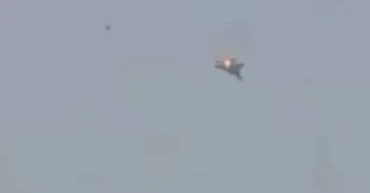
US Jets downed in Kuwait as Iran strikes region
The U.S. military said Monday that three F-15E fighter jets were “mistakenly shot down” by Kuwaiti air defenses during operations responding to Iranian attacks in the region. All six crew members ejected safely and have been recovered in stable condition.
The incident occurred as Iran and Iranian-backed militias launched missiles at Israel and Gulf states, reportedly striking the U.S. Embassy compound in Kuwait. Israel and the U.S. conducted retaliatory strikes on Iran, targeting missile sites, naval assets, and nuclear facilities.
The Iranian Red Crescent reported at least 555 deaths in Iran, while Israeli authorities confirmed 11 fatalities and Lebanon’s health ministry reported 31 deaths following airstrikes. In Kuwait, several U.S. warplanes also crashed, though pilots were unharmed.
The conflict has spread to regional energy infrastructure. Saudi Arabia’s Ras Tanura oil refinery was targeted by drones, prompting a temporary shutdown, while Oman reported a drone boat attack on a tanker, killing one crew member. Debris from intercepted drones caused injuries at Kuwait’s Ahmadi refinery. Analysts warn these attacks on Gulf oil facilities mark a significant escalation and pose broader economic risks.
Hezbollah fired missiles into Israel from Lebanon, triggering Israeli airstrikes that killed at least 31 people and wounded 149, mostly in the south. In Iraq, a pro-Iranian militia targeted U.S. troops with drones in Baghdad and Irbil, and Cyprus reported drone damage at a British airbase.
The U.S. has vowed to continue combat operations until objectives are achieved. President Donald Trump promised to “avenge” the deaths of three American troops in Kuwait while warning of further casualties.
The World Health Organization urged all parties to protect civilians and medical facilities amid the escalating conflict, as missiles and drones continued to strike cities across Iran, Israel, and the Gulf.
4 days ago
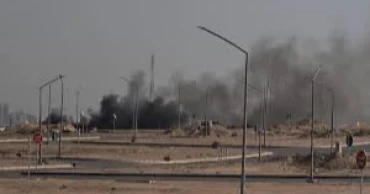
At least 555 killed in Iran as US-Israeli strikes intensify across region
At least 555 people have been killed across Iran in joint US-Israeli attacks targeting 131 counties so far, according to the Iranian Red Crescent as fighting escalates across the Middle East.
Ali Larijani, secretary of Iran’s National Security Council, rejected claims in US media he has made a renewed push to resume nuclear negotiations with Washington, saying Tehran has not sought fresh talks.
Israel said it is striking at the “heart of Tehran” and has launched attacks on Lebanon after Hezbollah fired a barrage of rockets at northern Israel. Lebanon’s Health Ministry said at least 31 people were killed and 149 others wounded in Israeli air attacks.
In the Gulf, Kuwait’s Defence Ministry said several US warplanes crashed inside the country, adding that all crew members survived.
US President Donald Trump warned that attacks on Iran would continue until all objectives are achieved and vowed to avenge the deaths of three US soldiers.
Meanwhile, a fire broke out at Saudi Arabia’s Ras Tanura oil refinery after debris from two intercepted drones fell on the facility, according to the Saudi Defence Ministry.
British Foreign Minister Cooper said a drone that struck a UK military base in Cyprus hit the runway.
The US embassy in Bahrain warned that “terrorist groups” are intent on attacking US citizens.
A security source told Al Jazeera that a joint Israeli-US missile strike targeted sites belonging to the Iran-backed paramilitary group Kataib Hezbollah in Jurf al-Sakhr, south of the Iraqi capital Baghdad.
4 days ago
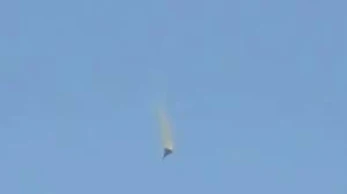
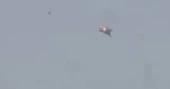
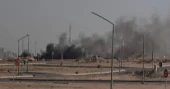
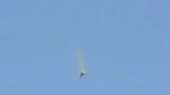
Video captures US fighter jet crash near Kuwait City
Verified video footage shows a US fighter jet plunging from the sky and crashing to the ground near Kuwait City, reports BBC.
The footage, filmed from the western outskirts of the capital near the Al Jahra area, captures the moment the aircraft falls and impacts the ground.
Earlier, the Kuwaiti military said that “several” US fighter planes had crashed in Kuwait, adding that all crew members were unharmed. No further details were immediately provided.
4 days ago