Others
EU pushes ahead with South America free trade deal
The European Union is renewing internal negotiations over a free trade agreement with five South American nations neighboring Venezuela a week after the United States' audacious raid there to detain President Nicolás Maduro.
Ministers of Agriculture from across the 27 European Union nations met in Brussels on Wednesday in part to discuss protecting farmers while also reaping the economic and geopolitical benefits of a free trade deal with the Mercosur nations of Brazil, Argentina, Bolivia, Paraguay and Uruguay. The EU's trade negotiator Maroš Šefčovič said after the meeting that while the deal would increase EU agrifood exports by up to 50%.
“It’s a landmark one. This is the biggest free trade agreement we ever negotiated,” Šefčovič said. He said that EU trading partners “value the EU for particular one thing in this turbulent world, one thing above all, this is credibility. So therefore, we must, safeguard this priceless currency by remaining a trusted and reliable trading partner.”
He said that EU negotiations over Mercosur will continue on Friday amid speculation that a deal could be signed in Paraguay on Jan. 12.
Fierce opposition from France in December, fired up by enraged farmers, derailed the deal and forced European Commission President Ursula von der Leyen to scrap a trip to Brazil where top EU officials had hoped to sign the EU-Mercosur deal after 26 years of negotiations.
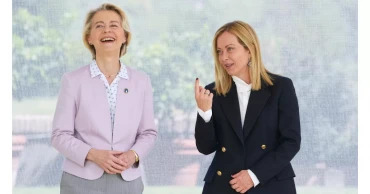
Italy is seen as the linchpin of the deal. If Italian Prime Minister Giorgia Meloni joins the deal's supporters led by Germany, then it will pass over the objections of France and Poland. She posted on X on Tuesday that she welcomed von der Leyen's proposal to fast-track funds to farmers but Meloni did not promise crucial backing to the deal.
The Mercosur trade deal covers a market of 780 million people and a quarter of the globe’s gross domestic product, and would progressively remove duties on almost all goods traded between the two blocs. Such a massive free trade deal would provide a stark counterpoint in South America of economic diplomacy compared to the Trump administration's incursion into Venezuela and threats across the region.
The EU is seeking to forge new trade ties amid commercial tensions with the U.S. and China, and the December delay of Mercosur was seen to diminish the EU’s negotiating credibility.
French President Emmanuel Macron led opposition to the deal, which he sees as fueling a surging far right that rallies support by criticizing the deal. His centrist government has demanded safeguards to monitor and stop large economic disruption in the EU, increased regulations in the Mercosur nations like pesticide restrictions, and more inspections of imports at EU ports.
French Agriculture Minister Annie Genevard reaffirmed Wednesday France’s opposition to the Mercosur deal, because she said it threatens sectors including beef, chicken, sugar, ethanol and honey.
“As long as the combat is not over, nothing is lost,” she told French news broadcaster France Info, referring to the ongoing negotiations over the deal.
If the EU Commission signs the deal on Jan. 12, it will be debated at the European Parliament, she said. “There’s no guarantee the deal will be approved by the European Parliament,” she said.
She also acknowledged Italy “will likely” approve the deal.
Supporters say the EU-Mercosur deal would offer a clear alternative to Beijing’s export controls and Washington’s tariff blitzkrieg, while detractors say it will undermine both environmental regulations and the EU’s iconic agricultural sector.
Šefčovič said recent negotiations within the EU over the deal had led to new safeguards like “semiautomatic triggering thresholds” that would snap into place if Mercosur imports are found to be deeply undercutting EU products.
The political tensions that have marked Mercosur in recent years — especially between Argentina’s far-right President Javier Milei and Brazil’s center-left Luiz Inácio Lula da Silva, the bloc’s two main partners — have not deterred South American leaders from pursuing an alliance with Europe that will benefit their agricultural sectors.
Venezuela was in Mercosur until 2016, when the trade bloc suspended its membership, a move criticized by Venezuela’s new prime minister Delcy Rodríguez, then the foreign minister.
1 month ago
Trump’s Greenland threats pose new challenge to NATO
U.S. President Donald Trump's latest threats against Greenland pose a new and potentially unprecedented challenge to NATO, perhaps even an existential one, for an alliance focused on external threats that could now face an armed confrontation involving its most powerful member.
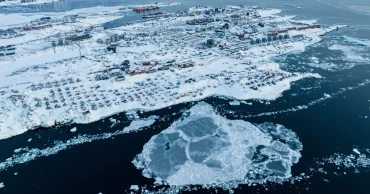
The White House says the administration is weighing “options” that could include military action to take control of the strategically located and mineral-rich island, which is a semi-autonomous region that is part of NATO ally Denmark.
Trump’s renewed interest in Greenland could put at risk the entire future of NATO, which was founded in 1949 to counter the threat to European security posed by the Soviet Union during the Cold War. The alliance is normally focused on threats such as those from Russia or international terror groups. It would not function without U.S. leadership and firepower.
NATO, the world’s biggest security organization, was built on a “Three Musketeers”-like vow that an attack on anyone in its ranks will be met with a response from all of them. That security guarantee, enshrined in Article 5 of its founding treaty, has kept Russia away from allied territory for decades.
But in an organization that operates on unanimity, Article 5 does not function if one member targets another.
Uneasy allies and neighbors Greece and Turkey have harassed each other’s military forces and disputed borders for decades. But past internal clashes have never posed the kind of threat to NATO unity that would arise from an American seizure of Greenland.
In a post on social media Wednesday, Trump said that “RUSSIA AND CHINA HAVE ZERO FEAR OF NATO WITHOUT THE UNITED STATES.” But he added: “We will always be there for NATO, even if they won’t be there for us.”
A White House warning
The White House took its threats toward Greenland to a new level Tuesday, issuing an official statement that insisted Greenland is “a national security priority” and refusing to rule out the use of military force.
“The president and his team are discussing a range of options to pursue this important foreign policy goal, and of course, utilizing the U.S. military is always an option at the commander in chief’s disposal,” it said.
Ian Lesser, distinguished fellow at the German Marshall Fund of the United States think tank and an expert on NATO, described the White House statement as “very striking.”
“It’s a low-probability, high-consequence event if it were to happen. But the odds have changed, and so it becomes more difficult to simply dismiss this as bluster from the White House,” he said.
The statement came after the leaders of Britain, France, Germany, Italy, Poland and Spain defended the sovereignty of Greenland, along with Denmark, whose right to the island was recognized by the U.S. government at the beginning of the 20th century.
“It is for Denmark and Greenland, and them only, to decide on matters concerning Denmark and Greenland,” the leaders said Tuesday in a joint statement. Canada, which sits off the western coast of an island that has been crucial to the defense of North America since World War II, expressed its support as well.
NATO itself remains reluctant to say anything that might annoy its leading member.
Danish Prime Minister Mette Frederiksen has warned that the U.S. threat must be taken seriously, particularly after Trump ordered the capture of Venezuelan leader Nicolás Maduro in a nighttime raid, and that any U.S. attempt to take control of the island could mean the end of NATO.
Asked whether Frederiksen was right when she said that an American attack on another NATO country means that "everything stops,” an official at the alliance said: “NATO does not speculate on hypotheticals.”
The official, who spoke on the condition of anonymity because NATO protocol forbids the use of their name, preferred to note Greenland’s strategic significance.
“The Arctic is an important region for our collective security, and NATO has a clear interest in preserving security, stability and cooperation in the high north,” the official said. “Together we make sure that the whole of the alliance is protected.”
Trump’s interest in Greenland also threatens to destabilize the alliance at the moment when the U.S.-led efforts to end the war in Ukraine enter a pivotal stage, distracting its members from their efforts to support Kyiv and provide it with security guarantees.
Maria Martisiute, a defense analyst at the European Policy Center think tank, warned that NATO’s credibility is on the line.
When a leading alliance member undermines another member, it hurts "NATO’s cohesion and credibility, and it serves only our adversaries such as Russia and China,” she said.
Tension comes after NATO leaders agreed to Trump's demands
Last summer, NATO leaders rallied behind Trump’s demand that they increase defense spending. Apart from Spain, they agreed to invest as much per capita as the United States does, within a decade.
Just before Christmas, NATO Secretary-General Mark Rutte hailed Trump as a savior.
“I believe fundamentally that thanks to Donald J. Trump, NATO is stronger than it ever was,” Rutte told BBC radio. “NATO has never been as strong as this moment since the fall of the Berlin Wall.”
Yet in a year-end address in Germany meant to rally to European citizens behind defense spending, Rutte warned that Russia might attack elsewhere in Europe within a few years should it win in Ukraine.
“Conflict is at our door,” the former Dutch prime minister said. “Russia has brought war back to Europe, and we must be prepared for the scale of war our grandparents or great-grandparents endured.”
Lesser said it's difficult to reconcile Trump's defense spending victory with his designs on Greenland.
“What good is it to have revived NATO capability if it’s no longer a functional political alliance” afterwards? he asked. If that breakdown occurs, “it's a gift to Moscow, and it’s a gift to Beijing.”
1 month ago
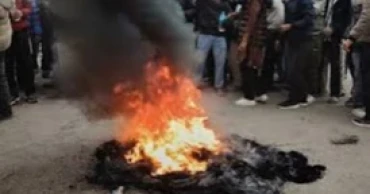
Curfew imposed in southern Nepal city after mosque vandalism sparks protests
Authorities have imposed a curfew in Birgunj, a major southern Nepalese border city, following protests between Hindu and Muslim groups after a mosque was vandalized over the weekend, officials said Tuesday.
The Parsa District Administration’s order bans all public gatherings and demonstrations, and requires residents to stay off the streets. The notice warned that security forces may use firearms against anyone violating the curfew.
Armed soldiers and police are patrolling the streets of Birgunj, about 130 kilometers (80 miles) south of the capital Kathmandu. The city serves as a key gateway for oil, goods, and other supplies imported from neighboring India into Nepal.
The unrest began on Sunday when Muslim groups protested the vandalism of a mosque in a nearby town. Later the same day, Hindu groups held a separate demonstration. Protests have continued since then.
Nepal’s Gen Z Protesters disillusioned with government they helped install
Officials said there have been no major clashes or serious injuries, though some minor scuffles with riot police have occurred.
Such conflicts between Hindus and Muslims are uncommon in Nepal, a predominantly Hindu country, where most of the Muslim population resides in southern border districts.
1 month ago
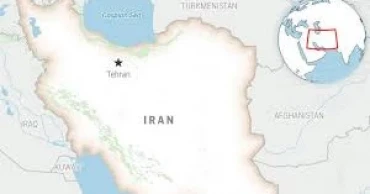
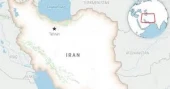
Iran executes man convicted of spying for Israel’s Mossad
Iran has executed a man convicted of spying for Israel’s intelligence agency, Mossad, state media reported Wednesday.
The official IRNA news agency named the man as Ali Ardestani, stating that he passed sensitive information to Mossad officers in exchange for cryptocurrency payments. According to the report, Ardestani admitted to the charges and had sought a reward of one million dollars and a British visa. IRNA described him as a “special operative force of Israel” and claimed he provided Mossad agents with images and videos of “sensitive locations.”
The agency did not specify when or where Ardestani was detained. It said Israel had recruited him online, and that his case underwent both primary court and Supreme Court proceedings in Iran.
Human rights groups and Western governments have criticized Iran’s growing use of the death penalty, especially for political and espionage cases. Activists argue that many convictions rely on confessions obtained under duress, and that trials are often held behind closed doors without independent legal representation.
Iran, however, maintains that those executed are “agents of hostile intelligence services” involved in terrorist or sabotage activities. Iranian officials have accused Israel of carrying out a series of covert attacks inside Iran, including the assassination of nuclear scientists and cyberattacks on strategic facilities.
Since a June conflict that killed nearly 1,100 people in Iran, including senior military officials and nuclear scientists, Tehran has executed 12 people for espionage. In retaliation, Iranian missile strikes killed 28 people in Israel.
The exchange has heightened tensions and left both countries on high alert, further escalating regional instability.
1 month ago
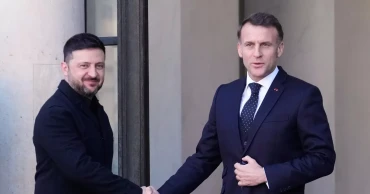
Ukraine allies meet in Paris to discuss post-war security
Leaders of Ukraine’s allies met Tuesday in Paris for talks aimed at shaping the country’s security after any potential peace deal with Russia, amid shifting U.S. priorities and renewed tensions over Greenland.
French President Emmanuel Macron said the meeting of 35 officials, including 27 heads of state, would result in “concrete commitments” to protect Ukraine and ensure a lasting peace. Ukrainian President Volodymyr Zelenskyy held preparatory talks with Macron, while French, British, and Ukrainian military chiefs, joined by NATO’s top commander, discussed security guarantees and multinational force deployment.
The summit comes as Washington’s focus has turned to Venezuela and Trump’s calls to take control of Greenland have drawn European pushback. Despite these distractions, participants aim to agree on monitoring a ceasefire, supporting Ukraine’s armed forces, and long-term defense cooperation. Zelenskyy stressed the importance of European deployments, including Britain and France, while noting many countries must secure parliamentary approval.
2 months ago
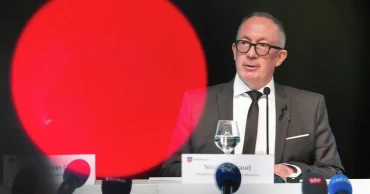
Swiss bar fire linked to skipped inspections since 2019
Fire safety inspections had not been conducted since 2019 at Le Constellation, the Swiss bar where a New Year’s party fire killed 40 people and injured over 100, authorities said Tuesday.
Investigators believe the blaze was triggered by sparkling candles on Champagne bottles that came too close to the ceiling. Authorities are examining whether ceiling soundproofing met regulations and if the candles were allowed. A criminal investigation has been launched against the bar’s two managers for involuntary homicide, bodily harm, and causing a fire, the Valais chief prosecutor said.
Crans-Montana municipality said fire safety checks were carried out in 2016, 2018, and 2019, with modifications requested, but no issues were raised regarding soundproofing. Municipal head Nicolas Féraud said inspections were not done between 2020 and 2025, a lapse he described as “bitterly regrettable.”
Severe burns complicated victim identification, requiring DNA samples. Investigators confirmed all 40 deceased and 116 injured, including nine French citizens, have been identified. The Paris prosecutor’s office opened a probe to support the Swiss investigation.
Authorities noted the bar’s capacity was 100 on the ground floor and 100 in the basement, though the exact number present during the fire remains unknown. Following the tragedy, the municipality banned indoor fireworks and will commission external agencies to inspect similar venues.
2 months ago
Maduro says he was ‘abducted’ as he pleads not guilty to US drug charges
Former Venezuelan leader Nicolás Maduro defiantly proclaimed himself “the president of my country” on Monday as he rejected federal drug trafficking charges in a New York courtroom, denouncing what he described as his forcible capture by U.S. authorities.
“I was abducted,” Maduro said in Spanish through an interpreter before the judge halted his remarks. When formally asked to enter a plea, he responded: “I am innocent. I am not guilty. I am a decent man and the constitutional president of my country.”
The appearance marked Maduro’s first time in a U.S. courtroom since he and his wife, Cilia Flores, were taken from their home in Caracas during a surprise overnight military operation on Saturday. Flores also entered a not-guilty plea. The case represents one of the most significant U.S. criminal prosecutions ever brought against a foreign head of state.
The legal proceedings are unfolding amid sweeping geopolitical consequences following President Donald Trump’s assertion that Maduro’s removal would allow Washington to temporarily oversee Venezuela’s affairs.
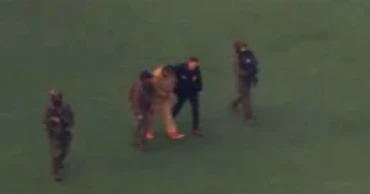
Maduro, 63, was transported to Manhattan under heavy security early Monday, arriving by helicopter from a Brooklyn detention facility before being driven in an armored convoy to the courthouse. He and Flores appeared shortly before noon, wearing jail uniforms and leg restraints, and listened to the English-language hearing through Spanish translation headsets.
As Maduro exited the courtroom, someone in the gallery shouted that he was an “illegitimate” leader.
Legal battle beginsAlthough Maduro will technically receive the same legal rights as any U.S. criminal defendant — including the right to a jury trial — his case is unusual given the manner of his arrest and the international implications involved.
From the outset, Maduro insisted that he had been unlawfully seized.
“I have been held here since Saturday, January 3,” he said, leaning toward the microphone. “I was taken from my home in Caracas.”
U.S. District Judge Alvin Hellerstein interrupted, telling Maduro that his objections would be addressed later through his attorney. The judge then asked a single question: “Are you Nicolás Maduro Moros?”
“I am Nicolás Maduro Moros,” he replied.
Maduro’s attorney, Barry Pollack, said the defense plans to challenge the legality of what he called a “military kidnapping.” Pollack argued that Maduro, as head of a sovereign state, is entitled to diplomatic immunity.
A similar argument failed in the case of Panamanian leader Manuel Noriega following his U.S. capture in 1990. Washington does not recognize Maduro as Venezuela’s legitimate president, particularly after his disputed reelection in 2024.
Flores, who introduced herself in court as Venezuela’s first lady, appeared with visible bandages on her head. Her lawyer said she sustained serious injuries during the operation.
A sweeping 25-page indictment accuses Maduro and associates of conspiring with drug cartels to ship massive quantities of cocaine into the United States. If convicted, they could face life sentences.
The charges allege that Maduro and Flores ordered kidnappings, assaults, and killings to enforce their trafficking operation, including the murder of a local drug figure in Caracas.
Outside the courthouse, police separated demonstrators protesting the U.S. action from those supporting it. Inside, as the hearing concluded, a Venezuelan man stood and confronted Maduro in Spanish. The former leader responded sharply as he was escorted out, saying: “I am a kidnapped president. I am a prisoner of war.”
Calls for Maduro’s returnTrump said over the weekend that the United States would temporarily “run” Venezuela, reiterating on Sunday that “we’re in charge.”
Secretary of State Marco Rubio later sought to soften the message, saying the U.S. would not manage Venezuela’s daily governance beyond enforcing an existing oil embargo.
Before his capture, Maduro had accused Washington of targeting him to gain control of Venezuela’s oil and mineral wealth. While Trump suggested the move could boost oil exports, prices climbed 1.7% on Monday amid uncertainty over Venezuela’s capacity to revive production.
Venezuela’s interim leader, Delcy Rodríguez, demanded Maduro’s return, though she later struck a more conciliatory tone, expressing openness to cooperation with Washington. She was sworn in Monday by her brother, National Assembly President Jorge Rodríguez.
Speaking during the ceremony, she condemned the U.S. operation and described Maduro and Flores as heroes who had been kidnapped.
Maduro’s son, lawmaker Nicolás Maduro Guerra, warned that the seizure of a sitting head of state could set a dangerous global precedent.
“If abducting a president becomes acceptable, no country is safe,” he said. “Today it is Venezuela. Tomorrow it could be anyone.”
The United Nations Security Council convened an emergency session on Monday, with senior U.N. officials cautioning that the U.S. action may have breached international law and highlighting Venezuela’s deep humanitarian crisis following years of economic turmoil.
2 months ago
Trump’s post-Maduro rhetoric revives echoes of American imperialism
President Donald Trump has delivered an unmistakable message following the U.S. military operation that captured former Venezuelan leader Nicolás Maduro and transported him and his wife to the United States to face federal drug trafficking charges.
Declaring that “American dominance in the Western Hemisphere will never be questioned again,” Trump framed the raid as a demonstration of renewed U.S. supremacy in the region.
In the days since the operation, Trump and senior officials have reinforced the idea that Washington’s assertive posture in the hemisphere is not temporary. The president has repeatedly pointed to Maduro’s capture as a warning to neighboring countries to align with U.S. interests or risk consequences.
Trump’s language has drawn comparisons to the forceful rhetoric of late 19th- and early 20th-century American leaders, when U.S. presidents openly used military power to secure territory and resources in places such as Cuba, Puerto Rico, Hawaii, Panama, Nicaragua, Haiti, Mexico and the Dominican Republic.
“Past conflicts like Vietnam and Iraq raised concerns about American imperialism, but leaders at the time justified their actions through the language of democracy,” said Edward Frantz, a historian at the University of Indianapolis. “Trump’s rhetoric is far more direct and reminiscent of an era we haven’t seen in decades.”
Following the raid, Trump has also aimed sharp criticism at traditional partners, including Greenland and Mexico. He renewed calls for U.S. control of the Danish territory, citing national security concerns, and said Mexico must “get its act together” in combating drug cartels.
He further warned that longtime U.S. adversary Cuba is “going down” after losing access to heavily discounted Venezuelan oil, and heightened regional anxiety by suggesting that a military operation in Colombia — a major hub of global cocaine production — would be acceptable.
Trump has asserted that Washington will effectively oversee Venezuela’s future, threatening interim President Delcy Rodríguez with consequences worse than Maduro’s if she fails to comply with U.S. demands. He has made clear that he expects Venezuela to open its vast oil reserves to American companies, fueling debate over U.S. overreach.
Over the weekend, Trump said U.S. energy firms would invest billions of dollars to rebuild Venezuela’s oil infrastructure and profit from its production.
The operation has divided Latin America. Right-leaning governments aligned with Trump largely welcomed Maduro’s removal, while non-aligned leaders condemned the action as a violation of national sovereignty. The episode has also intensified concerns that Trump’s desire to annex Greenland may be genuine.
Monroe Doctrine rhetoric unsettles allies
Danish Prime Minister Mette Frederiksen warned Monday that any U.S. attempt to seize Greenland would threaten the future of NATO, calling it a direct assault on the post-World War II security alliance.
“If the United States chooses to attack another NATO country militarily, then everything stops,” she told Danish broadcaster TV2.
Historically, U.S. leaders relied on the Monroe Doctrine — originally designed to prevent European interference in the Americas — to justify interventions across the hemisphere. Trump has now revived that doctrine to defend U.S. action in Venezuela and to warn other nations in the region.
According to Frantz, Trump’s language recalls President Theodore Roosevelt’s era of “gunboat diplomacy,” when U.S. power was openly asserted to protect national interests throughout the Caribbean and Central America.
Only weeks before Maduro’s removal, Trump released a long-awaited National Security Strategy that appeared internally contradictory. While it emphasized a preference for avoiding foreign conflicts, it also pledged to restore U.S. dominance in the Western Hemisphere.
With the Venezuelan operation, the administration appears firmly committed to the latter.
“This is where we live,” Secretary of State Marco Rubio said Sunday on NBC’s Meet the Press. “We’re not going to allow this hemisphere to be a base for our adversaries.”
Global backlash grows
At an emergency meeting of the U.N. Security Council on Monday, Colombia’s ambassador, Leonor Zalabata Torres, described the U.S. action as reminiscent of some of the region’s darkest moments of foreign interference.
“Democracy cannot be defended through violence or coercion, nor replaced by economic interests,” she said.
Democrats in the United States have also questioned whether Trump’s actions could embolden authoritarian leaders elsewhere, including Russia’s Vladimir Putin and China’s Xi Jinping.
“What the president has done here effectively gives Putin and Xi a green light,” said Sen. Angus King of Maine on CNN.
Russia has condemned the U.S. operation. Its U.N. ambassador, Vassily Nebenzia, said the international community cannot allow the United States to act as a “supreme judge” over other nations.
2 months ago
35 dead, 1,200 detained amid Iran’s economic unrest
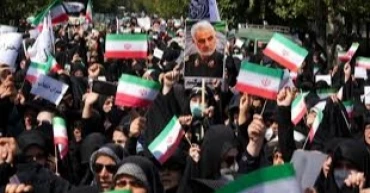
Activists said on Tuesday that at least 35 people have been killed in clashes linked to ongoing protests across Iran, with demonstrations continuing unabated.
According to the U.S.-based Human Rights Activists News Agency, more than 1,200 people have been arrested since the protests began over a week ago. The group reported that those killed include 29 demonstrators, four children, and two members of Iran’s security forces. Protests have spread to more than 250 locations across 27 of the country’s 31 provinces.
The organization, which gathers information through a network of activists inside Iran, has previously provided reliable data during periods of unrest.
Meanwhile, the semi-official Fars news agency, which is considered close to Iran’s Islamic Revolutionary Guard Corps, reported late Monday that around 250 police officers and 45 members of the volunteer Basij force were injured during the protests.
As the death toll continues to rise, concerns have emerged over possible U.S. involvement. On Friday, U.S. President Donald Trump warned that if Iranian authorities “violently kill peaceful protesters,” the United States would “come to their rescue.”
Although it remains uncertain whether or how Washington might act, Trump’s remarks prompted sharp reactions from Iranian officials, who threatened retaliation against U.S. troops stationed in the Middle East. The comments gained further attention after the U.S. military captured Venezuelan President Nicolás Maduro on Saturday, a key ally of Tehran.
These demonstrations mark the largest wave of protests in Iran since 2022, when nationwide unrest erupted following the death of 22-year-old Mahsa Amini while in police custody. However, the current protests have not yet reached the same level of intensity or scale as those sparked by Amini’s death, which followed her detention over alleged violations of Iran’s hijab rules.
Iran has experienced repeated nationwide protests in recent years. Economic pressure has intensified as sanctions tightened and the country struggled in the aftermath of a 12-day conflict with Israel. In December, the Iranian rial plunged to 1.4 million to the U.S. dollar, triggering fresh demonstrations shortly afterward.
Assessing the full extent of the current unrest has proven challenging. State media has offered limited coverage, while online videos provide only brief and unclear snapshots of crowds or gunfire. Journalists also face strict reporting restrictions, including travel permits and the risk of harassment or arrest.
Despite these challenges, the protests show little sign of ending, even after Supreme Leader Ayatollah Ali Khamenei warned on Saturday that “rioters must be put in their place.”
2 months ago
Maduro denies guilt, claims innocence
A defiant Nicolás Maduro declared himself the “president of my country” as he protested his capture and pleaded not guilty on Monday to the federal drug trafficking charges that the Trump administration used to justify removing him from power.
“I was captured,” Maduro said in Spanish as translated by a courtroom reporter before being cut off by the judge. Asked later for his plea to the charges, he stated: "“I’m innocent. I am not guilty. I am a decent man, the president of my country.”
The courtroom appearance, Maduro's first since he and his wife were seized from their home in a stunning middle-of-the-night military operation, kick-starts the U.S. government’s most consequential prosecution in decades of a foreign head of state. The criminal case in Manhattan is unfolding against the diplomatic backdrop of an audacious U.S.-engineered regime change that President Donald Trump has said will enable his administration to “run” the South American country.
Maduro makes first US court appearance on drug charges
Maduro, wearing a blue jail uniform, was led into court along with his co-defendant wife just before noon for the brief, but required, legal proceeding. Both put on headsets to hear the English-language proceeding as it is translated into Spanish.
The couple were transported to the Manhattan courthouse under armed guard early Monday from the Brooklyn jail where they've been detained since arriving in the U.S. on Saturday.
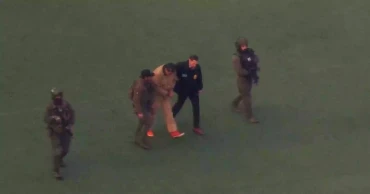
The trip was swift. A motorcade carrying Maduro left jail around 7:15 a.m. and made its way to a nearby athletic field, where Maduro slowly made his way to a waiting helicopter. The chopper flew across New York harbor and landed at a Manhattan heliport, where Maduro, limping, was loaded into an armored vehicle.
A few minutes later, the law enforcement caravan was inside a garage at the courthouse complex, just around the corner from the one where Trump was convicted in 2024 of falsifying business records. Across the street from the courthouse, the police separated a small but growing group of protesters from about a dozen pro-intervention demonstrators, including one man who pulled a Venezuelan flag away from those protesting the U.S. action.
As a criminal defendant in the U.S. legal system, Maduro will have the same rights as any other person accused of a crime — including the right to a trial by a jury of regular New Yorkers. But he'll also be nearly — but not quite — unique.
Trump threatens Colombia, warns Cuba ‘ready to fall’
Maduro’s lawyers are expected to contest the legality of his arrest, arguing that he is immune from prosecution as a sovereign head of state.
Panamanian strongman Manuel Noriega unsuccessfully tried the same defense after the U.S. captured him in a similar military invasion in 1990. But the U.S. doesn’t recognize Maduro as Venezuela’s legitimate head of state — particularly after a much-disputed 2024 reelection.
Venezuela’s new interim president, Delcy Rodríguez, has demanded that the U.S. return Maduro, who long denied any involvement in drug trafficking — although late Sunday she also struck a more conciliatory tone in a social media post, inviting collaboration with Trump and “respectful relations” with the U.S.
Before his capture, Maduro and his allies claimed U.S. hostility was motivated by lust for Venezuela’s rich oil and mineral resources.
The U.S. seized Maduro and his wife in a military operation early Saturday, capturing them in their home on a military base. Trump said the U.S. would “run” Venezuela temporarily, but Secretary of State Marco Rubio said Sunday that it would not govern the country day-to-day other than enforcing an existing " oil quarantine."
Trump suggested Sunday that he wants to extend American power further in the Western Hemisphere.
Speaking aboard Air Force One, he called Colombia's president, Gustavo Petro, "a sick man who likes making cocaine and selling it to the United States. And he’s not going to be doing it very long.”
He called on Venezuela's Rodriguez to provide “total access” to her country, or else face consequences.
Trump has suggested that removing Maduro would enable more oil to flow out of Venezuela, but oil prices rose a bit more than 1% in Monday morning trading to roughly $58 a barrel. There are uncertainties about how fast oil production can be ramped up in Venezuela after years of neglect and needed investments, as well as questions about governance and oversight of the sector.
A 25-page indictment made public Saturday accuses Maduro and others of working with drug cartels to facilitate the shipment of thousands of tons of cocaine into the U.S. They could face life in prison if convicted.
North Korea claims progress in hypersonic missile program amid regional tensions
He and his wife, Cilia Flores, have been under U.S. sanctions for years, making it illegal for any American to take money from them without first securing a license from the Treasury Department.
While the indictment against Maduro says Venezuelan officials worked directly with the Tren de Aragua gang, a U.S. intelligence assessment published in April, drawing on input from the intelligence community's 18 agencies, found no coordination between Tren de Aragua and the Venezuelan government.
Maduro, his wife and his son — who remains free — are charged along with Venezuela's interior and justice minister, a former interior and justice minister and Hector Rusthenford Guerrero Flores, an alleged Tren de Aragua leader who has been criminally charged in another case and remains at large.
Among other things, the indictment accuses Maduro and his wife of ordering kidnappings, beatings and murders of those who owed them drug money or undermined their drug trafficking operation. That included a local drug boss' killing in Caracas, the indictment said.
Maduro’s wife is also accused of accepting hundreds of thousands of dollars in bribes in 2007 to arrange a meeting between “a large-scale drug trafficker” and the director of Venezuela’s National Anti-Drug Office, resulting in additional monthly bribes, with some of the money going to Maduro's wife, according to the indictment.
2 months ago