Others
US, India strike trade deal after Trump–Modi call
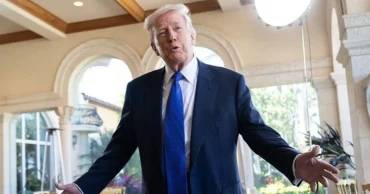
The United States and India have reached a trade agreement under which Washington will lower tariffs on Indian goods to 18% from 25%, while New Delhi has agreed to sharply reduce trade barriers and boost purchases of American products, US President Donald Trump said.
Announcing the deal on his Truth Social platform after a phone call with Indian Prime Minister Narendra Modi, Trump said India would bring both tariff and non-tariff barriers down to zero and stop buying Russian oil. As part of the agreement, an additional 25% tariff penalty imposed earlier over India’s continued purchase of Russian oil will also be withdrawn.
Trump said Modi requested an immediate trade agreement during the call, which also covered the Russia-Ukraine war, and committed to buying more than $500 billion worth of US goods. These include energy, technology, agricultural products and coal.
“He agreed to stop buying Russian oil and to buy much more oil from the United States and, potentially, Venezuela,” Trump wrote, adding that the agreement would significantly expand US exports to India.
A White House official later confirmed that tariffs linked to Russian oil purchases would be dropped and that the overall tariff rate on Indian goods would be reduced to 18%.
Modi welcomed the announcement, saying on X that he was “delighted” by the agreement. He thanked Trump on behalf of India’s 1.4 billion people and said cooperation between the two countries would unlock major opportunities for mutual benefit.
“When two large economies and the world’s largest democracies work together, it benefits our people,” Modi said.
The deal comes at a sensitive moment for India’s trade policy. Indian exports to the United States fell sharply after Washington imposed tariffs of up to 50% on Indian goods last August, the highest applied to any Asian country. In response, New Delhi had been seeking alternative trade partnerships.
Less than a week ago, India and the European Union announced a long-awaited free trade agreement aimed at cutting duties on most goods traded between India and the 27-nation bloc. European Commission President Ursula von der Leyen described it as the “mother of all deals,” with EU officials saying it could double European exports to India by 2032.
Analysts said the US-India deal signals Washington’s intent to reassert its position in global trade. Terry Haines, founder of Pangaea Policy, described the agreement as a response to perceptions that the EU was gaining ground on the United States in trade relations.
US markets edged higher following Trump’s announcement.
However, the agreement has drawn criticism from some US business groups. We Pay the Tariffs, a coalition representing about 800 small American companies, said the deal still leaves tariffs far higher than before Trump’s trade measures. Its director, Dan Anthony, said US importers previously paid an average tariff of 2.5% on Indian goods, calling the new rate a long-term tax increase rather than relief.
With inputs from BBC
4 months ago
An internal document shows Vietnamese military preparing for possible US war
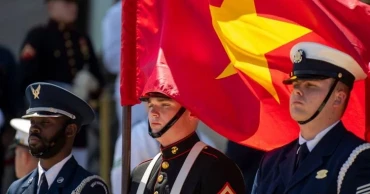
An internal Vietnamese military document has revealed deep concerns within Hanoi’s defense establishment about a potential American “war of aggression,” even as Vietnam maintains its highest-ever level of diplomatic relations with Washington.
The document, prepared by Vietnam’s Ministry of Defense in August 2024 and titled “The 2nd U.S. Invasion Plan,” portrays the United States as a “belligerent” power and urges vigilance against what it describes as possible US-led attempts to destabilise Vietnam’s socialist system, according to a report released on Tuesday by The 88 Project, a human rights organisation focused on Vietnam.
The disclosure comes roughly a year after Vietnam and the United States elevated their relationship to a Comprehensive Strategic Partnership, placing Washington on par with Hanoi’s ties to China and Russia. The internal assessment highlights what analysts describe as a dual-track approach in Vietnam’s foreign policy: outward diplomatic engagement alongside persistent internal suspicion.
Beyond fears of direct military conflict, the document underscores a long-standing anxiety within Vietnam’s Communist leadership about so-called “color revolutions,” mass uprisings that have toppled governments elsewhere, including Ukraine’s Orange Revolution in 2004 and the Philippines’ People Power movement in 1986. Vietnamese planners warn that external forces could exploit issues such as democracy, human rights, ethnicity and religion to engineer political change.
According to the document, while the risk of an immediate war against Vietnam is considered low, the US and its allies are seen as willing to use unconventional warfare or manufacture pretexts for intervention against countries that fall outside Washington’s strategic orbit, particularly as part of efforts to counter China’s influence in Asia.
Ben Swanton, co-director of The 88 Project and author of the analysis, said the concerns outlined in the document reflect a broad consensus within Vietnam’s government rather than the views of a marginal faction. He noted that Hanoi does not see the US as a true strategic partner and has no intention of joining any anti-China alliance.
Vietnam’s Foreign Ministry did not respond to requests for comment on the report or the document. The US State Department declined to address the contents directly but reiterated that the bilateral partnership is intended to promote shared prosperity and regional stability.
Analysts say the document offers rare insight into internal debates within Vietnam’s leadership, particularly tensions between reform-minded officials and more conservative, military-aligned figures who remain deeply shaped by memories of the Vietnam War and wary of foreign interference. While Western diplomats often view China as Hanoi’s primary security concern, the document suggests that regime stability and the threat of internal unrest remain paramount.
The assessment also reflects Vietnam’s delicate balancing act. China remains its largest overall trading partner, while the United States is its biggest export market, binding Hanoi economically to both powers even as strategic mistrust persists.
Observers say the return of US President Donald Trump for a second term has both eased and complicated Vietnamese concerns. While Washington has softened its emphasis on democracy and human rights, recent US actions abroad have reinforced fears among Vietnamese conservatives about American willingness to violate national sovereignty.
Overall, analysts suggest Vietnam’s leadership continues to engage the United States pragmatically, but with enduring caution rooted in history, ideology and fears of political destabilisation.
4 months ago
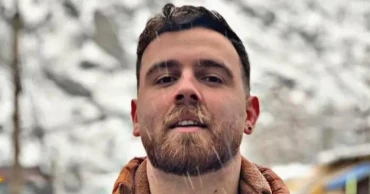
Iranian protester Erfan released on bail amid conflicting execution claims
Iranian protester Erfan Soltani, who was widely reported last month to have been sentenced to death over anti-government demonstrations, has been released on bail, according to media and rights groups.
Soltani, 26, was detained on 8 January in Fardis, near Tehran, amid nationwide protests that triggered a violent response from security forces. His family was later told by authorities that he was facing imminent execution, though no further details were provided, Norway-based Kurdish rights group Hengaw said.
Iran’s judiciary later rejected claims that Soltani had received a death sentence, stating instead that he was charged with security-related offences punishable by imprisonment, reports BBC.
His lawyer, Amir Mousakhani, told AFP that Soltani was freed on bail on Saturday and had his personal belongings, including his mobile phone, returned. A bail amount of two billion tomans—about $12,600—was posted to secure his release.
Hengaw and Iranian outlets, including semi-official news agency ISNA, also confirmed the development.
Soltani, a clothing shop owner, drew international attention after reports emerged that he was set to be executed. A relative previously told BBC Persian that a death sentence had allegedly been issued within just two days through an unusually fast legal process.
The reports prompted international reaction, including warnings from then US President Donald Trump of “very strong action” should executions proceed. Iran’s Supreme Leader Ayatollah Ali Khamenei, however, cautioned that any attack on Iran would ignite a wider regional conflict.
Iranian authorities dismissed foreign media reports about Soltani’s execution as false, while Foreign Minister Abbas Araghchi said there was no intention to carry out hangings. Hengaw later reported that Soltani’s execution had been postponed, citing family sources.
Meanwhile, human rights organisations say the death toll from the unrest continues to rise. The US-based Human Rights Activists News Agency claims more than 6,300 people have been killed since protests began in late December, with thousands more deaths under investigation. Iran Human Rights has warned the total could surpass 25,000.
Protesters have told the BBC that the scale and intensity of the crackdown were unprecedented. On Sunday, Khamenei accused demonstrators of attacking police, the Islamic Revolutionary Guard Corps and public institutions, including banks and mosques.
4 months ago
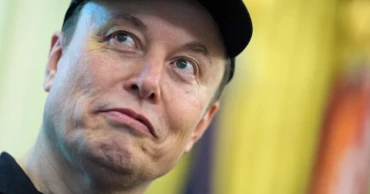
Epstein files name global elites, royals and billionaires
A newly released trove of US Justice Department documents linked to investigations into Jeffrey Epstein has named a wide range of powerful men, including tech billionaires, former heads of state, royalty and senior political figures, renewing scrutiny of their past associations with the disgraced financier.
None of those named have been charged with crimes connected to Epstein’s sexual abuse of girls and young women, and all have denied involvement in his crimes. However, the files show that several maintained friendships or contacts with Epstein even after allegations against him became widely known. Epstein died by suicide in a New York jail in 2019 while awaiting trial on federal sex trafficking charges.
Among the most prominent figures is Andrew Mountbatten-Windsor, formerly Britain’s Prince Andrew, whose name appears hundreds of times in the documents, including in Epstein’s private emails. He has long faced allegations from the late Virginia Giuffre that she was trafficked by Epstein and forced to have sex with him when she was 17, claims he has repeatedly denied. Late last year, King Charles III stripped him of his remaining royal titles.
The files also include references to Sarah Ferguson, Andrew’s former wife, who publicly apologised in 2011 for allowing Epstein to help pay off her debts. Emails show she later sought Epstein’s advice on handling media questions about their relationship, despite earlier pledging to cut all ties with him.
Billionaire entrepreneur Elon Musk appears several times in emails discussing possible visits to Epstein’s Caribbean island in 2012 and 2013, though it remains unclear whether any visit took place. Musk has said he repeatedly rejected Epstein’s invitations. Companies linked to him did not respond to requests for comment.
Virgin Group founder Richard Branson exchanged numerous emails with Epstein, including invitations to Branson’s own Caribbean island. Branson’s company said there was no wrongdoing, stressing that any contact was limited to business or group settings and ended once serious allegations against Epstein became clear.
The documents contain thousands of references to US President Donald Trump, largely involving shared news articles, political commentary and gossip. A Justice Department summary of tip-line calls alleging misconduct by prominent figures, including Trump, noted that many claims were unsubstantiated and deemed not credible by investigators.
Former US President Bill Clinton, who previously acknowledged traveling with Epstein decades ago, is also referenced. His representatives say he severed ties after Epstein faced criminal charges in 2006. No Epstein victim has publicly accused Clinton of wrongdoing.
Other figures named include Steven Tisch, co-owner of the New York Giants, who acknowledged exchanging emails with Epstein about adult women but denied any illegal conduct; film director Brett Ratner, who appears in photographs with Epstein and others; and Casey Wasserman, head of the Los Angeles 2028 Olympics organising committee, who exchanged flirtatious emails with Epstein associate Ghislaine Maxwell and later expressed regret.
Former Israeli Prime Minister Ehud Barak is shown to have stayed in contact with Epstein for years, including after his 2008 conviction. Barak has said he never witnessed any inappropriate behaviour. Larry Summers, former US Treasury secretary and ex-Harvard president, is also cited frequently, later describing his interactions with Epstein as a serious error of judgment.
Howard Lutnick, US Commerce Secretary under President Trump, appears in records showing visits to Epstein’s island with his family, though the Commerce Department said his interactions were limited and he has not been accused of wrongdoing. Google co-founder Sergey Brin, former Trump adviser Steve Bannon and several other political and business figures are also referenced.
The files further reveal that Miroslav Lajcak, Slovakia’s national security adviser and a former foreign minister, resigned after his past contacts with Epstein emerged. He has said the interactions were related to diplomatic duties and denied any misconduct.
US officials have stressed that being named in the documents does not imply criminal behaviour. The Associated Press, along with other media organisations, is continuing to review the files as part of a collaborative examination of the newly released records.
4 months ago
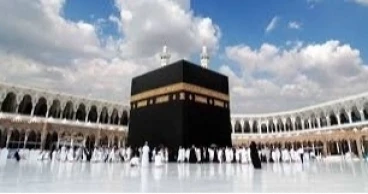
Saudi ministry suspends Umrah contracts of 1,800 foreign agencies
Saudi Arabia’s Ministry of Hajj and Umrah has suspended contracts with about 1,800 foreign Umrah travel agencies, giving them 10 days to resolve compliance issues identified during a routine performance review.
The action affects agencies operating in the Umrah sector out of an estimated total of 5,800, after evaluations found weaknesses in service quality and overall performance, according to Saudi Press Agency.
The ministry clarified that the suspension is limited to the issuance of new Umrah visas and is intended as a regulatory step to allow agencies time to address classification and compliance shortcomings. Contracts will be reinstated once the required standards are met within the given timeframe.
Read More: Hajj visa applications to open from February 8
Umrah pilgrims who already hold valid visas or have confirmed reservations will not be impacted, as services for them will continue without disruption, the ministry said.
The ministry stressed that enforcing approved classification criteria and performance benchmarks is essential to improving compliance among service providers and ensuring services meet required standards. Protecting the rights of Umrah pilgrims and maintaining uninterrupted services remain key priorities.
Ministry spokesperson Ghassan Alnwaimi said agencies that fail to correct deficiencies within the deadline will face regulatory action. He added that monitoring and evaluation mechanisms will continue to be used to strengthen the credibility of the Umrah sector and safeguard pilgrims’ rights.
4 months ago
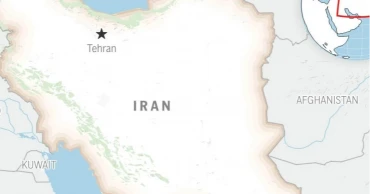
Iran labels EU militaries as terrorist groups amid rising tensions
Iran’s parliament on Sunday labeled all EU militaries as terrorist groups in response to the EU’s designation of its Revolutionary Guard..
Speaker Mohammad Bagher Qalibaf, a former Guard commander, said the designation is largely symbolic. Iran has previously used a 2019 law to reciprocally label foreign militaries as terror groups after the United States classified the Guard as such that year.
The announcement comes amid heightened Middle East tensions, with U.S. President Donald Trump weighing potential military action against Iran. The country has also scheduled live-fire drills in the strategic Strait of Hormuz, through which a fifth of the world’s oil trade passes.
Qalibaf and other lawmakers donned Guard uniforms during the parliamentary session in a show of support. He criticized the EU, saying their decision to target the Guard “goes against the interests of their own people” and blamed the bloc for following U.S. influence. Lawmakers later chanted anti-American and anti-Israel slogans.
Trump has warned Iran against killing peaceful protesters or executing detainees in the crackdown. He also raised concerns over Iran’s nuclear program, which was previously the subject of negotiations with the U.S. before Israel launched a 12-day war against Iran last June, during which the U.S. bombed three Iranian nuclear sites. Satellite observations suggest Iran may be trying to obscure activity at two of the sites.
Trump, speaking to reporters en route to Florida, avoided confirming any military decision, but reiterated that Iran should reach a “satisfactory” nuclear deal. “I don’t know that they will. But they are talking to us. Seriously talking to us,” he said.
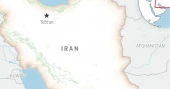
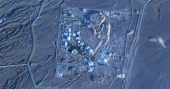
Satellite images show new activity at Iran nuclear sites amid protest tensions
Meanwhile, Iran’s top security official Ali Larijani tweeted that “structural arrangements for negotiations are progressing,” though no direct talks with the U.S. have been confirmed, with Supreme Leader Ayatollah Ali Khamenei repeatedly ruling them out.
4 months ago
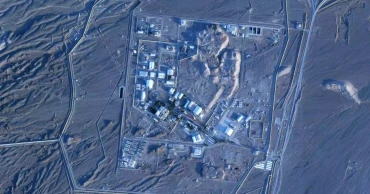
Satellite images show new activity at Iran nuclear sites amid protest tensions
Satellite imagery has revealed renewed activity at two major Iranian nuclear facilities damaged in airstrikes last year, raising fresh concerns as tensions escalate over Tehran’s violent crackdown on nationwide protests.
Images released by Planet Labs PBC show newly constructed roofs covering heavily damaged structures at Iran’s Natanz nuclear enrichment site and the Isfahan Nuclear Technology Center. Analysts say the coverings appear designed to block satellite surveillance, potentially allowing Iran to inspect or recover remaining materials out of international view.
The activity marks the first significant construction detected at Iran’s bombed nuclear sites since Israel’s 12‑day conflict with Iran in June, followed by U.S. strikes. Iran has denied inspectors from the UN’s International Atomic Energy Agency (IAEA) access to the facilities since the attacks.
Experts caution the work does not suggest reconstruction of the sites. Instead, it may indicate efforts to assess whether sensitive assets — including stocks of highly enriched uranium — survived the strikes.
Read More: China successfully launches new test satellite
“These roofs are likely meant to obscure recovery operations rather than rebuild,” said analysts monitoring Iran’s nuclear program.
Natanz, Iran’s primary uranium enrichment hub, previously enriched uranium up to 60% purity — close to weapons-grade levels. The above-ground Pilot Fuel Enrichment Plant was severely damaged by Israeli strikes, with subsequent U.S. bunker-busting bombs targeting underground halls.
At Isfahan, which produces uranium gas used in enrichment, a similar roof now covers a damaged structure near the site’s northeast corner. Satellite images also show tunnel entrances nearby being filled or reinforced, possibly to protect against future attacks.
Iran has not commented publicly on the new construction. The IAEA also declined to respond.
Meanwhile, U.S. President Donald Trump has warned Iran to negotiate over its nuclear program, as Washington increases its military presence in the Middle East. Analysts warn the ongoing crisis carries significant nuclear risks.
4 months ago
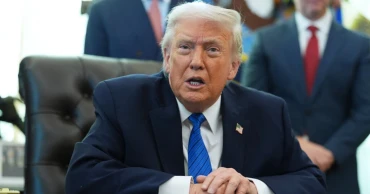
Trump says Iran negotiating with U.S.
U.S. President Donald Trump said on Saturday that Iran is negotiating with the United States.
“The plan is that (Iran is) in talks with us, and we’ll see whether anything can be achieved. Otherwise, we’ll see what happens,” Trump told a Fox News correspondent.
He said that “the last time they negotiated, we had to remove their nuclear capability. It didn’t work, you know. Then we did it a different way, and we’ll see what happens.”
“We have a large fleet moving there, larger than what we had and still have, actually in Venezuela,” Trump said.
Read More: Trump hikes US tariffs on South Korean goods to 25 percent
Trump also said the United States could not share military plans with Gulf allies while negotiations with Iran were under way.
“We can’t tell them the plan. If I told them the plan, it would be almost as bad as telling you the plan it could be worse, actually,” he said, responding to reports that Gulf allies remain uninformed about potential U.S. intervention plans involving Iran.
4 months ago
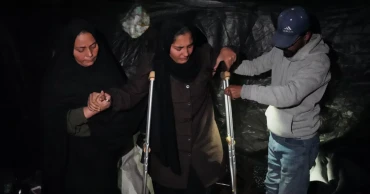
Shot in the knee, a Gaza teen waits for Rafah crossing to open
Rimas Abu Lehia was wounded five months ago when Israeli troops opened fire toward hungry Palestinians mobbing an aid truck for food in Gaza and a bullet shattered the 15-year-old girl's left knee.
Now her best chance of walking again is surgery abroad. She is on a list of more than 20,000 Palestinians, including 4,500 children, who have been waiting — some more than a year — for evacuation to get treatment for war wounds or chronic medical conditions, according to the Gaza Health Ministry.
Their hopes hinge on the reopening of the Rafah border crossing between Gaza and Egypt, a key point under the nearly 4-month-old ceasefire between Israel and Hamas. Israel has announced the crossing will open in both directions on Sunday.
The Israeli military body in charge of coordinating aid to Gaza said Friday that “limited movement of people only” would be allowed. Earlier, Prime Minister Benjamin Netanyahu had said Israel will allow 50 patients a day to leave; others have spoken of up to 150 a day.
That's a large jump from about 25 patients a week allowed to leave since the ceasefire began, according to U.N. figures. But it would still take anywhere from 130 to 400 days of crossings to get everyone in need out.
Abu Lehia said her life depends on the crossing opening.
“I wish I didn’t have to sit in this chair,” she said, crying as she pointed at the wheelchair she relies on to move. “I need help to stand, to dress, to go to the bathroom.”
Evacuations are critical as Gaza hospitals are decimated
Israel’s campaign in Gaza after the Hamas-led October 2023 attack on southern Israel that triggered the war has decimated the territory’s health sector. The few hospitals still working were overwhelmed by casualties. There are shortages of medical supplies and Israel has restricted aid entry.
Hospitals are unable to perform complicated surgeries for many of the wounded, including thousands of amputees, or treat many chronic conditions. Gaza’s single specialized cancer hospital shut down early in the war, and Israeli troops blew it up in early 2025. Without giving evidence, the military said Hamas militants were using it, though it was located in an area under Israeli control for most of the war.
More than 10,000 patients have left Gaza for treatment abroad since the war began, according to the World Health Organization.
After Israeli troops seized and closed the Rafah crossing in May 2024 and until the ceasefire, only around 17 patients a week were evacuated from Gaza, except for a brief surge of more than 200 patients a week during a two-month ceasefire in early 2025, according to WHO figures.
About 440 of those seeking evacuation have life-threatening injuries or diseases, according to the Health Ministry. More than 1,200 patients have died while waiting for evacuation, the ministry said Tuesday.
A U.N. official said one reason for the slow pace of evacuations has been that many countries are reluctant to accept the patients because Israel would not guarantee they would be allowed to return to the Gaza Strip. The official spoke on condition of anonymity because he was not authorized to discuss the issue. The majority of evacuees have gone to Egypt, the United Arab Emirates, Qatar and Turkey.
He said it wasn't clear if that would change with Rafah's opening. Even with "daily or almost daily evacuations,” he said, the number is not very high.
Israel has also banned sending patients to hospitals in the Israeli-occupied West Bank and east Jerusalem since the war began, the official said — a move that cut off what was previously the main outlet for Palestinians needing treatment unavailable in Gaza.
Five human rights groups have petitioned Israel’s High Court of Justice to remove the ban. The court has not ruled. Still, one cancer patient in Gaza was allowed to travel to the West Bank for treatment on Jan. 11, after the Jerusalem District Court accepted a petition in his case by the Israeli rights group Gisha.
Also, Israel has said it will only allow around 50 Palestinians a day to enter Gaza, while tens of thousands of Palestinians hope to go back.
Thousands of cancer patients need evacuation
Gaza has more than 11,000 cancer patients and some 75% of the necessary chemotherapy drugs are not available, the Health Ministry said. At least 4,000 cancer patients need urgent treatment abroad, it added.
Ahmed Barham, a 22-year-old university student, has been battling leukemia. He underwent two lymph node removal surgeries in June but the disease is continuing to spread “at an alarming rate,” his father, Mohamed Barham, said.
“There is no treatment available here," the elder Barham said.
His son, who has lost 35 kilograms (77 pounds), got on the urgent list for referral abroad this past week but still doesn’t have a confirmation of travel.
“My son is dying before my eyes,” the father said.
Desperate for Rafah to open
Mahmoud Abu Ishaq, a 14-year-old, has been waiting for more than a year on the referral list for treatment abroad.
The roof of his family home collapsed when an Israeli strike hit nearby in the southern town of Beni Suhaila. The boy was injured and suffered a retinal detachment.
“Now he is completely blind,” his father, Fawaz Abu Ishaq said. “We are waiting for the crossing to open.”
Abu Lehia was wounded in August, when she went out from her family tent in the southern city of Khan Younis, looking for her younger brother, Muhannad, she told The Associated Press. The boy had gone out earlier that morning, hoping to get some food off entering aid trucks.
At the time, when Gaza was near famine, large crowds regularly waited for trucks and pulled food boxes off them, and Israeli troops often opened fire on the crowds. The Israeli military said its forces were firing warning shots, but hundreds were killed over the course of several months, according to Gaza health officials.
When Abu Lehia arrived at the edge of a military-held zone from which the trucks were passing, dozens of people were fleeing as Israeli troops fired. A bullet hit Abu Lehia in the knee, and she fell to the ground screaming, she said.
At the nearby Nasser Hospital, she underwent multiple surgeries, but they were unable to repair her knee. Doctors told her she needs knee replacement surgery outside Gaza.
Officials told the family last month that she would be evacuated in January. But so far nothing has happened, said her father, Sarhan Abu Lehia.
“Her condition is getting worse day by day,” he said. “She sits alone and cries.”
4 months ago
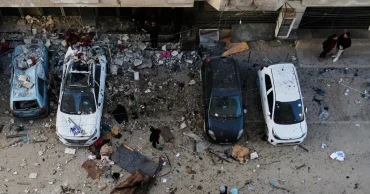
Israeli strikes kill 30 in Gaza amid ceasefire push
Hospitals in Gaza said Israeli strikes killed at least 30 Palestinians including several children on Saturday, one of the highest tolls since the October ceasefire, a day after Israel accused Hamas of new truce violations.
The strikes hit locations throughout Gaza, including an apartment building in Gaza City and a tent camp in Khan Younis, said officials at hospitals that received the bodies. The casualties included two women and six children from two different families. Another airstrike hit a police station in Gaza City, killing at least 14 and wounding others, Shifa Hospital director Mohamed Abu Selmiya said.
The strikes came a day before the Rafah crossing along the border with Egypt is set to open in Gaza’s southernmost city. All of the territory’s border crossings — the rest are with Israel — have been closed throughout almost the entire war. Palestinians see Rafah as a lifeline for tens of thousands needing treatment outside the territory, where the majority of medical infrastructure has been destroyed.
The crossing's opening, limited at first, will mark the first major step in the second phase of the U.S.-brokered ceasefire that took effect on Oct. 10. Other challenging issues include demilitarizing the strip after nearly two decades of Hamas rule and installing a new government to oversee reconstruction.
Egypt, one of the ceasefire mediators, in a statement condemned the Israeli strikes in the “strongest terms” and warned that they represent “a direct threat to the political course” of the truce. Qatar, another mediator, in a statement called Israel's strikes a “dangerous escalation” and said continuing them poses a “direct threat” to the political process.
‘We don’t know if we're at war or peace'
Nasser Hospital said the strike on the tent camp in Khan Younis caused a fire, killing seven, including a father, his three children and three grandchildren.
Atallah Abu Hadaiyed said he had just finished praying when the explosion struck. "We came running and found my cousins lying here and there, with fire raging. We don’t know if we’re at war or at peace, or what. Where is the truce? Where is the ceasefire they talked about?”he said, as people inspected ruins including a bloodied mattress.
Shifa Hospital said the Gaza City apartment building strike killed three children, their aunt and grandmother.
“The three girls are gone, may God have mercy on them. They were asleep, we found them in the street,” said a relative, Samir Al-Atbash, adding that the family were civilians with no connection to Hamas. Names were written on body bags lined up at the foot of a wall.
Shifa Hospital said the strike on the police station killed at least 14 including four policewomen, civilians and inmates. The hospital also said a man was killed in a strike on the eastern side of Jabaliya refugee camp.
Hamas called Saturday's strikes “a renewed flagrant violation” and urged the United States and other mediating countries to push Israel to stop them.
“All available indicators suggest that we are dealing with a ‘Board of War,’ not a ‘Board of Peace,’” senior Hamas official Bassem Naim said on X, questioning the legitimacy of the Trump administration-proposed international body meant to govern Gaza.
Israel’s military, which has struck targets on both sides of the ceasefire’s dividing line, said its attacks since October have been responses to violations of the agreement. It said Saturday's strikes followed what it described as two separate ceasefire violations a day earlier, in which Israeli forces killed three militants who emerged from a tunnel in an Israeli-controlled area of Rafah and four who approached troops near the dividing line.
The number reported killed Saturday was several times higher than the daily average since the ceasefire began. As of Friday, Gaza’s Health Ministry had recorded at least 520 Palestinians killed by Israeli fire since the start of the ceasefire. The ministry, part of the Hamas-led government, maintains detailed casualty records that are seen as generally reliable by U.N. agencies and independent experts.
The war began with the Hamas-led attack on southern Israel that killed some 1,200 people, mostly civilians, and took 251 people hostage. The remains of the final hostage in Gaza were recovered early this week.
4 months ago