Others
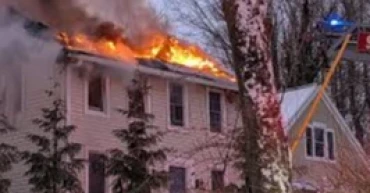
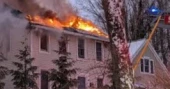
Deadly fire hits Alpine bar during New Year celebrations
A bar fire in the Swiss Alps during New Year’s festivities has resulted in deaths and injuries.
According to local media, police confirmed that people were killed and hurt in the incident, though officials had not yet released the exact number of casualties.
The fire broke out in Crans-Montana, a ski resort town in Switzerland’s Alpine region.
Authorities said further information was not immediately available.
5 months ago

Zohran Mamdani sworn In as New York City Mayor at historic Subway Station
Zohran Mamdani officially became New York City’s mayor shortly after midnight on Thursday, taking his first oath of office inside a historic, long-closed subway station in Manhattan.
A Democrat, Mamdani made history as the first Muslim mayor of the nation’s largest city, swearing in with his hand placed on a Quran.
Calling the moment “the honor and privilege of a lifetime,” Mamdani spoke briefly during the private ceremony, which was led by New York Attorney General Letitia James. The event was held at the former City Hall subway station, one of the system’s earliest stops, famed for its ornate arches and vaulted ceilings.
In his first comments as mayor, Mamdani described the station as a symbol of the essential role public transportation plays in the city’s past and future. He also announced Mike Flynn as his choice to lead the Department of Transportation. Smiling, he wrapped up his remarks before exiting up a staircase.
Later in the day, Mamdani is scheduled to take the oath again in a larger public ceremony at City Hall, administered by U.S. Senator Bernie Sanders. The event will be followed by a block party along Broadway’s “Canyon of Heroes,” a route historically used for ticker-tape parades.
Mamdani now steps into one of the most demanding roles in American public life and becomes one of the country’s most closely watched political figures.
Beyond being the city’s first Muslim mayor, he is also the first of South Asian heritage and the first born in Africa. At 34, he is among the youngest mayors New York has had in decades.
Running on a platform that made affordability a central campaign issue, the democratic socialist pledged sweeping changes to ease the cost of living. His proposals included free child care, fare-free buses, a rent freeze for roughly one million apartments, and a trial of city-operated grocery stores.
Alongside those ambitions, Mamdani must also manage the everyday challenges of running the city, from sanitation and snow removal to transit disruptions and infrastructure repairs.
Born in Kampala, Uganda, Mamdani is the son of filmmaker Mira Nair and scholar Mahmood Mamdani. His family moved to New York when he was 7. He later became a U.S. citizen in 2018 after growing up in a post-9/11 city where many Muslims faced discrimination.
Before running for mayor, Mamdani worked on Democratic political campaigns and was elected to the New York State Assembly in 2020, representing part of Queens.
He and his wife, Rama Duwaji, will move from their rent-stabilized one-bedroom apartment in the outer boroughs into the official mayoral residence in Manhattan.
Mamdani takes office as the city shows signs of recovery from the COVID-19 pandemic, with violent crime falling to pre-pandemic levels, tourism rebounding, and unemployment returning to earlier norms. Still, high living costs and rising rents remain major concerns.
He will also have to navigate relations with Republican President Donald Trump. During the campaign, Trump threatened to cut federal funding and suggested deploying National Guard troops if Mamdani won. However, the two later met at the White House in what was described as a cordial discussion.
Trump said he wanted Mamdani to succeed, though their sharp policy differences—especially on immigration—are likely to cause renewed friction.
Mamdani also faces criticism from segments of the city’s Jewish community over his stance on Israel’s government.
Since winning the election, Mamdani and his team have focused on preparing for the transition, assembling experienced advisers familiar with city government. That effort included convincing Police Commissioner Jessica Tisch to stay on, easing concerns among business leaders about potential major shifts in policing policy.
5 months ago
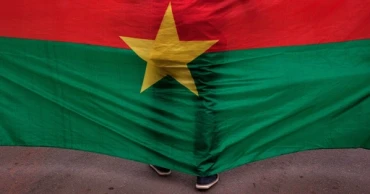
Mali, Burkina Faso ban US citizens in response to Trump travel curbs
Mali and Burkina Faso announced late Tuesday that they will bar United States citizens from entering their countries, in retaliation for US President Donald Trump’s decision to restrict the entry of Malian and Burkinabe nationals into the United States.
The decisions were announced in separate statements by the foreign ministries of the two West African nations, reflecting growing tensions between military-led governments in the region and Washington.
On Dec 16, Trump extended existing US travel restrictions to 20 additional countries, including Mali, Burkina Faso and Niger, all governed by juntas that have withdrawn from the Economic Community of West African States.
Mali’s Foreign Ministry said the move was based on the principle of reciprocity, adding that the government would immediately impose the same conditions and requirements on US citizens as those applied to Malian nationals seeking entry to the United States.
Burkina Faso’s Foreign Minister Karamoko Jean-Marie Traoré issued a similar statement, saying the ban on American nationals was taken for the same reasons.
The White House has cited ongoing attacks by armed groups as one of the grounds for the travel restrictions. Mali and Burkina Faso have faced persistent violence from militant groups, a key factor behind the military coups that brought the current juntas to power after the overthrow of civilian governments amid worsening insecurity.
5 months ago

Zohran Mamdani to take office as New York City welcomes the New Year
Zohran Mamdani is set to assume office as mayor of New York City at the start of 2026, with inauguration events stretching from midnight into New Year’s Day.
The Democratic mayor-elect’s team has arranged two swearing-in ceremonies on Thursday. The first will be a brief, private event with family members shortly after midnight at the historic former City Hall subway station in Manhattan. A larger, public ceremony will follow later in the day, featuring a block party outside City Hall.
It has long been tradition for incoming New York City mayors to mark the start of their term with more than one ceremony, as the new term officially begins with the new year. Outgoing Mayor Eric Adams was initially sworn in at Times Square after the New Year’s Eve ball drop, while former mayor Bill de Blasio took his first oath at his Brooklyn home.
Mamdani’s midnight ceremony will take place at the old City Hall subway station, one of the city’s earliest subway stops, known for its ornate arches and vaulted ceilings. New York Attorney General Letitia James will administer the oath of office.
The station, once the flagship stop of the city’s first subway line, was closed in 1945 and is now largely inaccessible to the public, aside from occasional guided tours.
Mamdani’s office said the location was chosen to reflect his commitment to working people who keep the city running. In a statement, Mamdani said the station symbolised New York’s ambition to build transformative infrastructure that improved the lives of ordinary people—an ambition he said his administration aims to revive.
Later on Thursday afternoon, Mamdani will be sworn in again on the steps of City Hall at a public ceremony scheduled for 1pm. The oath will be administered by US Senator Bernie Sanders, a longtime political inspiration for Mamdani, while US Representative Alexandria Ocasio-Cortez will deliver opening remarks.
The mayor-elect’s inaugural committee includes actor John Turturro, playwright Cole Escola and author Colson Whitehead, along with community advocates, small business owners and campaign workers.
The public ceremony will be accompanied by a block party along Broadway leading to City Hall, with organisers expecting thousands to attend. The event will feature music, performances and interfaith elements, according to Mamdani’s office.
5 months ago
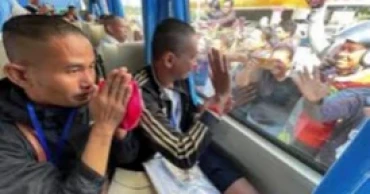
Thailand frees 18 Cambodian POWs under ceasefire deal
Thailand on Wednesday released 18 Cambodian prisoners of war who had been held for five months, in line with a ceasefire agreement aimed at ending prolonged and bitter border clashes between the two neighbours.
The release followed a ceasefire pact signed on Saturday by the defence ministers of Thailand and Cambodia at the same border checkpoint linking Thailand’s Chanthaburi province and Cambodia’s Pailin province, where the handover took place.
Thailand’s Foreign Ministry said the repatriation was carried out as a gesture of goodwill, confidence-building and compliance with international humanitarian norms.
Cambodia’s Defence Ministry welcomed the move, saying it would help foster peace, stability and the full normalisation of relations between the two countries for the benefit of their peoples.
The freeing of the soldiers removes a major obstacle to easing tensions after two rounds of intense fighting over disputed border areas.
Thailand had earlier maintained that detaining the soldiers was permitted under the Geneva Conventions, which allow prisoners of war to be held until hostilities end. Thai authorities said the detainees were granted access to the International Committee of the Red Cross and other protections under international humanitarian law.
Cambodia, however, had used the continued detention of the soldiers to galvanise domestic support amid the standoff with Thailand.
In a statement on Wednesday, Cambodia’s defence ministry said the government had honoured its pledge to the families of the captured soldiers and the nation that no servicemember would be left behind.
Under the ceasefire terms, the prisoners were to be released if fighting ceased for 72 hours after the agreement took effect at noon on Saturday. While that period ended on Tuesday, Thai officials said additional time was needed to assess the situation, citing reports of Cambodian drone activity along the border.
The two sides have offered conflicting versions of how the soldiers were captured on the day an earlier ceasefire took effect in late July. Cambodian officials said their troops approached Thai positions peacefully to exchange post-conflict greetings, while Thai authorities claimed the soldiers entered territory Thailand considers its own with hostile intent.
Initially, 20 Cambodian soldiers were taken captive, though two were released within days on medical grounds.
The July ceasefire was mediated by Malaysia and reinforced by pressure from then US President Donald Trump, who threatened to suspend trade benefits unless both sides agreed. A more detailed agreement was finalised in October during a regional meeting in Malaysia attended by Trump.
Despite those efforts, tensions persisted, with propaganda exchanges and sporadic clashes continuing before escalating into heavy fighting in early December.
Since December 7, Thailand has reported the deaths of 26 soldiers and one civilian due to the fighting, along with 44 civilian fatalities, according to officials.
5 months ago
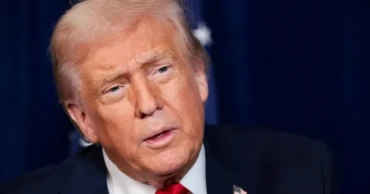
Trump urges Hamas disarmament, hopes for quick phase two of Gaza ceasefire
US President Donald Trump on Monday said he hopes to reach the second phase of the Gaza peace plan “very quickly” and warned Hamas of “hell to pay” if it does not disarm soon.
Trump made the remarks during a press conference with Israeli Prime Minister Benjamin Netanyahu in Florida. He said Israel has “lived up to the plan 100%” despite ongoing military actions in Gaza.
The Gaza ceasefire, which began in October, envisions a technocratic government in Gaza, disarmament of Hamas, withdrawal of Israeli troops, and reconstruction of the territory. Trump said reconstruction could “begin pretty soon.”
Trump also warned Iran that the US could carry out further strikes if the country resumes its ballistic missile or nuclear weapons programmes. Iran’s top adviser, Ali Shamkhani, responded that any aggression would receive an “immediate harsh response.”
Trump said the focus now is on ensuring Hamas disarms “in a fairly short period of time” so that the peace plan can progress. He stressed that Israel is following the plan and expressed concern mainly about the actions of other parties.
The leaders also discussed regional tensions, including Syria and Lebanon’s Hezbollah group. Trump said he hopes Israel can maintain peaceful borders with Syria under its new leadership.
Since the ceasefire began, at least 414 Palestinians have been killed by Israeli military operations in Gaza, while Israel has reported three soldier deaths during the same period.
With inputs from BBC
5 months ago
China expands joint military exercises near Taiwan
For the second consecutive day, China on Tuesday carried out joint live-fire military exercises around Taiwan, deploying air, naval, and missile forces in what Beijing described as a “strong warning” to pro-independence groups and what it called foreign interference. Taiwan responded by placing its military on heightened alert and accused China of being “the greatest threat to regional peace.”
Taiwanese aviation officials said the drills disrupted air traffic, affecting more than 100,000 international passengers because of flight cancellations and rerouting.
The exercises, named “Justice Mission 2025,” followed China’s anger over a potential record-breaking U.S. weapons sale to Taiwan and comments by Japanese Prime Minister Sanae Takaichi suggesting Japan’s military might become involved if China moved against the island. Beijing insists Taiwan is part of China and must eventually be unified.
Although China’s military did not directly mention the United States or Japan in its initial statement, the foreign ministry accused Taiwan’s ruling party of pushing independence by relying on U.S. backing. On Tuesday, China’s state-run Xinhua News Agency quoted a government spokesperson saying such efforts were “destined to fail.”
Zhang Xiaogang, a spokesperson for China’s Defense Ministry, urged other countries to abandon what he called the illusion of using Taiwan to restrain China and warned against challenging Beijing’s determination to protect its core interests.
Taiwan’s Defense Ministry said it had launched rapid-response drills and placed forces on high readiness, stating that the Chinese Communist Party’s actions once again demonstrated its aggressive nature and role in destabilizing peace.
U.S. President Donald Trump said he had not been informed ahead of time about the exercises but expressed little concern, noting that China has conducted naval drills in the region for decades. He emphasized his “strong relationship” with Chinese President Xi Jinping and said he did not believe Xi intended to attack Taiwan.
Military pressure intensifiesChina regularly sends military aircraft and ships near Taiwan, and the scale and intensity of such operations have grown in recent years.
Senior Col. Shi Yi, spokesperson for the People’s Liberation Army’s Eastern Theater Command, said the drills were taking place in the Taiwan Strait and in surrounding waters to the north, south, east, and west of the island. He said the exercises focused on combat readiness patrols, gaining overall control in joint operations, and simulating blockades of key ports.
For the first time in a major drill, China openly stated that one objective was “full-spectrum deterrence beyond the island chain.” Shi described the operation as a necessary and legitimate measure to defend China’s sovereignty and national unity.
China and Taiwan have been governed separately since 1949, when Communist forces won China’s civil war and Nationalist troops retreated to Taiwan. Although Taiwan has operated with its own government ever since, Beijing continues to claim it as Chinese territory.
Testing military capabilitiesOn Monday, China deployed destroyers, frigates, fighter jets, bombers, drones, and long-range rocket systems in and around the Taiwan Strait. Live-fire drills targeted areas at sea, while training exercises tested coordination between air and naval forces and precision strike capabilities east of the strait.
According to Hsieh Jih-sheng, Taiwan’s deputy chief of general staff for intelligence, by mid-afternoon Monday, 89 Chinese aircraft and drones were operating nearby, with 67 entering Taiwan’s monitored response zone. Taiwan also detected 14 Chinese naval vessels in the strait, four warships in the western Pacific, and 14 coast guard ships.
Hsieh warned that the live-fire drills not only increased military pressure on Taiwan but also posed broader risks to neighboring countries and the international community.
China notified aviation authorities that seven temporary danger zones would be established for rocket launches from 8 a.m. to 6 p.m., restricting airspace access. Taiwan said more than 850 international flights and over 80 domestic flights were affected, disrupting travel for more than 106,000 passengers.
Airlines announced widespread delays and cancellations, particularly on routes serving islands close to China.
China’s military also released promotional images online featuring military aircraft, warships, and symbolic imagery, accompanied by messages warning that any foreign forces or separatists challenging China would be crushed.
Broader political tensionsLast week, China imposed sanctions on 20 U.S. defense companies and 10 executives after Washington announced plans for arms sales to Taiwan exceeding $10 billion, pending congressional approval.
Under long-standing U.S. law, Washington is required to help Taiwan maintain its defensive capabilities, an issue that continues to strain U.S.-China relations. The U.S. ended formal diplomatic ties with Taiwan in 1979 after recognizing Beijing.
Taiwan’s presidential office spokesperson Karen Kuo said the drills threatened stability in the Taiwan Strait and the wider Indo-Pacific region, accusing China of violating international norms and using military intimidation.
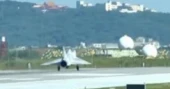
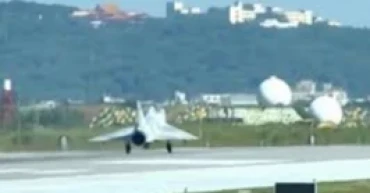
Taiwan’s Defense Ministry released footage showing its forces and weapons, including French-made Mirage 2000 fighter jets landing at an air base, as a show of readiness.
The tensions come as Taiwan accelerates plans to build a multilayered air defense system known as the “Taiwan Shield” or “T-Dome” to counter growing military threats.
The escalation followed comments by Taipei Mayor Chiang Wan-an, who said during a visit to Shanghai that he hoped the Taiwan Strait would be known for peace and prosperity rather than conflict.
5 months ago
Iran Central Bank governor resigns amid protests
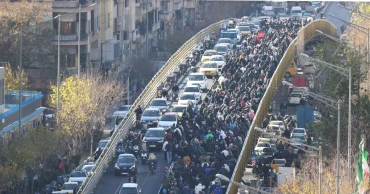
The head of Iran's Central Bank resigned Monday as protests erupted in Tehran and several other cities after the country’s currency plummeted to a new record low against the U.S. dollar.
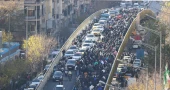
The resignation of Mohammad Reza Farzin was reported by state TV, as hundreds of traders and shopkeepers rallied in Saadi Street in downtown Tehran as well as in the Shush neighborhood near Tehran's main Grand Bazaar. Merchants at the market played a crucial role in the 1979 Islamic Revolution that ousted the monarchy and brought Islamists to power.
The official IRNA news agency confirmed protest gatherings. Witnesses reported similar rallies in other major cities including Isfahan in central Iran, Shiraz in the south and Mashhad in the northeast. In some places in Tehran, police fired tear gas to disperse protesters.
Witnesses told The Associated Press that traders shut their shops and asked others to do the same. The semiofficial ILNA news agency said many businesses stopped trading even though some kept their shops open.
On Sunday, protests were limited to two major mobile market in downtown Tehran, where the demonstrators chanted anti-government slogans.
Iran's rial on Sunday plunged to 1.42 million to the dollar. On Monday, it traded at 1.38 million rials to the dollar.
Reports about Farzin's possible resignation had been circulating over the past week. When he took office in 2022, the rial was trading at around 430,000 to the dollar.
The rapid depreciation is compounding inflationary pressure, pushing up prices of food and other daily necessities and further straining household budgets, a trend that could worsen by a gasoline price change introduced in recent days.
According to the state statistics center, inflation rate in December rose to 42.2% from the same period last year, and is 1.8% higher than in November. Foodstuff prices rose 72% and health and medical items were up 50% from December last year, according to the statistics center. Many critics see the rate a sign of an approaching hyperinflation.
Reports in official Iranian media that the government plans to increase taxes in the Iranian new year that begins March 21 have caused more concern.
Iran’s currency was trading at 32,000 rials to the dollar at the time of the 2015 nuclear accord that lifted international sanctions in exchange for tight controls on Iran’s nuclear program. That deal unraveled after U.S. President Donald Trump unilaterally withdrew the United States from it in 2018. There is also uncertainty over the risk of renewed conflict following June’s 12-day war involving Iran and Israel. Many Iranians also fear the possibility of a broader confrontation that could draw in the United States, adding to market anxiety.
In September, the United Nations reimposed nuclear-related sanctions on Iran through what diplomats described as the “snapback” mechanism. Those measures once again froze Iranian assets abroad, halted arms transactions with Tehran and imposed penalties tied to Iran’s ballistic missile program.
5 months ago
Trump, Netanyahu to meet as Gaza ceasefire faces critical phase
President Donald Trump is set to hold talks with Israeli Prime Minister Benjamin Netanyahu on Monday in Florida, as Washington seeks to inject new momentum into a US-brokered Gaza ceasefire that risks stalling ahead of a complex second phase.
The meeting at Trump’s Mar-a-Lago estate comes as the ceasefire between Israel and Hamas, strongly backed by Trump, has largely held but has recently slowed amid mutual accusations of violations and growing disagreements over the next steps.
Trump is expected to use his close relationship with Netanyahu to push for faster progress, amid criticism that the Israeli leader has not moved decisively enough to advance the process.
The truce’s first phase began in October, days after the second anniversary of the Hamas-led attack on Israel that killed about 1,200 people. Nearly all of the 251 hostages taken during that attack have since been released, either alive or dead.
Attention is now turning to the far more challenging second phase, outlined in Trump’s 20-point peace plan that has been approved by the UN Security Council. The plan envisions ending Hamas’ rule in Gaza and includes rebuilding the territory under international supervision.
The two leaders are also expected to discuss other regional issues, including Iran. Trump has continued to insist that Iran’s nuclear capabilities were “completely and fully obliterated” following US strikes in June.
Analysts say significant gaps remain. Mona Yacoubian of the Center for Strategic and International Studies said many elements of the second phase are opposed by Netanyahu, making agreement difficult.
“How he does that, what kind of pressure he puts on Netanyahu, I think, is going to be important to watch for,” she said, adding that the talks could reveal broader differences in their regional approaches.
US mediation efforts have continued in parallel. Recently, US Middle East envoy Steve Witkoff and Trump’s son-in-law Jared Kushner met in Florida with officials from Egypt, Qatar and Turkey, which have been key mediators.
According to officials briefed on those discussions, progress has been hampered by Israeli delays in approving members of a proposed Palestinian technocratic committee to administer Gaza and by continued Israeli military strikes.
A central but unresolved element is the proposed International Stabilization Force, a multinational body meant to oversee security and help disarm Hamas. Disagreements persist over its mandate, with some countries fearing it could effectively become an occupation force.
Hamas has said it is open to discussing “freezing or storing” its weapons but maintains its right to armed resistance as long as Israel occupies Palestinian territory. US officials have floated possible incentives, including financial compensation, in exchange for weapons.
Reconstruction of Gaza remains another major challenge. Arab states, including Egypt, Qatar, Saudi Arabia and Turkey, are pressing for further Israeli withdrawal and a negotiated approach to disarmament before moving ahead with rebuilding efforts.
The meeting between Trump and Netanyahu is being closely watched for signs of whether these obstacles can be overcome, or whether the fragile ceasefire will struggle to move beyond its initial phase.
5 months ago

Six IS militants, three police killed in clash in northwest Turkey
A clash between Islamic State militants and Turkish police in northwest Turkey on Monday left six militants and three police officers dead, Interior Minister Ali Yerlikaya said.
The shootout took place in the Elmali district of Yalova province, south of Istanbul, when police raided a house where the militants were hiding. At least eight other police officers and a night guard were wounded in the operation.
Special forces units from neighboring Bursa province were sent to support the raid, the minister said.
Yerlikaya said the Yalova operation was part of more than 100 simultaneous raids carried out against suspected IS members across 15 provinces in Turkey.
He said the operation was conducted with “great care” as women and children were inside the house. Five women and six children were safely evacuated, he added, noting that all the militants involved were Turkish nationals.
The operation began around 2 am local time and was officially concluded at 9:40 am, the minister said.
The Yalova Chief Public Prosecutor’s Office has launched an investigation, assigning five prosecutors to the case, Justice Minister Yilmaz Tunc said in a post on X. He said five people were taken into custody as part of the probe, without providing further details.
President Recep Tayyip Erdogan expressed condolences for the slain police officers and vowed to continue the fight against extremist groups.
“We will continue our fight against the blood-stained killers who threaten our nation’s peace and our state’s security, both within our borders and beyond, with determination and without compromise,” Erdogan said in a statement.
As the confrontation spilled into surrounding streets, five schools in the area were closed for the day, local media reported. Authorities also cut off gas and electricity supplies as a precaution and restricted civilian access to the neighborhood.
Last week, Turkish police detained 115 suspected IS militants in nationwide raids over alleged plans to carry out attacks during Christmas and New Year celebrations.
IS has carried out several deadly attacks in Turkey in recent years, including a mass shooting at an Istanbul nightclub during New Year celebrations in 2017 that killed 39 people.
5 months ago