others
Azerbaijan withdraws diplomats as Iran drone attack sparks tensions
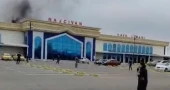
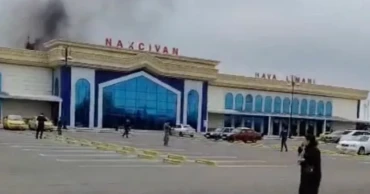
Azerbaijan has pulled its diplomatic staff from Iran following an alleged drone strike on its Nakhchivan exclave, heightening regional tensions as the Middle East conflict spreads north.
The drones reportedly targeted the airport, a school, and other locations, causing civilian injuries. One drone was shot down by Azerbaijani forces. President Ilham Aliyev condemned the attacks as an “act of terror” and demanded an explanation and apology from Tehran.
Aliyev announced the withdrawal of staff from Azerbaijan’s embassy in Tehran and its consulate in Tabriz “for their own safety,” and declared that the military has been placed on maximum combat readiness. The president also referenced Iran’s ethnic Azerbaijani population, signalling concerns over regional stability.
Iran has denied responsibility for the strikes, suggesting the attacks may have been an Israeli false-flag operation. Analysts note that Nakhchivan’s strategic location bordering Iran, Turkey, and Armenia makes it particularly vulnerable during regional conflicts.
The escalation comes amid rising mistrust between Baku and Tehran, fueled by Azerbaijan’s defense partnerships with Israel, historic tensions over Armenia, and Iran’s domestic treatment of its ethnic Azerbaijani minority. Azerbaijan has also highlighted that its close ties with Israel include intelligence and energy cooperation, further straining relations with Tehran.
Despite the attack, Aliyev stressed that Azerbaijan “will not participate” in military operations against Iran, while warning that threats to its territory could have broader regional consequences. The incident underscores the widening impact of the Middle East war and its potential to destabilise neighbouring countries and energy routes.
With inputs froom BBC
6 hours ago

Four arrested in UK over suspected links to Iran intelligence
British police have arrested four men on suspicion of assisting Iran’s intelligence service as part of a counter-terrorism investigation, authorities said.
The Metropolitan Police said one Iranian national and three dual British-Iranian nationals were detained in connection with suspected surveillance of locations and individuals linked to Jewish communities in London.
Commander Helen Flanagan, head of Counter Terrorism Policing London, said the arrests were part of a long-running investigation aimed at disrupting suspected hostile activities. She urged the public, particularly members of the Jewish community, to remain vigilant and report any suspicious activity to police.
According to police, a 40-year-old and a 55-year-old were arrested at addresses in Barnet, a 52-year-old in Watford and a 22-year-old in Harrow. Searches are continuing in Watford, Barnet and an address in Wembley.
The four men were detained under the National Security Act, introduced in 2023 to strengthen laws against espionage and foreign interference.
In a separate development, six other men aged 20 to 49 were arrested at the same location in Harrow on suspicion of assisting an offender. All 10 suspects are currently in police custody.
Home Secretary Shabana Mahmood said Britain’s police and security services would take strong action against any threat to the country.
Deputy Prime Minister David Lammy said Iran remains a major state sponsor of terrorism and warned that its activities could also affect British society. He praised intelligence agencies and counter-terrorism police for preventing potential threats.
The Community Security Trust, a charity that works to protect the Jewish community in Britain, thanked police and said security measures across Jewish institutions remain strong.
With inputs from BBC
8 hours ago

Gulf allies upset over lack of US warning before Iran war attacks
Several Gulf allies have expressed frustration with the United States over the ongoing conflict with Iran, saying they were not given enough warning before attacks that triggered retaliatory strikes across the region.
Officials from two Gulf countries said their governments were disappointed that Washington did not inform them in advance about the Feb 28 strikes on Iran carried out by the US and Israel. They also said their earlier warnings that the conflict could destabilise the entire region were ignored.
According to the officials, the Iranian retaliation with drones and missiles has left Gulf countries exposed and struggling to defend themselves.
One official said many in the region believe the US military has focused mainly on protecting Israel and American troops, while Gulf states were left to defend their own territories. He added that interceptor missile stocks in his country were running low.
The officials spoke on condition of anonymity as the matter involves sensitive diplomatic discussions.
Public responses from governments of Bahrain, Kuwait, Oman, Qatar, Saudi Arabia and the United Arab Emirates have remained limited, though some public figures close to those governments have criticised Washington’s approach.
Former Saudi intelligence chief Prince Turki al-Faisal told CNN that the conflict appeared to be driven largely by Israel, suggesting Israeli Prime Minister Benjamin Netanyahu persuaded US President Donald Trump to support the war.
The conflict has widened across the Gulf region, which lies within range of Iran’s short-range missiles and hosts major oil facilities, tourist centres and US military bases.
According to an Associated Press tally based on official statements, Iran has fired at least 380 missiles and more than 1,480 drones targeting five Arab Gulf countries since the start of the war. Local officials say at least 13 people have been killed.
Six US soldiers were also killed in Kuwait on Sunday when an Iranian drone struck an operations centre at a civilian port.
US defence officials have acknowledged difficulties in intercepting large numbers of Iranian drones, particularly the Shahed models, during briefings with lawmakers this week.
Analysts say Washington may have underestimated the risks faced by Gulf allies, believing Iran would mainly target US forces and Israel.
Experts also warn that Gulf countries are concerned about the economic damage and instability caused by the war, as well as uncertainty over how long the conflict could continue.
9 hours ago
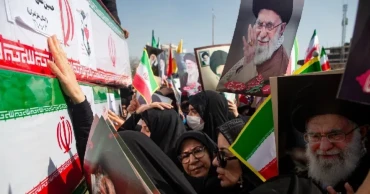
Trump wants role in choosing Iran’s next supreme leader
US President Donald Trump has said he wants to be involved in selecting Iran’s next supreme leader as the war involving the United States, Israel and Iran entered its sixth day, with the conflict spreading across the Middle East.
In an interview with the news website Axios, Trump dismissed Mojtaba Khamenei, the son of slain Iranian leader Ayatollah Ali Khamenei, as a potential successor. Mojtaba Khamenei has been seen as a leading contender to replace his father, who was killed during the opening wave of US-Israeli strikes on Iran.
Trump described the 56-year-old cleric as “a lightweight” and said Washington wants a leader who would bring stability to Iran.
“We want someone that will bring harmony and peace to Iran,” Trump said, adding that he hoped to be involved in the appointment process “like with Delcy in Venezuela,” referring to Delcy Rodríguez, who assumed leadership there following a US-backed operation earlier this year that led to the detention of President Nicolás Maduro.
Trump’s remarks are likely to intensify speculation about whether Washington and Israel ultimately seek regime change in Iran or simply a shift in Tehran’s policies.
Meanwhile, the conflict continued to widen, affecting at least 14 countries across the region and beyond. Iran continued launching missile and drone attacks against Israel, US military installations and other targets in the Middle East, while American and Israeli forces carried out widespread airstrikes across Iran targeting military facilities, leadership figures and parts of the country’s nuclear programme.
Casualties from the war have continued to rise. Officials say at least 1,230 people have been killed in Iran, more than 100 in Lebanon and about a dozen in Israel. Six US service members have also been killed.
Iran’s retaliation has also disrupted oil supplies and international air travel, while several neighbouring Arab countries reported attacks or interceptions of missiles and drones.
Iranian Foreign Minister Abbas Araghchi accused the US Navy of committing an “atrocity at sea” after an Iranian warship, the IRIS Dena, was sunk earlier in the week in the Indian Ocean, killing at least 87 crew members. The vessel had been returning from naval exercises hosted by India and also attended by the United States.
Araghchi warned that Washington would “bitterly regret” the incident. Sri Lankan authorities said 32 sailors had been rescued from the vessel.
Amid rising tensions, an Iranian cleric, Ayatollah Abdollah Javadi Amoli, called on state television for violence against Israel and Trump — a rare statement from a senior Shiite cleric.
The regional conflict has also intensified militarily. Israel reported fresh missile attacks targeting Tel Aviv and Jerusalem, while its forces launched strikes on Iranian ballistic missile launch sites.
In the United Arab Emirates, a drone was intercepted near Al Dhafra Air Base, which hosts US forces, leaving six people injured by falling debris. Qatar evacuated residents near the US Embassy in Doha as a precaution and later reported a missile attack on the city.
Saudi Arabia said it destroyed a drone near its border with Jordan, while Bahrain reported that an Iranian missile struck a state-run oil refinery, triggering a fire that was later extinguished without casualties. Bahraini authorities said their forces have intercepted dozens of Iranian missiles and drones since the conflict began.
Azerbaijan also accused Iran of launching drone attacks after one drone crashed near the airport in the Nakhchivan region and another fell close to a school, injuring four airport workers. President Ilham Aliyev described the incident as an act of aggression and said his country was preparing retaliatory measures. Iran denied launching drones toward Azerbaijan.
The war has also disrupted shipping routes in the Gulf of Oman and the Strait of Hormuz, a critical global oil transit route, pushing oil prices higher.
As tensions expanded further, Israel issued a mass evacuation warning to residents of Beirut’s southern suburbs, signalling the possibility of large-scale bombardment against Hezbollah positions.
The Israeli military said it had struck several Hezbollah command centres in the area. UN peacekeepers reported clashes, including ground combat, in southern Lebanon as Israeli forces moved deeper across the border.
UNIFIL spokesperson Tilak Pokharel said peacekeepers observed ground fighting near the border village of Kfar Kila and witnessed airstrikes, flares and explosions in nearby towns overnight as the conflict continued to escalate.
1 day ago
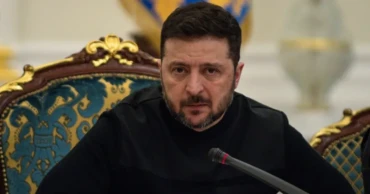
US seeks Ukraine help against Iranian drones
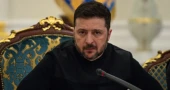
The United States has asked Ukraine to help Gulf allies defend against Iranian drones, Ukrainian President Volodymyr Zelensky said, as tensions in the Middle East raise concerns about wider security risks.
Zelensky said several partners have contacted Kyiv seeking support, including requests from the American side. The Pentagon has not commented on the claim.
He said Ukraine is willing to assist but only if the support does not weaken its own defence against Russia. Zelensky also suggested a possible exchange in which Ukraine could provide interceptor drones in return for more US Patriot air defence systems to counter Russian ballistic missiles.
The Middle East conflict has raised fears that Ukraine could face reduced attention and support from allies if global focus shifts to the new crisis.
There are also concerns that the war could increase oil prices, which would benefit Russia by boosting revenues that fund its military operations.
Despite these risks, Zelensky appears eager to use the situation to strengthen Ukraine’s diplomatic and military position. He said Kyiv has been in contact with leaders in the United Arab Emirates, Qatar, Bahrain, Jordan and Kuwait about helping defend their military bases and civilian infrastructure from drone attacks.
Ukraine has extensive experience dealing with Iranian-designed Shahed drones used by Russian forces. These one way attack drones are difficult to intercept without proper equipment and training.
“It is clear what their main request to Ukraine is,” Zelensky said on social media, noting that countries facing Iranian drone attacks need expertise and effective defence systems.
Ukraine may hope that helping US partners in the Gulf will improve relations with Washington and build stronger ties with Arab states, some of which have maintained close relations with Russia.
Delegations from several Gulf countries have already arrived in Kyiv for discussions on possible cooperation.
Zelensky also warned that the Middle East conflict has led to heavy use of Patriot interceptor missiles. He said around 800 Patriot PAC-3 missiles had been used in recent days, more than Ukraine has received during the entire war.
He suggested Ukraine could transfer some drone interceptors to partners if it receives additional Patriot missiles to fill its own shortages.
Ukraine’s defence industry says it could increase production of interceptor drones to about 10,000 per month. However, officials say any decision to export such systems would require approval from the country’s top leadership.
Experts also warn that providing equipment alone may not be enough, as foreign partners would require extensive training to use advanced air defence systems effectively.
With inputs from BBC
1 day ago

Who is Jiang Xueqin? ‘China’s Nostradamus’ goes viral for Trump prediction
A lecture by Jiang Xueqin has recently gone viral online after several of his geopolitical predictions appeared to align with current global developments.
Jiang, a Chinese-Canadian professor of philosophy and history educated at Yale University and currently teaching in Beijing, has drawn widespread attention on social media, where some users have dubbed him “China’s Nostradamus.”
His growing popularity is also linked to his YouTube channel, Predictive History, which has gained more than 1.5 million subscribers for its analysis of global political trends and forecasts.
Jiang’s predictions are based on historical patterns, game theory and geopolitical incentives, an approach inspired by the concept of “psychohistory” introduced by science fiction writer Isaac Asimov.
A lecture he posted in May 2024 has recently resurfaced and attracted significant attention online. In that lecture, Jiang made three key predictions. He suggested that Donald Trump would return to power and warned that a second Trump administration could lead to a major confrontation with Iran.
With those two developments now widely debated in political circles, attention has turned to Jiang’s third prediction — that the United States could ultimately lose in a prolonged escalation with Iran.
To explain his view, Jiang compared a potential US military campaign against Iran to the Sicilian Expedition, an ambitious military operation launched by ancient Athens that ended in disaster.
According to Jiang, Iran’s mountainous terrain, large population and strong domestic resistance would make any long-term military occupation extremely difficult.
Speaking recently on the US political program Breaking Points, Jiang also said Iran has spent decades preparing for such a confrontation.
He argued that Iran and allied groups, including the Hezbollah, Hamas and the Houthis, have studied American and Israeli military strategies over the years, he reports Times of India.
Jiang believes the conflict, if it intensifies, would likely become a prolonged war of attrition aimed at gradually weakening US influence in the region.
While it remains uncertain whether his final prediction will materialise, Jiang said any prolonged confrontation could have far-reaching consequences, potentially reshaping the global political landscape.
1 day ago
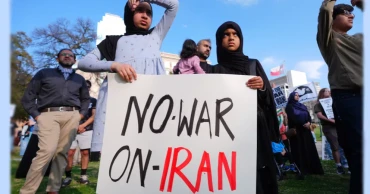
US-Israel-Iran conflict deepens, spreading tensions and fuel concerns globally
As the US-Israel conflict with Iran entered its sixth day on Thursday, tensions have intensified and begun to spread across the Middle East and beyond, with significant implications for countries heavily dependent on imported fuel.
The war has killed more than 1,000 people in Iran, more than 50 in Lebanon and around a dozen in Israel, according to officials in those countries.
The escalating hostilities have disrupted key energy routes, driven up global oil prices and heightened economic uncertainty in regions reliant on Middle Eastern energy supplies.
The ongoing violence has also raised fears of broader regional instability, particularly affecting oil transit through the Strait of Hormuz, a crucial chokepoint for nearly one-fifth of the world’s crude shipments.
Global stock markets have been hammered amid worries that the spike in oil prices may grind down the world economy. US stocks appeared steadier at Wednesday’s opening.
Bangladeshi economist Professor Selim Raihan has warned that the country faces a significant risk of sudden uncertainty if the conflict in the Middle East expands further.
In a Facebook post on Wednesday, Raihan said the situation became more alarming after Iran on Monday declared the closure of the Strait of Hormuz, triggering sharp volatility in the global energy market.
“Tehran has reportedly warned that its Revolutionary Guard and navy would take strict action against any vessel attempting to cross the strategic waterway.”
He said that a substantial share of the world’s crude oil and liquefied natural gas (LNG) shipments passes through the Strait of Hormuz.
“Any disruption to shipping along this route could cause major interruptions in global energy supply, with immediate consequences for import-dependent economies such as Bangladesh.”
Seeking an early resolution to the ongoing crisis in the Middle East, Bangladesh on Wednesday conveyed to the US that it is difficult for a country like Bangladesh to bear the economic impact of this war if it lasts longer and spreads further.
“We have discussed the crisis in the Middle East. I told him (US Assistant Secretary S Paul Kapur) that two of our Bangladeshis have lost lives and seven others have been injured. If this war is prolonged or spreads, this fear may increase further,” Foreign Minister Dr Khalilur Rahman told reporters at the Ministry of Foreign Affairs after his meeting with the US top diplomat.
Meanwhile, a torpedo fired by a US submarine sank an Iranian warship off the coast of Sri Lanka. The Sri Lankan navy said on Wednesday that it had recovered 87 bodies and rescued 32 people.
The Iranian vessel sunk in the Indian Ocean was the Islamic Republic’s “prize ship”, US Defence Secretary Pete Hegseth said. It was one of the few instances of a submarine sinking a ship since the Second World War.
The sinking of the IRIS Dena illustrates a US-Israeli military operation against Iran that is stretching beyond its borders.
War affects tens of thousands of flights
Over 20,000 of the more than 36,000 flights scheduled to fly to or from the Middle East between Saturday’s start of the war and Wednesday have been cancelled, according to aviation analytics firm Cirium.
How sport is being disrupted by the war
The war against Iran launched by the United States and Israel — and Iran's retaliation — has had a considerable impact on sport.
The US-Israel war with Iran has caused many sporting events in the region to be postponed. The conflict is also affecting other events farther afield, largely by forcing changes to travel arrangements. Some questions cannot yet be answered.
Iranian women kick off Women's Asian Cup campaign
The 2026 AFC Women’s Asian Cup kicked off on Sunday — a day after the US and Israel began launching airstrikes on Iran — but far from the conflict, in Australia. On Day 2 of the tournament, on Monday, all eyes were on the Iranian team, one of 12 taking part in the Women’s Asian Cup. The Iranian women did not sing the national anthem. South Korea dominated the football match from the outset, as might have been expected given that they sit 21st in the FIFA women’s rankings, well above Iran at 68th. South Korea won comfortably 3–0.
Men's football World Cup: Will Iran participate?
Even as the women were playing their opening match at the Women’s Asian Cup, the big question on football fans’ minds around the world is whether the Iranian men will do the same at this summer’s World Cup.
Iran’s group matches are all scheduled to be held in the United States, with two matches in Los Angeles and one in Seattle.
The president of Iran’s FA now says he cannot yet confirm whether the team will take part.
Iraq’s World Cup qualifying impacted by the war
Iraq’s hopes of World Cup qualification are being affected by the Iran war because embassy and airspace closures are preventing players from obtaining visas for the play-off tournament in Mexico.
The Iraqi football federation says it is communicating with FIFA about its match against Bolivia or Suriname in Monterrey, Mexico, on 31 March.
The federation wrote in a social media post that its coach, Graham Arnold, is unable to leave the United Arab Emirates, and several players and staff members are experiencing difficulties obtaining visas.
Iraq and the UAE have been floated as potential replacements for Iran’s team — which has already qualified — should the Iranians not participate in the World Cup.
Hegseth says war with Iran could last 8 weeks
U.S. Defence Secretary Peter Brian Hegseth says the timeline could extend further than previously speculated.
“You can say four weeks, but it could be six, it could be eight, it could be three,” he said. “Ultimately, we set the pace and the tempo.”
# With inputs from agencies
2 days ago
Iranian navy ship sinks off Sri Lanka; around 140 missing amid escalating Middle East conflict
Around 140 people are feared missing after an Iranian navy ship sank off the coast of Sri Lanka early Wednesday, as tensions across the Middle East continued to intensify with fresh strikes, missile interceptions and evacuation efforts.
Sri Lanka’s navy said it rescued 32 people after receiving a distress call from the Iranian vessel ‘IRIS Dena’. Navy spokesman Budhika Sampath said the ship went down about 40 nautical miles off the coast, within Sri Lanka’s search and rescue region.
“Though it was beyond our waters, it was within our search and rescue region. So we were obliged to respond as per international obligations,” he said.
According to ship documents, around 180 people were believed to be on board. Officials said they saw oil patches and floating lifeboats at the scene, but no sign of the vessel itself. The cause of the sinking remains unknown, and Sri Lankan authorities rejected reports suggesting a submarine attack.
The incident comes as the conflict involving Iran, Israel and the United States entered its fifth day, with violence spreading across several countries.
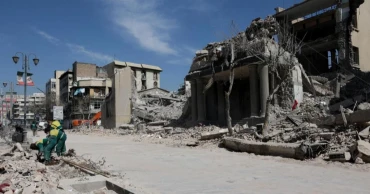
Israel said it had launched a new wave of strikes across Tehran, targeting what it described as “security headquarters” and regime infrastructure. Images from the Iranian capital showed several buildings reduced to rubble. Residents described fear and exhaustion amid repeated explosions.
A planned three-day state funeral for Iran’s late Supreme Leader Ayatollah Ali Khamenei, reportedly killed in an Israeli strike on Saturday, has been postponed, according to Iranian state media. Speculation is growing over his successor, with reports saying his son Mojtaba Khamenei survived recent attacks.
In Lebanon, Israel ordered civilians south of the Litani River to evacuate immediately ahead of military action against Hezbollah. Strikes were also reported in Beirut’s outskirts, including damage to a hotel in Hazmieh. The Israeli military said it was targeting Hezbollah operatives and facilities.
Elsewhere, Saudi Arabia reported an attempted drone attack on the Ras Tanura oil refinery, believed to be the kingdom’s largest. The Saudi defence ministry said the drone caused no damage.
Kuwait said it was intercepting a wave of missiles and drones, while Turkey’s defence ministry said Nato air defences shot down an Iranian missile heading towards Turkish airspace. No casualties were reported.
The UK Maritime Trade Operations also reported that a container ship was struck by an “unknown projectile” in the Strait of Hormuz, causing a fire in its engine room. No environmental damage was reported and investigations are ongoing.
Amid significant flight disruptions, countries are working to evacuate their nationals from the region. The UK confirmed that a repatriation flight from Muscat, Oman, is scheduled to depart at 23:00 local time.
As missile exchanges and airstrikes continue across Iran, Lebanon and neighbouring states, fears are mounting that the conflict could widen further across the region.
With inputs from BBC
2 days ago
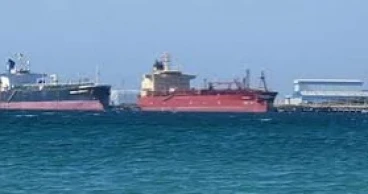
Iran war rattles global shipping and air cargo networks beyond oil
The ongoing war involving Iran has not only brought oil tanker traffic through the Strait of Hormuz to a near standstill, but is also straining broader global supply chains, disrupting the movement of goods ranging from Indian pharmaceuticals and Asian semiconductors to fertilizers and petrochemical products from the Middle East.
Cargo vessels are either stranded inside the Gulf or rerouting around Africa’s Cape of Good Hope, adding time and cost to deliveries. Meanwhile, air cargo operations across parts of the Middle East have been curtailed, raising concerns about shortages and rising prices if the conflict persists.
Patrick Penfield, a supply chain expert at Syracuse University, warned that prolonged instability would likely trigger supply shortfalls and significant price hikes worldwide.
Shipping bottlenecks spreadAccording to Clarksons Research, roughly 3,200 vessels — about 4% of global shipping tonnage — are currently idle inside the Persian Gulf, though many operate only regionally. Another 500 ships are reportedly waiting outside the Gulf near ports in the United Arab Emirates and Oman.
While the share may appear limited, industry experts caution that disruptions at key chokepoints can ripple through the global logistics network. Michael Goldman of CARU Containers compared the supply chain to a train, where a derailment in one segment can affect multiple links along the route.
In response to the crisis, U.S. President Donald Trump announced measures aimed at restoring tanker traffic through the Strait of Hormuz. He said the U.S. International Development Finance Corp. would offer political risk insurance for ships transiting the Gulf and indicated the U.S. Navy could escort tankers if needed. The Navy maintains multiple destroyers and littoral combat ships in the region.
Key goods face delaysBeyond oil — roughly 20% of which transits the region — the Middle East is a major exporter of natural gas–based products such as petrochemical feedstock and nitrogen fertilizer. In addition, pharmaceuticals from India and electronics, batteries and semiconductors from Asia often pass through the region, leaving them vulnerable to delays.
Instability has also affected the Red Sea and the Suez Canal, routes already strained by previous Houthi attacks. Shipping giant Maersk said it is diverting vessels around southern Africa to avoid risk, a decision that can extend voyages by up to two weeks and add around $1 million in fuel costs per trip.
Higher fuel prices, longer transit times and war-risk surcharges are driving up shipping expenses, which are expected to filter down to consumers.
Air freight capacity squeezedAir cargo networks have also been hit. Airspace closures and airport shutdowns in countries including the United Arab Emirates, Qatar, Bahrain, Kuwait, Iraq and Iran have grounded flights, affecting both passengers and freight.
Middle Eastern carriers such as Emirates, Qatar Airways and Etihad Airways operate significant cargo fleets and also transport goods in passenger aircraft holds. Although air freight accounts for less than 1% of global shipping volume, it represents about 35% of global trade value, according to Boeing, due to the high-value or time-sensitive nature of the goods transported — including medicines, electronics and fresh produce.
Industry analysts say extended airport closures could have serious economic consequences, particularly for countries like India, a major exporter of pharmaceuticals. Rerouted flights, longer travel times and additional fuel stops are likely to increase costs.
Maersk said it expects air freight rates to climb due to reduced capacity and added surcharges, including possible war-risk fees and higher jet fuel costs.
Industry adapts to repeated shocksDespite the turmoil, logistics companies say they are accustomed to navigating disruption after years of shocks, including the COVID-19 pandemic and previous Middle East conflicts.
While the current crisis is considered highly unusual in scope, industry leaders say supply chains have grown more flexible in recent years — though the longer the conflict endures, the greater the risk of lasting economic fallout.
2 days ago
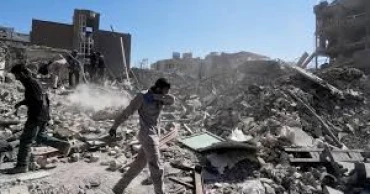
Israel strikes Iranian leadership, security forces as Tehran expands regional attacks
The United States and Israel launched fresh airstrikes on Tehran and other Iranian cities Wednesday, marking the fifth consecutive day of fighting, as Iran retaliated with waves of missiles and drones targeting Israel and sites across the region.
Residents of the Iranian capital awoke to explosions at dawn, with state television airing images of heavily damaged buildings in central Tehran. The holy city of Qom and several other urban centers were also struck.
Israeli warplanes were reported overhead as anxious residents watched the skies. A shopkeeper, speaking anonymously out of fear of repercussions, said he was torn between fleeing and staying to earn a living. He also voiced concern that broader regional involvement could worsen the conflict.
Israel’s military said one of its F-35 fighter jets downed an Iranian Air Force YAK-130 aircraft over Tehran. Air defenses were also activated across Israel to intercept incoming Iranian missiles, with blasts heard near Jerusalem.
Oil markets and US facilities under threatWith Iran controlling access to the Strait of Hormuz — a key route for roughly 20% of global oil shipments — Brent crude surged above $84 a barrel, rising more than 15% since the conflict began and reaching its highest level since July 2024. Markets worldwide have reacted sharply amid fears that soaring energy costs could hurt economic growth.
Drone attacks targeted the U.S. Embassy in Saudi Arabia and the U.S. Consulate in the United Arab Emirates on Tuesday. The State Department on Wednesday authorized the departure of non-essential personnel from Saudi Arabia.
U.S. Central Command chief Adm. Brad Cooper said Iran has launched more than 500 ballistic missiles and 2,000 drones since hostilities began. He described the initial U.S. strikes as nearly twice the scale of the opening phase of the 2003 Iraq invasion. According to Cooper, nearly 2,000 targets have been hit so far, significantly weakening Iran’s air defenses and missile infrastructure.
Nearly 800 people have reportedly been killed in Iran since the fighting began. U.S. President Donald Trump has suggested the conflict could last weeks and said some of those killed had once been seen as potential future leaders of Iran.
Conflict spreads across the regionAir raid sirens sounded in Bahrain, home to the U.S. Navy’s 5th Fleet, while Qatar said two Iranian ballistic missiles were fired toward its territory, with one striking Al-Udeid Air Base without causing casualties.
In Lebanon, Israeli strikes killed at least five people in Baalbek, according to state media, as Israel said it was responding to rocket fire from Hezbollah. Lebanese health officials report more than 50 dead and over 300 wounded.
Iran-linked militias in Iraq have also stepped up attacks. Saraya Awliya al-Dam claimed responsibility for a drone strike on Jordan and for previous attacks on U.S. targets in Baghdad and Irbil.
Iran has continued to launch missile and drone salvos at Israel, though Israeli defenses have intercepted most incoming projectiles. Eleven people have been killed in Israel since the war began.
Leadership succession in focusEarly joint U.S.-Israeli strikes killed Iran’s Supreme Leader Ayatollah Ali Khamenei, prompting speculation over succession. Although President Trump initially urged Iranians to rise up, senior U.S. officials later clarified that regime change was not the stated objective.
Israel’s defense minister warned that whoever is chosen as Iran’s next supreme leader could face assassination threats. Israeli forces also said they struck facilities in Tehran linked to the Basij militia, part of Iran’s Revolutionary Guard, which led a deadly crackdown on protesters earlier this year.
Iran’s judiciary chief warned that anyone aligning with the U.S.-Israeli campaign would be treated as an enemy under wartime conditions.
Iran’s leadership is now working to appoint a successor — only the second such transition since the 1979 Islamic Revolution. Among the figures reportedly under consideration is Mojtaba Khamenei, son of the late supreme leader.
Israeli officials said they targeted a building in Qom believed to be associated with clerics discussing the selection process. Iranian media denied that a meeting was underway at the time, saying members of the Assembly of Experts were convening remotely.
Mounting casualtiesIran’s Red Crescent Society said at least 787 people have been killed in U.S.-Israeli strikes. Casualties have also been reported elsewhere in the Gulf: Kuwait confirmed the death of an 11-year-old girl from falling debris during an interception, while three people were killed in the United Arab Emirates and one in Bahrain.
Six U.S. Army Reserve soldiers were killed Sunday in a drone attack on a command center in Kuwait’s Port Shuaiba.
With neither side signaling a pause, questions remain over how and when the expanding conflict will end.
2 days ago