others
In ancient cities and mountain towns, rescuers seek survivors from Morocco's quake of the century
Moroccans worked Sunday to rescue survivors and prayed for victims of the nation’s strongest earthquake in more than a century, while soldiers and workers brought water and supplies to mountain villages in ruins as international aid crews remained in limbo waiting for the nation to request their help. More than 2,000 people are dead — a number that is expected to rise.
Those left homeless by the destruction of Friday night's earthquake slept outside Saturday, in the streets of the ancient city of Marrakech or under makeshift canopies in Atlas Mountain towns like Moulay Brahim, among the hardest-hit. The worst destruction is in small, rural communities that are hard for rescuers to reach because of the mountainous terrain.
The magnitude-6.8 earthquake sent people racing from their beds into the streets and toppled buildings in mountainous villages and cities not built to withstand such a mighty quake. Some 2,012 people were confirmed dead and at least 2,059 more people were injured — 1,404 critically — Morocco’s Interior Ministry reported Saturday night.
Read more: Strong earthquake and aftershock shake Colombia's capital and other cities
“We felt a huge shake like it was doomsday,” Moulay Brahim resident Ayoub Toudite said. “Ten seconds and everything was gone.”
Flags were lowered across Morocco, as King Mohammed VI ordered three days of national mourning starting Sunday. The army mobilized specialized search and rescue teams, and the king ordered water, food rations and shelter to be provided to those who lost their homes.
The king called for mosques across the kingdom to hold prayers Sunday for the victims, many of whom were buried Saturday amid the frenzy of rescue work nearby.
Some Moroccans complained on social networks that the government wasn’t allowing more international help.
Aid offers have poured in from around the world and the U.N. said it had a team in Morocco coordinating with authorities there about how international partners can provide support. The U.N. estimated more than 300,000 people have been affected in Marrakech and the surrounding area.
Read more: 6.2 magnitude earthquake shakes part of Philippines southwest of the capital
In a sign that Morocco may be prepared to accept help from outside, the Spanish military said it had sent an Air Force plane carrying an urban search and rescue team of 56 soldiers and 4 dogs to Marrakech to help. Foreign Minister José Manuel Albares said in a radio interview that the deployment was in response to a bilateral request for help from Moroccan authorities.
About 100 teams comprising a total of 3,500 rescuers from around the world are registered with a U.N. platform and ready to deploy in Morocco but are awaiting a green light from Moroccan authorities, according to the founder of aid group Rescuers Without Borders.
Arnaud Fraisse said the group’s team got stuck at the Paris airport Sunday waiting for permission from Morocco to enter the country.
“We know there is a great urgency to save people and dig under the remains of buildings," he said. “There are people dying under the rubble, and we cannot do anything to save them.”
The epicenter of Friday’s quake — the biggest to hit the North African country in 120 years — was near the town of Ighil in Al Haouz Province, roughly 70 kilometers (44 miles) south of Marrakech. Al Haouz is known for scenic villages and valleys tucked in the High Atlas Mountains.
About 45 kilometers (28 miles) northeast of the quake epicenter, fallen walls exposed the innards of damaged homes, their rubble sliding down hills. People in Moulay Brahim, a poor rural community of less than 3,000 people, live in homes made of clay brick and cinder block. Many of the houses are either not safe or no longer standing.
Devastation gripped each town along the High Atlas’ steep and winding switchbacks, with homes folding in on themselves and people crying as boys and helmet-clad police carried the dead through the streets.
”I was asleep when the earthquake struck. I could not escape because the roof fell on me. I was trapped. I was saved by my neighbors who cleared the rubble with their bare hands," said Fatna Bechar in Moulay Brahim. “Now, I am living with them in their house because mine was completely destroyed.”
Hamid Idsalah, a 72-year-old mountain guide, said he and many others remained alive but had little future to look forward to as they lack the financial means to rebound.
Read more: Turkey's Erdogan retains power, now faces challenges over the economy and earthquake recovery
Some Marrakech shop owners returned to work Sunday morning, after the king encouraged economic activities to resume nationwide and ordered plans to begin to reconstruct destroyed buildings.
For much of Saturday in historic Marrakech, people could be seen on state TV clustering in the streets, afraid to go back inside buildings that might still be unstable.
The city's famous Koutoubia Mosque, built in the 12th century, was damaged, but the extent was not immediately clear. Moroccans also posted videos showing damage to parts of the famous red walls that surround the old city, a UNESCO World Heritage site.
Police, emergency vehicles and people fleeing in shared taxis spent hours traversing unpaved roads through the High Atlas in stop-and-go traffic, often exiting their cars to help clear giant boulders from routes known to be rugged and difficult even before Friday’s earthquake.
“It felt like a bomb went off,” 34-year-old Mohamed Messi said.
The U.S. Geological Survey said the quake had a preliminary magnitude of 6.8 when it hit at 11:11 p.m., with shaking that lasted several seconds. The agency added that a magnitude-4.9 aftershock hit 19 minutes later. The collision of the African and Eurasian tectonic plates occurred at a relatively shallow depth, which makes a quake more dangerous.
In 1960, a magnitude-5.8 tremor struck near the Moroccan city of Agadir and caused thousands of deaths. That quake prompted changes in construction rules in Morocco, but many buildings, especially rural homes, are not built to withstand such tremors.
In 2004, a magnitude-6.4 earthquake near the Mediterranean coastal city of Al Hoceima left more than 600 dead.
Friday's quake was felt as far away as Portugal and Algeria, according to the Portuguese Institute for Sea and Atmosphere and Algeria's Civil Defense agency, which oversees emergency response.
2 years ago
Biden, Modi and G20 allies unveil rail and shipping project linking India to Middle East and Europe
President Joe Biden and his allies on Saturday announced plans to build a rail and shipping corridor linking India with the Middle East and Europe, an ambitious project aimed at fostering economic growth and political cooperation.
"This is a big deal," said Biden. "This is a really big deal."
The corridor, outlined at the annual Group of 20 summit of the world's top economies, would help boost trade, deliver energy resources and improve digital connectivity. It would include India, Saudi Arabia, the United Arab Emirates, Jordan, Israel and the European Union, said Jake Sullivan, Biden's national security adviser.
Sullivan said the network reflected Biden's vision for "far reaching investments" that come from "effective American leadership" and a willingness to embrace other nations as partners. He said the enhanced infrastructure would boost economic growth, help bring countries in the Middle East together and establish that region as a hub for economic activity instead of as a "source of challenge, conflict or crisis" as it has been in recent history.
Indian Prime Minister Narendra Modi, European Commission President Ursula von der Leyen and other leaders from around the world participated in the announcement.
"Enhancing connectivity with all regions has been a key priority for India," said Modi, speaking through a translator. "We believe that connectivity is a means to not only increase mutual trade between different countries but also increase mutual trust."
The rail and shipping corridor would help physically tie together a vast stretch of the globe, improving digital connectivity and enabling more trade among countries, including with energy products such as hydrogen. Although White House officials did not set a timeline for its completion, the corridor would provide a physical and ideological alternative to China's own nation-spanning infrastructure program.
The White House gave no details on the project's cost or financing, though Saudi Arabia's Crown Prince Mohammed bin Salman mentioned a figure of $20 billion during the announcement. It was unclear if that sum applied solely to the Saudi commitment.
After the announcement, Biden greeted the crown prince with a hearty handshake, a friendlier exchange than when they last met, in Jeddah, Saudi Arabia, just over a year ago. At that time, Biden, who had harshly criticized Prince Mohammed over the kingdom's human rights record, awkwardly greeted him with a fist bump, a moment roundly criticized by rights activists.
Von der Leyen described the project as a "green and digital bridge across continents and civilizations." She added that it includes cables to transmit electricity and data.
She also announced a "Trans-African Corridor" connecting the Angolan port of Lobito with landlocked areas of the continent: the Kananga province in the Democratic Republic of Congo and the copper-mining regions of Zambia.
Speaking of the African project, Biden called it a "game changing regional investment" and said "both of these are huge, huge steps forward."
Amos Hochstein, Biden's coordinator for global infrastructure and energy security, laid out a rough timeline for the project over the next year.
In the next 60 days, working groups will put together a fuller plan and set timelines. The first phase will involve identifying the areas that need investment and where physical infrastructure can be connected between countries. Hochstein said the plans can be put into place over the next year so that the project can move onto setting up finances and construction.
Sullivan said the project started coming together after Biden visited Jeddah, Saudi Arabia, in July 2022, where he emphasized a need for greater regional economic integration.
In January, the White House started having conversations with regional partners about the concept. By spring, maps and written assessments of existing rail infrastructure in the Middle East were being drafted. Sullivan, and senior White House aides Hochstein and Brett McGurk, traveled to Saudi Arabia in May to meet with their Indian, Saudi and UAE counterparts.
All sides have worked since then to finalize details of the agreement announced Saturday.
The parties also brought Israel and Jordan into the project. Saudi Arabia and Israel do not have diplomatic relations, though the White House has been pushing them toward normalizing relations.
Israel Prime Minister Benjamin Netanyahu released a video statement calling the rail and shipping project a "breakthrough" that would transform the region. "It's a day of good news for all citizens of Israel, good news that leads us to a new era of regional integration and cooperation," he said.
Sullivan said the transportation project is not seen as a "precursor" to a potential normalization deal but he characterized Israel's inclusion as "significant."
"The participants in this effort are focused on practical outcomes that deliver for their people," Sullivan said. "And a corridor of this kind by dint of geography works best having Israel in as opposed to out and the countries participating prioritized that."
Biden participated in both G20 sessions on Saturday. He highlighted plans to push for more investments to address climate change, such as his own domestic incentives to encourage the use of renewable energy. He also argued that Russia's war in Ukraine is hurting many other nations, which have had to cope with greater food and energy costs as well as higher interest rate costs on their debt.
Ukraine President Volodymyr Zelenskyy, who has been a regular presence at international summits, including last year's G20 in Indonesia, since Russia invaded his country more than 18 months ago, was not invited by Modi's government to this year's gathering.
Zelenskyy has used the high-profile gatherings to argue for continued economic and military support for his country. India is one of the most prominent U.S. allies that has largely stayed on the sidelines of the war, and has even dramatically increased its purchases of Russian oil.
Jon Finer, the White House principal deputy national security adviser, said the administration pushed for Zelenskyy's inclusion at the summit.
"Ultimately, it is not our decision," Finer said. "But you can expect that the United States and our other partners who are working with Ukraine so closely ... We'll make that case quite forcefully in the context of these conversations."
The summit communique, a joint statement agreed to by all participants, addressed the war, among other issues. It included language underlining the principle that states cannot use force to change borders, disavowed the use of nuclear weapons and called for a just peace based on the principles of the U.N. Charter. The communique also underscored that attacks on civilian infrastructure must end.
During the summit, Biden also discussed his request to Congress for additional funding for the World Bank that could generate more than $25 billion in new lending for economic development.
The White House more broadly is trying to strengthen the G20 as an international forum, while Chinese President Xi Jinping and Russian President Vladimir Putin decided not to attend.
Biden has said he was disappointed by Xi's decision. Asked again about the Chinese leader's absence, Biden said Saturday that the summit "is going well" though "it would be nice to have him here."
2 years ago
G20 leaders vow commitment to growth, development goals
Leaders of the Group of 20 (G20) here on Saturday reaffirmed their commitment to international economic cooperation and pledged to take concrete steps to foster global growth.
In a declaration announced on the opening day of a two-day annual summit, the G20 leaders said they would act in concrete ways through partnerships to accelerate strong, sustainable, balanced and inclusive growth.
"Cascading crises have posed challenges to long-term growth," the group warned, stressing that G20 cooperation is essential in determining the course the world takes.
Read: Ensure prosperous future for all: PM Hasina at G20 summit
The group said they would speed up the full and effective implementation of the 2030 Agenda for Sustainable Development, and scale up financing from all sources for accelerating progress on Sustainable Development Goals (SDGs).
The leaders said they would better integrate the perspectives of developing countries into the future G20 agenda and strengthen the voice of developing countries in global decision-making.
They said they would protect the vulnerable by promoting equitable growth and enhancing macroeconomic and financial stability.
Welcoming the African Union (AU) as a permanent member of the G20, the group said it strongly believed the AU's inclusion into the G20 would significantly contribute to addressing global challenges.
Read: G20 countries agree to increase clean energy but reach no deal on phasing out fossil fuels
The leaders reaffirmed their commitment to strengthening their ties with and support to the AU and reiterated their strong support of Africa.
They also vowed to improve access to digital services and digital public infrastructure, and leverage digital transformation opportunities to boost sustainable and inclusive growth.
The G20 members pledged to work towards facilitating low-cost financing for developing countries to support their transition to low carbon/emissions.
"Through these actions today, we are building towards a system that better empowers countries to address global challenges," the declaration said.
Read: World Insights: G20 urged to focus on economic governance, development issues
Established in 1999, the G20 is a central forum for international cooperation on financial and economic issues. It comprises 19 countries plus the European Union, and the AU, which was just included in the group on Saturday.
The countries are Argentina, Australia, Brazil, Britain, Canada, China, France, Germany, India, Indonesia, Italy, Japan, Mexico, Russia, Saudi Arabia, South Africa, South Korea, Türkiye, and the United States.
2 years ago
G20 countries agree to increase clean energy but reach no deal on phasing out fossil fuels
G20 leaders agreed Saturday to triple renewable energy and try to increase the funds for climate change-related disasters but maintained the status quo with regards to phasing out carbon spewing coal.
At a news conference shortly after the leaders of the Group of 20 of the world’s biggest economies — which also emit 80% of all planet-warming gases — announced the agreement, Amitabh Kant, a senior Indian government official leading some of the G20 negotiations, called it "probably the most vibrant, dynamic and ambitious document on climate action.”
While most climate and energy experts were not as ebullient, they agreed that the G20 leaders had put out a strong message on climate action, even as the world is seeing increasingly frequent natural disasters such as extreme heat.
Even at the last meeting of the G20 climate ministers before the summit, disagreements had remained.
Global leaders and climate experts say the declaration had largely taken the conversation forward, setting the stage for an ambitious climate agreement when they meet at the global climate conference, COP28, in Dubai later this year.
“These 20 countries account for 80% of global emissions, so this declaration sends a powerful signal for climate progress," said Sultan al-Jaber, who will preside over the climate summit in Dubai.
Some climate activists said more could be done.
“While the G20’s commitment to renewable energy targets is commendable, it sidesteps the root cause — our global dependency on fossil fuels,’” said Harjeet Singh of Climate Action Network International.
According to a report by Global Energy Monitor, an organization that tracks a variety of energy projects around the world, the G20 countries are home to 93% of global operating coal power plants and 88% of new proposed coal power plants that don't have carbon capture technologies.
"It’s high time for rich nations in this group to lead by example, turn their promises into actions, and help forge a greener, more equitable future for all,” said Singh, who has tracked international climate negotiations for over two decades.
For the first time, the G20 countries agreed on the amounts required to shift to clean energy. The document states that $5.9 trillion is need up to 2030 by developing countries to meet their climate goals. An additional $4 trillion will be needed every year until the end of the decade if developing countries are to reach net zero emissions by 2050, it said.
“This G20 has seen many firsts,” said Madhura Joshi, a Mumbai-based energy analyst with the climate think tank E3G. “However, it’s disappointing that the G20 could not agree on phasing down fossil fuels.”
"Increasing renewables and reducing fossil fuels need to necessarily happen together – we need stronger bolder action from leaders on both. All eyes now on COP28 – can the leaders deliver?” he said.
2 years ago
Italy to give Africa 3bn euros for climate change - Meloni at G20
Italy is to give Africa three billion euros to mitigate and adapt to climate change over the next five years, helping stem migrant flows, Premier Giorgia Meloni said at the G20 summit in India Saturday.
"Italy will allocate more than 70 per cent of its Italian Climate Fund to Africa. That means 3 billion euro over the next five years, equally earmarked for mitigation and adaptation initiatives", she said.
Meloni added: "The commitment is part of the 'Rome Process' launched with the Conference on Migration and Development, which Italy convened in July and aims to build a new model of international relations on an equal footing, to create development, but also to foster legal migration paths and combat the powerful criminal networks of illegal immigration traffickers, who exploit desperation to enrich themselves".
In other remarks, Meloni accused Russia of using energy as blackmail; said the response to climate change must include everyone; and pledged Italian support for the quake that has killed over 820 people in Morocco.
2 years ago
World Insights: G20 urged to focus on economic governance, development issues
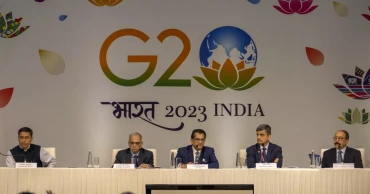
The Group of 20 (G20) should refocus on improving global economic governance and tackling development issues to boost confidence in the world's economic recovery, said experts, as the G20 summit kicks off in New Delhi on Saturday.
The experts said that leaders of the world's major economies are expected to find ways to work together and build consensus on the pressing economic challenges facing the world today.
SAFEGUARDING MULTILATERALISM
A significant challenge for today's world is the lack of multilateralism in global governance, said B. R. Deepak, chairperson of the Center of Chinese and Southeast Asian Studies at the New Delhi-based Jawaharlal Nehru University.
Read: The African Union is joining the G20, a powerful acknowledgement of a continent of 1 billion people
"Some countries, especially in the West, are adhering to the policies of protectionism, nativism, exclusivism and perhaps not believing in the kind of multilateralism which the developing countries believe in," he said.
He said that multilateralism is one of the key agendas of the G20, hoping the group would send a clear message to the world about the need for stronger multilateralism.
Created in 1999, the G20 is a leading forum for international cooperation on financial and economic issues. It comprises 19 countries plus the European Union, representing around 85 percent of global GDP, over 75 percent of global trade and about two-thirds of the world population.
In 2008, against the backdrop of the global financial crisis, the meetings of G20 finance ministers and central bank governors were raised to the level of heads of state and government for better crisis coordination. Altogether, 17 summits have been held.
This year's summit, themed "One Earth, One Family, One Future," focuses on inclusive growth, digital innovation, climate resilience and equitable global health access.
Read: India hopes for progress on global agenda as G20 leaders meet despite rifts over the war in Ukraine
Progress is needed on specific issues at the G20 summit in India, said Hasanul Haq Inu, chairman of Bangladesh's Parliamentary Standing Committee for the Ministry of Information and Broadcasting.
Although G20 members have differences, some common issues provide a possibility for unified decisions for progress, Inu said, stressing the need for a common approach to economic, social and environmental issues.
The lawmaker said political issues should not affect decisions on economic issues, noting that trade restrictions in many countries hinder the smooth functioning of supply chains.
ECONOMY, DEVELOPMENT MUST REMAIN FOCUS
Multiple challenges continue to weigh on global growth, including persistent inflation, financial volatility, deepening geo-economic fragmentation, and increased debt stress in emerging economies and developing countries.
Global growth is projected to fall from an estimated 3.5 percent in 2022 to 3.0 percent in 2023 and 2024, according to the World Economic Outlook Update published by the International Monetary Fund in July.
As an international forum representing the world's major developed and emerging economies, the G20 needs to reinvigorate the 2030 Agenda for Sustainable Development and promote North-South cooperation to achieve the agenda's goals, said Inu.
Read: President Macron arrives in Dhaka Sunday to "concretize some projects, boost" further economic relations
In Deepak's view, the current economic development issues in the Global South must be addressed with effective financing and technology solutions.
"We will perhaps see more collaboration, more rolling out of policies and funding, including technology transfer from the Global North to these countries," he said.
G20 members have a significant role to play in global governance, said Allan Behm, director of the International and Security Affairs Program at The Australia Institute.
"They are countries that can contribute enormously to human progress, especially in health and education. As their economies expand, the global economy expands at the same time," said Behm.
CHINA'S ACTIVE ROLE
As the world's second-largest economy and the largest developing country, China supports the G20's leading role in addressing global challenges and improving global economic governance, calling for increased representation for developing countries in international affairs.
The voice of the Global South remains weak in international organizations such as the United Nations, the World Bank and the International Monetary Fund, according to Inu.
"China can address these issues within the G20 and be a champion of Global South's interests," said Inu, who also appreciates China's support for the African Union's inclusion in the G20.
Teuku Rezasyah, associate professor of International Relations at Padjadjaran University, Indonesia, expects China to promote programs to fill the gaps in current Global South cooperation by utilizing its advantages in infrastructure, research and development, traditional medicine, renewable energy and sustainable growth.
China has taken active measures in addressing a range of global issues, Inu said, adding that he believes China "can play a very positive role" at this year's G20 summit.
2 years ago
The African Union is joining the G20, a powerful acknowledgement of a continent of 1 billion people
The group of the world's 20 leading economies is welcoming the African Union as a permanent member, a powerful acknowledgement of Africa as its more than 50 countries seek a more important role on the global stage.
U.S. President Joe Biden called last year for the AU’s permanent membership in the G20, saying it’s been “a long time in coming.” Indian Prime Minister Narendra Modi has said the bloc was invited to join during the G20 summit his country is hosting this week.
The African Union has advocated for full membership for seven years, spokesperson Ebba Kalondo said. Until now, South Africa was the bloc's only G20 member.
Here’s a look at the AU and what its membership represents in a world where Africa is central to discussions about climate change, food security, migration and other issues.
Read: India hopes for progress on global agenda as G20 leaders meet despite rifts over the war in Ukraine
WHAT DOES THIS MEAN FOR AFRICA?Permanent G20 membership signals the rise of a continent whose young population of 1.3 billion is set to double by 2050 and make up a quarter of the planet's people.
The AU's 55 member states, which include the disputed Western Sahara, have pressed for meaningful roles in the global bodies that long represented a now faded post-World War II order, including the United Nations Security Council. They also want reforms to a global financial system - including the World Bank and other entities - that forces African countries to pay more than others to borrow money, deepening their debt.
Africa is increasingly courting investment and political interest from a new generation of global powers beyond the U.S. and the continent's former European colonizers. China is Africa’s largest trading partner and one of its largest lenders. Russia is its leading arms provider. Gulf nations have become some of the continent’s biggest investors. Turkey ’s largest overseas military base and embassy are in Somalia. Israel and Iran are increasing their outreach in search of partners.
African leaders have impatiently challenged the framing of the continent as a passive victim of war, extremism, hunger and disaster that's pressured to take one side or another among global powers. Some would prefer to be brokers, as shown by African peace efforts following Russia’s invasion of Ukraine.
Granting the African Union membership in the G20 is a step that recognizes the continent as a global power in itself.
Read: G20 must urgently tackle global poverty with financial inclusion: deVere
WHAT DOES THE AFRICAN UNION BRING TO THE G20?With full G20 membership, the AU can represent a continent that's home to the world's largest free trade area. It's also enormously rich in the resources the world needs to combat climate change, which Africa contributes to the least but is affected by the most.
The African continent has 60% of the world’s renewable energy assets and more than 30% of the minerals key to renewable and low-carbon technologies. Congo alone has almost half of the world’s cobalt, a metal essential for lithium-ion batteries, according to a United Nations report on Africa's economic development released last month.
African leaders are tired of watching outsiders take the continent’s resources for processing and profits elsewhere and want more industrial development closer to home to benefit their economies.
Take Africa’s natural assets into account and the continent is immensely wealthy, Kenyan President William Ruto said at the first Africa Climate Summit this week. The gathering in Nairobi ended with a call for fairer treatment by financial institutions, the delivery of rich countries’ long-promised $100 billion a year in climate financing for developing nations and a global tax on fossil fuels.
Finding a common position among the AU's member states, from the economic powers of Nigeria and Ethiopia to some of the world’s poorest nations, can be a challenge. And the AU itself has long been urged by some Africans to be more forceful in its responses to coups and other crises.
The body's rotating chairmanship, which changes annually, also gets in the way of consistency, but Africa “will need to speak with one voice if it hopes to influence G20 decision-making,” Ibrahim Assane Mayaki, a former prime minister of Niger, and Daouda Sembene, a former executive director of the International Monetary Fund, wrote in Project Syndicate this year.
Read: China's Xi will skip G20 summit in India during a period of soured bilateral relations
African leaders have shown their willingness to take such collective action. During the COVID-19 pandemic, they united in loudly criticizing the hoarding of vaccines by rich countries and teamed up to pursue bulk purchases of supplies for the continent.
Now, as a high-profile G20 member, Africa’s demands will be harder to ignore.
2 years ago
Global food prices down 2.1 pct in August: FAO
The benchmark index of international food commodity prices has declined 2.1 percent compared to July, the United Nations Food and Agriculture Organization (FAO) said Friday.
The prices of rice, however, surged by 9.8 percent in August to a 15-year high compared to a month earlier. The increase was triggered by India's rice export ban from July, complicated by a seasonal lull in production between rice harvests in the Northern Hemisphere.
Read : FAO-ERD sign technical assistance project agreement
Overall prices for grains and cereals, the largest component in the index, slipped by 0.7 percent due to strong harvests from major producers. Corn prices fell for the seventh consecutive month based on bumper crops in Brazil, while wheat prices were 3.8 percent lower based on strong harvests in the United States and Canada.
FAO said four of the five broad sub-indexes saw declines. In addition to the slight dip in prices for grains and cereals, prices were also lower for vegetable oils, dairy products, and meat.
Read : Global food prices rise after collapse of Black Sea deal: FAO
Sugar prices, meanwhile, rose by 1.3 percent and were more than 34 percent above their levels from a year earlier. FAO said the increase in sugar prices stemmed from persisting concerns about impacts from the El Niño weather phenomenon in the eastern Pacific Ocean. Sugar output in India was also hurt by low rainfall there, while heavy rains made sugar harvests more difficult in Brazil.
Read : Climate adaptive innovation must for development of agro industries: Speakers say at ICC Bangladesh, Standard Chartered, FAO roundtable
The next FAO food price index is scheduled for publication on Oct. 6, 2023.
2 years ago
India hopes for progress on global agenda as G20 leaders meet despite rifts over the war in Ukraine
Leaders of many of the world's biggest economies prepared to huddle in the Indian capital for the Group of Twenty summit Saturday, though growing global rifts and the absence of key players meant that reaching consensus on the thorniest issues could prove elusive.
At least a fifth of G20 heads were not in New Delhi. The leaders of Russia and China opted not to come, ensuring no tough face-to-face conversations with their American and European counterparts over multiple disputes, most acutely the war in Ukraine. Spain's president couldn't make it due to COVID-19, and Mexico's president decided to miss it, too.
Read: Dhaka, New Delhi sign 3 MoUs after Hasina-Modi talks
Host India hoped the proceedings would not be overshadowed by the European war. It wanted to devote more attention to addressing the needs of the developing world — though it is impossible to decouple many issues, such as food and energy security, from the Ukraine conflict.
Indian Prime Minister Narendra Modi has made giving voice to the Global South a centerpiece of this year's summit.
While that may well get broad support, a series of preparatory meetings leading to this weekend's meeting failed to produce agreements due to increasingly fractious rifts among the world's global powers, largely due to differences over Ukraine. Ending the summit without such a statement would underscore how strained relations have become and tarnish the image Modi has tried to cultivate of India as a global problem solver.
Read: Putin, Erdogan set to meet amid efforts to repair Ukraine grain deal
Participants arriving in the Indian capital were greeted by streets cleared of traffic, and graced with fresh flowers and seemingly endless posters featuring slogans and Modi's face. Security was intensely tight, with most journalists and the public kept far from the summit venue.
The group was expected to invite the African Union to join as a permanent member, and among the major topics on the agenda were issues critical to developing nations, including alternative fuels like hydrogen, resource efficiency, developing a common framework for digital public infrastructure and food security.
Countries were also expected to address reforming development banks like the World Bank and International Monetary Fund to help make funds more accessible for lower- and middle-income countries as they seek solutions to combat climate change, among other things.
India's lead G20 negotiator, Amitabh Kant, told reporters that boosting climate action and climate financing were key priorities, particularly for developing and emerging markets.
“It was critical that we focused on multilateral organizations and how to redefine and reform them,” he said. "Our view was that Global South, developing countries, emerging markets must be able to get long-term financing.”
With so many other issues on the table, Human Rights Watch urged the G20 leaders not to let international disunity distract them at the summit.
“Political differences should not deter agreements on critical issues impacting human rights such as the sovereign debt crises, social protection programs, food security, climate change, or internet freedom,” said Meenakshi Ganguly, deputy director of the organization’s Asia division.
Read: PM calls for an amicable end to Ukraine war
Ganguly added that members should not “shy away from openly discussing challenges like gender discrimination, racism and other entrenched barriers to equality, including with host India, where civil and political rights have sharply deteriorated under the Modi administration.”
The summit comes just days after Russian President Vladimir Putin said a landmark deal allowing Ukraine to export grain safely through the Black Sea will not be restored until Western nations meet his demands on Russia's own agricultural exports.
The original deal had been brokered by the U.N. and Turkish President Recep Tayyip Erdogan, but Russia refused to extend it in July, complaining that a parallel agreement promising to remove obstacles to Russian exports of food and fertilizer hadn’t been honored.
Russia dispatched Foreign Minister Sergey Lavrov as its top representative to the G20. Erdogan himself was on hand in the Indian capital and others said ahead of the summit that they hoped to be able to find solutions, even as Russia’s military keeps up its attacks on Ukraine’s ports.
European Council President Charles Michel told reporters in New Delhi on Friday it was “scandalous” that Russia was blocking and attacking Ukrainian ports after terminating the grain deal.
“The Kremlin’s war is also unraveling lives far beyond Ukraine, including right here in South Asia,” he said. “Over 250 million people face acute food insecurity worldwide and by deliberately attacking Ukraine’s ports, the Kremlin is depriving them of the food they desperately need.”
British Prime Minister Rishi Sunak said he hoped to marshal international resources to counteract the impact of Russia’s moves on the global food supply. His government has announced London will host a global food security summit in November in response to Moscow’s actions.
Alternatives could include land routes or taking grain out of Ukraine by river barge.
Sunak’s government has also said Royal Air Force aircraft will fly over the Black Sea as part of efforts to deter Russia from striking cargo ships transporting grain from Ukraine to developing countries.
Hundreds of Tibetan exiles held a protest far from the summit venue to condemn Chinese participation in the event and urge leaders to discuss Sino-Tibetan relations.
Read: South Korea to expand support for Ukraine as President Yoon Suk Yeol makes a surprise visit
Before the meeting got formally underway, Modi met with U.S. President Joe Biden shortly after his arrival Friday evening.
White House aide Kurt Campbell told reporters afterward that there was an “undeniable warmth and confidence between the two leaders.”
Leaders of the U.S., India, Saudi Arabia and the United Arab Emirates were working to finalize a joint infrastructure deal involving ship and rail transit between India and the Middle East to Turkey and beyond, in hopes it could be announced in New Delhi during the summit.
Campbell called the emerging deal a potentially “earth-shattering” project and said that “the strongest supporter of this initiative is India.” In the past, Campbell said, India's leaders have had “almost a knee jerk reaction” to resist such massive multilateral projects.
“It’s the last moment that’s when things come together or they don’t,” Campbell said. “With huge, enormous ambitious deals it always comes to this place.”
As Biden made his way to New Delhi, U.S. administration officials sought to play down that Ukrainian Volodymyr Zelenskyy wasn’t invited to address the G20.
The Ukrainian leader has made regular appearances, virtual and in-person, at such international forums since the start of the war more than 18 months ago to rally allies to remain committed to support Ukraine.
2 years ago
Powerful quake in Morocco kills more than 1,000 people and damages historic buildings in Marrakech
A rare, powerful earthquake struck Morocco late Friday night, killing more than 1,000 people and damaging buildings from villages in the Atlas Mountains to the historic city of Marrakech. The full toll was not known as rescuers struggled to get through boulder-strewn roads to the remote mountain villages hit hardest.
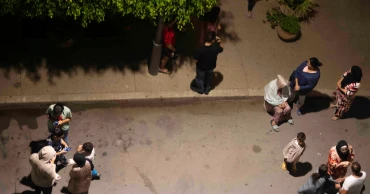
People woken by the magnitude-6.8 quake ran into the streets in terror and disbelief. A man visiting a nearby apartment said dishes and wall hangings began raining down, and people were knocked off their feet and chairs. A woman described fleeing her house after an “intense vibration.’’ A man holding a child said he was jarred awake in bed by the shaking.
State television showed people clustered in the streets of Marrakech, afraid to go back inside buildings that might still be unstable. Many wrapped themselves in blankets as they tried to sleep outside.
The quake was the biggest to hit Morocco in 120 years, and it toppled buildings and walls in ancient cities made from stone and masonry not designed to withstand quakes.
“The problem is that where destructive earthquakes are rare, buildings are simply not constructed robustly enough to cope with strong ground shaking, so many collapse resulting in high casualties," said Bill McGuire, professor emeritus of geophysical and climate hazards at University College London. "I would expect the final death toll to climb into the thousands once more is known. As with any big quake, aftershocks are likely, which will lead to further casualties and hinder search and rescue.”
In a sign of the huge scale of the disaster, Morocco’s King Mohammed VI ordered the armed forces to mobilize air and land assets, specialized search and rescue teams and a surgical field hospital, according to a statement from the military. But despite an outpouring of offers of help from around the world, the Moroccan government had not formally asked for assistance, a step required before outside rescue crews could deploy.
In Marrakech, the famous Koutoubia Mosque, built in the 12th century, was damaged, but the extent was not immediately clear. Its 69-meter (226-foot) minaret is known as the “roof of Marrakech.” Moroccans also posted videos showing damage to parts of the famous red walls that surround the old city, a UNESCO World Heritage site.
At least 1,037 people died, mostly in Marrakech and five provinces near the quake’s epicenter, and another 1,204 people were injured, Morocco's Interior Ministry reported Saturday morning. Of the injured, the ministry wrote, 721 were in critical condition.
Read: This summer was a global record breaker for the highest heat ever measured, meteorologists say
Rescuers worked through the night, searching for survivors in darkness, dust and rubble.
Most of the tiny village of Moulay Brahim, carved into a mountainside south of Marrakech, was uninhabitable after walls crumbled, windows shattered and more than a dozen homes were reduced to piles of concrete and bent metal poles. At least five residents were trapped.
Ayoub Toudite said he had been working out with friends at the gym when “we felt a huge shake like it was doomsday.” In 10 seconds, he said, everything was gone.
“We found casualties and people running and kids crying,” he told The Associated Press. “We never saw anything like this, 20 deaths in the area, 30 injuries."
Rescuers were using hammers and axes to free a man trapped under a two-story building. People capable of squeezing into the tiny space were giving him water.
“We are all terrified that this happens again,” Toudite said.
The head of a town near the earthquake's epicenter told Moroccan news site 2M that several homes in nearby towns had partly or totally collapsed, and electricity and roads were cut off in some places.
Abderrahim Ait Daoud, head of the town of Talat N’Yaaqoub, said authorities are working to clear roads in Al Haouz Province to allow passage for ambulances and aid to populations affected, but said large distances between mountain villages mean it will take time to learn the extent of the damage.
Read: 3.5 magnitude earthquake jolts Sylhet
The Moroccan military deployed aircraft, helicopters and drones and emergency services mobilized aid efforts to the areas hit by damages, but roads leading to the mountain region around the epicenter were jammed with vehicles and blocked with collapsed rocks, slowing rescue efforts. Trucks loaded with blankets, camp cots and lighting equipment were trying to region that hard-hit area, the official news agency MAP reported.
On the steep and winding switchbacks from Marrakech to Al Haouz, ambulances with sirens blaring and honking cars veered around piles of Mars-like red rock that had tumbled from the mountainside and blocked the road. Red Cross workers tried to clear a boulder blocking the two-lane highway.
Later Saturday morning in Marrakech, ambulances and motorcycles whirred by the edge of the old city, where business as usual mostly resumed Saturday morning. Tourists and passersby navigated roadblocks and snapped photos of sections of the clay ochre wall that had cracked, spilling fragments and dust onto the sidewalk and street.
World leaders offered to send in aid or rescue crews as condolences poured in from countries around Europe, the Middle East and a Group of 20 summit in India. Turkey’s president, whose country lost tens of thousands of people in a massive earthquake earlier this year, was among those proposing assistance. France and Germany, with large populations of people with Moroccan origins, also offered to help, and the leaders of both Ukraine and Russia expressed support for Moroccans.
Read: Strong earthquake and aftershock shake Colombia's capital and other cities
The U.S. Geological Survey said the quake had a preliminary magnitude of 6.8 when it hit at 11:11 p.m. (2211 GMT), with shaking that lasted several seconds. The U.S. agency reported a magnitude 4.9 aftershock hit 19 minutes later.
The epicenter of Friday’s tremor was near the town of Ighil in Al Haouz Province, roughly 70 kilometers (43.5 miles) south of Marrakech. Al Haouz is known for scenic villages and valleys tucked in the High Atlas, and villages built into mountainsides.
The USGS said the epicenter was 18 kilometers (11 miles) below the Earth’s surface, while Morocco’s seismic agency put it at 11 kilometers (7 miles) down. Such shallow quakes are more dangerous.
Initial reports suggest damages and deaths were severe throughout the Marrakech-Safi region, which more than 4.5 million people call home, according to state figures.
Earthquakes are relatively rare in North Africa. Lahcen Mhanni, Head of the Seismic Monitoring and Warning Department at the National Institute of Geophysics, told 2M TV that the earthquake was the strongest ever recorded in the region.
In 1960, a magnitude 5.8 tremor struck near the Moroccan city of Agadir and caused thousands of deaths.
Read: 5.0 earthquake felt in Dhaka, other areas
The Agadir quake prompted changes in construction rules in Morocco, but many buildings, especially rural homes, are not built to withstand such tremors.
In 2004, a 6.4 magnitude earthquake near the Mediterranean coastal city of Al Hoceima left more than 600 dead.
Friday's quake was felt as far away as Portugal and Algeria, according to the Portuguese Institute for Sea and Atmosphere and Algeria's Civil Defense agency, which oversees emergency response.
2 years ago