others
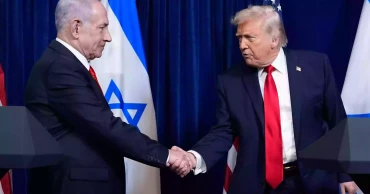
Netanyahu to press Trump to widen Iran nuclear talks during White House meeting
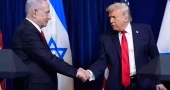
Israeli Prime Minister Benjamin Netanyahu is set to meet President Donald Trump at the White House on Wednesday, where he is expected to push for expanding ongoing talks with Iran beyond its nuclear program.
The meeting comes as Trump said he believes Tehran is willing to strike a deal. “We’ll see what happens. I think they want to make a deal,” Trump told Fox Business Network on Tuesday. “I think they’d be foolish if they didn’t. We took out their nuclear power last time, and we’ll have to see if we take out more this time.” He added, “It’s got to be a good deal. No nuclear weapons, no missiles.”
Netanyahu’s office said he wants any new agreement to also address Iran’s ballistic missile program and its backing of armed groups such as Hamas and Hezbollah.
“I will present to the president our outlook regarding the principles of these negotiations the essential principles which, in my opinion, are important not only to Israel, but to everyone around the world who wants peace and security in the Middle East,” Netanyahu said before leaving Israel.
The two sides recently held indirect talks in Oman and signaled cautious optimism. However, deep mistrust remains.
Trump’s world order looms over Europe ahead of crucial Munich security summit
Tensions are still high after last June’s 12-day war between Israel and Iran. A series of airstrikes, including U.S. attacks on Iranian nuclear sites, killed nearly 1,000 people in Iran and around 40 in Israel. Trump claimed at the time that Iran’s nuclear capabilities were “obliterated,” though the full extent of the damage remains unclear. Recent satellite images have shown renewed activity at some sites.
Israel has long demanded that Iran stop enriching uranium, curb its missile program and cut ties with regional militant groups. Iran has rejected those demands, saying it would only accept limits on its nuclear activities in exchange for relief from sanctions.
The U.S. has strengthened its military presence in the region, deploying an aircraft carrier and other assets. Meanwhile, countries including Turkey and Qatar have urged restraint, warning that further escalation could destabilize the Middle East.
The Gaza conflict is also expected to be discussed during the talks, as Washington weighs its broader diplomatic efforts in the region.
3 months ago
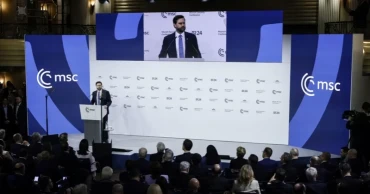
Trump’s world order looms over Europe ahead of crucial Munich security summit
Europe’s security outlook is under renewed scrutiny as leaders prepare to gather for the Munich Security Conference this week, with the legacy and ongoing impact of US President Donald Trump’s foreign policy casting a long shadow over transatlantic relations.
It has been a year since US Vice President JD Vance delivered a controversial address at the same forum, sharply criticising Europe over migration and free speech and arguing that the continent’s greatest threats were internal. The remarks stunned delegates and signalled a deeper shift that has since reshaped US relations with both allies and rivals.
Over the past year, the Trump administration has imposed punitive tariffs on partners, taken an aggressive stance abroad and pursued diplomacy on Ukraine that many in Europe see as favouring Moscow. Trump has also made provocative statements, including suggesting that Canada should become the 51st US state.
As the conference opens later this week, more than 50 world leaders are expected to attend. The US delegation will be led by Secretary of State and National Security Adviser Marco Rubio, amid growing European concerns about Washington’s long-term commitment to the continent’s defence.
Those concerns were heightened by the latest US National Security Strategy, published late last year, which urged Europe to take primary responsibility for its own security. The document reinforced fears that the United States is increasingly reluctant to continue underwriting European defence.
Tensions were further strained by a recent crisis over Greenland, after Trump repeatedly said the United States needed to “own” the Arctic island for security reasons and at one point did not rule out the use of force. Greenland is a self-governing territory under Denmark, a Nato member, and Danish leaders warned that any hostile takeover would effectively end the alliance that has underpinned European security for decades.
Although the immediate Greenland dispute has subsided, it has left lingering doubts about the durability of the US-Europe security partnership.
Former UK intelligence chief Sir Alex Younger said the transatlantic alliance has changed but is not broken, noting that Europe still benefits greatly from its security and intelligence ties with the United States. He also argued that Trump was right to push Europe to shoulder more of the defence burden, pointing to long-standing imbalances in military spending.
However, divisions extend beyond defence budgets. The Trump administration has clashed with Europe over trade, migration and free speech, while many European governments have been alarmed by Trump’s approach to Russian President Vladimir Putin and his tendency to criticise Ukraine despite Russia’s invasion.
Ahead of the conference, organisers released a report warning of a fundamental break with long-standing US post-World War II strategy, which had prioritised multilateral institutions, economic integration and the promotion of democracy and human rights as strategic assets. The report said all three pillars have been weakened or openly questioned under the Trump administration.
US-based analysts at the Centre for Strategic and International Studies described the new National Security Strategy as a painful wake-up call for Europe and evidence of a deep divergence between European expectations and Washington’s current vision.
The strategy includes language supporting groups opposed to Europe’s current political direction and criticises European migration policies, while still acknowledging that Europe remains strategically important to the United States.
A central concern for many European officials is whether Nato’s Article 5, the collective defence clause, can still be relied upon. Although Nato leaders insist the commitment remains intact, Trump’s unpredictability and his administration’s scepticism towards Europe have raised doubts.
These questions are sharpened by the ongoing war in Ukraine and hypothetical scenarios involving Nato’s eastern flank, where any hesitation or miscalculation could have serious consequences.
As discussions begin in Munich, European leaders hope for clarity on the future of the transatlantic alliance, even as many fear the answers may confirm a more uncertain and fragmented security order.
With inputs from BBC
3 months ago
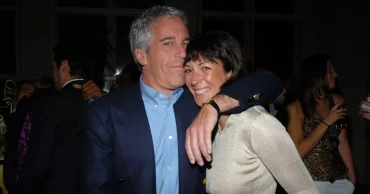
Epstein associate Maxwell refuses to testify, seeks clemency
Ghislaine Maxwell, the convicted associate of disgraced financier Jeffrey Epstein, refused to answer questions during a US congressional deposition on Monday, repeatedly invoking her constitutional right against self-incrimination.
Maxwell appeared virtually in a closed-door session before the House Oversight Committee from a Texas prison, where she is serving a 20-year sentence for sex trafficking offences linked to Epstein.
House Oversight Committee Chairman James Comer said Maxwell, as anticipated, pleaded the Fifth Amendment throughout the hearing. He described the outcome as disappointing, saying lawmakers had intended to question her about crimes committed by Epstein and herself, as well as the possible involvement of other individuals.
Comer said the committee’s objective was to uncover the truth for the American public and secure justice for survivors of abuse.
The Fifth Amendment of the US Constitution allows individuals to refuse to answer questions under oath if the responses could incriminate them.
Democratic Representative Melanie Stansbury told reporters after the hearing that Maxwell appeared to use the deposition as an opportunity to seek clemency. Comer said conversations with Epstein survivors had made it clear to him that Maxwell did not deserve immunity of any kind.
Earlier, Maxwell’s lawyer David Oscar Markus said in a social media post that his client was prepared to speak fully if she were granted clemency by President Donald Trump. He claimed Maxwell could provide a complete account of events, even if some found the truth uncomfortable.
Ahead of the deposition, a group of Epstein survivors urged lawmakers to treat any information from Maxwell with caution. In a letter to the committee, they criticised her for failing to name influential figures allegedly involved in Epstein’s trafficking network and for what they described as a lack of meaningful cooperation with investigators. They warned that offering her special treatment or credibility would be deeply harmful to survivors.
The White House has previously said that no leniency for Maxwell is being considered.
Maxwell was convicted in 2021 for recruiting underage girls for Epstein, her former partner, who died in prison in 2019 while awaiting trial. She is seeking a presidential pardon and has faced allegations of lying to federal officials.
In a separate letter to Chairman Comer, Democratic Representative Ro Khanna said he had planned to question Maxwell about a court filing in which she claimed there were four named co-conspirators and at least 25 others who were not charged in the Epstein investigation. He also intended to ask about Epstein and Maxwell’s social ties with President Trump and whether any discussion of a potential pardon had taken place.
Trump has consistently denied any wrongdoing related to Epstein and has said he cut ties with him years ago. He has not been accused of crimes by Epstein’s victims.
Khanna later said Maxwell’s refusal to testify appeared inconsistent with her earlier conduct, noting that she did not invoke the Fifth Amendment during a previous meeting with Deputy Attorney General Todd Blanche. According to a justice department transcript, Maxwell told officials she had not witnessed inappropriate conduct by Trump or former president Bill Clinton and said there was no Epstein “client list”.
The deposition had originally been scheduled for August last year but was delayed at the request of Maxwell’s lawyers pending a Supreme Court ruling.
The hearing comes as the US Department of Justice has begun releasing millions of pages of documents related to the Epstein investigation under a law passed by Congress. Lawmakers are set to review unredacted versions of nearly three million pages at the justice department.
Epstein survivors have continued to call for full transparency, while justice department officials have denied claims of a cover-up, rejecting suggestions that evidence has been deliberately withheld.
With inputs from BBC
3 months ago
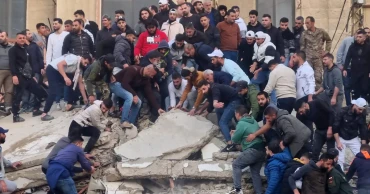
Lebanon building collapse: Death toll rises to 15
The number of people killed in a building collapse in the city of Tripoli in northern Lebanon has risen to 15, state media reported Monday.
A further eight people were injured, the state-run National News Agency reported. Lebanon’s civil defense said at least one person suffered a gunshot wound. Residents of the area gathered around the crater where the building had fallen and fired in the air following the collapse.
The six-story apartment building in the impoverished Bab Tabbaneh neighborhood collapsed Sunday afternoon. Resident of Tripoli, Lebanon’s second largest city, have long complained of government neglect and shoddy infrastructure.
Building collapses are not uncommon in Tripoli due to poor building standards, but the incident on Sunday sparked particular outrage due to the high death toll.
Surrounding buildings in the area were evacuated out of fear that they, too, might be structurally compromised.
Officials have pledged to investigate the cause of the collapse and take legal measures against those found to be responsible for it.
3 months ago
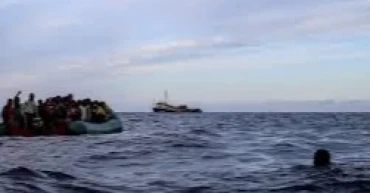
Two babies among 53 dead or missing after migrant boat capsizes off Libya, UN reports
Two babies are among at least 53 people reported dead or missing after an inflatable migrant boat sank off the coast of Libya, the U.N. migration agency said Monday, highlighting the ongoing dangers faced by those seeking to reach Europe.
According to the International Organization for Migration (IOM), the boat carrying 55 African migrants departed from the western Libyan town of Zawiya shortly before midnight on Thursday. Around six hours later, the vessel began taking on water and capsized on Friday morning north of Zuwara.
Two Nigerian women survived the disaster and were rescued by Libyan authorities. One woman lost her husband, while the other lost her two children, IOM said.
“Trafficking and smuggling networks continue to exploit migrants along the central Mediterranean route,” the U.N. agency stated, noting that these groups profit by sending people on unsafe and overcrowded boats from Libya to Europe.
Libya has become a key transit point for migrants fleeing conflict and poverty across Africa and the Middle East, despite the country’s ongoing instability following the 2011 NATO-backed uprising that toppled longtime leader Moammar Gadhafi.
The IOM’s missing migrants project reports that 484 migrants have died or gone missing along the central Mediterranean route so far in 2026. In 2025, the figure exceeded 1,300.
“These repeated incidents underscore the persistent and deadly risks faced by migrants and refugees attempting the dangerous crossing,” the agency said.
Human traffickers exploit Libya’s chaos, smuggling migrants across its borders and forcing them onto poorly equipped, overcrowded vessels. Those intercepted and returned to Libya are often held in government-run detention centers, where they face abuses including forced labor, beatings, sexual violence, and torture — acts deemed crimes against humanity by U.N.-commissioned investigators.
Migrants are frequently extorted by traffickers or authorities before being allowed to attempt the dangerous journey to Europe, the IOM added.
3 months ago
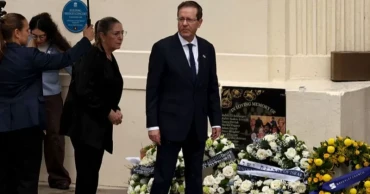
Israeli president begins Australia visit amid protests
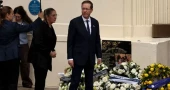
Israeli President Isaac Herzog on Monday laid a wreath and placed two stones brought from Jerusalem at Sydney’s Bondi Beach, marking the start of a tightly secured and controversial four-day visit to Australia.
Bondi Beach was the site of a deadly shooting in December during a Jewish Hanukkah festival, in which 15 people, including a 10-year-old girl, were killed. Paying tribute to the victims, Herzog said he had come to “embrace and console the bereaved families,” adding that pain felt by one Jew resonates across the global Jewish community.
Herzog’s visit, which includes stops in Canberra and Melbourne and meetings with Prime Minister Anthony Albanese, has drawn mixed reactions. Senior Jewish leaders welcomed the trip, saying it would bring comfort to a traumatised community. However, several civil society groups and activists have criticised the invitation, citing allegations that the Israeli president has incited violence in Gaza.
Albanese said the visit was intended to promote social cohesion and unity following the Bondi attack. Despite this, nationwide protests were planned, including a large demonstration in central Sydney, where organisers estimated around 5,000 participants.
Security measures were heightened across Sydney, particularly at Bondi Beach. The New South Wales government invoked rarely used “major event” powers, granting police expanded authority to restrict movement, conduct searches and impose fines for non-compliance. Shortly before the protest was due to begin, the Palestine Action Group lost a legal challenge against the use of these powers.
Police said they dealt with several individuals during the operation. One man who shouted at Herzog was issued a move-on direction, while another was arrested and charged with intimidation and offensive behaviour after allegedly abusing passengers on a bus.
Leaders of Australia’s Jewish community said Herzog’s presence carried deep symbolic meaning. Alex Ryvchin, co-chief executive of the Executive Council of Australian Jewry, said the visit would help lift the spirits of victims’ families and survivors and could help reset strained bilateral ties between Australia and Israel.
However, opposition to the visit has been vocal. The Jewish Council of Australia and the Australian National Imams Council said Herzog should not have been invited, arguing that his presence risks conflating Jewish identity with the actions of the Israeli state. A letter signed by around 600 Australian Jews was published in local media stating that Herzog did not represent them and was not welcome.
Human rights groups also pointed to a UN commission report that accused Herzog and other Israeli leaders of inciting genocide through public statements related to the Gaza war. Herzog has rejected the findings, saying his remarks were taken out of context, while Israel has denied committing genocide.
Responding to the protests, Herzog said he had come in goodwill, stressing the long-standing alliance between Australia and Israel. He also warned that rising antisemitism worldwide posed a serious global threat, saying hatred directed at Jews rarely stops with them.
With inputs from BBC
3 months ago

Former French minister resigns over Epstein-linked tax fraud case
France’s former Culture Minister Jack Lang has stepped down as head of a Paris cultural center following allegations of past financial ties to convicted sex offender Jeffrey Epstein that led to a tax investigation.
He is the most prominent figure in France to be affected by the release of the Epstein files on Jan. 30 by the U.S. Department of Justice. He is widely known for serving as culture minister under Socialist President François Mitterrand during the 1980s and 1990s.
Lang, 86, was summoned to the French Foreign Ministry, which oversees the Arab World Institute, on Sunday, but he instead submitted his resignation.
“He is very sad and deeply hurt to be leaving a position he loves,” his lawyer Laurent Merlet told RTL radio on Sunday. “He placed the interests of the Arab World Institute above all else,” Merlet said, adding that his client denied the allegations and described them as inaccurate.
The Foreign Ministry confirmed his resignation on Saturday evening.
Read More: Starmer faces mounting pressure over Mandelson-Epstein saga
The financial prosecutors’ office said it has opened an investigation into Lang and his daughter, Caroline, over alleged “aggravated tax fraud laundering.”
French investigative news website Mediapart reported last week on alleged financial and business links between the Lang family and Jeffrey Epstein through an offshore company based in the U.S. Virgin Islands in the Caribbean Sea.
Jack Lang’s name appeared more than 600 times in the Epstein files, indicating intermittent correspondence between 2012 and 2019. His daughter was also named in the released documents.
Foreign Minister Jean-Noël Barrot has “taken note” of Lang’s resignation and has begun the process of seeking his successor, the foreign ministry said.
Lang has led the Arab World Institute since 2013.
3 months ago
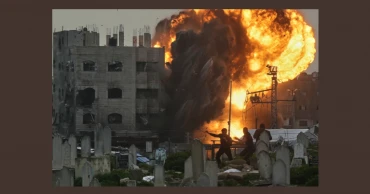
Over 72,000 Palestinians killed in Gaza since October 2023
The Palestinian death toll in the Gaza Strip has risen to 72,027, with 171,651 others wounded since Oct. 7, 2023, Gaza-based health authorities said on Saturday.
In a press statement, the authorities said that 174 deaths from Jan. 30 to Feb. 6 were added to the official count, following approval by the relevant government committee.
576 Palestinians have been killed and 1,543 others wounded since a ceasefire in Gaza came into effect on Oct. 10, it added.
In a separate statement, the health authorities said that the remaining functioning hospitals in the Gaza Strip, struggling to continue providing services, have become mere waiting rooms for thousands of patients, adding that many of the wounded face an uncertain fate.
The war has made sustaining healthcare a daily struggle, severely hindering recovery and the revival of specialized medical services, the authorities said.
The statement warned that basic painkillers have become a rare luxury due to shortages. It also said that 46 percent of essential medicines, 66 percent of medical supplies and 84 percent of laboratory and blood bank materials are completely out of stock.
It added that cancer treatment, hematology, surgery, intensive care and primary healthcare are among the hardest hit, with the limited supplies available falling far short of demand.
3 months ago
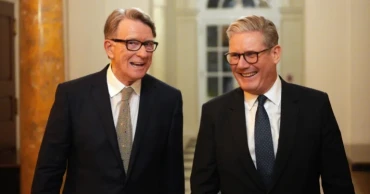
Epstein files shake Europe’s elite, US impact limited so far
Revelations from newly released Jeffrey Epstein documents have triggered political turmoil across Europe, toppling senior figures and prompting investigations, while the fallout in the United States has remained comparatively restrained.
The large cache of files released by the US Department of Justice has dominated headlines in Europe, ending careers of princes, diplomats and politicians who maintained ties with Epstein after his conviction as a sex offender. In contrast, few American figures have faced serious consequences so far.
In Britain, former US ambassador Peter Mandelson was dismissed and is now under police investigation over whether he passed sensitive information to Epstein. Prime Minister Keir Starmer is facing mounting political pressure for appointing Mandelson despite earlier warnings about his links to the disgraced financier.
The documents also deepened scrutiny of Prince Andrew, brother of King Charles III, who had already lost his royal titles and public funding after settling a lawsuit with one of Epstein’s victims. His former wife Sarah Ferguson saw her charity shut down this week.
Although none of the European figures now under fire, apart from Andrew, are accused of sexual abuse, many have been forced out for continuing social or professional contact with Epstein long after his criminal conviction.
Legal experts say European media and political systems have reacted more forcefully. “If your name appears in these files, it becomes a major issue immediately,” said Rob Ford, a political scientist at the University of Manchester, pointing to stronger accountability pressures in parliamentary democracies.
Across Europe, resignations and suspensions have followed. Swedish UN official Joanna Rubinstein stepped down after disclosure of a visit to Epstein’s private island. Slovakia’s national security adviser Miroslav Lajcak quit over communications with Epstein. Latvia, Lithuania and Poland have launched official probes into the documents, with Poland also examining possible links to Russian intelligence.
Norway has been particularly shaken. Authorities opened a corruption investigation into former Prime Minister Thorbjørn Jagland, while ambassador Mona Juul was suspended after it emerged Epstein had left $10 million to her children in his will. Crown Princess Mette-Marit publicly apologized after emails showed her friendly exchanges with Epstein.
In the United States, the release of the files followed bipartisan pressure on President Donald Trump’s administration, but repercussions have been limited. Former Treasury Secretary Larry Summers took leave from academic posts, and a top US law firm chair resigned. Other high-profile figures, including political advisers, business leaders and former presidents, have faced questions but no major sanctions.
Analysts say the contrast highlights differences in political culture and accountability, with Europe showing lower tolerance for associations seen as unethical, even without criminal allegations.
The documents reveal Epstein’s extensive global network of royals, politicians, billionaires and academics, raising fresh questions about his influence and access. European investigators say further disclosures could yet widen the impact of the scandal.
3 months ago
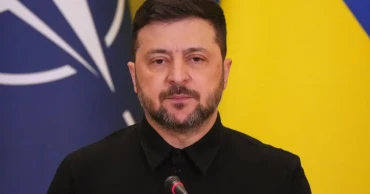
US sets June deadline for Ukraine-Russia war deal: Zelenskyy
The United States has given Ukraine and Russia a deadline until June to reach an agreement to end the nearly four-year war, Ukrainian President Volodymyr Zelenskyy said, as fresh Russian attacks severely damaged the country’s energy infrastructure.
Speaking to reporters, Zelenskyy said the Trump administration wants the war to end by early summer and is likely to pressure both sides if no deal is reached by then.
“The Americans want to do everything by June. They want a clear schedule and will push both sides according to this timeline,” Zelenskyy said. His comments were made on Friday but released on Saturday.
He said the US has proposed holding the next round of trilateral talks involving Ukraine, Russia and the United States next week, possibly in Miami. Ukraine has confirmed its participation, he added.
Zelenskyy also said Russia has submitted a massive $12 trillion economic proposal to the US, referred to as the “Dmitriev package,” named after Russian envoy Kirill Dmitriev. Economic cooperation with the US is part of the broader negotiation process, he noted.
Meanwhile, Russian forces launched more than 400 drones and around 40 missiles overnight, targeting Ukraine’s energy grid, power generation facilities and distribution networks, Zelenskyy said in a post on X.
Ukraine’s state energy operator Ukrenergo said the strikes forced nuclear power plants to reduce output after key high-voltage substations were hit. Eight energy facilities in eight regions were damaged in what it called the second major attack on energy infrastructure this year.
As a result, Ukraine’s power shortage has worsened significantly, leading to extended scheduled power outages across the country, the operator said.
The June deadline follows US-brokered trilateral talks in Abu Dhabi that failed to produce progress, as both sides maintained firm and opposing positions. Russia continues to demand Ukraine’s withdrawal from the Donbas region, a condition Kyiv has repeatedly rejected.
“Ukraine has once again confirmed its position on Donbas. We stand where we stand,” Zelenskyy said, adding that the most difficult issues should be discussed directly at the leaders’ level.
He said no agreement was reached on the management of the Russian-held Zaporizhzhia nuclear power plant and voiced doubts about a US proposal to turn the Donbas into a free economic zone as a compromise.
Zelenskyy said the talks also covered how a potential ceasefire would be monitored, with the US reaffirming its role in that process.
He added that Washington again proposed a ceasefire banning attacks on energy infrastructure. Ukraine is ready to accept such a deal if Russia complies. However, he noted that a previous US-backed pause was broken by Russia after just four days.
3 months ago