others
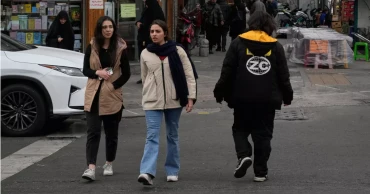
'All options are on the table' in emergency UN meeting, US warns Iran
After weeks of escalating tension, U.S. and Iranian officials faced each other Thursday at the U.N. Security Council, where America's envoy renewed threats against the Islamic Republic despite President Donald Trump's efforts to lower the temperature between the two adversaries.
The U.S. was joined by Iranian dissidents in rebuking the government’s bloody crackdown on nationwide protests that activists say have killed at least 2,677 people.
“Colleagues, let me be clear: President Trump is a man of action, not endless talk like we see at the United Nations,” Mike Waltz, U.S. ambassador to the U.N., told the council. “He has made it clear that all options are on the table to stop the slaughter. And no one should know that better than the leadership of the Iranian regime.”
Waltz's remarks came as the prospect of U.S. retaliation for the protesters’ deaths still hung over the region, though Trump signaled a possible de-escalation, saying the killing appeared to be ending. By Thursday, the protests challenging Iran’s theocracy appeared increasingly smothered, but the state-ordered internet and communication blackout remained.
One diplomat told The Associated Press that top officials from Egypt, Oman, Saudi Arabia and Qatar spent the last 48 hours raising concerns with Trump that a U.S. military intervention would shake the global economy and destabilize an already volatile region.
During the meeting, Hossein Darzi, the deputy Iranian ambassador to the U.N., blasted the U.S. for what he claimed was America's “direct involvement in steering unrest in Iran to violence.”
“Under the hollow pretext of concern for the Iranian people and claims of support for human rights, the United States is attempting to portray itself as a friend of the Iranian people, while simultaneously laying the groundwork for political destabilization and military intervention under a so-called ′humanitarian′ narrative,” Darzi said.
The U.S. requested the emergency Security Council meeting and invited two Iranian dissidents, Masih Alinejad and Ahmad Batebi, to describe their experience as targets of the Islamic Republic.
In a stunning moment, Alinejad addressed the Iranian representative directly.
“You have tried to kill me three times. I have seen my would-be assassin with my own eyes in front of my garden, in my home in Brooklyn,” she said while the Iranian official looked directly ahead, without acknowledging her.
In October, two purported Russian mobsters were each sentenced to 25 years behind bars for hiring a hit man to kill Alinejad at her New York home three years ago on behalf of the Iranian government.
Batebi described the deep cuts the prison guards in Iran would inflict on him before pouring salt on his wounds. “If you do not believe me, I can show you my body right now,” he told the council.
Both dissidents called on the world body and the council to do more to hold Iran accountable for its human rights abuses. Batebi pleaded with Trump not to “leave” the Iranian people alone.
“You encouraged people to go into the streets. That was a good thing. But don’t leave them alone,” he said.
Russia was the only member of the council that defended Iran's actions while calling for the U.S. to stop intervening.
Protests appear smothered as death toll risesVideos of demonstrations have stopped coming out of Iran, likely signaling the slowdown of their pace under the heavy security force presence in major cities.
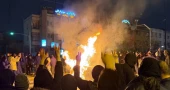
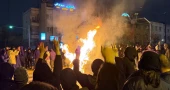
In Iran’s capital, Tehran, witnesses said recent mornings showed no new signs of bonfires lit the night before or debris in the streets. The sound of gunfire, which had been intense for several nights, has also faded.
The clampdown on the demonstrations has killed at least 2,677 people, according to the U.S.-based Human Rights Activists News Agency. The figure reported Thursday is an increase of 106 from a day earlier, and the organization says the number will likely continue to climb. The death toll exceeds that of any other round of protest or unrest in Iran in decades and recalls the chaos surrounding the country’s 1979 Islamic Revolution.
The U.S.-based agency, founded 20 years ago, has been accurate throughout multiple years of demonstrations, relying on a network of activists inside Iran that confirms all reported fatalities.
With communications greatly limited in Iran, the AP has been unable to independently confirm the group’s toll. The Iranian government has not provided casualty figures.
New sanctions on senior IraniansIn other developments Thursday, the U.S. announced new sanctions on Iranian officials accused of suppressing the protests, which began late last month over the country’s faltering economy and the collapse of its currency. The Group of Seven industrialized democracies and the European Union also said they too were looking at new sanctions to ratchet up the pressure on Iran’s theocratic government.
Among those hit with U.S. sanctions was the secretary of Iran’s Supreme Council for National Security, whom the Treasury Department accuses of being one of the first officials to call for violence against protesters. The Group of Seven, of which the U.S. is a member, also warned they could impose more sanctions if Iran’s crackdown continues.
European Union chief Ursula von der Leyen said the 27-nation bloc was looking at strengthening sanctions “to push forward that this regime comes to an end and that there is change.
4 months ago
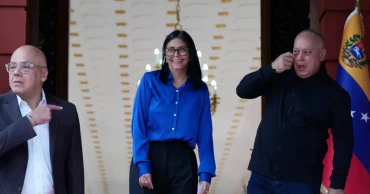
Venezuela to continue releasing political prisoners after Maduro arrest
Venezuela’s acting President Delcy Rodríguez said Wednesday her government would continue releasing prisoners detained under former president Nicolás Maduro, describing the move as part of a “new political moment” following his removal by the United States earlier this month.
Speaking at her first press briefing since Maduro was captured by US forces and flown to New York on Jan 3 to face drug trafficking charges, Rodríguez said the process of freeing detainees “has not yet concluded” and signaled that more releases were planned.
Addressing reporters at the presidential palace in Caracas, she struck a conciliatory tone, promising a Venezuela that would allow political and ideological diversity while insisting that the rule of law would be strictly enforced.
A leading Venezuelan human rights group estimates that about 800 political prisoners remain behind bars, including politicians, soldiers, lawyers and civil society activists.
Rodríguez’s comments came after US President Donald Trump said he had held a “great conversation” with her, their first direct contact since Maduro’s arrest.
“We had a long call. We discussed a lot of things, and I think we’re getting along very well with Venezuela,” Trump said at the White House.
Unlike previous speeches that echoed Maduro’s anti-US rhetoric, Rodríguez avoided mentioning Washington directly, even as relations between the two countries shift rapidly.
She acknowledged that prisoner releases were under way, a move widely seen as encouraged by the Trump administration, but insisted that the process had begun under Maduro in December as a gesture toward dialogue and tolerance.
“Crimes related to the constitutional order are being evaluated,” she said, referring to detainees held on charges that human rights groups say are politically motivated. “Messages of hatred, intolerance and acts of violence will not be permitted.”
Flanked by National Assembly President Jorge Rodríguez and Interior Minister Diosdado Cabello, she took no questions and said Cabello was overseeing the release process, which critics say has been slow and opaque.
Venezuela’s leading prisoners’ rights group, Foro Penal, confirmed that at least 72 detainees have been freed so far, including political activist Nicmer Evans, journalist Roland Carreño and two campaign aides of opposition leader María Corina Machado.
However, Foro Penal says more than 800 prisoners remain in custody on political grounds and has criticised the government for a lack of transparency.
Rodríguez rejected such claims, accusing what she called “self-proclaimed nongovernmental organizations” of spreading falsehoods about Venezuela.
“There will always be those who want to fish in troubled waters,” she said, adding that her government was committed to letting “the truth be reported.”
4 months ago
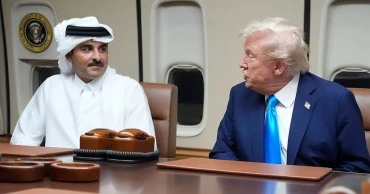
US advises evacuation of some staff from Qatar base amid Iran crisis
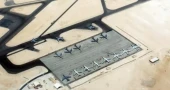
Some personnel at a key US military base in Qatar were advised to evacuate by Wednesday evening as tensions rose following Iran’s deadly crackdown on protesters and warnings of possible US action, a US official and Qatari authorities said.
The precautionary move came after a senior Iranian official referred to Tehran’s retaliatory missile strike on Al Udeid Air Base in June, carried out in response to earlier US attacks on Iran’s nuclear facilities.
A US official, speaking on condition of anonymity due to the sensitivity of the matter, said the step was part of broader regional security measures. The official declined to say whether the evacuation was optional or mandatory, whether it applied to military or civilian personnel, or how many people were affected.
Early Thursday, the US Embassy in Qatar said it had advised its staff to exercise increased caution and limit non-essential travel to Al Udeid Air Base. It also urged US citizens in Qatar to take similar precautions.
In Kuwait, the US Embassy ordered a temporary halt on its personnel travelling to several military bases, including Camp Arifjan, Camp Buehring, Ali Al Salem Air Base and Camp Patriot, amid heightened regional tensions. Kuwait hosts US Army Central, Washington’s Middle East command.
Anti-government protests in Iran began in late December, and President Donald Trump has said he is prepared to launch military operations if Tehran continues to kill and detain protesters.
A day after describing the killings as “significant” and vowing that his administration would “act accordingly,” Trump told reporters he had been informed that Iran had halted its targeting of protesters and suspended execution plans, though he offered no details.
His vague remarks left it unclear what action, if any, the United States might take against Iran.
Qatar’s international media office said the security measures at Al Udeid were being taken in response to “current regional tensions” and stressed that protecting citizens, residents and critical infrastructure remained a top priority.
Al Udeid, which hosts thousands of US troops, was struck by Iranian missiles in June. While the US military said no American or Qatari personnel were harmed, a Qatari officer later said one missile was not intercepted and hit the base.
Iranian Supreme Leader adviser Ali Shamkhani warned on social media that any future US aggression would be met with a decisive response, citing the earlier strike on Al Udeid as proof of Iran’s capabilities.
US and Qatari officials said they remain in close contact, with Qatar reiterating its support for de-escalation and peaceful solutions to maintain regional stability.
4 months ago
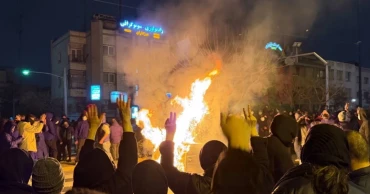
Trump says Iran paused execution plans as protests rage
U.S. President Donald Trump said Wednesday he had been told “on good authority” that Iran has stopped plans to carry out executions, even as Tehran signals fast-track trials and harsh punishments for thousands detained in its nationwide crackdown on protesters.
The U.S. president made the claim without providing details, days after telling protesting Iranians that “help is on the way” and that his administration would “act accordingly” in response to the Iranian government’s actions.
However, Trump did not explain how Washington might respond and it was unclear whether his remarks suggested a delay in any possible U.S. action.
Earlier in the day, Iran’s judiciary chief Gholamhossein Mohseni-Ejei said authorities must move quickly to punish more than 18,000 people detained during the unrest through rapid trials and executions.
Iran’s security forces have killed at least 2,586 people during the crackdown, according to the U.S.-based Human Rights Activists News Agency. The toll is the highest from any wave of unrest in Iran in decades, recalling the turmoil surrounding the country’s 1979 Islamic Revolution.
Tensions between Tehran and Washington remained high as Iran further extended an order closing its airspace to commercial aircraft without explanation early Thursday. A notice to pilots said the closure was expected to last until 7:30am local time.
The United States also requested an emergency meeting of the UN Security Council on Iran, while U.S. embassies in Kuwait and Qatar ordered heightened security measures and advised personnel to limit movements to key military bases.
Britain shut its embassy in Tehran and withdrew diplomats, citing security concerns, while several countries, including India and Italy, urged their nationals to leave Iran.
Iranian Foreign Minister Abbas Araghchi said Tehran is “ready for negotiation” and urged Washington to choose diplomacy over war, while again blaming foreign powers for the unrest.
US labels three Muslim Brotherhood branches as terrorist groups
Meanwhile, mass funerals were held in Tehran for security force members killed in the protests, and demonstrations in support of Iranian protesters continued in cities across Europe.
4 months ago
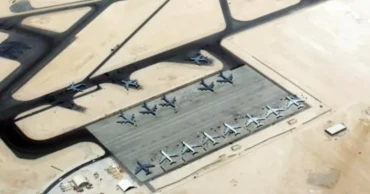
US, UK reduce personnel at Qatar’s Al-Udeid base amid Iran tensions
The United States and the United Kingdom are partially withdrawing personnel from the Al-Udeid air base in Qatar amid rising tensions with Iran over its crackdown on anti-government protests.
Officials described the move as a “precautionary measure” as US President Donald Trump considers possible actions against Tehran. Some UK staff are also reported to be leaving the base. A Qatari government statement said the steps were being taken “in response to current regional tensions.”
Al-Udeid, the largest US military base in the Middle East, hosts about 10,000 US personnel and roughly 100 from the UK. It is unclear how many are departing. A UK Ministry of Defence spokesperson declined to comment, citing operational security.
Rights groups report that over 2,400 protesters have been killed in Iran since the unrest began in late December, with more than 18,400 arrests. The protests initially erupted over a collapsing currency and rising living costs and have grown into widespread demands for political change.
Iran’s government has warned that any US military action would make Israeli and US military and shipping facilities in the region legitimate targets. Meanwhile, the US has advised its citizens in the Middle East to exercise increased caution and limit travel to military sites.
Trump has repeatedly threatened “very strong action” if Iran executes protesters, while also stating that Iranian leaders have sought negotiations.
With inputs from BBC
4 months ago
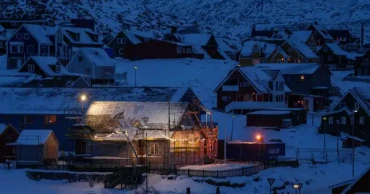
Trump says US control of Greenland is ‘non-negotiable’
President Donald Trump on Wednesday said anything short of US control over Greenland would be unacceptable, just hours before Vice President JD Vance was due to hold talks with Danish and Greenlandic officials in Washington.
In a post on his social media platform, Trump repeated his claim that the United States “needs Greenland for national security” and said NATO should help Washington secure the Arctic island. Otherwise, he warned, Russia or China could step in.
“NATO would become much stronger and more effective with Greenland under US control. Anything less than that is unacceptable,” Trump wrote.
Greenland has become the focus of growing geopolitical tension after Trump openly declared his desire to take control of the island, a move strongly rejected by its residents and leaders. The White House has not ruled out the use of force to take over the semi-autonomous territory, which is part of Denmark, a NATO ally of the United States.
Vice President Vance is scheduled to meet Danish Foreign Minister Lars Løkke Rasmussen and Greenland’s Foreign Minister Vivian Motzfeldt to discuss the issue.
Ahead of the meeting, France’s foreign minister criticised what he described as US “blackmail” over Greenland, reflecting rising frustration among Washington’s allies.
In Nuuk, Greenland’s capital, international media crews have been questioning residents about the unfolding crisis. Tuuta Mikaelsen, a 22-year-old student, told the Associated Press she hoped US officials would “back off”.
Greenland’s Prime Minister Jens-Frederik Nielsen said in Copenhagen on Tuesday that if forced to choose, Greenland would stand with Denmark, NATO, the Danish kingdom and the European Union.
Asked about Nielsen’s remarks, Trump said he disagreed and warned the issue could become “a big problem” for the Greenlandic leader.
Greenland holds growing strategic importance as melting ice due to climate change could open shorter shipping routes to Asia and make it easier to access vast reserves of critical minerals used in electronics. Trump has also cited what he claims are threats from Russian and Chinese ships in the region as justification for seeking control of the island.
However, both experts and Greenlandic residents have questioned those claims.
4 months ago
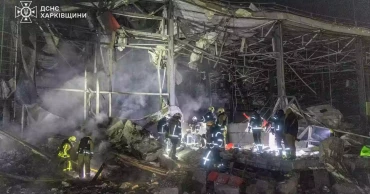
Russia attacks Ukraine's power grid again in freezing cold
Russia carried out another large-scale drone and missile attack on Ukraine its second in four days, Ukrainian officials said Tuesday, once again targeting energy infrastructure during subzero conditions. The strikes appeared to dismiss U.S.-backed peace initiatives as Moscow’s invasion nears its fourth year.
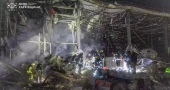
Russia unleashed a massive overnight aerial assault on Ukraine, firing nearly 300 drones along with 18 ballistic and seven cruise missiles across eight regions, President Volodymyr Zelenskyy said. One strike in the northeastern Kharkiv region hit a mail depot, killing four people and injuring at least 10 others. In the Kyiv region, hundreds of thousands of households were left without electricity as freezing weather gripped the country.
Kyiv has endured subzero temperatures for more than two weeks, with daytime readings dropping to minus 12 degrees Celsius. Ice-coated streets, snow-covered sidewalks and the constant hum of generators underscored the city’s worsening energy crisis. Mayor Vitali Klitschko said the latest strikes caused the most severe power outage the capital has experienced so far, leaving more than 500 residential buildings without central heating.
Residents sought warmth wherever possible. Many gathered at government-run “Points of Invincibility,” temporary shelters offering food, heat and electricity. Olena Davydova, a Kyiv resident, said her family had gone nearly two days without power, forcing them to adapt by sharing beds for warmth, storing food outdoors and relying on candles at night.
Elsewhere, friends and relatives crowded into apartments that still had electricity or hot water to charge phones, shower and share warm drinks. City authorities ordered daily hot meals for vulnerable residents and announced bonuses for utility workers laboring around the clock to restore essential services.
Read More: Ukrainian drone strike kills one, injures three in Russian city of Voronezh
The attack followed another large-scale Russian barrage just four days earlier, which included the rare use of a hypersonic missile. The United States condemned the renewed strikes as a dangerous escalation, accusing Moscow of deliberately targeting civilian infrastructure to deprive Ukrainians of heat and water-a tactic Ukrainian officials call “weaponizing winter.”
In response, Ukraine carried out drone strikes inside Russia, reportedly hitting a drone manufacturing facility in Taganrog. Russian officials said 11 Ukrainian drones were intercepted, though damage was reported. Independent verification of the claims was not possible.
4 months ago

Trump urges Tehran to show humanity toward protesters
President Donald Trump was consulting with his national security team Tuesday about next steps with Iran as he looked to get a better understanding of the number of Iranian citizens who have been killed and arrested in more than two weeks of unrest throughout the country.
Trump said he believes that the killing is “significant” and that his administration would “act accordingly.” He added that he believed the Iranian government was “badly misbehaving.”
But the president said he has yet to receive a confirmed number of Iranians killed in the protests that began late last month, saying he has heard “five different sets of numbers” about the death toll.
Since the protests began Dec. 28, 16,700 people have been arrested and more than 2,000 have been killed, the vast majority protesters, according to Human Rights Activists News Agency. The organization relies on a network of activists inside Iran that confirms all reported fatalities.
“The message is they’ve got to show humanity,” Trump said of the Iranian government. “They’ve got a big problem. And I hope they’re not going to be killing people.”
The comments came after Trump earlier in the day announced he was cutting off the prospect of talks with Iranian officials amid a protest crackdown, telling Iranian citizens “help is on its way.”
Iran protest death toll jumps to 2,571
Trump did not offer any details about what the help would entail, but his remarks come just two days after the Republican president said Iran wants to negotiate with Washington after his threat to strike the Islamic Republic.
But Trump appeared to make an abrupt shift about his willingness to engage with the Iranian government.
“Iranian Patriots, keep protesting and take over your institutions if you can,” Trump said in speech Tuesday at an auto factory in Michigan. “Save the names of the killers and abusers that are abusing you. You are being very badly abused."
Iranian ambassador responds to Trump
Iran's chief envoy to the United Nations, Ambassador Amir Saeid Iravani, denounced Trump's latest comments in a letter to U.N. officials as “interventionist rhetoric.”
“This reckless statement explicitly encourages political destabilization, incites and invites violence and threatens the sovereignty, territorial integrity and national security of the Islamic Republic of Iran,” Iravani wrote.
Iranian state media has aired at least 97 confessions from protesters, many expressing remorse for their actions, since the protests began, according to a rights group that is tracking the videos.
Iran alleges these confessions, which often include references to Israel or America, are proof of foreign plots behind Iran’s nationwide protests. Activists say they are coerced confessions, long a staple of Iran’s hard-line state television, the only broadcaster in the country. And these videos are coming at an unprecedented clip.
Trump tells Iranians “help is on its way” amid deadly protests
Trump, in an exchange with reporters during the factory visit, demurred when asked what kind of help he would provide.
“You’re going to have to figure that one out,” he said.
The U.S. president has repeatedly threatened Tehran with military action if his administration found the Islamic Republic was using deadly force against antigovernment protesters. Trump on Sunday told reporters he believed Iran is “starting to cross” that line and has left him and his national security team weighing “very strong options” even as he said the Iranians had made outreach efforts to the U.S.
And on Monday, the president’s team offered guarded hope that a diplomatic solution could still be found.
Later Monday, Trump said he would slap 25% tariffs on countries doing business with Tehran “effective immediately,” but the White House has not provided details on that move. China, the United Arab Emirates, Turkey, Brazil and Russia are among economies that do business with Tehran.
Administration leaders weigh US options
Vice President JD Vance, Secretary of State Marco Rubio and key White House National Security Council officials began meeting Friday to develop options for Trump, ranging from a diplomatic approach to military strikes.
“We don’t want to see people killed and we want to see a little bit of freedom for these people," Trump said. "These people have been living in hell for a long time.”
Iraq PM race: al-Sudani withdraws in favor of Maliki
Iran, through the country’s parliamentary speaker, has warned that the U.S. military and Israel would be “legitimate targets” if Washington uses force to protect demonstrators.
Trump said he was undeterred by threats of Iranian retaliation.
“Iran said that the last time I blew them up,” said Trump, referring to threats from the government ahead of U.S. military strikes in June on key Iranian nuclear facilities. “They better behave.”
More than 600 protests have taken place across all of Iran’s 31 provinces, the Human Rights Activists News Agency reported Tuesday. The activist group said 1,850 of the dead were protesters and 135 were government-affiliated. It said more than 16,700 people had been detained.
Understanding the scale of the protests has been difficult. Iranian state media has provided little information about the demonstrations. Online videos offer only brief, shaky glimpses of people in the streets or the sound of gunfire.
Trump's push on the Iranian government to end the crackdown comes as he is dealing with a series of other foreign policy emergencies around the globe.
It’s been more than a week since the U.S. military launched a successful raid to arrest Venezuela’s Nicolás Maduro and remove him from power. The U.S. continues to mass an unusually large number of troops in the Caribbean Sea.
Trump is also focused on trying to get Israel and Hamas onto the second phase of a peace deal in Gaza and broker an agreement between Russia and Ukraine to end the nearly four-year war in Eastern Europe.
But advocates urging Trump to take strong action against Iran say this moment offers an opportunity to further diminish the theocratic government that’s ruled the country since the Islamic revolution in 1979.
The demonstrations are the biggest Iran has seen in years — protests spurred by the collapse of Iranian currency that have morphed into a larger test of supreme leader Ayatollah Ali Khamenei’s repressive rule.
4 months ago
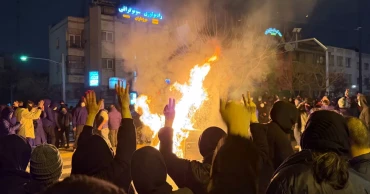
Iran protest death toll jumps to 2,571
The death toll from a crackdown on protests in Iran jumps to at least 2,571, activists said early Wednesday.
The figure came from the U.S.-based Human Rights Activists News Agency, which has been accurate in multiple rounds of unrest in Iran in recent years.
The activist group said 2,403 of the dead were protesters and 147 were government-affiliated. Twelve children were killed, along with nine civilians it said were not taking part in protests. More than 18,100 people have been detained, the group said.
With the internet down in Iran, gauging the demonstrations from abroad has grown more difficult. The Associated Press has been unable to independently assess the toll. Iran’s government has not offered overall casualty figures.
Trump urges Tehran to show humanity toward protesters
That death toll dwarfs the death toll from any other round of protest or unrest in Iran in decades and recalls the chaos surrounding the country’s 1979 Islamic Revolution.
Iranians reach out, but world can't reach in
Several people in Tehran were able to call the AP on Tuesday and speak to a journalist. The AP bureau in Dubai, United Arab Emirates, was unable to call those numbers back. Witnesses said text messaging was still down, and internet users in Iran could connect to government-approved websites locally but nothing abroad.
Anti-riot police officers wore helmets and body armor while carrying batons, shields, shotguns and tear gas launchers, according to the witnesses. Police stood watch at major intersections. Nearby, witnesses saw members of the Revolutionary Guard's all-volunteer Basij force, who carried firearms and batons. Security officials in plainclothes were visible in public spaces.
Several banks and government offices were burned during the unrest, witnesses said. Banks struggled to complete transactions without the internet, they added.
Trump tells Iranians “help is on its way” amid deadly protests
Shops were open, though there was little foot traffic in the capital. Tehran's Grand Bazaar, where the demonstrations began Dec. 28 over the collapse of Iran's rial currency, opened Tuesday. A witness described speaking to multiple shopkeepers who said security forces ordered them to reopen no matter what. Iranian state media did not acknowledge that order.
The witnesses spoke on condition of anonymity for fear of reprisal.
It also appeared that security service personnel were searching for Starlink terminals, as people in northern Tehran reported authorities raiding apartment buildings with satellite dishes. While satellite television dishes are illegal, many in the capital have them in homes, and officials broadly had given up on enforcing the law in recent years.
On the streets, people also could be seen challenging plainclothes security officials, who were stopping passersby at random.
State television also read a statement about mortuary and morgue services being free — a signal that some likely charged high fees for the release of bodies amid the crackdown.
Khamenei, in a statement carried by state TV, praised the tens of thousands who took part in pro-government demonstrations nationwide on Monday.
Russia strikes Ukraine with drones and missiles amid freezing winter
“This was a warning to American politicians to stop their deceit and not rely on traitorous mercenaries,” he said. “The Iranian nation is strong and powerful and aware of the enemy.”
State TV on Monday aired chants from the crowd, which appeared to number in the tens of thousands. They chanted “Death to America!” and “Death to Israel!” Others cried out, “Death to the enemies of God!” Iran’s attorney general has warned that anyone taking part in protests will be considered an “enemy of God,” a death-penalty charge.
4 months ago
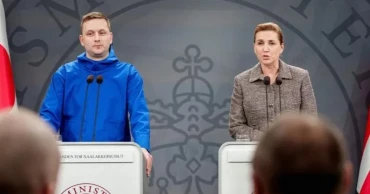
Greenland chooses Denmark over US amid Trump annexation threat
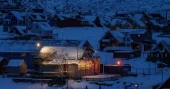
Greenland’s people would choose Denmark over the United States if asked today, Greenlandic Prime Minister Jens-Frederik Nielsen said, responding to renewed US pressure over the semi-autonomous island.
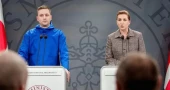
Nielsen made the remark at a joint news conference with Danish Prime Minister Mette Frederiksen, the strongest statement yet from Greenland since former US President Donald Trump revived plans to annex the island. Trump has claimed the US needs to “own” Greenland to counter Russia and China and suggested buying the territory, without ruling out force.
Frederiksen condemned the “completely unacceptable pressure” from the US and warned that any military action could harm the trans-Atlantic NATO alliance.
Greenland’s strategic location between North America and the Arctic makes it important for missile early warning systems and monitoring vessels. The US already has more than 100 military personnel stationed at Pituffik base under existing agreements with Denmark.
Nielsen said Greenland does not want to be governed or owned by the US, calling the situation a “geopolitical crisis.”
European allies, including major NATO members, have expressed support for Denmark, stressing that only Denmark and Greenland can decide on matters regarding the island.
Danish and Greenlandic officials are scheduled to travel to the US to meet Vice President JD Vance and Secretary of State Marco Rubio.
Greenland’s growing resource potential, including rare earth minerals, uranium, iron, oil, and gas, has increased international interest, especially as climate change melts ice and improves access.
With inputs from BBC
4 months ago