others

Israel claims killing of top Hamas commander in Gaza
Israel on Saturday said it killed a top Hamas commander in Gaza after an explosive device detonated and wounded two soldiers in the territory's south.
Hamas in a statement did not confirm the death of Raed Saad. It said a civilian vehicle had been struck outside Gaza City and asserted it was a violation of the ceasefire that took effect on Oct. 10.
Saad served as the Hamas official in charge of manufacturing and previously led the militant group's operations division. The Israeli statement described him as one of the architects of the Oct. 7, 2023, attack that sparked the war, and said that he had been “engaged in rebuilding the terrorist organization” in a violation of the ceasefire.
The Israeli strike west of Gaza City killed four people, according to an Associated Press journalist who saw their bodies arrive at Shifa Hospital. Another three were wounded, according to Al-Awda hospital.
Israel and Hamas have repeatedly accused each other of truce violations.
Israeli airstrikes and shootings in Gaza have killed at least 386 Palestinians since the ceasefire took hold, according to Palestinian health officials. Israel has said recent strikes are in retaliation for militant attacks against its soldiers, and that troops have fired on Palestinians who approached the “Yellow Line” between the Israeli-controlled majority of Gaza and the rest of the territory.
Israel has demanded that Palestinian militants return the remains of the final hostage, Ran Gvili, from Gaza and called it a condition of moving to the second and more complicated phase of the ceasefire. That lays out a vision for ending Hamas’ rule and seeing the rebuilding of a demilitarized Gaza under international supervision.
The initial Hamas-led 2023 attack on southern Israel killed around 1,200 people and took 251 hostages. Almost all hostages or their remains have been returned in ceasefires or other deals.
Israel’s two-year campaign in Gaza has killed more than 70,650 Palestinians, roughly half of them women and children, according to the territory’s Health Ministry, which does not distinguish between militants and civilians in its count. The ministry, which operates under the Hamas-run government, is staffed by medical professionals and maintains detailed records viewed as generally reliable by the international community.
Much of Gaza has been destroyed and most of the population of over 2 million has been displaced. Humanitarian aid entry into the territory continues to be below the level set by ceasefire terms, and Palestinians who lost limbs in the war face a shortage of prosthetic limbs and long delays in medical evacuations.
5 months ago

Messi’s India GOAT Tour hit by chaos in Kolkata
Football icon Lionel Messi’s much-hyped “GOAT Tour of India” began in Kolkata on Saturday but was marred by chaos and mismanagement at the Yuva Bharati Krirangan, forcing the event to be cut short amid fan unrest.
Messi virtually unveiled a 70-foot statue of himself earlier in the day, marking the start of his three-day India tour. The statue, installed by the Sree Bhumi Sporting Club at Lake Town, shows the Argentine great holding the FIFA World Cup trophy and is the first of its kind in India.
However, moments after Messi appeared at the Salt Lake Stadium, the situation spiralled out of control as angry fans protested over alleged mismanagement and lack of access. Visuals showed vandalism inside the stadium, while security personnel rushed to escort Messi out as tensions rose.
As a result, several scheduled activities were curtailed. West Bengal Chief Minister Mamata Banerjee, former Indian cricket captain Sourav Ganguly and Bollywood star Shah Rukh Khan, who were expected to attend the programme, could not take part after the event was abruptly ended.
Promoter Satadru Datta and security officials whisked Messi away from the venue as fans shouted slogans and expressed frustration, calling the situation an “absolute disgrace” and blaming poor planning.
Earlier in the day, Messi met Shah Rukh Khan and industrialist Sanjiv Goenka and expressed happiness over the statue, according to state minister Sujit Bose, who said Messi and his team had approved the installation.
Messi arrived in Kolkata on Saturday morning and is scheduled to leave for Hyderabad in the evening, where he is set to take part in a football clinic and a celebrity match. The India tour will continue in Mumbai on December 14 and conclude in New Delhi on December 15.
Despite the disorder in Kolkata, organisers said the remaining legs of the tour would go ahead as planned under tighter security arrangements.
With inputs from NDTV
5 months ago

Nobel laureate Narges Mohammadi detained by Iranian authorities
Supporters of Nobel Peace Prize winner Narges Mohammadi said Friday that Iranian authorities have arrested the prominent human rights activist.
According to the foundation that bears her name, Mohammadi was detained in the northeastern city of Mashhad while attending a memorial service for a human rights lawyer who was recently found dead under unclear circumstances. Mashhad is located about 680 kilometers from Tehran.
A local official reportedly confirmed that arrests took place but did not specifically identify Mohammadi, who is 53. It remains uncertain whether she will be sent back to prison, where she had been serving a sentence before being granted temporary medical leave in December 2024.
Her detention comes amid an intensified crackdown by Iranian authorities on activists, intellectuals, and dissidents as the country grapples with economic hardship, international sanctions, and fears of renewed conflict with Israel. The arrest could increase pressure from Western governments at a time when Tehran has signaled interest in restarting nuclear negotiations with the United States.
The Norwegian Nobel Committee expressed serious concern over Mohammadi’s arrest, urging Iranian authorities to immediately clarify her whereabouts, ensure her safety, and release her unconditionally.
Supporters said Mohammadi was forcibly detained by security and police forces during the memorial, where other activists were also reportedly arrested. The ceremony honored Khosrow Alikordi, a 46-year-old lawyer and human rights advocate whose death was officially described as a heart attack, though its timing has raised questions amid heightened security measures. More than 80 lawyers have called for greater transparency surrounding his death.
Human rights advocates condemned the arrests, describing them as an assault on basic freedoms. They said detaining people for attending a memorial reflects deep fear of accountability within the government and highlighted the courage of Iranians who continue to protest peacefully.
Video shared by Mohammadi’s supporters showed her speaking to the crowd without wearing a hijab and leading chants in honor of Majidreza Rahnavard, who was publicly executed in 2022. Additional footage appeared to show anti-government slogans being shouted during the gathering.
Mashhad’s governor said prosecutors ordered the temporary detention of several participants after what he described as the chanting of inappropriate slogans. He claimed the measures were preventive, though he did not address allegations that force was used during the arrests.
Mohammadi had been on extended medical furlough for several months after her release from prison late last year. Although initially granted for three weeks, the leave was repeatedly extended, possibly due to international pressure. During that time, she continued her activism, participating in protests and speaking to international media, including appearing outside Tehran’s Evin prison.
She had been serving a sentence of nearly 14 years on charges related to national security and propaganda against the state and was a vocal supporter of protests following the 2022 death of Mahsa Amini. Mohammadi has suffered serious health issues while imprisoned, including heart attacks and surgery for a bone lesion that doctors feared could be cancerous.
Medical professionals have warned that returning her to prison without adequate care could seriously endanger her health. An engineer by profession, Mohammadi has been jailed multiple times over the years, receiving sentences totaling more than three decades. Her most recent imprisonment began in 2021 after she attended another memorial linked to nationwide protests.
5 months ago

Fighting continues despite Trump announcing Thailand-Cambodia truce
President Donald Trump said Friday that Thailand and Cambodia had agreed to restore a ceasefire after several days of deadly fighting, but officials from both countries indicated that hostilities had not fully stopped and that key issues remain unresolved.
Trump announced the renewed truce on social media after separate phone calls with Thai Prime Minister Anutin Charnvirakul and Cambodian Prime Minister Hun Manet. He said both sides had agreed to halt all shooting and return to the original peace agreement reached earlier this year with support from Malaysia’s Prime Minister Anwar Ibrahim.
However, Thailand’s Foreign Ministry later challenged Trump’s claim that a ceasefire had been finalized, without offering further details. A spokesperson for Thailand’s defense ministry said clashes were continuing, while Cambodia’s defense ministry reported that Thai forces carried out strikes early Saturday. Those claims could not be independently confirmed.
Before Trump’s social media announcement, Anutin said he had told the U.S. president that Thailand would continue military operations until Cambodia no longer threatened its sovereignty. He said Thailand wanted concrete actions from Cambodia, including halting attacks, withdrawing forces, and clearing land mines, rather than declarations alone.
Trump credited Malaysia’s prime minister with playing a key role in efforts to prevent what he described as a potentially major war between two neighboring countries. The original ceasefire was reached in July through Malaysian mediation and U.S. pressure, with Trump warning of possible trade consequences if the deal was not accepted. The agreement was later formalized in October at a regional meeting in Malaysia.
Despite that arrangement, tensions persisted, marked by propaganda campaigns and sporadic cross-border violence. The conflict is rooted in long-standing territorial disputes dating back to colonial-era maps from 1907, which Thailand disputes, and a 1962 International Court of Justice ruling that awarded disputed territory to Cambodia.
Recent fighting has included Thai airstrikes on what it says are Cambodian military targets and Cambodia’s use of BM-21 rocket launchers. Thai media reported that at least six Thai soldiers were killed by rocket shrapnel, and the Thai military said Cambodian rockets damaged homes near the border. Thailand also reported destroying a crane near the historic Preah Vihear temple, alleging it was being used for military surveillance.
Trump has repeatedly claimed credit for helping resolve multiple international conflicts since returning to office and has openly expressed interest in receiving a Nobel Peace Prize. Speaking to reporters later Friday, he said his administration had successfully eased the Thailand-Cambodia crisis and described the situation as stable.
Other ceasefires Trump has cited as diplomatic successes are also facing difficulties. A recent peace deal between the Democratic Republic of Congo and Rwanda is under strain as violence has escalated in eastern Congo. The International Contact Group for the Great Lakes expressed deep concern and urged all parties to honor their commitments and de-escalate tensions.
Meanwhile, Trump’s internationally backed plan to end the Israel-Hamas war in Gaza remains unresolved, with intermittent fighting continuing and negotiations over a key second phase still ongoing.
5 months ago

Humans make fire far earlier than previously believed, study finds
Scientists in Britain say ancient humans may have learned to make fire far earlier than previously believed, after uncovering evidence that deliberate fire-setting took place in what is now eastern England around 400,000 years ago.
The findings, described in the journal Nature, push back the earliest known date for controlled fire-making by roughly 350,000 years. Until now, the oldest confirmed evidence had come from Neanderthal sites in what is now northern France dating to about 50,000 years ago.
The discovery was made at Barnham, a Paleolithic site in Suffolk that has been excavated for decades. A team led by the British Museum identified a patch of baked clay, flint hand axes fractured by intense heat and two fragments of iron pyrite, a mineral that produces sparks when struck against flint.
Researchers spent four years analyzing to rule out natural wildfires. Geochemical tests showed temperatures had exceeded 700 degrees Celsius (1,292 Fahrenheit), with evidence of repeated burning in the same location.
That pattern, they say, is consistent with a constructed hearth rather than a lightning strike.
Rob Davis, a Paleolithic archaeologist at the British Museum, said the combination of high temperatures, controlled burning and pyrite fragments shows “how they were actually making the fire and the fact they were making it.”
Iron pyrite does not occur naturally at Barnham. Its presence suggests the people who lived there deliberately collected it because they understood its properties and could use it to ignite tinder.
Deliberate fire-making is rarely preserved in the archaeological record. Ash is easily dispersed, charcoal decays and heat-altered sediments can be eroded.
At Barnham, however, the burned deposits were sealed within ancient pond sediments, allowing scientists to reconstruct how early people used the site.
Researchers say the implications for human evolution are substantial.
Fire allowed early populations to survive colder environments, deter predators and cook food. Cooking breaks down toxins in roots and tubers and kills pathogens in meat, improving digestion and releasing more energy to support larger brains.
Chris Stringer, a human evolution specialist at the Natural History Museum, said fossils from Britain and Spain suggest the inhabitants of Barnham were early Neanderthals whose cranial features and DNA point to growing cognitive and technological sophistication.
Fire also enabled new forms of social life. Evening gatherings around a hearth would have provided time for planning, storytelling and strengthening group relationships, which are behaviors often associated with the development of language and more organized societies.
Archaeologists say the Barnham site fits a wider pattern across Britain and continental Europe between 500,000 and 400,000 years ago, when brain size in early humans began to approach modern levels and when evidence for increasingly complex behavior becomes more visible.
Nick Ashton, curator of Paleolithic collections at the British Museum, described it as “the most exciting discovery of my long 40-year career."
For archaeologists, the find helps address a long-standing question: When humans stopped relying on lightning strikes and wildfires and instead learned to create flame wherever and whenever they needed it.
5 months ago
US, Japan launch joint flight drills as China ramps up military activity near Japan
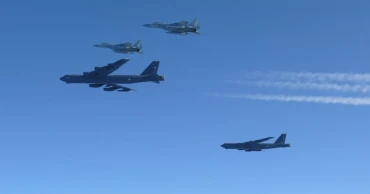
U.S. strategic bombers joined a fleet of Japanese fighter jets in a joint military exercise meant to demonstrate their military cooperation around Japan's airspace, defense officials said Thursday, as tensions with China escalate.
The exercise showcasing joint Japanese-U.S. air power came a day after Chinese and Russian bombers flew together around western Japan, prompting Tokyo to scramble fighter jets, though there was no airspace violation. It also follows China's military aircraft locking radar on Japanese jets Saturday, another incident that has caused Tokyo-Beijing relations to further deteriorate.
Early Friday, Japanese Defense Minister Shinjiro Koizumi and his U.S counterpart, Pete Hegseth, held telephone talks on “increasingly severe security situation in the Indo-Pacific region, including the radar incident,” the Japanese defense ministry said in a statement. It did not mention the flight drills.
It said the ministers expressed serious concern over any actions to increase regional tensions, as “China's actions are not conducive to regional peace and stability.” Koizumi reiterated that Japan will firmly and steadily continue surveillance and monitoring activities in the airspace and waters surrounding the country.
Japan's Air Self Defense-Force and the U.S. military conducted the joint exercise Wednesday as “the security environment surrounding our country is becoming even severer,” the Japanese Joint Staff said.
It said the allies “reaffirmed the strong resolve to prevent unilateral attempts to change the status quo by force and the readiness between the SDF and the U.S. forces.”
Two U.S. B-52 strategic bombers and three Japanese F-35 stealth fighter jets and three F-15 jets conducted their joint flight drills near Japan’s western airspace, above the waters between the country and South Korea, officials said.
Exercises held as the security environment grows more tense
The Joint Staff denied that the exercise was conducted in response to a specific incident, but acknowledged Chinese military aircraft’s recent radar-locking on Japanese jets and the China-Russia joint bomber exercises Tuesday as examples of a worsening security environment around Japan.
Relations between Japan and China have deteriorated after Japan’s Prime Minister Sanae Takaichi said in early November that Japan's military could get involved if China were to take action against Taiwan, the self-governing island that Beijing claims as its own.
The row escalated over the weekend when separate Chinese drills involving a carrier near southern Japan prompted Tokyo to scramble jets and to protest that Japanese aircraft were targeted by repeated radar-locking — a move considered as possible preparation for firing.
Tokyo protested to Beijing, asking for an explanation and preventive measures. China denied the allegation and accused Japanese jets of interfering and endangering the Chinese exercise.
Washington stressed its “unwavering” alliance with Japan, saying the incident was not “conducive to regional peace and stability."
The exercise came one day after Chinese and Russian strategic bombers conducted joint long-distance flight from the waters between Japan and South Korea down to the Pacific, the Joint Staff said.
Two Russian strategic bombers Tu-95 that flew down from the airspace east of the Korean Peninsula joined a pair of Chinese H-6 bombers over the East China Sea for a joint flight down to the Pacific off the southern coast of Japan's Shikoku island.
The four bombers were also joined by four Chinese J-16 fighters as they flew back and forth between two Japanese southwestern islands Okinawa and Miyako, the area where China is expanding its military presence.
5 months ago
Beijing outlines 2026 economic strategy
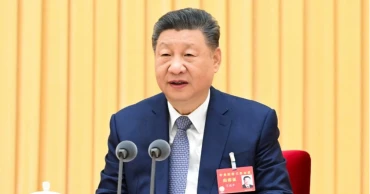
The annual Central Economic Work Conference was held in Beijing from Wednesday to Thursday as Chinese leaders decided priorities for the economic work in 2026.
Xi Jinping, general secretary of the Communist Party of China (CPC) Central Committee, Chinese president and chairman of the Central Military Commission, delivered an important speech at the conference.
In his speech, Xi reviewed the country's economic work in 2025, analyzed the current economic situation and arranged next year's economic work.
It was noted at the meeting that 2025 is a truly extraordinary year, and the main targets for economic and social development will be successfully achieved.
As the 14th Five-Year Plan (2021-2025) is set to approach a successful conclusion, the meeting noted that over the past five years, China has effectively navigated various shocks and challenges, and achieved new major accomplishments in the cause of the Party and the country.
It is necessary to fully tap the economic potential, continue to pursue both policy support and reform and innovation, ensure both market vitality and effective regulation, combine investment in physical assets with investment in human capital, and respond to external challenges by strengthening internal capabilities, the meeting said.
Noting that there are still long-standing and new challenges in China's economic development, and the impact of changes in the external environment has deepened while risks and hidden dangers persist in some key areas, the meeting said that these issues can be resolved through efforts, and the underlying conditions and fundamental trends sustaining China's long-term economic growth remain unchanged.
The conference stressed the need to fully and faithfully apply the new development philosophy, move faster to forge a new development paradigm and focus on promoting high-quality development.
China will adhere to the general principle of pursuing progress while ensuring stability, better coordinate domestic economic work with struggles in the international economic and trade arena, and ensure both development and security.
The country will implement more proactive and impactful macroeconomic policies, formulate more far-sighted, more targeted and better-coordinated policies, continuously expand domestic demand and optimize supply, and develop new quality productive forces according to local conditions.
Efforts will be made to develop a unified national market and continuously prevent and defuse risks in key areas. It is imperative to secure the steady development of employment, businesses, markets and expectations, getting the 15th Five-Year Plan (2026-2030) off to a good start.
China will continue to implement a more proactive fiscal policy and maintain necessary fiscal deficits, overall debt levels and expenditure scale, while standardizing tax incentives and fiscal subsidy policies.
Greater attention should be given to addressing local fiscal difficulties, and Party and government bodies will continue to keep their belts tightened.
China will continue implementing a moderately loose monetary policy, employ various monetary policy tools such as reserve requirement ratios and interest rates in a flexible and efficient manner to maintain ample liquidity.
China will guide financial institutions to scale up support for domestic demand expansion, sci-tech innovation, micro, small and medium enterprises, and other key areas.
The RMB exchange rate will be kept generally stable at an adaptive, balanced level, the meeting said, adding that China will make macro policy orientations more consistent and effective, and refine expectations management mechanisms to bolster social confidence.
5 months ago
Zelenskyy races to rally allies as Trump pushes rapid Russia peace plan
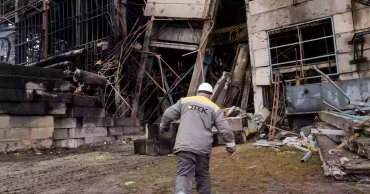
Ukrainian President Volodymyr Zelenskyy was set to hold urgent talks on Thursday with leaders and senior officials from around 30 countries backing Kyiv’s push for fair terms to end the war with Russia.
Top leaders from Germany, Britain and France were expected to join the virtual meeting of Ukraine’s partners, known as the Coalition of the Willing.
Zelenskyy signalled that the consultations were hastily arranged as Kyiv tries to avoid being pressured by U.S. President Donald Trump, who is urging a rapid settlement. European governments are racing to shape the talks, saying their own security depends on the outcome.
Trump said Wednesday that he had discussed peace proposals “in pretty strong terms” with European leaders and insisted that Zelenskyy “has to be realistic” about a plan that would see Ukraine give up territory to Russia. He did not provide further detail.
Trump’s push to broker a deal has stretched beyond his own deadlines. He initially demanded that Kyiv accept his plan before Thanksgiving, but that and earlier timelines have passed without agreement.
Russia, aiming to avoid fresh U.S. sanctions, is also trying to show it is engaging with Trump’s efforts. Foreign Minister Sergey Lavrov said Moscow has sent Washington additional proposals on collective security guarantees that Ukraine and Europe say are essential to prevent future attacks. He offered no specifics.
The diplomatic rush came as Ukraine carried out one of its largest drone strikes of the nearly four-year war, forcing all four Moscow airports to halt flights for seven hours overnight. Airports in eight other Russian cities also faced restrictions, according to Russia’s civil aviation authority.
Russia’s Defense Ministry said air defenses shot down 287 Ukrainian drones across several regions. The strike highlighted Ukraine’s ability to hit deep inside Russia, countering the Kremlin’s argument that the invasion gives Moscow overwhelming leverage.
Analysts say Russian President Vladimir Putin wants to appear to be negotiating from a position of strength. But since launching the full-scale invasion in February 2022, Russia has seized only about 20 percent of Ukrainian territory.
European leaders said Wednesday the talks had reached “a critical moment.” Zelenskyy added late Wednesday that Ukraine will coordinate further with European partners next week.
EU member states are scheduled to hold a regular summit in Brussels at the end of next week.
5 months ago
UN rights office hit by $90M deficit, 300 jobs cut
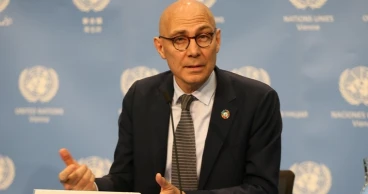
The U.N. human rights chief said Wednesday that his office is facing a $90 million funding shortfall this year and staff cuts would include about 300 posts, or about 15%, over the course of the year.
Volker Turk, the U.N. high commissioner for human rights, says the Geneva-based office was in “survival mode” at a time when major donors, including Britain, Finland, France and the United States, have lowered their contributions.
“Our resources have been slashed along with funding for human rights organizations, including at the grassroots level around the world,” Turk told reporters on Human Rights Day. “We are in survival mode.”
“My office has had about $90 million less than we needed this year, which means around 300 jobs have been lost and essential work has had to be cut,” in countries like Colombia, Conga, Myanmar and Tunisia, he said, "at a time when the needs are rising.”
The rights office had an approved budget from member states of $246 million this year, but received $67 million less than that, spokeswoman Marta Hurtado Gomez said in an email.
Additionally, the office had appealed for extra-budgetary, or voluntary, funding for $500 million, but has received half that. It is expected to have spent $273 million by year’s end, which means a deficit of another $23 million.
Many U.N. organizations, including the World Health Organization, the U.N. refugee agency and the International Organization for Migration, have slashed jobs and spending this year because some top donors have not paid their U.N. dues in full or cut back foreign aid.
Those other organizations have annual budgets in the billions, and far larger staffs than the rights office.
“We are all affected,” Turk said, adding that his office has been "disproportionately affected ... in the sense that if you cut what is already very scarce, and if you cut this even further, then obviously it has a huge impact.”
After beginning the year with about 2,000 employees, the rights office has already cut 230 posts this year and is expected to cut between 70 and 80 more by year-end.
5 months ago

Machado’s daughter receives Nobel Peace Prize in her absence
The daughter of Venezuelan opposition figure María Corina Machado accepted the Nobel Peace Prize on her mother’s behalf Wednesday, after officials confirmed Machado would not be able to attend the ceremony.
Machado has been in hiding since Jan. 9, when she briefly appeared at a protest in Caracas and was detained. She has not been seen publicly since.
During the award ceremony, Norwegian Nobel Committee Chair Jørgen Watne Frydnes said Machado had made every effort to reach Oslo “despite facing extreme danger,” and assured attendees that she was safe and expected to arrive later. Her daughter, Ana Corina Sosa, collected the prize in her place.
In an audio message released by the Nobel Foundation, Machado said many people had risked their lives to help her travel and described the honor as recognition for all Venezuelans. She said she looked forward to reuniting with family and supporters she had not seen in two years.
Several Latin American leaders, including Argentina’s Javier Milei and Ecuador’s Daniel Noboa, attended the ceremony to show support for Machado, who was awarded the prize for her push for democratic change in Venezuela.
Machado won the opposition primary but was barred from running in the 2024 presidential election, which later returned President Nicolás Maduro to power amid allegations of arrests, repression and rights abuses. Her replacement candidate, Edmundo González, who has since sought asylum in Spain, was also present at the event.
Machado joins several previous Nobel Peace laureates who could not attend due to imprisonment or persecution, including Narges Mohammadi, Ales Bialiatski, Liu Xiaobo and Aung San Suu Kyi.
Venezuelan activist Gustavo Tovar-Arroyo said her absence underscored the risks faced by those resisting authoritarian governments, adding that supporters knew the dangers involved but remained committed to the struggle.
5 months ago