Others

Indonesia’s first giant panda cub squeals and squirms in new park footage
Indonesia’s first-ever giant panda cub is thriving, vocal, and feeding well, according to the conservation park where he was recently born.
Indonesian Safari Park on Sunday released photos and video of the tiny, fluffy cub nestled in an incubator and wriggling and squeaking as his mother held him close.
Hu Chun, a 15-year-old female panda, delivered the cub — named Satrio Wiratama, or Rio — on Nov. 27 at the park in Cisarua, West Java. The name reflects the shared commitment of Indonesia and China to protect endangered wildlife, the park said.
Indonesian President Prabowo Subianto officially announced the cub’s name on Thursday during a meeting with senior Chinese political adviser Wang Huning, displaying the newborn’s photograph.
The park says Rio is in stable condition, displaying strong cries, healthy nursing behavior, and consistent weight gain. Over the coming weeks, he is expected to develop better body temperature control, open his eyes, grow more fur, and become more active.
At The Gentle Barn, Thanksgiving turkeys are meant for cuddling — not carving
For now, the park is prioritizing the wellbeing of both mother and baby, and the cub will remain off-limits to visitors.
Hu Chun and her mate, Cai Tao, were sent to Indonesia in 2017 as part of a decade-long conservation collaboration with China. They live in a special enclosure roughly 70 kilometers (43 miles) from Jakarta.
Giant pandas — long seen as China’s unofficial national symbol — are central to Beijing’s well-known “panda diplomacy,” through which the animals are loaned to zoos worldwide. Due to their difficulty breeding, each successful birth is celebrated. Fewer than 1,900 giant pandas remain in the wild, found only in China’s Sichuan, Shaanxi, and Gansu provinces.
Source: AP
5 months ago

How to check your Spotify Wrapped, YouTube Recap and other 2025 digital year-in-review
As 2025 nears its end, many apps and platforms are rolling out annual recaps, giving users a snapshot of their online activity over the past year. From music streaming and video watching to language learning, these summaries highlight top songs, artists, videos, and habits.
Spotify released its Wrapped on Dec. 3, showcasing users’ most-streamed songs, artists, and podcasts. A new feature, Wrapped Party, lets friends compare listening habits on Spotify’s mobile app. YouTube Recap debuted Dec. 2 in North America, with a global rollout this week, summarizing users’ watch history, including music consumption, via the homepage or “You” tab.
Apple Music Replay, available since Dec. 2, details top songs, genres, and artists, accessible in the app or at replay.music.apple.com. Amazon Music Delivered also launched Dec. 2, providing a yearly summary to listeners with sufficient listening history. Twitch offers an annual recap for users with at least ten hours of activity, accessible at twitch.tv/annual-recap.
Language app Duolingo released its Year in Review, showing lessons completed, streaks maintained, and minutes practiced. Users can access it in-app via prompts or the small logo on the home navigation page. These recaps provide a fun way for users to reflect on their digital habits in 2025.
Source: AP
6 months ago
Gen Z and Millennials turn to sustainable, home-grown alternatives
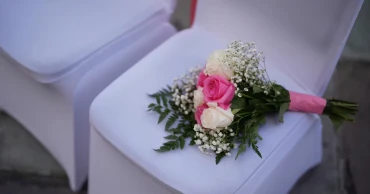
When Emily Day planned her October wedding in Calgary, she skipped a traditional florist and instead planted her own flowers — a creative experiment that opened her eyes to the environmental toll of the global flower trade. Her dried, homegrown arrangements cost far less than store-bought bouquets and lasted long after the ceremony.
Day and her fiancé built garden beds from wooden shipping crates and planted varieties such as yarrow, feverfew, strawflowers and statice. They harvested and dried the blooms in midsummer before the first frosts. On her wedding day, her autumn-themed bouquets included blue echinops from a nearby farm and tansy picked from roadsides. The entire project cost about 1,300 Canadian dollars ($925), significantly cheaper than hiring a florist. It also pushed her to consider the heavy carbon footprint of imported flowers — from plastic packaging to long-haul flights.
Younger generations planning weddings and special events are increasingly choosing eco-friendly alternatives: growing their own flowers, foraging wild blooms, opting for potted plants or working with florists who prioritize sustainability. Many businesses now focus on local sourcing and repurposing flowers after events.
The environmental cost of imported bloomsImported flowers often travel from South America to North America through long, energy-intensive supply chains, said Kai Chan, a sustainability scientist at the University of British Columbia. Cut flowers require refrigeration and are frequently flown in — both major sources of greenhouse gases. Large-scale monoculture fields used for growing roses and other flowers also degrade soil and reduce biodiversity.
Chan said flowers grown by local farmers are typically a better choice, as they require less travel and are usually produced in ways more compatible with local ecosystems.
A shift toward local, seasonal choicesOmaha-based florist Holly Lukasiewicz of District 2 Florals prioritizes sustainable methods, from avoiding non-biodegradable green foam to sourcing local blooms. She offers composting services and preserves flowers for clients. She hopes customers increasingly embrace seasonal flowers instead of expecting any variety year-round.
King Charles III’s charity sells Christmas stockings sewn from Sandringham drapery
Imported flowers became dominant in the industry thanks to trade policies and cheaper production costs, said Neil Anderson, a horticulture professor at the University of Minnesota. While many consumers choose the least expensive option, others are willing to pay more for local, eco-conscious flowers.
Debra Prinzing, founder of the Slow Flowers Society, said local flowers can make weddings more personal: couples know exactly where the blooms come from, and seeing them again in bloom can bring back memories year after year.
The Knot’s editorial director, Esther Lee, said sustainability has become a priority for many couples who want their weddings to reflect the character of the region and include meaningful, local touches.
What about artificial flowers?Artificial flowers are sometimes marketed as eco-friendly alternatives, but many are made from plastic and shipped long distances. Silvia Bellezza of Columbia Business School said buyers should look closely at manufacturer data rather than assuming artificial options are greener.
For Day, the benefits of her homegrown flowers continued after the wedding. Guests took arrangements home, and a friend later reused several pieces at her own ceremony. She said dried flowers can be reused repeatedly — and when they finally wear out, they can go straight into the compost bin.
Source: AP
6 months ago
King Charles III’s charity sells Christmas stockings sewn from Sandringham drapery
Need a unique gift for the royal enthusiast in your life?
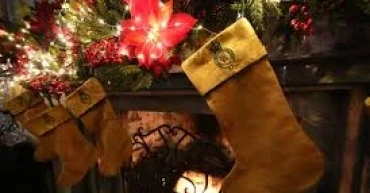
Consider a Christmas stocking crafted from curtains that once hung at King Charles III’s Sandringham estate, hand-sewn by members of a sewing group at Dumfries House in Scotland. The King’s Foundation, which aims to preserve traditional crafts, oversees the work done at the estate.
Members of the Dumfries House Sewing Bee recently completed the stockings, delicately stitching the repurposed royal fabric as they chatted over warm drinks while rain tapped on the windows of the 18th-century home, located south of Glasgow.
“It’s been absolutely wonderful,” said 72-year-old Christine Wilson, a retired finance officer. “The sewing bee has such a lovely atmosphere—we’re great friends—and we support many charities too.”
Wilson and her fellow volunteers produced 25 stockings, each individually numbered. The final piece, No. 25, will be presented to King Charles as a Christmas gift.
The auction, which runs until midnight on Dec. 12, will raise funds for the King’s Foundation, which trains more than 15,000 young people each year in practical fields such as hospitality and animal care.
“We hope the winners will treat these stockings as future family heirlooms, passed down for generations,” said Sarah McClymont, lead tutor for the foundation’s Future Textiles program.
This marks the foundation’s third such auction. The first, in 2023, featured kimono jackets made from former Buckingham Palace and Windsor Castle drapes. In 2024, students at the Highgrove Gardens furniture school created footstools upholstered with more repurposed royal curtains.
And there’s no fear of running out of fabric—Buckingham Palace alone boasts 760 windows, meaning an almost endless supply of gently used royal textiles.
6 months ago
At The Gentle Barn, Thanksgiving turkeys are meant for cuddling — not carving
As the holiday rush began, Jordan Gullotta chose to spend part of her week in a place that brings her calm. At The Gentle Barn — a Tennessee animal sanctuary known for its therapeutic programs — she can groom a cow, stroke a sheep or simply soak in the peaceful atmosphere.
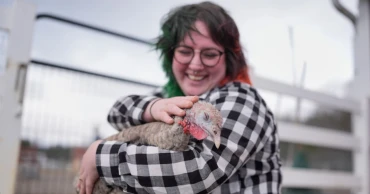
But on this visit, she held something new: a blind turkey. Within moments, the brown-feathered bird named Smudge relaxed in her arms, closed her eyes and drifted off to sleep.
“Oh my goodness, you’re so snuggly,” Gullotta whispered.
While turkeys usually take center stage on Thanksgiving dinner tables, The Gentle Barn founder Ellie Laks says they can also make surprisingly affectionate therapy companions.
“People already know that dogs, cats and horses offer emotional support,” Laks said. “At The Gentle Barn, we ask, ‘Why not turkeys?’”
The idea came years ago when one particularly vocal turkey shadowed Laks around the farm. When she knelt down and invited the bird closer, it became clear the hen simply wanted to be held.
The Tennessee sanctuary is home to about 60 animals rescued from abuse or neglect, many of them older or living with injuries. One turkey receives acupuncture for hip pain, and a goat who lost its back hooves to frostbite now moves with the help of a custom wheelchair.
“We rehabilitate them, give them a safe home, and when they’re ready, we partner with them to help people heal from similar experiences,” Laks explained. “They help people connect to the love and magic animals can offer.”
Can’t take hormone therapy for menopause? Doctors say effective alternatives exist
Though often dismissed as unintelligent or aloof, turkeys are deeply perceptive and loving, she said — something visitors like Gullotta quickly discover. The Middle Tennessee State University student had come before to visit the cows, her favorites, but hadn’t expected turkey cuddling to be on her agenda.
“The turkeys love in their own way — it’s different, but really special,” she said.
Turkey therapy sessions are offered all year, and The Gentle Barn — which also operates a location in California — hosts a special Thanksgiving event where visitors can feed and pet turkeys as an alternative way to celebrate. Guests can also sponsor rescued turkeys to help support their care.
Source: AP
6 months ago
Malaysia to restrict social media access for children under 16 beginning next year
Malaysia plans to prohibit people under 16 from having social media accounts starting in 2026, aligning itself with Australia and other countries adopting stricter age rules to protect minors online.
Communications Minister Fahmi Fadzil said Sunday that the Cabinet approved the measure as part of a wider effort to protect children from digital risks such as cyberbullying, online scams, and sexual exploitation. He noted that the government is reviewing age-verification models used in Australia and elsewhere, including possible electronic checks using ID cards or passports. He did not specify the exact date the restriction will begin.
He said that with cooperation from the government, regulators, and parents, Malaysia can ensure the internet remains fast, accessible, and affordable—while above all staying safe for children and families.
Since January, major social media and messaging platforms with at least 8 million Malaysian users must obtain a licence, a step tied to increased government oversight of digital services. Licensed platforms are required to use age-verification tools, enforce content-safety standards, and follow transparency rules in line with Malaysia’s drive toward a safer online environment.
Australia recently became the first country to legally bar children under 16 from social media, with the ban taking effect Dec. 10. Platforms such as Facebook, Instagram, Snapchat, Threads, TikTok, X, YouTube, Reddit, and the streaming site Kick could face penalties of up to 50 million Australian dollars ($33 million) if they fail to prevent underage users from opening accounts.
Other nations are monitoring Australia’s policy as concerns grow about the effects of social media on young children.
Denmark announced plans earlier this month to block social media access for users younger than 15, though enforcement details have yet to be finalized. Norway is also advancing legislation that would set a minimum age of 15 for accessing social platforms.
6 months ago

Japan’s first female prime minister confronts long-standing ban on women entering the sumo ring
Sanae Takaichi made history in October when she became Japan’s first woman to serve as prime minister. Now she faces another potential milestone: whether to challenge the long-standing prohibition that bars women from entering the sacred sumo ring.
At the close of the Kyushu Grand Sumo Tournament on Sunday, the winner will receive the Prime Minister’s Cup. Several past male prime ministers, including Junichiro Koizumi, have stepped into the ring to hand over the prize.
Takaichi — a conservative who champions traditional, male-centered social values — may choose not to break the taboo. In any case, she will not need to decide this time, as she returns from the G20 summit in South Africa a day after the tournament ends.
Her next decision point will come during the New Year’s tournament in Tokyo.
Still, the broader debate over whether women should be allowed in the ring is likely to intensify now that a woman leads the country. Critics argue that bans in sumo and in certain religious settings do not reflect the evolving role of women in Japanese society.
Women remain barred from some religious sites and eventsThe sumo ring is just one example.
For centuries, women in Japan have been excluded from specific sacred mountains, religious training rituals, temples, shrines, and festivals. Similar prohibitions exist in some other cultures, but Japan’s traditional restrictions stem from beliefs about female “impurity” connected to menstruation and childbirth, as well as certain misogynistic interpretations of Buddhism, says Naoko Kobayashi, a professor at Aichi Gakuin University.
While many of these bans — including those on Mount Fuji — have been abolished, they persist at some shrines and festivals. Kobayashi notes that many of these taboos date only to the Meiji era in the late 19th century, and have endured partly because women were long prevented from participating in religious and political decision-making.
Sumo is ancient, but the exclusion of women is notSumo’s origins lie in rituals tied to the Shinto religion, involving prayers for good harvests and performances at shrines. The wrestling area, or dohyo, is made of special clay and encircled with rice straw, symbolizing a sacred space separated from impurities — and, in professional sumo, off limits to women.
Some scholars say the ban reflects Shinto notions of impurity, but the Japan Sumo Association denies that the rule comes from religious doctrine.
In 2018, association chief Nobuyoshi Hakkaku insisted the ban had no sexist intent, saying the dohyo is a “serious battleground for men,” and that keeping it male-only preserves tradition.
Historical documents, however, show that women once took part in sumo-style wrestling. A 7th-century text describes female court members performing sumo at an emperor’s request, and records from the 16th century mention women wrestlers.
Sumo became more prestigious after Emperor Meiji attended matches in 1884, and it became recognized as a national sport with the building of Tokyo’s Ryogoku Arena in 1909.
The ban has drawn criticism for decadesIn 1978, labor ministry official Mayumi Moriyama protested when the sumo association barred a girl who won a regional competition from competing in the finals because they were held in a real dohyo.
In 1990, as government spokesperson, Moriyama herself asked to enter the ring to present the Prime Minister’s Cup but was denied.
A more dramatic incident occurred in 2018 when the mayor of Maizuru collapsed while speaking in a sumo ring. Female medical workers rushed to begin treatment while male officials looked on. Announcers repeatedly ordered the women to leave the ring, and officials purified the area with salt afterward.
Shortly after, the association refused to allow Tomoko Nakagawa — then the mayor of Takarazuka — to step onto the dohyo to give a speech, forcing her to speak from the side. She later said she felt humiliated.
The sumo association apologized for mishandling the medical emergency and for causing discomfort, and convened a panel of experts to study the ban. Seven years later, no decision has been reached.
“Excluding women under the guise of tradition is no longer justifiable,” said Professor Kobayashi.
Takaichi’s stance aligns with traditional gender normsTakaichi is not viewed as a feminist figure. She supports conservative family structures, male-only succession to Japan’s imperial throne, and opposes reforming a 19th-century law that would allow married couples to keep separate surnames.
She is currently working to win back right-wing voters who have shifted toward newer populist movements. Entering the sumo ring could be seen as defying tradition and risk alienating those supporters.
Though she has not publicly commented on the trophy issue, her chief government spokesperson said she has no intention of entering the ring.
“Prime Minister Takaichi intends to respect the traditions of sumo culture,” Chief Cabinet Secretary Minoru Kihara said.
6 months ago

Flush with cash: solid gold toilet fetches $12.1M at auction
At a New York auction Tuesday, a Gustav Klimt portrait set a record by selling for $236 million, while a fully functional, solid gold toilet created by Italian artist Maurizio Cattelan—satirizing the ultra-wealthy—sold for $12.1 million.
The toilet, titled “America,” weighs 101 kilograms (223 pounds) and is made of 18-karat gold. It went on the block at Sotheby’s with a starting bid around $10 million. Known for his provocative works, including taping a banana to a wall, Cattelan has described the piece as a commentary on superwealth: “Whatever you eat, a $200 lunch or a $2 hot dog, the results are the same, toilet-wise.” Sotheby’s calls it an “incisive commentary on the collision of artistic production and commodity value.”
Earlier in the evening, Klimt’s “Portrait of Elisabeth Lederer” sold after a 20-minute bidding war, becoming the most expensive artwork ever sold by Sotheby’s. The painting survived World War II intact and depicts the daughter of one of Klimt’s patrons. It was part of the collection of billionaire Leonard A. Lauder, heir to The Estée Lauder Companies, who passed away earlier this year.
Solid gold toilet set for auction with $10 million starting price
Cattelan made two versions of the toilet in 2016. One was displayed at New York’s Guggenheim Museum and was infamously offered to President Donald Trump when he requested a Van Gogh. That piece was later stolen in England from Blenheim Palace, birthplace of Winston Churchill. Two men were convicted in the theft, but the whereabouts of the toilet remain unknown, with investigators suspecting it may have been melted down.
The auctioned toilet “America” was displayed at Sotheby’s New York in the weeks leading up to the sale.
Source: AP
6 months ago
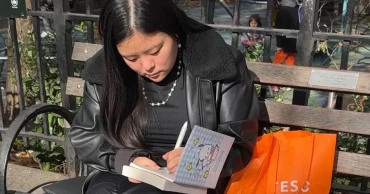
Reconnecting with old friends: Why it matters
Childhood friends Jennifer Austin and Molly lost touch after Austin’s family moved to Germany, only to reconnect decades later. “Strong friendships really do stay for the long haul,” Austin, 51, said. “Even if there are pauses, they don’t completely dissolve. They linger like a little light in the back.”
Psychologist Marisa Franco notes that adult responsibilities and technology can make staying connected difficult, but most people appreciate efforts to rekindle old bonds. She recommends referencing a shared memory or suggesting a phone call or meetup.
Can’t take hormone therapy for menopause? Doctors say effective alternatives exist
For Heather Robb and Laine DiPasquantonio, a decades-long gap ended when Robb visited Denver for work. Their reunion brought them closer, with Robb calling it “a missing piece.” Similarly, Reyna Dominguez, 18, reconnected with a childhood friend after months apart, encouraging others to “just do it.”
Long-distance friendships also thrive with regular calls or visits, as Andrew Snyder, 50, notes. While some connections fade, like Kim Ventresca’s college friendship, experts say reaching out carries little risk and can restore meaningful bonds.
Austin and Molly’s renewed friendship shows the value of effort and timing in keeping lifelong connections alive.
Source: AP
6 months ago
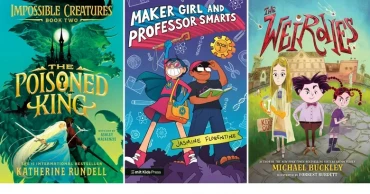
These children's books from 2025 make great holiday gifts for every age group
Look no further for great gift ideas for your kiddos. The Associated Press scoured the bookshelves for standout 2025 releases to share the love of reading with your child, student or friend, and came up with this list for the holidays.
Board books and read-to-me books (ages 0-3)
— “I Love You, Little Moose!” by Sandra Magsamen. A five-line poem about nature and all the things we love about it, with vibrant colors and bubble-letter text. This board book also has soft plushie antlers on top. Cartwheel Books, $8.99.
— “Why Does the Wind Blow?” by Eric Carle. Science made easy in classic Eric Carle style! This quick read explains in simple terms how wind blows, aided by illustrations and one Very Hungry Caterpillar. World of Eric Carle, $5.99.
— “Little Heroes of Color: I’m A Little Hero” by David Heredia. Heroes range from hardworking Jim Thorpe to inventive Arvind Gupta to fearless Sonia Sotomayor. Rhyming and repetition make complicated words and ideas easier to understand. In the back, readers will find a mirror with a message that they're a little hero, too. Cartwheel Books, $9.99.
— “Everywhere You Are” by Victoria Monét, illustrated by Alea Marley. This sweet book reaffirms a parent’s love for their child even when they’re not physically together. Grammy winner Monét's musicality shines in this lullaby, illustrated in a colorful, swirly, star-speckled outer space. G.P. Putnam’s Sons Books For Young Readers, $18.99.
Early readers (ages 3-8)
— “Bitty and Bub, Best Buds” by Janee Trasler. Five short, silly comics follow fun-loving friends Bitty and Bub. It’s a great introduction to reading comics, using speech bubbles in simple panel progressions. Holiday House, $14.99.
— “Don’t Trust Fish” by Neil Sharpson, illustrated by Dan Santat. Why read another boring animal book when you can read something hilarious? The book teaches kids how to recognize mammals, reptiles, amphibians and birds — and, chiefly, why you shouldn't trust fish. Dial Books, $18.99.
— “Grandmother Moon” by Wunneanatsu Lamb-Cason, illustrated by Trisha B. Waters. A girl's grandma explains Grandmother Moon to her. The author’s Indigenous storytelling tradition is extended by dreamy full-page paintings. Includes a Moon Calendar and a guide to reading the calendar on the scales of Turtle’s back. Beaming Books, $18.99.
Bob Ross paintings fetch over $600,000 at auction to support public TV stations
Middle grade (ages 8-12)
— “Dory Fantasmagory 7: Center of the Universe” by Abby Hanlon. Book 7 in the silly illustrated series that’s a perfect bridge into chapter books. In this story, Dory has a new rival. Dory’s zany antics and odd friends could elicit laughter from any reader. Dial Books, $17.99.
— “Maker Girl and Professor Smarts” by Jasmine Florentine. So what if they don't have superpowers? These supersmart best friends are ready to take on supervillains! This hilarious, hybrid graphic chapter book includes science-backed instructions for making sorbet and cardboard grappling hooks. MIT Kids Press, $19.99.
— “The Weirdies” by Michael Buckley, illustrated by Forrest Burdett. From the creator of “Sisters Grimm,” these 10-year-old triplets and the world they live in are weird — and highly entertaining. Pencil-hatching illustrations accompany Lemony Snicket-esque humor and fourth-wall breaking. Little, Brown Books for Young Readers, $14.99.
— “The Poisoned King” by Katherine Rundell, illustrated by Ashley Mackenzie. It's up to 12-year-old Princess Anya to save the dragons and her kingdom. The hotly anticipated Book 2 of the Impossible Creatures series is a fantasy adventure driven by an unyielding belief in the power of goodness. Knopf Books for Young Readers, $19.99.
— “Bunns Rabbit” by Alan Barillaro. The other rabbits fear that Bunns' short ears are a bad omen. Full of heart, this mature, tender chapter book showcases descriptive writing and stunning, dramatically lit illustrations. Candlewick, $18.99.
Young adult (ages 12+)
— “The Story of My Anger” by Jasminne Mendez. Told in verse and as a play, this empowering story follows Yuli, a junior at a Texas high school, as she learns how to handle racism, the pressure to shine, and stress at home with a widowed mom living with a chronic illness. Dial Books, $19.99.
— “The House of Quiet” by Kiersten White. A Gothic mystery that explores class struggle and what it means to make a positive impact in the world. The stunning ending pulls the pieces together without a single detail wasted. Delacorte Press, $19.99.
— “When We Were Monsters” by Jennifer Niven. Arlo and Effy trade off narrating this genre-bender of dark academia, murder mystery, thriller and romance. A “Frankenstein” motif throughout the novel conveys themes of monsters and fate vs. free will. Knopf Books for Young Readers, $20.99.
— “Leave It on the Track” by Margot Fisher. After her dads die in a fire, Moose moves to a new state to live with her older half-sister, who convinces her to try roller derby. Fisher's debut grabs you and doesn't let go, tackling grief, being LGBTQ+ and finding community. Dutton Books for Young Readers, $19.99.
— “Take Up Space, Y’all” by Tess Holliday and Kelly Coon. A body positivity book with guides and tips, from finding your fashion to having a healthy relationship with food to dealing with labels. It always defers to consulting your doctor for medical needs like skin problems and mental health challenges. Running Press Kids, $13.99.
— “I Wish I Didn’t Have to Tell You This: A Graphic Memoir” by Eugene Yelchin. The sequel to “The Genius Under the Table” also stands on its own, chronicling a Jewish man’s escape from Soviet Russia in the 1980s with a unique art style that incorporates photographs. Yelchin’s mom and grandmother provide comic relief with their melodrama and uncanny wisdom. Candlewick, $22.99.
Source: AP
6 months ago