others

Good Friday observances bring faith to the streets across Latin America
Thousands of Catholic faithful marked Good Friday across Latin America with vibrant processions and ceremonies recreating the crucifixion of Jesus Christ.
In Antigua, a historic colonial city in southern Guatemala, devotees dressed in traditional purple and white robes walked through cobblestone streets under the morning sun. Many were penitents known as “cucuruchos,” while others carried centuries-old statues of Jesus. The শহর hosts more than a dozen processions during Holy Week, set against dramatic volcanic scenery.
Marcos Bautista, 63, said he has attended the annual observances since infancy. He described the experience as deeply emotional and beyond words.
In Bolivia, President Rodrigo Paz joined Good Friday events in the southern city of Tarija. His participation marked a shift from past leaders, who largely avoided religious ceremonies despite Bolivia’s strong Catholic roots.
In the capital, La Paz, processions featuring hooded penitents and military bands moved through the streets, with participants carrying representations of the Holy Sepulcher. Many welcomed the visible presence of authorities at the events.
Although Bolivia is constitutionally secular, Catholic traditions remain influential. In some households, people observe the day by eating only fish and preparing symbolic dishes representing the apostles, though such customs have declined in recent years amid economic hardship.
In Ecuador, where a large majority identify as Catholic, major cities held processions. In Quito, the “Jesús del Gran Poder” procession drew more than 150,000 people, filling the historic কেন্দ্র with prayers and chants as they accompanied an image of Jesus carrying the cross.
Meanwhile, in neighboring Colombia, thousands climbed Monserrate Hill in Bogotá to attend Mass at the summit basilica. Similar reenactments of the Stations of the Cross were held nationwide.
In Mexico, home to one of the world’s largest Catholic populations, observances included the “Procession of the Chained” in the town of Atlixco. Participants, some wearing chains and cactus spines as acts of penance, walked through the streets in a display of devotion and sacrifice.
Attendee Marcela Ramírez described the event as both solemn and moving, calling it an act of reverence.
While the proportion of Catholics in Latin America has declined in recent years, the religion remains the region’s largest. In countries such as Peru and Argentina, more than 60% of adults still identify as Catholic, according to recent surveys.
2 months ago
Kenya’s Greenland Girls School empowers teenage mothers through education and child care
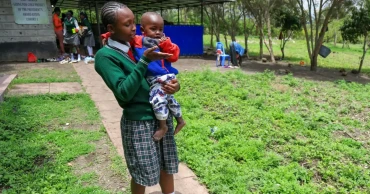
At Greenland Girls School in Kenya, 19-year-old Valerie Wairimu barely gets a break between classes. During recess, she grabs a quick snack before heading to the school’s on-site nursery to care for her baby, Kayden, who is looked after by a team of nannies while she attends lessons.
Greenland Girls School is the only institution in Kenya exclusively dedicated to teenage mothers, providing both education and child care. The school supports 310 students and more than 80 children, offering young mothers a second chance at education in an environment free from stigma. Experts consider it a model for reintegrating adolescent mothers into the school system.
“When I found out I was pregnant, I didn’t have anywhere else to go,” said Wairimu, who consistently ranks near the top of her class and dreams of becoming a doctor.
Founded in 2015, the boarding school has enabled hundreds of girls and young women to complete secondary education while supporting their children. Some graduates have pursued successful careers in fields such as government and medicine. The school is managed by the nonprofit organization Shining Hope for Communities, and many students attend through grants.
Most students come from Kajiado County, south of Nairobi, where Greenland maintains outreach officers to identify and refer pregnant girls. The school also works with social services and is recognized by teachers across Kenya, including in more distant regions such as Wairimu’s home in western Kenya. Her grandmother had referred her to the school because her family lacked the resources to care for a newborn.
Many students come from challenging circumstances, including pregnancies resulting from sexual assault or forced marriages. Paul Mukilya, the school manager, said parents are often unsupportive, and outreach officers must sometimes negotiate with community elders to allow students to attend.
“Some of the challenges the students face come from family and community. Most have not been accepted as they are,” Mukilya said. “Here, we provide psychological counseling and mentorship.”
In Kenya, sexual activity involving minors under 18 is illegal, but only the male partner is held criminally responsible. Teenage pregnancies frequently lead to legal proceedings, and Greenland supports students while coordinating with local authorities in cases of underage marriage.
While students are in class, the school’s staff manage child care and provide guidance on parenting. Caroline Mumbai, a caregiver at Greenland and mother of two, said, “Some of the mothers see their children as a burden. We also teach them how to mother.”
Making education accessible to teenage mothers remains a challenge in Kenya, a country with a rapidly growing youth population. National statistics report that over 125,000 births in 2024 involved adolescent mothers under 19. According to a 2015 Population Council study, two-thirds of teenage mothers cited pregnancy as the reason for leaving school, while research by IDinsight in 2022 showed that unintended pregnancy was the second-leading reason girls dropped out, after inability to afford school fees.
In response to growing demand along Kenya’s coast, Greenland Girls School plans to open a second campus in Kilifi County.
“Every girl who becomes pregnant and leaves school should be allowed to return,” said Dr. Githinji Gitahi, CEO of Amref Health Africa. “Special schools are critical in complementing scalable policy frameworks and helping close the education equity gap.”
Students at Greenland also value the school’s stigma-free environment, which encourages learning. Mary Wanjiku, 20, whose son is nearly 18 months old, said, “People used to judge me for getting pregnant. The moment I came here, I was received with love. Now, I hope to become a lawyer.”
2 months ago

Saudi Arabia reveals rare 1,000-year-old Quran manuscript
Saudi Arabia’s King Abdulaziz Public Library has revealed a 1,000-year-old manuscript titled “Gharib Al Quran”, authored by the early scholar Abu Ubaidah Mamar Ibn Al Muthanna.
The manuscript, dating to the fourth century, consists of 23 folios measuring 17 by 22 cm, reports GulfNews.
It is written in clear Andalusian script, with the names of surahs inscribed in Kufic script, and remains an unpublished work in Quranic sciences.
The library said its collection includes a wide range of rare manuscripts on Quranic interpretation and linguistics, spanning several centuries.
Among them are works by Abu Ishaq Al Zajjaj and Ibn Qutaybah Al Dinawari, as well as parts of Tafsir al Tabari, copied in the sixth century. The archive holds more than 185 rare manuscripts on Quranic exegesis, alongside hundreds of texts covering recitation, grammar and interpretation.
The library said it aims to showcase its rare collections of manuscripts, documents, photographs, coins and artefacts, while opening new avenues for studying and engaging with heritage in its diverse forms. It also seeks to support academic research by making these rare manuscripts more accessible to scholars.
2 months ago

China’s farms go high-tech, boosting yields and cutting waste
Zhang Tong, 36, oversees his family farm along the Yellow River in Shandong Province, blending tradition with cutting-edge technology. Unlike past generations of farmers, Zhang relies on drones, smart machines, and precision irrigation to manage his 300-hectare wheat fields.
A sleek silver drone maps the plots, plans spraying routes, and checks for water stress, while snake-like pipes deliver water and fertilizer directly to plant roots, reducing water use by nearly 30 percent. “The pipes work like the fine blood vessels of the human body,” Zhang explained.
Since starting his farming career in 2019, Zhang has embraced automation. Intelligent seeders planted his entire farm in a month, while a fertilizer blender adjusts nutrients based on soil tests. Driverless harvesters and unmanned scout vehicles monitor crops and control pests. These innovations have pushed his annual wheat yield to 3,000 tonnes.
Across China, agriculture is undergoing a similar transformation. In the south, rice seedlings grow in climate-controlled facilities, while winter wheat in the north thrives under drone-guided care. The
centuries-old image of farmers with oxen and hoes is giving way to high-tech operations powered by AI, robotics, and data-driven planning.
Zhang is also experimenting with soybean-corn intercropping and custom seeders to optimize harvest timing. Researchers like Feng Lingyang of Peking University support farmers by using computer vision, machine learning, and gene editing to improve crop yields and create new revenue streams.
China produced a record 715 million tonnes of grain last year. Under the 15th Five-Year Plan (2026–2030), the country aims to increase production to 725 million tonnes, focusing on stabilizing rice and wheat while expanding corn and soybean output. Experts say technology will be key to achieving these goals.
On a neighboring farm, over 500 sensors track soil moisture, temperature, and wind across 660 hectares. Yu Long, general manager of Jinan Chengfa Agricultural Technology Co., said the goal is to cut grain loss by 5 percent, raise yields by 15 percent, and reduce fertilizer and pesticide use. “We are installing water-saving sprinklers and larger harvesters to further minimize losses,” he added.
The fields along the Yellow River reflect a new era of Chinese farming, where science and machinery are transforming how the nation feeds its 1.4 billion people.
2 months ago
Pink peach blossoms draw crowds in northern Greece
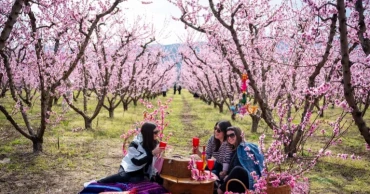
Vast peach orchards in northern Greece have turned bright pink as thousands of visitors gather to witness the region’s annual blossom season, creating a scenic spring attraction.
Every year, blooming peach trees spread like a pink blanket across the plains around Veria, drawing tourists mainly from across Greece and increasingly from other European countries.
“It’s something people should see at least once in their lives because the area is so large,” said Gianna Pilitsidou, president of the Veria Tourism Club. She noted that the plains, covering about 170 square kilometres, become entirely pink during peak bloom.
To celebrate the season, the tourism club has been organising activities such as photography tours, cycling events and exhibitions of local farm products. Over two recent weekends, thousands of visitors walked through the flowering orchards near Veria, located about 72 kilometres west of Thessaloniki.
Visitors from abroad also joined the celebrations. Dutch travel blogger Wesley van Eijk said he wanted more people to discover lesser-known destinations like Veria, while German tourist Andrea Lachnit described the blossoms as “stunning and heavenly.”
Local farmers say the event helps promote their produce and supports the region’s economy. Hotel operators also reported a noticeable rise in visitor numbers.
Peach blossoms in the Veria region typically appear between mid-March and mid-April, marking one of Greece’s most colourful spring attractions.
2 months ago
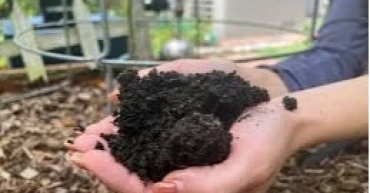
Soil is key to a healthy garden, experts say
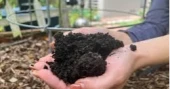
A lush, beautiful garden is a common dream, but experts say the secret to achieving it starts below the surface with healthy soil.
While many gardeners focus mainly on plants, a garden depends on a strong foundation. Soil is not just dirt; it is a living system filled with nutrients, organic matter and countless organisms such as bacteria, fungi, insects and worms. A 2023 study published in the ‘Proceedings of the National Academy of Sciences’ says soil may contain about 59% of all life on Earth, making it the most biodiverse habitat.
These organisms play a vital role by controlling harmful pests, turning organic material into natural fertilizer and improving air flow and drainage in the soil. Maintaining soil health is therefore essential for a successful garden.
Before planting, experts advise checking soil structure. Sandy soil drains water too quickly, while clay soil holds too much moisture both can harm plant growth. To improve soil quality, add 3–4 inches of compost, leaf mold or well-rotted manure and mix it gently into the top 6–12 inches. However, avoid over-tilling, as it can damage beneficial organisms, increase erosion and bring weed seeds to the surface.
In later seasons, simply spread organic matter on top and let it break down naturally.
Testing soil pH is also important, as different plants grow best within specific pH ranges. Gardeners can use simple home test kits and adjust levels with lime or sulfur if needed. It is also useful to check key nutrients nitrogen, phosphorus and potassium to guide fertilizer use.
Experts stress that building healthy soil takes time. Slow-release fertilizers and organic materials are better long-term choices than quick chemical fixes, which should be used only in urgent cases.
Gardeners are also advised not to walk on planting areas, as compacted soil limits air and water flow and restricts root growth.
Leaving soil bare can lead to erosion, nutrient loss and weed growth. Instead, plant ground cover or apply organic mulch such as bark, straw or dry leaves. A 2–3 inch layer of mulch helps retain moisture, regulate temperature and reduce weeds, but it should be kept away from plant stems to prevent rotting.
Jessica Damiano, a gardening writer for The Associated Press, shares regular tips in her award-winning Weekly Dirt Newsletter.
2 months ago

Cognitive shuffling: A sleep technique helping anxious minds switch off
A sleep method known as cognitive shuffling is gaining attention for helping people, especially anxious over-thinkers, fall asleep by occupying the mind with random, neutral imagery.
The technique, developed over 15 years ago by Luc P Beaudoin, an adjunct professor at Simon Fraser University in Canada, involves visualising objects starting with the letters of a random word, such as “cake.” Users move through each letter, imagining items like “car,” “carrot,” or “cottage,” effectively distracting the mind from intrusive thoughts.
Beaudoin’s method, also called serial diverse imagining, is designed to mimic the natural mental patterns that occur at the boundary between wakefulness and sleep, known as hypnagogic mentation. Researchers say the approach can reduce the impact of anxiety-inducing thoughts and help the brain feel “safe” enough to sleep.
A 2016 study involving 154 university students showed that using an app to guide cognitive shuffling improved sleep quality as effectively as traditional journaling methods, while allowing participants to practice it while lying in bed.
Sleep experts have described cognitive shuffling as “super somnolent,” combining a push-and-pull effect on the brain that encourages sleep while quieting worries. Experts advise users to stick to emotionally neutral words and avoid topics like politics or work, which could stimulate the mind.
Although the technique is not a universal solution, it has become popular on social media, with hundreds of videos demonstrating the method. Researchers hope further studies will clarify its effectiveness for occasional sleepers and those with clinical insomnia.
Sleep specialists emphasize that while cognitive shuffling can be a helpful tool, chronic sleep problems may require medical consultation and a combination of strategies, including mindfulness and cognitive refocusing.
With inputs from BBC
2 months ago

Harry and Meghan denounce royal author over ‘Deranged Conspiracy’
The Duke and Duchess of Sussex have accused royal author Tom Bower of promoting “deranged conspiracy and melodrama” in his new biography.
In excerpts published by ‘The Times’ on Friday, Bower claims Queen Camilla told a friend that Meghan had “brainwashed” Prince Harry. The author also described Meghan as a “divisive agent” and suggested that Prince William and Catherine, Princess of Wales, viewed her as a threat.
Responding on Saturday, a spokesperson for Harry and Meghan said Bower had “long crossed the line from criticism into fixation” and accused him of building “elaborate theories about people he does not know and has never met.” The statement added: “Those interested in facts will look elsewhere; those seeking deranged conspiracy and melodrama know exactly where to find him.”
The book, titled ‘Betrayal: Power, Deceit And The Fight For The Future Of The Royal Family’, explores tensions between the Sussexes and the Prince and Princess of Wales, as well as Harry and Meghan’s business and charitable activities since stepping down as senior royals in 2020, including deals with Netflix and Spotify.
Bower claims friction between the siblings escalated before Harry and Meghan left the UK. He suggests William and Catherine were “alarmed” by Meghan and worried she resented Harry’s limited chances of becoming king, just as she regretted not being queen. He also writes that Harry fears losing royal titles and being effectively exiled from Britain.
A section on the Invictus Games refers to media coverage of Harry and Meghan at the veteran-focused sporting event as the “Meghan Games.”
Bower previously authored ‘Revenge: Meghan, Harry, And the War Between the Windsors’, published in 2022.
With inputs from BBC
2 months ago
Raucous ‘bird tornado’ marks snow geese’s annual migration to Arctic
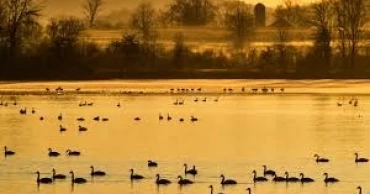
Dozens of birdwatchers gathered before dawn at a reservoir in Pennsylvania to witness a striking natural spectacle as thousands of migrating snow geese suddenly took flight during their annual journey north.
About an hour after sunrise, the birds which had been honking and grooming on the water — burst into the air in a dramatic swirl. They circled briefly before heading toward nearby farm fields to feed on leftover grains as they continued their long spring migration toward breeding grounds in the Arctic, passing through New York and Quebec.
The reservoir, created about 50 years ago to attract waterfowl, has gradually become a major stopover for migrating birds. Payton Miller, an environmental education specialist with the Pennsylvania Game Commission, described the moment when the flock lifts off the water as a loud “bird tornado.”
“It only takes one beautiful morning with a big flight to remind you how incredible it is to see so many of these birds together,” Miller said, adding that the sight never gets old.
Among the spectators was Adrian Binns, a safari guide from Paoli, Pennsylvania, who visited the Middle Creek Wildlife Management Area to experience something unique.
Snow geese have been arriving at the 6,300-acre Middle Creek site in increasing numbers since the late 1990s. Before reaching the area, many spend the winter along the Atlantic coast, from New Jersey to the Carolinas, with large groups staying on the Delmarva Peninsula near the Chesapeake Bay.
Although the geese stay at Middle Creek only briefly, the site attracts around 150,000 visitors each year, including about 1,000 hunters. According to the Pennsylvania Game Commission, about 100,000 snow geese gathered there on the busiest day last year, though the single-day record remains around 200,000 birds recorded on Feb. 21, 2018.
Snow goose populations have grown sharply over the past century. A 2017 study published by Springer Nature found that greater snow geese increased from about 3,000 in the early 1900s to roughly 700,000 by the 1990s. Today, their population is estimated at around one million, while the smaller lesser snow geese may number about 10 million.
The number of migrating tundra swans visiting Middle Creek has also risen, from only about a dozen in the mid-1970s to more than 5,000 in recent years. Birdwatchers have identified over 280 bird species at the site, including bald eagles, northern harriers, ospreys and owls.
However, the rapid growth of snow goose populations has created environmental concerns. Wildlife officials in the United States and Canada have been adjusting hunting rules while also addressing crop damage, migration changes and habitat destruction in the Arctic caused by the birds’ feeding habits.
David M. Bird, a wildlife biology professor at McGill University, said the growing population may be one of the biggest conservation challenges facing wildlife experts in North America. Snow geese often pull plants out by the roots while feeding, damaging fragile habitats used by other wildlife.
Meanwhile, the Pennsylvania Game Commission reported that avian influenza, present in the state since 2022, continues to circulate among wild birds. Authorities recently removed around 2,000 bird carcasses mostly snow geese from a quarry north of Bethlehem during December and January.
Bird noted that while nature lovers admire snow geese, farmers often see them as pests, hunters value them as food and animal rights advocates want them protected — making wildlife management a complex task.
2 months ago
Japan marks 15 years since Tsunami, Takaichi calls for more nuclear energy
Japan on Wednesday marked the 15th anniversary of the devastating earthquake, tsunami, and nuclear disaster that struck its northeastern coast, as the government pushes for increased use of atomic energy.
The magnitude 9.0 quake and resulting tsunami on March 11, 2011, killed more than 22,000 people and forced nearly 500,000 to flee their homes, mostly due to flooding. In Fukushima, around 160,000 residents evacuated after radiation leaked from the tsunami-hit Fukushima Daiichi nuclear plant, with about 26,000 still living elsewhere due to lingering radiation fears or restrictions in their hometowns.
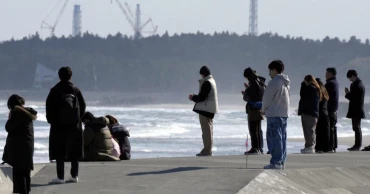
At 2:46 p.m., the country observed a moment of silence, marking the exact time the quake struck.
Prime Minister Sanae Takaichi, speaking at a ceremony in Fukushima, vowed to accelerate the region’s recovery over the next five years and to continue sharing “the valuable lessons learned from the disaster.” She has also pushed for faster restarts of nuclear reactors, supporting nuclear power as a stable energy source following a policy reversal in 2022 that ended a decade-long phase-out.
Early Wednesday, some residents of the tsunami-hit areas visited the coast to pray for missing loved ones. Over one million homes, schools, and offices in Iwate, Miyagi, Fukushima, and other coastal regions were destroyed or damaged. While infrastructure has largely been rebuilt, community and economic recovery has been slow, with many residents relocating permanently.
At Fukushima Daiichi, meltdowns occurred in three of six reactors, with at least 880 tons of melted fuel still inside. Radiation levels prevent full inspection, and large-scale removal is not expected until 2037 or later. Decontamination efforts produced massive amounts of slightly radioactive soil—enough to fill 11 baseball stadiums which the government plans to move, including for public works, but faces local resistance.
2 months ago