Foreign-Affairs
Fake photocards circulating online misquote State Minister: MoFA
The Ministry of Foreign Affairs (MoFA) on Monday urged the people to remain cautious and not be misled by misinformation circulating on social media, clarifying that recently shared photocards attributed to State Minister for Foreign Affairs Shama Obaed Islam are entirely false.
The MoFA noticed fabricated photocards that were circulated online falsely quoting the State Minister.
One such card claims, “We must approach India with submission, just as we now rely on them even for oil. Shouting slogans like ‘Delhi or Dhaka’ is meaningless. We need to understand that if we antagonise India, our very existence could be at risk."
The Ministry firmly said these claims are baseless, misleading, and deliberately fabricated.
It emphasised that the State Minister has never made such remarks.
“Therefore, everyone is requested not to be confused by this misinformation and rumor,” the MoFA said.
In fact, the State Minister said Bangladesh’s foreign policy is guided by a “Bangladesh first” principle.
“We will maintain relations with all countries and governments while safeguarding the interests of the people of Bangladesh. Bangladesh will stand firm and continue to engage, communicate, and foster friendly relations with all nations," the MoFA quoted her as saying.
2 months ago
Bangladesh, EU reaffirm commitment to deepen economic engagement
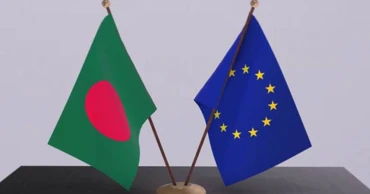
Bangladesh and the European Union (EU) have expressed optimism about further strengthening trade and investment cooperation in a bilateral meeting held on the sidelines of the 14th WTO Ministerial Conference (MC14).
During the meeting that took place on March 29 in Yaoundé, Cameroon, Commerce Minister Khandaker Abdul Muqtadir reiterated Bangladesh’s strong commitment to enhancing economic partnership with the EU, said a Commerce Ministry press release on Monday.
The Commerce Minister led the Bangladesh delegation which included Commerce Secretary Mahbubur Rahman and other senior officials of the ministry.
EU Commissioner Maroš Šefčovič led the European side accompanied by Director-General for Trade Sabine Weyand and other senior officials.
The minister said the new government has been taking forward-looking measures to integrate Bangladesh more deeply into global value chains and improve the business climate, which would help accelerate sustainable trade-led growth.
Referring to Bangladesh’s upcoming graduation from the Least Developed Country (LDC) category, the minister requested the EU to extend the transition period by three years to help maintain export competitiveness and mitigate potential economic risks.
He also urged the EU to initiate discussions on a Free Trade Agreement (FTA) at an early stage, noting that the bloc remains Bangladesh’s largest export destination particularly for readymade garments.
Highlighting Bangladesh’s broader trade strategy, the minister said the country has already concluded an Economic Partnership Agreement (EPA) with Japan and is currently engaged in negotiations on FTAs and CEPAs with several countries including South Korea, Singapore and the United Arab Emirates.
He also noted that Bangladesh has made significant progress in labour sector reforms in line with International Labour Organization (ILO) guidelines, adding that the amended labour law will be enacted soon.
The EU side assured that Bangladesh’s request for extending the LDC transition period would be considered positively and appreciated the ongoing labour reforms, said the release.
Regarding the proposed FTA, EU officials said the matter would be assessed following the completion of necessary internal processes.
Both sides emphasised the importance of ensuring a level playing field, transparency and fairness in trade and investment.
The EU underscored the need for balanced engagement while Bangladesh reaffirmed its commitment to ensuring non-discriminatory and equitable treatment for all partners.
Both parties agreed to maintain close engagement and continue discussions on trade, investment and reform initiatives in the future.
2 months ago

France reaffirms support for Bangladesh’s independent judiciary
France on Sunday reaffirmed its support for Bangladesh’s efforts to build an independent, effective and accessible judicial system.
French Ambassador to Bangladesh Jean-Marc Séré-Charlet met with the Minister of Law, Justice and Parliamentary Affairs, Md. Asaduzzaman and discussed issues of mutual interest.
He congratulated the Law Minister on his appointment.
The discussion centered on ongoing parliamentary affairs, justice reform, and the promotion of the rule of law.
France keen to expand cooperation with Bangladesh Police, says envoy
2 months ago
France keen to expand cooperation with Bangladesh Police, says envoy
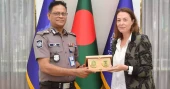
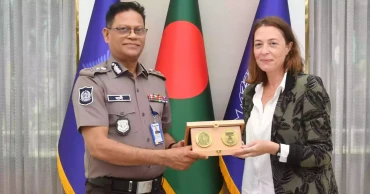
France has expressed interest in expanding cooperation with Bangladesh Police in key areas including crowd control, migration support, criminal investigation and institutional capacity building.
The interest was conveyed when French Deputy Homeland Security Attaché Ms Christelle Fontaine paid a courtesy call on Inspector General of Police (IGP) of Bangladesh Md Ali Hossain Fakir at Police Headquarters on Sunday.
During the meeting, the French official highly appreciated the role of Bangladesh Police in the 13th national parliamentary elections, particularly their operational efficiency.
She also showed keen interest in enhancing the capacity of Bangladesh Police in several sectors, including managing public gatherings, assisting migrants and strengthening investigative capabilities.
Welcoming the initiative, the IGP underscored the need for modernising Dhaka’s traffic management system and enhancing the skills of police personnel working in the hill tracts and Rohingya camps.
He also emphasised training in areas such as migration, cyber security and human trafficking, alongside strengthening mutual cooperation between the law enforcement agencies of the two countries.
Senior police officials were present at the meeting.
2 months ago
Russian envoy discusses Dhaka-Moscow cooperation with Foreign Secretary
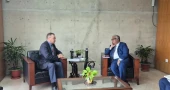
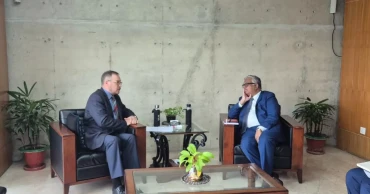
Russian Ambassador to Bangladesh Alexander Khozin on Sunday met Foreign Secretary Asad Alam Siam and discussed issues of mutual interest including the crisis in the Middle East.
“The crisis in the Middle East was also brought up,” said the Russian Embassy in Dhaka after the meeting.
Ambassador Alexander Khozin said Russia stands for a swift end to hostilities and is ready to facilitate a solution of the ongoing conflict and existing differences through political and diplomatic means.
2 Russian navy ships arrive in Chittagong on goodwill visit
The two sides discussed current Bangladesh-Russia cooperation including at the UN and between the two countries' Foreign Ministries.
2 months ago
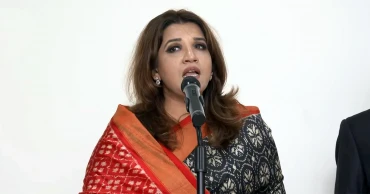
Human trafficking must stop, offenders must face justice: State Minister
State Minister for Foreign Affairs Shama Obaed Islam on Sunday said that human trafficking must be stopped and those involved in such inhumane activities must face exemplary punishment.
“The long-term solution is how human trafficking can be prevented. We must find a way. It cannot be allowed. This does not fall under any definition of civilisation,” she told reporters at the Ministry of Foreign Affairs.
The State Minister said traffickers must be punished under both domestic and international laws.
Govt prioritises safety of Bangladeshis abroad amid Middle East tensions: State Minister
At least 18 Bangladeshis died while attempting to cross the Mediterranean Sea through a risky and illegal route, trying to reach Greece via Libya.
International media, quoting the Greek coastguard, reported that 22 migrants died off the coast of Greece while attempting to reach Europe. Another 26 survived the ordeal and were rescued by a European border agency vessel near the island of Crete.
Officials said the survivors included a woman and a minor, adding that those in need of medical care were transferred to hospitals.
Among the survivors, 21 were Bangladeshi citizens, four were from South Sudan, and one was a Chadian national.
The boat had been at sea for six days after departing from Tobruk, a port city in eastern Libya, on March 21. The city is widely seen by migrants as a gateway to seeking asylum in the European Union.
“We are yet to receive details. Our missions are in constant communication with the authorities there (Greece). The Ministry of Expatriates’ Welfare and Overseas Employment is also aware of the situation. We are working together to ensure proper support for those who were rescued,” the State Minister said.
She described the incident as extremely unfortunate, noting that people are engaging in such inhumane acts for financial gain.
Those rescued have been taken either to hospitals or camps, she added.
Need to Complete Certain Procedures
Responding to a question about repatriating the bodies and survivors, the State Minister said it would take some time. “We need to complete certain procedures. In such incidents, governments become particularly sensitive,” she said.
The State Minister said the priority is to assess the condition of the survivors, confirm their identities, and complete proper verification before taking further steps, including assistance and repatriation.
She said Bangladesh embassies in Athens and Libya remain active in dealing with the situation and are continuing investigations.
“We have received preliminary information from our missions,” the State Minister said, adding that they suspect that trafficking networks are operating both in Bangladesh and Libya.
She said these groups lure people with false promises and put their lives at risk.
The State Minister said citizens from a number of countries were on board, calling it particularly tragic that a woman and a child were among them. “Our missions are working to gather more details,” she added.
The State Minister said she has instructed the relevant missions to investigate and identify those responsible.
“We are facing a harsh global reality. People in many countries feel insecure for various reasons. In such circumstances, exploiting vulnerable individuals for profit through inhumane means is deeply unfortunate,” she said.
The number of migrants who have died trying to reach EU soil more than doubled in the first two months of 2026, compared with last year, the EU border agency Frontex said earlier this month.
2 months ago
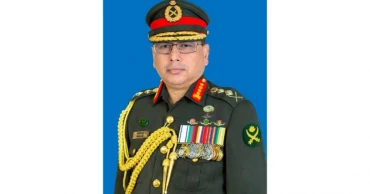
Army Chief leaves for US on official visit
Army Chief General Waker-Uz-Zaman left Dhaka for the United States on Saturday on an official visit.
During the trip, the Army Chief will attend a special lecture at the Senate Chamber and accept an award proposed by the Georgia State Capitol in recognition of the commendable contributions of Bangladeshi peacekeepers in United Nations missions, said an Inter-Services Public Relations (ISPR) press release on Sunday.
He is also scheduled to participate in bilateral meetings with U.S. officials concerned.
2 months ago

Bangladesh named among countries facing heightened risk from prolonged war in Middle East
The Middle East war poses a greater risk to Bangladesh, Pakistan, and Sri Lanka, and to a lesser extent Laos, due to their high dependence on imported energy and limited reserve supplies, says S&P Global Ratings, noting that these countries are particularly vulnerable to rising oil prices and potential supply disruptions.
In their base case scenario, the war is unlikely to have a material impact on their sovereign ratings for these countries, but a more prolonged price and supply shock in global energy markets could cause more pronounced credit damage.
Asian stocks decline, oil prices rise amid uncertainty over Iran conflict
At S&P Global Ratings with analyst-driven credit ratings, research, and sustainable finance opinions provide critical insights that are essential to translating complexity into clarity so market participants can unlock opportunities and make decisions with conviction.
Pakistan, Sri Lanka, and Bangladesh are showing signs of economic recovery. The three countries have made progress, but sustained high energy prices and potential disruptions to trade and remittances could derail their fragile economies.
Laos is comparatively less exposed due to its hydropower electricity generation and balanced fiscal position. While still vulnerable to extended energy price and supply shocks, the conditions supporting the positive outlook on our long-term ratings remain intact for now.
“Our ratings on Bangladesh can likely withstand the shorter-term economic disruptions associated with our base case scenario,” said the report by the American credit rating agency.
However, the country faces mounting growth, inflation, and external risks if the spike in energy prices endures longer than they currently anticipate, S&P said.
The duration of the Middle East conflict and associated price shock, as well as the physical availability of fuel supplies, will be key determinants of the impact on the sovereign's creditworthiness.
Higher fuel prices are likely to arrest the gradual decline in inflation over the next three to six months, and could sap underlying recovery momentum in the economy.
Nearly 50% of Bangladesh's electricity generation is gas-fired, and nearly a quarter of its gas needs are met through imports.
Meanwhile, the economy is almost entirely reliant on imports for crude and refined oil products. Oil supply reserves are likely to be less than one month, after which measures to curb consumption may become more pronounced if imports remain constrained.
While the government and national energy companies have been able to secure some additional gas, diesel, and petrol supplies recently, the availability of these could become scarcer if the conflict endures.
Officials have moved quickly to implement measures aimed at blunting the hit from higher fuel prices. These include a cap on retail fuel prices alongside a temporary rationing mechanism, cuts to operations at fertilizer plants to prioritize gas supply to power plants, and early school closures to manage energy consumption.
The country is already grappling with stubbornly high inflation, which rose to 9.2% in February from 8.6% in January, and an extended moderation in growth following the collapse of the previous government in mid-2024.
The Bangladesh National Party's solid margin of victory in February 2026 elections, and a relatively smooth transition from the caretaker government, mitigates risks of policy paralysis, and could help to restore policy continuity and political stability following a period of heightened uncertainty.
However, policy tools available to the officials will be bound by price pressures, the taka exchange rate, foreign reserve targets, and the government's limited revenue-generation capacity.
Bangladesh's revenue to GDP ratio is among the lowest of all rated sovereigns. It is estimated that it will be around 9% in the current fiscal year (ending June 2026).
The war will also be an unwelcome headwind against Bangladesh's improving external position. Foreign exchange reserves rose to US$29.6 billion as of March 12, 2026, a substantial boost compared to just US$19.7 billion at the same time in 2025.
The country's overall current account balance has improved, too, supported by surging remittance inflows, and despite a slowdown in the ready-made garment export sector.
The accumulation of a more meaningful foreign exchange buffer, and the current account's modest surplus position so far this fiscal year, will help to alleviate the immediate stresses that could arise from a period of acutely high energy prices.
However, a more drawn-out conflict would pressure Bangladesh's economy across a variety of fronts, including through the import channel, which could shift the current account back into a deficit depending on the length and scale of the price shock.
2 months ago
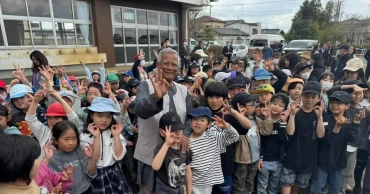
Prof Yunus visits Sakai, discusses social business, ‘3ZERO’ vision
Nobel Laureate Prof Muhammad Yunus visited Sakai, Ibaraki Prefecture, an innovation-driven city near Tokyo, on Friday.
Mayor Masahiro Hashimoto warmly welcomed Prof Yunus and said he has been leading efforts to transform Sakai into a model “3.0 Smart City,” inspired by Professor Yunus’ vision of three zeros.
Sakai is known for pioneering initiatives such as autonomous driving technologies and the “hometown tax” system, which allows residents in major cities like Tokyo to allocate part of their taxes to their hometown, supporting local development.
During the visit, Prof Yunus spent time at a local elementary school, interacting with students.
The visit included a touching moment with the national anthem of Bangladesh. He also planted a cherry tree at the school, symbolizing growth, renewal, and future generations.
Mayor Hashimoto also invited Professor Yunus and his team to provide guidance on further advancing Sakai’s transformation. Key ideas discussed included establishing social business funds and launching “3ZERO Club” to foster innovation and social impact at the community level.
When supported and scaled, ideas can contribute to solving global challenges: Prof Yunus
Later, Prof Yunus visited Bando Taro Co., Ltd., a Japanese company best known for operating a chain of family-friendly restaurants with over 100 locations across Japan. Its business model thoughtfully integrates social impact, pairing each restaurant with a nearby nursery so that employees’ children can remain close to their parents during working hours.
At the site, Prof Yunus planted peach trees, a gesture symbolizing sustainability and a long-term vision.
2 months ago
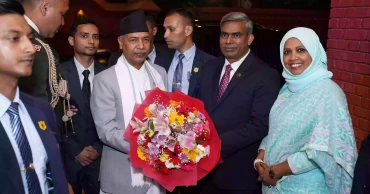
UNGA Presidency: Ambassador rallies support for Bangladesh’s candidacy
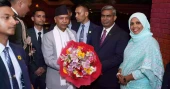
The Bangladesh Embassy in Nepal hosted a grand reception in Kathmandu on Friday evening to celebrate the 55th anniversary of the Great Independence and National Day.
The reception held at a leading hotel in the capital was attended by ambassadors and heads of mission, ministers, political leaders, senior government officials, members of civil society, business leaders, media representatives and members of the Bangladesh community in Nepal.
In his speech, Bangladesh Ambassador Md Shafiqur Rahman paid profound tributes to the valiant freedom fighters who made their supreme sacrifices during the nine month-long Liberation War of Bangladesh.
Bangladesh Army Chief lauds Nepal Army's role as ‘wall of defence’
He expressed sincere appreciation to the government and the people of Nepal for their invaluable moral and material support during the War.
He also reaffirmed the government's commitment to strengthening and solidifying the bilateral relations with Nepal, particularly in the areas of trade, investment, connectivity, energy, culture, education, tourism, and people-to-people contacts.
Ambassador Rahman also congratulated the new government of Nepal, which was formed under the able leadership of Prime Minister Balendra Shah and his cabinet expressing hope that the bilateral collaboration will further deepen and reach new heights during his tenure.
Referring to the new government in Bangladesh, the Ambassador apprised the gathering about the plans and initiatives of the new government under the dynamic and visionary leadership of Prime Minister Tarique Rahman and conveyed the readiness of the government to engaging closely with the new government in Nepal and the international community.
During the celebration, two placards were distinctly displayed featuring the candidacy of the Foreign Minister Dr. Khalilur Rahman, who is running for the post of the President of the 81st session of the United Nations General Assembly for the term 2027-2028.
Ambassador Rahman presented a brief outline of his profile and sought for the support for his candidature.
The reception concluded with a buffet dinner featuring a variety of traditional Bangladeshi and international cuisine.
Around 380 guests including Minister for Law, Justice and Parliamentary Affairs of Nepal, 25 Ambassadors or Heads of Resident missions in Nepal, and members of the diplomatic corps joined the celebration.
2 months ago