Law-&-Order
Tensions escalate at Biswa Ijtema ground after clashes; 2 dead
Authorities have tightened security in and around the Biswa Ijtema ground in Tongi to prevent any untoward incidents following violent clashes between two groups that left two people dead and many injured.
A large contingent of the Army, Border Guard Bangladesh (BGB), Rapid Action Battalion (RAB), and other forces, along with regular police, have been patrolling the area, reports UNB’s district correspondent from the scene.
According to a statement from the BGB headquarters, four platoons have been deployed in the area.
Despite the heavy security, a tense atmosphere persists there.
Locals reported that followers of Maulana Saad remain inside the ground, while those of Maulana Zubair are positioned outside.
Meanwhile, a meeting between the two groups was held at the Ministry of Home Affairs later today (Wednesday).
The meeting asked the two groups to vacate the ground and they were learned to have agreed to leave the area.
Read: Ijtema: Saad’s supporters attempt to march to Chief Adviser’s residence
As per the government’s decision, the first phase of the Biswa Ijtema, organised by Zubair’s followers, will take place from January 31 to February 2 next year, while the second phase, led by Saad’s followers, is scheduled from 7 to 9 February.
Although the government permitted the Saad group to host the first phase, the opposing faction has been reluctant to accept the decision. Tensions between the two groups have been brewing ever since.
In preparation for their 'Jor Ijtema,' set to be held from December20 to 24, Saad’s followers began entering the ground.
But, sensing their presence, Zubair’s followers reportedly attacked them around 3 am.
In response, Saad’s supporters, attempting to gain entry to the ground, launched a counter-attack, leading to a fierce clash that resulted in two deaths and numerous injuries.
Locals alleged that as Saad’s supporters entered the ground, police stationed at the Ijtema site moved away, positioning themselves on the Dhaka-Mymensingh Highway to the east.
Read more: First phase of Biswa Ijtema to begin Jan 31
Tongi West Police Station Officer-in-Charge Iskandar Habibur Rahman confirmed the fatalities, adding that several injured individuals were sent to Dhaka Medical College Hospital.
He said that the situation is now under control, with law enforcement remaining on high alert.
1 year ago
15th Amendment Verdict: Clearing path for return of caretaker govt system
The High Court on Tuesday said that the 15th Amendment to the Constitution of Bangladesh contradicts its fundamental framework and undermines key democratic principles, emphasising that there is no legal obstacle to reinstating the caretaker government system.
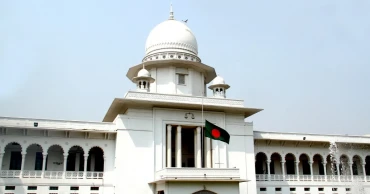
A High Court bench comprising Justice Farah Mahbub and Justice Debasish Roy Chowdhury made the remarks while delivering its verdict on the highly debated 15th Amendment and the abolition of the caretaker government system.
The court ruled that while the amendment is not entirely void, it has compromised the Constitution's fundamental structure.
In its observations, the High Court said that the core of the Constitution lies in democracy, which can only be upheld through free, fair and credible elections.
It added that the caretaker government system, introduced through political consensus, had become an essential component of the Constitution’s basic framework.
“The beauty of the Constitution lies in empowering people. People are the source of all power,” the court noted in its judgment, reinforcing the necessity of a mechanism to preserve democratic values.
The High Court reiterated that the abolition of the caretaker government system disrupted the nation’s democratic structure, as it was originally enacted to ensure impartial elections and foster political stability.
The court observed, “Caretaker governments were formed through political consensus and have since become a fundamental part of the Constitution’s foundation.”
The ruling followed extensive hearings over 23 working days, during which key legal representatives from all concerned parties presented their arguments.
Attorney General Md Asaduzzaman and Deputy Attorney General Md Asad Uddin represented the state.
Senior lawyer Dr Sharif Bhuiyan argued on behalf of the petitioners, including Badiul Alam Majumdar of SUJAN, while BNP’s counsel included senior lawyers Zainul Abedin, Barrister Badruddoza Badal, Barrister Ruhul Quddus Kajol, and Advocate Farzana Sharmin Putul. Jamaat-e-Islami was represented by Advocate Mohammad Shishir Monir and Barrister Ehsan Siddique, while Advocate Ishrat Hasan spoke for Insaniyat Biplob. Additionally, Barrister Junaid Ahmed Chowdhury appeared for four other petitioners, and Barrister Hamidul Misbah argued as an intervener.
Earlier, on December 5, the court had scheduled the verdict following the prolonged hearings on why the 15th Amendment, which abolished the caretaker government system, should not be declared illegal.
The verdict came four months after the fall of the Sheikh Hasina-led Awami League government in a student-led mass uprising, followed by her fleeing to India.
The caretaker government system, originally introduced to oversee impartial elections, was scrapped through the Fifteenth Amendment in 2011. This move sparked criticism from various political factions and civil society groups.
Legal and political analysts have noted that the High Court’s ruling opens the door for revisiting and restoring the caretaker government framework, a measure many believe is crucial for holding credible elections and ensuring the nation’s democratic stability.
What AG Says
Attorney General (AG) Md Asaduzzaman stated that the High Court did not abolish the 15th Amendment entirely but rather kept some issues, including the father of the nation and the 7th March Speech, pending for Parliament.
Asaduzzaman said this while briefing reporters after the final hearing of two separate petitions in this regard.
Referring to the past three national elections, the court observed how they were conducted, with exiled leaders, a bar on rule of law, biased judicial division, and constitutional interference.
He added that the court did not address the remainder of the 15th Amendment and left these matters for Parliament to decide.
Caretaker Govt’s Start
The first caretaker government in Bangladesh was installed in 1990 under then Chief Justice Shahabuddin Ahmed based on political understanding, without any prior constitutional amendment.
1996 Constitutional Amendment
Khaleda Zia, leader of the Bangladesh Nationalist Party (BNP), became Prime Minister of Bangladesh for the first time after the 1991 general election.
She was reelected in the February 1996 general election, which was conducted by her government.
Major opposition parties, including the Awami League, Jatiya Party and Jamaat-e-Islami, boycotted the election.
As a result, BNP secured a landslide victory, and Khaleda Zia retained her position as Prime Minister.
However, the opposition demanded fresh elections under a neutral caretaker government, leading to widespread violence.
Amid violent protests, new elections were held in June 1996 under a caretaker administration, and the Awami League won the election.
On 28 March 1996, the 13th Amendment to the Constitution was passed, introducing a system of non-party Caretaker Government to oversee general elections.
2006–2008 Caretaker Govt
In late 2006, President Iajuddin Ahmed formed a caretaker government. The role of Chief Advisor was initially intended for Chief Justice KM Hasan, but he could not assume the position.
The Awami League alleged that Hasan had been appointed Chief Justice by the outgoing BNP-led government to manipulate the caretaker system in its favor.
This controversy led to violent unrest, culminating in the cancellation of the January 2007 general election.
Subsequently, Fakhruddin Ahmed formed a new caretaker government in January 2007 with the support of the Bangladesh Armed Forces. This caretaker government remained in power beyond its constitutionally-mandated 120-day term and oversaw the 2008 general election before stepping down.
Abolition
However, the caretaker government system was abolished through the 15th Amendment in 2011, as the Supreme Court struck down the 13th Amendment to the Constitution as illegal.
Since the abolition of the system, BNP and its allies have persistently demanded its reinstatement. The then ruling Awami League, on the other hand, firmly rejected these calls.
What is Next?
Attorney General Mohammad Asaduzzaman said, "The review petition regarding the reinstatement of the Caretaker Government system is under consideration in the Appellate Division. The findings of this order (from the HC) will be presented there. Ultimately, the Appellate Division will make the final decision on the caretaker government system."
Dr Sharif Bhuiyan, the lawyer representing the petitioners challenging the validity of the 15th Amendment, said, "A major obstacle to the return of the caretaker government system has been removed. However, it cannot be said that it has fully returned, as it was abolished in two ways—by the court's order and by the constitutional amendment passed by Parliament."
He noted that Badiul Alam Majumdar and four others have filed a review petition with the Appellate Division on this matter.
A hearing will take place in January, and if the decision is made in favor of the petitioners, the caretaker government system will be reinstated, he added.
1 year ago
DMP files 2,444 cases for traffic violations
The traffic division of the Dhaka Metropolitan Police (DMP) has filed 2,444 cases during drives against traffic rule violators.
The drives were conducted on Sunday and Monday, said Talebur Rahman, DC (Media) of DMP on Tuesday afternoon.
DMP files 1,520 cases for traffic law violations on Dec 14
Besides, 49 vehicles were impounded and 41 others were towed during the drives conducted in different parts of the capital.
The drive will continue to maintain discipline, he said.
1 year ago
ACC to probe graft allegations against Hasina, family members
The Anti-Corruption Commission (ACC) on Tuesday decided to investigate the allegations of Tk 60,000 cr embezzlement against former prime minister Sheikh Hasina, her sister Sheikh Rehana, son Sajeeb Wazed Joy and niece Tulip Siddique.
ACC spokesperson Aktarul Islam said the decision was taken following a complaint of chairman of Nationalist Democratic Movement Bobby Hajjaj.
On December 15, the High Court issued a rule seeking explanation as to why the inaction of the ACC in probing the allegations of graft against Sheikh Hasina, her son Joy and niece Tulip in the Rooppur Nuclear Power Plant project should not be decaled illegal.
Read: Enforced Disappearances Commission submits report finding Hasina’s involvement, recommends disbanding RAB
The High Court bench of Justice Fahmida Kader and Justice Mubina Asaf issued the rule following a writ petition in this regard.
The writ petition, filed on September 3 by Bobby Hajjaj, Chairman of the National Democratic Movement (NDM), sought an investigation into the alleged embezzlement of Tk 60,000 crore from the RNPP through a Malaysian bank by them.
Fourteen people including Secretary of Ministry of Power, Energy and Mineral Resources, Secretary of the Ministry of Home Affairs, ACC Chairman, Sheikh Hasina, Sajib Wazed Joy and Tulip Siddique were made respondents to the rule.
1 year ago
HC finds 15th amendment conflicting, clears path to restore caretaker govt
The High Court has observed that the Fifteenth Amendment to the Constitution of Bangladesh contradicted its fundamental framework and rendered key democratic principles compromised, emphasising that there is no legal bar to reinstating the caretaker government system.
A High Court bench comprising Justice Farah Mahbub and Justice Debasish Roy Chowdhury made the remarks while delivering its verdict on the much-debated Fifteenth Amendment and the abolition of the caretaker government system on Tuesday.
The court ruled that the amendment, while not entirely void, had undermined the Constitution’s fundamental structure.
Caretaker Issue: Verdict on validity of 15th Amendment today
In its observations, the High Court said that the core of the Constitution lies in democracy, which can only be ensured through free, fair, and credible elections.
It added that the caretaker government system, introduced through political consensus, had become an essential component of the Constitution’s basic framework.
“The beauty of the Constitution lies in empowering the people. The people are the source of all power,” the court noted in its judgment, reinforcing the necessity of a mechanism to preserve democratic values.
The High Court reiterated that the abolition of the caretaker government system disrupted the nation’s democratic structure, as it was originally enacted to ensure impartial elections and foster political stability. The court observed, “Caretaker governments were formed through political consensus and have since become a fundamental part of the Constitution’s foundation.”
ACC sues former ministers, their families over corruption
The ruling followed extensive hearings spanning 23 working days, during which key legal representatives from all concerned parties presented their arguments.
Attorney General Md Asaduzzaman and Deputy Attorney General Md Asad Uddin represented the state. Senior lawyer Dr Sharif Bhuiyan argued on behalf of the petitioners, including Badiul Alam Majumdar of SUJAN, while BNP’s counsel included senior lawyers Zainul Abedin, Barrister Badruddoza Badal, Barrister Ruhul Quddus Kajol, and Advocate Farzana Sharmin Putul. Jamaat-e-Islami was represented by Advocate Mohammad Shishir Monir and Barrister Ehsan Siddique, while Advocate Ishrat Hasan spoke for Insaniyat Biplob. Additionally, Barrister Junaid Ahmed Chowdhury appeared for four other petitioners, and Barrister Hamidul Misbah argued as an intervener.
Earlier, on December 5, the court had scheduled the verdict following the prolonged hearings on why the 15th Amendment, which abolished the caretaker government system, should not be declared illegal.
Writ petition seeking probe into graft allegations against 51 judges, other staff rejected
The caretaker government system, originally introduced to oversee impartial elections, was scrapped through the Fifteenth Amendment in 2011, a move that sparked criticism from various political quarters and civil society groups.
Legal and political analysts have noted that the High Court’s ruling opens the door for revisiting and restoring the caretaker government framework, a measure many believe is crucial to holding credible elections and ensuring the nation’s democratic stability.
1 year ago
Caretaker Issue: Verdict on validity of 15th Amendment today
The High Court is set to deliver its verdict today (Tuesday) on the validity of the 15th amendment to the Constitution, which abolished the caretaker government system.
The bench of Justice Farah Mahbub and Justice Debasish Roy Chowdhury will pronounce the verdict as hearings concluded earlier this month.
On December 4, the court concluded the hearing of two writ petitions challenging the legitimacy of the 15th amendment.
Graft in RNPP project: HC issues rule over ACC’s inaction in probe
Several political entities, including the BNP and Jamaat-e-Islami, were involved in the petitions, with most of them advocating for the reinstatement of the caretaker government system.
The 15th Amendment, passed by the ruling Awami League on June 30, 2011, formally abolished the provision of the caretaker government system.
The amendment also included a provision imposing the death penalty for the unlawful usurpation of state power, categorising it as treason.
Writ petition seeking probe into graft allegations against 51 judges, other staff rejected
The amendment also altered the timeline for parliamentary elections, stipulating that elections must be held within 90 days after the end of a parliamentary term.
Previously, elections were required to be held in the 90 days preceding the end of the term.
In total, the 15th Amendment introduced 55 major and minor changes to the Constitution.
1 year ago
Graft in RNPP project: HC issues rule over ACC’s inaction in probe
The High Court has issued a rule seeking explanation as to why the inaction of the ACC in probing the allegations of graft against ex-prime minister Sheikh Hasina, her son Joy and niece Tulip in the Rooppur Nuclear Power Plant project should not be decaled illegal.
The High Court bench of Justice Fahmida Kader and Justice Mubina Asaf issued the rule on Sunday following a writ petition in this regard.
Fourteen people including Secretary of Ministry of Power, Energy and Mineral Resources, Secretary of the Ministry of Home Affairs, ACC Chairman, Sheikh Hasina, Sajib Wazed Joy and Tulip Siddique were made respondents to the rule.
ACC sues Benazir, Matiur, family members
The writ petition, filed on September 3 by Bobby Hajjaj, Chairman of the National Democratic Movement (NDM), sought an investigation into the alleged embezzlement of Tk 60,000 crore from the RNPP through a Malaysian bank by them.
A report on the alleged corruption involving Sheikh Hasina's family members in the Rooppur Nuclear Power Plant was published in various newspapers on August 19.
1 year ago
Pilkhana Massacre: Govt decides against forming inquiry committee for now
The government has decided not to form an independent commission of inquiry to reinvestigate the 2009 Bangladesh Rifles (BDR) killings, citing the ongoing legal proceedings related to the incident.
The Home Ministry informed the High Court of this decision on Sunday.
Deputy Attorney General Tanim Khan informed the High Court bench, led by Justice Farah Mahbub and Justice Debashish Roy Chowdhury, about this development.
An initial proposal to form a commission to probe the mutiny was made earlier, but the Home Ministry's update on Sunday clarified that the decision had been put on hold due to two pending cases.
On February 25-26, 2009, 74 people, including 57 army officers deputised to BDR, were killed during an apparent mutiny by the force's jawans.
Pilkhana Massacre: HC issues rule on formation of investigation committee
In the case filed over the incident, 152 people were sentenced to death, 161 were sentenced to life imprisonment, 256 were sentenced to various terms of imprisonment and 278 were acquitted. But most victims' families, and many others, continued to maintain the real truth behind the unprecedented incident has never been uncovered.
The case is currently being heard in the Appellate Division. As the other case is pending in the Bakshi Bazar Temporary Court, the formation of the committee proposed as per the petitioner's demand would conflict with the court order, so it is not possible to form the committee for the time being.
The government is keen to strees it has considered the matter with great importance. But as the two cases are pending in the court, no decision could be taken at this stage, according to Home Ministry’s Assistant Secretary of the Public Security Division Md Mofizul Islam.
1 year ago
ACC sues Benazir, Matiur, family members
The Anti-Corruption Commission (ACC) on Sunday filed six separate cases against ex-IGP Benazir Ahmed and former National Board of Revenue (NBR) official Matiur Rahman and their family members on charges of acquiring illegal wealth and concealing information about their assets.
ACC Director General (Prevention) Md. Akhter Hossain told UNB about the filing of the cases.Govt working to ease public suffering: Adviser Fouzul Kabir
He said that the ACC filed two cases against Matiur and his wife Shammi Akhter Shibli while four separate cases against Benazir, his wife and two daughters.
1 year ago
Joint teams formed to probe money laundering by businesses, influential figures
Ten joint teams have been constituted to investigate allegations of revenue evasion and money laundering involving prominent figures and business entities associated with the ousted Awami League government.
The Bangladesh Financial Intelligence Unit (BFIU) has uncovered the evidence of money laundering by influential business figures, according to sources at the Financial Institutions Division (FID) and Bangladesh Bank (BB).
The FID disclosed that the teams were established following consultations with and advice from the Ministry of Finance.
Online VAT services to remain suspended for 96 hours: NBR
An officer nominated by the Anti-Corruption Commission (ACC) will lead the investigation, with the BFIU acting as the coordinating body.
Members of the joint teams include representatives from the Customs Intelligence and Investigation Department and the Criminal Investigation Department (CID) of the police.
These joint teams will delve into allegations of money laundering involving several high-profile groups and individuals, including the S Alam, Beximco, Nabil, Summit, and Aramit Groups. Additionally, the teams are investigating former State Minister for Land Saifuzzaman Chowdhury for alleged money laundering.
A letter seeking information on their financial activities have already been dispatched to various countries, including the US, the UK, Singapore, Canada and the United Arab Emirates.
Senior FID officials revealed that on December 4, the BFIU sent a formal communication to the investigating agencies.
The letter detailed recent findings, which indicate instances of loan funds being diverted from various scheduled banks into different sectors through corruption, fraud, and forgery, in violation of banking regulations.
Pakistan keen to import medicine from Bangladesh
The letter states, “Information has been found against these business groups of tax and customs evasion, money laundering under the guise of foreign trade, and various illegal methods of money laundering abroad. It is necessary to conduct further investigation into whether these groups and individuals have embezzled bank loan money, laundered money acquired through various legal or illegal means, or smuggled it abroad.”
The investigation teams, comprising the ACC, CID, and Customs Intelligence and Investigation Department under the National Board of Revenue (NBR), are tasked with determining the extent of wrongdoing.
Timor-Leste President seeks to boost trade ties with Bangladesh
The ACC-nominated officer will lead the inquiry and, upon obtaining agency approval, will submit charge sheets to the court.
1 year ago