Bangladesh
Neighbouring country's instigation behind Khagrachhari unrest: Home Adviser
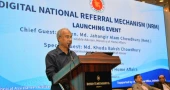
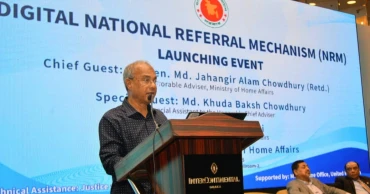
Home Affairs Adviser Lt Gen (retd) Md Jahangir Alam Chowdhury on Monday alleged that the current unrest in Khagrachhari was being instigated by India or fascist elements.
“All necessary measures have been taken to ensure the peaceful celebration of Durga Puja, but a vested quarter is trying to disrupt the festival,” he said.
The adviser was talking to reporters after inaugurating the foundation stones of construction of new buildings of Adabor, Kadamtali, Bhashantek, Ramna and Rampura police stations from Ramna Police Station (old) premises in the capital.
Khagrachhari unrest: Blockade cripples life for third straight day
Inspector General of Police (IGP) Baharul Alam, Dhaka Metropolitan Police Commissioner Sheikh Mohammad Sajjad Ali and other senior police officials were present at the event.
The home adviser said a vested quarter was attempting to destabilise the situation in Khagrachhari. “This is happening with instigations from India or fascists. We are taking maximum precautionary measures,” he added.
Army issues statement on communal violence in Khagrachhari
Jahangir Alam said the Adviser on the Chittagong Hill Tracts Affairs has been staying there and had spoken with law enforcement agencies and local leaders, and that the situation is now almost under control. “Some terrorists are firing gunshots from hilltops. These weapons often come from outside the country,” the adviser said.
In response to another query, Jahangir Alam said most of the tourists stranded in Khagrachhari had already been brought back.
10 months ago
5 new products to be included in TCB sales from Nov: Commerce Adviser
Trading Corporation of Bangladesh (TCB) is set to add five more products including tea and salt from the month of November, said Commerce Adviser Commerce Adviser Sk. Bashir Uddin on Monday.
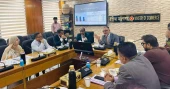
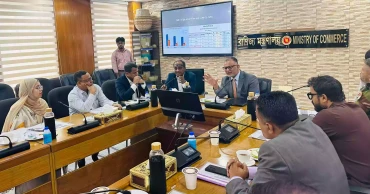
“The inclusion of five new products in TCB’s ongoing sales programme will provide further relief to low-income families and contribute to curbing inflation,” he said while talking to reporters after a meeting on "Beneficiary Selection and Activation of TCB Smart Cards" at the Secretariat.
Detergent and two types of soap are among the five new products.
The government provided around Tk 5,000 crore in subsidies to support TCB operations, helping to stabilise market demand and supply, said the adviser.
"As responsible officials, you must take proactive steps to ensure the proper selection of one crore beneficiaries. It must be ensured that no poor individual is left outside the social safety net,” he said.
He also hoped that such efforts would help build a welfare-oriented state.
“When issuing cards, the priority should be identifying those who are poor and vulnerable—they are entitled to government assistance," said the adviser.
He also urged for visible progress in beneficiary selection and card activation across the country including in city corporations, within the next month.
Commerce Secretary Mahbubur Rahman said identification is emerging as the main challenge in selecting the right beneficiaries.
Currently, a total of 60,34,316 cards are active while 3,39,454 cards are pending activation.
Administrators of Dhaka South City Corporation, Dhaka North City Corporation, Narayanganj City Corporation, and Gazipur City Corporation as well as additional deputy commissioners and Upazila Nirbahi Officers from Dhaka and other adjacent areas were present at the meeting.
10 months ago
Bangladesh, ADB sign $334 million loan agreement
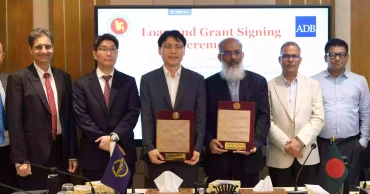
The Asian Development Bank (ADB) and the Government of Bangladesh on Monday signed three agreements involving over $334 million in loans and grants to strengthen power distribution in the northwest, expand water supply services in Khulna, and improve basic infrastructure for displaced people from Myanmar and host communities.
Md. Shahriar Kader Siddiky, Secretary of the Economic Relations Division (ERD), and Hoe Yun Jeong, ADB Country Director for Bangladesh, signed the agreements on behalf of Bangladesh and ADB, respectively, at a ceremony held at the ERD in Dhaka.
The $91 million Northwest Distribution Network Modernization Project will enhance the quality, efficiency, and resilience of the power distribution network in Rajshahi and Rangpur divisions.
It will integrate advanced smart technologies, reinforce climate-resilient infrastructure, install solar backup systems in critical facilities and shelters, and provide electricity-based livelihood opportunities for vulnerable communities, with a special focus on women and marginalised people in remote riverine islands, said a press release.
The project also includes construction of new substations and switching stations, modernisation of existing ones, and installation of rooftop solar systems with battery storage.
ADB keen to assist Bangladesh in capital market reforms
Besides, a $2 million grant from the Japan Fund for Prosperous and Resilient Asia and Pacific (JFPR), financed by the Government of Japan, will strengthen disaster preparedness and resilience in flood-prone areas.
The Khulna Water Supply Project (Phase 2), supported by a $150 million loan and a $4 million grant, aims to expand piped water services to 1.78 million people in Khulna city.
The project will transition the city towards sustainable surface water use, addressing salinity during the dry season.
It will also adopt smart water supply management, expand supervisory control and data acquisition (SCADA) systems, and reduce non-revenue water. The accompanying technical assistance grant will support studies on artificial recharge and groundwater management.
Under the Integrated Services and Livelihood for Displaced People from Myanmar and Host Communities Improvement Project, Bangladesh will receive a $58.6 million grant from the Asian Development Fund and a $28.1 million concessional loan.
The initiative will expand access to water, sanitation, hygiene, energy, and disaster resilience in Cox’s Bazar and Bhasan Char, while enhancing social cohesion between displaced people and host communities.
Planned interventions include solar-powered streetlights, improved fecal sludge management, biogas production, nature-based drainage solutions, food distribution centers, cyclone shelters, mini piped water systems, and road connectivity improvements.
ADB, Bangladesh sign $150m deal to boost technical training for employment creation
“Through these initiatives, ADB is supporting Bangladesh’s priorities in advancing climate-resilient infrastructure, improving urban services, and fostering inclusive development,” said ADB Country Director Hoe Yun Jeong
The projects will contribute to poverty reduction, disaster preparedness, and long-term sustainability, he added.
Currently, Bangladesh hosts over 1 million displaced people from Myanmar, around 75% of whom are women and children, residing in 33 camps in Cox’s Bazar, with more than 36,000 relocated to Bhasan Char.
10 months ago
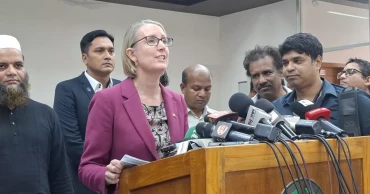
UK supports free, fair credible elections in Bangladesh next year: Sarah Cooke
British High Commissioner to Bangladesh Sarah Cooke on Monday reaffirmed the UK's support for free, fair, credible and peaceful elections in Bangladesh in 2026.
“I reaffirmed the UK's support for free, fair, credible and peaceful elections here in Bangladesh next year,” she said while talking to reporters after a meeting with Chief Election Commissioner AMM Nasir Uddin at the latter's office in the city's Nirbachan Bhaban.
Sarah Cooke said the UK welcomes the announcement of the national election by the Chief Adviser a few months ago.
Chevening prog reflects strong Dhaka-London partnership: Sarah Cooke
Notting that she had a very good meeting with the chief of the Election Commission, she said, “We commend the efforts of the Election Commission and the interim government.”
The envoy said the UK along with its international partners is supporting the Election Commission, particularly through national civic education programmes and particularly for vulnerable groups here in the country, and also the training of polling staff.
So, the agenda of the meeting was to discuss the UK's support to the Election Commission, she added.
10 months ago
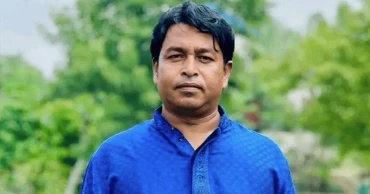
Jubo Dal leader killed Narsingdi clash
A local Jubo Dal leader was killed and at least 10 other people were injured in a clash on Monday over establishing dominance at Alokbali in sadar upazila of Narsingdi district.
The deceased was Sadeq Hossain, 40, joint convener of Alokbali Union unit Jubo Dal and son of Rup Mia of Muradnagar village in Alokbari Union.
Additional Police Superintendent of Narsingdi Kalim Ullah said tensions mounted in the char area of Alokbali over establishing dominance by two groups.
BNP factional clash: 2 killed in Narsingdi within 24 hours
As a sequel to the enmity they attacked each other in the morning when Sadeq was shot dead and 10 others suffered wound, he said.
Earlier Idon Mia was killed in a clash in the union over the same issue on September 18 and Ferdousi Begum on September 19.
Additional police have been deployed to avert further trouble, said ASP Kalim Ullah.
10 months ago
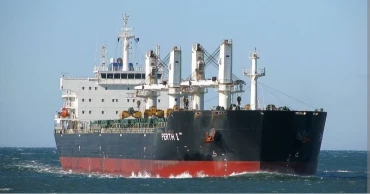
Vessel with 52, 500 mts of Russian wheat arrives in Kutubdia
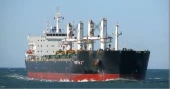
A vessel carrying 52, 500 metric tonnes of wheat from Russia has arrived at Kutubdia outer anchorage in the Bay of Bengal.
The vessel ‘MV PERTH I’ carrying the consignment imported under cash purchase agreement docked at Kutubdia, according to a media release sent from the Ministry of Food on Monday.
Wheat unloaded at Mongla Port for the first time
Samples of the wheat on board have been examined and measures for unloading those have been taken, it said.
Of the consignment, 31,500 metric tonnes will be unloaded at Chittagong Port and the remaining quantity will be dispatched to Mongla Port.
10 months ago

Youth killed in Uttara road crash
A 21-year-old youth died after being hit by a speeding bus in Uttara of Dhaka early Monday.
The deceased was identified as Md Arman Mirza, son of Abu Sufian Mirza from Purhatiala village in Hajiganj upazila of Chandpur district.
He passed the HSC in 2024 from Uttara Abdullahpur Nawab Habibullah College.
Student killed in train accident in Khulna
The victim’s maternal aunt Naznin Begum said Arman was returning home on his motorcycle when the bus rammed into him on Jashimuddin Road around 5:30am, leaving him critically injured.
He was first taken to Kurmitola General Hospital and then shifted to Dhaka Medical College Hospital (DMCH) where physicians declared him dead upon arrival, she said.
Inspector Md Faruk, in-charge of DMCH police outpost, said that the body has been kept at the hospital morgue for the autopsy.
10 months ago
Government allows duty-free imports for partial exporters against bank guarantees
The government has issued a notification enabling partial exporters to import raw materials duty-free by providing bank guarantees.
The notification, issued on September 25, 2025, targets export-oriented industrial enterprises that are unable to obtain bonded warehouse licenses under the existing bond management system.
Under the notification, eligible importers can bring in raw materials or products without paying customs duties or taxes, provided they submit bank guarantees equivalent to the assessed duties and taxes determined by customs authorities.
In a press release, the National Board of Revenue (NBR) said the move is expected to help enterprises maximise production capacity, diversify exportable products, and expand the country’s export trade.
NBR eyes bonded facilities for toy industry
The NBR Chairman recently told business representatives that exporters without bond licenses can now import raw materials duty-free by obtaining a guarantee from a bank, ensuring that the imported items will be used solely for export purposes and not sold in the local market.
Under the existing bond system, export-oriented enterprises import raw materials and accessories duty-free, storing them in bonded warehouses for manufacturing export products.
If these goods are sold domestically, the companies must pay substantial import duties.
10 months ago
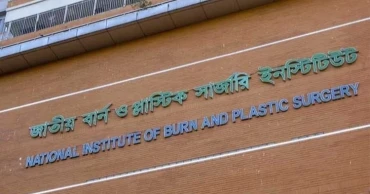
Jatrabari AC Blast: Death toll rises to 2 as another victim dies
A 9-year old child who sustained severe burn injuries in an air conditioner (AC) blast in Jatrabari area of Dhaka on September 20 succumbed to his injuries on Monday morning.
With this, the death toll from the explosion rose to two.
Dr. Shawon Bin Rahman, resident surgeon of the National Institute of Burn and Plastic Surgery, said Tanvir breathed his last around 7am while receiving treatment at the Intensive Care Unit.
He suffered 45 percent of burns.
Tongi Fire: Shop employee succumbs to burn injuries
Earlier on Wednesday, his father Tuhin, who was also injured in the blast, died while undergoing treatment with 47 percent of burns at the High Dependency Unit of the institute.
On September 20, four members, including the duo, of the family were burnt in the AC blast and rushed to the hospital’s emergency department.
Tanvir’s mother Eva Akter, 30, and younger brother Tauhid, 7, are undergoing treatment at the hospital.
10 months ago
2 ex-MPs, 11 AL leaders, activists arrested in Dhaka
Detectives of Dhaka Metropolitan Police (DMP) arrested two former MPs and 11 leaders and activists of Awami League from different areas in Dhaka on Sunday night.
Talebur Rahman, deputy commissioner (media) of the DMP, issued a message on Monday morning over the arrest.
The arrested former MPs are Faizur Rahman Badal, who was elected from Brahmanbaria-5 constituency and Tamanna Nusrat Bubli, who became MP from the reserved women seat.
All of them were arrested in a case under the Anti-Terrorism Act.
Details about the arrestees will be shared later, he said.
10 months ago