Politics
BNP leaders visit ailing journalist leader Quader Gani Chowdhury in hospital
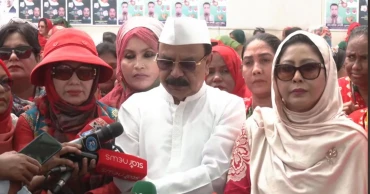
BNP Standing Committee member Dr Abdul Moyeen Khan visited Bangladesh Federal Union of Journalists (BFUJ) Secretary General and Bangladesh Sammilito Peshajibi Parishad Member Secretary Quader Gani Chowdhury at PG Hospital on Thursday evening to inquire about his health condition.
He was accompanied by BNP Joint Secretary General Advocate Abdus Salam Azad and BNP Media Cell member Sayrul Kabir Khan.
Moyeen Khan inquired about his physical condition and spoke to the doctors about his treatment.
Earlier in the day, BNP Secretary General Mirza Fakhrul Islam Alamgir and Standing Committee member Mirza Abbas also made phone calls to express concern and extend their best wishes for Chowdhury’s speedy recovery.
A wide array of political leaders, former bureaucrats, medical professionals, academics, poets, editors, engineers, and journalists also visited upon hearing of Chowdhury’s illness.
Notable visitors included BNP Standing Committee member Dr AZM Zahid Hossain, BNP Health Affairs Secretary Dr Rafiqul Islam, former Cabinet Secretary Abdul Halim, former MP Salauddin Ahmed, National Press Club President and poet Hasan Hafiz, Jugantor Editor Abdul Hai Sikder, and Bangabandhu Sheikh Mujib Medical University Vice Chancellor Professor Dr Mohammad Shahinul Alam.
Earlier, the journalist leader was hospitalised with fever and symptoms of chikungunya.
10 months ago
Jamaat supremo to undergo bypass surgery for 3 blocks on Saturday
Dr. Shafiqur Rahman, Ameer of Bangladesh Jamaat-e-Islami, is scheduled to undergo bypass surgery on Saturday morning following the diagnosis of three major heart blockages.
Dr. Md. Shafiqul Islam Masud, a Central Working Committee member of the party and Secretary of its Dhaka City South unit, shared the information via a Facebook post on Thursday night.
In the post, he called upon the public, well-wishers, and Jamaat supporters at home and abroad to pray for the successful surgery and swift recovery of their party chief.
“Come, let us pray for him from every position through voluntary worship in the court of Almighty Allah,” Masud wrote. “May Allah Almighty grant our beloved leader the blessing of complete recovery and enable him to return to the field of religious service with full strength—this is my heartfelt prayer. Amen.”
He also urged Jamaat members and the wider Muslim community to pray for Dr. Shafiqur during Friday congregational prayers.
Dr. Shafiqur Rahman has been under medical care at United Hospital in Dhaka since mid-July, following a health scare during Jamaat's national rally at Suhrawardy Udyan on July 19.
He reportedly fell ill twice while delivering his speech and had to complete his remarks seated before being rushed to hospital for examination.
Nazrul Islam, his personal secretary, earlier confirmed that Dr. Shafiqur was undergoing a series of health check-ups, which ultimately revealed the need for urgent cardiac intervention.
10 months ago
Tarique urges all to stay vigilant against fascism ahead of election
Stating that the upcoming national election is extremely important for every citizen in establishing the kind of Bangladesh a mother would envision, BNP Acting Chairman Tarique Rahman on Thursday urged all, including women, to remain alert so that fascism and extremism can never rise again.
Addressing a discussion virtually, he also said the BNP has designed all its future action plans keeping in mind the hopes and aspirations of women as it believes the country cannot move forward without ensuring the dignity, security, and active participation of women in every sphere of life.
“If we are to build the kind of Bangladesh that a mother envisions, the upcoming national election is extremely important for every citizen. To ensure that fascism, extremism and radicalism can never again raise their heads in this country, women in particular must remain alert and vigilant. I call upon all mothers and sisters across Bangladesh to stay watchful in this regard,” Tarique said.
He also called upon the democracy-loving people of the country—men, women and children of all faiths and communities—to remain united in building a just, democratic and secure Bangladesh in honour of the sacrifices of martyrs.
“We firmly hope that, just like in the past, our mothers and sisters will continue to actively participate in and support the ongoing struggle to build a safe, democratic and humane country for all,” the BNP leader said.
Fakhrul for mutual understanding among political parties to avoid toxic politics
Jatiyatabadi Mohila Dal organised the programme titled ‘Women’s Contribution to the Anti-Fascist Movement’ at the Shaheed Abu Sayed International Convention Centre of Bangladesh Medical University, marking the first anniversary of the July–August mass uprising.
Tarique said no country, including Bangladesh, can truly progress if women’s strength and participation are left out of national planning.
“That’s why the BNP has prioritised women, who make up half the country’s population, by ensuring their safety and reflecting their hopes and aspirations in all of its future plans and programmes,” he said.
In the current era of globalisation, the BNP leader said opportunities in education, employment, and business are open for women not only in Bangladesh but around the world. “If we truly want to take the country forward, we must empower everyone—men and women alike—by making them at least capable and skilled through proper education and training.”
Tarique said he believes that educating women and helping them become economically self-reliant is crucial. “If we succeed in doing so, it will help reduce discrimination and exploitation against women, and also play a major role in preventing domestic violence caused by financial stress.”
“That’s why our slogan is: Empowered women, liberated families. BNP’s policies are rooted in human values and aim to create a skilled, empowered workforce, a safe working environment, and new employment opportunities,” he said.
The BNP leader said it is clear that the number of female-headed families is growing in the country.
“But when it comes to economic independence, most women in Bangladesh are still far behind. To address this, BNP has already prepared specific plans to promote women's economic empowerment,” he said.
July Charter a social contract, no party to break this agreement: Salahuddin
Tarique said they are planning to implement a “Family Card” system, starting with 50 lakh marginalised families, if the party is voted to power.
He said “Family Cards” will be issued under the name of the female head of each family for providing state-supported monthly financial aid or essential food support to these families.
“We believe this initiative will not only strengthen women’s economic position but also help families gradually become self-reliant—ultimately building a stronger, more equitable society,” the BNP leader said.
He said many mothers have lost their beloved sons during the long anti-fascist struggle, including his own mother, who lost her son Arafat Rahman Koko.
“Countless wives, sisters, and mothers have suffered loss, abuse, and broken families. Now, after all the sacrifices, there is finally a chance to build a humane Bangladesh for all—regardless of gender, religion, or background,” Tarique observed.
He recalled the vital role played by women in all democratic movements, including the supreme sacrifices of 10 women during the mass uprising, saying the nation remains deeply indebted to them. “Now it is our turn to repay that debt by honouring their sacrifice and building a just, democratic and humane Bangladesh.”
Fakhrul reiterates call for unity among parties, warns against divisive politics
During the event, family members of martyrs from the anti-fascist movement and the mass uprising shared their grief and sorrow, creating an emotional atmosphere.
Later, they were presented with honorary medals on behalf of the Jatiyatabadi Mohila Dal, the women’s wing of the BNP.
A documentary highlighting the contributions of women to the anti-fascist movement was screened at the event.
10 months ago
NCC backs 100-member upper House thru proportional representation
The National Consensus Commission (NCC) on Thursday decided in favour of forming a 100-member Upper House through the Proportional Representation (PR) system based on the percentage of votes, amid opposition from BNP and several like-minded parties.
NCC Vice Chair Prof Ali Riaz informed the decision in the 23rd session (last day) of the second-round dialogue between the NCC and the political parties at the city's Foreign Service Academy in the afternoon.
Under the NCC’s proposal, the Upper House will not have the authority to enact any law on its own. However, all bills, except financial bills, must be introduced in both the Lower and Upper Houses.
The Upper House will not be allowed to keep any bill pending permanently. If any bill remains pending for more than a month it will be considered approved by the Upper House.
NCC’s last-day reform dialogue begins to reach decisions on several issues
The Upper House will review and analyse the bills passed by the Lower House and must approve or reject them within a stipulated time.
If approved, the bill will move to the President for assent. If rejected, the Upper House will return it to the Lower House with recommended amendments, which the Lower House may accept in full, in part, or reject entirely.
The candidates with at least 10pc woman aspirants for the Upper House shall be announced alongside that of the national parliamentary election.
Before the lunch break, BNP, Labour Party, NDM, the 12-Party Alliance and the Nationalist Alliance had voiced opposition to the Upper House under the PR system.
After the break, BNP Standing Committee member Salahuddin Ahmed voiced strong opposition to the proposal to elect 100 Upper House members. “BNP and several other parties and alliances disagree with both the PR system and the proposed powers of the Upper House. We will not endorse this unless our dissent is officially recorded,” he said.
BNP leader Salahuddin questions mandatory consensus on NCC proposals
Some leftist and Islamist parties, including CPB, BSD, Jamiat Ulema-e-Islam, and the Aam Janatar Dal, opposed the very idea of an Upper House, citing Bangladesh’s socio-economic realities.
Despite lengthy discussions on several days, the matter of the Upper House formation was entrusted to the commission due to differences of opinion among the parties.
The commission announced this decision on Thursday.
Consensus Commission seeks final decision on NCC in today’s meeting: Ali Riaz
10 months ago
Fakhrul for mutual understanding among political parties to avoid toxic politics
BNP Secretary General Mirza Fakhrul Islam Alamgir on Thursday urged all political parties to build mutual understanding and stop the blame game, warning that continued mudslinging will only deepen bitterness and make politics toxic.
“Political parties must maintain mutual understanding. Without it, what we see now is mudslinging. There will always be some mudslinging in democracy—many harsh words may be exchanged—but there should be a limit. Otherwise, it creates bitterness, and over time, that bitterness makes politics even more toxic,” he said while speaking at a discussion.
The Jatiya Press Club organised the programme at its auditorium, marking the first anniversary of the July-August mass uprising.
Stating that the country is now going through a critical time, the BNP leader said it is a time for mutual understanding among political parties to move the country forward together.
“If we try to move forward together through mutual understanding, then it is the people who will benefit. They will get their representatives and a proper government. That doesn’t mean all problems will go away instantly, but a path will be opened—a path through which our voices and the concerns of the people can reach the government. That is the space we want to reach,” he said.
Despite all the challenges, Fakhrul said political parties have already reached a consensus on 12 fundamental issues.
“Efforts are ongoing to reach an agreement on the rest. Meetings are happening daily for several hours. There are many points we don’t yet understand—what they really want to do,” he said.
The BNP leader urged the National Consensus Commission to focus on the key unresolved issues and leave aside the complicated ones, to help create a way forward for holding the national election by mid-February next year as discussed between Chief Adviser Professor Muhammad Yunus and BNP Acting Chairman Tarique Rahman in London.
“If that happens, I believe many of our doubts and confusions will start to clear, and we’ll be able to move towards a better place,” he said.
Fakhrul reiterates call for unity among parties, warns against divisive politics
Fakhrul also expressed his disappointment that the interim government has not taken proper steps to support the families of those who were killed or injured during the mass uprising, or to ensure their rehabilitation over the past year.
“As I was listening to a sister speak today (about the pain of losing her husband during the mass uprising), a question crossed my mind—what really is the state? And who is it for? Those who are running the state—could they not find these people even after a whole year? Couldn’t they prepare a proper list and make arrangements to rehabilitate those who gave their lives, who shed their blood to bring change to this country?” he asked.
The BNP leader became emotional while speaking about a child who suffered a horrific injury—losing part of his skull—during the mass uprising."
“Yesterday (Tuesday), a little boy—he must have been six or seven—suddenly came up to me and hugged me. He said, ‘My skull is missing.’ What he meant was that his head had been hit by a bullet, and later, doctors had to replace part of his skull with a plastic one—an artificial skull. What sacrifice could be greater than that? Honestly, I sometimes get a bit emotional,” a dejected Fakhrul said.
“This is the price we’ve paid. And if we cannot honour that sacrifice properly—if we fail to do justice to them, to those children, to my sister, to the mothers—then without doubt, we will be committing a grave betrayal of this nation,” he added.
The BNP leader, however, expressed hope that the country would not go down that path. “I truly believe we can move forward towards a better and more beautiful Bangladesh.”
Recalling a 2014 incident when he was arrested after staying at the Jatiya Press Club for a day, Fakhrul said, “The Press Club president asked me about that experience, but I don’t wish to describe it. It wasn’t a happy or pleasant memory for me. Still, I accepted it as normal at the time.”
The BNP leader said when he stepped outside the club gate on that day, his car was attacked with large iron hammers. “At that moment, I felt that I might not return home alive. But somehow, I did... and now I am speaking before you.”
Fakhrul said those anti-fascist politicians like him who are still fortunately alive have a responsibility to stand beside the families of those who sacrificed their lives for the restoration of democracy and people’s rights through democratic movements.
Before the discussion meeting, the BNP Secretary General inaugurated a photo exhibition that highlighted the Awami League government’s oppression and torture of journalists during the 15-year anti-fascist movement and the July Uprising.
The Jatiya Press Club also screened a documentary at the event.
Later, the Press Club honoured five senior editors: Shafik Rehman of Jaijaidin, Matiur Rahman Chowdhury of Manab Zamin, Mahmudur Rahman of Amar Desh, Nurul Kabir of New Age, and former editor of Sangram, Abul Asad. Family members of two martyrs of the July-August uprising were also honoured.
The Press Club’s executive committee conferred special honour on BNP Secretary General Mirza Fakhrul Islam Alamgir and Standing Committee member AZM Zahid Hossain. The awards were presented by the club’s President, Hasan Hafiz.
Khaleda Zia to contest election: BNP leader Mintoo
10 months ago
DUCSU draft voter list published; over 39,000 eligible to vote
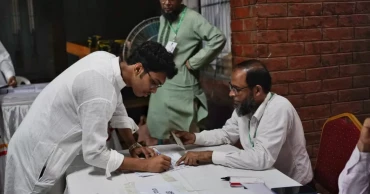
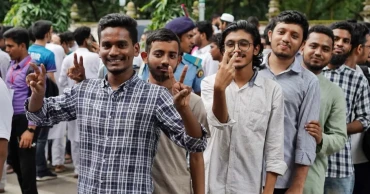
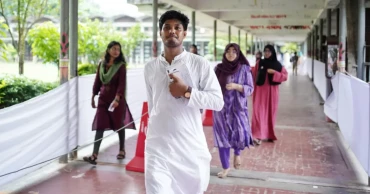
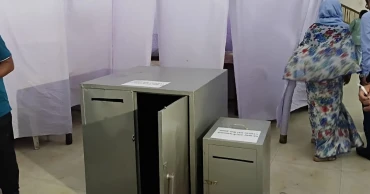
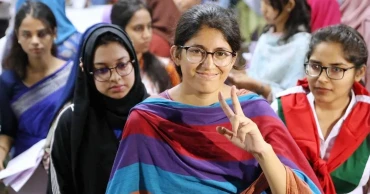
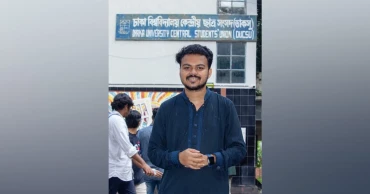
The draft voter list for the upcoming Dhaka University Central Students' Union (DUCSU) has been published.
The draft was uploaded on Wednesday on the dashboards of the respective residential halls.
Students can raise objections to the list until August 8, with the final voter list scheduled to be published on August 11. The elections are set to be held on September 9.
According to the draft list, a total of 39,932 students are eligible to vote in this year’s DUCSU election. Among them, 20,904 are male students, making up 52.35 percent of the total, while 19,028 are female students, accounting for 47.65 percent.
Among the male students’ halls, Jagannath Hall has the highest number of registered voters at 2,254, followed by Dr. Muhammad Shahidullah Hall with 2,017 and Bijoy Ekattor Hall with 2,013.
Other notable counts include Fazlul Haq Muslim Hall with 1,779 voters, Amar Ekushey Hall with 1,319, Kabi Jasimuddin Hall with 1,298, Muktijoddha Ziaur Rahman Hall with 1,735, Shahid Sergeant Zahurul Haque Hall with 1,961, Salimullah Muslim Hall with 559, Surja Sen Hall with 1,495, Sir A.F. Rahman Hall with 1,480, and Haji Muhammad Mohsin Hall with 1,394.
In the female students’ halls, Ruqayyah Hall has the highest number of voters with 5,676. Kabi Sufia Kamal Hall has 4,495 voters, Shamsun Nahar Hall has 4,098, Bangladesh-Kuwait Maitree Hall has 2,108, and Bangamata Sheikh Fazilatunnesa Mujib Hall has 2,651.
According to the election schedule, distribution of nomination papers will begin on August 12 and continue daily from 10am to 4pm until August 18.
The deadline for submission of nomination papers is 3 pm on August 19.
Scrutiny will take place on August 20, and a preliminary list of candidates will be published on August 21 at 12 pm.
The last date to withdraw nominations is August 24 by 12 pm, with the final list of candidates to be announced on August 25 at 4 pm.
For the first time, students will vote across six designated centres based on their halls.
Students from Dr. Muhammad Shahidullah, Amar Ekushey and Fazlul Haq Muslim Halls will cast their votes at the Curzon Hall center.
Students of Jagannath, Shahid Sergeant Zahurul Haq and Salimullah Muslim Halls will vote at the Physical Education Center.
Those from Ruqayyah, Shamsun Nahar and Kabi Sufia Kamal Halls will vote at the Student-Teacher Center (TSC).
Students from Bangladesh-Kuwait Maitree Hall and Sheikh Fazilatunnesa Mujib Hall will vote at the Dhaka University Club Center.
Students from Sir A.F. Rahman, Haji Muhammad Mohsin and Bijoy Ekattor Halls will vote at the Senate Bhaban Center.
Meanwhile, voting for students from Surja Sen Hall, Muktijoddha Ziaur Rahman Hall, Sheikh Mujibur Rahman Hall and Kabi Jasimuddin Hall will take place at the Udayan School and College Center.
10 months ago
Jamaat Ameer diagnosed with heart blocks, to undergo bypass surgery
Bangladesh Jamaat-e-Islami Ameer Shafiqur Rahman has been diagnosed with heart blocks and will undergo bypass surgery in the country, according to party sources.
Nazrul Islam, personal secretary of the party chief, told UNB about the blocks on Wednesday night.
He said that Shafiqur has been diagnosed with three major heart blocks and is currently undergoing treatment at the United Hospital in the capital.
Meanwhile, in a Facebook post, Hafez Rashedul Islam, former central president of Islami Chhatra Shibir and current Ameer of Jamaat’s Dhanmondi Thana unit, wrote although Shafiqur's family and personal physician recommended that the surgery be performed abroad, he opted to have the procedure done in a hospital in the country.
Earlier, on July 19, Shafiqur fell ill twice while delivering a speech at Jamaat’s national rally at Suhrawardy Udyan in Dhaka.
He completed his speech while seated and was later taken to hospital for medical examination.
Since then, he has been undergoing a series of health check-ups, which led to the diagnosis.
10 months ago
July Charter a social contract, no party to break this agreement: Salahuddin
BNP Standing Committee member Salahuddin Ahmed on Wednesday described the ‘July National Charter 2025’ as a great binding social contract between the people and political parties, saying no party would dare to defy it as it has evolved through a transparent national dialogue and must be implemented by the next parliament.
“Would any political party dare to break this? Would any party take that risk? I don’t think there could be a bigger consensus, memorandum of understanding, or social contact or agreement than this. It is a contract between the nation, the people, the political parties, and all stakeholders. And I firmly believe the only place to implement this is the National Parliament,” Salahuddin told reporters during a tea break at the 22nd session of the second-round dialogues hosted by the National Consensus Commission (NCC) at the Foreign Service Academy.
He made the remarks when asked about BNP’s position on the demand raised by Bangladesh Jamaat-e-Islami and the National Citizen Party (NCP) for a legal framework to ensure immediate implementation of the charter.
“Some are saying this should be a legal document. But I would say this entire process — involving many political parties in long, transparent, live-broadcasted discussions — is like an open court trial. The nation has seen who said what. Now when a charter is prepared with signatures from the chief adviser, heads of reform commissions, members of the NCC, national leaders, and representatives of all parties — and it gets published online and in newspapers — can any party dare to break it? I don’t think so,” Salahuddin said.
He said the charter reflects the collective spirit of the nation following the July-August student uprising. “Can any political party ignore the nation’s aspirations and the commitments made by political leaders following the student-people mass uprising…. I don’t believe that is possible,” he added.
Salahuddin asserted that BNP has made its position clear and fully agrees with the NCC’s proposals on how the charter should be implemented. “We believe the National Parliament is the only place to implement this charter,” he said.
Noting that one secrion in the charter clearly says that the agreed commitments must be implemented within two years of the formation of parliament. “We are 100% in agreement with that sentiment and proposal,” he added.
Salahuddin also said many reforms have already begun to be implemented through ordinances and ministerial actions even before the charter is signed.
On allegations that BNP does not accept reforms, Salahuddin said: “Out of 826 total proposals from the six key reform commissions, we disagreed with only 51. After such a massive process of consensus-building, how can anyone say BNP is not committed to reforms?”
10 months ago
NCP clarifies difference between ‘July Charter’ and ‘Proclamation’
National Citizen Party (NCP) on Wednesday clarified the difference between the ‘July Charter’ and ‘July Proclamation’ to remove confusion saying that the two documents are distinct things.
"The ‘July Proclamation’ and the ‘July Charter’ are two separate documents. But many people are confusing these two documents, which is questioning the NCP’s position,” NCP Member Secretary Akhtar Hossain told reporters during a tea break in the 22nd session of the second-round dialogue between the National Consensus Commission and the political parties.
He explained that the ‘July Declaration’ is a historic acknowledgment of the August 2024 mass uprising and the victory on August 5, 2024, which needs legal recognition.
“This is a historic document,” he said, adding, “On the other hand, the July Charter is a practical roadmap based on the political reform proposals being discussed within the Commission.”
Akhtar said NCP does not want an ineffective, incomplete ‘July Charter’ that ends up as another symbolic document like the previous three-party agreement of early 1990s.
“We want a Charter that is effective, legally grounded, reflected by basic reform aspirations and capable of being implemented immediately,” he added.
He said the NCP firmly rejected the two-year implementation timeline mentioned in the NCC’s initial draft of the ‘July Charter’. “Such a delayed implementation proposal allows room for betrayal and undermines public expectations,” said the NCP leader.
Regarding the ‘July Declaration’, Akhtar Hossain said, “We are not willing to compromise even slightly. If the government fails to issue the Declaration by July 36, NCP will issue it independently in alliance with all anti-fascist forces.”
Noting that the government has shared a draft of the ‘July Proclamation’, he said NCP has submitted a more mature version.
10 months ago
Fakhrul reiterates call for unity among parties, warns against divisive politics
BNP Secretary General Mirza Fakhrul Islam Alamgir on Wednesday urged all political parties not to create divisions over minor issues, warning that such disputes could disrupt the country’s democratic progress.
“Many political discussions and disputes are happening now… That is normal in a democracy. But please do not do anything that could disrupt democracy again,” he said.
Fakhrul made the remarks while addressing a protest rally organised by the Dhaka District unit of BNP at the Darul Ihsan Madrasa ground in Ashulia’s Sreepur area.
The programme was arranged to remember the victims of the brutal Ashulia incident during the July Mass Uprising 2024, when the bodies of martyrs were reportedly burned near the Ashulia Police Station.
He appealed to all political parties, saying, “We request you not to create situations over small matters that could give fascist Hasina any opportunity to return to the country.”
The BNP leader also called upon political parties to come together and quickly resolve their problems to restore democracy. “Let us settle our issues promptly and return to a democratic system and establish a government of the people through a neutral election,” he said.
Fakhrul said that if a people’s government had been in place, they would not have had to hear the complaint made by a member of a martyr's family about not standing beside them.
Tarique Rahman warns interim govt against missteps, democratic backslide
He expressed his confidence that the nation would unite to restore democracy, ensure justice for those still waiting for it, and improve the lives of the people under Tarique Rahman’s leadership.
Referring to the incident of burning the bodies of martyrs in a van during the July uprising, just before the fall of Sheikh Hasina’s regime, the BNP leader said, adding, “I am shocked. Such scenes are unimaginable. What kind of country are we living in? Only Mussolini used to kill people in gas chambers during the Second World War. But Hasina has burned students alive in our country.”
He said it is hard to speak after hearing the statements of the families of the martyrs, as he felt deeply ashamed.
“What kind of nation are we when we burn our own children alive? What kind of nation allows its officials and employees to kill and burn their own people?” Fakhrul questioned.
He also mentioned a mother who spoke about her son, who was still alive when he was burned.
Khaleda Zia to contest election: BNP leader Mintoo
The BNP leader expressed frustration that the government has still failed to provide proper compensation to the families of those killed and injured during the mass uprising.
Fakhrul strongly criticised deposed Prime Minister Sheikh Hasina, accusing her of resorting to brutal killings just to stay in power.
“People are still strongly demanding trial of Hasina. The whole nation wants Hasina to be held accountable. You know that Hasina has fled to India, and India has given her shelter. You have seen that from there, through audio messages and videos, she is trying to create unrest in Bangladesh by spreading various provocations and tensions. And they have already created such a situation in Gopalganj,” he observed.
Fakhrul urged the nation to remain alert to protect the country and foil all conspiracies.
Some family members of the martyrs shared their heartbreaking stories, moving the entire gathering to tears.
10 months ago