Politics
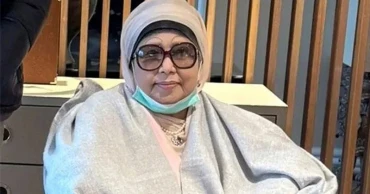
Money laundering case filed against man impersonating Khaleda Zia
Dhaka, Sept 8 (UNB) – The Financial Crime Unit of CID filed a money laundering case on Sunday against a man accused of defrauding people and extorting large sums of money using the name of former Prime Minister and BNP Chairperson Begum Khaleda Zia.
The case was filed at Pallabi Police Station under section 4(2)(4) of the Money Laundering Prevention Act, 2012 (case number: 19).
Investigation revealed that Motalles Hossain posed as Khaleda Zia’s liaison officer and collected crores of takas from various individuals and businessmen over a long period.
Evidence shows nearly Tk 20 crore in transactions through his bank accounts.
CID found that his company, ML Trading, was essentially non-existent.
Although it had a trade license from Dhaka North City Corporation, investigators found no business, contracting, or import-export activity under the company.
Motallesh Hossain allegedly presented himself as a garment owner, tea estate entrepreneur or contractor to build connections with influential people.
He then told party officials about Khaleda Zia’s ill health and collected about Tk 15 crore in his personal bank accounts, which he embezzled.
Ishaq Dar meets Khaleda Zia
Remaining, Tk 5.03 crore in his accounts was frozen by court order.
Motallesh Hossain and two to three unidentified persons were named as accused.
CID said the investigation is ongoing to identify and arrest others involved in the fraud.
Jasim Uddin Khan, Special Superintendent of Police (Media), confirmed the information.
10 months ago
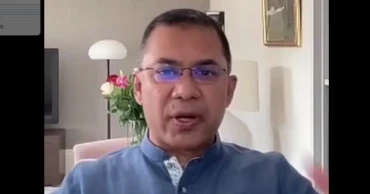
Stay vigilant to restore democracy, foil conspiracies: Tarique to BNP followers
BNP Acting Chairman Tarique Rahman on Monday asked his party followers to stay vigilant until restoration of democracy as the most important task for them now is to establish democracy by foiling conspiracies against Bangladesh at any cost.
"Our two important tasks in the coming days are -- to establish democracy by resisting conspiracies against Bangladesh at any cost and build the country as per public aspirations,” he said.
Tarique made the remarks while addressing the biennial council of Thakurgaon district BNP unit at Thakurgaon Boys High School ground through a virtual platform.
He said BNP’s movement would continue until the democratic rights of people are restored and Bangladesh returns to the track of democracy.
BNP leader urges govt to clear doubts over election
“Let’s vow in this council that BNP will not stop its movement until Bangladesh gets back on the rail-track of democracy,” he said.
As the country’s largest political party in the country, Tarique said BNP has a ‘sacred responsibility’ to rebuild Bangladesh.
“We have already outlined the framework for this (building Bangladesh) through the 31-point framework we unveiled two and a half years ago,” he added.
BNP Acting Chairman urged party leaders and activists to make two pledges from the council: to remain vigilant like sentinels until democracy is restored and to dedicate them to fulfilling public aspirations and the party’s 31-point reform agenda if BNP assumes office through the people’s mandate, even at the cost of their lives.
Conspirators active to resist polls, destroy communal harmony: Salahuddin
“As the largest political party in Bangladesh, it is our responsibility to confront any threat to democracy,” he said.
Tarique, however, said that BNP’s movement must refrain from any course of action that disrupts peace and discipline. “As a political party, our responsibility is to ensure that no one can undermine democracy in any way,” he said.
Talking about state reforms, the BNP leader said his party unveiled the 31-point reform agenda two and a half years ago and the interim government formed reform commissions where almost all democratic political parties provide their opinions over various issues. On some issues, all parties agreed, while there are differences over some other issues, he added.
He said it is natural that different political parties and different people have differences in opinion. “We think it is natural in the democratic system that there might be differences in opinions,” he said.
Zia's legacy bestows positive image of BNP in popular perception
Talking about the issues where differences remain, Tarique said, “If you truly have trust and confidence in the people, then leave it to them. Present your policies, ideology and objectives before the people and let people decide.”
BNP secretary general Mirza Fakhrul Islam Alamgir also spoke at the district council held after 8 years.
10 months ago
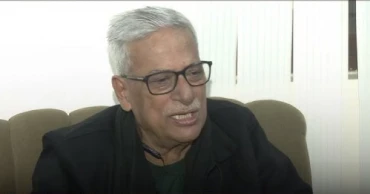
BNP leader urges govt to clear doubts over election
BNP Chairperson’s Advisory Council Member Zainul Abedin Farroque on Monday urged the interim government to play an active role in removing doubts over holding the national election in February.
“Who is creating doubts about whether the election will be held or not? Why are you (govt) just sitting idle? The government must look around itself. Don’t you know who are still sitting in different ministries? Can’t you see who is bringing out processions? Can’t you see who is creating mobs and plotting to foil the election in the country? You should know,” he said.
Farroque, also a former opposition chief whip in parliament, made the remarks while speaking at a discussion organised by Bikoshito Foundation Bangladesh at the Jatiya Press Club.
He said Chief Adviser Prof Yunus should not be afraid of any particular individuals and quarters since he was made the head of the interim government through a mass uprising and the sacrifices of many people, including Abu Sayed, Mir Mahfuzur Rahman Mugdho and Wasim Akram.
“There is still fear and doubt about whether the national election will be held. It is the government’s responsibility to remove this uncertainty. Certain elements, sitting in Kolkata and even within the administration, are acting as secret agents and trying to foil the next election,” the BNP leader said.
Conspirators active to resist polls, destroy communal harmony: Salahuddin
Farroque demanded that the government immediately publish a list of the remnants of fascism and the secret agents, and keep them away from the election process. “If that is done, the public will no longer have doubts.”
He also claimed that conspiracies are being hatched from India to undermine the legacy of the July-August mass uprising, which was made possible with the full support of BNP and its acting chairman Tarique Rahman.
In an indirect reference to Bangladesh Jamaat-e-Islami, Farroque said some parties are resorting to political hypocrisy. “Some are changing their political tone to oppose the election while still campaigning in religious spaces like mosques.”
He shared an example from Mohammadpur, where a mosque imam claimed to represent a group but was allegedly linked with Jamaat-e-Islami. “A young man in the audience challenged the imam’s position, saying you cannot campaign in mosques while at the same time spreading fear about the election. This double standard must stop.”
Speaking about the Ducsu (Dhaka University Central Students’ Union) election, Farroque, a former student of Dhaka University, called upon all students to take part in the vote scheduled for tomorrow (Tuesday).
Tarique Rahman will return soon, says Salahuddin
“Even in the face of repression, BNP’s student wing, Chhatra Dal, has survived by holding onto the ideals of Shaheed Ziaur Rahman,” he said.
Farroque recalled seeing prominent student leaders like Shahid Uddin Chowdhury Annie and Sultan Salauddin Tuku wounded on campus during past movements. “With courage in their hearts, Jatiyatabadi Chhatra Dal is facing a tough test tomorrow (Tuesday), inspired by Ziaur Rahman’s ideals, Khaleda Zia’s uncompromising leadership, and under the guidance of Tarique Rahman.”
He urged the students of all levels at the university to keep faith in the nationalist spirit and elect the Jatiyatabadi Chhatra Dal panel through a fair election.
BNP leader urges Jamaat to apologise for past mistakes, join polls
At the same time, the BNP leader also called upon the government to ensure that Tuesday’s Ducsu election is held in a free, fair and peaceful manner.
10 months ago
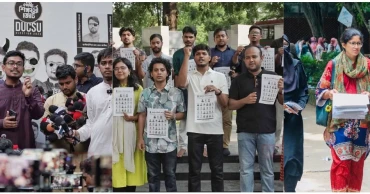
The 2025 DUCSU Election's Digital Mirage
The final days of the DUCSU 2025 election saw a dramatic shift in online engagement, but a new analysis reveals that much of the visible momentum was a carefully constructed mirage. A report from SharedToday exposes a phenomenon called "auto-turfing"—the use of coordinated, repetitive campaign posts to create an illusion of widespread support. This practice has cluttered the digital view, making it difficult to distinguish genuine popularity from manufactured waves.
Detecting the Deception
Auto-turfing campaigns can be identified by several key markers, as outlined in the SharedToday report:
- Identical or near-identical posts shared by multiple accounts in short timeframes.- Overuse of templated slogans and hashtags.- High engagement spikes on content with low diversity.
Read more: DUCSU Election 2025: A Campaign’s Final Twist
The Turf-Inflated Race
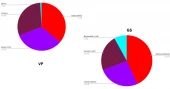
Looking at the final 24 hours of raw engagement, the GS race was dominated by two candidates, with a shocking shift in momentum. Meghmallar of the Left Alliance suddenly took the lead, capturing 63.6% of engagement, while Shibir’s Farhad held 33.3%. Odhikar's Sabina, once a frontrunner, collapsed to just 2.1%.
However, this sudden surge was highly artificial. The Left's rise was almost entirely from organized amplification, with over 70% of Meghmallar’s last 24-hour engagement being turfing-driven. Similarly, Shibir’s late surge was powered by organized networks, with an estimated 60-65% of Farhad’s engagement being turfing-driven.
The Real Race: Organic Engagement Only
When the "turfing" is stripped away, the true state of the race becomes clear. A "clean" analysis of organic-only engagement provides a different picture of the election:
Organic VP Race (two-week trend):
- Umama (Independent): ~40%- Abidul (JCD): ~36%- Sadiq (Shibir): ~22%- Others:
10 months ago
Conspirators active to resist polls, destroy communal harmony: Salahuddin
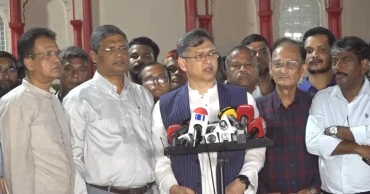
BNP senior leader Salahuddin Ahmed on Sunday alleged that conspiracies are being hatched to destroy Bangladesh’s communal harmony in a bid to obstruct the upcoming national election.
“In the present context, we are observing that some quarters are plotting in different ways to destroy communal harmony in the country,” he said.
Salahuddin, a BNP Standing Committee member, made the remarks after a meeting with leaders of Bangladesh Puja Udjapan Parishad and Mahanagar Sarbojanin Puja Committee ahead of the Durga Puja festival at the Dhakeshwari National Temple in the capital.
He also said that even within religious communities, attempts are being made to create unrest and damage religious harmony.
Tarique Rahman will return soon, says Salahuddin
“The motive of such moves is to disrupt the country’s peaceful environment and hinder the upcoming election. The democratic question of Bangladesh is deeply connected to this,” the BNP leader said.
Salahuddin said people need to remain cautious and extend cooperation in advance to prevent such conspiracies.
He said BNP has always stood beside the Hindu community in celebrating their biggest religious festival, Durga Puja, and will continue to do so this year as well.
“Last year, alongside the government, BNP leaders and activists at all levels across the country guarded Puja mandaps and gave full cooperation. We will do the same this time as well,” Salahuddin said.
He said their party wants to send a clear message to the nation that communal harmony in Bangladesh will remain intact.
The BNP leader vowed that any attempt to disrupt communal harmony would be resisted with a strong hand.
He said the government must take proper steps and play its role in ensuring the smooth celebration of Durga Puja.
No force can block February election: Govt
“But as conscious citizens and political workers, we along with all our party members will make the highest efforts so that Durga Puja is held peacefully and communal harmony is maintained,” Salahuddin assured.
Durga Puja, the biggest religious festival of the Hindu community, will begin on September 28 with Shashthi at temples and makeshift mandaps across Bangladesh with religious fervour and festivity.
The festival will end on October 2 with the immersion of the idols of Goddess Durga.
10 months ago
Tarique Rahman will return soon, says Salahuddin
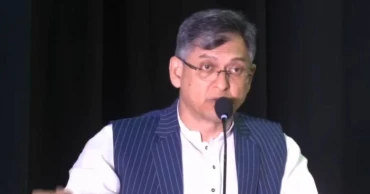
BNP senior leader Salahuddin Ahmed on Sunday said their Acting Chairman Tarique Rahman will soon return to Bangladesh, enabling the party to carry out half of its election campaign on that historic day.
“Our leader Tarique Rahman will soon return to Bangladesh. On that day, all aspects of the country’s election process will be strengthened, Insha’Allah,” he said while addressing a discussion.
From BNP’s side, Salahuddin said they will be able to complete half of the election activities across the country on that day.
“On that day, we will be able to carry out half of our election campaign across the country, Insha’Allah. Campaigning is an integral part of the election, so half of it will be completed on that day,” he said.
Salahuddin, a BNP Standing Committee member, also said Tarique’s return will be one of the most unforgettable and historic events in Bangladesh’s history.
He praised Tarique’s leadership, saying that through his talent, dedication, hard work and leadership, he has established himself at the top of Bangladesh’s political leadership.
Bangladesh heading towards abnormal process: Mirza Abbas
“We have worked closely with him in anti-fascism and other movement struggles, and we have seen political maturity in him. Under his leadership, this nation will go far ahead,” the BNP leader said.
The Bangladesh Nationalist Tax Lawyers’ Forum arranged the discussion programme at the Institution of Diploma Engineers, Bangladesh.
Salahuddin said the nation must soon establish a political government through an election, specifically a constitutional parliamentary government. “Through it, the aspirations and dreams of the country’s martyrs must be fulfilled. We are moving forward with this goal.”
He hoped that the national parliamentary election in Bangladesh would be held in the first half of February 2026, shortly before the start of Ramadan, or possibly even earlier.
Rizvi warns of ‘deep conspiracy’ tied to international plot
“I would like to tell all those who try to create obstacles or spread confusion with misleading statements that we are already in the election atmosphere. Excitement for the election has developed across the country,” the BNP leader said.
He emphasised that the country must be run strictly according to the Constitution, warning against using extra-constitutional or special instruments to govern.
The BNP leader said terms like “extra-constitutional order,” “super-constitutional instrument,” or “special constitutional order” are just different ways of saying the same legal measure.
“Such measures are only needed when the normal constitutional provisions are not working. Today, our Constitution is in place and the state is being run according to it. There is no reason to issue any special proclamation. Why would anyone need to do this, and for whose satisfaction?” he asked.
Salahuddin said the people of the country carried out struggles, including sacrifices during the student-led mass uprising, to maintain democratic continuity and establish the right to vote. “We want to be a stable nation.”
BNP leader urges Jamaat to apologise for past mistakes, join polls
He said the interim government was formed following constitutional procedures, with the Chief Adviser and other advisers taking the oath under Article 106 of the Constitution. “There has been no disruption of constitutional continuity, and there is no reason to undermine it now.”
“The Chief Adviser said in his speech that this interim government is an expression of the aspirations expressed by the students through the uprising. Does this mean that constitutional continuity was violated through the student uprising? Of course not! So, we hope good sense will prevail upon all,” the BNP leader said.
BNP to end enforced disappearances if returns to power, says Salahuddin
He called upon all, including experts and advisers who are discussing and giving recommendations, to act and think within democratic and constitutional principles to ensure stability in the country.
10 months ago
DUCSU Election 2025: A Campaign’s Final Twist
As the Dhaka University Central Students’ Union (DUCSU) election 2025 draws to a close, the final days have proven to be a testament to the unpredictable nature of student politics. According to a data report from SharedToday, the digital landscape shifted dramatically between September 5th and 6th, re-shaping the races for the top posts.
The Vice President's Race
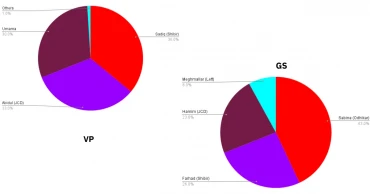
The VP race, once a clear contest between JCD’s Abidul and Independent candidate Umama, has become a three-way battle. A late and powerful digital push from Shibir’s Sadiq vaulted him to the top of the online engagement charts. SharedToday’s data shows that Sadiq now holds
36% of the online traction, just edging out Abidul at 33% and Umama at 30%. This isn't an overnight change in campus sentiment but a clear mobilization effect, demonstrating Shibir's highly disciplined and organized approach to the digital campaign.
Read more: DUCSU Election 2025: A Race of Fragile Alliances and Shifting Sentiments
The General Secretary’s Race
In the GS race, a clear front-runner has emerged. Odhikar’s Sabina has pulled ahead of her competitors by successfully branding herself as the “face of change” and a representative of the July movement’s ideals. According to data from SharedToday, she had a commanding
43% share of traction from August 22 to September 6. She is well ahead of Shibir’s Farhad, who sits at
26%, and JCD’s Hamim at 23%. This indicates that students are responding to a message of change and accountability, and Sabina has been the most effective at capturing that sentiment.
Read more: JCD alleges certain group spreading hate online centring DUCSU
What the Data Says About the BGCS Panel
While BGCS was once a symbol of the student movement's power, Shared Today’s analysis reveals that the panel is now "virtually absent" from the digital conversation. Their traction scores are negligible, with less than a 1% share. This mirrors the panel's internal fragmentation, as key leaders defected to run as independents, leaving the official BGCS panel without the digital firepower needed to compete.
10 months ago
DUCSU Election 2025: A Race of Fragile Alliances and Shifting Sentiments
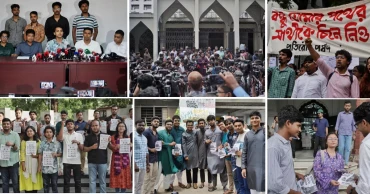
As the Dhaka University Central Students' Union (DUCSU) election 2025 approaches, an analysis of social and digital media trends, sourced from SharedToday, reveals a fragmented and highly competitive landscape. The traditional political dominance of single panels appears to be over, with a mixed outcome now the most probable scenario.
The Fallout of Fragmentation
The most significant dynamic shaping this election is the visible disunity within the BGCS panel, which emerged from the July uprising. Several prominent BGCS leaders—including Tahmid Al Mudasir, Ashiqur Rahman Jim, Abu Salehin Ayon, and Sanjana Afifa Aditi—have decided to run independently or join rival panels. This internal discord has led to the resignations of key figures like Moktosen Muktar, who cited frustration with "party-linked politics," and Mahin Sarkar, who is now contesting for General Secretary from another independent panel. Abdul Kader, the BGCS VP candidate, acknowledged that these divisions could negatively impact the panel's prospects. This fragmentation is likely to damage voter trust in the BGCS's unity and effectiveness and increases the risk of vote splitting.
JCD's Strategic Advantage
This internal disarray within the BGCS has created a strategic opening for the Jatiyatabadi Chhatra Dal (JCD). The JCD panel, with VP candidate Md. Abidul Islam Khan and GS candidate Sheikh Tanvir Bari Hamim, has a disciplined, nationwide network aligned with the BNP. While the July movement activists are split, JCD has been able to consolidate its support across halls, giving it an advantage. Social media analysis indicates that JCD has a high organizational presence and steady news visibility, suggesting stable momentum.
Read more: Ducsu polls: JCD unveils 10-point manifesto promising changes
The Rise of Independent Candidates
In contrast to the BGCS's struggles, the Independent Alliance led by Umama Fatema is gaining significant traction. With prominent BGCS figures now running independently, Umama's panel may attract disillusioned BGCS supporters. Her campaign is positioned as a "fresh face" with strong credibility from the July uprising, appealing to voters who are disenchanted with traditional party politics.
10 months ago
JCD alleges certain group spreading hate online centring DUCSU
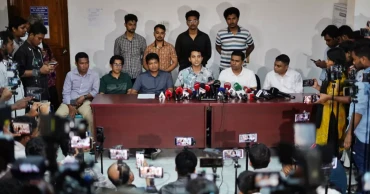
Jatiyatabadi Chhatra Dal has alleged that a certain group is spreading the poison of hatred in the cyber sphere centring the Dhaka University Central Students’ Union (DUCSU) election.
Chhatra Dal leaders said this in a press briefing on Saturday afternoon, after submitting a complaint to the Returning Officer at the university’s Nawab Ali Chowdhury Senate Building.
They demanded the closure of fake Facebook IDs active centring the university at least until the election, saying such behavior is not desirable.
DU JCD president Ganesh Chandra Roy Sahos, General Secretary Nahiduzzaman Shipon, and DUCSU Assistant General Secretary (AGS) candidate Tanvir Al Hadi Mayed were present at the presser.
Tanvir Al Hadi Mayed said, “We believe that the students will choose the right candidates in DUCSU. Many, failing in the field, are spreading false propaganda against us online. The Election Commission could not control them despite attempts. We want the DUCSU election to be held in a beautiful environment without any kind of problems.”
Nahiduzzaman Shipon said, “From various fake IDs in the name of Dhaka University, honorable political personalities are being cyber-attacked. This is harming the election environment. These groups must be made inactive until the election. Because, through them, poisonous hatred is being spread.”
Meanwhile, in a notification from the Chief Returning Officer’s office, it has been stated, “From DUCSU and hall unions, various false propaganda is being spread on social media. Attempts are being made to assassinate the character of candidates in various ways. With a clear voice, we again announce that we have taken punitive action under the code of conduct against several identified social media pages of this type, and are about to take action under the Cyber Security Ordinance 2025 against several more social media accounts.”
Students have been urged not to pay heed to any kind of rumours. They have also been called upon not to be confused by any propaganda related to withdrawal of candidacy either in favour of or against any candidate in the election.
10 months ago
Nur suffering from short-term memory loss, still bleeding from nose: Rashed
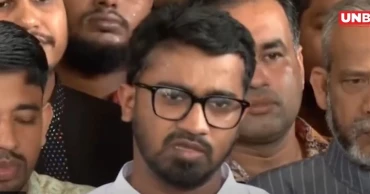
Gono Odhikar Parishad President Nurul Haque Nur, currently undergoing treatment at Dhaka Medical College Hospital (DMCH), is suffering from short-term memory loss, claimed the party’s General Secretary Rashed Khan on Saturday.
Speaking to reporters after visiting Nur at the hospital in the afternoon, Rashed Khan said Nur is forgetting many small things. “Blood is still flowing from his nose. Although the government has assured treatment abroad, a section within the administration does not want his condition to improve.”
He alleged that Nur’s health may deteriorate further due to government negligence and politically motivated actions.
Rashed Khan also rejected allegations linking the Gono Odhikar Parishad to the recent vandalism and arson at the Jatiya Party's central office on Friday (September 5).
“We had no involvement in the incident. Attempts are being made to falsely implicate our leaders and activists, which is entirely politically driven,” he added.
Meanwhile, BNP senior leader Mirza Abbas, who also visited Nur at the hospital, said the attack on Nur seems intentional.
“The attack on Nur was brutal and clearly deliberate, not a random clash. His condition is serious, as he is still bleeding at times, and I fear internal injuries. A fair investigation must be carried out to find out who was behind it and why,” he said.
Abbas said although the government has said Nur will be sent abroad for treatment, it has not happened yet, which is frustrating.
10 months ago