politics

Mirza Abbas returns home after over five months of treatment abroad
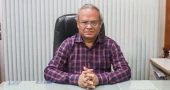
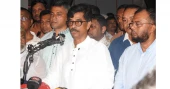
BNP Standing Committee Member and Prime Minister’s Political Adviser Mirza Abbas returned home on Wednesday night after undergoing treatment in Singapore and Malaysia for five and a half months.
The flight carrying Mirza Abbas landed at Hazrat Shahjalal International Airport in Dhaka around 9:30pm.
His wife Afroza Abbas accompanied him, said BNP Media Cell member Sayrul Kabir Khan.
Mirza Abbas returning home tonight after over five months of treatment abroad
Earlier, thousands of party activists from different thanas, wards and affiliated organisations of the capital gathered at the airport to welcome Mirza Abbas.
Many of them were seen carrying party flags and banners and chanting various slogans. An atmosphere of enthusiasm and excitement prevailed among the activists.
According to family members and the BNP Media Cell, the flight carrying Mirza Abbas left Kuala Lumpur International Airport around 7:30pm local time on Wednesday after he completed five and a half months of treatment in Singapore and Malaysia.
The BNP leader suddenly lost consciousness while taking Iftar on March 11. He was admitted to Evercare Hospital late that night.
Following a brain surgery at the Dhaka hospital, he was flown to Singapore by air ambulance on March 15. After receiving treatment there, he was later taken to Malaysia for physiotherapy.
Mirza Abbas was elected a Member of Parliament from the Dhaka-8 constituency in the 13th parliamentary elections.
16 hours ago
Bangladesh to become $1 trillion economy within five years: Rizvi
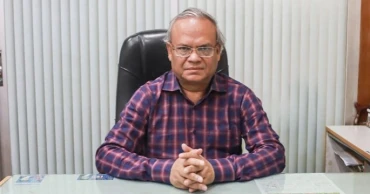
BNP acting Secretary General Ruhul Kabir Rizvi on Wednesday said Bangladesh will become a $1 trillion economy within five years under the leadership of Prime Minister and BNP Chairman Tarique Rahman.
“Tarique Rahman has announced that Bangladesh will become a $1 trillion economy within five years,” he said.
Bangladesh will bounce back under PM Tarique’s leadership: Rizvi
Rizvi said Tarique Rahman has set a number of targets after assuming office, including tackling the impacts of climate change, restoring the country’s self-sufficiency in food production and creating employment opportunities.
“He has pledged to create 2 crore jobs in various ways, including through overseas employment, and has announced the goal of building a $1 trillion economy. Within these five years, Bangladesh will become a $1 trillion economy,” he said.
The BNP leader was speaking as the chief guest at a discussion organised by the Uttaranchal Chhatra Forum at the Jatiya Press Club, marking Tarique Rahman’s 18th jail release anniversary.
He said the necessary initiatives and directives to achieve these targets are already visible and people can see the work being carried out by the government.
“We are seeing the necessary initiatives and directives right before our eyes. If we read the newspapers, we can see what he is doing,” Rizvi said.
He said BNP is a party that keeps its commitments and fulfils its promises, citing the examples of BNP founder and late President Ziaur Rahman and former Prime Minister Khaleda Zia.
“BNP is a party of commitment and a party that keeps its promises. Shaheed President Ziaur Rahman set that example, and Khaleda Zia also left an exceptional example,” the acting BNP secretary general said.
He said Tarique Rahman is now carrying forward the legacy of his father and mother.
“Carrying the flag earned by his father and mother, Tarique Rahman is now pursuing the politics of fulfilling commitments after coming to power,” Rizvi said.
He reiterated that the programmes announced by Tarique Rahman include measures to address climate change, regain self-sufficiency in food, create two crore jobs through domestic and overseas employment and transform Bangladesh into a $1 trillion economy within five years.
State Minister for Land Barrister Mir Mohammed Helal Uddin attended the programme as a special guest with Prime Minister’s Additional Press Secretary Atikur Rahman Rumon in the chair.
17 hours ago
Jamaat lawmakers raise concern over ‘deteriorating’ law and order
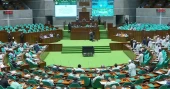
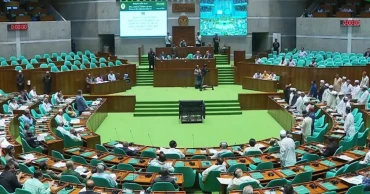
Two Bangladesh Jamaat-e-Islami lawmakers on Wednesday raised concerns over the “deteriorating” law-and-order situation, including what they described as rising incidents of mugging, theft, robbery and extortion, and called for coordinated drives by law enforcement agencies to ensure public safety.
Speaking under Rule 71 of the Rules of Procedure on matters of urgent public importance, Jamaat MP Salah Uddin and reserved women’s seat MP Subikunnahar
highlighted what they described as a growing sense of fear and insecurity among people in Dhaka and elsewhere in the country.
Salah Uddin said people are increasingly concerned over the “deterioration” of law and order in different areas.
Referring to several recent incidents, he said, “A female teacher was killed in an attack by muggers in front of the Parliament complex, a JCD leader allegedly snatched gold ornaments at the airport, Tk 39 lakh was snatched in broad daylight in Dhanmondi, and mugging took place in broad daylight at Mugda Hospital. A person was also stabbed to death in Jatrabari.”
The MP said theft and robbery have also increased in rural areas, with frequent power outages creating opportunities for vehicle theft, burglary and other crimes.
He alleged that in some cases, instead of arresting criminals, families of victims are being subjected to harassment.
The lawmaker also alleged that drug dealers and armed criminals are moving around openly in different areas. “People are living in extreme fear because of the inactivity, indifference and inability of the police,” he said.
He called for coordinated operations involving the police, Rapid Action Battalion (RAB) and Border Guard Bangladesh (BGB) to protect people’s lives and property.
Salah Uddin also urged the government to conduct special drives if necessary, saying initiatives similar to “Operation Clean Heart” could be considered to ensure security for people.
Meanwhile, Subikunnahar raised concerns over the occupation of footpaths and alleged extortion in Dhaka and other cities.
She said footpaths intended for pedestrians have been occupied in many areas by shops, street vendors and permanent commercial structures, forcing people to walk on roads and exposing them to the risk of accidents.
The female MP alleged that organised extortion has developed around the allocation of space for shops on footpaths. “It is now an open secret that an institutionalised extortion racket has developed around setting up shops on footpaths,” she said.
According to the lawmaker, money is collected on a daily, weekly or monthly basis in different areas in exchange for allowing businesses to operate on footpaths.
Citing a media report, she claimed that traders are sometimes being asked to pay Tk 20,000 to set up a tea stall and up to Tk 30,000 for other types of shops.
“Extortion has today become like a communicable disease of the ruling party,” Subikunnahar said, urging the Ministry of Home Affairs to identify those involved in extortion and bring them to justice.
18 hours ago
BNP marks 48th founding anniversary with tree plantation drive
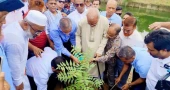
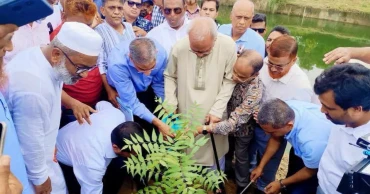
Bangladesh Nationalist Party (BNP) on Wednesday organised a tree plantation drive in the capital, marking its 48th founding anniversary.
The campaign began at 11:00am on the 300-feet Road at Kuril, followed by another tree plantation programme at 12:30pm at Dholaikhal Pond, adjacent to Sadek Hossain Khoka Ground.
BNP acting Secretary General Ruhul Kabir Rizvi attended the programmes as the chief guest, organised under the overall management of BNP Joint Secretary General and Water Resources Minister Shahiduddin Chowdhury Anee.
19 hours ago
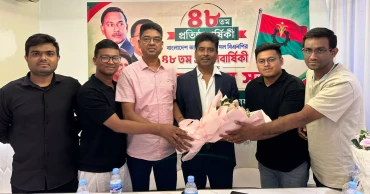
BNP's China unit marks 48 years recalling role in protecting democracy
China unit of the BNP organised a discussion meeting in Guangzhou on Tuesday to mark the 48th founding anniversary of the Bangladesh Nationalist Party (BNP), focusing on the party’s political journey, its establishment and its role in promoting democracy and people’s rights in Bangladesh.
Senior leader of China BNP Sakhawat Hossain Kanon presided over the meeting, while Asif Haque Rupu moderated it.
The speakers recalled the history of the BNP’s establishment and discussed the party’s 48-year political journey. They also highlighted the party’s role in establishing democracy and protecting the rights of the people of Bangladesh.
They discussed the political ideology of BNP founder and former President Ziaur Rahman, as well as different aspects of his 19-point programme.
20 hours ago
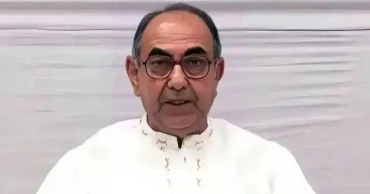
Mirza Abbas returning home tonight after over five months of treatment abroad
Prime Minister’s Political Adviser and BNP Standing Committee Member Mirza Abbas is returning home tonight (Wednesday night)
after undergoing treatment in Singapore and Malaysia for more than five months.
A flight carrying him is scheduled to land at Hazrat Shahjalal International Airport in the capital at 9:00pm.
Mirza Abbas returning home Wednesday after five months of treatment
BNP Media Cell member Sayrul Kabir Khan said Mirza Abbas is now considerably better and is returning home on the advice of his medical board.
The BNP leader suddenly lost consciousness while taking Iftar on March 11. He was admitted to Evercare Hospital late that night.
Following a brain surgery at the Dhaka hospital, he was flown to Singapore by air ambulance on March 15. After receiving treatment there, he was later taken to Malaysia for physiotherapy.
Mirza Abbas was elected a Member of Parliament from the Dhaka-8 constituency in the 13th parliamentary elections.
20 hours ago
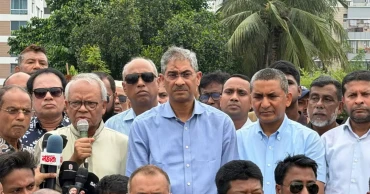
Gas, power supply to normalise within 1-1.5 weeks: Rizvi
BNP Acting Secretary General Ruhul Kabir Rizvi on Wednesday said adequate gas and electricity supply to households, mills and factories would be restored within the next one to one-and-a-half weeks.
“The stove in the kitchen that is now burning dimly due to the gas shortage will burn properly again. The necessary fuel supply for mills and factories will also be ensured within one to one-and-a-half weeks. This is the government’s commitment,” he said.
Rizvi made the remarks while inaugurating a nationwide tree plantation campaign organised by BNP marking its 48th founding anniversary, in an area adjacent to Bashundhara Convention Centre on the 300 Feet Road in the capital.
He said the government has allocated an additional Tk 4,000 crore beyond the budget, for the urgent purchase of LNG and fuel to ease the sufferings of the people and meet the fuel requirements of mills and factories.
“The government is not sitting idle. This is not happening because of any fault or failure of the government,” he said.
Rizvi said the technical problems at the Maheshkhali gas terminal have largely been resolved and the process of refilling gas there was underway.
Explaining the reasons behind the gas and fuel crisis, he said the ongoing US-Iran war and the suspension of fuel-carrying vessels through the Strait of Hormuz have created a global energy crisis.
The movement of ships through the strait has been disrupted due to the risk of mines and bomb attacks, resulting in fuel supply problems in Bangladesh and many other countries.
He said the government is communicating with Malaysia, Indonesia and other countries to explore alternative arrangements for fuel supplies.
Regarding the opposition's movement over the gas crisis, Rizvi said a constructive opposition should inform people about the actual causes of the crisis.
BNP Joint Secretary General and Water Resources Minister Shahiduddin Chowdhury Anee, Joint Secretary General Abdus Salam Azad, Jubo Dal General Secretary and MP Nurul Islam Nayon, among other party leaders, were present at the programme.
22 hours ago
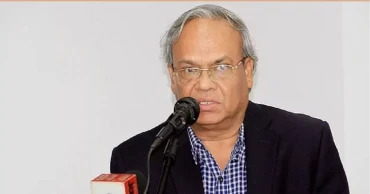
Bangladesh will bounce back under PM Tarique’s leadership: Rizvi
BNP acting Secretary General Ruhul Kabir Rizvi on Tuesday said Bangladesh will bounce back under the leadership of Prime Minister Tarique Rahman, despite all conspiracies to undermine their party.
“Despite various conspiracies, BNP could not be defeated and it will not be defeated in the future either. Rather, Bangladesh will bounce back under the leadership of Prime Minister Tarique Rahman and become self-sufficient in all economic indicators,” he said.
Rizvi made the remarks at a brief rally organised in Uttara in the evening marking the 48th founding anniversary of BNP.
Recalling the country's economic condition in the early years after independence, he said Bangladesh was a hungry, poor and famine-stricken country where people had to eat mango leaves between 1972 and 1975.
Rizvi said then President Ziaur Rahman, a patriotic leader who wanted to protect the country's national independence and sovereignty and refused to act at the behest of any “master”, was killed in a conspiracy involving domestic and foreign actors.
“Why did they kill this patriotic leader? He wanted to protect national independence. He wanted to protect sovereignty. He did not want to act at the behest of any master. That is why Ziaur Rahman was killed as part of a domestic and foreign conspiracy,” he said.
The BNP leader said a political party founded by a patriot and freedom fighter could not be wiped out.
He also recalled former Prime Minister and BNP Chairperson Khaleda Zia, saying despite facing repression and persecution, she could not be driven out of the country and remained with the people, speaking for them until her death.
“A party that stood by the people and whose leader remained with the people and spoke for them until her death can never be destroyed,” Rizvi said.
“Naturally, this party could not be defeated despite various conspiracies, and it will not be defeated in the future either. Rather, Bangladesh will bounce back under Prime Minister Tarique Rahman’s leadership and become self-sufficient in all economic indicators,” he said.
1 day ago
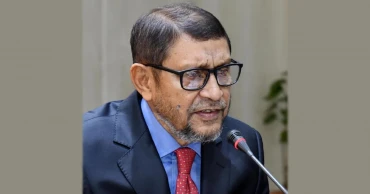
Popular candidates to get BNP nominations in local polls: Sakhawat
Health and Family Welfare Minister Sardar Md Sakhawat Husain on Tuesday said BNP candidates for the upcoming local government elections will be nominated based on their popularity among people,
He made the remarks at a discussion organised marking the 48th founding anniversary of the BNP in front of the Monohardi upazila BNP office in the evening.
The minister urged BNP leaders and activists to remain united at all levels ahead of the Union Parishad, municipality and Zila Parishad elections.
"Prime Minister Tarique Rahman is already assessing the situation in different areas. We will also send reports, after which he will take the final decision," he said.
Sakhawat urged party leaders and activists to remain united behind the candidates selected by the Prime Minister.
"Many have organised processions and meetings and faced persecution, but that alone will not guarantee them nominations. Candidates will be selected based on popularity. The people will vote for them, while those who switched parties will be evaluated separately," he said.
On the health sector, the minister said he has been visiting districts across the country to ensure better healthcare services. "I visited three or four hospitals in each district. During my visits, I have found 100 percent attendance of doctors, while the bedbug problem is being addressed and cleanliness is improving," he said.
He said regular inspections are helping improve the quality of healthcare services and expressed hope that there will be a "radical change" in the country's health sector within the next year under the leadership of Prime Minister Tarique Rahman.
The meeting was chaired by Monohardi upazila BNP Joint Convener Mohammad Moniruzzaman Monir and moderated by its Member Secretary Aminur Rahman Sarkar Dolon.
Later, the minister led a rally marking the BNP's founding anniversary. The rally started in front of the upazila BNP office, passed through the main roads and ended at the Switchgate.
Sakhawat later released fish fry into the Old Brahmaputra River.
1 day ago
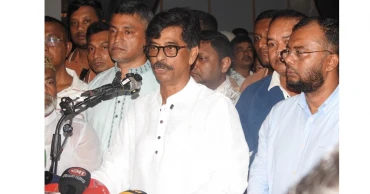
Ziaur Rahman only President to declare independence, fight in Liberation War: Minister
Fisheries and Livestock and Agriculture Minister Mohammed Aminur Rashid on Tuesday said Shaheed President Ziaur Rahman was the only President who declared Bangladesh’s independence and took part in the Liberation War with arms.
He said Ziaur Rahman’s sense of responsibility towards the people, honesty and simple lifestyle should serve as examples for political workers.
The minister also urged leaders and activists of the Bangladesh Nationalist Party (BNP) to work for the welfare of the country and its people after being imbued with Ziaur Rahman’s ideals.
He was speaking as the chief guest at a discussion organised by Cumilla city BNP at the Cumilla Shilpakala Academy, marking the BNP’s founding anniversary, according to a PID handout.
Aminur said people are the ultimate source of power in a democratic state and the BNP formed the government through the direct votes of the people.
“No government in history has been able to hold on to power over the people forever. Over time, many powerful rulers and governments have also had to leave,” he said, adding that the people are the fundamental strength of democracy and the true source of state power.
The minister said nearly 75 percent of the country’s population is directly or indirectly involved in agriculture and farming.
“The government firmly believes that sustainable development of the country is not possible without the development of farmers,” he said, adding that the government is ready to take all necessary measures to develop agriculture and improve farmers’ livelihoods.
Aminur said agricultural development was a key component of the BNP’s election pledges and that the government is implementing various initiatives for farmers’ welfare, including loan waivers and necessary support for agricultural activities.
He said there was a time when Bangladesh had to import agricultural products, but dependence on imports has declined, particularly in the case of onions.
“In the future, the new generation will no longer have to import onions. Rather, we will think about exporting onions,” the minister said, adding that the government also plans to reduce imports of other agricultural products and eventually export them.
Cumilla city BNP President and Cumilla Development Authority Chairman Udbatul Bari Abu presided over the meeting, while city BNP General Secretary and Cumilla City Corporation Administrator Yousuf Mollah moderated it.
1 day ago