politics
BNP to act as sleepless sentinels at Durga Puja mandaps: Rizvi
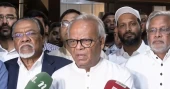
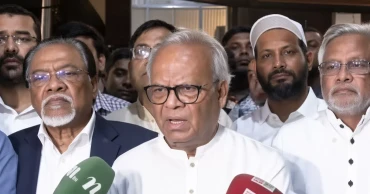
BNP leaders and activists will act as volunteers and sleepless sentinels at every Durga Puja mandap across the country, to ensure the safe and uninterrupted celebration of the festival by members of the Hindu community, BNP Acting Secretary General Ruhul Kabir Rizvi said on Saturday.
“They will act as volunteers and sentinels at every Puja mandap like sleepless guards,” he said.
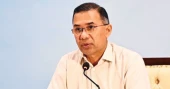
Rizvi made the remarks while briefing reporters after a meeting of the BNP’s highest policymaking body, the National Standing Committee, chaired by BNP Chairman and Prime Minister Tarique Rahman on Saturday night.
The meeting began at 6:30pm at the BNP chairman’s office in Gulshan in the capital.
Rizvi said the meeting primarily discussed ensuring the safe and uninterrupted celebration of Durga Puja across the country, allowing members of the Hindu community to take part in the festivities and share their joy with others.
The party leaders discussed how BNP activists would coordinate with local Puja committees at different mandaps across the country and perform voluntary duties to help ensure security during the festival, he said.
“You know that various kinds of blueprints are being drawn by some quarters against the country and the democratic government,” Rizvi said.
He expressed hope that the government would be able to thwart all kinds of propaganda, misdeeds and conspiracies through efficient management and administration, adding that BNP leaders and activists would remain vigilant in this regard.
He said the meeting also discussed what steps could be taken on the issue and what the party had already done.
Rizvi said the BNP had formed a central Durga Puja monitoring committee on Friday under the leadership of Joint Secretary Generals Khairul Kabir Khokon and Syed Emran Saleh Prince, he added.
The party had also issued various instructions earlier to ensure the peaceful celebration of the festival, he said.
“We are deeply concerned about this issue, and all of us remain alert,” Rizvi said.
The meeting also discussed organisational matters, including the party’s future course of action and ways to further intensify its organisational activities, Rizvi said.
He said there was no discussion at the meeting about the upcoming local government elections.
Asked whether there was any message regarding the formation of the Jatiyatabadi Chhatra Dal (JCD) committee, Rizvi said no such message had reached him so far that he could share with the media.
He also confirmed that the party’s national council was not discussed at the meeting.
Those present at the meeting included Gayeshwar Chandra Roy MP, Local Government, Rural Development and Co-operatives Minister Dr Abdul Moyeen Khan, Home Minister Salahuddin Ahmed, Selima Rahman, Finance Minister Amir Khosru Mahmud Chowdhury, Power and Energy Minister Iqbal Hasan Mahmood Tuku, Social Welfare Minister Prof AZM Zahid Hossain, Amanullah Aman MP, Prime Minister’s Adviser on Public Administration Ismail Zabiullah, and BNP Chairman’s Adviser Dr Farhad Halim Doner.
17 days ago
Tarique Rahman chairs BNP standing committee meeting
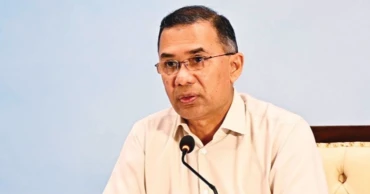
A meeting of the BNP’s National Standing Committee was held on Saturday, chaired by BNP Chairman and Prime Minister Tarique Rahman.
The meeting began at 6:30pm at the BNP chairman’s office in Gulshan in the capital.
BNP media cell member Sayrul Kabir Khan, confirmed the information.
Those present at the meeting included BNP Acting Secretary General Ruhul Kabir Rizvi, Gayeshwar Chandra Roy MP, Local Government, Rural Development and Co-operatives (LGRD) Minister Dr. Abdul Moyeen Khan, Home Minister Salahuddin Ahmed, Selima Rahman, Finance Minister Amir Khosru Mahmud Chowdhury, Power and Energy Minister Iqbal Hasan Mahmood Tuku, Social Welfare Minister Prof. AZM Zahid Hossain, Amanullah Aman MP and Farhad Halim Doner.
17 days ago
NCP voices solidarity with Indian youth, urges release of detained protesters
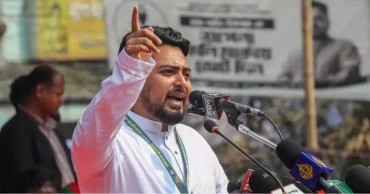
National Citizen Party (NCP) Convener and Opposition Chief Whip Nahid Islam Saturday expressed firm solidarity with young people in India demanding electoral accountability and defending democratic rights.
In a statement issued on Saturday, Nahid said recent detentions of peaceful protesters, organisers and journalists in New Delhi, along with internet suspensions and restrictions at Jantar Mantar, "directly threaten fundamental freedoms."
He said concerns over electoral integrity and institutional independence require transparent answers, not barricades and censorship.
Drawing parallels with Bangladesh's July 2024 uprising, Nahid said the student-led movement against recruitment quotas turned into a nationwide uprising against 15 years of authoritarian rule.
The state responded with live ammunition, he said, adding that the United Nations later estimated as many as 1,400 people were killed during the uprising and its suppression.
He recalled the solidarity Indian students, writers and independent voices showed during the uprising.
He also paid tribute to India's traditions of democratic resistance, citing the women of Shaheen Bagh and generations of students at JNU and Jadavpur University.
Noting the presence of young Indian women on the streets, Nahid said women were also at the forefront of Bangladesh's July Revolution, and their courage and sacrifices helped secure its victory.
The NCP convener said Hindutva majoritarianism, fascism and every form of religious supremacy must not define South Asia's future.
He said his party rejects authoritarianism, communal hatred and political intolerance in India as it does in Bangladesh.
"No society is truly democratic while minorities live in fear, dissent is criminalised, and citizenship is conditional on identity," he said.
He called on Indian authorities to: respect the right to peaceful assembly;.disclose the whereabouts and legal grounds for the detention of protest organisers; immediately release those held for exercising their rights; and ensure journalists can report without intimidation or equipment seizure.
Referring to Sharjeel Imam and Umar Khalid, Nahid said they continue to be kept behind bars for years without trial.
He described all of India's young protesters and prisoners of conscience as "comrades."
He said the struggles of the two countries are interconnected, extending to unresolved issues such as border killings, water sharing, environmental protection and national sovereignty.
He said he wants a South Asia where nations treat each other as equals and "sovereignty is never an excuse for domination."
Concluding the statement, Nahid urged the people of India to stand firm, protect one another and reject communal hatred.
17 days ago

BNP forms 12-member monitoring committee for Durga Puja
Bangladesh Nationalist Party (BNP) on Friday has formed a 12-member monitoring committee ahead of Durga Puja, the biggest religious festival of the Hindu community.
BNP Joint Secretary General Khairul Kabir Khokon has been made convener of the committee, while another Joint Secretary General of the party, Syed Emran Saleh Prince, has been named its member secretary.
The names of the committee members were announced in a press release signed by BNP Assistant Office Secretary Muhammad Munir Hossain on night.
The other members of the committee are BNP National Executive Committee Assistant Organising Secretary Jayanta Kumar Kundu, Assistant Secretary for Marginalised People Development Aparna Roy Das, Assistant Secretaries for Religious Affairs Amalendu Das Apu and John Gomes, and National Executive Committee members Advocate Nipun Roy Chowdhury and Ramesh Dutta.
The committee also includes Jubo Dal central committee Labour Affairs Secretary Partha Dey Mondal, former Vice-President of the central committee of Jatiyatabadi Chhatra Dal Joydeb Roy, former student leader Milton Baidya, and Ganesh Chandra Roy Sahas, president of Dhaka University Chhatra Dal.
18 days ago
Indian youth return to streets as anger mounts against election chief and Modi
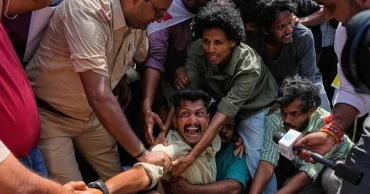
India’s youth-led “Cockroach” movement is preparing to stage another round of protests in New Delhi on Saturday, expanding a nationwide campaign against a controversial voter list revision that has sparked growing criticism of Prime Minister Narendra Modi’s government and the country’s election authorities.
Thousands of demonstrators are expected to gather at Jantar Mantar, the capital’s designated protest venue. However, authorities have introduced extensive security restrictions, including the suspension of mobile internet services. Police said on Friday that permission for the demonstration had been denied because the organisers submitted their application too late.
The protest area has been surrounded by yellow metal barricades, with thousands of police officers deployed nearby. Disruptions to train services and metro stations were also expected to make it more difficult for demonstrators to reach the venue.
The extensive security arrangements reflect the authorities’ efforts to contain a rapidly expanding protest movement that has attracted thousands of young people, gained support from opposition parties and increased pressure on Modi’s administration.
The demonstrations come at a politically sensitive moment, just months after protests organised by the “Cockroach” movement over alleged examination paper leaks led to the resignation of Modi’s education minister in July.
Voter list revision sparks concerns over election fairness
The latest protests focus on the Election Commission of India’s Special Intensive Revision of voter lists, a process opposition parties claim has deprived millions of eligible citizens of their voting rights.
Demonstrators are demanding the resignation of Chief Election Commissioner Gyanesh Kumar and an end to the revision process, which has reportedly resulted in the removal of more than 130 million names from electoral rolls.
The Election Commission and the government have rejected allegations of electoral manipulation, maintaining that the exercise is intended to remove duplicate registrations and the names of individuals who are no longer eligible to vote.
The controversy has become a major political issue for opposition parties seeking to challenge Modi’s Hindu nationalist Bharatiya Janata Party (BJP).
Saturday’s planned demonstration follows several days of protests in New Delhi, where opposition lawmakers have intensified their campaign against the voter list changes. Congress leader Rahul Gandhi was briefly detained by police during one of the demonstrations.
Gandhi and other opposition figures have accused the Election Commission of conducting the revision in a manner that favours the ruling BJP. They allege that voters more likely to support opposition parties have been disproportionately removed from the electoral rolls, while BJP supporters have been protected from deletion or added to the lists.
Both the Election Commission and the government have denied these accusations.
Youth movement expands its campaign against Modi
For the “Cockroach” movement, the controversy over voter registration has created an opportunity to extend its campaign beyond education-related grievances and challenge broader government policies.
The movement emerged online in May and gained momentum through street demonstrations, sit-ins and hunger strikes over alleged examination paper leaks. Its campaign culminated in the resignation of Modi’s education minister in July, marking an uncommon political setback for a prime minister who has maintained a strong grip on national politics for more than 12 years.
The latest protests represent another challenge for Modi as he continues his third term in office. However, the extent to which the demonstrations will affect his political standing remains uncertain.
India’s next national election is not scheduled until 2029. Nevertheless, state elections expected next year in Uttar Pradesh, the country’s most populous state, and Gujarat, Modi’s home state, will provide important tests of the BJP’s political strength.
The growing demonstrations could therefore become a significant political issue for the ruling party as it faces increasing scrutiny over electoral procedures and public concerns about democratic representation.
18 days ago
Politics should serve people's rights, not power: Moyeen Khan
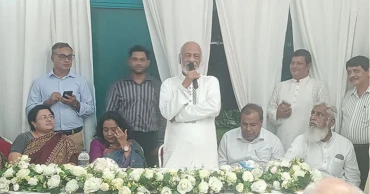
Politics should not be about gaining power but about establishing people's rights and ensuring their welfare, Local Government, Rural Development and Cooperatives Minister Dr Abdul Moyeen Khan said on Friday.
He said the democratic system must be strengthened by establishing democracy at the grassroots level and ensuring accountability of elected representatives.
The minister made the remarks as the chief guest at a discussion with teachers of The Millennium University at his office at his Gulshan residence in the capital on the occasion of National Teachers' Day 2026.
Representatives of various NGOs also attended the meeting, where the Khan Foundation's website was inaugurated.
Moyeen Khan said being able to represent the people was a great privilege, adding that he had been trying to pursue politics guided by the same ideals for nearly 35 years.
Just as elected representatives are accountable to the people, citizens also have a responsibility to elect the right representatives, he said.
The minister said the tendency to spend huge amounts of money to win elections must be changed, stressing that politics could not be conducted on the right path without the ideal of serving the people.
Describing the local government system as one of the foundations of democracy, he said democracy could not function effectively at the national level without establishing it at the grassroots.
Reforming local government institutions, ensuring public services and holding elections at five tiers of local government were among the major challenges ahead, he said.
He stressed the need to ensure that people could go to polling centres without fear and vote for candidates of their choice.
Expressing support for holding local government elections on a non-party basis, Moyeen Khan said this would create opportunities to reduce political divisions and mutual hostility at the local level.
Although there would be competition in elections, everyone must rise above party divisions and work for the country's development and people's welfare, he said.
Emphasising the role of NGOs in building society, the minister said Bangladeshi NGOs had made important contributions to poverty alleviation, improving people's living standards and various social sectors.
Coordination between local government institutions and NGOs must be strengthened to make development activities more effective, he added.
Among those present at the discussion were Advocate Rokhsana Khondker, chairperson of the Board of Trustees of The Millennium University and the Khan Foundation; Prof Dr Abinoy Chandra Shaha, vice-chancellor of The Millennium University; Mahmuda Khatun, executive director of the Khan Foundation; representatives of various NGOs; university teachers; and officials and employees of the Khan Foundation.
18 days ago
Rizvi says threat to halt remittances anti-national, anti-humanitarian
Ruhul Kabir Rizvi has described the threats to halt remittance flows as anti-national, anti-humanitarian and contrary to the interests of the people, criticizing the opposition party to the parliament.
“Such a threat means you are threatening to keep the people of the country hungry, halt the country’s development and disrupt economic activities. Remittance is a driving force of our national economy, and you are threatening to shut down that driving force. What kind of politics do you practice?” he said.
Remittances sent by Bangladeshis working abroad make a significant contribution to the national economy and support the livelihoods of their families back home. Millions of families depend on these funds, he added.
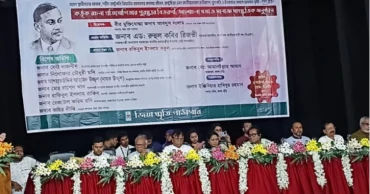
He made the remarks at an event organized by the ‘Zia Smrity Pathagar’ at the TSC auditorium of Dhaka University on Friday afternoon.
Rizvi said not all Bangladeshis living abroad support a particular political party. They include supporters of different political parties, ordinary citizens and people who have never been involved in politics, he added.
“By what authority will you shut down remittances? Is there any legal provision for this, or do you have some secret operation through which you intend to do it?” he said.
The BNP leader alleged that his political opponents had never prioritized national or public interests, instead placing party interests above those of the state.
“They have practiced politics for their party’s interests. They have prioritized party interests over national interests. The BNP, on the other hand, has always put the interests of the state and the people first,” he said.
Speaking at the same event, Dhaka South City Corporation Administrator Abdus Salam said Chhatra Dal should strengthen its cultural and intellectual activities to restore the country’s lost cultural heritage, literature and glorious history.
He urged Chhatra Dal to organize essay competitions on the Liberation War and Ziaur Rahman at all educational institutions across the country.
Referring to reforms introduced by Ziaur Rahman across various sectors, Salam said, “Many people are shouting and making a fuss about reforms today. The reforms Ziaur Rahman introduced when he took responsibility for the state have yet to be matched by anyone.”
Salam also said Ziaur Rahman had made a significant contribution to the country’s politics despite not initially being a politician, adding that he had fostered healthy political practices.
He further alleged that Sheikh Mujibur Rahman, like his daughter, had banned politics and pushed it underground.
18 days ago
Bangladesh must build soft power through culture, creativity: Amir Khosru
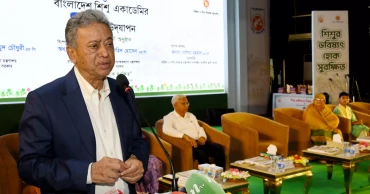
Finance Minister Amir Khosru on Thursday said Bangladesh must develop its soft power by nurturing its cultural identity and creative potential.
“Soft power is all these things combined. We have to build it in Bangladesh,” he said, referring to arts, music, film, theatre, sports, and other cultural pursuits as essential elements of a nation’s identity.
The Finance Minister made these remarks while addressing the closing ceremony marking the 50th anniversary of Bangladesh Shishu Academy at its auditorium in the capital.
He said a country’s strength is not only measured by the size of its economy, stressing that a distinctive national identity built through culture and creativity is equally important.
He said children should therefore be encouraged to develop their abilities in areas beyond formal education, including sports, drawing, music, theatre and film.
“Studying is certainly necessary, but life is not just education,” he said.
He urged families and society to give children opportunities to discover their interests and develop hobbies, saying a generation’s intellectual and creative growth depends on such exposure from an early age.
The Minister also said there should be no discrimination between boys and girls in access to opportunities.
He said the government is working to bring artists, filmmakers, theatre practitioners, cultural workers, and traditional artisans into the economic mainstream under a new creative economy initiative.
The Minister also stressed the importance of exposing children to nature and developing empathy toward animals and biodiversity.
He said many birds, butterflies, insects, and fish that were once common are declining or disappearing as their natural habitats shrink.
“We have moved far away from nature,” he said, urging greater attention to environmental and biodiversity concerns in development activities.
He also called on parents to encourage children to ask questions and maintain open communication with them.
“Children will ask many questions. We have to answer all of them,” he said, describing childhood as the critical stage for learning and developing curiosity.
He said Bangladesh Shishu Academy has an important role in sending a broader message about how the country wants its children to grow and what kind of future it envisions for them.
The minister expressed hope that families, institutions, and the government would work together to provide children with the guidance and opportunities needed to develop their full potential.
19 days ago
End “mafia rule” on roads to restore discipline: Rizvi
BNP Acting Secretary General Ruhul Kabir Rizvi on Thursday called for an end to the “mafia rule” in the road transport sector, saying longstanding extortion, syndicates and irregularities must be eliminated to restore discipline and ensure a comfortable environment for ordinary people.
Rizvi made the remarks at a tribute programme organised by the newly formed committee of the Jatiya Sarak Paribahan Sramik Federation at the graves of BNP founder and former President Ziaur Rahman and former BNP Chairperson Khaleda Zia.
Rizvi said he hoped the new federation would remain active and vocal in putting an end to the longstanding anarchy and illegal extortion on the roads.
The BNP leader expressed confidence that the new federation leadership would use fresh ideas and approaches, drawing on its members’ backgrounds in student politics, to address longstanding disorder in the road transport sector, bring activities within the bounds of law and make a significant contribution to passenger services.
He said the leaders has taken on the responsibility with a commitment to improving the sector,
He said responsible performance in one sector could positively influence other sectors, encouraging them to improve through healthy competition.
Rizvi expressed hope that the new federation leadership would help replace the deteriorated road transport management that had developed during what he described as fascist rule with a new system that would strengthen public trust and make people feel safer and more comfortable while travelling.
20 days ago
Abrar killing awakened nation to resistance: Rizvi
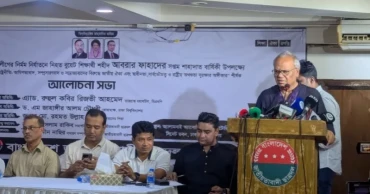
BNP acting Secretary General Ruhul Kabir Rizvi on Wednesday said the brutal killing of Bangladesh University of Engineering and Technology (BUET) student Abrar Fahad over his patriotic Facebook post had awakened the entire nation to resistance, describing it as a rare example in the country’s history.
“Following the brutal killing of Abrar over his patriotic Facebook post, the way the entire nation awakened for resistance was a rare example,” he said while addressing a discussion at the Senate Building of Dhaka University, marking the seventh martyrdom anniversary of Abrar Fahad.
The Jatiyatabadi Chhatra Dal (JCD) organised the discussion titled “The Foreign Policy of a BNP Government: National Unity Against Hegemonism, Expansionism and Imperialism; and Commitment to Protecting Independence, Sovereignty and Territorial Integrity.”
Rizvi said they were becoming frustrated after repeatedly carrying out movements against injustice, repression, enforced disappearances and extrajudicial killings, wondering why the nation was not waking up.
“We were mistaken. Sheikh Hasina could not suppress the tide of rebellion of this nation. And because she could not stop it, July 2024 mass uprising was the ultimate culmination of Abrar’s death, when Sheikh Hasina fled the country,” he said.
Rizvi said they could no longer see any hope of escaping from the situation when the country had fallen into what he described as the “clutches of fascism.”
He said agreements were signed one after another, but they were not allowed to talk about those agreements. “And the then prime minister said ‘they will remember what I have given to the neighbouring country.’ But what did she give that they would remember?” he said.
The BNP leader said the underlying message of those remarks was, in his view, the weakening of the country’s sovereignty and independence.
Referring to Abrar Fahad’s Facebook post, he said every word was extremely sharp and incisive and challenged what he described as aggressive and expansionist forces seeking to take control of the country.
Rizvi alleged that national and international conspirators sought to silence the people by killing Abrar Fahad and creating fear among them, but their attempt failed.
Describing Abrar Fahad as the “first martyr” of the struggle against hegemonism, he said, “Abrar’s sacrifice has proved that the people will remain steadfast in the principle that they will not surrender even an inch of land without a fight and will continue to fight till the end to protect the territory and existence of the country.”
Praising the role of JCD in politics, the BNP leader said its leaders and activists had repeatedly been beaten and admitted to hospitals with injuries but had never deviated from late BNP Chairperson Begum Khaleda Zia’s uncompromising political line.
He expressed his commitment to protecting the country’s independence, sovereignty, flag and all its achievements at any cost.
Abrar, a student of the BUET Electrical and Electronic Engineering Department, was beaten to death at Sher-e-Bangla Hall on the night of October 6, 2019.
20 days ago