politics
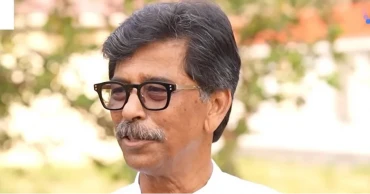
Govt mapping out flood damage to support affected farmers: Agriculture Minister
Agriculture, Fisheries and Livestock Minister Mohammad Amin Ur Rashid on Saturday said the government is preparing an accurate list of farmers affected by the recent floods across the country to ensure they receive rehabilitation assistance without delay.
He said local administrations are collecting accurate information on affected farmers and cultivators following the Prime Minister's directives. “Once the lists are prepared at the union and ward levels, the government will provide necessary assistance to help farmers recover and resume agricultural activities quickly,” he said.
The minister made this remark, while talking to reporters after inaugurating a week-long tree plantation campaign and tree fair at the Cumilla Town Hall ground, said a PID handout here.
Addressing the tree plantation campaign, the minister said the government is firmly committed to turning Bangladesh into a clean, green, and pollution-free nation. So, the government is implementing a massive tree plantation programme in the country, he added.
To mitigate post-harvest losses and protect farmers from price volatility, the minister announced a massive infrastructure plan. The government has initiated a phased programme to set up mini-cold storage facilities across the country.
“Several are already operational, and we have planned to construct over 2,000 additional mini-cold storages in the near future,” he added.
Highlighting the vital role of agriculture, the minister stated that around 75 percent of the country’s population is directly or indirectly dependent on farming. So, improving farmers' livelihoods, ensuring fair prices, and transforming agriculture into a highly profitable sector remain core government priorities, he said.
Cumilla City Corporation Administrator Yusuf Molla Tipu, Deputy Commissioner Rosy Akter, Cumilla Social Forest Division's Divisional Forest Officer Md. Ruhul Amin, and Superintendent of Police Anisuzzaman, among others were present at the inaugural event.
Earlier, the minister participated in a colorful rally held to mark the opening of the tree fair and visited various stalls featuring fruit, forest, and medicinal saplings.
23 days ago

JCD forms two medical teams to provide healthcare in flood-hit areas
Bangladesh Jatiyatabadi Chhatra Dal (JCD) on Saturday has formed two medical teams to provide emergency healthcare services to people affected by the ongoing floods in different parts of the country.
The information was disclosed in a press release issued by the JCD central committee.
According to the statement, continuous rainfall and hill torrents from India have triggered flash floods in Chattogram, Khagrachhari, Rangamati, Bandarban, Cox's Bazar, Sylhet, Moulvibazar and Sunamganj, leaving thousands of people stranded and facing humanitarian hardship.
Chatra Dal accused of attacking BRUR press conference seeking VC’s resignation
To ensure emergency medical assistance for flood victims, the JCD central committee has constituted two medical teams comprising central leaders, physicians from various public and private medical colleges, and student leaders.
Medical Team-1 will be coordinated by JCD Vice-President Dr. Touhidur Rahman Awal. The team also includes central leaders and representatives from Dhaka Medical College, Shaheed Suhrawardy Medical College and Chattogram Medical College Chhatra Dal.
Medical Team-2 will be coordinated by JCD Joint General Secretary Dr. A. S. M. Rakibul Islam Akand. It includes central leaders, physicians and representatives from private medical and dental college units of Chhatra Dal.
The press release said the two teams will provide medical treatment, conduct health awareness activities and carry out humanitarian assistance in flood-affected areas.
The statement, signed by JCD Office Secretary (with the status of Vice-President) Md. Jahangir Alam, said the organisation would continue its efforts to ensure necessary medical services for people affected by the disaster.
23 days ago
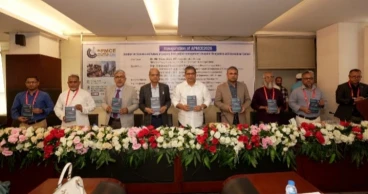
Engineers should lead technical decisions in development projects: State Minister Mir Shahe Alam
Local Government, Rural Development and Cooperatives State Minister Mir Shahe Alam on Saturday stressed the need to ensure engineers play an active role in every stage of development projects, from planning and design to implementation, saying technical decisions should remain in the hands of engineering professionals.
He said engineering-related institutions should ensure the appointment of qualified engineers, arguing that greater professional involvement would improve the quality of development projects, ensure proper use of public funds and support sustainable national development.
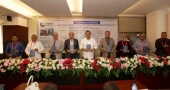
The state minister made the remarks while inaugurating a seminar titled "Inauguration of APMCE2026 & Success and Failure of Projects from Project Management Viewpoint: Bangladesh and International Context" at the Council Hall of the Institution of Engineers, Bangladesh (IEB) headquarters in Ramna. The seminar was organised by the IEB Civil Engineering Division.
Mir Shahe Alam said research findings could play an effective role in government policymaking and development planning, calling for stronger government support to implement research-based recommendations.
Expressing concern over the growing tendency of engineering graduates to pursue administrative careers instead of engineering, he said the country was losing skilled engineers despite the significant time and public investment required to produce them.
He also emphasised the importance of adopting long-term planning while preparing development project proposals (DPPs), taking into account feasibility, maintenance, environmental impact and future needs.
Referring to the DPP approval process, the state minister said project proposals prepared by engineers are often returned by the Planning Commission for revision through individuals who are not engineering professionals, resulting in inadequate assessment of technical realities.
He stressed the need for greater participation of engineers in the Planning Commission to ensure technically sound project evaluation.
Highlighting the contribution of engineers, he said their achievements in infrastructure development, industrialisation, power, transport, information technology and economic growth often receive less attention than isolated project failures.
Addressing architects, Mir Shahe Alam urged them to prioritise natural light and ventilation in building designs to reduce electricity consumption and promote environmentally friendly and healthy buildings.
Speaking as special guest, Dhaka University of Engineering and Technology (DUET) Vice-Chancellor Prof Dr Mohammad Iqbal said development projects should be guided by long-term planning rather than short-term thinking.
He said project sustainability, maintenance, economic viability, environmental impact and the needs of future generations must all be considered alongside construction.
Iqbal said the joint initiative by IEB and DUET would contribute to research, knowledge sharing and the formulation of effective national development policies, while also strengthening collaboration between academia and industry.
In his welcome address, IEB Honorary General Secretary Prof Dr Engr Md Sabbir Mostafa Khan said most buildings in Bangladesh are still not constructed according to modern earthquake-resistant standards.
As Bangladesh is located in an earthquake-prone region, he stressed the need to prioritise earthquake-resilient technologies in future infrastructure projects and suggested learning from Japan's experience and expertise.
He also recommended developing small-scale, demand-based local water supply systems alongside centralised water supply networks.
In addition, he said new roads should be planned with a minimum of four lanes to accommodate future traffic growth and urbanisation, reducing the need for repeated road widening and saving public resources.
The keynote paper was presented by Executive Engineer of the Local Government Engineering Department (LGED) and Chairman of the IEB Civil Engineering Division Engr Muhammad Shafiqul Islam (Khoka).
Among others, IEB President and RAJUK Chairman Engr Mohammad Riajul Islam (Riju) and DUET Civil Engineering Department Head Prof Dr Engr Md Abu Tayeb attended the seminar as special guests.
The session was chaired by Engr Md Ainul Kabir, Vice-Chairman of the IEB Civil Engineering Division, and moderated by the division's Secretary Engr Nesar Uddin. Engineers from government and private organisations, IEB council members and representatives from various engineering chapters also attended the event.
23 days ago
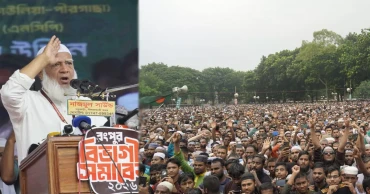
Fulfil promises or be compelled to implement referendum verdict: Jamaat Ameer
Jamaat-e-Islami Ameer Dr Shafiqur Rahman on Saturday urged the government to honour its promises to the people, warning that otherwise it would be compelled to implement the referendum verdict.
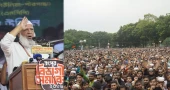
"Do not become a national traitor. Fulfil the promises made to the people and implement the referendum verdict," he said while addressing an 11-party alliance rally at the Rangpur District School Ground.
Jamaat Ameer alleges conspiracy involving interim govt to defeat 11 parties in last election
The rally was organised to press for the implementation of the Teesta Master Plan, effective steps to implement the referendum verdict, an end to border killings and push-ins, and measures to ease public suffering.
Jamaat-e-Islami Ameer Dr Shafiqur Rahman said attempts were being made to divert public attention from the demand to implement the referendum verdict.
"Many things are being said to distract us from the demand for implementing the referendum verdict in different ways. But we cannot betray the nation. We have promised the people that we will continue our struggle and ensure the implementation of the referendum verdict, InshaAllah," he said.
"We will not move an inch from this position. I am reaffirming this commitment here in Rangpur, the land soaked in the blood of Abu Sayed," he added.
Shafiqur said the country's youth had fought against inequality and corrupt politics to build a new Bangladesh. He claimed the referendum was held to bring about reforms.
He alleged that the current Prime Minister had pledged to vote for both his party and the referendum but had fulfilled only the first promise.
Referring to the Teesta issue, Shafiqur said the ruling party had earlier launched the "Jago Bahe Teesta Bachao" movement before the election, but no allocation had been made for the Teesta project in the current budget.
"We do not want empty words. We want practical action. If this government fails, the 11-party alliance, with the support and votes of the people, will form the government in the future and implement the Teesta project, InshaAllah," he said.
Speaking about the border situation, the Jamaat chief alleged that India was creating tension along the border while the government remained silent.
"The people are not only protesting, they are also standing beside BGB personnel to resist such actions. We salute these brave people," he said.
He criticised the government's silence over the issue and urged it to reflect the aspirations of the people instead of acting to please others.
Reiterating his demand, Shafiqur said there should be no further delay in implementing the Teesta project.
NCP Convener Nahid Islam said the government would fail to secure international support if it failed to maintain national unity and honour the commitments made after the mass uprising.
"If there is no national unity in the country, the government will not receive support from any country in the world. The IMF has already told them it will not provide any more loans. No country will cooperate with them if they betray the spirit of the mass uprising and the reform process," he said.
Nahid claimed that the mass uprising, the referendum, the reform agenda and the July Charter had created the political environment that brought the BNP to power.
He alleged that the BNP had since gone back on its commitments.
"The BNP has betrayed the referendum, the 31-point reform proposal, the July Charter and democracy," he said.
Leaders of the alliance components also spoke at the rally with Opposition Chief Whip and National Citizen Party (NCP) Convener Nahid Islam in the chair.
23 days ago
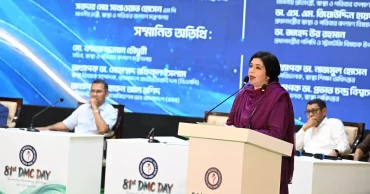
Zubaida Rahman hopes DMC will become South Asia's leading medical education hub
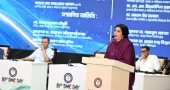
Prime Minister Tarique Rahman's wife and renowned cardiologist Dr Zubaida Rahman on Saturday expressed the hope that Dhaka Medical College (DMC) will emerge as one of South Asia's leading centres for medical education, research and innovation within the next 20-25 years.
Speaking as a special guest at the inaugural programme of DMC Day-2026, she said, "Twenty or twenty-five years from now, we want to see Dhaka Medical College as one of South Asia's finest centres for medical education, research and innovation."
A former student of the DMC's 43rd batch, Zubaida said the institution's next chapter should be marked by innovation, international collaboration, excellence in research and compassionate leadership.
"Today, we are spread across different parts of the world. Our workplaces may be different, but the roots of our identity remain at Dhaka Medical College Hospital," she said.
23 days ago
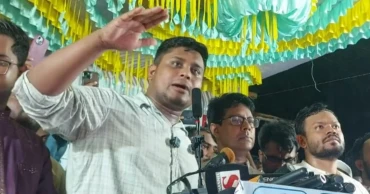
Politics must be freed from rogues: Hasnat
Hasnat Abdullah, Member of Parliament for the Comilla-4 constituency and chief organizer of the southern region for the National Citizen Party (NCP), stated on Friday night that politics must be freed from the clutches of rogue individuals.
"Politicians do not take any action against drug dealers. When commodity prices increase in the market, politicians remain silent," he remarked while addressing a road march and rally at Raipur upazila in Lakshmipur as the chief guest around 10:30 pm.
Hasnat Abdullah claimed that prior to elections, politicians collect extortion money from business syndicates to fund their campaign activities. "Consequently, when those same business syndicates increase the prices of essential goods against the public interest after the election, politicians wear wooden spectacles and remain busy solely singing the praises of the Prime Minister in parliament," he said.
The NCP leader also criticized the constraints faced within the legislature. "When we want to speak in parliament, the Speaker tells us that it is not Shahbagh Square, it is parliament. There is no need to think that we will only speak inside parliament. If you do not allow us to speak there, we will speak outside. We will speak near the people. You cannot keep us away from speaking."
24 days ago

ZRF stands by flood victims in Chattogram on Zubaida Rahman's directions
The Ziaur Rahman Foundation (ZRF) on Friday launched a humanitarian relief initiative to support flood-affected and waterlogged people in Chattogram following days of heavy rainfall that triggered floods and the deadliest landslides in years.
The programme was formally inaugurated in the afternoon through the distribution of food among stranded people near Sholoshahar Railway Station in Chattogram city.
ZRF forms 23-member Board of Directors
The relief operation was carried out under the direction of ZRF Vice President and eminent cardiologist Dr. Zubaida Rahman,a and under the overall supervision of the Foundation's Executive Director Dr. Farhad Halim Dona.
According to the foundation, food and medicines have been distributed among flood-affected people in different parts of Chattogram over the past five days as continuous rainfall left many areas inundated.
As part of the programme, emergency food and medical assistance were distributed at two locations in Chattogram on Friday.
24 days ago
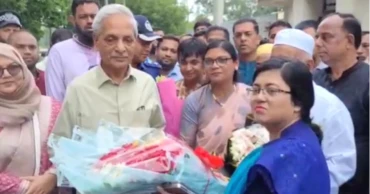
July Museum to open 'soon': Culture Minister
All necessary preparations have been completed and a new management committee has been formed to open the July Memorial Museum very soon, Cultural Affairs Minister Nitai Roy Chowdhury said on Friday.
The minister made the remarks while responding to reporters after inspecting the Mainamati Museum and the ancient archaeological site Shalban Vihara in Cumilla this morning.
Nitai Roy Chowdhury explained that the museum's original museum committee had become somewhat disorganized during the tenure of the interim government.
"A new committee has now been constituted, and a decision regarding this has been approved in parliament," he said.
He added that the official inauguration date and other details regarding the July Museum will be disclosed shortly.
Launching a sharp critique against the previous regime, the minister alleged that the erstwhile Awami League government had systematically destroyed the country's cultural heritage.
Chowdhury emphasized that the current government is working tirelessly to recover the country's lost heritage and preserve its cultural resources.
During his visit to the archaeological sites, the minister was accompanied by Cumilla-6 constituency Member of Parliament Monirul Haque Chowdhury, Director General of the Department of Archaeology Sabina Alam, and Cumilla Deputy Commissioner Rosey Akter, among other senior officials from various government departments.
24 days ago
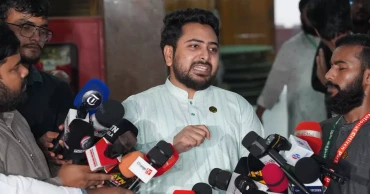
Hasina will return 'only to face execution of verdict': Nahid Islam
National Citizen Party (NCP) Chief Coordinator Nahid Islam on Friday said that former prime minister Sheikh Hasina would return to Bangladesh only for the execution of a death sentence verdict against her.
He made the remarks while addressing an event organised by the National SME Foundation marking International Micro, Small and Medium Enterprises (MSME) Day 2026 at the Diploma Engineers Institute in the capital's Kakrail. The programme featured an award ceremony and discussion session honouring successful small entrepreneurs.
Govt must implement referendum verdict to prove its commitment to July uprising: Nahid Islam
Speaking as the chief guest, Nahid Islam said, "Today we watched an interview where someone said that they are planning to return to the country in December. Our demand is that the country has already suffered from 16 years of destruction. Now we also want her to return, to face the execution of the death sentence verdict."
He said a verdict has already been delivered in Bangladesh and the government should bring back the "perpetrator of genocide" through proper diplomatic and legal processes and execute the verdict.
Replying to journalists after the event, Nahid said it is the responsibility of the Bangladesh government to decide how Sheikh Hasina will return, who she will come with, and whether she will surrender.
"The Bangladesh government will discuss the matter with Delhi. There is no other party involved here. The government will decide when and how to bring her back and how the verdict will be executed. She must be brought back with all necessary preparations," he said.
Nahid further said Sheikh Hasina's decisions are not solely personal decisions, claiming that she speaks according to what is permitted from Delhi.
"Whether Sheikh Hasina will return or not, how she will return, and whether she will face trial, all these issues depend on the diplomatic and political understanding between Dhaka and Delhi. Sheikh Hasina or the Awami League is no longer a political party," he said.
Saying that participants of the July uprising are prepared to face any situation, Nahid said, "Those who took part in the July mass uprising are politically prepared to deal with any situation. We are ready for any circumstances to protect the country's independence, sovereignty and economy."
He warned that if there is any attempt to create political tension centring on Sheikh Hasina or the Awami League, and if the government supports such efforts, the government itself will suffer the most.
"The people of Bangladesh, all forces involved in the July uprising, around 30,000 injured people and families of 1,400 martyrs — we are all prepared," he said.
Regarding the trial of the Awami League, Nahid said the government is considering bringing the party as an organisation under judicial proceedings.
"We believe this is the right path. The verdict against Sheikh Hasina has already been delivered. Now it has to be executed. If Sheikh Hasina returns to the country, she will return only for the execution of the death sentence verdict. Therefore, we also want the verdict to be implemented," he said.
Entrepreneurs from across the country attended the event, where officials of different organisations and entrepreneurs also delivered speeches.
24 days ago
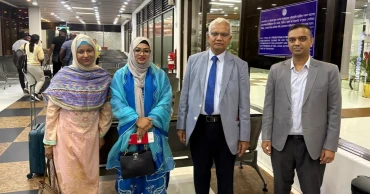
AZM Zahid Hossain leaves for Islamabad to attend OIC Women’s Affairs Conference
Women and Children Affairs Minister and BNP Standing Committee Member Prof. Dr. AZM Zahid Hossain left Dhaka for Islamabad, Pakistan, on Friday to represent Bangladesh at the Organisation of Islamic Cooperation (OIC) Women’s Affairs Conference.
He departed for Islamabad from Dhaka on Friday afternoon.
BNP Media Cell member Sayrul Kabir Khan confirmed the matter.
Zahid for integrated prevention measures to keep youth away from drugs
The ninth OIC Women’s Affairs Conference, focusing on women’s empowerment, protection of rights and socio-economic development of women in the 57 OIC member states, will be held in the Pakistani capital.
24 days ago