politics

Bangladesh facing a state of instability, warns Fakhrul
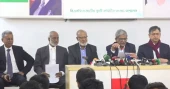
BNP Secretary General Mirza Fakhrul Islam Alamgir on Tuesday (November 18) bemoaned that Bangladesh is currently experiencing a state of instability.
"At this moment, we truly needed people like Barrister Moudud Ahmed. Because, we are living in a state of instability. Barrister Moudud was undoubtedly one of the people who could have shown us the way out, could have guided us out of this instability,” he said.
The BNP leader made the remarks while addressing the publication ceremony for the book “Demise of Democracy”, written by the late BNP leader Barrister Moudud Ahmed, at a city hotel.
Fakhrul also lamented that Moudud Ahmed had not been able to witness the fall of fascist Hasina, which he had sincerely wanted to see.
The BNP Secretary General recalled his time in jail with Barrister Moudud Ahmed in 2012, highlighting the late leader's absolute dedication to his writing.
“I remember in 2012 when we were first jailed together... almost 17 of us went to the old central jail on Nazimuddin Road... immediately upon entry, Barrister Moudud swiftly headed towards a specific room, intending to dedicate his entire time in prison to writing,” he said.
Fakhrul observed that Barrister Moudud would wake up very early and immediately start writing. “His wife would send him necessary papers, documents, and books from outside. I saw how meticulously and sincerely he practised this study of history.”
He appreciated Moudud as an objective writer of history, saying, "I feel that while there may be some criticism or controversy surrounding Moudud as a politician, I do not think there is much opportunity to criticise his work in writing history."
Fakhrul also shared a personal anecdote illustrating Barrister Moudud's fundamental commitment to democratic principles, even in the country's early days.
Read more: Fakhrul calls Hasina verdict ‘end of all dictatorships’ in Bangladesh
He mentioned that after independence, during the time of Sheikh Mujibur Rahman, a form of misrule and a one-party system was being established, marked by the formation of the Rakkhi Bahini.
The BNP leader recounted how, during that period, the Rakkhi Bahini arrested a communist leader from Khulna, Shanti Sen, along with his wife, sister-in-law, and another communist worker, Hanufa Begum. They were subjected to extreme torture for 21 days before being transferred to Dhaka Central Jail.
“Barrister Moudud Ahmed, then a young lawyer, filed a Habeas Corpus petition, and with Justice Debesh Bhattacharya presiding, he had them presented in court and secured their release,” he said.
Fakhrul stressed that such incidents proved Barrister Moudud Ahmed was, at heart, a sincere democratic leader and a democratic soul.
"Undoubtedly, both in this book and in his other writings, we will find this—that Barrister Moudud Ahmed was a thoroughly democratic political leader. Although he took various positions at different times for various reasons, if we look closely, we will see that he went there to find a way back to democracy. And I believe that this is probably the best way to evaluate him," he said.
He urged people, especially the younger generation, to read “Demise of Democracy,” believing it is highly necessary for those who have fought for freedom from "fascist rule."
Read more: BNP hails Hasina’s death sentence verdict, says justice served
11 months ago

World Bank delegation meets Jamaat Ameer
A World Bank delegation held a meeting with Bangladesh Jamaat-e-Islami Ameer Dr Shafiqur Rahman on Tuesday.
The meeting was held at the Jamaat chief’s office in Bashundhara, Dhaka.
The delegation was led by Jean-Denis Pesme, Country Director of the World Bank’s Dhaka Regional Office.
He was joined by Mehreen A Mahbub, Senior Economist at the WB Dhaka office, and MS Gaëlle Martin, Operations Manager.
From Jamaat, economist Dr Mizanur Rahman, former senior secretary Muhammad Safiullah, and the party chief’s adviser on foreign affairs Prof Dr Mahmudul Hasan were also present.
During the discussion, the two sides exchanged views on reforms and development of Bangladesh’s financial sector infrastructure, sustainable economic pathways, taxation issues and matters concerning the country’s social sectors.
11 months ago

Govt approves proposal to launch festive polls campaign with LED caravans
The government has moved to produce and disseminate promotional content to create a festive and participatory atmosphere ahead of the national election, with plans for a countrywide awareness campaign through an LED Activation Caravan.
Officials said the initiative includes producing TV commercials, video documentaries and other visual materials that will be showcased in 64 districts and 300 upazilas using mobile LED units.
The proposal received in-principle approval at a meeting of the Advisers Council Committee on Economic Affairs and the Advisers Council Committee on Government Purchase at the Secretariat on Tuesday with Finance Adviser Dr Salehuddin Ahmed in the chair.
Speaking to reporters after the meetings, the adviser said the campaign will feature a documentary aimed at encouraging voters to view the election as a celebration and to take part enthusiastically.
He said the documentary’s production will go through a competitive process as it is a professional assignment.
Meeting sources said preparations must begin in the fourth week of November.
The estimated cost of the project is Tk 25 crore.
Dr Salehuddin declined to share budget details during the briefing, saying it would be inappropriate to disclose figures before the formal procurement process is completed.
11 months ago
Home Adviser signals zero tolerance on unrest as election in February
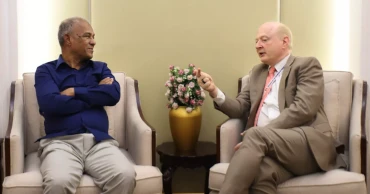
Home Affairs Adviser Lt Gen (retd) Md Jahangir Alam Chowdhury on Tuesday (November 18) said law-enforcement agencies are fully prepared to act against any attempt to destabilise the country, as the next national election is going to be held in the first half of February.
He made the remarks at a meeting with German Ambassador to Bangladesh Dr Rudiger Loltz at the Ministry of Home Affairs, where the overall law-and-order situation dominated the discussions.
The Adviser said law and order across the country remains normal, except a few isolated incidents reported following the verdict against Sheikh Hasina.
He warned that strict action will be taken against anyone attempting to disrupt public security in the coming days.
Read more: Fakhrul calls for resistance against ‘vested quarter’ ahead of Hasina verdict
Jahangir Alam said that the responsibility for announcing the specific polling date lies with the Election Commission, but emphasised that security agencies are ready to support the electoral process whenever required.
The meeting also focused on public reactions to the verdict, preparations surrounding the national election timeline, prisoner extradition, cybercrime, and other areas of cooperation.
Germany and Bangladesh are ‘tested friends’, the Adviser said, adding that he hopes bilateral relations will continue to strengthen.
Additional Secretary (Political) of the Home Ministry Khandaker Md Mahabubur Rahman and Anja Kersten, Deputy Head of Mission at the German Embassy, also attended the meeting.
Read more: Working with a clear commitment to create fair election atmosphere: CEC
11 months ago
BNP hails Hasina’s death sentence verdict, says justice served
BNP on Monday night (November 17) said it believes justice has been served through the International Crimes Tribunal’s verdict sentencing deposed Prime Minister Sheikh Hasina to death for crimes against humanity committed during the July-August Uprising.
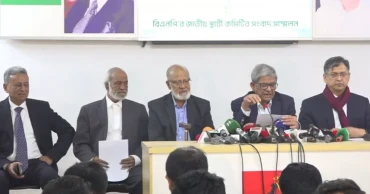
“After a long judicial process, following international standards, the International Crimes Tribunal has delivered its verdict against Awami fascist Sheikh Hasina and her two accomplices. This verdict has ensured justice,” said BNP Secretary General Mirza Fakhrul Islam Alamgir.
He shared the party’s formal reaction at a press briefing after a meeting of the BNP Standing Committee at the party chairperson’s Gulshan office.
Fakhrul said people at home and abroad had long called for accountability for the crimes committed under the previous regime.
“The people of Bangladesh and the international community have been waiting for justice for the brutal acts of murder, torture and genocide carried out by the fallen dictator and her associates,” he said.
Fakhrul said the tribunal handed down the maximum punishment under the law to Sheikh Hasina and former Home Minister Asaduzzaman Khan Kamal, while former Inspector General of Police Chowdhury Abdullah Al-Mamun, who cooperated with the court, received a reduced sentence of five years’ imprisonment.
Read more: UN rights body regrets Hasina’s death sentence, calls verdict important for victims
He said the BNP is firmly committed to the rule of law and urged the country’s people to stay alert in this regard.
Fakhrul said their party also demanded fair trials for all other accused persons in other cases.
“With this verdict, we believe the souls of those who were victims of enforced disappearances, killings and extrajudicial executions over the past sixteen years — and the thousands who were killed during the 2024 student uprising — will find some peace. The anger of their families will ease to some extent,” the BNP leader said.
The BNP Standing Committee meeting, chaired virtually by Acting Chairman Tarique Rahman from London, began at 8:30pm and continued for two hours.
BNP Standing Committee members Khandaker Mosharraf Hossain, Abdul Moyeen Khan, Amir Khosru Mahmud Chowdhury and Salahuddin Ahmed were also present at the press briefing.
Earlier in the day, the tribunal convicted Sheikh Hasina and two others in a case related to crimes against humanity committed during last year’s July–August uprising, in which more than 1,000 people were killed.
The ICT-1 sentenced Sheikh Hasina to death, while former Home Minister Asaduzzaman Kamal also received the death penalty. Former Inspector General of Police Chowdhury Abdullah Al-Mamun, who gave testimony as a state witness, was sentenced to five years’ imprisonment.
The court further ordered the confiscation of the properties of Sheikh Hasina and Asaduzzaman Kamal in favour of the state.
Read more: Awami League using looted money for acts of sabotage: Rizvi
11 months ago

NCP, Samajtantrik Dal get final registration from EC
The National Citizen Party and Bangladesh Samajtantrik Dal (Marxist) have received final registration from the Election Commission (EC).
As no objections were filed against the parties, the EC issued the official gazette on Monday.
With this, both parties will be able to contest the upcoming election with their own symbols.
The two parties have also been invited to join the EC’s dialogue scheduled for Wednesday.
However, the Bangladesh Aam Jonogon Party has not yet received final approval, as objections were submitted against it.
Bangladesh Election: EC to launch mobile app for postal balloting Tuesday
On November 4, the EC issued a public notice announcing its preliminary decision to grant registration to three parties.
It also fixed until November 12 inviting objections, if any, against the registration of the parties.
A total of 10–15 objections were filed against the Bangladesh Aam Jonogon Party, which is under further review.
11 months ago

Jamaat, allies drop ‘Jamuna agitation’ to focus on election: Salahuddin
BNP senior leader Salahuddin Ahmed on Monday said Jamaat-e-Islami and some of its like-minded allies have already stepped back from their ‘Jamuna-centred’ agitation and will soon turn towards election activities at the grassroots.
“Some groups have been creating unnecessary complications over the July National Charter. One side is still ‘examining’ the order before signing it, while another says the order alone reflects the people’s intent, yet they are raising fresh questions about the proposed referendum,” he said.
Speaking at a seminar, the BNP leader said Jamaat and seven other parties are now becoming election-oriented, stepping back from their earlier stance of pushing for proportional representation and a referendum before the national election.
“In another five to seven days, this movement will drift away from the Jamuna (Chief Adviser’s residence) and move towards the villages, close to the election. I heard yesterday that their movement is no longer at Jamuna. Whatever they may be thinking now, in the end they will have to stand for the election,” he said.
Salahuddin, a BNP Standing Committee member, said the people of Bangladesh struggled for 16 to 17 years to achieve a free environment where they can exercise their voting rights. “The entire nation is now waiting for this election so we can build a democratic system where dictatorship or fascism can never return.”
‘White Panel’, the pro-BNP teachers’ forum at Dhaka University, organised the seminar titled “Transforming the Future of Education in Bangladesh: A Strategic Roadmap” at the Nabab Nawab Ali Chowdhury Senate Building.
Salahuddin said a section of actors is questioning the legal validity of the interim government and approaching the High Court with the intention of creating chaos. “Their aim is to obstruct or delay the election so they can enjoy power. These people are not part of the government.”
He said the interim government appears committed to holding the national election in the first half of February.
“There is no situation yet to question its commitment… Some individuals inside the government may have different motives, but the Chief Adviser remains committed to holding the national election in the first half of February. Even if, for some reason, the election cannot be held at that time, we will still thank him,” the BNP leader added.
Salahuddin warned that attempts to impose legal questions around the July National Charter were unnecessary and politically motivated.
He said the referendum proposal was made only to seek the people’s sovereign consent, as some political actors still demanded legal guarantees even after signing the Charter.
The BNP leader said the state cannot run on emotion or “people’s intent” alone. “The country must run on the Constitution and the law.”
“Once a full caretaker government is in place, there will be no scope for any form of authoritarian rule to emerge in the country,” he observed.
Salahuddin said BNP’s reform proposals aim to ensure balance among all organs of the state, including a truly independent Election Commission and a fully independent judiciary.
“If every organ of the state works within its constitutional limits without interference, then no dictatorship or fascism will rise in the future,” he said.
The BNP leader criticised those who only want to control the executive branch as a way to prevent dictatorship, saying such ideas are flawed.
Salahuddin hails ICT verdict against Hasina, calls it a lesson against dictatorship
“The executive alone does not run the state. If the executive is not allowed to function, there can be no progress. Real stability comes only when every organ of the state works within its constitutional limits without interfering with each other. Only then will there be complete harmony among all organs of the state and a truly balanced system of governance. This is what we have proposed,” he said.
Salahuddin, however, said genuine state reform requires a change in mindset before anything else. “We must change our outlook first. Without a change in mentality, no matter how many laws we make, they will be of no use.”
11 months ago

Trial of Awami League must follow Hasina verdict: Nahid
National Citizen Party (NCP) Convener Nahid Islam on Monday said the party is happy with the death sentence handed down to former prime minister Sheikh Hasina in the case over last year’s July-August mass killings, but insisted that the Awami League as a political party must also be brought to justice.
Taking to reporters at the NCP’s central office on Monday, Nahid said the verdict is against “individual Hasina,” but the Awami League, as a political organisation, was also involved in the mass killings and other acts deemed crimes against humanity.
Hasina, Asaduzzaman sentenced to death; Mamun gets 5 years jail
“This verdict proves the party’s role. Our appeal to the tribunal is to begin the trial of the Awami League now. As a party, they are equally responsible. Hasina, as party chief and head of government, ordered and planned the mass killing,” he said.
Calling for the swift execution of the verdict, he said, “She must be brought back within a month and the sentence carried out. Our souls will find peace only when the execution is completed in her lifetime.”
Govt calls death sentences for Hasina, Asaduzzaman a historic verdict
Nahid said the families of those killed in July would get justice only when the verdict is executed. “We vowed to ensure justice on the day Abu Sayed was shot dead in Rangpur. Today the verdict has honoured that commitment,” he added.
11 months ago

Fakhrul calls Hasina verdict ‘end of all dictatorships’ in Bangladesh
BNP Secretary General Mirza Fakhrul Islam Alamgir on Monday said the verdict delivered against deposed Prime Minister Sheikh Hasina marks ‘the burial of all forms of dictatorship’ in Bangladesh.
“We believe that today’s verdict is not just a judgment on Sheikh Hasina’s crimes, but a burial of all forms of dictatorship on the soil of this country,” he wrote in a post on his verified Facebook page, reacting to the verdict of the International Crimes Tribunal-1 (ICT-1).
ICT verdict to uphold fair trial with international standards, hopes Fakhrul
Earlier in the day, the tribunal convicted Sheikh Hasina and two others in a case related to crimes against humanity committed during last year’s July–August uprising, in which more than 1,000 people were killed.
The ICT-1 sentenced Sheikh Hasina to death, while former Home Minister Asaduzzaman Kamal also received the death penalty. Former Inspector General of Police Chowdhury Abdullah Al-Mamun, who gave testimony as a state witness, was sentenced to five years’ imprisonment.
The court further ordered the confiscation of the properties of Sheikh Hasina and Asaduzzaman Kamal in favour of the state.
11 months ago

Salahuddin hails ICT verdict against Hasina, calls it a lesson against dictatorship
BNP senior leader Salahuddin Ahmed on Monday said the International Crimes Tribunal-1 (ICT-1) verdict convicting deposed Prime Minister Sheikh Hasina and two others delivers justice and serves as a warning against future dictatorship.
“Justice has been established today in the International Crimes Tribunal. But the sentences given to the accused—fascist Sheikh Hasina, Asaduzzaman Kamal and former IGP Mamun—are far too lenient compared to the crimes they committed,” Salahuddin said.
The BNP leader made the remarks while speaking to reporters after attending a seminar at Nabab Nawab Ali Chowdhury Senate Bhaban at Dhaka University.
Salahuddin, a BNP standing committee member, said the verdict also shows that any offender, no matter how powerful, must eventually face trial.
“This verdict is not enough compared to the gravity of the crimes, but it is not only a step towards justice — it is also an example for the future. It sends a message that no one can ever again establish a fascist regime in this country, no one can become a fascist ruler, and dictatorship must never return. This is a lesson for the future, not just a judgement for the past, and we must remember that,” he observed.
Earlier in the day, the International Crimes Tribunal-1 (ICT-1) convicted and sentenced Sheikh Hasina to death in a case concerning crimes against humanity committed during last year’s July–August uprising, which claimed more than 1,000 lives.
The tribunal also awarded former Home Minister Asaduzzaman Kamal the death penalty, while former Inspector General of Police Chowdhury Abdullah Al-Mamun, who became a state witness, was sentenced to five years’ imprisonment.
The court also ordered the confiscation of the properties of Sheikh Hasina and Asaduzzaman Kamal in favour of the state.
Salahuddin said there is no harsher punishment than what was awarded to Sheikh Hasina. “That is why the judges handed down the death penalty for one crime of Sheikh Hasina, and another death sentence for her separate crime… Asaduzzaman Kamal was sentenced to death, and IGP Mamun’s sentence was reduced to five years for his cooperation with the court.”
He said there are still many cases pending against the accused, and he hopes justice will be served in those as well.
“Through today’s verdict, several things are proven: no matter how strong a fascist dictator may be, or how long they exercise power illegally, they must eventually face trial. Sheikh Hasina tried to establish a one-party state and government, and to impose her rule through oppression, enforced disappearances, killings and inequality. But she could not succeed,” the BNP leader said.
He also recalled that the country’s people suffered greatly under long-term misrule and fascist rule. “The country’s development and progress have been delayed for many years. We do not want to look back anymore.”
Salahuddin said justice and the rule of law will be established in every sphere, and through this, in the days ahead, a strong democratic state will be built. That will be the Bangladesh of the future.
“We are committed to establishing that Bangladesh. We will achieve this through reforms. We will establish the rule of law, and create a balanced state system and government, Insha’Allah. We will continue our relentless struggle to build a state where every citizen receives justice. Today, a milestone has been achieved for it,” he added.
11 months ago