politics
Salahuddin slams govt for 7-day ultimatum on referendum consensus
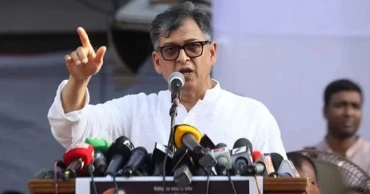
BNP Standing Committee member Salahuddin Ahmed on Saturday cautioned the interim government against ‘displaying excessive assertiveness’ by setting a seven-day deadline for achieving political consensus on the referendum issue, saying such an approach ‘does not befit’ a non-elected administration.
“The government must remember it is not an elected one. Your mandate extends only to holding a free and fair election, and BNP’s support will continue only up to that point,” he said while speaking at a programme organised by Jatiyatabadi Chhatra Dal in the capital.
Criticising the government for invoking other parties’ names to call BNP for talks, he said, “This is not a decent approach. Invite us directly if you truly want dialogue — don’t hide behind other parties.”
Salahuddin claimed that BNP maintains active political communication with all parties, including the National Citizen Party (NCP) and Bangladesh Jamaat-e-Islami.
Recalling that he was the first to propose the idea of a referendum, Salahuddin said turning it into a divisive issue is unacceptable. “The referendum must take place on the same day as the national election. Holding it separately would be costly and impractical.”
He also criticised the recent ultimatum issued by Islamist parties over the referendum issue, saying, “Whom are you warning? The government is already working in your favour. So, who are these ultimatums really for?"
BNP candidate Ershad Ullah airlifted to Dhaka for treatment
Salahuddin alleged that the chief adviser’s endorsement of the Consensus Commission’s recommendations represents a “clear conflict of interest,” claiming the commission’s report “fails to reflect months of discussion. The commission’s tenure has expired, and its members have already returned to the United States.”
On the upcoming 13th national election, Salahuddin said the schedule is likely to be announced in early December, giving about two months for campaigning.
“Within that time, all propaganda by fascists and their allies will collapse,” he said, urging Chhatra Dal activists to actively campaign for BNP candidates in their constituencies.
He also advised student leaders to develop their intellectual capacity by reading more books, saying, “The politics of the future will be based on merit, the era of empty rhetoric is over.”
11 months ago
Jamaat not involved in any activities that threaten election process: Azad
Bangladesh Jamaat-e-Islami’s Assistant Secretary General Hamidur Rahman Azad on Saturday said their party is not involved in any activities that threaten the election process.
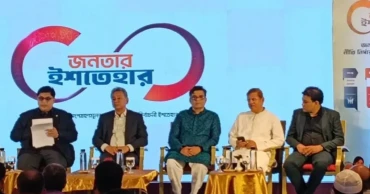
He made the remark while speaking at a seminar on how political parties can use technology to better reflect citizens' aspirations in their election manifestos, at a city hotel.
“We are proceeding positively. We are not, and never have been, involved in any activities that create unrest or threaten the election process. BNP is not willing to sit for talks with Jamaat, despite the latter’s call for dialogue. We don’t want politics to return to a fascist culture. However, if BNP calls for talks, we are ready to participate,” Azad said.
The Jamaat leader said, “Jamaat is not a pressure group, it represents people’s opinions and aspirations on the streets. We can accept differences in opinion, but not division. We expect the national election to be held in February, and we are moving forward with that hope.”
Azad described the proposed national referendum as an ‘acid test’ for the Election Commission, cautioning that holding the referendum and the national election on the same day could reduce voter turnout.
“In national elections, voters’ attention remains focused on parties and candidates. If both the election and referendum are held together, it could delay voting and prevent many from casting their ballots,” he said.
Referring to the implementation process of the July Charter, Azad said though the charter was signed with some notes of dissent, differences emerged only after the implementation process was presented.
Jamaat, allies submit memo to CA, warn of ‘Different Dhaka’ on Nov 11
He also criticised the Election Commission for `creating confusion’ over the timing of the referendum, saying, “Holding the referendum on election day could cause complications. The main focus of the national election should remain on victory, and any suspension of polling could create uncertainty regarding the charter.”
After the National Consensus Commission recommended the implementation of the July Charter, the BNP and Jamaat—once allies—took opposing stances over the timing of the referendum.
The interim government has urged the political parties to hold discussions and reach an understanding.
11 months ago

Constitution has no referendum provision, says Amir Khosru
Stating that there is no provision for a referendum in the Constitution, BNP senior leader Amir Khosru Mahmud Chowdhury on Saturday (8th November 2025) urged political parties to avoid heating up the streets over the issue in order to prevent political confrontation.
“The current interim government has been formed under the existing Constitution and has taken oath in accordance with it. There is no provision for a referendum in this Constitution,” he said.
Speaking at a dialogue titled ‘Jonotar Ishthehar (People’s Manifesto)’ at a city hotel, the BNP leader said if political parties want to introduce a referendum, they must first obtain a public mandate through the next election, place their proposals in Parliament, and only after those proposals are passed can a referendum be held.
“We may have many desires and demands, but not all of them can be met by sitting in Dhaka and trying to reach consensus through the Consensus Commission. The only real solution is to go to the people and resolve these issues through their mandate,” he said.
Khosru, a BNP Standing Committee member, said political parties should embrace the spirit of people’s mandate instead of imposing their ideas on others.
BNP candidate Ershad Ullah airlifted to Dhaka for treatment
“Everyone has the right to protest. But the people of Bangladesh no longer want confrontational politics. They want stability. Even when there is disagreement, people want to show respect for others’ views. That culture must take root among us,” he said.
The BNP leader urged parties not to rush to the streets over the referendum issue, warning that such moves could spark violence.
“You can’t keep going out into the streets over every issue. If one group stages a protest and another group then also takes to the streets in response, what will happen? There will be clashes. If the largest party mobilises on the streets and another large group protests against them, we will see violent confrontation,” he said.
Khosru said the people of Bangladesh did not remove autocratic ruler Sheikh Hasina only to drag the country back into confrontational politics. “We must be extremely careful. There are those who may try to link such actions to attempts to disrupt or delay the election.”
Fakhrul slams govt for creating situation to derail polls
Khosru said BNP initially announced a 27-point state reform proposal, which was later expanded to 31 points through consultations with 42 parties and people from all walks of life.
He said, “After publishing it, we sought public feedback nationwide and online, inviting suggestions to refine it further. People’s input is essential. Each party has its own philosophy and ideas, but no one should try to impose their views outside the agreed consensus.”
After long discussions under the Consensus Commission, political parties reached an agreement and signed a joint charter, he said, adding, “That consensus must be respected during implementation. No one can enforce their own version unilaterally.”
Khosru observed that after 15–17 years of Sheikh Hasina’s rule, an authoritarian mindset has developed, with some politicians believing only their opinions matter. “But democratic politics requires respect for differing views.”
He warned that attempts to bypass consensus or impose unilateral decisions could undermine democracy. “There is no scope to go beyond the consensus reached among political parties. If anyone wants to move beyond that, they should go to the people in the next election with their manifesto.”
Desperation to hold referendum before election raises public suspicion: Khosru
Referring to the recent killing in Chattogram, Khosru said it appeared to stem from internal feuds within a student organisation but suspected that those trying to delay or obstruct the upcoming election might be involved.
On BNP’s election preparations, he said the party’s forthcoming manifesto would focus on job creation, rural economic growth, education, healthcare, and investment reform.
“BNP has a clear plan to create 10 million jobs within 18 months. We have identified exactly where and how those jobs will be created,” he said, adding that the plan prioritises agriculture, manufacturing and services.
Khosru also pledged to invest up to 5% of GDP in education and healthcare, focusing on skills development and technology-based employment for the youth.
“We will not pursue mega projects by printing money or taking excessive loans. Our investment will focus on job creation and sustainable growth,” he said.
Read more: BNP’s Mosharraf calls on people to unite for fair Feb election
11 months ago

BNP candidate Ershad Ullah airlifted to Dhaka for treatment
BNP candidate from Chattogram-8 constituency Ershad Ullah, who was shot during an election campaign, has been airlifted to Dhaka for advanced medical treatment.
He was brought from Chattogram to Dhaka by a helicopter on Friday afternoon and later admitted to Square Hospital in the capital, said BNP Chairperson’s Assistant Secretary A.B.M. Abdus Sattar.
He said he visited Ershad Ullah on the directive of the party’s Acting Chairman.
He said he also spoke with the injured leader’s family and attending physicians regarding his condition.
Fakhrul slams govt for creating situation to derail polls
BNP Acting Chairman Tarique Rahman later inquired about Ershad Ullah’s health over the phone and expressed sympathy to his family.
Earlier, on Wednesday Ershad Ullah was injured in a gun attack by armed miscreants during electioneering at East Bayezid Hamzarbagh (Chalitati) area in Chattogram.
11 months ago

BNP suspends three Sitakunda leaders
BNP has suspended three of its leaders in Sitakunda, Chattogram, over allegations of violating party discipline.
In a press release issued on Friday, signed by party Senior Joint Secretary General Ruhul Kabir Rizvi, the BNP said the action was taken for activities that went against the party’s policies and organisational principles.
Fakhrul slams govt for creating situation to derail polls
Those suspended are Kamal Kader, convener of the Sitakunda upazila unit of BNP, Md Morsalin, former president of Chattogram North District Jatiyatabadi Swechchhasebak Dal, and Korban Ali Sahed, member secretary of the Sitakunda upazila unit of Jatiyatabadi Chhatra Dal.
Their primary membership and all positions at different levels of the party have been suspended until further notice, the release added.
11 months ago

Fakhrul slams govt for creating situation to derail polls
BNP Secretary General Mirza Fakhrul Islam Alamgir on Friday (7th November 2025) accused the interim government of creating a situation over the implementation of the July National Charter with the intention of delaying the national election.
Speaking before inaugurating the party’s rally marking National Revolution and Solidarity Day, Fakhrul said the people of Bangladesh will not accept anything other than holding the national election and the referendum on the July Charter on the same day in February next year.
“It is unfortunate that the interim government, which we fully supported, is now itself creating a situation so that the election may be disrupted,” Fakhrul said.
He alleged that some political parties pushing for a separate referendum are also conspiring to foil the national election.
Read more: Five BNP men wounded in Raozan gun attack
“If there is a referendum, it must be held on the same day as the election, and that election must take place in February 2026. Otherwise, the people of Bangladesh will not accept anything else,” the BNP leader warned.
Fakhrul said the BNP also extended full support to the interim government when it started working on reforms and preparing the National Charter.
“For almost a year, they worked on drafting the Charter. On October 17, in front of the Parliament, all political parties signed the document based on consensus reached through the National Consensus Commission,” he said.
The BNP leader, however, alleged that later, Consensus Commission Vice Chair Dr Ali Riaz, along with the Chief Adviser, came up with new proposals and recommendations that excluded several agreed points from the signed Charter.
He said it was unanimously agreed that if any party had objections, those objections or notes of dissent would be recorded in the final document. “But that was not done. We did not accept it and made our position clear in a press conference.”
Fakhrul said an adviser, at a recent press conference, stated that the advisory council had decided to give the political parties seven days to discuss among themselves and take a final decision on the implementation of the July Charter.
“Then what was the point of holding seven months of meetings under the National Consensus Commission, discussing every reform proposal and reaching an agreement to sign the National Charter? How could that happen? You spent so much money on this process, yet it brought no solution for the political parties.”
Read more: Prof Yunus orders security forces to hunt down attackers behind Ctg violence
Fakhrul also criticised Jamaat and some other political parties for putting pressure to hold the referendum before the election.
“Why should there be a referendum before the election? We have agreed to the referendum, but it must be held on the same day as the election. Holding two separate votes will cost a lot of money and disrupt the main national election,” he said.
Fakhrul said the spirit of November 7 is the spirit of democracy. “Our party, the BNP, was born through reform. Our leader, President Ziaur Rahman Bir Uttam, initiated that reform.”
He said BNP Acting Chairman Tarique Rahman has given the nation a new Magna Carta through his 31-point reform outline. “We will move forward with that goal. We will take part in the upcoming election and, Insha’Allah, by winning it, we will build a new Bangladesh.”
BNP Standing Committee Member Mirza Abbas also spoke at the event, accusing Bangladesh Jamaat-e-Islami of conspiring against the country’s independence and sovereignty.
He urged Jamaat to stop all conspiracies to delay the election and the restoration of democracy.
“Otherwise, BNP leaders and activists will resist them on the streets,” Abbas warned.
Later, thousands of leaders and workers of BNP’s Dhaka South and North units took out a massive rally in front of the party’s Nayapaltan central office on the occasion of National Revolution and Solidarity Day, commemorating the “civil-military uprising” of November 7, 1975.
The rally, which began around 4pm, ended at the Sonargaon Hotel intersection after parading through Shantinagar, Malibagh, Mouchak, Moghbazar and Bangla Motor.
Carrying portraits and posters of BNP founder Ziaur Rahman, Chairperson Khaleda Zia and Acting Chairman Tarique Rahman, participants waved the party’s flags and the ‘sheaf of paddy’, its election symbol.
Read more: BNP’s Mosharraf calls on people to unite for fair Feb election
11 months ago
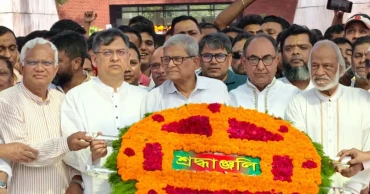
Efforts underway to destroy democracy: Fakhrul
BNP Secretary General Mirza Fakhrul Islam Alamgir on Friday alleged that various efforts are once again underway to destroy democracy in Bangladesh, following last year’s July–August mass uprising.
“After the mass uprisings in Bangladesh, there are now again different kinds of attempts and conspiracies to destroy democracy. At this moment, the Revolution and Solidarity Day inspires us to follow the path through which we can truly build a democratic and prosperous Bangladesh,” he said.
Speaking to reporters after paying homage to BNP founder and former president Ziaur Rahman at his grave, Fakhrul said the “civil-military uprising” of November 7, 1975, also inspires the party to work towards building a country where people’s right to vote and right to justice are guaranteed.
“Along this path, Bangladesh will move forward, BNP will move forward, and we are working towards that goal,” the BNP leader said.
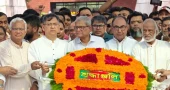
Earlier, Fakhrul, along with thousands of BNP leaders and activists, paid homage to Zia by placing wreaths at his grave in the capital’s Sher-e-Bangla Nagar, marking the National Revolution and Solidarity Day commemorating the “civil-military uprising” of November 7, 1975. They offered fateha at the grave of the party’s founder and prayed for the eternal peace of his departed soul.
BNP pledges to implement signed July Charter, urges parties not to block polls with new issues
Fakhrul described November 7, 1975, as a turning point in Bangladesh’s history when patriotic soldiers and mass people united to foil the conspiracies of hegemonic forces and freed Ziaur Rahman, the “proclaimer of independence,” from captivity, entrusting him with the responsibility of leading the nation.
He said Ziaur Rahman laid the foundation for Bangladesh’s political and economic transformation by restoring multi-party democracy, ensuring press freedom, guaranteeing the independence of the judiciary, and introducing a free-market economy.
During his short term in office, Fakhrul said Zia vigorously reformed the country’s political and economic systems, moved Bangladesh away from one-party BAKSAL rule to a multi-party democracy, opened up the media sector—which previously had only four newspapers—and strengthened judicial independence by establishing the Judicial Council.
He said Zia also set the groundwork for Bangladesh’s economic progress by launching the free-market system, encouraging industrial growth, and creating opportunities for overseas employment—initiatives that laid the foundation for today’s thriving garment industry and remittance-driven economy.
“This was how the journey towards a prosperous Bangladesh began. Ziaur Rahman laid the foundation for building a happy and democratic state,” the BNP leader said.
Fakhrul said Zia, a great leader born once in a generation, established the very basis of Bangladesh’s progress. “That is why this day is not only significant for BNP but also deeply important to all democratic-minded people across the nation.”
BNP is observing the National Revolution and Solidarity Day today with various programmes held with due respect.
Desperation to hold referendum before election raises public suspicion: Khosru
On this day in 1975, amid political unrest, soldiers and civilians together freed then Chief of Army Staff Ziaur Rahman from captivity in Dhaka Cantonment, paving the way for him to come to power.
On November 2, BNP announced a 10-day programme to mark the day extensively, aiming to highlight its true historical importance.
As part of the programmes, the party flag was hoisted atop all its offices across the country in the morning.
The BNP’s Dhaka South and North city units brought out a rally from the party’s Nayapaltan central office at 3:00pm. All district and upazila units of the party also held rallies on the same day.
11 months ago

BNP pledges to implement signed July Charter, urges parties not to block polls with new issues
BNP on Thursday reaffirmed its full commitment to implementing the “July National Charter”, signed on October 17, and urged all political parties not to raise new issues or create crises that could hinder the upcoming election.
The party made its position clear on the ongoing political debate over the July Charter’s implementation after a virtual meeting of its National Standing Committee, held with Acting Chairman Tarique Rahman in the chair.
A press release signed by BNP Secretary General Mirza Fakhrul Islam Alamgir announced the decisions made at the meeting.
It said that after long and detailed discussions in the National Consensus Commission, a national consensus was reached on several issues, including some with notes of dissent, which were signed in a historic ceremony at the South Plaza of the National Parliament on October 17.
“As a participant in that process, we embrace all the points stated in the Charter and remain committed to implementing them in accordance with the Constitution and the existing laws of the country,” the part said.
BNP to observe Nov 7 as ‘National Revolution & Solidarity Day’ Friday
It said the party would uphold the strength of the democracy-loving people against all ill attempts to create new questions or crises over the implementation of the unanimously adopted July National Charter, reaffirming its respect for the boundless sacrifices of the martyrs and the injured in the long 16-year relentless struggle for the restoration of democracy and in the mass uprising of July–August 2024.
The BNP also said it firmly believes that all political parties will remain united in implementing the consensus reached through long discussions and, under no circumstances, will raise new questions or create crises that could obstruct the election to be held for the restoration of democracy.
“BNP calls upon the interim government to take sincere and effective measures for the lawful implementation of all the issues agreed upon in the July National Charter and to ensure that the national election is held on time,” it added.
11 months ago

Tarique’s 31-point plan offers path to democratic revival: Ndileka Mandela
Ndileka Mandela, granddaughter of Nelson Mandela, said on Thursday that BNP Acting Chairman Tarique Rahman’s 31-point plan could help restore democracy and rebuild people’s trust in Bangladesh.
She made the remarks while speaking at a discussion titled 'Reimagining Bangladesh’s Political Future’ organised by The Dhaka Forum Initiative at a hotel in the capital.
The event was based on the book ‘Tarique Rahman: Politics and Policies’ and his BBC Bangla interview.
Ndileka Mandela, founder and CEO of Thembekile Mandela Foundation, said democracy is not a trophy to be won once but a discipline that must be practiced every day, with the inclusion of all women and men, the poor and the powerful, the majority and the minority.
“The book ‘Tarique Rahman: Politics and Policies’ does more than follow one figure. It invites debates about institutional accountability and the people’s will in modern Bangladesh,” she said.
Focusing on the 31-point charter, Ndileka described it as `an invitation to argue with purpose’, addressing issues such as protection of free speech and media, repeal of laws limiting basic freedoms, release of political detainees, anti-corruption measures and protection of minority rights.
“These are not opposition values or government values,” Ndileka said, adding, “They are societal guardrails— the rails that keep the democratic train from derailing.”
Emphasising women’s empowerment, she said democracy without women is ‘an unfinished sentence’.
Ndileka called for a renewed national contract with women, including zero tolerance for violence, investment in girls’ education, equal pay and leadership opportunities across public service, business, media and politics. “When women stand equally, nations stand taller,” she added.
Ndileka also spoke about the importance of climate justice, describing the global crisis as ‘climate apartheid’, where those least responsible for emissions pay the highest price.
“Bangladesh sits on the front line of floods, cyclones and displacement. Climate action is not an environmental chapter, it is a political test,” she said.
Citing her grandfather Nelson Mandela’s belief that ‘hope is a discipline’, Ndileka said Bangladesh’s journey toward fairness, equality and climate responsibility can help not only restore democratic reform but also renew democratic faith.
“True vision is turning personal struggle into public service, mobilisation into institutions, and momentum into rules that outlast any one leader,” she said.
Former Dhaka University Vice-Chancellor Professor Anwarullah Chowdhury presided over the discussion, while Jahangirnagar University Vice-Chancellor Professor Kamrul Ahsan conducted it.
BNP Standing Committee members Dr Khandaker Mosharraf Hossain and Amir Khasru Mahmud Chowdhury, BNP Chairperson’s Adviser and Chairman of the Foundation for Security and Development Studies Major General (retd) Fazle Elahi Akbar, Acting Chairman’s Adviser Mahdi Amin, National Democratic Movement (NDM) Chairman Bobby Hajjaj, Bangladesh Open University Pro-Vice Chancellor (Education) Professor Dil Rowshan Zinnat and North South University Political Science Professor Md Taufiqul Islam Mitil also spoke at the event.
A written statement from Professor Aliar Hossain of the Department of Leadership and Diplomacy at Northumbria University, London, was also read out at the programme.
11 months ago
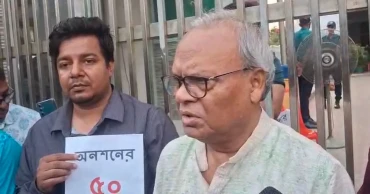
BNP expresses solidarity with Tarek’s hunger strike over his party's registration
BNP on Thursday expressed solidarity with Tarek Rahman, who has been observing a hunger strike in front of the Election Commission, demanding registration for his political party.
“The political party he formed definitely deserves registration. And for this just cause, he has been on hunger strike... I, on behalf of the Bangladesh Nationalist Party (BNP), express full solidarity with his hunger strike programme,” said BNP senior joint secretary general Ruhul Kabir Rizvi on Thursday afternoon.
Rizvi said Tarek’s political platform, Aam Janatar Dal, had applied to the Election Commission for registration, but the application was rejected.
“I’ve seen that less significant organisations have already been registered, but Tarek’s party was denied. I don’t understand why. Tarek has always spoken for the country’s interest, against aggression and for Bangladesh’s sovereignty,” he added.
Tarek rose to prominence in national politics as part of the Nurul Huq Nur-led Quota Reform Movement in 2018. He later joined the party Nur launched, Gono Odhikar Parishad. When the GOP split, Tarek ended up in the faction led by Dr Reza Kibria.
The two splinters eventually merged back, but Tarek at that point chose to launch his own new platform.
Several political parties, including Aam Janatar Dal, Bangladesh Justice and Development Party, and Moulik Bangla—continued their demonstration in front of Nirbachan Bhaban on Thursday as well demanding registration.
On Tuesday afternoon, Aam Janatar Dal member secretary Tarek Rahman began a 'hunger strike unto death' shortly after the announcement of the EC’s decision to award registration to three other parties—National Citizen Party (NCP), Bangladesh Samajtantrik Dal (Marxist), and Bangladesh Aam Janagan Party.
On Wednesday morning, Bangladesh Justice and Development Party and Moulik Bangla joined the demonstration with separate sit-in programmes at the EC gate.
The Election Commission on Tuesday night issued separate notifications over awarding registration to the three political parties --- NCP with the electoral symbol of ‘Water Lily Bud’, Bangladesh Aam Janagan Party with ‘Handshake’ symbol and Bangladesh Samajtantrik Dal (Marxist) with ‘Sewing Scissor’ symbol.
The Commission will finally recognise them as registered parties after settling any objections against them, that are received by November 12.
BNP to revoke power sector indemnity provision if voted to power: Rizvi
On March 10, 2025 the Commission invited applications from the new political parties by April 20 next to get registered ahead of the 13th parliamentary election.
The EC received applications from 143 parties seeking registration within the extended deadline of June 22 last. After scrutiny, 22 parties were shortlisted for field-level inquiries to verify the authenticity of their claims of fulfillment of registration conditions.
A total of 57 parties have so far obtained registration since the registration system was introduced before the 2008 general election. Later, five of them lost their status but two parties regained the registration. Besides, the registration of Awami League remains suspended.
11 months ago