politics

JCD leaders to visit graves of July martyrs, meet families Tuesday, Wednesday
Jatiyatabadi Chhatra Dal (JCD) leaders across the country will visit the graves of those killed in the July 2024 mass uprising, meet their family members and hand over gifts on Tuesday and Wednesday as part of the organisation's month-long programmes to mark the 2nd anniversary of the movement.
According to a press release issued by the student wing of the ruling BNP on Monday, leaders of its central committee, as well as all university, district, metropolitan, upazila, college and municipal units across the country, will visit the graves of the martyrs, offer prayers for the salvation of their souls and meet their family members.
During the visits, they will also hand over gifts from the government and BNP Chairman Tarique Rahman to the families of the martyrs.
JCD’s month-long programmes are aimed at commemorating the July mass uprising, paying tribute to the martyrs and the injured, preserving its historical legacy, recognising the contributions of all those involved, strengthening national unity against fascism and celebrating what JCD described as the student-people's victory over authoritarian rule.
7 days ago
Presidential election to be held on time: Mirza Fakhrul
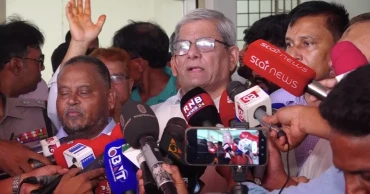
The presidential election will be held on time and candidates for the post will be nominated according to the party’s decision, LGRD Minister Mirza Fakhrul Islam Alamgir said on Monday.
He made the remarks while responding to journalists' questions after inaugurating the divisional office of the Bangladesh Rural Development Board (BRDB) in the Terminal area of Rangpur city.
Mirza Fakhrul said the BNP is a democratic political party.
“Through a long struggle, our party formed the government with a two-thirds majority in parliament with the love and votes of the people,” he said.
He said the BNP had fulfilled the responsibility of running the government not once, but five times. “Those who call BNP a fascist either lack knowledge or have developed such a mentality,” he added.
The minister also urged the Jamaat-e-Islami Ameer to read his party’s constitution carefully and assess how democratic the party is.
Regarding local government elections, he said the Election Commission would decide on the issue of educational qualifications for candidates. “If not by the end of this year, the local government elections will be held early next year,” he said.
Mirza Fakhrul also said the government has waived interest on agricultural loans up to Tk 10,000 to support agricultural development.
He added that the Prime Minister announced maximum allocation for agricultural development in the Rangpur region and that all necessary steps would be taken to make agriculture profitable.
Later, Mirza Fakhrul inaugurated a rural fair organised at the Rangpur Public Library grounds, visited different stalls and attended a community meeting at the Shilpakala Academy.
Rangpur Development Authority Chairman Shamsuzzaman Samu, Divisional Commissioner Shahidul Islam (NDC), Rangpur Range DIG Aminul Islam, Rangpur Deputy Commissioner Ruhul Amin, Rangpur Zilla Parishad Administrator Saiful Islam, government officials and employees, and BNP leaders and activists were present.
7 days ago

Jamaat calls for urgent action to ease gas crisis
Bangladesh Jamaat-e-Islami on Sunday urged the government and relevant authorities to take immediate and effective measures to resolve the ongoing gas crisis and provide relief to people suffering from the shortage.
In a statement, the party's Assistant Secretary General Advocate Zubair said people across the country are facing an acute shortage of LPG and CNG gas, which are essential commodities.
He expressed deep concern over widespread disruptions to daily cooking, CNG-powered transport services and industrial production due to the crisis.
He also said long queues of vehicles have been seen at CNG stations in the capital because of the severe gas shortage.
"As a result, millions of working hours of citizens are being wasted and public suffering has reached its peak. People believe that illegal gas connections, government mismanagement, irregularities and syndicates are largely responsible for the crisis," he said.
He demanded an investigation into whether any group was attempting to create an artificial gas shortage to increase prices and urged authorities to take effective measures to reduce public suffering.
Zubair also called for exploring and drilling new gas wells, ensuring extraction from existing wells and securing necessary LNG imports in line with public demand.
He alleged that the government is focused on securing the interests of unscrupulous groups rather than addressing citizens' basic needs, resulting in a severe gas crisis across the country.
8 days ago
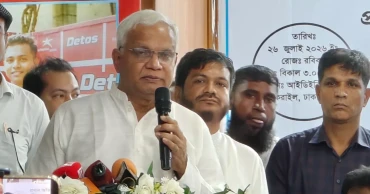
Remain vigilant against authoritarian resurgence: Minister Zahid Hossain
Social Welfare Minister Prof Dr AZM Zahid Hossain on Sunday said there would be no opportunity for the resurgence of authoritarianism in the country and everyone must remain vigilant so that no one can undermine people's rights.
"Remember, those who have fled are not sitting idle. They and their associates are still around. Those who thought they could return to power through conspiracies like in 2009 are also facing difficulties because people have crushed their conspiracies," he said.
Zahid Hossain, also BNP Standing Committee Member, made the remarks while addressing a discussion organised by Jatiyatabadi Technical Engineers Bangladesh (JTEB) at the Diploma Engineers Institution in Kakrail, Dhaka, to commemorate the sacrifices of the July Uprising martyrs.
State Minister for Chittagong Hill Tracts Affairs Barrister Mir Mohammed Helal Uddin and BNP Joint Organising Secretary attended the programme as a special guest.
The minister said some quarters may try in different ways to create divisions within the unity and aspirations of people.
"Bangladesh Nationalist Party is a party of people and a party that reflects the hopes and aspirations of people. BNP was formed to protect the rights of all people irrespective of religion, caste and identity," he said.
He said BNP has a history, a present and, under the leadership of Prime Minister Tarique Rahman, the future Bangladesh would be a humane and inclusive country where good governance would prevail and there would be no scope for injustice, corruption or authoritarianism.
"If we can build such a Bangladesh where people can live with dignity then the sacrifices of hundreds of martyrs and those who were forcibly disappeared including Sajjad, Selim Talukder and Engineer Atik, will not go in vain," he added.
Zahid Hossain said the January 7, 2024 election and subsequent movements eventually led to the mass uprising. "If you do not stand beside people and cannot earn their love and trust, the consequences are evident," he said.
The programme was chaired by JTEB Central Executive Committee President Engineer Md Fakhrul Alam and moderated by General Secretary Engineer ABM Ruhul Amin Akand.
Leaders and activists of the organisation along with family members of the July martyrs, were present at the event.
8 days ago
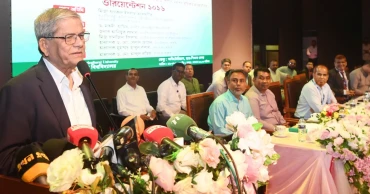
Don't just chase jobs, build agro-based industries: Fakhrul at SAU orientation
Local Government, Rural Development and Cooperatives Minister Mirza Fakhrul Islam Alamgir on Sunday urged newly admitted students of Sher-e-Bangla Agricultural University (SAU) to become entrepreneurs through agro-based industries, agribusiness and innovative agricultural ventures instead of focusing solely on government jobs.
He said the country's vast agricultural potential could create employment opportunities and make a significant contribution to the national economy if young people established themselves as entrepreneurs.
Speaking as the chief guest at the orientation programme for freshers at SAU in the capital, Fakhrul said studying agriculture does not necessarily mean pursuing only government employment.
"Students should create jobs not only for themselves but also for others by engaging in agriculture-related business, industry and technology-based initiatives," he said.
The minister said employment for educated youth remains a major challenge. Therefore, students should develop skills, creativity and innovative thinking rather than focusing only on obtaining academic degrees. He also stressed the need to transform agriculture into a modern, technology-driven and productive sector.
He said greater investment in agricultural research and wider dissemination of new technologies among farmers are essential to ensuring the country's food security. Students, teachers, researchers and farmers all have vital roles to play in advancing the agricultural sector, he added.
Referring to the current political situation, Fakhrul said various discussions and debates are natural in politics, especially in Bangladesh, but the country must continue moving forward.
"It may seem difficult, but moving forward is not impossible," he said.
"Now we have an opportunity. We should not waste it carelessly or push the country back into darkness. Rather, we must move it towards light through our collective efforts," he said.
The minister said Bangladesh is currently facing serious challenges related to energy shortages, including gas, electricity and fuel, compounded by disruptions to global supply chains caused by international conflicts.
Calling for constructive politics, Fakhrul said democracy requires political activities, but politics should always serve the country's interests rather than become negative.
He also encouraged graduates to think beyond traditional employment.
"When students complete their studies, they often ask for jobs. But where are the jobs? We need to create employment ourselves. Why don't we think about setting up agro-industries, agricultural farms or poultry farms? That will significantly reduce unemployment," he said.
Prime Minister's Education Adviser Dr Mahdi Amin also addressed the programme, saying the government has already begun working at the field level to increase the use of technology in agriculture and make farmers self-reliant.
He said Sher-e-Bangla Agricultural University has made significant contributions to agricultural production and research in Bangladesh and expressed hope that the new students would play an important role in building a food-secure nation.
The programme was chaired by SAU Vice-Chancellor Prof Dr Md Abdul Latif.
Among others, Madaripur-3 MP Anisur Rahman, reserved-seat MP Sanzida Islam, teachers, students and invited guests attended the event.
8 days ago
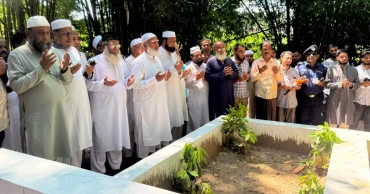
Jamaat Ameer stresses safe working environment for journalists
Opposition leader and Jamaat-e-Islami Ameer Dr. Shafiqur Rahman on Saturday called for ensuring a safe and secure working environment for journalists, saying justice for slain journalist Turab is essential to restoring public confidence in the rule of law.
He made the remarks while speaking to reporters after visiting the Fatehpur graveyard in Beanibazar, where he paid tribute at the grave of martyred journalist Turab, the then Sylhet bureau chief of Daily Naya Diganta and staff reporter of Daily Jalalabad.
He also offered special prayers for Turab's soul.
Following the visit, Dr. Shafiqur Rahman met Turab's family members and expressed deep condolences to his elder brother, Abu Azraf Md. Jabur, and other relatives.
He also inquired about their well-being.
Speaking to journalists, the Jamaat Ameer said the country had been freed from fascism through the sacrifices of martyrs, including journalist Turab.
"It is very unfortunate that even after two years, the trial over Turab's murder has not begun," he said.
He said failure to bring the killers to justice would discourage courageous and truth-seeking journalism in the future.
"The murder of journalist Turab must be tried without delay to ensure a safe working environment for journalists and restore people's confidence in the justice system," he said.
Dr. Shafiqur Rahman said his party would continue to strengthen its demand for justice for Turab.
"Turab's murder must be tried in the interest of justice. We do not know whether this government will ensure justice in his case. However, Turab will certainly receive justice on the Day of Judgment," he added.
8 days ago
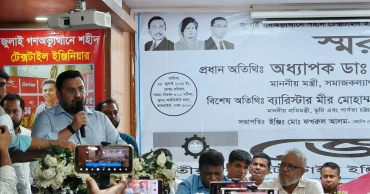
PM Tarique carries true spirit of July martyrs: Mir Helal
Chittagong Hill Tracts Affairs State Minister and BNP Joint Organising Secretary Barrister Mir Mohammed Helal Uddin on Sunday said the interim government dishonoured the July martyrs by favouring a particular group instead of upholding the spirit of the July mass uprising.
"But Prime Minister Tarique Rahman truly carries in his heart the sacrifices made by the martyrs of the July uprising and the anti-autocracy movement. Through his actions, he has been trying to ensure their proper dignity and recognition," he said.
He made the remarks while speaking as a special guest at a discussion organised by Jatiotabadi Textile Engineers Association of Bangladesh (JTEB) at the Institution of Diploma Engineers, Bangladesh (IDEB) in Kakrail in memory of the martyrs of the July mass uprising.
BNP Standing Committee Member and Social Welfare Minister Prof Dr AZM Zahid Hossain attended the programme as the chief guest.
Expressing disappointment over the role of the interim government, Mir Helal said, "It is with great regret that I say those who ran the government after the July mass uprising, and those under whose influence it was run, failed to uphold the July spirit, the emotions, aspirations and ideals of the uprising. By trying to favour a particular group, they dishonoured the July martyrs."
Recalling the victims of the uprising, he said the nation had witnessed the cries of grieving parents who lost their children, but added that similar pain had been experienced repeatedly over the previous 17 years under what he described as the fascist rule of Sheikh Hasina.
He said that thousands of BNP leaders and activists, along with members of its affiliated organisations, were brutally killed or forcibly disappeared during that period.
He said the sacrifices of thousands of people, including BNP leaders and activists and many others who opposed the previous AL government during its 17-year rule, also contributed to the July uprising.
Highlighting the lessons of the movement, Mir Helal said the country must be governed with patriotism, prioritising the interests of the people above all else.
He said Prime Minister Tarique Rahman has been working tirelessly under that principle, while senior cabinet members, ministers, state ministers, government officials and elected lawmakers are all striving to improve the lives of the people and establish Bangladesh as a prosperous, self-reliant and dignified nation.
"We are also working to improve the living standards of ordinary people, especially those at the grassroots," he added.
Referring to discussions held since the July uprising, Mir Helal said Tarique Rahman has remained behind the scenes, working day and night, just as he had done during the movement itself.
"He did not do this to claim credit or gain personal benefit. He genuinely believes that if we are to honour the sacrifices of all those who laid down their lives from 2009 until February 12, 2026, in the struggle to restore democracy, then there is no alternative to working for the development and prosperity of Bangladesh and its people," he said.
He recalled Tarique Rahman's slogan, "Bangladesh First," saying that every state policy and programme should be assessed based on whether it benefits the people and the country.
Calling for collective support for the families of the July martyrs, Mir Helal said the government would continue to stand beside them within the limits of available resources, while the BNP and its senior leaders would also extend support.
He concluded by saying that merely recounting stories of revolution would not improve the lives of the people.
"What the country needs is work for Bangladesh, work for its people, and work for its prosperity under the leadership of Prime Minister Tarique Rahman. Let us all move forward together for the development and prosperity of the country and its people," he said.
The programme was chaired by JTEB Central Executive Committee President Engineer Md Fakhrul Alam and moderated by General Secretary Engineer ABM Ruhul Amin Akand. Leaders and activists of the organisation, along with family members of the July martyrs, were present at the event.
8 days ago
Jatiya Party's expenditure exceeds income in 2025
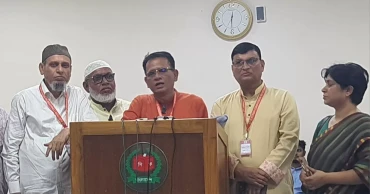
Jatiya Party, led by GM Quader, spent more than it earned during the 2025 calendar year, according to the party's annual financial statement submitted to the Election Commission (EC) on Sunday.
The party reported an income of Tk 1,82,04,270 and an expenditure of Tk 1,87,93,433, resulting in a deficit of Tk 5,89,163 for the year.
Jatiya Party Additional Secretary General Rezaul Islam Bhuiyan submitted the income and expenditure statement for 2025 to EC Senior Secretary Akhtar Ahmed at the Nirbachan Bhaban in Agargaon.
Speaking to reporters after submitting the statement, Rezaul said the party's total income until December 31, 2025, stood at Tk 18,204,270, while total expenditure amounted to Tk 1,87,93,433.
He said the party had Tk 2,66,55,164 in its bank accounts, including the previous year's balance, and after meeting all expenditures, the closing bank balance stood at Tk 78,61,731.
Rezaul attributed the higher expenditure to election-related activities during the year.
Referring to the upcoming local government elections, he said political parties will not be able to contest officially under party symbols this time, but Jatiya Party-backed candidates will participate independently with the party's support.
Asked about demand for legal action against former President Mohammed Shahabuddin following his recent resignation, the Jatiya Party leader said, “The question is whether he engaged in any unconstitutional activities while in office. If he did not, why should we demand his arrest? The Jatiya Party has no comment on the issue."
Responding to a question about the impact of divisions within the party following the fall of the Awami League government, he claimed that most leaders who had left the party since have returned under GM Quader's leadership.
Rezaul expressed optimism that Jatiya Party-backed candidates will perform well in the upcoming local government elections, particularly in certain regions, and said the previous split had not significantly affected the party's grassroots organisation.
He also hinted at the possibility of the party's divided factions being reunited in the future.
8 days ago
If BNP forgets July Movement, it will face consequences: Nahid Islam
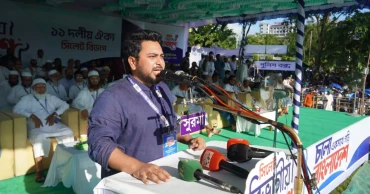
National Citizen Party (NCP) Convener Nahid Islam on Saturday warned that the Bangladesh Nationalist Party (BNP) would face consequences if it forgets the July Movement, the youth and the 1,400 martyrs.
“The impact of the July Movement is spreading from country to country. Unfortunately, our government is moving in the opposite direction,” he said.
Nahid made the remarks while addressing a divisional rally of an 11-party alliance at the historic Government Alia Madrasa ground in Sylhet on Saturday afternoon.
“We had hoped that the government that came to power through the July Movement would implement the people's verdict in the referendum. But we are saddened to see that the government is ignoring the people's verdict,” he said.
He alleged that BNP had forgotten about reforms after the election and was now only talking about constitutional amendments.
“Some corrupt intellectuals are saying that amendments are needed, not reforms,” he added.
Nahid warned that if reforms are not carried out, Prime Minister Tarique Rahman would not be able to maintain the trust created among the people.
“The Constitution must be reformed through the July Charter,” he said.
The NCP leader also alleged that BNP was politicising state institutions, including the Election Commission, which would hinder the progress the people expected.
“If the referendum result is not implemented, it will not be possible for us to support this government. If the July Charter and the referendum result are not implemented, this government will not be able to complete its five-year term,” he said.
He urged Tarique Rahman to take a decision on implementing the referendum result and the July Charter, warning that otherwise he would have to face the consequences.
9 days ago
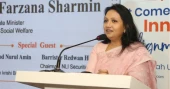
Families must provide children with basic, moral education: State Minister Farzana
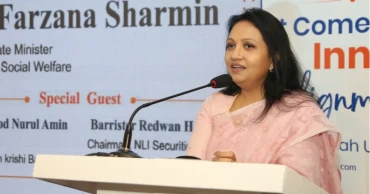
State Minister for Social Welfare Farzana Sharmin on Saturday said children must be prepared from an early age with basic education, moral values and lessons on positive change at the family level to help build a safe and livable Bangladesh for future generations.
She made the remarks while attending the “Premium Mind Master Retreat and MCA Convocation (July 2026)” organized by Wellbeing Bangladesh Foundation at the hotel InterContinental Dhaka.
Addressing the event as the chief guest, the state minister said social transformation requires collective efforts, and initiatives like the programme contribute to that goal. She praised the foundation’s work and acknowledged the contributions of mind coaches engaged in social welfare activities, along with Dr Mesbah.
Referring to the book Overthinking Detox Blueprint, Farzana Sharmin highlighted its message that “thoughts are not my enemies,” saying the idea encourages people to develop a new perspective on their thoughts.
She said thoughts are not necessarily linked to anxiety, and recognizing this can be a positive step towards personal growth.
The state minister also noted that people often pick up negative influences from abroad while overlooking positive lessons. Emphasizing the importance of mental health, she said self-confidence and self-awareness are essential for personal progress.
“The government alone cannot change the country. Everyone must become a partner in bringing change from their respective positions,” she said.
Bangladesh Krishi Bank Chairman Mohammad Nurul Amin and Supreme Court lawyer Barrister Redwan Hossain attended the programme as special guests.
The event was also attended by professionals from various fields, writers, master coaches and other participants.
9 days ago