business
Chicken, chickpeas, fruit prices jump in Dhaka before Ramadan
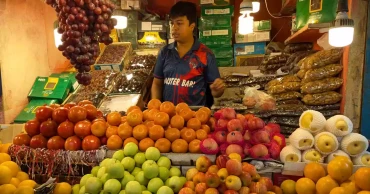
The prices of chicken, chickpeas and fruits have surged in Dhaka’s kitchen markets ahead of Ramadan, driven by rising demand and tighter supplies, adding fresh strain on household budgets.
A visit to several markets in the capital on Wednesday found that the prices of chickpeas, lentils, poultry and fruits have increased sharply over the past week, with traders blaming a sudden spike in demand while consumers alleged syndication.
At Karwan Bazar wholesale market, good quality chickpeas were selling at Tk 90-100 per kg. The same item was retailing at Tk 110-115 per kg in Shantinagar, Rampura and Badda, up from Tk 80-85 a week ago.
The prices of lentils also climbed. Anchor daal, which was selling at Tk 50 per kg earlier, is now priced at Tk 80. Coarse lentils used for preparing popular Ramadan snacks like onion fritters (piyaju) rose to Tk 120 per kg from Tk 90-100.
Chickpea traders said supply remains adequate but prices increased due to higher demand ahead of Ramadan.
Poultry prices witnessed a steep rise within days. Broiler chicken was selling at Tk 200-220 per kg, up from Tk 190-200 two days ago and Tk 160-170 a week earlier. Sonali chicken was retailing at Tk 340-360 per kg, compared to Tk 320-340 two days ago and Tk 280-300 last week.
“Wholesale prices of chicken increased from Tuesday evening, forcing us to adjust retail rates,” said Latif, a poultry trader in North Badda.
Local (deshi) chicken prices also rose by Tk 50-60 per kg to Tk 700-720 from Tk 650.
Beef prices increased to Tk 800 per kg in markets where it was previously sold at Tk 750. Mutton was selling at Tk 1,000-1,200 per kg depending on the market.
Consumers expressed frustration over the price spiral.
“Like every Ramadan, prices of almost all items have been raised before the fasting month begins. We have to spend an extra Tk 2,000-3,000 for monthly groceries,” said Afsana Akter at Rampura market.
Another buyer, Ehsanur Rahman, alleged manipulation. “If there were supply shortages, prices would have increased weeks ago. The sudden hike just before Ramadan indicates syndication.”
In the fruit market, prices of most fruits increased except dates, which dropped by Tk 50-100 per kg depending on variety.
Malta rose to Tk 300-350 per kg from Tk 250-260. Apples climbed to Tk 350-380 from Tk 280-320. Jujube increased to Tk 200-250 from Tk 120-180, while pomegranate prices jumped to Tk 520-580 per kg from Tk 450-480. Pineapple prices rose to Tk 80-100 per piece from Tk 60.
Fruit trader Suman in Motijheel alleged that a syndicate at the Badamtoli wholesale market influences prices every Ramadan.
Sirajul Islam, president of the Badamtoli Fruit Importers’ Association, said limited import permits given to a few traders create scope for syndication. Expanding import opportunities could help stabilise the fruit market.
Vegetable prices remained largely stable for beans, bottle gourd, turnip, radish and bitter gourd. However, cucumber, carrot and tomato prices increased to Tk 80-100 per kg from Tk 50-60 last week.
Lemon prices also climbed, with retail rates reaching Tk 120 per four pieces, while wholesale prices ranged between Tk 90-100 per four depending on variety.
Market insiders said monitoring has been relatively weak due to administrative focus on the 13th parliamentary elections, giving room to certain trader groups to raise prices of Ramadan essentials.
Vice-President of the Consumers Association of Bangladesh SM Nazer Hossain said stabilising the market during Ramadan is the first expectation from the new government. “The government must rein in prices at any cost.”
Meanwhile, Commerce Minister Khandaker Abdul Muktadir assured that the market would return to normal soon. “There is adequate stock of essential commodities for Ramadan and beyond. Supplies are normal and there is no reason to panic.”
Muktadir attributed the initial price hike to a one-off surge in demand, as many consumers purchase groceries for the entire month at once, creating temporary pressure on the retail market.
Describing Ramadan market management as a major test for the government, the minister said there is no alternative to ensuring stability in essential commodity prices during the holy month.
5 months ago

Stocks extend losing streak as DSE indices fall for third straight day
Stocks extended their downward trend for the third consecutive session at the Dhaka Stock Exchange (DSE) on Wednesday, with all major indices closing lower amid a decline in turnover and majority share prices.
On the fourth trading day of the week, the benchmark DSEX shed 51 points. The Shariah-based DSES dropped 11 points, while the blue-chip DS30 index lost 16 points.
Most listed companies ended in the red as 286 issues declined against 82 gainers, while 25 remained unchanged.
Stocks extend losing streak for second day as DSE slips, turnover eases
The turnover also fell, snapping a three-day streak of transactions exceeding Tk 1,200 crore. Total turnover at the DSE declined to Tk 935 crore on the day.
In the block market, shares worth Tk 13 crore from 40 companies were traded. GQ Ball Pen Industries Ltd topped the block trade list with shares worth Tk 2.5 crore changing hands.
Nearly 10 percent price appreciation placed Nahee Aluminium Composite Panel PLC at the top of the gainers’ chart, while Union Capital Limited plunged nearly 9 percent to become the day’s worst performer.
Meanwhile, the Chittagong Stock Exchange (CSE) also ended lower. Its benchmark CASPI index declined by 84 points.
At the CSE, 122 issues declined against 79 gainers, while 27 remained unchanged.
The turnover at the port city bourse, however, edged up slightly to around Tk 22 crore, compared to Tk 21 crore in the previous session.
Stocks edge up at DSE, CSE in early trading
Hami Industries PLC emerged as the top gainer at the CSE with nearly 10 percent price growth, while Union Capital Limited lost 10 percent to bottom the losers’ list.
5 months ago
Bangladesh to seek delay in LDC graduation, says Commerce Minister
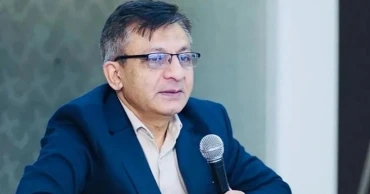
The newly elected BNP government will take necessary steps to defer Bangladesh’s graduation from the Least Developed Country (LDC) status, Commerce Minister Khandaker Abdul Muktadir said on Wednesday.
“We will take all required measures to defer the LDC graduation. Work on the matter has already begun,” Muktadir told reporters at the Secretariat on his first day in office.
Muktadir said the government is keen to defer the graduation timeline and will do whatever is necessary to that end.
The initiative has started from the Ministry of Commerce and will be pursued in coordination with the Economic Relations Division (ERD) to expedite required communications and procedures.
Referring to long-standing demands from business leaders, he said the issue is being treated with utmost priority. “There is no obligation to send a letter within the first week, but we have started working on it from today.”
On the recent slowdown in exports, the Commerce Minister said Bangladesh’s export basket remains highly concentrated, with nearly 85 percent of total exports dependent on a single product.
To overcome the vulnerability, Muktadir stressed the need for diversification by adding new products and expanding into new markets. The private sector, particularly investment-oriented entrepreneurs, will receive necessary support, he said.
Responding to concerns over the Ramadan market, Muktadir said stable supply would ensure market stability. “The government has adequate stocks of essential commodities for Ramadan and the subsequent period, with sufficient supplies also in the pipeline. There is no reason to panic over the Ramadan market.”
Explaining the price hikes of certain items at the beginning of Ramadan, he said the increases are often driven by a one-off surge in demand as consumers tend to purchase for the entire month at once, temporarily impacting the retail market. “Such impact does not last long.”
Finance Minister Amir Khosru unveils ambitious reform plan on day one
Asked whether the onset of Ramadan immediately after the new government assumed office poses a major challenge, Muktadir said managing the holy month will be a crucial test for the government. “We must meet people’s expectations. There is no alternative to success.”
On foreign and domestic investment, the minister noted that investment does not flow amid uncertainty. A stable environment is the primary condition for attracting investment, as investors seek assurance of expected returns against their capital and labour.
Muktadir said Bangladesh has a large working-age population, with around 2 to 2.2 million people entering the labour market every year. Investment stagnation over the past two to three years has created significant pressure and failure to address the situation promptly could pose serious risks to employment and the broader economy.
State Minister for Commerce Md Shariful Alam and Commerce Secretary Mahbubur Rahman were present.
Later, the Commerce Minister exchanged views with senior officials and heads of departments under the ministry.
5 months ago

Bangladesh gold price drops Tk 3,266 per bhori; 22-carat set at Tk 255,558
Gold prices in Bangladesh have declined again, with the rate of 22-carat gold reduced by Tk 3,266 per bhori to Tk 255,558, the Bangladesh Jewellers Association (Bajus) announced on Wednesday.
In a morning statement, Bajus said the price of pure gold (tejabi gold) fell in the local market, prompting a fresh adjustment that takes immediate effect.
Under the revised rates, 21-carat gold will be sold at Tk 243,953 per bhori (11.664 grams), 18-carat at Tk 209,077, and traditional-method gold at Tk 171,111 per bhori.
The selling price of gold will include a mandatory 5 percent government VAT and a minimum 6 percent making charge set by Bajus. However, making charges may vary depending on design and quality.
On Tuesday morning, Bajus had cut the price of 22-carat gold by Tk 2,216 to Tk 258,824 per bhori. With the latest adjustment, gold prices have declined by a total of Tk 5,482 per bhori in two consecutive revisions.
So far in 2026, gold prices have been adjusted 30 times in the domestic market — raised on 18 occasions and reduced 12 times.
Gold price drops by Tk 2,216 per bhori in Bangladesh
Meanwhile, silver prices remain unchanged. A bhori of 22-carat silver is currently selling at Tk 6,357, 21-carat at Tk 6,065, 18-carat at Tk 5,190, and traditional silver at Tk 3,907.
Silver prices have been adjusted 17 times this year, including 10 hikes and seven cuts.
5 months ago
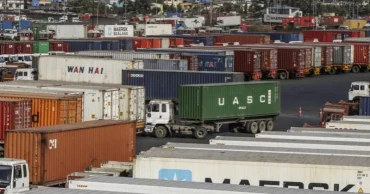
India trade pacts lift profile, challenges remain
A series of landmark trade agreements signed this year has pushed India firmly onto the global trade map, though experts warn the deals alone will not be enough to drive a sustained surge in exports.
Even before March, New Delhi has concluded major trade pacts with the European Union and the United States, moves being described by officials as historic. Despite concerns that the interim agreement with Washington is skewed in favour of the US, the deals mark India’s 10th free trade agreement (FTA) since 2014 and signal a clear shift away from years of protectionism.
Building on this momentum, India has also agreed to begin negotiations with the six-nation Gulf Cooperation Council, which accounts for about 15 percent of its global trade.
Trade experts say the direction is positive but caution that FTAs are not a cure-all. India has traditionally made limited use of such agreements, with utilisation rates hovering around 25 percent, far below the 70 to 80 percent seen in advanced economies.
Analysts point out that many Indian exporters, particularly smaller firms, struggle with complex paperwork, compliance costs and limited understanding of FTA provisions, often wiping out the benefits of lower tariffs.
Data from consultancy firms show that while India’s exports to FTA partner countries grew moderately in recent years, imports rose much faster, highlighting weaknesses in leveraging preferential market access. More recent agreements with countries such as Australia and the United Arab Emirates have shown better results, helped by improved trade infrastructure and faster dispute resolution.
Still, challenges remain significant. Exporters cite strict Rules of Origin requirements, high documentation costs, non-tariff barriers and inconsistent customs practices as major obstacles. Under the India-EU deal, exporters must self-certify product origin, shifting legal and financial risks directly onto businesses.
Beyond technical reforms, experts stress that India must address deeper competitiveness issues to match Asian peers such as Vietnam and Bangladesh. Faster logistics, predictable customs clearance, reliable infrastructure and lower transaction costs are seen as critical.
While India has made progress in high-tech manufacturing, including assembling smartphones for global brands, it continues to lag in labour-intensive sectors like textiles, footwear and furniture.
With the trade deals now signed, analysts say the real test lies in execution. Streamlining regulations, cutting logistics costs and creating a more export-friendly ecosystem will be essential if India is to attract investment, generate jobs and reach its ambitious target of $1 trillion in annual exports.
With inputs from BBC
5 months ago
BSEC extends lock-in on Asiatic Labs shares over IPO fund misuse
Bangladesh Securities and Exchange Commission (BSEC) has extended the lock-in on shares held by sponsors, directors, and placement shareholders of Asiatic Laboratories Limited due to underutilisation of IPO funds and a controversial real estate plan.
The company raised Tk 95 crore through an IPO in 2022 for business expansion, including machinery, factory construction, and loan repayment, but has yet to fully use the proceeds.
In September 2025, it disclosed plans for a 32-storey building without feasibility studies or regulatory approvals from RAJUK, a move inconsistent with its Memorandum of Association.
IPO rulebook overhauled as BSEC hopes to attract ‘good companies’ in 2026
Following a Dhaka Stock Exchange inspection and considering investor protection, BSEC extended the lock-in for three years from expiry or until the building’s commercial operation and occupancy certificate, whichever comes later.
5 months ago

Islami Bank remittance clients to get 20 motorcycles
Islami Bank Bangladesh PLC will provide a motorcycle through a digital raffle draw on every banking day (Sunday-Thursday) for sending cash remittance through Ria Money Transfer.
Remittance recipients will also get a key ring as a common gift. This offer will
continue from 19 February to 18 March, 2026, on the occasion of Holy Ramadan.
Md. Omar Faruk Khan, Managing Director of the Bank, inaugurated Islami Bank- Ria
Nabil Mustafizur Rahman to be appointed MD of Sammilito Islami Bank
Money Transfer Remittance Fiesta, as the chief guest on Tuesday, was held at
Islami Bank Tower.
Dr. Emil Ruban, Managing Director & Senior Regional Director
of India and South Asia, Ria Money Transfer, spoke at the event as the guest of honor.
Md. Altaf Hossain, Engr. Mohammad Jamal Uddin Mazumder and Dr. M Kamal
Uddin Jasim, Additional Managing Directors addressed the program as a special guest.
Md. Rafiqul Islam, Deputy Managing Director Presided over the program while
Standard Bank rebranded as ‘Standard Islami Bank’
Rashedul Islam Talukder, Country Manager of Ria Money Transfer, Bangladesh, also spoke at the program, and Mohammad Shahadat Hossain, head of overseas banking.
5 months ago

Stocks extend losing streak for second day as DSE slips, turnover eases
Stocks at the Dhaka Stock Exchange (DSE) extended their losing streak for a second straight session on Tuesday, with prices falling for most companies amid a slight decline in overall turnover.
On the third trading day of the week, the benchmark DSEX slipped 18 points, while the Shariah-based DSES shed 1 point and the blue-chip DS30 slipped 9 points.
Market breadth remained negative as 238 issues declined against 131 gainers, while 27 securities closed unchanged.
Despite the easing trend, the turnover stayed above Tk 1,200 crore for the third consecutive session. The total transactions amounted to Tk 1,222 crore, down from Tk 1,257 crore in the previous session.
In the block market, shares worth Tk 17 crore of 40 companies were traded, with Fine Foods Limited accounting for the highest turnover at Tk 1.5 crore.
AB Bank PLC topped the gainers’ list on the DSE, rising nearly 9.5 percent, while Bay Leasing and Investment Limited sank about 9.5 percent to finish at the bottom.
Stocks edge up at DSE, CSE in early trading
The bearish sentiment also weighed on the Chittagong Stock Exchange (CSE), where the overall CASPI index fell 13 points.
At the port city bourse, 110 issues declined against 94 gainers, while 27 remained unchanged.
The turnover, however, improved to Tk 21 crore from Tk 13 crore a day earlier.
Prime Finance and Investment Limited emerged as the top gainer on the CSE with a 10 percent rise, while ICB AMCL First Agrani Bank Mutual Fund lost 10 percent to end as the worst performer.
5 months ago

2,100 tonnes of rice imported through Benapole Port
A total of 2,100 metric tonnes of non-basmati coarse rice have been imported through Benapole port, over six working days.
The rice consignments, brought in through 15 separate shipments, entered the port’s 31 No. transshipment yard, said Benapole Port Director Shamim Hossain on Tuesday.
According to port sources, the imports were made between Jan 27 and Feb 17.
Earlier, 6,128 metric tonnes of rice were imported through the port during the four months from August to November last year.
Benapole Port on high alert after import of 125 tonnes of MGMCL
On January 18, the government allowed 232 importing firms to bring in 2,00,000 metric tonnes of rice, setting March 3 as the deadline for completing the imports and marketing the rice in Bangladesh.
The importing firm, Haji Musa Karim & Sons, brought the rice from India, while C&F agent M/s Bhuiya Enterprise is handling the clearance process.
Abdus Samad, proprietor of Haji Musa Karim & Sons, said they imported 2,100 metric tonnes of coarse rice from India in 58 trucks over six days.
5 months ago
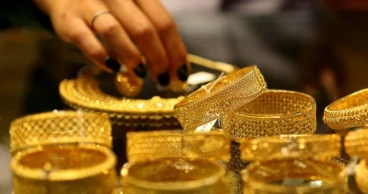
Gold price drops by Tk 2,216 per bhori in Bangladesh
The price of gold in Bangladesh has been reduced by Tk 2,216 per bhori, with the new rate for 22-carat gold set at Tk 258,824 per bhori (11.664 grams), Bangladesh Jewellers Association (BAJUS) announced on Tuesday.
In a morning notification, BAJUS said the price of pure gold (tejabi gold) declined in the local market, prompting the adjustment.
The revised rates have come into effect immediately.
Under the new pricing structure, 21-carat gold has been fixed at Tk 247,044 per bhori, while 18-carat gold will cost Tk 211,760 per bhori.
The price of gold produced under the traditional method has been set at Tk 173,327 per bhori.
The selling price of gold must include a mandatory 5 percent government VAT and a minimum 6 percent making charge set by BAJUS. However, the making charge may vary depending on the design and quality of the jewellery.
On February 9, BAJUS had increased the price of 22-carat gold by Tk 2,216 per bhori to Tk 261,040.
Gold Price Shock: Tk16,330 surge hits Bangladesh overnight
So far in 2026, gold prices have been adjusted 29 times in the local market—raised on 18 occasions and reduced 11 times.
Despite the fall in gold prices, silver rates remain unchanged. Currently, 22-carat silver is being sold at Tk 6,357 per bhori.
The price of 21-carat silver stands at Tk 6,065 per bhori, 18-carat silver at Tk 5,190 per bhori, and traditional silver at Tk 3,907 per bhori.
5 months ago