business

Govt setting up incubation centers to develop startup ecosystem: Faiz Ahmad Taiyeb
Faiz Ahmad Taiyeb, Special Assistant to the Chief Adviser, said on Friday that the objective of establishing IT Training and Incubation Centers is to foster a robust startup ecosystem across the country.
Taiyeb, who holds the portfolio for the Ministry of Posts, Telecommunications, and Information Technology, made the remarks during the inauguration of an IT Training and Incubation Center in Meherpur. The project was implemented by Bangladesh Hi-Tech Park Authority under the ICT Division.
Addressing the ceremony, Taiyeb emphasized that for an emerging district like Meherpur, creating a skilled workforce and technology-based employment is vital for sustainable development.
"This center will serve three major purposes. "First, it will provide infrastructure to help local entrepreneurs and small IT businesses evolve into successful startups. Second, it will train the youth in freelancing, e-commerce, and ICT to ensure quality employment. Third, it will bridge the gap between academia and industry by connecting universities with the commercial sector," he noted.
The newly inaugurated center is equipped with state-of-the-art facilities, including:
Modern Computer Labs: For hands-on technical training.
Startup Spaces: Dedicated areas for incubation and business growth.
150-Seat Auditorium: For seminars, workshops, and large-scale training sessions.
Taiyeb confirmed that all certifications provided by the center would be verified by the National Skills Development Authority (NSDA), ensuring that graduates receive professional recognition both at home and abroad.
Regarding financial support for new ventures, Taiyeb highlighted that local entrepreneurs can now apply for government startup funds and investment through ‘Startup Bangladesh Limited’ and the ‘iDEA Project’ directly from Meherpur. This move is intended to decentralize the IT sector and reduce the historical dependency on Dhaka.
Monir Haider, Special Assistant to the Chief Adviser, was present at the event as a special guest.
The event was presided over by Mohammad Saiful Hassan, Member (Joint Secretary) of the Bangladesh Hi-Tech Park Authority. The inauguration began with the launch of a "Specialized ICT Training for College Teachers" workshop, followed by a ceremonial tree-planting program on the center's premises.
Distinguished attendees included Dr. Sheikh Bakhtiar Uddin, Vice-Chancellor of Meherpur University; Dr. Sayed Enamul Kabir, Deputy Commissioner of Meherpur; and Ujjal Kumar Roy, Superintendent of Police, alongside other government officials.
6 months ago

Gold price jumps Tk 6,299 per bhori in Bangladesh after brief cut
Gold prices in Bangladesh surged again on Saturday noon, rising by Tk 6,299 per bhori (11.664 gram), barely hours after a reduction announced on Friday night, according to the Bangladesh Jewellers Association (BAJUS).
After six consecutive hikes, BAJUS had lowered the price of gold by Tk 3,149 per bhori on Friday night. However, the jewellers’ body reversed course on Saturday, setting a new record high for gold prices in the country.
In a press release, BAJUS said the price of 22-carat gold has been increased by Tk 6,299 to Tk 255,617 per bhori—the highest ever in Bangladesh. The new rate will take effect immediately.
BAJUS said the adjustment was made considering the rise in the local market price of tejabi gold (pure gold) and the overall market situation.
Under the revised rates, the price of 21-carat gold has been fixed at Tk 244,011 per bhori, 18-carat gold at Tk 209,136 per bhori, while gold under the traditional method will sell at Tk 171,869 per bhori.
In addition to the selling price, buyers will have to pay a government-mandated 5 percent VAT and a minimum 6 percent making charge set by BAJUS. The making charge, however, may vary depending on the design and quality of jewellery.
BAJUS last adjusted gold prices on January 22, when it reduced the price of 22-carat gold by Tk 3,149 per bhori, setting it at Tk 249,318.
With the latest revision, gold prices have been adjusted 12 times in the domestic market so far in 2026—raised nine times and reduced three times.
In line with the hike in gold prices, silver prices have also been raised. The price of 22-carat silver has been increased by Tk 525 per bhori to Tk 6,882, marking the highest silver price in the country’s history.
Meanwhile, the price of 21-carat silver has been set at Tk 6,532 per bhori, 18-carat silver at Tk 5,599 per bhori, and silver under the traditional method at Tk 4,199 per bhori.
6 months ago

Titas Gas to face low pressure for 24 hours from Saturday
Titas Gas Transmission and Distribution PLC on Friday said that gas supply across all its supply areas will remain under low pressure for 24 hours due to reduced LNG supply.
In a media release, the state-run company said low gas pressure will prevail in Dhaka and all Titas-affiliated areas from 12:00pm on Saturday to 12:00pm on Sunday.
The disruption is being caused by a temporary reduction in gas received from LNG sources due to maintenance work at an LNG terminal, the statement said.
Titas apologised to consumers for the temporary inconvenience.
Alongside gas supplied from local gas fields, Titas distributes LNG-based gas from the Maheshkhali LNG terminals in Cox’s Bazar. There are two floating storage and regasification units (FSRUs) at Maheshkhali, though Titas did not specify which terminal is undergoing maintenance.
Titas supplies gas to most districts in Dhaka and Mymensingh divisions. As a result, consumers in these areas are expected to face disruptions during the 24-hour low-pressure period.
Titas low pressure chokes gas supply across Dhaka; residents struggle
Meanwhile, gas consumers have been facing severe supply constraints for several months due to pipeline leakages, valve failures and maintenance-related issues.
The shortage of LPG cylinders in the market has forced many city residents to rely on electric cookers or firewood for daily cooking.
6 months ago
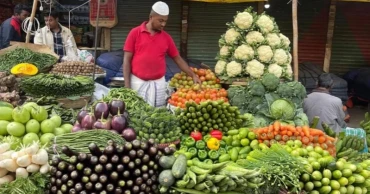
Plenty on fields: Why vegetables so expensive in Dhaka?
Winter has brought a bumper vegetable harvest across the country, supported by smooth transportation and abundant supply, yet Dhaka’s consumers are seeing little relief at the markets.
Visits to several city markets showed that vegetable prices remain stubbornly high, even as farmers complain they are barely recovering production costs, raising fresh questions about possible market manipulation and the role of middlemen in the supply chain.
Dhaka’s kitchen markets are actually awash with winter vegetables, but prices show little sign of easing even in what is traditionally the cheapest season of the year.
While consumers continue to pay inflated rates, farmers across producing districts say they are selling their produce at throwaway prices, pointing to a widening gap between farm-gate and retail prices driven largely by middlemen.
Major wholesale markets in the capital receive winter vegetables from Bogura, Naogaon, Chuadanga, Sirajganj, Rajshahi, Jashore and other districts.
Traders say more than 50 truckloads of vegetables arrive in Dhaka every day from Bogura alone during the peak season.
Despite ample supply, winter vegetables costly in Lalmonirhat
Wholesalers at Karwan Bazar said supply is higher than last year, yet prices have not come down. By late January, wholesale prices were on average Tk 20 per kg higher than the same period a year ago.
“Last year at this time, cauliflower sold at Tk 15–20 per kg wholesale. This year it is Tk 30–35,” said Latif Munshi, a vegetable trader at Karwan Bazar, adding, “We are buying at higher prices from upstream traders, so we have no option but to sell at higher rates to retailers.”
Anwar Mia, a trader at the Swarighat wholesale market, echoed the sentiment. “Prices of cabbage, tomato, cucumber, carrot, bottle gourd—almost all winter vegetables—are higher than last year. There is no supply shortage, but increased intermediary costs are pushing prices up.”
The picture is starkly different at the production level.
In Bogura’s Sherpur upazila, vegetable grower and trader Naim Meyajan said he cultivated cauliflower on nearly 10 bighas of land. While early varieties fetched good prices between September and November, prices collapsed once peak harvesting began in December.
“Wholesalers bought fields early at Tk 80,000 to Tk 100,000 per bigha against a production cost of around Tk 50,000. But when the main harvest started, there were no buyers for fields. I had to take cauliflowers to market where prices fell to Tk 5 per kg,” he said.
Farmers at Fulbari and Mohasthan haats in Bogura said prices of most vegetables started falling sharply by late December.
In many cases, they were forced to sell produce at an inflated ‘maund’ calculation—60 kg instead of the standard 40 kg—yet still failed to recover costs.
Early winter vegetable cultivation gains momentum across Khulna division
In Dhaka, however, prices moved in the opposite direction. Cauliflower that sold at Tk 25 per piece in late December is now priced at Tk 40–50 depending on size. At Shantinagar kitchen market, cabbage is selling at around Tk 50 per piece.
By contrast, in Sirajganj’s Ullapara upazila, farmer Bhobesh Ghoshal said he sold cabbage at Tk 6–10 per piece in January. “Those same cabbages are being sold in Dhaka at Tk 20 or more”.
A visit to the Jatrabari wholesale hub shows cabbage trading at Tk 25–30 per piece wholesale, before reaching consumers at Tk 50. For key winter vegetables, the price gap between farmers and consumers ranges from Tk 30 to Tk 40 per unit.
Tomato prices show an even sharper disparity. Early varieties arrive in Dhaka from Chattogram, while seasonal tomatoes mainly come from Rajshahi. In both phases, retail prices in Dhaka have ranged between Tk 100 and Tk 150 per kg.
In Rajshahi’s Godagari upazila, tomato farmer Moktar Hossain said he is currently selling tomatoes at Tk 40 per kg, down from Tk 50–80 during the early season. “Middlemen are selling those tomatoes in Dhaka at Tk 60 per kg, and prices keep rising along the chain.”
At wholesale markets in Dhaka, tomatoes are sold to retailers at Tk 80–90 per kg and finally reach consumers at Tk 100–120. The cumulative price difference from farm to table stands at Tk 50–70 per kg.
Radish prices, though relatively lower, reflect a similar pattern. In retail markets, radish sells at Tk 30–40 per kg. In Cumilla’s Gomti char area, farmer Sohrab said radish is sold in bundles rather than by weight.
“One bundle of 8–10 radishes sells for Tk 30, which is roughly Tk 10 per kg,” he said. “But consumers are paying at least Tk 20 more per kg in Dhaka.”
According to a study by the Food and Agriculture Organization (FAO), more than 700,000 kg of vegetables are sold daily in Dhaka. Even assuming a conservative price gap of Tk 20 per kg between farmers and consumers, the additional daily burden on consumers stands at around Tk 15 million—amounting to nearly Tk 500 million over January due to elevated prices.
Commenting on the situation, Consumers Association of Bangladesh (CAB) President AHM Shafiquzzaman blamed market syndicates and weak oversight.
“A group of traders is taking advantage of the pre-election period by forming syndicates and destabilising the vegetable market. Vegetables have been selling at high prices for nearly a month, but there is no effective monitoring. Extortion at different stages of the supply chain is also pushing prices up,” he said.
Shafiquzzaman warned that prices could rise further during Ramadan, expressing doubts about official assurances of market stability. “Government data is often unreliable,” he said.
Calling for decisive action, he urged the authorities to dismantle syndicates of middlemen, ensure fair prices for farmers and protect consumer rights through stricter market regulation.
Former Jahangirnagar University vice-chancellor and agricultural economist Abdul Bayes, however, advised that ensuring fair prices for both consumers and farmers in the agricultural market should not rely solely on government intervention; instead, marginal farmers must be empowered.
Vegetable prices soar in Manikganj amid inclement weather
Emphasising the formation of farmers’ cooperatives, Bayes said, “A single farmer from Bogura cannot bring 100 kilograms of cauliflower to Dhaka to sell. But if 100 farmers from the same area form a cooperative, they can collectively bypass middlemen and bring their produce directly to the market. This would allow farmers to secure better prices from wholesalers, while consumers would be able to buy vegetables at lower prices.”
He also noted that NGOs could play an important role by supporting farmers in forming such cooperatives.
Besides, Bayes said, if the government can dismantle syndicates in wholesale markets, foster competition, and curb extortion along supply chains, long-term market instability in the vegetable sector could be brought under control.
6 months ago

Bangladesh Bank to ease rules, give banks more freedom: Governor
Bangladesh Bank (BB) Governor Dr Ahsan H Mansur on Thursday said the central bank is working to reduce ‘regulatory overreach’ by allowing banks greater operational freedom, provided they strictly comply with existing rules and guidelines.
“We do not want to interfere in your work, but our guidelines and regulations must be followed by everyone,” he said while speaking at a roundtable titled ‘Banking Sector Reforms’, jointly organised by Mutual Trust Bank PLC and The Financial Express at a city hotel.
The Governor said Bangladesh Bank has opted for a direct action approach by forming three dedicated task forces instead of setting up a banking commission to expedite reforms and asset recovery.
Dr Mansur explained that forming a commission would be time-consuming, requiring at least six months to prepare a report and another three months for review, leaving the current interim government with little time for implementation.
BTMA threatens shutdown of all spinning mills over duty-free yarn imports
“We have taken the approach that we will not form any commission. We will move directly to implementation through task forces,” he said.
Dr Mansur said the three task forces are focusing on banking sector reform, Bangladesh Bank reform, and asset recovery.
Referring to the challenges of recovering laundered money, the Governor said a Joint Investigation Team (JIT) has been formed comprising the Criminal Investigation Department (CID), the Bangladesh Financial Intelligence Unit (BFIU), and the Anti-Corruption Commission (ACC).
He acknowledged that capacity building remains a major challenge, noting that Bangladesh is receiving technical assistance from international partners. “The World Bank, British government, FBI and the European Union are providing technical support,” Dr Mansur said.
The Governor said the long-term goal is to establish a permanent mechanism similar to the United Kingdom’s National Crime Agency (NCA) to combat financial crimes on a continuous basis.
He revealed that authorities have identified 12 to 13 major individuals and around 200 others who allegedly laundered more than Tk 200 crore each.
Experts, farmers warn of food security crisis over poultry import ban
Expressing optimism over ongoing legal proceedings, Dr Mansur specifically mentioned the asset recovery case involving Saifuzzaman in London, adding that Islami Bank has also filed a claim in the matter.
The BB Governor said the central bank is maintaining strict political neutrality to keep the economy functional, distinguishing the current approach from that of the ‘1/11’ caretaker government period.
“We do not want any factories to close. No colour, no party—if a factory exists, the objective is how to keep it running,” Dr Mansur said.
He cited examples, noting that letters of credit (LCs) were allowed for S Alam Group’s SS Power plant due to its $2.5 billion investment, which is critical for the country’s power supply.
Similarly, facilities have been extended to the Gazi Group and Beximco, he said.
Regarding Beximco, the Governor said that out of its 18 or 19 entities, only the textile division is currently facing difficulties, while other units such as pharmaceuticals and Shinepukur Ceramics remain operational.
Dr Mansur said an exit roadmap has been developed in consultation with business representatives, allowing affected industries timeframes ranging from five to 12 years to regularise their liabilities.
11 more institutions inc. banks, municipal bodies join BIDA’s One-Stop Service portal
The Governor stressed the urgency of passing key financial laws during the tenure of the current administration, warning that future governments may find it ‘extremely difficult’ to enact them.
He expressed concern that the amendment to the Money Loan Court Act was returned by a committee on the grounds of being anti-business, arguing that without the amendment, asset recovery would be impossible.
Dr Mansur also underscored the importance of passing amendments to the Bank Company Act to strengthen governance in the banking sector.
6 months ago

BTMA threatens shutdown of all spinning mills over duty-free yarn imports
Bangladesh Textile Mills Association (BTMA) on Thursday threatened to shut down all spinning mills across the country from February 1 if the government does not withdraw duty-free import facilities for certain categories of cotton yarn.
BTMA President Showkat Aziz Russell issued the ultimatum at a press conference held at the association’s office in Dhaka.
The association is demanding the immediate suspension of bond facilities on the import of 10–30 count cotton yarn, arguing that the measure is essential to protect the local spinning industry from what it describes as unfair competition.
11 more institutions inc. banks, municipal bodies join BIDA’s One-Stop Service portal
The dispute centres on the National Board of Revenue’s (NBR) bond facility, which allows export-oriented industries to import raw materials duty-free on the condition that the finished products are exported.
According to the BTMA, this policy is severely undermining local spinning mills, particularly those producing 10–30 count yarns.
Highlighting the urgency of the issue, the BTMA said the government must implement the Commerce Ministry’s recommendation to withdraw the facility within the current month.
Russell clarified that withdrawing the duty-free facility should not be confused with the imposition of a new tariff. Importers, he said, would still be able to claim duty drawbacks from the government under existing rules.
The demand follows a recent recommendation by the Bangladesh Trade and Tariff Commission (BTTC), which advised the Commerce Ministry to suspend the bond facility for 10–30 count cotton yarn.
Proposed amendments to Bank Company Act faces fierce opposition from BAB
Local millers say 10–30 count yarn is a core product of the domestic spinning sector, and the continued influx of duty-free imported yarn of the same count is making local production economically unsustainable.
Earlier, the Commerce Ministry formally recommended to the NBR that the bond facility be suspended to safeguard domestic investment and ensure a level playing field for local textile manufacturers.
6 months ago
Bangladesh stock markets open higher on week's last trading day
Trading at the country’s stock markets began on a positive note on the last working day of the week, with key indices of both the Dhaka Stock Exchange (DSE) and the Chittagong Stock Exchange (CSE) posting gains.
During the first half of the session, the DSE’s benchmark index rose by 16 points.
The other two indices—the Shariah-based DSE Shariah Index (DSES) and the blue-chip DS30—also advanced by 3 points each.
Share prices increased for most of the listed companies. Of the issues traded on the DSE, prices rose for 218 companies, fell for 85, and remained unchanged for 83.
The total turnover on the DSE stood at Tk 230 crore in shares and units during the period.
Stocks open mixed as DSE advances, CSE slips
Meanwhile, at the CSE, the overall index CASPI gained 18 points in the first half of trading.
Prices advanced for 46 companies, declined for 24, while 10 issues remained unchanged.
The port city bourse recorded a turnover of Tk 1.5 crore in shares and units during the first half of the session.
6 months ago

Gold price tops Tk 250,000 per bhori, sets new all-time high in Bangladesh
Gold prices in Bangladesh have surged past the Tk 250,000 mark per bhori on Wednesday, hitting an all-time high in the domestic market.
The Bangladesh Jewellers Association (BAJUS) raised the price of 22-carat gold by Tk 8,339 per bhori (11.664 grams), setting the new rate at Tk 252,467, the highest ever recorded in the country.
In a notification issued at night, BAJUS said the price adjustment was made in view of a rise in the local market price of pure gold (tejabi gold).
The new prices will come into effect from Thursday.
According to the revised rates, the price of 21-carat gold has been fixed at Tk 240,978 per bhori, 18-carat gold at Tk 206,569 per bhori, while gold under the traditional method will sell at Tk 169,653 per bhori.
Gold price hits fresh record in Bangladesh
In addition to the selling price, buyers will have to pay a mandatory 5 percent VAT set by the government and a minimum 6 percent making charge fixed by BAJUS.
However, making charges may vary depending on the design and quality of jewellery.
BAJUS last revised gold prices on January 20, when it increased the rate of 22-carat gold by Tk 5,249 per bhori to Tk 244,128 — then the highest price in Bangladesh’s history.
With the latest adjustment, gold prices have been revised 10 times in the domestic market so far in 2026. Of these, prices were increased on eight occasions and reduced twice.
Silver Prices Also Rise
Alongside gold, silver prices have also been increased. BAJUS raised the price of 22-carat silver by Tk 292 per bhori to Tk 6,882, marking the highest silver price ever in the country.
Gold price hits record Tk 234,680 per bhori in Bangladesh
Under the new rates, 21-carat silver will sell at Tk 6,532 per bhori, 18-carat silver at Tk 5,599 per bhori, while silver under the traditional method has been fixed at Tk 4,199 per bhori.
So far this year, silver prices have been adjusted seven times in the local market, with prices increased five times and reduced twice.
6 months ago

Stocks end lower at DSE, CSE as most shares decline
Despite a positive start to the session, both the Dhaka Stock Exchange (DSE) and the Chittagong Stock Exchange (CSE) closed lower on Wednesday, with prices of most listed companies declining.
At the DSE, the benchmark index DSEX fell by 3 points, while the Shariah-based DSES also shed 3 points. The blue-chip index DS30 dropped by 6 points.
Out of the traded issues, prices declined for 192 companies, while 136 advanced and 61 remained unchanged.
The turnover also fell, with shares and units worth Tk 605 crore changing hands, down from Tk 669 crore in the previous session.
Stock markets open higher at DSE, CSE
In the block market, shares of 33 companies worth Tk 22 crore were traded, with Chartered Life Insurance PLC topping the list with transactions worth Tk 6 crore.
Daffodil Computers PLC emerged as the top gainer on the DSE, jumping nearly 10 percent, while ICB AMCL Second Mutual Fund was the worst performer, losing more than 7 percent.
The CSE also ended in the red, with its overall index CASPI losing 6 points.
At the port city bourse, prices fell for 91 companies, rose for 86, and remained unchanged for 21 issues.
The turnover on the CSE, however, increased to Tk 13 crore from Tk 10 crore in the previous session.
Prime Finance and Investment Ltd topped the gainers’ list on the CSE, soaring over 45 percent, while Usmania Glass Sheet Factory Ltd sank 10 percent to close as the day’s worst loser.
6 months ago

Stock markets open higher at DSE, CSE
Trading at the country’s stock markets opened on a positive note on Wednesday, the fourth working day of the week, with key indices of both the Dhaka Stock Exchange (DSE) and Chittagong Stock Exchange (CSE) gaining in the first half of the session.
During the first half, the DSE’s benchmark index advanced by 8 points. Of the other indices, the Shariah-based DSES remained unchanged, while the blue-chip DS30 index slipped by 2 points.
Most stocks traded higher on the DSE, as prices of 194 companies rose against 100 decliners, while 88 issues remained unchanged.
The total turnover at the premier bourse stood at Tk 230 crore in shares and units.
Meanwhile, on the CSE, the overall CASPI index gained 34 points in the first half of trading.
On the port city bourse, the prices of 46 companies increased, while 26 issues saw a fall and 9 remained unchanged.
Read More: Bangladesh stock market closes higher on strong bullish momentum
The turnover at the CSE amounted to Tk 4 crore during the period.
6 months ago