World
Haitian gang releases 13 women, children after mass kidnapping
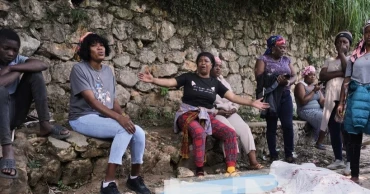
A gang in Haiti has released 13 women and children who were among more than 50 people kidnapped following a deadly attack on a community near the capital, according to UNICEF.
The United Nations children’s agency said late Friday that six children and seven women were freed.
The children include three under the age of two, a 7-year-old and two teenage girls.
UNICEF Deputy Representative in Haiti Yannig Dussart described the release as a rare moment of hope amid the violence affecting children across the country.
He said the kidnapping in Kenscoff was not an isolated incident but highlighted the scale and frequency of attacks on children in Haiti.
UNICEF said it worked with community leaders to help secure the release of the women and children. It was not immediately known whether they required medical treatment or whether other women and children remained in captivity.
Mass kidnappings are relatively uncommon in Haiti, although individual abductions are widespread. Victims are sometimes released without ransom, while others are killed even after ransoms are paid.
At least 47 people were killed during a gang attack late Sunday in Kenscoff, a farming community in the hills above Port-au-Prince that was previously considered relatively peaceful.
Gang leader Izo 2 had threatened to execute all the hostages if police killed any gang members during their efforts to regain control of Kenscoff.
Izo 2 reportedly operates an armed group in the area in coordination with other gang leaders, including Izo, who is considered one of Haiti’s most powerful gang leaders.
4 days ago
US announces new sanctions campaign targeting Iran
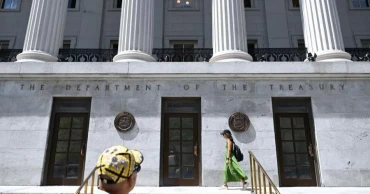
The U.S. Treasury Department on Friday proposed revoking Banque Misr UAE's correspondent banking access, launching a new sanctions campaign dubbed "Operation Economic Outcast".
The department's Financial Crimes Enforcement Network (FinCEN) labeled the bank a "critical node" for Iran's access to U.S. dollars. FinCEN alleged that between January 2024 and June 2026, the bank processed $1.8 billion for 103 companies suspected of operating within Iranian shadow banking networks.
U.S. Treasury Secretary Scott Bessent warned that Iranian enablers would lose access to the global financial system. Separately, the Office of Foreign Assets Control (OFAC) sanctioned Reza Mohammad Taeedi, general manager of Bank Melli's Dubai branch, for allegedly facilitating billions of dollars in transactions for the Islamic Revolutionary Guard Corps' Quds Force.
Bessent had announced the campaign on Monday, pledging to sever Tehran's remaining economic lifelines.
Iranian Foreign Minister Seyed Abbas Araghchi condemned the operation as "economic terrorism" and called on the United Nations to denounce the U.S. actions.
4 days ago
37 killed as Russian air raids hit Kyiv region for third day
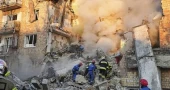
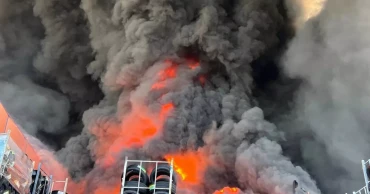
Russian air raids disrupted Kyiv for a third day, with a strike in Bucha district raising the region's death toll to 37, officials said Saturday.
Regional military administrator Tymur Tkachenko said fires damaged a restaurant and 50 residential buildings, including an elderly and disabled care home, forcing over 370 evacuations.
In Myla, an unspecified warehouse detonated. President Volodymyr Zelenskyy opened negligence criminal proceedings, citing bans on storing ammunition near homes. Prime Minister Serhii Koretskyi condemned the "criminal negligence" in the fifth year of the invasion, comparing it to a Vyshneve depot blast that killed 22 earlier this month.
Russia’s Defense Ministry claimed it targeted drone boosters in Myla, Flamingo cruise missile parts in Kyiv and ports in Mykolaiv and Izmail.
Separately, Saturday’s shelling in southern Kherson killed two people and wounded 27, including a child. Regional head Oleksandr Prokudin warned of prolonged winter outages from intensified infrastructure strikes in the 70-percent Russian-controlled territory, urging tens of thousands to evacuate.
4 days ago
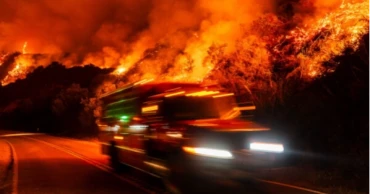
27 church members killed in Zimbabwe road crash
A head-on collision between a haulage truck and a minibus taxi carrying church members killed 27 people in Zimbabwe, police said Saturday.
Paul Nyathi, Police spokesperson, said the crash occurred Friday night on a major highway near Chivhu, 132 kilometers (82 miles) south of Harare, as the truck attempted to overtake another vehicle. The passengers, members of a popular indigenous African Christian denomination known for wearing white robes, were traveling to a conference.
State media, citing a provincial minister, reported that 23 people died at the scene, while others succumbed to injuries at a local hospital. Both vehicles carried an unspecified number of passengers, and the minibus taxi burst into flames, leaving only a shell.
Road accidents are common in Zimbabwe, with authorities attributing 94% of crashes to human error. Across Africa, road crashes kill about 300,000 people annually, according to the United Nations Economic Commission for Africa. The continent has the world's highest road fatality rate for its 1.5 billion people, despite holding just 3% of the global vehicle fleet.
4 days ago
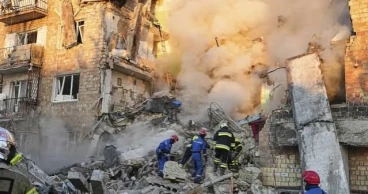
Russian attack kills at least 27 in Ukraine's Kyiv region
At least 27 people were killed in a Russian attack in the Bucha district near Ukraine's capital Kyiv, officials said Saturday.
Tymur Tkachenko, head of the regional military administration, said the attack damaged at least 50 residential buildings and triggered a major fire that spread to homes and a restaurant.
Ukrainian President Volodymyr Zelenskyy said a warehouse in the village of Myla was hit and then exploded.
Zelenskyy did not provide further details about the facility but said authorities had opened a criminal investigation over possible official negligence.
“There are regulations in place — ammunition cannot be stored near homes or other residential areas,” he said.
The president also said a care home for elderly people and people with disabilities, along with several residential buildings, was damaged in the attack.
More than 370 people have already been evacuated from the affected areas, with the operation still underway, Zelenskyy said.
Meanwhile, Kyiv has faced near-continuous air raid alerts for a third consecutive day, severely disrupting daily life and economic activity in the capital more than four years after Russia launched its full-scale invasion of Ukraine.
5 days ago
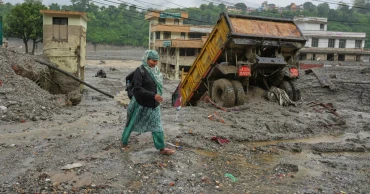
Nepal-China flood survivors reach safety as families await word on nearly 3,000 missing
Rescue teams on Saturday continued evacuating survivors from areas devastated by catastrophic flash floods along the Nepal-China border, while families anxiously searched for relatives still missing.
The combined death toll in Nepal and Tibet has risen to 633, while nearly 3,000 people remain unaccounted for, according to figures released by authorities. Chinese authorities have reported seven deaths and more than 550 people missing.
In Nepal’s Nuwakot district, one of the worst-hit areas, helicopter operations resumed before noon after bad weather temporarily disrupted aerial rescue efforts.
Some helicopters arrived carrying relief supplies, including clothes, instant noodles, crackers and rice, while others evacuated survivors from flood-hit communities.
At relief centres, soldiers helped elderly people and carried babies who had been rescued from the nearby community of Trishuli. Medical workers examined evacuees after they arrived.
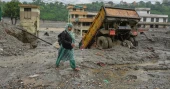
As some residents were still being evacuated from Trishuli, others returned to their damaged homes to search for belongings that might have survived the floods.
One boy was seen carrying muddy sandals from his home, while resident Shoba Shretha returned to look for her dog, Sweetie, which she had been forced to leave behind during the flooding.
Relief workers later cleared villagers, journalists and volunteers from the entrance to the community as excavation machinery moved in to continue clearing mud and debris.
In the capital Kathmandu, relatives and friends gathered outside the main government hospital, hoping to find information about loved ones who have been missing since the disaster.
Families moved between help desks and hospital notice boards, checking lists of injured people and putting up posters containing photographs and contact numbers of missing relatives. Officials also displayed photographs of unidentified bodies in an effort to help families identify them.
Gajendra Rawat, a security official working at the hospital help desk, said around 1,600 missing people had been registered there since the disaster.
“People are coming from all parts of Nepal,” he said.
At a relief centre in Nuwakot, military personnel posted lists containing the names of dozens of missing people. Relatives gathered around the lists, taking photographs and searching anxiously for familiar names.
Rajesh Kumar Ram, who was searching for his son, said he was still hoping he might be found alive.
“I’m hopeful that my son is somewhere. Maybe they find him stuck somewhere. I’m waiting for that moment only,” he said.
Search and rescue operations were continuing at several locations in Nepal and China’s Tibet, including the Upper Trishuli-1 Hydropower Project in Rasuwa district and the heavily damaged Gyirong border crossing.
Nepali Army spokesperson Brig. Gen. Raja Ram Basnet said rescue operations would continue at the hydropower project, where more than 100 people are believed to be trapped inside a tunnel filled with mud.
Rescuers have used baskets and ropes to reach some people, but the operation has been hampered by mud up to 4 to 5 feet (1.2 to 1.5 metres) deep and limited helicopter landing sites.
Rescue teams have also remained alert to the possibility of further flooding from a newly formed lake high in the Himalayas. The lake was created after a glacier collapsed and triggered the initial floods on Wednesday.
Chinese monitoring data showed the lake had decreased in size by late Friday, with its water level falling about 10 metres (32 feet) from its peak on Thursday morning, according to state broadcaster CCTV.
Meanwhile, aid trucks continued heading from Kathmandu toward the affected areas.
On the Chinese side, rescuers reached the devastated Gyirong Port on Saturday by foot and raft, while some were lowered into the area by drones, according to CCTV footage.
It remained unclear how many people were inside the border checkpoint building when the floods struck.
Nepal’s disaster agency said Saturday that the country’s death toll had reached 626, with 2,426 people still missing. More than 3,700 people have been rescued so far.
Chinese state media reported that 554 people remained missing on the Chinese side. Many of those unaccounted for are foreigners who had travelled to the area for work, trekking or pilgrimage.
5 days ago

Trump says US reaches deal giving access to Venezuela’s 65 billion barrels of oil reserves
President Donald Trump said Friday that the United States has reached a major agreement with Venezuela that could give an American-backed private company access to the South American nation's vast oil reserves.
Trump described the agreement as the “biggest oil deal in world history”, saying it was negotiated by Secretary of State Marco Rubio, Defense Secretary Pete Hegseth and Venezuela's acting President Delcy Rodríguez.
Rodríguez's government said the agreement covers the development of 17 oil fields with proven potential of 65 billion barrels. It estimated that the deal could attract around $100 billion in investment and generate more than $209 billion in tax revenue for Venezuela.
Under the agreement, the United States would partner with an unnamed private operator to establish a new company to develop the oil fields, according to a U.S. official familiar with the deal.
The official, who spoke on condition of anonymity because he was not authorized to discuss the agreement publicly, said Rodríguez had granted the company rights to develop the fields for 100 years.
The company would give the United States an effective 55% share of its output, including an ownership stake and the right to purchase oil at cost, the official said. If realized, the company would become the world's second-largest corporate holder of proven oil reserves after Saudi Aramco.
Trump under pressure over high fuel prices
The announcement comes as Trump faces pressure to reduce high fuel prices in the United States amid the ongoing war in Iran and disruptions to global energy supplies.
The U.S. government has been drawing from its strategic petroleum reserves, which fell below 300 million barrels in early August, more than 100 million barrels lower than at the beginning of 2026.
The conflict involving the United States, Israel and Iran has sharply reduced the flow of Gulf oil through the Strait of Hormuz, a major global energy route that previously carried about 20% of the world's petroleum.
The average U.S. gasoline price was around $4.09 per gallon on Friday, compared with $3.21 a year earlier, according to AAA.
However, experts said the Venezuelan agreement is unlikely to bring immediate relief at the gas pump. Increasing Venezuela's oil production substantially would require years of investment to repair and expand its badly damaged infrastructure.
Major U.S. oil companies could also be reluctant to return because of Venezuela's political uncertainty and their previous experiences operating in the country.
After Maduro's removal, Trump met oil executives at the White House and urged them to return to Venezuela. Although executives showed interest, some remained cautious. ExxonMobil CEO Darren Woods had previously described Venezuela as an “un-investable” market.
Trump has maintained that his administration has helped bring greater stability to Venezuela. He has also accused the country of taking U.S. oil after former President Hugo Chávez nationalized hundreds of foreign-owned assets, including those belonging to American oil companies.
Venezuela opens oil sector to private investment
Rodríguez moved to open Venezuela's oil industry to greater private investment after taking power, reversing a key policy of the socialist movement that has governed the country for more than two decades.
Rubio said the new agreement would bring billions of dollars in private investment to Venezuela while helping reduce fuel prices in the United States.
The U.S. official said oil purchased from the new company would be used to replenish the American strategic petroleum reserve and for military purposes.
Venezuela possesses the world's largest proven crude oil reserves, estimated at around 303 billion barrels, or approximately 17% of global reserves, according to the U.S. Energy Information Administration.
Most of the country's oil deposits have already been identified, but aging infrastructure has severely limited production. Venezuela currently accounts for only about 1% of global oil output.
Former Venezuelan President Nicolás Maduro remains jailed in the United States. He has pleaded not guilty to federal narcoterrorism and drug trafficking charges.
5 days ago

What to know about Iceland’s vote on reopening EU accession talks
Icelanders will vote Saturday on whether the country should restart negotiations to join the European Union, more than a decade after its previous membership talks were suspended.
The referendum comes as Iceland reassesses its ties with Europe amid economic pressures at home and rising geopolitical uncertainty across the North Atlantic.
The result is expected to be close.
What are Icelanders voting on?The nationwide referendum on Aug. 29 will ask voters a straightforward question: Should Iceland reopen negotiations on EU membership?
The Althingi, Iceland’s parliament, approved the referendum in May by 34 votes to eight, with 14 lawmakers abstaining.
It is the first time Icelanders have been directly asked to decide through a referendum whether the country should resume EU accession talks.
A “Yes” vote would not automatically make Iceland an EU member. It would instead authorize the government to restart negotiations and determine what conditions could be secured for Iceland.
If an accession agreement is eventually reached, voters would have another chance to decide whether to approve it. Prime Minister Kristrun Frostadottir has said Iceland would only join the EU if the public approves membership in a second referendum.
Iceland already maintains close economic and travel links with the EU. It has been part of the European Economic Area since 1994 and is also a member of the Schengen Area and the European Free Trade Association.
Through the EEA, Iceland has access to the EU single market and follows a large portion of EU legislation, although it does not have a vote in many of the decisions behind those rules.
Why has EU membership returned to the agenda?Iceland submitted its EU membership application in 2009, after the global financial crisis severely damaged its banking sector and weakened the Icelandic krona. Formal negotiations began the following year.
The process effectively stalled after the 2013 election, when the EU-skeptic Independence Party and Progressive Party formed a government. The new administration halted the talks, with fisheries and agriculture among the major unresolved issues.
In 2015, Iceland notified Brussels that it no longer wanted to be treated as an EU candidate country.
The issue resurfaced after another political change. A coalition government formed in December 2024 by the Social Democratic Alliance, Reform Party and People’s Party promised to hold a referendum on whether to continue the accession process by 2027. Parliament subsequently set the vote for Aug. 29.
Economic considerations are again playing an important role. The coalition agreement linked the referendum commitment to an examination of Iceland’s currency options. Inflation, elevated interest rates and the economic vulnerabilities of a small, open economy have also contributed to the renewed debate over EU membership.
Lassi Heininen, a Finnish scholar specializing in Arctic geopolitics, told Xinhua that domestic political and economic considerations are the main forces behind the referendum, similar to the factors that prompted Iceland’s original membership application.
But geopolitical developments have also added urgency to the discussion.
Tobias Etzold, a senior adviser at the European Policy Centre in Brussels, said increasing competition among major powers in the strategically important North Atlantic has created greater uncertainty for smaller countries.
He cited concerns over the reliability of the United States, Washington’s interest in Greenland and questions about the future strength of NATO.
Iceland is a NATO member but has no standing army. Etzold said uncertainty surrounding US President Donald Trump’s commitment to regional security has encouraged Iceland to take a closer look at its relationship with Europe.
Foreign Minister Thorgerdur Katrin Gunnarsdottir has also highlighted rising protectionism, unexpected US tariffs and the increasing use of trade measures as instruments of foreign policy.
How close is the vote and what happens afterward?The referendum remains too close to predict.
A Gallup poll published Thursday showed 51.6% of decided voters opposed reopening negotiations, compared with 48.4% in favor. The margin was within the poll’s statistical uncertainty.
A Maskina survey released Tuesday produced the reverse result, with 51.3% supporting renewed talks and 48.7% opposing them.
Fisheries and agriculture are expected to remain among the most contentious issues. Marine products made up 38.9% of Iceland’s merchandise exports in 2025, and voters remain concerned about national control over natural resources, food security and the possible impact of EU policies on Iceland’s fisheries and protected agricultural sector.
The EU has indicated that there could be scope for compromise. EU Commissioner for Fisheries and Oceans Costas Kadis said in April that there was “definitely room for flexibility” on fisheries. EU enlargement chief Marta Kos has also suggested that innovative arrangements could be considered for Icelandic farming and fishing.
If voters approve reopening negotiations, the Icelandic government plans to formally notify the EU, appoint a negotiating team and seek to restart the process.
Icelandic officials estimate that negotiations could take roughly 18 months to two years. Kos has said they might be completed within one to two years because Iceland already follows much of the EU’s regulatory framework through the EEA.
However, the negotiations would not simply pick up from where they ended in 2013. An Icelandic parliamentary committee said in May that Iceland’s negotiating positions would have to be reassessed across all areas after more than a decade of political and regulatory changes.
The referendum could also have wider regional consequences.
Steven Blockmans, deputy director of the International Centre for Defence and Security, said a “Yes” vote could maintain momentum for EU enlargement and bolster the bloc’s geopolitical standing, while a rejection could strengthen doubts about further expansion.
Heininen said an affirmative vote could also influence political debates in Norway and potentially Greenland. If Iceland eventually became an EU member, he said, Nordic politics and aspects of regional security could become more closely linked to Europe, while the EU would gain additional influence in Arctic affairs.
If voters reject reopening the negotiations, the Icelandic government has said it will not restart the accession process. Iceland’s relationship with the EU would then continue primarily through existing arrangements such as the EEA and Schengen.
5 days ago
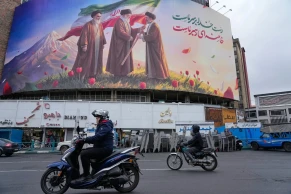
Six months after US-Israel campaign, Iran’s new leaders dig in against pressure
Six months into a devastating war, Iran’s leadership has consolidated around a group of senior military commanders and clerics with deep roots in the country’s ruling system, signaling preparations for a prolonged standoff with the United States while moving aggressively to prevent unrest at home.
The development is a sharp departure from US President Donald Trump’s early expectation that the Islamic Republic could be toppled, followed by his later assertion that regime change had brought more moderate figures into Iran’s leadership.
Iran’s new ruling circle appears deeply skeptical of reaching an agreement with Trump after being attacked twice while negotiations were underway. Officials may also be preparing for renewed US strikes after Washington replenishes its stocks of missile interceptors. At the same time, Iran has warned it could intensify the conflict as a US blockade and planned sanctions place additional pressure on an economy already struggling.
“If Trump wants to act, we will respond on a seismic scale,” Mohsen Rezaei, Iran’s newly appointed secretary of the Supreme National Security Council, said last weekend. In a post on X, he warned that continued economic warfare could result in Iran stopping all oil exports from the Persian Gulf.
Iran moves to prevent another wave of unrest
Rezaei was among a series of appointments announced by Supreme Leader Ayatollah Mojtaba Khamenei to establish the country’s new senior leadership and military command structure. His father, Ayatollah Ali Khamenei, and many senior officials were killed in the US-Israeli bombing campaign that began Feb. 28.
The appointment of Hossein Taeb as head of the Basij, the Revolutionary Guard’s volunteer force used to maintain order on the streets, was particularly significant. The Basij played a major role in suppressing nationwide protests in January, when thousands were killed.
Taeb, a hard-line cleric and former intelligence chief, was also involved in an earlier major crackdown during protests in 2009.
His return to a prominent security position suggests Iran’s leadership is determined to prevent fresh demonstrations as economic hardship and public dissatisfaction increase.
The 56-year-old supreme leader has not appeared publicly or in recorded video or audio since Israeli attacks killed his father, who had led Iran for nearly four decades. Mojtaba Khamenei is also believed to have been injured. His absence could be linked either to extensive security precautions because he remains a potential Israeli target or to the severity of his injuries.
Khamenei relies on longtime hard-line alliesThrough appointments announced Aug. 11 and 12, Khamenei brought several longtime allies into key positions, including Rezaei and Taeb.
The appointments appear to strengthen a group of veteran commanders who have worked together for decades, said Sascha Bruchmann, an analyst with the International Institute for Strategic Studies’ Middle East office in Bahrain.
Rezaei, 71, commanded Iran’s Revolutionary Guard during much of its early development, including the 1980-88 Iran-Iraq war, and remained in the position until 1997. He has repeatedly sought the presidency as a hard-line candidate since 2009.
Brig. Gen. Ahmad Vahidi, 68, was formally confirmed as commander of the Revolutionary Guard after serving as acting chief following the death of his predecessor alongside the elder Khamenei.
Gen. Ali Ozmaei was confirmed as acting commander of the Guard’s naval forces, while Gen. Ali Abdollahi retained his position as military chief of staff.
Bruchmann noted that Rezaei had commanded Vahidi for years, describing the appointments as an effort to reinforce unity within the leadership.
“It looks like internal cohesion, with hard-core figures being brought into the inner circle,” he said.
Economic pressure fuels calls for restraintHomayoun Falakshahi, Kpler’s leading oil analyst, said the appointments of Rezaei and Vahidi indicated growing influence for officials favoring a tougher approach.
However, he said a further escalation was not unavoidable. Iran could struggle to restore deterrence through military action without provoking a response that would leave the country in an even weaker position.
A ceasefire agreed in June quickly unraveled as Iran, the US and Israel exchanged strikes. Tehran has demanded the release of billions of dollars in frozen assets under the agreement and has also sought formal control over the Strait of Hormuz.
President Masoud Pezeshkian remains among the most prominent officials advocating negotiations. His supporters warn that continuing the conflict could worsen Iran’s already fragile economy.
“It would be better to end the war,” Pezeshkian said last week, arguing that Iran had demonstrated its strength and gained international recognition while the United States had become widely disliked.
He has also defended the June ceasefire agreement against hard-line critics who say Tehran made excessive concessions.
Rezaei, unlike some ultra-hard-liners who reject negotiations outright, has left the door open to a potential agreement if Washington changes course. On Monday, he told Pakistani mediator Gen. Asim Munir that the United States should alter its approach and take concrete steps to fulfill the ceasefire conditions.
Tehran-based political analyst Ahmad Zeidabadi said the country’s leadership faces “serious differences” over its future direction.
Writing in the pro-Pezeshkian newspaper Hammihan, Zeidabadi said hard-liners oppose restoring normal relations with Washington because their political survival is tied to continued confrontation and hostility.
Basij appointment highlights concern over protestsThere have so far been no indications of a fresh protest movement, even as rising economic pressures make basic necessities increasingly difficult for many Iranians to afford.
Taeb’s appointment to lead the Basij indicates that the leadership wants to deal with possible unrest before it develops, Bruchmann said.
Taeb, 63, previously headed the Basij during the suppression of large demonstrations following hard-line President Mahmoud Ahmadinejad’s disputed reelection in 2009. Dozens of people were killed during the unrest.
He later became chief of the Revolutionary Guard’s intelligence organization, holding the post for nearly 13 years before being removed in 2022 amid a reported shake-up following Israeli intelligence successes inside Iran.
The Basij operates a nationwide volunteer network with a presence in streets, government institutions and cultural centers. Its role includes promoting loyalty to Iran’s theocratic system and monitoring ideological conformity.
In the decree appointing Taeb, Khamenei instructed him to expand the Basij’s involvement in Iranian society, make greater use of technology and promote the force internationally in opposition to what he described as “Zionist-American arrogance.”
That wording could indicate an effort to expand the Basij’s connections with Iranian-backed groups abroad.
The force increased its presence during the war, while hard-line supporters organized nightly rallies in Tehran and other cities to demonstrate loyalty to the government and discourage dissent.
It remains unclear how Taeb intends to expand the Basij’s role. But in a recent speech, he appeared to advocate greater influence over Iranian society.
He said US economic pressure was designed to divide the country and argued that stronger community ties centered around mosques could help preserve national unity.
“If the mosque becomes the center of the neighborhood, the nation will protect its unity,” he said, describing that unity as a stronger deterrent than any missile.
5 days ago
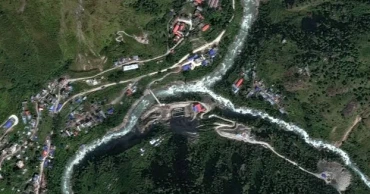
Satellite images reveal glacier and bedrock collapse behind Nepal-China floods
Satellite imagery has given scientists new clues about the cause of the devastating floods along the Nepal-China border, showing that a massive section of bedrock collapsed beneath a glacier before torrents of water and debris swept through valleys and communities.
The disaster on Wednesday killed hundreds of people in Nepal and Tibet, while hundreds more remain missing, including foreign nationals and religious pilgrims.
Earth scientists Kristen Cook and Dan Shugar initially struggled to examine the affected area because clouds and dust obscured satellite images from Nepal. They could only determine that part of a glacier had broken away from Langtang Lirung peak near the Tibetan border.
Clearer images taken Thursday showed that the bedrock beneath the glacier had also collapsed, carrying a huge mass of ice, rocks and boulders into the valley below.
Shugar, an associate professor at the University of Calgary, said the images indicated that the incident involved not only a glacier collapse but also a much larger failure of the mountainside's underlying bedrock.
The debris crashed into the valley and continued moving through the steep, narrow terrain. As the ice melted, it added more water to the flow, while mud and debris formed a massive torrent that swept through nearby settlements, said Cook of Université Grenoble Alpes in France.
Trishuli River expands after floodingThe Trishuli River rose sharply during the disaster. Satellite images taken before and after the floods show that the river has become considerably wider around Kolpurtar, Betrawati and Syapru Besi in Nepal.
The water has also changed from a greenish appearance to dark brown and black, indicating the enormous amount of sediment and mud carried by the floodwaters.
Several towns and villages along the river have been buried beneath mud and debris. In images of Betrawati, only parts of some houses remain visible above the destruction.
Syapru Besi, a popular tourist destination and the starting point for the Langtang trek, suffered extensive damage as buildings were swept away. A smaller river in the area also became wider after the powerful floodwaters forced water upstream.
Scientists assess possible climate connectionAlton Byers, a mountain geographer at the University of Colorado Boulder, described the affected area as a wasteland that could take years to recover.
Byers, who has lived in Nepal and continues to visit the country to study glacier-related hazards and help communities prepare for disasters, said the event was the largest glacier-related flood he had witnessed.
He believes climate change may have contributed to the disaster. Rising global temperatures are melting glaciers and permafrost, potentially weakening the rock, soil and ice that stabilize high mountain slopes.
According to Byers, the weakening of permafrost can make mountains increasingly unstable and trigger a chain of events involving rockfalls, glacier collapses and flooding.
However, Cook and Shugar cautioned that there is not yet enough evidence to establish a direct connection between this particular collapse and climate change.
Cook noted that landslides and slope failures naturally occur in mountainous regions, although the continued melting of permafrost is known to contribute to the destabilization of mountain slopes.
She said that while the current disaster could not yet be directly attributed to climate change, a warmer climate could make similar events more likely in the future.
5 days ago