world
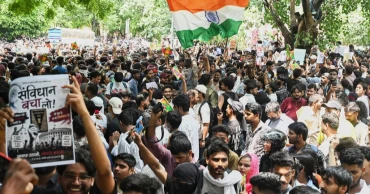
India's 'Cockroaches' movement emerges as major youth-led challenge to Modi government
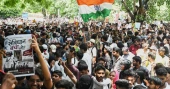
A youth-led protest movement that began as an online response to a controversial court remark has grown into one of the most significant public challenges to India's ruling government, expanding from demands for education reforms to broader calls for accountability and institutional change.
The movement, known as the "Cockroaches," was sparked by widespread anger over alleged leaks of highly competitive entrance examinations for medical colleges and government jobs, which are seen as critical pathways to employment and social mobility for millions of Indians.
The protests gained momentum in May after India's Supreme Court Chief Justice Surya Kant, during an unrelated court hearing, reportedly compared some unemployed young people to "cockroaches." The remark triggered a backlash on social media, leading Boston University student Abhijeet Dipke to launch the Cockroach Janta Party, or Cockroach People's Party.
Many young people embraced the label as a symbol of resilience, rapidly turning the movement into a social media phenomenon. Supporters shared satirical content criticizing the government over unemployment, limited job opportunities and economic challenges.
The campaign moved from online platforms to the streets in June when Dipke returned to India and organized demonstrations in several cities and university campuses. Protesters are demanding the resignation of Education Minister Dharmendra Pradhan, reforms to the examination system and compensation for families of students who died by suicide following alleged exam paper leaks.
Initially drawing only a few hundred participants, the protests have since attracted thousands. The movement gained further attention after activist Sonam Wangchuk joined the demonstrations and launched a hunger strike lasting more than three weeks before police transferred him to a hospital.
As the campaign has expanded, it has evolved beyond student concerns to reflect wider public frustration over government accountability, unemployment and confidence in institutions, including the education system, political leadership, judiciary and media.
The protests have also drawn support from professionals, families and volunteers across the country, many of whom have contributed through donations and social media campaigns rather than traditional political organizations.
The Indian government initially dismissed the protesters' demands. Education Minister Dharmendra Pradhan said authorities had addressed the examination controversy by ordering fresh tests and accused demonstrators of acting against national interests.
However, the government's stance softened after police used tear gas and batons to disperse protesters attempting to march to Parliament earlier this week. The crackdown triggered public criticism and prompted government representatives to hold talks with protest leaders, although no breakthrough was reported.
The movement has also received backing from opposition leader Rahul Gandhi and several rights groups, who describe it as a broader campaign for democratic accountability and the right to peaceful protest.
Political observers say the decentralized youth movement presents an unusual challenge for Prime Minister Narendra Modi's government, particularly as India's large population of young voters could play a decisive role in future elections.
12 days ago

Congo Ebola death toll nears 1,000 as outbreak spreads rapidly
The death toll from the Ebola outbreak in the Democratic Republic of Congo has climbed to 999, according to the latest official figures, underscoring the severity of what health authorities have described as the fastest-spreading Ebola outbreak on record.
Data released by Congo’s Ministry of Health showed that, as of Sunday, the country had recorded 2,473 confirmed and suspected Ebola cases since the outbreak was declared on May 15. Of those, 999 people have died.
The current outbreak is caused by the Bundibugyo strain of the Ebola virus, for which there are currently no approved vaccines or specific treatments, making containment efforts more challenging.
Health officials say the outbreak is spreading at an unprecedented pace. Previous outbreaks, including the 2013-2016 West Africa epidemic that claimed more than 11,000 lives, took around eight months to reach 1,000 deaths. The current outbreak has reached that milestone in a significantly shorter period.
Ebola is a highly infectious viral disease transmitted through direct contact with bodily fluids such as blood, vomit and semen. It often causes severe illness and can be fatal.
Authorities have expressed concern that about 80 percent of newly reported infections are linked to unknown transmission chains, indicating that the virus is spreading faster than health teams can identify and isolate cases.
The outbreak is centred in Ituri province but has also spread to four other provinces, prompting authorities to intensify surveillance and response efforts.
Response operations have been hampered by insecurity in some affected areas. Attacks on health facilities and medical teams have forced aid workers to suspend operations in certain locations, while some healthcare workers have staged strikes over unpaid salaries since the outbreak began.
Speaking at the Africa Health Summit in Ghana on Tuesday, Africa Centres for Disease Control and Prevention (Africa CDC) Director-General Dr. Jean Kaseya urged stronger international support to contain the outbreak.
"If we do not stop this outbreak today, it could become one of the worst Ebola outbreaks the world has ever documented," he warned.
12 days ago
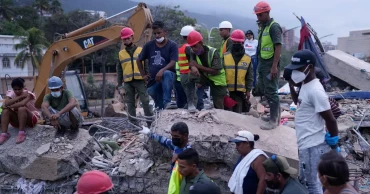
Venezuela earthquake: Death toll rises to 5,346
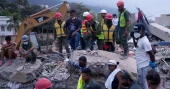
The death toll from the June 24 earthquakes in Venezuela has risen to 5,346, National Assembly President Jorge Rodriguez said on Tuesday.
The number of the injured remained at 16,740, while 17,265 people were left homeless, according to an official report posted on X by Rodriguez. Currently, 23,122 people are staying in 107 temporary camps set up in the capital of Caracas and the central states of La Guaira, Miranda and Aragua.
Nearly 40,000 individuals were treated in medical facilities, and more than 128,000 families received government assistance, said the report.
Since the twin earthquakes of 7.2-magnitude and 7.5-magnitude jolted the South American country more than three weeks ago, authorities have recorded 1,331 aftershocks.
12 days ago

Ukraine reshuffles military leadership amid war with Russia
Ukraine pressed ahead with its war effort against Russia on Wednesday under a new military leadership after President Volodymyr Zelenskyy overhauled the country’s top defence command following days of political turmoil.
The changes came after Zelenskyy dismissed Commander-in-Chief Gen Oleksandr Syrskyi, responding to mounting public pressure and criticism over the military leadership. The reshuffle also saw Defence Minister Mykhailo Fedorov leave office, marking a significant overhaul of Ukraine’s defence establishment.
The leadership changes, announced late Tuesday, followed a week of political tensions that drew attention both at home and abroad, with Russian officials publicly welcoming the developments.
Maj Gen Mykhailo Drapatyi, 43, was appointed as the new commander-in-chief. Considered part of a younger generation of Ukrainian military leaders, Drapatyi first gained prominence in 2014 during Russia’s annexation of Crimea and has since built a reputation for his leadership on the battlefield.
Zelenskyy said the new military leadership has been tasked with presenting an updated defence strategy that includes continued reform of the army’s corps structure, faster delivery of weapons and drones, stronger air defence capabilities, and a clearer mobilisation plan.
The future role of former defence minister Fedorov remains uncertain.
The 35-year-old, widely credited with advancing Ukraine’s drone technology, had reportedly been at odds with Syrskyi over military reforms. His dismissal prompted protests in Kyiv and several other cities, where demonstrators demanded his reinstatement and called for Syrskyi’s removal.
Following the reshuffle, Zelenskyy said he had offered Fedorov a senior government position aimed at strengthening Ukraine’s technology sector, though it remains unclear whether the former minister has accepted the proposal.
Fedorov had earlier indicated that he had received job offers from several international defence technology companies after leaving office.
He welcomed Drapatyi’s appointment, describing it as a symbol of change and expressing hope that the new commander would strengthen Ukraine’s fight against Russian aggression.
Before his dismissal, Fedorov had publicly criticised Syrskyi, accusing him of obstructing military reforms and arguing that changes in the army’s leadership were necessary to sustain Ukraine’s resistance against Russia.
12 days ago
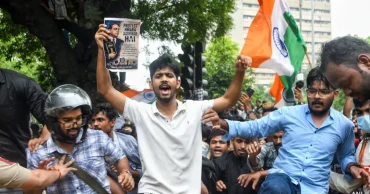
Govt set for fresh talks with CJP as Centre offers detailed debate on NEET paper leak
The government is set to hold its second meeting in three days with a delegation of the Cockroach Janta Party (CJP), although, unlike Monday's discussion, the talks will not take place at Union Minister JP Nadda's residence. The venue for the meeting has not yet been announced.
Amid mounting protests over the alleged NEET paper leak, Union Parliamentary Affairs Minister Kiren Rijiju said on Wednesday that the Centre is prepared for a comprehensive discussion on the issue in Parliament.
Government sources dismissed opposition demands for the resignation of Union Education Minister Dharmendra Pradhan, describing them as politically motivated. They maintained that the government acted promptly after the alleged leak came to light.
Protests over the controversy entered their third consecutive day on Wednesday. Demonstrations continued despite clashes between protesters and police on Monday, during which authorities said dozens of police personnel were injured.
Addressing the issue, Prime Minister Narendra Modi called for the toughest possible action against those responsible for the alleged paper leak.
Quoting the prime minister after the NDA Parliamentary Party's 'Mangal Milan' meeting, Rijiju said Modi urged alliance partners to remain united in ensuring the smooth functioning of Parliament and appealed to opposition parties to cooperate constructively.
According to Rijiju, the prime minister said that although political differences are natural, all lawmakers share a collective responsibility to work for the country's future and safeguard the interests of its youth.
source: NDTV
12 days ago

Iran fires missiles at Jordan as regional tensions escalate
Iran launched missiles at Jordan on Wednesday, prompting air raid sirens in the port city of Aqaba, as renewed hostilities across the Middle East continued to overshadow diplomatic efforts aimed at restoring a collapsed interim ceasefire.
Jordan's military said it intercepted four Iranian missiles, while two others landed in uninhabited areas without causing reported casualties. Videos recorded from the nearby Israeli city of Eilat showed plumes of smoke rising over Aqaba.
The latest attack came after the US military said it had completed its 11th consecutive night of strikes on targets inside Iran.
Iranian air defence systems were activated around the capital, Tehran, while the state-run IRNA news agency reported explosions in Bushehr, East Azerbaijan, Hamadan, Hormozgan, Khuzestan, and Sistan and Baluchistan provinces. According to the US military, the strikes targeted aircraft hangars and drone storage facilities.
On Tuesday, Iran also attacked a tanker in the Strait of Hormuz, forcing its crew to abandon the vessel. Tehran has simultaneously expanded its military operations against US allies in the region, launching attacks on Bahrain, Jordan and Kuwait.
The renewed violence has further complicated diplomatic efforts to end the conflict. Iranian Interior Minister Eskandar Momeni visited Pakistan, which has been acting as a mediator, in an attempt to revive negotiations. However, there has been no indication of progress toward a new ceasefire agreement.
Speaking from the Oval Office on Tuesday, US President Donald Trump expressed little optimism about renewed talks, saying Washington had "no interest in meeting." He also indicated that US forces could soon strike areas near one of Iran's principal uranium enrichment sites.
Meanwhile, Yemen's Iran-backed Houthi rebels have intensified regional tensions by announcing a naval blockade of Saudi Arabia, threatening global oil shipments and trade routes. With shipping through the Strait of Hormuz severely disrupted, Saudi Arabia has increasingly relied on its pipeline to the Red Sea to maintain crude oil exports.
12 days ago
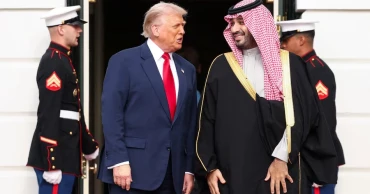
Trump approves nuclear deal that could let Saudi Arabia enrich uranium
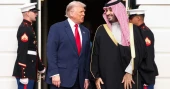
US President Donald Trump has approved a nuclear cooperation agreement with Saudi Arabia that could eventually allow the kingdom to enrich uranium for its civilian nuclear energy programme, according to two people familiar with the decision.
The agreement, which has not yet been formally announced, could be made public as early as Wednesday, the sources said. They spoke on condition of anonymity because they were not authorised to discuss the matter publicly.
Expected to remain in force for 30 years, the agreement would involve US companies in developing Saudi Arabia's civilian nuclear sector. It also envisions the possible construction of a uranium enrichment facility in the kingdom after a joint US-Saudi feasibility study.
The proposal will be submitted to the US Congress for review, where it is likely to face scrutiny from lawmakers concerned that permitting Saudi Arabia to enrich uranium could increase the risk of nuclear proliferation and trigger a regional arms race.
Saudi Arabia is a member of the Vienna-based International Atomic Energy Agency (IAEA), which promotes the peaceful use of nuclear energy while monitoring member states to ensure they are not pursuing secret nuclear weapons programmes.
However, one of the sources said the agreement is not expected to include the IAEA's Additional Protocol, which provides inspectors with expanded authority to verify that nuclear activities remain exclusively peaceful.
The development comes amid heightened regional tensions following military operations by the United States and Israel targeting Iran's nuclear capabilities. Tehran maintains that its uranium enrichment programme is intended solely for peaceful purposes.
The White House and Saudi authorities did not immediately comment on the reported agreement. The Wall Street Journal first reported the decision.
Both Trump and former President Joe Biden had sought a civilian nuclear agreement with Saudi Arabia that would allow the kingdom to benefit from American nuclear technology.
Non-proliferation experts, however, have warned that domestic uranium enrichment could provide Saudi Arabia with the technical foundation for a future weapons programme. Crown Prince Mohammed bin Salman has previously suggested the kingdom would seek nuclear weapons if Iran were to acquire them.
US Energy Secretary Chris Wright visited Saudi Arabia last year and held discussions with Saudi officials on expanding the kingdom's commercial nuclear power sector. The US Department of Energy did not immediately respond to requests for comment.
Saudi Arabia has also strengthened security ties with nuclear-armed Pakistan. Analysts note that any future enrichment capability in the kingdom is likely to draw increased international attention given the region's security dynamics.
While uranium enrichment alone does not enable a country to build a nuclear weapon, it is considered a critical step in the nuclear fuel cycle and can significantly shorten the path to developing weapons-grade material if a country chooses to do so.
The United Arab Emirates, by contrast, built its Barakah nuclear power plant under a so-called "123 agreement" with the United States without pursuing domestic uranium enrichment—a model widely regarded by non-proliferation experts as the international benchmark for civilian nuclear cooperation.
12 days ago
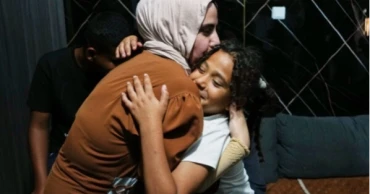
Palestinian siblings separated by war reunite in Israel after losing parents in Gaza
A Palestinian family divided between Israel and Gaza has reunited after nearly two years of war, displacement and personal tragedy.
Mais al-Gharam, 23, had not seen her seven younger siblings since leaving Gaza for Israel shortly before the war began. During the conflict, an Israeli airstrike destroyed the family's home in central Gaza, killing her parents and one of her brothers.
Earlier this month, Mais waited outside Israel's Kerem Shalom crossing, searching the crowd for her surviving siblings as they emerged from Gaza.
"We never stopped being a family," she said. "But every day I wondered whether I would see them again."
After years of legal efforts, Mais was finally able to bring her brothers and sisters, aged 8 to 22, to Israel. The siblings reunited at the border crossing and then travelled together to Nazareth, where relatives welcomed them with hugs and home-cooked meals.
The reunion brought both relief and grief. Although the family was together again, they were also mourning the loss of their parents and younger brother.
Their grandfather, Faraj al-Gharam, described the moment as "coming back from the grave."
The family's story began in 2002 when Murad al-Gharam, a resident of Gaza, met Amal Karim, a Palestinian citizen of Israel from Nazareth, while working in Israel on a temporary permit. After marrying, the couple moved permanently to Gaza, where they raised eight children in Nuseirat refugee camp.
Life changed dramatically after the Hamas-led attack on southern Israel on October 7, 2023, which killed about 1,200 people and led to Israel's military campaign in Gaza.
Mais had already returned to Nazareth, where she married and found work. Her seven siblings, who were born in Gaza, were eligible to apply for Israeli citizenship through their mother, but their father was not.
The family initially decided to remain together in Gaza rather than leave without him.
As fighting intensified, they were displaced multiple times before returning to their home in Nuseirat. On July 10, 2024, an airstrike struck the house, killing Murad, Amal and their 11-year-old son, Maisara.
The surviving children were injured but managed to reach Al Aqsa Hospital in Deir al-Balah, where doctors confirmed the deaths of their parents and brother.
The Israeli military did not immediately comment on the strike.
After the attack, the older siblings took responsibility for caring for the younger children. They cooked, cleaned, collected firewood for heat and water, and even opened a small bakery to earn money while receiving support from relatives in Nazareth.
Meanwhile, Mais worked with Israeli rights group HaMoked to secure permits, legal guardianship papers and citizenship applications for her siblings.
According to HaMoked, the Israeli Interior Ministry initially rejected the request because the children's mother had died. The family was later required to undergo DNA testing to prove their relationship to Mais before the applications were approved.
Nearly two years after the airstrike, the siblings crossed into Israel on July 8 and travelled to Nazareth.
After arriving, they spoke not about politics but about ordinary plans for the future, including going back to school, seeing doctors and spending time with relatives.
"Family is the most important thing," said Jwaher, one of the siblings.
12 days ago
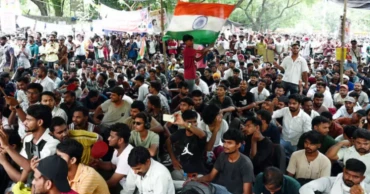
"Don't waste time": India’a top court declines urgent hearing on CJP protest case
India's Supreme Court on Tuesday declined to entertain an urgent plea alleging police brutality against students protesting in New Delhi under the banner of the Cockroach Janta Party (CJP), asking the petitioner's lawyer not to "waste" the court's time.
"Don't waste our time and yours," Chief Justice Surya Kant told the lawyer, who sought the court's intervention over alleged police action against students protesting at Jantar Mantar.
The chief justice also declined to view videos purportedly showing the police action, saying, "We don't want to watch any videos."
The remarks came a day after thousands of students took to the streets of New Delhi demanding the resignation of Education Minister Dharmendra Pradhan following a call by the CJP online movement.
Police used batons to disperse demonstrators as they attempted to march towards Parliament, escalating protests over alleged irregularities in major examinations. Protesters were seen running for safety as riot police moved in near the protest site.
Organisers of the demonstration condemned what they described as the authorities' heavy-handed response, claiming that hundreds of protesters were injured.
"It's a shameful day in the history of Indian democracy that people, honest students, who had come for a genuine issue were brutally beaten by the Delhi police," a CJP spokesperson said.
Meanwhile, the Delhi High Court on Tuesday declined to urgently hear a petition challenging the alleged use of excessive force by Delhi Police against students participating in the CJP's protest march to Parliament.
"Don't drag the court into all this," a bench comprising Chief Justice D K Upadhyaya and Justice Tejas Karia told the petitioner while scheduling the matter for hearing on Wednesday.
12 days ago
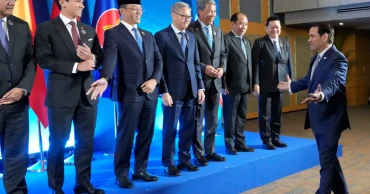
Rubio warns ASEAN that Iran's Hormuz demands could threaten global shipping
US Secretary of State Marco Rubio on Wednesday warned that Iran's demand to control and collect tolls from ships passing through the Strait of Hormuz could set a dangerous global precedent and threaten freedom of navigation.
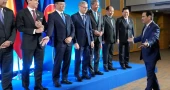
Speaking at the opening of the annual Association of Southeast Asian Nations (ASEAN) foreign ministers' meeting in Manila, Rubio said allowing any country to control an international waterway and charge ships for passage would pose risks not only in the Middle East but also in the Indo-Pacific region.
"If a country is allowed to control an international waterway, charge tolls and attack ships that refuse to pay, it would create a dangerous precedent that could be repeated in other parts of the world, including this region," Rubio said.
His remarks came as ASEAN members voiced concern over the renewed conflict in the Middle East, which has also affected economies in Southeast Asia. Despite the US focus on the Middle East, Rubio assured ASEAN leaders that Washington remained fully committed to the regional bloc.
On the sidelines of the meeting, Rubio also joined his counterparts from the Quad grouping — the United States, Australia, India and Japan — to discuss cooperation on technology, humanitarian assistance, disaster response, maritime security and transnational security.
In a joint statement, the four countries reaffirmed their commitment to strengthening maritime security and maintaining peace and stability in the Indo-Pacific, amid growing concerns over China's expanding influence in the region.
"The Quad remains a priority, and we will meet again later this year," Rubio wrote in a post on X.
The Trump administration has repeatedly criticised China's increasingly assertive actions in the South China Sea, particularly those affecting smaller claimant countries such as the Philippines, a long-standing US treaty ally.
The South China Sea disputes, involving China, Taiwan, Vietnam, Malaysia, Brunei and the Philippines, are among the key issues being discussed during the three-day ASEAN meetings in Manila.
Rubio also held talks with Indian External Affairs Minister Subrahmanyam Jaishankar, where they discussed regional security, the conflict involving Iran and efforts to finalise an interim trade agreement aimed at reducing tariffs imposed by President Donald Trump on Indian goods.
According to US State Department spokesperson Tommy Pigott, both sides agreed on the importance of completing the interim trade deal, which is nearing completion.
Rubio was also scheduled to meet Chinese Foreign Minister Wang Yi on the sidelines of the ASEAN meetings.
12 days ago