world
Poland shoots down drones after airspace violations amid Russian strikes on Ukraine
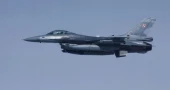
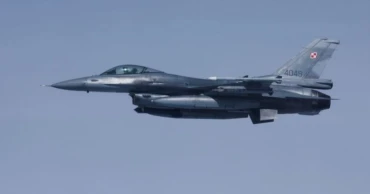
Poland said Wednesday it shot down drones that violated its airspace during Russia’s latest large-scale aerial assault on Ukraine, forcing the temporary closure of four airports and putting its armed forces on the highest state of alert.
The Operational Command of the Polish Armed Forces claimed in a statement, “During today’s attack by the Russian Federation targeting Ukraine, our airspace was repeatedly violated by drones.”
“At the request of the operational commander, weapons have been used, and operations are under way to locate the downed targets”, the military said.
Polish and NATO aircraft were scrambled, while ground-based air defence and radar systems were moved to maximum readiness. Prime Minister Donald Tusk confirmed that “an operation is under way related to multiple violations of Polish airspace.”
Earlier, flights were suspended at Warsaw’s Chopin Airport, Rzeszow–Jasionka Airport, Modlin Airport, and Lublin Airport, according to notices on the US Federal Aviation Administration’s website. The Polish military did not directly mention the closures.
Ukraine’s Air Force initially reported that Russian drones had crossed into Polish territory, posing a threat to the southeastern city of Zamosc. But the statement was later removed later. Overnight, much of Ukraine — including western border regions Volyn and Lviv — was under extended air raid alerts.
Border with Belarus to close amid Russian-led drillsSeparately, Poland said it will close its border with Belarus from midnight Thursday due to Russian-Belarusian military exercises known as “Zapad-2025,” scheduled to begin Friday in western Russia and Belarus. The drills have raised alarm in NATO countries bordering Belarus — Poland, Lithuania, and Latvia.
Interior Minister Marcin Kierwiński said the border would reopen only when the government is sure “there is no more threat to Polish citizens.”
Belarus summoned Poland’s chargé d’affaires to protest the move, calling it “an abuse of geographical position” that “caused significant difficulties.” Its Foreign Ministry said the suspension reflected “an intention to conceal one’s own actions rather than any real threat from Belarus.”
Lithuania also announced it would tighten border security with both Belarus and Russia during the drills.
10 months ago
Trump ‘not thrilled’ as Israeli strike in Qatar sparks global outrage
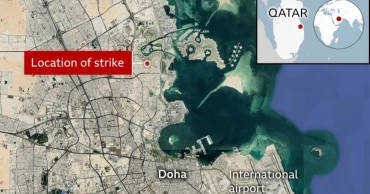
US President Donald Trump has said he is “not thrilled” about Israel’s air strike in Qatar, which killed five Hamas members and triggered widespread condemnation from across the world.
The Israeli Prime Minister Benjamin Netanyahu defended this attack as “fully justified,” targeted senior Hamas leaders accused of masterminding the 7 October 2023 attack on Israel that sparked the Gaza war.
Hamas confirmed the deaths of five members, including the son of top negotiator Khalil al-Hayya, but said Israel failed to assassinate its political bureau members. The group denounced the strike in Doha as a “heinous crime” and a “flagrant violation of international law.”
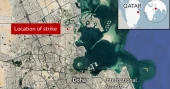
Qatar, a key US ally hosting an American air base and the Hamas political bureau since 2012, strongly condemned the assault as “cowardly” and a grave breach of its sovereignty. The interior ministry said one security officer was killed and others injured. Witnesses in Doha reported up to eight explosions in the Katara district.
Trump told reporters: “I’m not thrilled about the whole situation. It’s not a good situation. We want the hostages back, but we are not thrilled about the way that went down today.” The White House later said the president had assured Qatar’s emir and prime minister that “such a thing will not happen again on their soil.”
According to US officials, Trump had instructed envoy Steve Witkoff to inform Qatari authorities of the impending strike. The White House stressed that bombing inside a sovereign ally “does not advance Israel or America’s goals,” though it described eliminating Hamas as a “worthy” objective.
Israel said the operation was carried out independently, involving 15 fighter jets that launched 10 munitions within seconds. Netanyahu and Defence Minister Israel Katz said the decision followed recent deadly attacks in Jerusalem and Gaza.
Reactions poured in from around the world. The UN Secretary General António Guterres condemned the strike as a violation of Qatar’s sovereignty, while French President Emmanuel Macron called it “unacceptable regardless of motive.” UK Prime Minister Keir Starmer warned of further escalation, and Saudi Arabia denounced the “brutal aggression.”
Pope Leo XIV said the situation was “very serious,” while families of Israeli hostages held in Gaza expressed deep anxiety that the strike could endanger their loved ones. Israeli opposition leader Yair Lapid demanded the government clarify whether hostages’ safety had been considered.
Hamas said its delegation had been discussing the latest US ceasefire proposal in Doha when the compound was hit. The plan reportedly includes a 60-day truce, the release of Israeli hostages in exchange for Palestinian prisoners, and talks on a permanent ceasefire.
Netanyahu later told a gathering at the US embassy in Jerusalem that the strike could “open the door to an end of the war.” He urged Gazans to “stand up for your rights and your future” and accept peace.
Israel has previously killed several top Hamas leaders, including Ismail Haniyeh in Iran in July 2024 and Yahya Sinwar in Gaza three months later. The Gaza war erupted after Hamas-led attacks on southern Israel killed 1,200 people and took 251 hostage on 7 October 2023.
Since then, Israeli strikes have killed at least 64,605 people in Gaza, according to the Hamas-run health ministry.
10 months ago
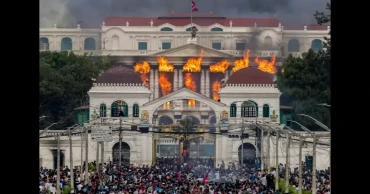
UN appalled by killings in Nepal; it says violence is not the answer
UN Human Rights Chief Volker Türk on Tuesday said he was appalled by the escalating violence in Nepal that has resulted in multiple deaths and the injury of hundreds of mostly young protesters, as well as the widespread destruction of property.
“I plead with security forces to exercise utmost restraint, and avoid further such bloodshed and harm,” he said, adding that violence is not the answer.
“Dialogue is the best and only way to address the concerns of the Nepalese people. It is important that the voices of young people are heard.”
The High Commissioner said protesters have the right to express peacefully their political frustrations and grievances over corruption and a ban on social media platforms.
“I have received concerning reports of unnecessary and disproportionate use of force by the security forces,” said Türk. “I call for urgent, thorough, transparent and impartial investigation into such acts.”
Ex-Nepal PM’s wife dies after protestets set their home on fire
He reminded protesters that they too must uphold the spirit of peaceful assembly and refrain from violence. “I am disturbed by reports of public buildings, businesses and private residences being attacked and, in some instances, set ablaze. Equally, I am concerned by reports of physical attacks on senior government officials.”
The world has admired Nepal’s emergence from conflict to become a peaceful democracy, Türk said, appealing to all Nepalese stakeholders to find a way forward to continue on that path.
“Together with the United Nations system, my Office stands ready to support dialogue and trust-building measures that can help de-escalate tensions and restore confidence,” the High Commissioner said.
10 months ago

Ex-Nepal PM’s wife dies after protesters set their home on fire
Rajyalaxmi Chitrakar, wife of former Nepalese Prime Minister Jhalanath Khanal, was tragically killed when protesters, led by Generation Z activists, trapped her inside their house in the Dallu area of Kathmandu and set it ablaze. She was taken to Kirtipur Burn Hospital but succumbed to her injuries, according to family sources.
This incident happened amid widespread protests in Kathmandu against a brief government ban on social media platforms. The unrest, fueled by anger over political corruption and nepotism, escalated as demonstrators targeted homes of top leaders, including Prime Minister KP Sharma Oli, whose residence was also set on fire.
Following violent clashes, including police firing on crowds that resulted in 19 deaths, Prime Minister Oli resigned. Videos surfaced showing his finance minister, Bishnu Prasad Paudel, being violently attacked in the streets.
The protests began after the government blocked Facebook, X, and YouTube, citing failure by these platforms to comply with registration and regulatory demands. Many young protesters are particularly frustrated by the privileged lifestyles of politicians' children, known as “Nepo Kids,” while many youth face unemployment and hardship.
10 months ago
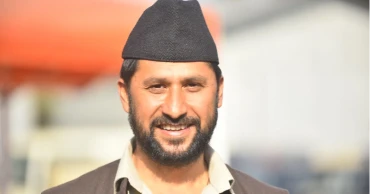
Nepal protests: Gen Z free Rabi Lamichhane, spark mass prison break
Former Deputy Prime Minister and Rastriya Swatantra Party (RSP) chief Rabi Lamichhane was freed from Nakkhu Prison on Tuesday after Gen Z protesters stormed the facility during nationwide demonstrations against Nepal’s recent social media ban.
According to local media outlet Khabarhub, Lamichhane was released as part of a wider push by protesters, who later facilitated the escape of around 1,500 other inmates after police abandoned their posts. His wife, Nikita Paudel, arrived at the prison to receive him as thousands of supporters gathered outside to greet the popular leader.
Lamichhane, who had been detained in connection with a cooperative savings case, addressed crowds in a video shared by RSP central member Krantishikha Dhital. Dressed in white, he waved to his supporters while security forces withdrew, raising concerns over the collapse of order in Kathmandu.
The development came hours before Prime Minister KP Sharma Oli announced his resignation amid intensifying anti-government protests. The movement, led largely by students, unemployed youth, and professionals, erupted after the government banned social media platforms—a move Oli reversed only after security forces killed 19 people and injured more than 300 on Monday.
Earlier in the day, at least 21 RSP lawmakers resigned en masse, deepening the country’s political turmoil. Analysts say the resignations are a calculated move to disrupt Parliament and accelerate demands for a reset of Nepal’s political system.
Lamichhane, seen by many as an uncorrupted and decisive alternative to Nepal’s scandal-hit leadership, has quickly become the face of this rising political tide. His background as a media personality and his ability to harness online frustration have allowed him to convert digital dissent into street power.
Chanting slogans such as “KP Chor, Desh Chhod” (KP thief, leave the country) and “Take Action Against Corrupt Leaders,” demonstrators across Kathmandu signaled their rejection of Nepal’s traditional political elite. With Oli gone, uncertainty looms over whether protests will settle—or escalate further—as demands now extend to the dissolution of the entire government.
10 months ago

Israel carries out strike on senior Hamas leaders in Qatari capital
Israel has carried out a strike on senior Hamas leaders in Qatar's capital Doha
A Hamas official says its negotiating team was targeted in the attack, reports BBC.
Qatar's foreign ministry says the attack is a "blatant violation" of international law, adding it "will not tolerate this reckless Israeli behaviour and the continuous tampering with the security of the region"
The IDF says it "conducted a precise strike" and those targeted "are directly responsible for the brutal October 7 massacre"
The Hamas negotiating team is based in Doha; they have not been involved in any indirect negotiations with Israel since July.
10 months ago
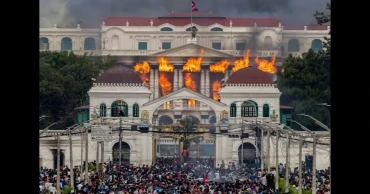
Nepal protesters set parliament ablaze following PM resignation
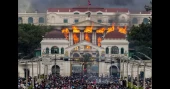
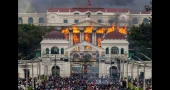
Protesters in Kathmandu ignored a curfew, broke into the parliament building, and set parts of it on fire. They had earlier attacked the office of the Nepali Congress, the country’s biggest political party, and the homes of several prominent politicians.
Prime Minister KP Sharma Oli resigned on Tuesday as anti-corruption protests intensified. His resignation came a day after security forces killed 19 people during violent demonstrations triggered by a social media ban.
Excited young protesters rushed into the parliament complex after hearing the news, waving and shouting slogans while smoke rose from the building.
Oli’s government had lifted the social media ban on Monday after police used live ammunition, tear gas, and rubber bullets against demonstrators trying to storm parliament, which left more than 100 people injured.
Protesters painted messages of victory on the parliament walls and flashed “V” signs, celebrating Oli’s resignation. Witnesses said there were no clashes afterward, as security forces did not intervene.
The unrest is the worst Nepal has seen in years, even more violent than a 2006 uprising that ended the king’s executive powers and killed 18 people. In 2008, parliament formally abolished the monarchy.
Many Nepalis are frustrated with the republic, citing ongoing political instability. In March, two people died during a rally by supporters of the former king demanding the monarchy’s return.
Although Oli has stepped down, it is unclear if protests will end, as many demonstrators are calling for the entire government to be dissolved—a move that could further destabilize Nepal, which has seen 13 governments since 2008.
Source: ALJazeera
10 months ago

Blast in Qatar’s capital after Israel claims strike on Hamas leadership
Israel’s military said Tuesday it launched an airstrike aimed at Hamas leadership, though it did not specify the location.
Shortly after the announcement, a powerful explosion was heard in Doha, Qatar’s capital, sending black smoke into the sky. Al Jazeera, the Qatar-based news network, linked the blast to Israel’s statement. It was not immediately known if there were any casualties.
Hamas’ political leadership has long been based in Qatar, which has served as a key mediator in negotiations between the group and Israel for years, including during the current Gaza war.
Analysts warn that a strike targeting Hamas’ exiled leaders could complicate ongoing efforts to reach a ceasefire in Gaza and secure the release of hostages taken in the group’s Oct. 7, 2023 attack on Israel.
10 months ago
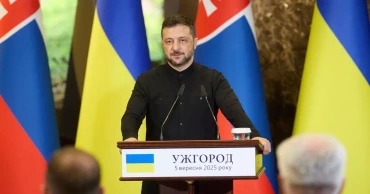
Russian glide bomb kills 21 pension seekers in eastern Ukraine village attack
A Russian glide bomb struck a village in eastern Ukraine on Tuesday as residents queued outside to collect their pensions, killing at least 21 people and injuring around two dozen others, according to Ukrainian President Volodymyr Zelenskyy and local officials.
The attack hit Yarova village in Donetsk region, less than 10 kilometers (6 miles) from the front line, Zelenskyy said on Telegram. It marked another deadly strike on civilians in the three-year conflict, which has claimed more than 12,000 civilian lives, according to the United Nations.
Calling the strike “frankly brutal,” Zelenskyy urged tougher international sanctions to hold Russia accountable. “The world should not remain silent … strong action is needed so that Russia stops bringing death,” he wrote.
The assault comes as U.S.-led peace initiatives have stalled and Russia has stepped up aerial attacks. On Sunday, Moscow launched the largest drone and missile barrage on Kyiv since the war began in February 2022.
Despite U.S. President Donald Trump’s efforts to convince Russian leader Vladimir Putin to agree to a ceasefire and talks with Zelenskyy, Moscow has intensified its bombing campaign. Western officials worry Ukraine is depleting its air defenses faster than replacements can arrive.
U.S. and European officials met at the Treasury Department in Washington on Monday to explore new economic measures against Russia, including additional sanctions and oil tariffs, according to a person familiar with the talks. Discussions were expected to continue Tuesday.
Glide bombs, Soviet-era munitions modified with guidance systems, have been devastating eastern Ukraine for months. Some now weigh up to 3,000 pounds (1,360 kilograms), six times heavier than those first deployed in 2022.
In rural Ukrainian villages, pensions are typically distributed in cash at local post offices or mobile postal vans due to limited access to banking services. Photos from the scene showed bodies near a damaged Ukrposhta vehicle parked under trees, apparently serving as a mobile post office.
Ukrposhta head Ihor Smilianskyi said the van was positioned under cover to avoid detection, but “apparently, someone gave away the coordinates.”
Donetsk Governor Vadym Filashkin confirmed 21 deaths and 21 injuries, calling the strike “pure terrorism.” Emergency services were deployed to the site, he added.
Yarova was occupied by Russian forces in 2022 but recaptured by Ukrainian troops later that year.
10 months ago
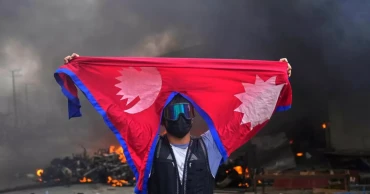
Nepal protests: Social media ban sparks outrage over corruption and nepotism
Nepal’s Prime Minister K.P. Sharma Oli resigned Tuesday after violent protests over a short-lived social media ban left 19 people dead and exposed widespread anger over corruption and nepotism.
The ban, widely seen as an attempt at censorship, triggered youth-led demonstrations that quickly turned into broader unrest against politicians and their families, accused of flaunting wealth while the country struggles with poverty and unemployment.
Analysts say the protests, largely driven by Gen Z, reflect deep frustration with political instability and lack of opportunities. Despite Oli’s resignation and rollback of the ban, demonstrations have spread beyond Kathmandu, with protesters demanding sweeping change and even dissolution of the government.
Observers warn Nepal faces its worst crisis in decades, with youth anger unlikely to subside without major reforms.
10 months ago