world

Mecca's Kaaba seen like a bright light from 400k km above earth; picture goes viral
A stunning photograph taken from orbit has gone viral online, revealing Mecca’s Kaaba glowing like a luminous point from 400 kilometers above Earth.
The image, captured from the International Space Station (ISS), highlights Islam’s holiest site as a radiant center within the city.
Nasa astronaut Don Pettit, who has just returned from his ISS mission, posted the photo on X (formerly Twitter) with the caption: “Orbital views of Mecca, Saudi Arabia. The bright spot in the center is the Kaaba, Islam’s holiest site, visible even from space”.
Pettit, known for his artistic approach to space imagery during his fourth stint on the station, shot the picture using a high-resolution Nikon camera through the ISS cupola window.
10 months ago

Houthis release mariners detained since July ship attack
Yemen’s Houthi rebels on Wednesday released 11 mariners held since a July attack on the ship Eternity C in the Red Sea, an assault that killed four on board and sank the vessel.
The Iranian-backed Houthis, who have been targeting ships during the Israel-Hamas war, said via their al-Masirah satellite news channel that Oman had taken custody of the mariners, who were flying to the sultanate.
Oman later said it received the 11 mariners — who are from India and the Philippines — “in preparation for their return to their home countries.” However, the Houthis later released images of only 10 mariners. It wasn't clear why the 11th releasee wasn't shown.
A Royal Oman Air Force jet landed earlier Wednesday in Sanaa, the Yemeni capital held for over a decade by the rebels, according to flight-tracking data analyzed by The Associated Press. Following the Houthi announcement, the plane was tracked leaving Yemeni airspace.
Oman later published images of the men being greeted on arrival in Muscat, the sultanate's capital, by Filipino and Indian diplomats.
The Philippines said Tuesday it expected nine Filipino mariners held by the Houthis since the attack to be released. The Foreign Ministry in Manila described the mariners as being “held hostage by the Houthis” since the attack, something the U.S. government also had said earlier.
The Houthis offered no immediate breakdown on the nationalities of those released. It had described their forces as rescuing the men after they abandoned the crippled ship following the attack. It contended the men spent "five months spent as guests, not detainees.”
The Houthis have targeted more than 100 ships with missiles and drones in their campaign, sinking four vessels. The attacks have killed at least nine mariners, after a crew member aboard one vessel targeted, the Minervagracht, died of his wounds in October.
The Houthis have held mariners for months in the past, and it wasn’t immediately clear why they released the mariners now.
The Houthis stopped their attacks during a brief, earlier ceasefire in the war in Gaza. They later became the target of a weekslong campaign of airstrikes ordered by U.S. President Donald Trump before he declared a ceasefire had been reached with the rebels. The current ceasefire in the war has again seen the Houthis hold their fire.
Meanwhile, the future of talks between the United States and Iran over Tehran’s battered nuclear program is in question after Israel launched a 12-day war against the Islamic Republic in June that saw the U.S. bomb three Iranian atomic sites.
10 months ago
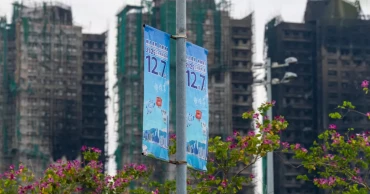
Fire raises concerns as Hong Kong approaches Sunday legislative poll
The deadliest fire in Hong Kong in decades is piling pressure on Beijing’s “patriots-only” governance system, casting a shadow on elections widely seen as a further step to tighten control over the city's legislature.
Sunday's vote to elect new lawmakers to Hong Kong's 90-member Legislative Council comes just 11 days after a massive fire engulfed seven towers in a high-rise apartment complex, killing at least 159 people in the financial hub's worst blaze since 1948.
With many voters in the city grown politically apathetic since China’s crackdown shut out the pro-democracy camp in recent years, Sunday's turnout rate will be a key barometer of public sentiment toward the government and its handling of the fire.
While there hasn’t yet been significant public protests because of the chilling effect of a wide-ranging security crackdown that started five years ago, some residents have raised concerns among friends, on social media and to reporters about government oversight in building maintenance projects and official investigation efforts.
Nearly 40% of incumbents, including household names and mildly vocal politicians, are stepping aside for this election. More candidates with mainland Chinese business links, as well as more members of China’s parliament, are joining the race.
Observers suggest the candidate lineup signals Beijing’s tightening control over even its loyalists and a preference for politicians more in tune with its agenda.
A change of guard
Starting in late September, many veteran lawmakers announced one by one that they would not seek reelection. Regina Ip, a leading member of Hong Kong’s cabinet, said she wanted to pass the torch to the younger generation and denied that age was a factor.
Several relatively outspoken lawmakers also stepped aside. One of them, Doreen Kong, insisted she faced no pressure to bow out.
The changes drew wide attention to the legislature, now filled with Beijing loyalists after China overhauled electoral rules in 2021.
Under the rules, the number of directly elected seats was reduced from 35 to 20. Forty other seats are chosen by a predominantly pro-Beijing election committee, with voters in professional, business and other designated sectors picking another 30 for their industries. All candidates must pass official vetting, including by national security authorities.
Pro-democracy politicians in the legislature have completely disappeared after many were arrested under a 2020 national security law Beijing imposed to quell the massive protests that started in 2019.
The pro-Beijing camp praised the new model’s efficiency, but Hong Kong think tank POD Research Institute in September said its survey showed growing public concerns about the quality of debate in the legislature.
More candidates with mainland Chinese ties
The new candidate pool marks a deeper change.
The Associated Press found that at least 26 of 161 candidates, or 16%, held positions in Chinese-funded businesses without declaring party affiliations — almost double the figure reported by local newspaper South China Morning Post in the 2021 election. Most were connected to state-owned enterprises.
Among all candidates, 16 are delegates to China's top legislature — more than double from the last election — and 13 others are members of China's top political advisory body. The directly-elected seats drew more candidates than four years ago, including district councilors handling municipal matters. Still, many of those new candidates are not familiar names to voters.
John Burns, an honorary professor of politics and public administration at the University of Hong Kong, said the central government has “very much controlled” the city's elections since 2021. Burns said it appears that the central authorities have a new informal criterion on an upper age limit and possibly less appetite for outspoken lawmakers.
He said members of China's legislature and political advisory body are more in tune with Beijing's agenda, while those who work for state-owned enterprises are under more control by the central authorities, in addition to having better resources for their roles.
“They’re trying to ensure that the new people adopt a national perspective, national agenda ... and not focus on sectional interests, not focus on vested interests, and not perhaps representing the concerns of people in Hong Kong,” he said.
He added that central authorities also appeared to be trying to minimize the influence of traditional political parties.
Other new faces joining the race include Olympic fencing champion Vivian Kong, who has faced questions over her eligibility to run in the tourism sector. She cleared the official vetting process in November after citing her efforts to promote horse racing tourism.
Candidates defend dual roles
Hong Kong leader John Lee maintained that personnel changes in the election are normal during a change of term, and condemned attempts by “opposing forces” to smear the election with accusations of interference. He added it’s justifiable for Beijing to care about the election.
Incumbent finance lawmaker Ronick Chan, an adviser at Bank of China (Hong Kong) Limited, whose parent company is a state-owned commercial bank, said working in Chinese-funded enterprises does not conflict with serving as a legislator.
“Employees of Chinese-funded enterprises frequently engage with national policies in their daily work," he said in a text message. “That helps Hong Kong better understand the central government’s concerns and facilitates the city's service to and integration into national development.”
His rival Ip Tsz-kin, who works in the Bank of Communications (Hong Kong) — also affiliated with another state-owned bank — told the SCMP that candidates must work for Hong Kong's future development regardless of their company background. He did not reply to the AP’s request for comment.
During an election candidate forum, candidate Rex Lai said patriot organizations can mobilize volunteers to support relief efforts in a disaster.
In November, China’s Hong Kong affairs office said the pool of new candidates will boost the development of “high-quality democracy” that suits Hong Kong.
It said the legislature needs new blood, and that the participation of professional elites from new sectors, innovation industries and think tanks, among other areas, signals hopes for better alignment with China’s next five-year plan.
Push for turnout could be dampened by fire aftermath
Voter turnout rate in the 2021 election had dropped to 30.2%, a record low. Officials have been pulling out all the stops to boost that figure until the fire brought a temporary halt.
Burns noted that about 60% of the popular vote went to the pro-democracy camp in past elections before 2021. He believed those voters would continue to stay away from Sunday's election.
He said that while some pro-government voters would be grateful for the authorities' response to the fire, others could have reservations about voting due to the systemic problems uncovered by the fire and the huge death toll.
To drive up turnout, the government has extended voting hours, added voting stations and offered subsidies to centers for older adults and people with disabilities. City leader Lee urged civil servants to vote and companies provided time off for employees casting ballots. Authorities have made arrests over social media content that allegedly discouraged voting or for damaging promotional election materials.
“This fire has run a truck right through that campaign,” Burns said. “That makes it very difficult for the authorities to better the thirty percent, and so probably it will be lower."
10 months ago

Putin in New Delhi to bolster ties
Russian President Vladimir Putin landed in India Thursday on a state visit aimed at bolstering bilateral and economic ties between the two countries.
Indian Prime Minister Narendra Modi received the Russian leader at an airport in New Delhi, giving a bearhug and a tight handshake with the gusto of an old friend.
Modi will host Putin for a private dinner tonight at his decked-up official residence.
On Friday, the two leaders will hold talks as part of the 23rd India-Russia Summit and discuss deepening economic cooperation, mainly in defense, energy and the mobility of skilled labor.
Putin’s visit comes at a sensitive time in global politics when there is a renewed push by the U.S. on a peace deal to bring the Russia-Ukraine war to an end. The visit will test New Delhi’s efforts to balance relations with Moscow and Washington as the nearly four-year war in Ukraine grinds on.
Putin last visited India in 2021. Modi was in Moscow last year, and the two leaders briefly met in September in China during a Shanghai Cooperation Organization summit.
10 months ago

Trump’s remarks alarm Somali community in Minneapolis
President Donald Trump’s latest remarks targeting Somali immigrants sparked outrage and anxiety Wednesday in the Minneapolis–St. Paul area, home to the largest Somali community in the United States.
Speaking first during a Tuesday Cabinet meeting, Trump said Somalis “contribute nothing” and described them as “garbage,” adding that accepting them would send the country “the wrong way.” He intensified the criticism on Wednesday, telling reporters at an Oval Office event that “Somalians should be out of here” and that they had “destroyed our country.”
He also took aim at Minneapolis Mayor Jacob Frey, calling him a “fool,” and said he would not be “proud to have the largest Somali population” in the U.S.
Hamse Warfa, a Minnesota-based Somali-born entrepreneur and head of the education nonprofit World Savvy, rejected the president’s remarks.
“I am not garbage. I’m a proud American citizen,” Warfa said, noting that anti-immigrant rhetoric has repeatedly been used for political gain, pointing to past comments Trump made about Haitian migrants ahead of the 2024 election.
The Twin Cities region is home to roughly 84,000 people of Somali descent — nearly one-third of the U.S. Somali population. Refugees from the East African nation have been settling in Minnesota since the 1990s, drawn by social support services and the growing diaspora community.
Trump’s comments came amid reports that federal authorities are preparing a targeted immigration enforcement action in Minnesota focused on Somalis living illegally in the country, according to a person familiar with the preparations. Most Somalis in the state, however, are U.S. citizens, including many born in America.
Some community leaders said they heard anecdotal accounts of detentions by federal agents, though they lacked details. Immigration officials did not immediately respond to requests for comment.
Somalis have become an integral part of Minnesota’s civic and political landscape, contributing to local economies, opening businesses and serving in the Legislature and on city councils. U.S. Rep. Ilhan Omar, frequently singled out by Trump — including this week, when he called her “garbage” — represents Minnesota in Congress.
The community has also faced scrutiny following the arrests of dozens of people, many of them Somalis, accused of involvement in fraud schemes targeting social service agencies. While Trump has repeatedly claimed Minnesota is “a hub of fraudulent money laundering activity” and suggested money may have flowed to the extremist group al-Shabab, federal authorities have not charged any defendants with terrorism-related offenses, and evidence of such links remains scant.
Trump’s latest remarks followed his administration’s decision to halt all asylum rulings after two National Guard soldiers were shot dead in Washington. Although the suspect is of Afghan origin, Trump questioned immigrants from other countries, including Somalia. The administration also paused immigration applications for people from 19 countries — among them Somalia — that had been under previous U.S. travel bans.
Minnesota leaders, including Gov. Tim Walz and Mayor Frey, pledged to support Somali residents.
“Minneapolis is — and will remain — a city that stands up for our residents,” Frey said in a statement.
Several Democratic legislators and Minneapolis City Council members held a news conference Wednesday urging Republican lawmakers to condemn Trump’s comments.
“Where are the Republicans now?” asked state Sen. Zaynab Mohamed of Minneapolis, who said she had invited GOP leaders to attend the briefing.
Warfa said he hopes the political rhetoric recedes soon, especially as his daughter, a high school senior, prepares for college.
“I would rather spend time thinking about her future,” he said, instead of hearing the president describe people like him “as garbage.”
10 months ago

Killings reveal deep cartel control in Mexico’s Michoacan
Two recent killings in Mexico’s Michoacan state — one of a lime growers’ representative and the other of a popular mayor — have laid bare the extent to which drug cartels dominate the region’s economy, politics and daily life.
The violence underscores a grim reality long known to residents: organized crime controls large swaths of Michoacan, from its lime orchards and avocado farms to its most vulnerable towns. Even as U.S. President Donald Trump launches strikes on suspected drug-smuggling boats and offers military help to Mexico, President Claudia Sheinbaum faces intensifying pressure to rein in cartels that generations of leaders have failed to subdue.
The crisis was brought into sharp focus when a farmer approached Rev. Gilberto Vergara in Tierra Caliente, saying cartel extortion was so severe that harvesting limes no longer made financial sense. Residents feared that speaking up meant death, but staying silent meant going hungry. Vergara drove home through cartel-controlled roads where land mines and drone attacks are constant threats. “They have the state in their hands,” he said.
The assassination of Uruapan’s 40-year-old mayor, Carlos Manzo, shocked the country. The outspoken Morena politician, known for confronting criminal groups and firing corrupt officers, was gunned down during Day of the Dead festivities despite a 22-member security team. His killing — allegedly linked to the Jalisco New Generation Cartel — sparked protests across Michoacan and Mexico City, with residents calling him “the Mexican Bukele” for his hard-line stance.
Manzo’s death also intensified fear among other local leaders. In La Ruana, activist Guadalupe Mora, whose brother was murdered two years ago, now moves with a 20-person security detail. “It seems we made the government and organized crime uncomfortable,” he said.
Cartels have expanded their tactics with drone-dropped explosives, improvised mines, surveillance networks and 3D-printed weapons. Extortion has become as profitable as drug trafficking, crippling industries from agriculture to transport. Even avocados — vital to U.S. consumers — have become more expensive due to cartel control.
Sheinbaum’s government has deployed 2,000 additional troops, raising the regional presence to more than 8,000, and insists coordination and intelligence will make the difference. Yet many residents remain skeptical after decades of failed plans. Security analysts warn that targeting smaller groups may inadvertently strengthen the dominant Jalisco cartel.
For farmers in the hills, the war feels endless. One woman, who fled her home earlier this year, returned only when the army arrived. She sent her teenage son to the U.S. fearing he would be recruited or kidnapped. Mines still detonate when animals cross them, and civilians remain trapped between shifting front lines.
Communities are increasingly taking security into their own hands. In several Indigenous towns, residents have set up their own patrols after cartels stormed guard posts. Yet in lime-growing regions, the loss of key leaders has left producers voiceless.
Growers say extortion has pushed them to abandon orchards, with prices controlled entirely by organized crime. Representative Bernardo Bravo, who called it “permanent commercial kidnapping,” was killed just weeks before Manzo. Without him, farmers say they have no one to advocate for them.
“We don’t see a resolution,” one grower said. “The criminals are squeezing us tight.”
10 months ago

Turkey warns Black Sea attacks threaten vital Russian oil and gas supplies
Turkey’s energy minister has urged greater protection of Black Sea oil and gas routes after three Russian tankers were struck off the Turkish coast, warning that the region’s critical energy lifelines are increasingly at risk.
Minister Alparslan Bayraktar said Ankara is alarmed not only by the threat to commercial vessels but also to two major undersea pipelines — Blue Stream and TurkStream — that deliver Russian gas directly to Turkey. Citing the 2022 Nord Stream sabotage, he stressed Turkey’s heavy dependence on imported energy.
“We call on all parties to keep energy infrastructure out of this war because it concerns people’s daily lives,” Bayraktar told reporters Wednesday. “Energy flows in the Black Sea and the Bosphorus and Dardanelles straits must remain uninterrupted.”
Ukraine says its naval drones hit two Russian tankers on Nov. 28, while a third was damaged Tuesday as it approached the port of Sinop. President Recep Tayyip Erdogan earlier denounced the attacks, calling them a threat to navigation, human life and the marine environment within Turkey’s exclusive economic zone.
Nearly half of Turkey’s total energy supply comes from Russian oil and gas. Ankara, a NATO member, faces mounting pressure from Washington to scale back its energy reliance on Moscow. During President Recep Tayyip Erdogan’s visit to President Donald Trump in September, the U.S. urged Turkey to loosen its energy ties with Russia. Turkish companies later signed a multibillion-dollar deal to purchase U.S. liquefied natural gas.
Bayraktar defended the relationship, saying Russia had long been “a very reliable supply” for Turkish consumers since the 1980s. Still, he acknowledged the need to diversify. “We don’t want to rely on one country or a few countries,” he said, noting that Turkey seeks more competitive and varied sources of natural gas.
He confirmed that state-owned BOTAS recently finalized a new supply contract with Russia’s Gazprom.
Turkey’s cooperation with Russia also extends to nuclear energy. Rosatom is constructing the four-reactor Akkuyu nuclear power plant on Turkey’s Mediterranean coast, expected eventually to provide around 10% of the country’s electricity. The project, however, has suffered repeated delays linked to Western sanctions on Russian entities following Moscow’s 2022 invasion of Ukraine.
Bayraktar said the plant is still on track to generate its first electricity next year. Some components are now being sourced from China after Western suppliers declined involvement due to sanctions.
He added that financing challenges persist, including around $2 billion “stuck in JP Morgan for a long time” after Western nations froze Russian assets. “We need to play a moderator role to help release this money because it is intended for the project,” he said.
10 months ago
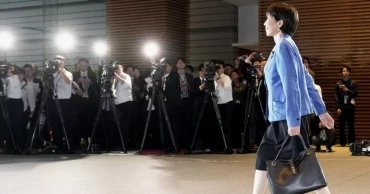
Japan’s Takaichi becomes unexpected style icon with ‘work, work, work’ mantra
Japanese Prime Minister Sanae Takaichi’s pledge to “work, work, work, work and work” — a line she used after winning the leadership of the ruling Liberal Democratic Party — has been selected as Japan’s catchphrase of the year, underscoring the determination that helped her become the country’s first female leader.
Takaichi, an ultraconservative politician, delivered the phrase in October during her LDP victory speech. It drew praise and concern in a country known for long working hours, especially for women who must balance jobs with family duties. The award triggered mixed reactions, with some interpreting it as a commentary on Japan’s culture of overwork.
Accepting the recognition this week, Takaichi said she meant only to express enthusiasm and did not intend to promote excessive labor. She also declined to elaborate on recent diplomatic tensions, including a dispute with Beijing after she suggested Japan could respond militarily if China attacked Taiwan.
Her rapid rise has also captured public attention for reasons beyond politics. Takaichi has become an unexpected fashion trendsetter, with many women trying to mirror her workwear and using the phrase “Sana-katsu” to express their support. Her simple black handbag, now known as the “Sanae Bag,” has become a major hit. The Grace Delight Tote, made by Tokyo-based Hamano Inc. and priced at 136,400 yen ($875), sold out in all eight colors shortly after she was photographed carrying it into her office on Oct. 21. The company says new buyers will have to wait until August because the handmade bags cannot be mass-produced.
Another item gaining popularity is her sparkly light-pink Jetstream 4&1 pen from Mitsubishi Pencil Co., which is frequently sold out online and in stores. Shoppers often post pictures proudly showing they use the same model as the prime minister.
Takaichi’s demanding schedule has also drawn attention. She held a 3 a.m. meeting on the first day of parliament and later told lawmakers she sleeps about two hours a night while caring for her husband, who is recovering from a stroke. She says her main source of relaxation is soaking in a hot bath morning and night.
Experts note that the intense public interest surrounding Takaichi is usually reserved for athletes or entertainers. Namiko Kubo-Kawai, a psychology professor at Nagoya Shukutoku University, says Takaichi has emerged as a new kind of role model — admired not for traditional femininity but for her authority, short haircut and practical clothing.
Takaichi’s conservative positions may limit her appeal among feminists. She supports maintaining male-only succession for Japan’s imperial family and opposes changes to a 19th-century law that would allow married couples to keep separate surnames. Still, Kubo-Kawai says her rise reflects growing diversity in Japan’s female role models, attracting women who may never have imagined rooting for a prime minister.
10 months ago

UK, Norway to launch joint patrols as Russia activity rises
Britain and Norway will begin joint naval patrols to safeguard undersea cables and track Russian submarines, the U.K. government announced Thursday as Prime Minister Keir Starmer met Norwegian Prime Minister Jonas Gahr Støre for defence talks.
Officials said a combined force of at least 13 vessels will operate in the North Atlantic to “hunt Russian submarines and protect critical infrastructure,” amid growing concerns over maritime security.
The move follows a £10 billion ($13.4 billion) agreement in August for Norway to purchase at least five British-built frigates. Those ships will work alongside eight Royal Navy vessels along NATO’s northern flank.
The two countries’ defence ministers formalised the pact in London on Thursday, which also includes a commitment for the Royal Navy to adopt Norwegian-made missiles for its surface fleet.
Starmer and Støre were expected to continue discussions at 10 Downing Street before travelling to RAF Lossiemouth in Scotland to meet British and Norwegian crews monitoring Russian naval movements. According to U.K. officials, Russian activity around British waters has risen by 30% over the past two years.
10 months ago

Putin rejects parts of US peace plan for Ukraine war
Russian President Vladimir Putin has said that several elements of a U.S. proposal to end the war in Ukraine are unacceptable to Moscow, signalling that negotiations remain far from a breakthrough despite Washington’s latest diplomatic push.
U.S. President Donald Trump has launched the most intensive effort yet to halt the conflict since Russia’s full-scale invasion nearly four years ago. But the initiative has again hit long-standing obstacles, particularly over whether Ukraine must cede territory to Russia and how future security guarantees for Kyiv would work.
Trump’s special envoy Steve Witkoff and son-in-law Jared Kushner are scheduled to meet Ukraine’s chief negotiator, Rustem Umerov, in Miami later Thursday, according to a senior Trump administration official who spoke on condition of anonymity.
Putin described his five-hour talks with Witkoff and Kushner in the Kremlin on Tuesday as “necessary,” “useful” and “difficult,” noting that some parts of the U.S. proposal were impossible for Russia to accept.
Speaking to India Today TV ahead of a visit to New Delhi, Putin said both sides “had to go through each point” of the U.S. plan, which prolonged the discussions. Russian state agencies Tass and RIA Novosti released excerpts before the full interview aired.
“It was a very concrete conversation,” Putin said, adding that while Moscow is prepared to discuss certain provisions, “others we can’t agree to.”
Trump said Wednesday that his envoys left Moscow convinced that Putin genuinely wants to reach a settlement. “Their impression was very strongly that he’d like to make a deal,” he said.
Putin declined to detail which points were acceptable or unacceptable, saying it was “premature” and could hinder the negotiation process, according to Tass.
European leaders, excluded from the direct talks between Washington, Moscow and Kyiv, have accused Putin of merely appearing to support Trump’s peace initiative.
Meanwhile, Russian attacks on Ukrainian cities continued overnight. A missile strike in Kryvyi Rih on Wednesday injured six people, including a 3-year-old girl, and damaged dozens of homes, a school and gas pipelines, city chief Oleksandr Vilkul said.
In Kherson, a 6-year-old girl died after being wounded by artillery fire the previous day, regional military head Oleksandr Prokudin reported. The Kherson Thermal Power Plant, which supplies heat to more than 40,000 residents, was forced to shut down Thursday following days of Russian drone and artillery strikes, he said.
Authorities have convened emergency meetings to secure alternative heating sources. In the meantime, warming tents with charging points have been set up across the city.
In Odesa, Russian drone strikes wounded six people and damaged civilian and energy infrastructure, regional administrator Oleh Kiper said.
Ukrainian officials reported that Russia launched two ballistic missiles and 138 drones overnight.
In the Russia-occupied part of Kherson, two men were killed and a 68-year-old woman was wounded when a Ukrainian drone hit their vehicle, Moscow-installed regional head Vladimir Saldo said.
10 months ago