world

Russia launches over 500 drones and missiles at Ukraine
Overnight, Russia launched more than 500 drones and around two dozen missiles targeting Ukraine, officials reported Wednesday. Amidst this, Ukraine’s President Volodymyr Zelenskyy and European leaders continued efforts to boost Ukraine’s defenses and revive momentum in stalled U.S.-led peace initiatives.
Zelenskyy said Russian attacks mainly focused on civilian infrastructure, especially energy facilities, as Ukraine braces for another winter three years after Russia’s full-scale invasion. The strikes concentrated on western and central regions of Ukraine and caused injuries to at least five people, according to the Ukrainian air force.
Despite ongoing Russian air attacks on civilian zones and harsh ground offensives along the roughly 1,000-kilometer (620-mile) front line, the fighting has not diminished in recent months, despite attempts by former U.S. President Donald Trump to halt the conflict.
Although Zelenskyy has shown openness to Trump’s ceasefire proposals and direct peace talks with Russian President Vladimir Putin, the Kremlin has expressed reservations.
In the context of recent diplomatic developments, Putin held meetings in China with Chinese President Xi Jinping, North Korean leader Kim Jong Un, and Indian Prime Minister Narendra Modi. These nations, according to Washington, support Russia’s military campaign, with North Korea reportedly sending troops and ammunition, while China and India continue purchasing Russian oil, indirectly aiding Russia’s war economy.
Zelenskyy described the recent attacks as a show of impunity by Putin. Writing on Telegram, he called for stronger sanctions, especially targeting Russia’s war economy, urging increased pressure to halt Russia’s aggression.
In his daily address on Tuesday evening, Zelenskyy noted a rise in Russian drone assaults, including attacks during daylight, and signaled a buildup of Russian forces in certain front-line sectors.
Zelenskyy arrived in Denmark on Tuesday for discussions with Northern European and Baltic nations regarding new military support and diplomatic backing for Ukraine.
Simultaneously, British Defense Secretary John Healey traveled to Kyiv to discuss ways to strengthen Ukraine’s military capabilities.
Later on Wednesday, Zelenskyy was scheduled to meet French President Emmanuel Macron in Paris, ahead of a European summit the following day to evaluate possible postwar security assurances in coordination with the United States.
11 months ago
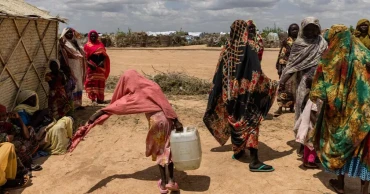
Over 1,000 killed in Darfur landslide; Sudan urges global assistance
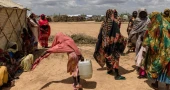
Sudan appealed for international aid on Tuesday after a landslide wiped out an entire village in western region of Darfur, killing an estimated 1,000 people in one of the deadliest natural disasters in the African country’s recent history.
The village of Tarasin was “completely leveled to the ground,” the Sudan Liberation Movement-Army said as it appealed to the U.N. and international aid groups for help to recover the bodies.
The tragedy happened Sunday in the village, located in Central Darfur’s Marrah Mountains, after days of heavy rainfall.
“Initial information indicates the death of all village residents, estimated to be more than 1,000 people," the rebel group said in a statement. ”Only one person survived,” it added.
Abdel-Wahid Nour, the group’s leader, made an appeal on Tuesday for international help. “The scale and magnitude of the disaster are immense and defy description,” he said.
The ruling Sovereign Council in Khartoum said it mourned “the death of hundreds of innocent residents” in the Marrah Mountains' landslide. In a statement, it said “all possible capabilities” have been mobilized to support the area.
Footage shared by the Marrah Mountains news outlet showed a flattened area between mountain ranges with a group of people searching the area.
Luca Renda, the U.N. humanitarian coordinator in Sudan, said he was “deeply saddened” by the reported landslide, adding that local sources indicated that “between 300 and 1,000 people may have lost their lives.” He said the U.N. and its partners were mobilizing to support the impacted communities at the scene.
A local emergency network, which has been providing support to communities across Sudan during the war, said its teams recovered the bodies of at nine people on Tuesday. Search teams were facing challenges to reach the area because of bad weather and lack of resources, it added.
‘Unprecedented tragedy’
Al-Amin Abdallah Abbas, a farmer from Ammo — a cluster of villages that includes Tarasin — said the area has seen weeks of heavy rainfall, with Tarasin among the worst hit. He said tribal and community leaders in nearby areas have moblized efforts to recover and bury the victims.
“The village and its people disappeared," he said. “It's an unprecedented tragedy.”
Mohamed Abdel-Rahman al-Nair, a spokesman for the Sudan Liberation Movement-Army, told The Associated Press that the village where the landslide took place is remote and accessible only by foot or donkeys.
Tarasin is located in the central Marrah Mountains, a volcanic area with a height of more than 3,000 meters (9,840 feet) at its summit. A world heritage site, the mountain chain is known for its lower temperature and higher rainfall than surrounding areas, according to UNICEF. It’s located more than 900 kilometers (560 miles) west of the capital city, Khartoum.
Sunday’s landslide was one of the deadliest natural disasters in Sudan’s recent history. Hundreds of people die every year in seasonal rains that run from July to October. Last year’s heavy rainfall caused the collapse of a dam in the eastern Red Sea Province, killing at least 30 people, according to the U.N.
The tragedy came as a devastating civil war has engulfed Sudan after tensions between the country’s military and the paramilitary Rapid Support Forces, or RSF, exploded into open fighting in April 2023 in the capital, Khartoum, and elsewhere in the country.
‘Deprived of adequate assistance’
Most of the conflict-stricken Darfur region has become mostly inaccessible for the U.N. and aid groups, given crippling restrictions and fighting between Sudan's military and the RSF.
Aid group Doctors Without Borders has warned that multiple communities in Darfur, including the Marrah Mountains, have been cut off after more than two years of war and isolation, describing these areas as “a black hole" in Sudan’s humanitarian response.
It said in a July report that people in these communities have been “deprived of adequate assistance and neglected by aid actors for over two years.”
The International Organization for Migration on Tuesday called for safe access and scaling-up support to the area, saying in a statement: “The people of Sudan cannot bear this never-ending suffering alone.”
The Sudan Liberation Movement-Army, centered in the Marrah Mountains area, is one of multiple rebel groups active in the Darfur and Kordofan regions. It hasn’t taken sides in the war.
The Marrah Mountains are a rugged volcanic chain extending for 160 kilometers (100 miles) southwest of el-Fasher, an epicenter of fighting between the military and the RSF. The area has turned into a hub for displaced families fleeing fighting in and around the besieged city.
On Monday, the RSF shelled el-Fasher, the military’s last stronghold in Darfur, killing at least 18 people and injuring over 100 others, according to the Sudan Doctors Network, a group of professionals tracking the war.
The RSF didn’t immediately respond to a request for comment.
Alleged war crimes
The conflict in Sudan has killed more than 40,000 people, forced more than 14 million to flee their homes and left some families eating grass in a desperate attempt to survive as famine swept parts of the country.
It has been marked by gross atrocities including ethnically motivated killing and rape, according to the United Nations and rights groups. The International Criminal Court said it was investigating alleged war crimes and crimes against humanity.
The conflict created the world’s largest humanitarian crisis, with more than 30 million of the country’s 50 million population needing assistance. Of those, over 630,000 live in famine-stricken areas in Darfur and Kordofan regions, according to the international hunger experts.
11 months ago
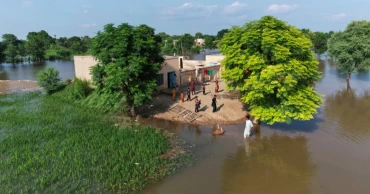
India warns Pakistan of more cross-border flooding due to heavy monsoon rains
India warned Pakistan about possible cross-border flooding for the second time in as many weeks as monsoon deluges cause death and widespread destruction in both countries.
The disaster management authority in eastern Pakistan announced the warning Tuesday.
New Delhi shared the warning with Pakistan on "humanitarian grounds” through New Delhi’s high commission in Islamabad rather than the water-sharing Indus Waters Treaty, which remains suspended, an Indian government official said.
Pakistan conducted mass evacuations late last month after India released water from overflowing dams and swollen rivers into low-lying border regions.
The countries came close to war in May and tensions frequently escalate between the two nuclear-armed rivals, making diplomatic contact uncommon.
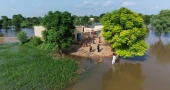
The latest warning concerns a surge in the Sutlej River, with floodwaters expected to enter Pakistan on Wednesday. Raging torrents already have devastated border communities in Kasur, Okara, Vehari and Bahawalnagar.
Punjab’s Disaster Management Authority said the Indian High Commission conveyed the warning to Pakistan through the Ministry of Water Resources.
Downpours lashed several parts of northern India and killed at least 10 people over the past 24 hours. Authorities were forced to close some schools and offices on Tuesday.
Landslides, flooding and gushing rivers in India’s Punjab state, home to more than 30 million people, killed at least 29 people last month. Rescue teams, backed by the army and disaster response services, have evacuated thousands from homes impacted by floods.
In New Delhi, water levels of the Yamuna River, which originates in the Himalayas, crossed the danger mark Tuesday, posing a threat of flooding in low-lying areas of the city.
Heavy rains also flooded parts of Gurugram city on the outskirts of the capital, causing severe traffic disruptions while waterlogging roads and apartments.
Officials in Pakistan’s Punjab province said Tuesday that more than 1 million people have been evacuated and 2.45 million people have been affected by monsoon flooding in recent months.
11 months ago

Beijing commemorates WWII victory with large-scale military display
Chinese leader Xi Jinping, speaking before a military parade to mark the 80th anniversary of the end of World War II, said Wednesday that humanity today must choose between peace and war and between dialogue and confrontation.
Xi started a brief address by remembering the victims of the war and called for eradication of the roots of war to prevent history from repeating itself.
The parade began after he spoke with troops marching in rhythmic lockstep, their boots echoing off the pavement, for a review by Xi, who is also head of China's military as chairman of the Central Military Commission.
The parade will showcase missiles, modern fighter jets and other military might as China seeks to wield greater influence on the global stage. Some of the military hardware is on public view for the first time.
Before they started marching, Xi rode by the entire length of the formations along Beijing’s central Chang’an Avenue in a classic-style black limousine. He stood up through an opening in a roof with four microphones lined in front of him and greeted flanks of troops as he passed them and rows of missiles and military vehicles.
They shouted back mottos in unison such as “We serve the people.”
Before Xi spoke, the ceremony began with an 80-gun artillery salute to mark the 80 years since the end of the war, followed by the national anthem, the “March of the Volunteers,” a song composed in 1935 during the early years of resistance against invading Japanese forces.
11 months ago

Pentagon approves deployment of 600 military lawyers as temporary immigration judges
Defense Secretary Pete Hegseth has authorized deploying up to 600 military lawyers to the Justice Department to serve as temporary immigration judges, a memo reviewed by AP shows.
The lawyers — both military and civilian — will be sent in groups of 150, with the first round to be identified next week. The move, requested by the Justice Department, aims to ease a massive immigration court backlog of about 3.5 million cases amid the Trump administration’s intensified immigration crackdown.
The appointments, initially set for up to 179 days but renewable, could nearly double the current pool of about 600 immigration judges, following recent dismissals and resignations.
The Pentagon and DOJ declined to comment, while the White House said the plan reflects efforts to address the backlog, calling it “a priority that everyone — including those waiting for adjudication — can rally around.”
11 months ago

Argentina orders house arrest for Nazi fugitive’s daughter linked to stolen artwork
Argentine prosecutors on Tuesday placed Patricia Kadgien, the daughter of a fugitive Nazi officer, and her husband under house arrest over a stolen 18th-century Italian painting.
Police conducted raids late Monday on homes linked to Patricia and her husband, Juan Carlos Cortegoso, in the coastal city of Mar del Plata.
Patricia Kadgien is the daughter of Friedrich Kadgien, a financial adviser to Hermann Göring, who looted Jewish-owned art galleries during World War II. Kadgien fled to Argentina after the war and died in Buenos Aires in 1978.
The stolen painting, a Baroque work called Portrait of a Lady by Italian painter Giuseppe Ghislandi, had been missing for 80 years. It was recently spotted in a real estate listing hanging above a green couch in Kadgien’s living room. The painting had been part of over 1,000 pieces stolen from Dutch-Jewish art dealer Jacques Goudstikker.
When police entered Kadgien’s house last week, the painting was gone and replaced by a tapestry. Additional raids on Monday seized several prints and two paintings possibly from the 1800s, but the stolen artwork was not found.
Prosecutor Carlos Martínez said the couple obstructed the investigation, leading to their home detention for at least 72 hours. He added that the Kadgien family had offered to return the painting but has not done so yet.
11 months ago
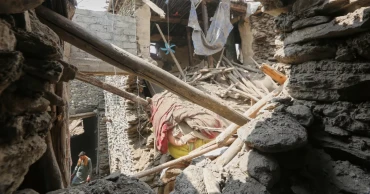
Afghanistan rocked by another earthquake amid ongoing crisis
A 5.2-magnitude earthquake jolted Nangarhar province in eastern Afghanistan on Tuesday afternoon, the U.S. Geological Survey reported.
According to the USGS, the tremor struck Jalalabad City, the provincial capital, at 4:59 p.m. local time. The epicentre was located at 34.67 degrees north latitude and 70.68 degrees east longitude, at a depth of 10 kilometres.
This quake comes just a day after a devastating 6.0-magnitude earthquake late Sunday killed over 1,400 people and injured more than 3,000 across Kunar, Nangarhar, and Laghman provinces.
Authorities are currently assessing the impact of the latest tremor in the already-stricken region.
11 months ago
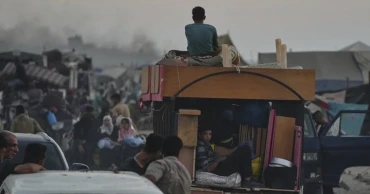
Israel starts calling up reservists as it begins Gaza City offensive
Israel began mobilizing tens of thousands of reservists Tuesday to expand its offensive in Gaza City, amid domestic opposition and international criticism.
Ground and air operations targeted northern and central Gaza, including Zeitoun and Shijaiyah neighborhoods, repeatedly hit during the 23-month conflict with Hamas. Once a bustling area, Zeitoun has been largely emptied and reduced to rubble, now considered a “dangerous combat zone” by Israel’s military.
Gaza City, Hamas’ political and military hub, still hosts extensive tunnel networks and hundreds of thousands of civilians facing both combat and famine. Israel plans to call up at least 60,000 reservists while extending the service of 20,000 already deployed.
Criticism of the war is growing in Israel, with movements encouraging reservists to refuse service, though the impact of the latest call-up remains unclear.
Malnutrition deaths in Gaza are rising, with 185 reported in August, the Health Ministry said. The ministry also reports 63,557 deaths and 160,660 injuries since the war began, with roughly half of the dead being women and children. The figures are widely cited by U.N. agencies as the most reliable estimates.
The conflict began on Oct. 7, 2023, when Hamas militants attacked southern Israel, killing 1,200, mostly civilians, and taking 251 hostages. Forty-eight remain in Gaza, with around 20 believed alive, according to Israel.
11 months ago
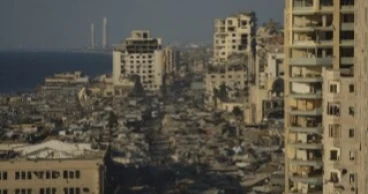
Belgium plans to recognize Palestinian state, Israel responds
Belgium is preparing to recognize a Palestinian state, the country’s foreign minister announced Tuesday, joining a growing number of nations considering the move amid Israel’s intensified military campaign in Gaza.
Foreign Minister Maxime Prévot said Belgium’s recognition plans will be revealed at the United Nations General Assembly on Sept. 9. However, the step is conditional: all Israeli hostages held in Gaza must be released, and Hamas must be removed from political authority in the enclave. These conditions make immediate recognition unlikely.
If implemented, Belgium would join over 140 countries, including more than a dozen in Europe, that already recognize Palestinian statehood.
Prévot also outlined measures targeting Israel, including a ban on goods from West Bank settlements and declaring Hamas leaders, violent settlers, and two far-right Israeli ministers as persona non grata.
“This is not about punishing the Israeli people but ensuring their government abides by international and humanitarian law and taking steps to change the situation on the ground,” Prévot said on social platform X.
He urged the European Union to increase pressure on Israel, including suspending its trade agreement under the Association Agreement.
Israel’s war in Gaza has strained relations among the EU’s 27 member states, sparked protests across Europe, and tested political coalitions in Belgium and the Netherlands. Yet Israel maintains strong ties with European military, business, and academic institutions.
Belgium’s announcement drew sharp criticism from Israel’s far-right national security minister Itamar Ben Gvir, a potential target of the sanctions along with Finance Minister Bezalel Smotrich. “The self-righteous European countries being manipulated by Hamas will eventually face terrorism themselves,” Ben Gvir told The Associated Press.
France and the United Kingdom have also announced plans to recognize Palestine, increasing diplomatic pressure on Israel.
Countries like Australia, Canada, and European nations linking recognition to reforms by the Palestinian Authority face challenges, as the PA is widely viewed as corrupt and unpopular among Palestinians. Israel opposes granting it a larger role in postwar Gaza.
The Palestinians aim to establish an independent state in the occupied West Bank, annexed east Jerusalem, and Gaza—territories Israel captured in the 1967 Middle East war. Israel’s government and most political factions have historically opposed Palestinian statehood and argue that recognition now would reward militants following Hamas’ Oct. 7 attacks.
11 months ago
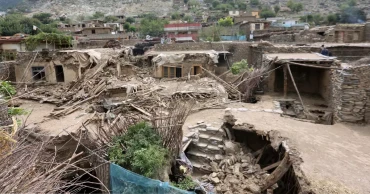
Afghanistan earthquake death toll tops 1,400
The death toll from a devastating earthquake that struck eastern Afghanistan has surpassed 1,400, with over 3,000 people injured, according to Taliban government spokesperson Zabihullah Mujahid, who confirmed the figures on platform X (formerly Twitter).
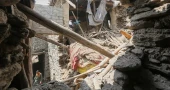
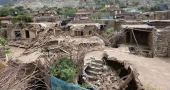
Rescue operations are underway in what UN officials described as a “race against time” to reach remote, mountainous areas worst hit by Sunday’s 6.0 magnitude quake. Entire villages were flattened, and many residents remain trapped under the debris of mud and wood homes that collapsed under the force of the tremor.
“The people of Afghanistan are enduring multiple crises, and their resilience is at a breaking point,” said Indrika Ratwatte, the UN’s Resident Coordinator in Afghanistan. He urged the international community to step up urgently, stressing that the situation involves life-or-death decisions.
This is the third major earthquake to hit Afghanistan since the Taliban took control in 2021. The country is already grappling with severe aid cuts, economic hardship, and a surge in returnees from neighboring Iran and Pakistan.
Ratwatte noted that many of the homes, made from fragile materials, crumbled during the quake while residents were asleep—causing a high casualty rate that could rise further in the coming days.
Despite international reluctance to engage directly with the Taliban government—recognized only by Russia—the regime has appealed for global assistance.
Aid efforts have been hampered by limited funding, global donor fatigue, and concerns over Taliban policies, especially restrictions on Afghan women and girls, including a ban on their work with NGOs. Earlier this year, the U.S. significantly cut aid to Afghanistan, citing fears of funds benefiting the Taliban.
Kate Carey, Deputy Head of the UN’s humanitarian coordination office in Afghanistan, said more than 420 health facilities have closed or suspended services due to funding shortfalls, including 80 in the eastern region affected by the quake.
“As a result, the remaining health centers are overcrowded, under-resourced, and located farther from quake-hit communities—creating a dangerous gap in emergency trauma care during the critical first 24 to 72 hours,” Carey said.
11 months ago