world

Verdict, sentencing phase of Bolsonaro’s ‘historic’ election conspiracy trial begins
The trial of Brazil’s former President Jair Bolsonaro entered a decisive stage Tuesday as the verdict and sentencing phase began over accusations that he conspired to remain in power after losing the 2022 election.
A Supreme Court panel has scheduled sessions through Sept. 12 to determine whether the far-right leader is guilty of trying to overturn the vote that narrowly made Luiz Inácio Lula da Silva president.
Bolsonaro, who insists he is innocent, faces five charges connected to an alleged coup attempt. Currently under house arrest, he has repeatedly claimed the case is politically motivated.
That claim has drawn support from U.S. President Donald Trump, who linked a 50% tariff on Brazilian imports to Bolsonaro’s legal battle and described the proceedings as a “witch hunt” against his ally. The comment has sparked nationalist backlash among Brazilian politicians.
The ex-president is accused of plotting a coup, joining an armed criminal organization, attempting to violently undermine democracy, and committing two acts of state property destruction. A conviction on the coup charge alone could result in up to 12 years in prison.
Seven Bolsonaro allies are also on trial, including former running mate and defense minister Walter Braga Netto and ex-defense minister Paulo Sérgio Nogueira.
Brazil’s electoral court has already barred Bolsonaro from running for office until 2030 for abusing his presidential powers and spreading baseless claims against the country’s electronic voting system.
According to a federal police probe, the spread of disinformation about the voting system was part of a wider strategy to cling to power. Prosecutors allege that plan included assassination plots against Lula and a Supreme Court justice, as well as the Jan. 8 attack on government buildings that sought to trigger military intervention against Lula’s new administration.
The prosecution completed its case in July, followed by the defense in mid-August. Soon after, police accused Bolsonaro and his son Eduardo of obstructing justice in a separate case, saying the former president once considered fleeing to Argentina for asylum.
Eduardo Bolsonaro, who relocated to the U.S. earlier this year despite holding a congressional seat, has lobbied for sanctions against Justice Alexandre de Moraes, who oversees his father’s trial. Trump’s administration imposed such sanctions in late July.
Authorities consider Bolsonaro a flight risk. Ahead of the verdict phase, the Supreme Court imposed tighter security, including inspections of vehicles leaving his residence and constant monitoring of the area.
Observers have described the case as ‘historic,’ noting it is the first time top officials accused of attempting a coup face trial.
Brazil was ruled by a military dictatorship from 1964 to 1985, an era Bolsonaro has openly admired. While an Amnesty Law passed in 1979 shielded officials from prosecution for human rights abuses, experts say this trial signals a break with that legacy of impunity.
“History will tell whether it is 100% successful, but what we are seeing today is a movement that breaks with a tradition of military coups,” said Lucas Figueiredo, a writer on Brazil’s dictatorship era.
11 months ago
Rescue operations resume after Afghanistan quake kills over 800
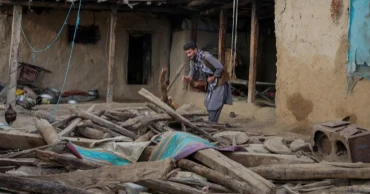
Rescue operations resumed Monday after a devastating 6.0-magnitude earthquake struck eastern Afghanistan late Sunday, leaving more than 800 people dead, according to preliminary figures from the UN’s humanitarian agency.
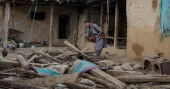
The quake, centered in the remote and mountainous Kunar province, has flattened villages and trapped many under the rubble.
Officials warned the death toll could rise sharply as rescue efforts are being hampered by blocked roads, forcing helicopters to deliver aid and reach survivors.
Daniel Endres, the UN’s lead coordinator in Afghanistan, told the BBC that hot meals and blankets were being prepared for affected families.
The Taliban has appealed for international assistance, while the United Kingdom announced £1 million in relief support, clarifying that the funds would not be handled by the Taliban.
The quake struck at a shallow depth of just 8 kilometers (5 miles), making it particularly destructive. Tremors were felt as far away as the Afghan capital Kabul and Pakistan’s capital Islamabad.
11 months ago
Strikes across Gaza kill at least 31 as scholars accuse Israel of genocide
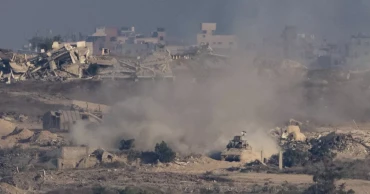
Israeli airstrikes across the Gaza Strip on Monday left at least 31 people dead as the military pushed forward with its offensive in the territory’s largest city, according to health officials. At the same time, leading genocide scholars accused Israel of committing genocide, charges the Israeli government strongly denies.
Explosions from artillery and airstrikes shook Gaza City after Israel declared it a combat zone last week. Residents in Jabaliya refugee camp and the city’s outskirts said explosive-laden robots were being used to destroy buildings.
“Another merciless night in Gaza City,” said Saeed Abu Elaish, a medic originally from Jabaliya who is sheltering in the city’s northwest.
Health officials reported that at least 31 people were killed Monday, more than half of them women and children. Thirteen deaths occurred in Gaza City, which has been repeatedly targeted since Hamas-led militants launched the Oct. 7, 2023, attack that triggered the war.
Israel insists its operations are aimed at militants and says Hamas is responsible for civilian deaths because it operates in crowded neighborhoods.
Gaza under siege: war and hungerGaza City residents, many uprooted multiple times, now face both conflict and famine. The world’s top food-crisis authority declared last month that Gaza is in the grip of famine — a crisis worsened by Israel’s blockade, mass displacement, and the collapse of local food production.
Since the war began, 63,557 Palestinians have been killed and 160,660 wounded, according to Gaza’s Health Ministry. While the ministry does not separate civilians from fighters, it says women and children account for about half of the dead. The ministry, run by Hamas but staffed by health professionals, is considered by U.N. agencies and experts to provide the most credible figures, though Israel disputes them and has not offered its own count.
On Oct. 7, Hamas-led militants killed 1,200 people in Israel, mostly civilians, and took 251 hostages. Forty-eight captives remain in Gaza, with Israel believing around 20 are alive.
Genocide accusations escalateOn Monday, the International Association of Genocide Scholars, the world’s largest body of experts in the field, declared that Israel is committing genocide in Gaza.
Israel — founded after the Holocaust in which 6 million Jews and others were killed — strongly rejects the charge. It maintains that it seeks to minimize civilian harm and is waging a defensive war after Hamas’ attack, which Israel calls genocidal in nature.
The association’s resolution stated that “Israel’s policies and actions in Gaza meet the legal definition of genocide,” as well as crimes against humanity and war crimes. The resolution passed with support from 86% of members who voted. Voting details were not disclosed.
“People who are experts in the study of genocide can see this situation for what it is,” said Melanie O’Brien, the association’s president and professor of international law at the University of Western Australia.
Israel’s Foreign Ministry dismissed the declaration as “an embarrassment to the legal profession and to any academic standard,” saying it was “entirely based on Hamas’ campaign of lies.”
In July, the Israeli rights groups B’Tselem and Physicians for Human Rights-Israel also accused Israel of genocide — the first time Jewish-led organizations inside the country had used the term. International human rights organizations have made similar accusations.
Grief and anger at hostage funeralThousands attended the funeral of Idan Shtivi, one of two hostages whose remains were retrieved last week. A private ceremony was held for the other, Ilan Weiss.
Some mourners lashed out at the government for failing to secure a deal with Hamas to end the war and bring the hostages home.
“It is very, very infuriating that no one, no one from this government stands up and says enough,” said Ami Dagan, a mourner from Rishon Letzion.
“It’s a horror, it’s profound sadness and grief beyond words to describe the anger, the insult to the hostages, the insult to the fallen, the insult to the soldiers sent once again to Gaza," said Ruti Taro, another mourner. “No one knows why, except for the power-hungry ruler.”
Criticism of Prime Minister Benjamin Netanyahu has grown, with many Israelis accusing him of prolonging the war for political survival. Large-scale protests demanding a ceasefire and hostage release have surged in recent weeks.
Flotilla departs Barcelona after storm delayMeanwhile, an activist flotilla aiming to break Israel’s blockade set sail again from Barcelona after stormy weather forced a temporary return to port.
The Global Sumud Flotilla, involving about 20 boats with participants from 44 countries, includes climate activist Greta Thunberg. She had joined a previous flotilla in July that was intercepted by Israel.
This is the largest attempt yet to symbolically challenge Israel’s blockade, though past efforts have all been stopped at sea. Israel says the blockade is necessary to block weapons shipments to Hamas, insisting aid can reach Gaza through other means.
As the latest offensive in Gaza City continues, Israel has further restricted food deliveries to northern Gaza.
11 months ago

14,000 US-bound migrants have turned back south since Trump border changes, UN reports
More than 14,000 mostly Venezuelan migrants who had set their sights on reaching the United States have reversed direction and headed south since U.S. President Donald Trump’s immigration crackdown took effect, according to a report released Friday by the governments of Colombia, Panama, and Costa Rica.
The trend, described as “reverse flow” migration, is primarily made up of Venezuelans who fled years of economic, social, and political turmoil at home, only to find that U.S. policies now bar asylum-seekers.
Migration through the dangerous Darien Gap between Colombia and Panama peaked in 2023 with over half a million crossings. While the pace slowed in 2024, it has nearly halted this year. The joint report, backed by the U.N. High Commissioner for Human Rights, said northbound migration has dropped 97% in 2025.
Interviews with migrants heading back south in Costa Rica, Panama, and Colombia showed that 97% were Venezuelans, and nearly half said they planned to return to their home country. Most said they had no choice but to turn back because they could no longer enter the U.S. legally.
Since 2017, around 8 million Venezuelans have fled the crisis. Many initially sought refuge in South American nations such as Colombia, Peru, Ecuador, and Chile, before a large wave shifted toward the U.S. starting in 2021, braving the perilous Darien route.
During the Biden administration, a U.S. government mobile app was the main pathway for asylum-seekers. But Trump scrapped the app on his first day in office, leaving thousands stranded in Mexico. Those who had continued their journey north when the new restrictions began are now heading back. A quarter of those interviewed plan to settle in Colombia, while others were unsure of their destination.
Colombia and other South American nations have long appealed for international assistance to manage the Venezuelan migrant influx, even before many began moving toward the U.S. Meanwhile, Venezuela’s political and economic crisis continues unabated.
Migrants retracing their steps face even greater risks, the report noted. Many lack money or jobs, and are dropped into areas dominated by criminal groups that increasingly prey on them. “Most of these people are already victims of human rights abuses," said Scott Campbell, a U.N. human rights representative in Colombia. “We urge authorities to aid people in this reverse migration to prevent them from being exploited or falling into trafficking networks run by illegal armed groups.”
The development marks a dramatic reversal in one of the world’s largest migration movements.
Migrants heading south typically take buses through Mexico and Central America to reach Panama, then pay between $260 and $280 for overcrowded boat rides back to Colombia.
Two routes are used: one across the Caribbean Sea, where they land in Necocli, Colombia — the same town where many first entered the Darien Gap; the other along the Pacific coast of Panama and Colombia, ending in remote towns or Buenaventura. Colombia’s Ombudsman’s Office estimates about 450 migrants have taken the latter, more hazardous path, while the U.N. has recorded cases of people being scammed, stranded, or suffering boat accidents, arriving exhausted and vulnerable.
The Pacific region remains one of Colombia’s most violent zones, where armed groups fill the void left by weak state presence.
11 months ago
EU leader’s plane hit by suspected Russian GPS jamming in Bulgaria
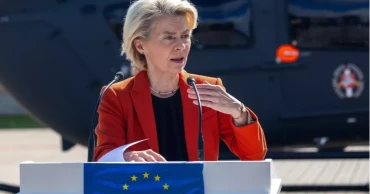
A plane carrying European Commission President Ursula von der Leyen experienced GPS jamming over Bulgaria in what officials suspect was Russian interference, the EU said Monday.
The aircraft landed safely in Plovdiv, and von der Leyen continued her four-day tour of EU states bordering Russia and Belarus. Commission spokesperson Arianna Podestà confirmed the disruption, citing Bulgarian authorities’ suspicion of “blatant interference by Russia.”
Podestà said the incident highlighted the urgency of von der Leyen’s mission, stressing EU commitments to boost defense spending and readiness. Bulgaria also confirmed the aircraft lost GPS navigation signals on approach to Plovdiv Airport. Von der Leyen was scheduled to hold a press conference later in Romania.
11 months ago
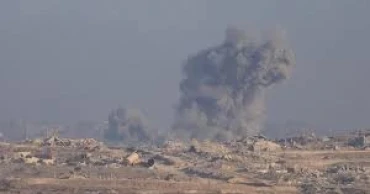
Israel kills Hamas spokesperson as offensive in Gaza intensifies
Israel announced Sunday that it had killed Abu Obeida, the longtime spokesperson for Hamas’ military wing, as its security cabinet convened to discuss expanding military operations in densely populated areas of Gaza.
An anonymous official said ceasefire talks were not on the cabinet’s agenda.
Israeli Defense Minister Israel Katz confirmed that Abu Obeida, a key figure in Hamas’ Qassam Brigades, was killed over the weekend. Hamas has not confirmed his death. According to the Israeli military, Abu Obeida — whose real name was Hudahaifa Kahlout — was responsible for publicizing hostage videos and footage from the October 7 attacks. The military reiterated that Hamas leaders abroad remain targets.
The offensive comes amid Israel’s broader campaign to dismantle Hamas following the October 2023 assault in which 251 people were taken hostage and around 1,200 — mostly civilians — were killed in southern Israel. Currently, fewer than 50 hostages are still held in Gaza, with only around 20 believed to be alive.
Outside the cabinet meeting, families of hostages protested the government’s unwillingness to prioritize a ceasefire. Einav Zangauker, whose son is a hostage, criticized the government for refusing to reach a deal that could save lives.
Deadly Attacks Amid Aid Efforts
Since Saturday, at least 43 Palestinians have been killed, most in Gaza City. Shifa Hospital reported 29 bodies, including 10 civilians who died while attempting to access aid. One grieving woman questioned the rationale behind the airstrikes, asking whether rubble was being mistaken for resistance fighters.
Al-Awda Hospital reported another seven civilians were shot while trying to reach humanitarian aid. Witnesses said Israeli troops opened fire on crowds in the Netzarim Corridor — a military zone that cuts across Gaza. “We just wanted food,” said Ragheb Abu Lebda, who saw multiple people wounded. “It’s a death trap.”
Civilians continue to die amid chaos surrounding humanitarian convoys. The Gaza Humanitarian Foundation (GHF), a U.S.-funded aid organization, denied any incident near its facilities that day. Israel’s military has not commented on the civilian casualties reported Sunday.
City in Ruins, Civilians Too Weary to Flee
Israeli forces have been targeting areas around Gaza City for weeks, preparing for a larger offensive. Airstrikes have intensified in neighborhoods like Rimal, where smoke filled the sky Sunday. Residents, exhausted and displaced multiple times, picked through the rubble for basic supplies. Many say they are too tired to evacuate again or doubt any part of Gaza is truly safe.
The U.N. reports that over 90% of Gaza’s 2 million residents have been displaced at least once, often multiple times. Israel has hinted that it will limit aid to Gaza City while planning new infrastructure in the south — steps that Palestinians see as forced displacement.
Rising Deaths from Starvation
Gaza’s Health Ministry reported seven more adult deaths due to malnutrition in the past day. Since June, 215 adults and 124 children have died from hunger-related causes, the ministry says.
Meanwhile, a humanitarian flotilla departed from Barcelona in the largest effort yet to breach Israel’s naval blockade. Previous attempts have been unsuccessful.
According to Gaza’s Health Ministry, over 63,000 Palestinians have been killed since the war began. About half of the dead are believed to be women and children. While Israel disputes these figures, it has not released its own casualty estimates. The U.N. and independent organizations regard the ministry’s numbers as generally credible.
11 months ago
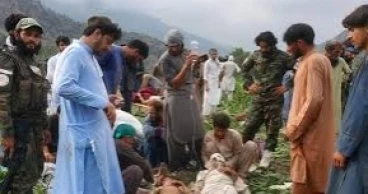
Powerful earthquake kills 800 in eastern Afghanistan, over 2,500 injured
A powerful earthquake struck eastern Afghanistan late Sunday, killing at least 800 people and injuring more than 2,500, according to the Taliban government. Survivors spent the night digging through rubble with their bare hands, searching for family members trapped beneath collapsed homes.
The 6.0-magnitude quake hit around 11:47 p.m. and was centered 27 kilometers northeast of Jalalabad in Nangarhar province, at a shallow depth of 8 kilometers — increasing its destructive impact. Several aftershocks followed.
The hardest-hit areas were in Kunar province, where entire villages were leveled. Footage from the scene showed chaotic rescue efforts, with injured victims being carried from the debris and airlifted to hospitals.
At a press briefing Monday, Taliban spokesman Zabihullah Mujahid confirmed the rising toll and said most fatalities were in Kunar. He vowed that all available resources would be used for rescue operations.
Many of the buildings in the affected areas were poorly constructed, especially in rural villages where mud bricks and wood are commonly used. One resident of Nurgal district said his entire village had collapsed. “Children, the elderly, young people — all are under the rubble,” he said, pleading for urgent help.
In mountainous eastern Afghanistan, where communication is limited and roads are rough, rescue efforts have been complicated. Dozens of emergency flights have operated out of Nangarhar Airport to transport the wounded.
One survivor, Sadiqullah from Maza Dara, described being trapped under debris after saving three of his children. His wife and two sons died, and his father was injured. “It felt like the entire mountain was shaking,” he said from a hospital bed in Nangarhar.
Health Ministry spokesman Sharafat Zaman said casualty figures may rise as reports continue to come in from remote areas. Medical teams from Kunar, Nangarhar, and Kabul have been deployed.
Jalalabad, near the epicenter and close to the Pakistan border, is a major trade hub with a large metropolitan population and significant agricultural activity. It remained on high alert following the quake.
The tremor was also felt in parts of Pakistan, including Islamabad, though no casualties were reported there. Pakistani Prime Minister Shehbaz Sharif expressed condolences and said his country was ready to assist.
The latest disaster comes less than two years after a 6.3-magnitude earthquake struck Afghanistan in October 2023, killing thousands. That quake was the deadliest in recent Afghan history, with the Taliban estimating 4,000 dead, while the UN put the toll closer to 1,500.
11 months ago
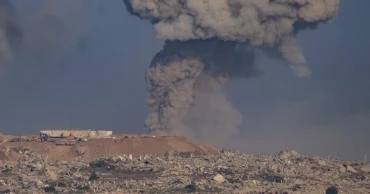
Hamas’ longtime spokesperson Abu Obeida killed in Gaza offensive
The Israeli military announced Sunday it had killed Abu Obeida, the longtime spokesperson for Hamas’ armed wing, as the country’s security cabinet convened to discuss the widening offensive in some of Gaza’s most populated areas.
Officials said there were no plans to address ceasefire negotiations at the meeting.
Defense Minister Israel Katz identified the slain spokesperson as Abu Obeida, the nom de guerre for the representative of Hamas’ Qassam Brigades, saying he was killed over the weekend. Hamas has not commented on the claim. The Israeli military further identified him as Hudahaifa Kahlout, alleging he was behind videos of hostages and footage of the Oct. 7 Hamas-led attack.
Abu Obeida’s last statement came Friday as Israel declared Gaza City a combat zone. He said militants would try to safeguard living hostages but warned they were in battle areas, adding that the remains of dead hostages would “disappear forever.”
Israel has targeted many Hamas leaders since Oct. 7, 2023, when militants killed around 1,200 people, mostly civilians, and abducted 251 in southern Israel. Fewer than 50 hostages remain in Gaza, about 20 of them believed to be alive.
Families of hostages protested outside the cabinet meeting, demanding a ceasefire. “It is our side that is unwilling to sign a comprehensive deal and is unwilling to end the war and is deciding to sacrifice my child while he is still alive,” said Einav Zangauker, mother of hostage Matan Zangauker.
Local hospitals reported at least 43 Palestinians killed since Saturday, most in Gaza City. Shifa Hospital said 29 bodies were brought to its morgue, including 10 people killed while seeking aid. “Where are the resistance fighters that (Prime Minister Benjamin) Netanyahu claims he is bombing? Does he consider stones resistance fighters?” asked a grieving relative at Shifa.
Al-Awda Hospital reported seven civilians killed while trying to reach aid. Witnesses said Israeli troops opened fire in the Netzarim Corridor. “We were trying to get food, but we were met with the occupation’s bullets,” said Ragheb Abu Lebda. “It’s a death trap.”
Civilians have also been killed near U.N. convoys and Gaza Humanitarian Foundation sites. The GHF denied any incident Sunday. Israel’s military did not comment on the casualties.
Israel has stepped up airstrikes on Gaza City’s coastal areas, including Rimal. The military has urged civilians to flee south, but many say they are too exhausted after repeated displacements, with over 90% of Gaza’s population uprooted at least once. Palestinians say Israel’s reduction of aid to Gaza City and new projects in the south amount to forced displacement.
Meanwhile, Gaza’s Health Ministry said seven more adults died of malnutrition-related causes in the past 24 hours, bringing the total to 215 since June, along with 124 children since the war began.
The ministry said at least 63,371 Palestinians have been killed during the conflict, about half of them women and children.
In a new attempt to break the Israeli blockade, a flotilla carrying humanitarian aid and activists departed Sunday from Barcelona, though similar efforts have failed in the past.
11 months ago

Xi, Modi pledge to address border issues, strengthen ties at Tianjin meeting
Chinese President Xi Jinping and Indian Prime Minister Narendra Modi on Sunday committed to resolving border disputes and enhancing cooperation as they met ahead of a regional summit in Tianjin.
Modi’s trip marks his first visit to China since deadly border clashes in 2020 strained relations between the two nations. He is attending in connection with India’s membership in the Shanghai Cooperation Organization, a regional political, economic, and security bloc founded by China.
In his opening remarks, Modi said ties with China have moved in “a meaningful direction,” noting there is now “a peaceful environment at the borders after disengagement." He also stressed “the importance of peace and tranquillity on the border areas for continued development of bilateral relations,” according to India’s Ministry of External Affairs.
Xi, meanwhile, said he hoped the meeting would “further elevate” and “promote the sustained, healthy and stable development of bilateral relations,” state broadcaster CCTV reported. He added that the two sides should “not let the border issue define the overall China-India relationship," emphasizing that economic growth must be their focus.
“As long as they remain committed to the overarching goal of being partners, not rivals, and providing development opportunities, not threats, China-India relations will flourish and move forward steadily," Xi said.
Russian President Vladimir Putin also arrived in Tianjin on Sunday and is expected to meet with both leaders in the coming days.
The talks follow Chinese Foreign Minister Wang Yi’s visit to New Delhi earlier in August, during which both sides pledged to resume border negotiations, reintroduce visas, and restart direct flights.
Wang’s trip coincided with U.S. President Donald Trump’s decision to impose 50% tariffs on India for buying Russian oil, but India had already been working to mend ties with Beijing. On Sunday, Modi underlined that “India and China both pursue strategic autonomy, and their relations should not be seen through a third country lens,” according to India’s foreign ministry.
This year, both governments have increased official exchanges and discussed easing trade and border restrictions. In June, Beijing allowed Indian pilgrims to visit holy sites in Tibet.
11 months ago
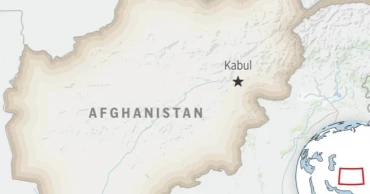
Earthquake devastates Afghan villages, 250 dead
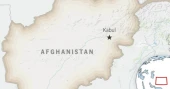
A powerful earthquake near Afghanistan’s eastern border with Pakistan leveled villages and caused widespread destruction late Sunday, leaving at least 250 people dead and 500 injured, officials said. Authorities warned the toll could climb as rescue teams reached affected areas.
The 6.0 magnitude quake struck at 11:47 p.m. in Kunar province, about 27 kilometers (17 miles) east-northeast of Jalalabad in neighboring Nangarhar province, at a shallow depth of 8 kilometers (5 miles), according to the U.S. Geological Survey. Shallow quakes typically cause greater damage.
The Kunar Disaster Management Authority reported that the worst-hit districts were Nur Gul, Soki, Watpur, Manogi and Chapadare.
“Rescue operations are still underway there, and several villages have been completely destroyed. The figures for martyrs and injured are changing. Medical teams from Kunar, Nangarhar and the capital Kabul have arrived in the area,” said Sharafat Zaman, a spokesman for the ministry of public health.
He noted that many areas had yet to provide casualty figures and that “the numbers were expected to change” as reports came in.
Jalalabad, a major trading hub near the Pakistan border with around 300,000 residents, is surrounded by vulnerable rural communities where homes are often built of mud bricks and wood. The region is also known for agriculture, including citrus and rice farming, sustained by the Kabul River.
Afghanistan has a history of devastating quakes. On Oct. 7, 2023, a magnitude 6.3 earthquake killed thousands. The Taliban government estimated about 4,000 deaths, while the U.N. put the figure closer to 1,500, making it one of the country’s deadliest recent disasters.
11 months ago