tech
Trump bids Elon Musk farewell from Oval Office, applauding his disruptive influence
President Donald Trump formally bid goodbye to Elon Musk at the White House on Friday, closing a controversial and impactful chapter for the billionaire entrepreneur, who is stepping down from his leadership role at the Department of Government Efficiency (DOGE).
Musk, now returning full-time to helm his companies — including Tesla, SpaceX, and social media platform X — was praised by Trump for bringing “a colossal change” to government operations. Trump acknowledged that some of Musk’s team would remain in place, continuing the work they started.
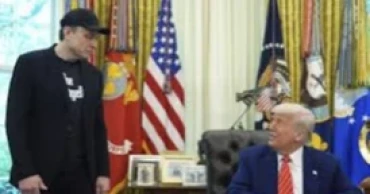
Wearing black attire and a “The Dogefather” T-shirt, Musk nodded as Trump listed off federal contracts that had been eliminated under Musk’s oversight. Accepting a ceremonial key, Musk said, “I think the DOGE team is doing an incredible job... and they’re going to keep it up.”
Musk’s time at DOGE left a major imprint on the federal government, including the dismissal or forced resignation of thousands of employees. Agencies like USAID — which supports global humanitarian work — were gutted. Researchers at Boston University estimate that these budget cuts may have already led to hundreds of thousands of deaths.
The State Department responded by saying core health initiatives like PEPFAR (the U.S. HIV/AIDS program) remain active but didn’t address broader funding reductions. They urged other nations to increase their humanitarian efforts.
Musk, however, fell short of his ambitious fiscal promises. After vowing to slash $1–$2 trillion in federal spending, he later adjusted the goal to $150 billion for this fiscal year. DOGE claims $175 billion in savings, but the site’s accuracy has been questioned due to frequent errors and inflated figures.
During the Oval Office event, observers noticed a bruise near Musk’s eye. He explained it lightheartedly, saying his young son punched him during playful roughhousing. “I said, go ahead, punch me in the face — and he did,” Musk remarked.
Trump described Musk’s impact as “the most sweeping and consequential government reform in generations,” and hinted that Musk would remain informally involved: “He’s really not leaving… he’ll be around.”
Still, the spotlight on Musk appeared to be dimming. Once a constant presence beside Trump, he now stood by quietly as reporters asked the president about various unrelated issues — from France’s president to possible pardons. When Musk was asked about tariffs affecting Tesla, Trump answered for him.
Musk, the world’s richest person and a top donor to Trump’s last campaign, recently said he plans to scale back his political contributions.
Trump, eager to leave Musk’s exit on a positive note, posted on social media: “This will be his last day, but not really… Elon is terrific!”
Though his role at DOGE was always meant to be temporary, Musk had previously floated the idea of staying on part time. He’s been vague about the agency’s future without him but expressed optimism.
“DOGE is a way of life,” he recently told reporters. “Like Buddhism.”
1 year ago
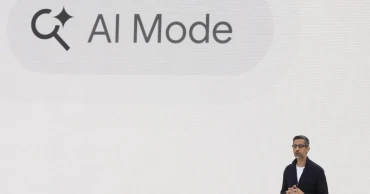
Google, Justice Department face off in climactic showdown in search monopoly case
Google will return to federal court Friday to fend off the U.S. Justice Department's attempt to topple its internet empire at the same time it's navigating a pivotal shift to artificial intelligence that could undercut its power.
The legal and technological threats facing Google are among the key issues that will be dissected during the closing arguments of a legal proceeding that will determine the changes imposed upon the company in the wake of its dominant search engine being declared as an illegal monopoly by U.S. District Judge Amit Mehta last year.
Brandishing evidence presented during a recent three-week stretch of hearings, Justice Department lawyers will attempt to persuade Mehta to order a radical shake-up that includes a ban on Google paying to lock its search engine in as the default on smart devices and an order requiring the company to sell its Chrome browser.
Google lawyers are expected to assert only minor concessions are needed, especially as the upheaval triggered by advances in artificial intelligence already are reshaping the search landscape, as alternative, conversational search options are rolling out from AI startups that are hoping to use the Department of Justice's four-and-half-year-old case to gain the upper hand in the next technological frontier.
“Over weeks of testimony, we heard from a series of well-funded companies eager to gain access to Google’s technology so they don’t have to innovate themselves,” Lee-Anne Mulholland, Google's vice president of regulatory affairs, wrote in a blog post earlier this month. “What we didn’t hear was how DOJ’s extreme proposals would benefit consumers.”
After the day-long closing arguments, Mehta will spend much of the summer mulling a decision that he plans to issue before Labor Day. Google has already vowed to appeal the ruling that branded its search engine as a monopoly, a step it can't take until the judge orders a remedy.
While both sides of this showdown agree that AI is an inflection point for the industry's future, they have disparate views on how the shift will affect Google.
Nvidia tops Q1 forecasts despite tariff hurdles
The Justice Department contends that AI technology by itself won't rein in Google's power, arguing additional legal restraints must be slapped on a search engine that's the main reason its parent company, Alphabet Inc., is valued at $2 trillion.
Google has already been deploying AI to transform its search engine i nto an answer engine, an effort that has so far helped maintain its perch as the internet's main gateway despite inroads being made by alternatives from the likes of OpenAI and Perplexity.
The Justice Department contends a divestiture of the Chrome browser that Google CEO Sundar Pichai helped build nearly 20 years ago would be among the most effective countermeasures against Google continuing to amass massive volumes of browser traffic and personal data that could be leveraged to retain its dominance in the AI era. Executives from both OpenAi and Perplexity testified last month that they would be eager bidders for the Chrome browser if Mehta orders its sale.
The debate over Google's fate also has pulled in opinions from Apple, mobile app developers, legal scholars and startups.
Apple, which collects more than $20 billion annually to make Google the default search engine on the iPhone and its other devices, filed briefs arguing against the Justice Department's proposed 10-year ban on such lucrative lock-in agreements. Apple told the judge that prohibiting the contracts would deprive the company of money that it funnels into its own research, and that the ban might even make Google even more powerful because the company would be able to hold onto its money while consumers would end up choosing its search engine anyway. The Cupertino, California, company also told the judge a ban wouldn't compel it to build its own search engine to compete against Google.
In other filings, a group of legal scholars said the Justice Department's proposed divestiture of Chrome would be an improper penalty that would inject unwarranted government interference in a company's business. Meanwhile, former Federal Trade Commission officials James Cooper and Andrew Stivers warned that another proposal that would require Google to share its data with rival search engines “does not account for the expectations users have developed over time regarding the privacy, security, and stewardship” of their personal information.
The App Association, a group that represents mostly small software developers, also advised Mehta not to adopt the Justice Department's proposed changes because of the ripple effects they would have across the tech industry.
Hobbling Google in the way the Justice Department envisions would make it more difficult for startups to realize their goal of being acquired, the App Association wrote. “Developers will be overcome by uncertainty” if Google is torn apart, the group argues.
SpaceX launches another Starship rocket after back-to-back explosions, but it tumbles out of control
Buy Y Combinator, an incubator that has helped create hundreds of startups collectively worth about $800 billion filed documents pushing for the dramatic overhaul of Google, whose immense power has discouraged venture capitalists from investing in areas that are considered to be part of the company's “kill zone.”
Startups “also need to be able to get their products into the hands of users, free from restrictive dealing and self-preferencing that locks up important distribution channels. As things stand, Google has locked up the most critical distribution channels, freezing the general search and search text advertising markets into static competition for more than a decade,” Y Combinator told Mehta.
1 year ago

Govt may lose Tk 284cr yearly if ICX system voided: Experts
Removing the Interconnection Exchange (ICX) system from Bangladesh’s telecom infrastructure could badly impact government revenues, employment and national security, warned experts and industry stakeholders.
The government may lose around Tk 284 crore in revenue annually, with 700 engineers becoming unemployed, if the ICX is scrapped, they warned.
The data were put forward at a workshop titled ‘Draft Telecom Reform Policy 2025: Relevance of ICX’, organised by the Telecom and Technology Reporters Network Bangladesh (TRNB).
The event, moderated by TRNB President Samir Kumar Dey and inaugurated by General Secretary Masuduzzaman Robin, served as a platform for open dialogue between telecom policy stakeholders and reporters.
Discussants shared their insights, saying that the ICX system plays a critical role in revenue assurance, fraud prevention and digital surveillance.
Calling the ICX a ‘third eye’, Brig Gen (retd) Mostafizur Rahman, president of the Telecommunication Infrastructure Operators of Bangladesh (TIOB), warned that dismantling the locally developed framework in favour of foreign-controlled systems could jeopardize both economic and national interests.
Brig Gen (retd) Khurshid Alam, treasurer of TIOB, emphasised that the existing telecom structure had been developed to support local businesses, combat money laundering and uphold national interests.
Microsoft fires employee who interrupted CEO's speech to protest AI tech for Israeli military
He said four months ago the industry had invested Tk 130 crore in transitioning from TDM to IP technology as per government directives.
The sudden shift to a new network topology now threatens to render that investment futile.
He argued that the proposed policy change, currently under consideration by the Bangladesh Telecommunication Regulatory Commission (BTRC), would allow mobile operators to bypass ICX and operate directly at the gateway level without separate licensing.
This move could increase illegal VoIP operations and reduce transparency in telecom revenue.
Ahmedur Rahman Rumel, Head of Operations at Agni Systems, mentioned that over Tk 1.15 crore in daily SMS traffic is currently unaccounted for due to bypassing ICX systems.
The government could earn an additional Tk 74 crore annually if routed properly through ICX.
More than 50 voice service providers, including mobile, PSPAN, and IPTSP operators, currently rely on ICX for efficient bilateral connectivity.
Eliminating this centralised system would increase operational costs and technical complexity for each provider, stakeholders warned, said the speakers.
The workshop also highlighted the role of ICX in international call routing and it contributes to digital surveillance, essential for maintaining national sovereignty and security.
Google rolls out 'AI Mode' in major search engine overhaul
The draft amendment to the Telecommunications Act, proposed by BTRC under the interim government, however suggests removing ICX from the telecom licensing structure, a move that experts say could compromise Bangladesh’s digital and national security.
VoiceTel Chief Executive Officer Mustafa Mahmud Hossain, Bangla ICX Director Hasibur Rahman, Banglatelecom CEO Brig Gen (retd) Md Abdul Hanna, Imam Network Limited CEO M Nurul Alam were, among others, present at the event.
1 year ago
Texas effort to ban social media for minors loses steam as legislative deadline nears
A proposed ban on social media accounts for minors under 18 in Texas has stalled, as state lawmakers failed to hold a critical vote ahead of a looming deadline, likely ending the push for what would have been one of the strictest measures of its kind in the U.S.
The bill, which had already passed the Republican-led Texas House, sought to go beyond Florida’s restrictions on social media use by children under 14. By comparison, Australia has implemented a ban on users under 16.
However, momentum behind the Texas legislation faltered in the state Senate late in the session, with lawmakers facing a weekend deadline to pass bills and send them to Republican Governor Greg Abbott. Abbott has not publicly expressed support or opposition to the proposal, which drew strong resistance from tech industry groups and free speech advocates, who argued it would violate constitutional rights.
“This bill was the best way to protect children in this state,” said Republican Representative Jared Patterson, who sponsored the legislation, on Wednesday.
The Texas legislative session concludes on Monday, leaving little time for the bill to advance. If enacted, the measure would have marked another major attempt by states to regulate when and how minors access social media.
Texas is home to a growing number of major tech firms, including Elon Musk-owned X (formerly Twitter). Earlier this week, Governor Abbott signed a separate bill into law requiring Apple and Google to verify users' ages in app stores and obtain parental consent for minors to download apps or make in-app purchases — a move similar to legislation passed in Utah earlier this year.
The proposed Texas social media ban is part of a broader, bipartisan effort across the U.S. to curb the harmful effects of social media on children. Critics accuse tech platforms of using addictive features to hook young users, failing to prevent exposure to harmful content, and inadequately addressing online abuse.
A December 2024 Pew Research Center report found that nearly half of American teens report being online "constantly," despite growing concerns about the mental health impact of excessive screen time and social media use.
The American Psychological Association has urged both lawmakers and tech companies to take steps to protect young users, warning that social media poses significant risks to children and teens who struggle with impulse control and the ability to disconnect.
Various states and countries have attempted to implement similar safeguards, though not all efforts have withstood legal scrutiny. In 2024, a federal judge temporarily blocked Utah’s groundbreaking law that required social media companies to verify user ages and impose limitations on minors' accounts.
California, home to many of the world’s biggest tech companies, will ban platforms from offering addictive feeds to children without parental permission starting in 2027. Meanwhile, a new law in New York allows parents to prevent algorithm-driven content suggestions from reaching their children on social media platforms.
1 year ago
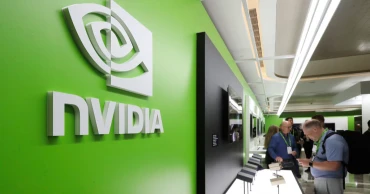
Nvidia tops Q1 forecasts despite tariff hurdles
Artificial intelligence technology bellwether Nvidia overcame a wave of tariff-driven turbulence to deliver another quarter of robust growth amid feverish demand for its high-powered chips that are making computers seem more human.
The results announced Wednesday for the February-April period came against the backdrop of President Donald Trump’s on-again, off-again trade war that has whipsawed Nvidia and other Big Tech companies riding AI mania to propel their revenue and stock prices upward, AP reports.
But Trump’s tariffs — many of which have been reduced or temporarily suspended – hammered the market values of Nvidia and other tech powerhouses heading into the springtime earnings season as investors fretted about the trade turmoil dimming the industry’s prospects.
Those worries have eased during the past six weeks as most Big Tech companies lived up to or exceeded the analyst projections that steer investors, capped by Nvidia’s report for its fiscal first quarter.
Nvidia earned $18.8 billion, or 76 cents per share, for the period, a 26% increase from the same time last year. Revenue surged 69% from a year ago to $44.1 billion.
If not for a $4.5 billion charge that Nvidia absorbed to account for the US government’s restrictions on its chip sales to China, Nvidia would have made 96 cents per share, far above the 73 cents per share envisioned by analysts.
OpenAI Codex: A Pair Programmer to Shape the Future Coding Paradigm
In another positive sign, Nvidia predicted its revenue for the May-July period would be about $45 billion, roughly the level that investors had been anticipating. The forecast includes an estimated $8 billion loss in sales to China due to the export controls during its fiscal second quarter, after the restrictions cost it about $2.5 billion in revenue during the first quarter.
In a conference call with analysts, Nvidia CEO Jensen Huang lamented that the US government had effectively blocked off AI chip sales to China — a market that he estimated at $50 billion.
Huang warned the export controls have spurred China to build more of its own chips in a shift that he predicted the US will eventually regret.
“The US based its policy on the assumption that China cannot make AI chips. That assumption was always questionable, and now it’s clearly wrong,” Huang said.
Despite Nvidia's lost opportunities in China, investors were heartened by the company's first-quarter performance. Nvidia's shares gained more than 4% in extended trading after the numbers came out.
Nvidia’s stock price ended Wednesday’s regular trading session at $134.81, just slightly below where it stood before Trump’s January 20 inauguration.
The price had plunged to as low as $86.62 last month during a nosedive that temporarily erased $1.2 trillion in shareholder wealth.
1 year ago

SpaceX launches another Starship rocket after back-to-back explosions, but it tumbles out of control
After back-to-back explosions, SpaceX launched its mega rocket Starship again on Tuesday evening, but fell short of the main objectives when the spacecraft tumbled out of control and broke apart.
The 403-foot (123-meter) rocket blasted off on its ninth demo from Starbase, SpaceX’s launch site at the southern tip of Texas. Residents voted this month to organize as an official city.
CEO Elon Musk 's SpaceX hoped to release a series of mock satellites following liftoff, but that got nixed because the door failed to open all the way. Then the spacecraft began spinning as it skimmed space toward an uncontrolled landing in the Indian Ocean.
SpaceX later confirmed that the spacecraft experienced “a rapid unscheduled disassembly,” or burst apart. “Teams will continue to review data and work toward our next flight test,” the company said in an online statement.
Musk noted in a post on X it was a “big improvement” from the two previous demos, which ended in flaming debris over the Atlantic. Despite the latest setback, he promised a faster launch pace moving forward, with a Starship soaring every three to four weeks for the next three flights.
It was the first time one of Musk's Starships — intended for moon and Mars travel — flew with a recycled booster. There were no plans to catch the booster with giant chopsticks back at the launch pad, with the company instead pushing it to its limits. Contact with the booster was lost at one point, and it slammed into the Gulf of Mexico in pieces as the spacecraft continued toward the Indian Ocean.
Amazon launches its first internet satellites to compete against SpaceX's Starlinks
Then the spacecraft went out of control, apparently due to fuel leaks.
“Not looking great with a lot of our on-orbit objectives for today,” said SpaceX flight commentator Dan Huot. The company had been looking to test the spacecraft’s heat shield during a controlled reentry.
Communication ceased before the spacecraft came down, and SpaceX ended its webcast soon afterward.
The previous two Starships never made it past the Caribbean. The demos earlier this year ended just minutes after liftoff, raining wreckage into the ocean. No injuries or serious damage were reported, although airline travel was disrupted. The Federal Aviation Administration last week cleared Starship for another flight, expanding the hazard area and pushing the liftoff outside peak air travel times.
Besides taking corrective action and making upgrades, SpaceX modified the latest spacecraft’s thermal tiles and installed special catch fittings. This one was meant to sink in the Indian Ocean, but the company wanted to test the add-ons for capturing future versions back at the pad, just like the boosters.
NASA needs SpaceX to make major strides over the next year with Starship — the biggest and most powerful rocket ever built — in order to land astronauts back on the moon. Next year’s moonshot with four astronauts will fly around the moon, but will not land. That will happen in 2027 at the earliest and require a Starship to get two astronauts from lunar orbit to the surface and back off again.
1 year ago

‘Call of Duty’ beats US govt in placing veterans in jobs
As Memorial Day nears and National Military Appreciation Month concludes in US, an unexpected leader in veteran employment has emerged, the video game franchise Call of Duty.
The Call of Duty Endowment (C.O.D.E.), a nonprofit initiative tied to the popular military video game published by Activision, has placed over 150,000 US veterans in meaningful jobs since its launch in 2009.
According to the organisation’s President Dan Goldenberg, the initiative has been outpacing the federal government’s veteran placement efforts since 2022, reports AP.
The initiative has raised $48 million through sales of special accessory packs in “Call of Duty” games alone (one of which recently launched in collaboration with real-life vets First Sergeant Korey Staley and Captain Florent “Flo” Groberg), in addition to other donation streams, and “every cent of which is going to putting vets in jobs,” Goldenberg said.
“And one thing I know for sure is we’ve had more measurable social impact than anyone I know of in the gaming industry. I can’t think of another cause where it’s not so much the money raised, it’s the impact out,” he said.
He mentioned that others may have raised more money, but they have put — including the in-game stuff and other donations and corporate partnerships — close to $100 million against this problem. And as a result, 150,000 vets have jobs, their families are more secure.
The average starting salary for veterans placed through C.O.D.E. is $75,000, with 93 per cent securing full-time roles.
Rockstar confirms GTA VI to launch 'May 26, but not this year'
The organisation reports an 89 per cent six-month retention rate and notes that 20 per cent of those placed are women. Remarkably, each placement costs just $628 — a fraction of what government programs spend.
Launched in 2009 by former Activision chief Bobby Kotick and co-chaired by General James L. Jones beginning in 2012, the Call of Duty Endowment started out a time when the unemployment rate for veterans “was super high,” Goldenberg said.
C.O.D.E. is currently bracing for a higher number of unemployed veterans amid the recent job cuts across government service, a popular sector for vet placement, under the administration of President Donald Trump.
But Goldenberg says the techniques the endowment already has in place — methods it has been building on through years of trial and error — will help significantly with this influx.
Beyond employment, video games like Call of Duty have served as a form of relief for veterans. A study by the Entertainment Software Association found that 86 per cent of surveyed US veterans said gaming helped relieve stress and anxiety — and Call of Duty was their favourite title.
“When I’ve talked to friends who’ve been forward, when I’ve gone forward... you would think, and people from outside will say, ‘Don’t you get enough of the military thing?’” Goldenberg said.
“And no, it’s like a great way for them... to decompress and have fun.”
1 year ago
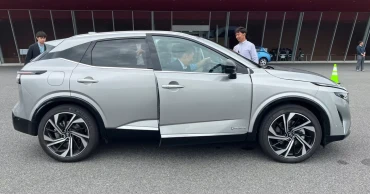
Japan's troubled automaker Nissan banks on hybrid EV technology
Money-losing Japanese automaker Nissan is banking on its latest “e-Power” technology for a turnaround.
A kind of hybrid, e-Power comes equipped with both an electric motor and gasoline engine, much like the Toyota Motor Corp. Prius. It’s different from a Prius in that it doesn’t switch back and forth between the motor and engine during the drive.
That means the car always is running on its EV battery, ensuring a quiet, smooth ride.
“Nissan has a proud history of pioneering innovative technology that set us apart,” Chief Technology Officer Eiichi Akashi told reporters on the sidelines of a test drive at its Grandrive course outside Tokyo.
The advantage of e-Power vehicles is that they never need to be charged like EVs do. The owner just fuels up at a gas station and the car never runs out of a charge.
Nissan Motor Corp., which racked up a $4.5 billion loss for the fiscal year through March, sorely needs a hot-seller, especially in the lucrative North American market. But the U.S. market is proving a big headache for all the Japanese automakers because of President Donald Trump’s tariff policies.
To achieve a turnaround, Nissan is working on reducing costs, strengthening business partnerships and redefining its lineup. That's where e-Power fits in, according to Akashi.
OpenAI Codex: A Pair Programmer to Shape the Future Coding Paradigm
Yokohama-based Nissan announced earlier this month that it’s slashing about 15% of its global work force, or about 20,000 employees, and reducing the number of its auto plants to 10 from 17, under an ambitious recovery plan led by its new Chief Executive Ivan Espinosa.
Nissan officials did not give a price for the upcoming e-Power models. The only other automaker offers a similar technology is “kei,” or tiny car manufacturer Suzuki Motor Corp.
E-Power is already offered on the Nissan Qashqai and X-Trail model in Europe, and the Note in Japan. The upgraded version will be offered in the new Rogue in the U.S.
Nissan, a pioneer in EVs with its Leaf, which went on sale in 2010, is also preparing beefed up EV models. It's also working on a solid-state battery which is expected to replace the lithium-ion batteries now widely used in hybrids, EVs and e-Power models.
Analysts say Nissan is in danger of running out of cash and needs a partner. Speculation is rife its Yokohama headquarters building will get sold, or one of its Japan plants will be turned into a casino.
Google rolls out 'AI Mode' in major search engine overhaul
Nissan started talks last year with Japanese rival Honda Motor Co. for a business integration but announced in February that it was dropping the talks.
1 year ago

In Netflix's 'The Eternaut,' an Argentine comic goes global as dystopia hits home
A group of friends gather to play cards in their host’s cozy home when the power cuts. Cellphones die. An eerie snow falls all over the city, killing everyone it touches. The friends struggle to survive, their panic replaced by a growing awareness that humanity itself is at stake.
This is the premise of “The Eternaut,” a chilling dystopian drama out of Argentina that premiered its first season on Netflix on April 30. The six-episode, Spanish-language series with its mix of sci-fi elements and focus on human resilience has struck a universal nerve, rocketing to No. 1 among Netflix’s most streamed non-English-language TV shows within days.
Netflix already renewed the show for a second season, with filming scheduled to start next year.
But “The Eternaut” has touched on something deeper in Argentina, where legendary comic-strip writer Héctor Germán Oesterheld penned the original graphic novel in 1957 — two decades before he was “disappeared” by Argentina’s military dictatorship, along with all four of his daughters.
Abroad, publishers are scrambling to keep pace with renewed interest in the source material. The Seattle-based Fantagraphics Books said it would reissue an out-of-print English translation due to the surge in U.S. demand.
At home, the TV adaptation has reopened historical wounds and found unexpected resonance at a moment of heightened anxiety about the state of Argentine society under far-right President Javier Milei.
“The boom of ‘The Eternaut' has created a cultural and social event beyond the series,” said Martín Oesterheld, the writer’s grandson and a creative consultant and executive producer on the show. “It fills our hearts. It brings us pride.”
An alien invasion hits home
For years, the surviving Oesterhelds resisted offers from Hollywood to adapt the cult classic, wary of the industry's seemingly irresistible urge to destroy New York City and other Western centers in apocalyptic dramas.
Microsoft fires employee who interrupted CEO's speech to protest AI tech for Israeli military
To honor his grandfather's creation, Martín Oesterheld said the show had to be filmed in Spanish, with an Argentine cast and set in Buenos Aires.
“What he did was to do away with the representations of science fiction that we know in Europe and the United States,” Martín Oesterheld said of his grandfather. “He told it on our own terms, through things that we recognize.”
Netflix, pushing to expand beyond its saturated U.S. market into previously untapped regions like Latin America, was a natural fit, he said. The streaming giant wouldn’t disclose its budget, but said the special effect-laden show took four years of pre- and post-production, involved 2,900 people and pumped $34 million into Argentina’s economy.
In the show, aliens wreak predictable mayhem on an unpredictable cityscape — wide boulevards, neoclassical buildings, antique pizza halls and grimy suburbs — lending the show a shiver of curious power for Argentines who had never seen their city eviscerated on screen.
The protagonists don't play poker but truco, a popular Argentine trick card game. They sip from gourds of mate, the signature Argentine drink made from yerba leaves. The snowfall is uncanny, and not just because it kills on contact. Buenos Aires has only seen snow twice in the last century.
“From truco in scene one, which couldn't be more Argentine, we see that ‘The Eternaut’ is playing with these contrasts — life and death, light and darkness, the familiar versus the alien,” said Martín Hadis, an Argentine researcher specializing in science fiction. “It's not just a sci-fi story. It's a modern myth. That’s what makes it so universal.”
In updating the story to present-day Argentina, the show brings the nation’s disastrous 1982 war with Britain over Las Malvinas, or the Falkland Islands, into the backstory of its hero, Juan Salvo, played by renowned actor Ricardo Darín.
Salvo, a protective father and courageous ex-soldier who emerges to lead the group of survivors, is haunted by the rout of his comrades sent by Argentina's dictatorship to retake the South Atlantic islands. The defeat killed 649 Argentine soldiers, many of them untrained conscripts.
“The conflict in Las Malvinas is not closed, it’s still a bloody wound,” Darín told The Associated Press. “It’s bringing the subject back to the table. That has moved a lot of people.”
Argentine underdogs
Faced with catastrophe, the protagonists rely on their own ingenuity, and on each other, to survive.
What comes through, the creators say, is the Argentine saying “atado con alambre” — roughly, “held together with wire” — used to describe the inventive nature of those who do much with little in a nation that has suffered through decades of military rule and economic crises.
“It says a lot about being Argentine — taking whatever you have at your disposal and pushing your limitations,” said Martín Oesterheld. He was referring not only to the plot but also to the production at a time when Milei has waged war on Argentina's bloated state and slashed funding to cultural programs like the National Film Institute.
“As our culture is being defunded, we’re taking this Argentine product to the world,” Martín Oesterheld said.
Netflix's first quarter builds on recent momentum as trade war drags down other tech companies
Against this backdrop, the show's message of solidarity has gained an urgent new meaning, with those outraged over Milei’s libertarian ideology transforming the series' motto, “No one gets through it alone,” into a rallying cry.
The slogan was scrawled on signs at protests by retirees demonstrating against the government’s sharp cuts to their pensions this month. To protect against police tear gas, some traded bandannas for the gas masks used in the show to shield against toxic snowfall.
“There is a general policy these days that the state shouldn't take care of its citizens, which relates to individual freedom,” Darín said. "But there are many cases where, if the state disappears completely, people are left to drift as if they were shipwrecked.”
A search reignited
As the Netflix series exploded out of the gate, missing-persons flyers for Héctor Oesterheld, his daughters and potential grandchildren popped up on billboards for “The Eternaut” all over Buenos Aires, a reminder of the real-life horror story behind the pulp adventure.
By the time the military junta came to power in 1976, Oesterheld, 58, had become known as a committed leftist, his four daughters, ranging in age from 19 to 25, had joined a far-left guerilla group and the whole family had turned into a target of Latin America’s deadliest dictatorship.
Two of Oesterheld's daughters were pregnant at the time of their kidnapping. To this day, no one knows what happened to their unborn children, but they are believed to be among the estimated 500 newborns snatched from their parents and handed over to childless military officers, their true identities erased.
The three surviving members of the Oesterheld family have never stopped searching. Martín Oesterheld's grandmother, Elsa, who raised him after his mother was killed, banded together with other women dedicated to finding their missing grandchildren. They became known as the Grandmothers of the Plaza de Mayo.
Seizing on national interest in the TV series, the Grandmothers this month issued public appeals for help finding the disappeared grandchildren.
The response was overwhelming.
Hollywood director arrested for swindling Netflix out of $11 million
“It was incredible, it went viral,” said Esteban Herrera, who works with the Grandmothers and is still searching for his own missing sibling. “Since it’s a science-fiction series on a platform like Netflix, we’re reaching homes that the Grandmothers perhaps hadn’t before.”
The outpouring of emails and calls raised more questions than answers. Reaching out were hundreds of Argentine viewers newly determined to find their own disappeared relatives or suddenly skeptical about the legality of their own adoptions.
“'The Eternaut’ is a living memory, a classic that has been passed down from generation to generation,” said Martín Oesterheld. “For it to be embraced by so many people in this way ... there is no greater social commentary.”
1 year ago

Trump threatens 50% tariffs on EU and 25% penalties on smart phones as his trade war intensifies
President Donald Trump on Friday threatened a 50% tax on all imports from the European Union as well a 25% tariff on smartphones unless those products are made in America.
The threats, delivered over social media, reflect Trump's ability to disrupt the global economy with a burst of typing, as well as the reality that his tariffs have yet to produce the trade deals he is seeking or the return of domestic manufacturing he has promised voters.
The Republican president said he wants to charge higher import taxes on goods from the EU, a longstanding US ally, than from China, a geopolitical rival that had its tariffs cut to 30% this month so Washington and Beijing could hold negotiations. Trump was upset by the lack of progress in trade talks with the EU, which has proposed mutually cutting tariffs to zero even as the president has publicly insisted on preserving a baseline 10% tax on most imports.
“Our discussions with them are going nowhere!” Trump posted on Truth Social. “Therefore, I am recommending a straight 50% Tariff on the European Union, starting on June 1, 2025. There is no Tariff if the product is built or manufactured in the United States.”
Speaking later in the Oval Office, Trump stressed that he was not seeking a deal with the EU and might delay the tariffs if more companies invested in the United States.
“I’m not looking for a deal,” Trump told the reporters. “We’ve set the deal. It’s at 50%.”
The EU’s top trade official, Maros Sefcovic, posted on the social media site X that he spoke Friday with U.S. Trade Representative Jamieson Greer and Commerce Secretary Howard Lutnick.
“The EU’s fully engaged, committed to securing a deal that works for both,” Sefcovic said. “EU-US trade is unmatched & must be guided by mutual respect, not threats. We stand ready to defend our interests.”
All smartphones could be affected
Trump's tariffs against Europe had been preceded by a threat of import taxes against Apple for its plans to continue making its iPhone in Asia. Apple now joins Amazon, Walmart and other major U.S. companies in the White House's crosshairs as they try to respond to the uncertainty and inflationary pressures unleashed by his tariffs.
“I have long ago informed Tim Cook of Apple that I expect their iPhone’s that will be sold in the United States of America will be manufactured and built in the United States, not India, or anyplace else,” Trump wrote. “If that is not the case, a Tariff of at least 25% must be paid by Apple to the U.S.”
OpenAI Codex: A Pair Programmer to Shape the Future Coding Paradigm
Trump later clarified his post to say that all smartphones made abroad would be taxed and the tariffs could be coming as soon as the end of June.
“It would be also Samsung and anybody that makes that product,” Trump said. “Otherwise, it wouldn’t be fair.”
The statements by Trump are critical in that he suggests the company itself would bear the price of tariffs, contradicting his earlier claims as he rolled out a series of aggressive tariffs over the past several months that foreign countries would shoulder the cost of the import taxes. In general, importers pay the tariffs and the costs are often passed along to consumers in the form of higher prices.
In response to Trump’s tariffs on China, Apple CEO Tim Cook said earlier this month that most iPhones sold in the U.S. during the current fiscal quarter would come from India, with iPads and other devices being imported from Vietnam. After Trump rolled out tariffs in April, bank analysts estimated that a $1,200 iPhone would if made in America jump in price anywhere from $1,500 to $3,500.
Stocks sold off after Trump's postings, with the S&P 500 index down roughly 0.67%. The markets have developed a hair-trigger sensitivity to the U.S. president's statements, often slumping when he announces high tariffs and rallying when he retreats from those threats.
US vs. EU
U.S. Treasury Secretary Scott Bessent tried to provide some clarity on Trump's postings in a Friday interview on the Fox News show “America's Newsroom.”
Bessent said the EU has a “collective action problem” because its 27 member states are being represented by “this one group in Brussels,” such that the “underlying countries don’t even know what the EU is negotiating on their behalf.”
The Treasury secretary said he was not in a White House meeting this week that Cook attended, but he also spoke with the Apple CEO this week. Bessent said the goal was to have Apple bring more of its computer chip supply chain into the U.S.
The core of Trump's argument against the EU is that America runs a “totally unacceptable” trade deficit with the 27 member states. Countries run trade deficits when they import more goods than they export.
From the vantage point of the EU's executive commission, trade with the U.S. is roughly in balance if both goods and services are included. As a global center for finance and technology, the U.S. runs a trade surplus in services with Europe. That offsets some of the trade gap in goods and puts the imbalance at 48 billion euros ($54 billion).
German Foreign Minister Johann Wadephul said the EU's executive commission has his country’s full support in working to “preserve our access to the American market.”
“I think such tariffs help no one, but would just lead to economic development in both markets suffering,” Wadephul said in Berlin. “So we are still counting on negotiations, and support the European Commission in defending Europe and the European market while at the same time working on persuasion in America.”
Trump aides have said the goal of his tariffs was to isolate China and strike new agreements with allies, but the president's tariff threats undermine the logic of those claims. Not only could the EU face higher tariffs than China, but the bloc of member states might have been better off by establishing a broad front with China and other countries against Trump’s trade policy, said German economist Marcel Fratzscher.
Trump signs orders to boost Nuclear Power and speed up project approvals
“The strategy of the EU Commission and Germany in the trade conflict with Trump is a total failure,” Fratzscher, the head of the German Institute for Economic Research, said on X. “This was a failure you could see coming — Trump sees Europe’s wavering, hesitation and concessions as the weaknesses that they are.”
Mary Lovely, a senior fellow at the Peterson Institute for International Economics, said the 50% tariffs on Europe are most likely a “negotiating ploy” by Trump, as he has previously retreated on tariffs after taking a hard line.
She said Trump seems to believe that negotiations operate by going to a “threat point” that could risk self-harm to the U.S. just to demonstrate how serious he is, in hopes that doing so would produce an agreement.
But Lovely said that in the long-run Trump's approach “suggests that the U.S. is an unreliable trading partner, that it operates on whim, not on rule of law.”
A history with Apple
Trump has run hot and cold on his relationship with Apple, a sign that currying favor with him might not necessarily shield a company from his anger. He has essentially told companies such as Walmart to “eat” the costs of his tariffs instead of raising prices, even though doing so could squeeze profits and cause layoffs. He now appears to deploying a similar degree of pressure to force Apple to accept the higher costs of relocating its supply chains.
Trump had previously created an exemption on electronics imported from China to help companies such as Apple, something he could now remove. He also threatened separate 25% import taxes on computer chips and could have the tariffs schedule rewritten in ways that could expose Apple products to the taxes.
Until recently, the U.S. president repeatedly bragged about the $500 billion that Apple in February pledged to invest domestically as part of its development of artificial intelligence technologies. But he publicly turned against the company last week while speaking in Qatar.
“I had a little problem with Tim Cook yesterday,” Trump told the audience. “I said to him: ‘Tim, you're my friend. I treated you very good. You’re coming here with $500 billion, but now I hear you’re building all over India. I don’t want you building in India.'”
Microsoft fires employee who interrupted CEO's speech to protest AI tech for Israeli military
Analysts have been skeptical that Apple could quickly shift device manufacturing to the U.S., mainly because it has spent decades embedding complex supply chains in China to feed the factories. But it also has the challenge of grappling with “the unpredictable nature of the current U.S. administration,” said Ben Wood, chief analyst at U.K.-based research firm CCS Insight.
“At any moment, things can change overnight, making it extremely difficult for companies such as Apple to plan their business,” Wood said. “It seems that despite the best efforts of the Apple leadership team to lobby the U.S. administration to treat the iPhone more favorably, a curveball can come out of nowhere and derail any plans they have in place.”
1 year ago